



MyCARE (Humanitarian Care Malaysia) is one of Malaysia’s leading humanitarian NGOs. It was founded in 2010 as Aqsa Syarif and rebranded as MyCARE in 2014 to serve as a coordinating umbrella for several humanitarian organizations including Aqsa Syarif, i4Syria, Salam Iraq, and Rose2Rose.
From its inception, MyCARE has pursued a vision that extends beyond traditional relief to organized humanitarian work rooted in ethical imperatives that transcend borders. That is why Palestine and its people have been central to its humanitarian and political agenda—driven by a belief that justice is incomplete without liberation from occupation and oppression.
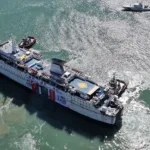
This commitment has been clearly visible through MyCARE’s field participation in convoys and flotillas aimed at breaking the siege of Gaza, most notably the Freedom Flotilla (MV Mavi Marmara), which attracted global attention in 2010.
The organization also took part in the Viva Palestine convoy that traveled overland from London to Gaza, as part of an international grassroots effort to break not just the physical blockade but also the political and media isolation imposed on the Gaza Strip. Its engagements continued with the Women’s Boat to Gaza in 2016, the Return Boat in 2018, and strong preparatory and media support for the planned 2024 Freedom Flotilla.
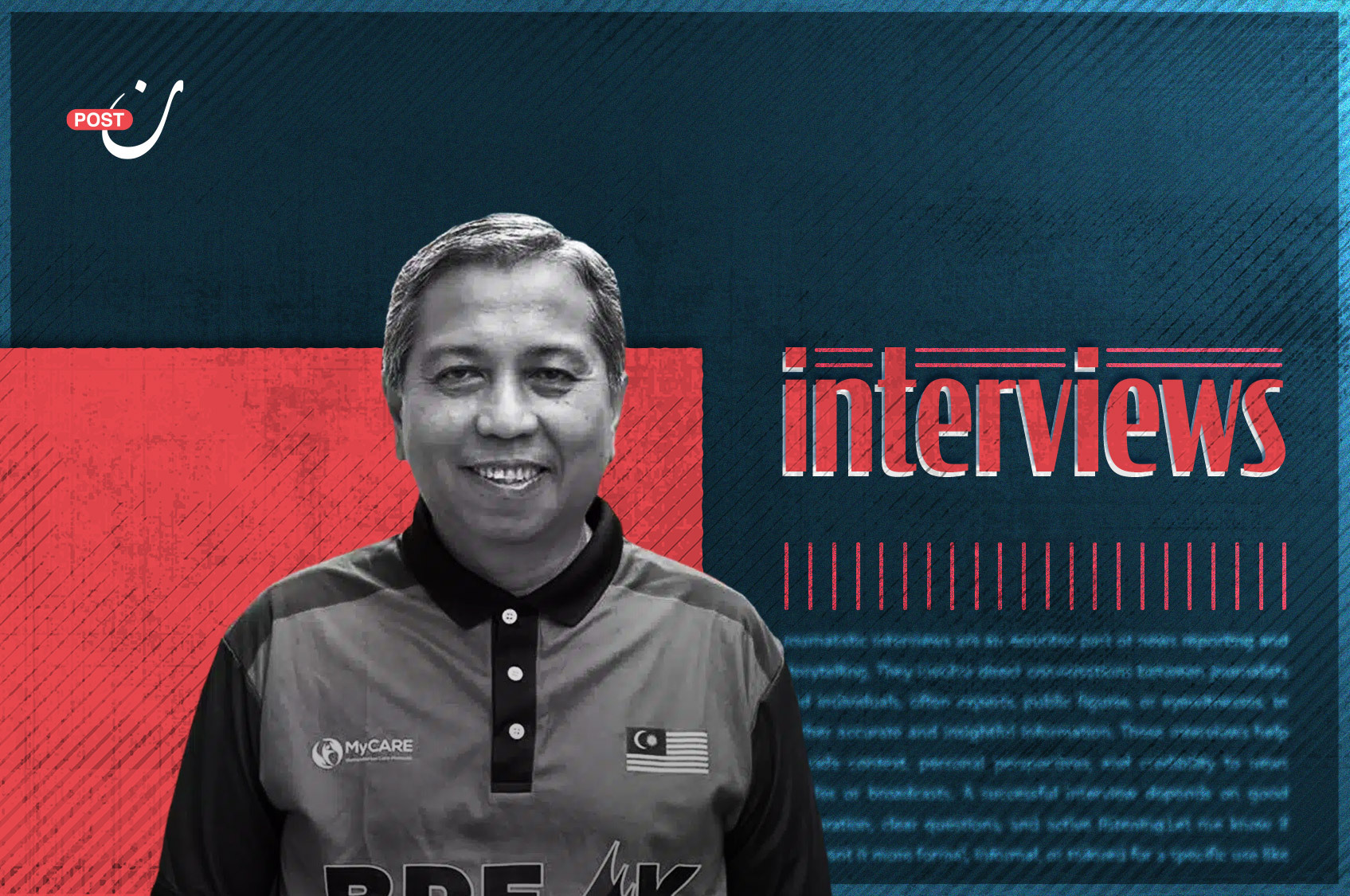
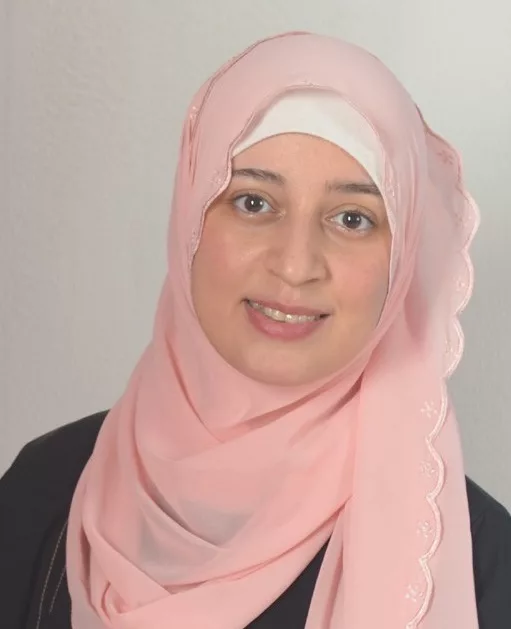
To highlight the significance of land convoys and sea flotillas in challenging Israel’s siege of Gaza, Noon Post interviews Mr. Qamar al-Zaman Shaher al-Anwar, CEO of MyCARE Malaysia and one of its founding leaders. He holds bachelor’s and master’s degrees in electrical engineering and worked for more than 25 years in major tech companies before transitioning to humanitarian work in 2013 via Aqsa Syarif.
With the merger of multiple Malaysian aid organizations into MyCARE at the start of 2014, al-Zaman continued his humanitarian efforts as its CEO. Under his leadership, MyCARE launched missions to Gaza, Syria, Lebanon, Aceh, Somalia, and Bangladesh, and helped open the NGO’s official office in Gaza.
Over a decade of humanitarian leadership, al-Zaman has played a key role in strengthening Malaysian solidarity with vulnerable communities worldwide—especially in Palestine—and in expanding MyCARE’s network of international humanitarian partnerships.
Q1: What inspired MyCARE’s participation, and as CEO, how do you assess the overall impact of these missions in challenging the siege on Gaza?
From its founding, MyCARE adopted a strategy that goes beyond providing relief supplies or financial assistance. It embraced clear advocacy aimed at revealing the true extent of Palestinian suffering, especially in besieged Gaza. Participation in the MV Mavi Marmara flotilla in 2010 and the Viva Palestine convoy from London to Gaza marked a turning point in its practical engagement with international solidarity efforts.
Subsequent missions included the Women’s Boat to Gaza in 2016 and the Return Boat in 2018. Remarkably, many leaders of these flotillas have been non-Muslims from Western countries—signaling a broadening global awareness of the Palestinian cause.
These initiatives served as powerful platforms to amplify Palestinian voices worldwide—not just in humanitarian terms but strategically, by exposing the illegitimacy of the blockade. MyCARE sees its involvement as both an ethical and religious imperative, asserting that Muslims should take leadership roles in these endeavors—not remain passive followers or mere donors.
Q2: What future plans or strategies does MyCARE have to maintain momentum in solidarity convoys, especially as political and logistical barriers grow?
MyCARE aims to overcome political and logistical obstacles by leveraging modern technologies to spread the Palestinian narrative and boost public awareness. The organization believes maintaining momentum requires not just repeating initiatives but enhancing them—by involving influential public figures, especially those outside the Muslim world.
Media remains a vital tool, whether through broad news coverage or through social media campaigns. MyCARE views media advocacy not as a temporary tactic, but as a long-term strategy to ensure Palestinian voices resonate and their story becomes part of global consciousness.
Q3: Can you share major political, legal, or operational challenges MyCARE faced during preparation and execution of the flotillas?
MyCARE and its team faced complex challenges while preparing and executing their participation in the Freedom Flotilla. These included legal aspects like registering ships under the flags of supportive nations—for example, the withdrawal of Guinea-Bissau’s flag at the last moment in previous missions, which affected the flotilla’s departure.
They also confronted issues around securing experienced maritime crews, selecting safe port departure sites, and ensuring sufficient funding for each stage of the mission.
Furthermore, the timing of mission announcements and the selection of participants—particularly those with global influence—were critical factors impacting both safety and the necessary media coverage. MyCARE regards the ability to turn such challenges into opportunities as a key to success in these initiatives.
“If you play your cards right, you secure the needed attention and ensure the safety and impact of the mission.”
Q4: Given Israel’s persistent opposition to these missions, how does MyCARE plan to keep the cause active and effective in international discourse and public opinion?
Despite Israel’s continuous rejection of any attempt to break the siege, MyCARE believes repeated missions—backed by broad media exposure—remain effective means to keep the Palestinian cause alive in global conscience. Each mission, even if it does not reach Gaza, generates political and media reverberations that foster greater public and diplomatic awareness.
The organization counts on the surge in solidarity since the outbreak of the “Al-Aqsa Flood” and documented civilian atrocities. If leveraged well, this wave can broaden the circle of supporters and reshape international discourse toward greater fairness for Palestinians.
MyCARE argues that a civil resistance narrative—rooted in non-violence and peaceful defiance—is one of the strongest weapons available today, particularly in the face of the other side’s superior military apparatus and Western political backing.
Q5: Is MyCARE seeking or open to building partnerships with international organizations like UN agencies to strengthen the legal and humanitarian dimensions of your work?
MyCARE holds a special position in the UN system, with consultative status at the UN Economic and Social Council (ECOSOC). This enables it to engage with international bodies and submit official interventions.
The organization frequently emphasizes its full openness to collaboration with UN agencies and international NGOs to bolster the legal and humanitarian integrity of its operations—whether in safeguarding participants or affirming the legality of the movements under international humanitarian law.
It views the strengthening of these partnerships as essential to protecting solidarity initiatives from restriction or misrepresentation—especially in light of recurring Israeli accusations.
Q6: How would you describe the level of community and institutional support in Malaysia and the region for these missions over the years? Has it grown, shifted, or encountered setbacks?
In recent years, MyCARE has experienced a remarkable rise in popular and institutional support, both in Malaysia and across neighboring countries. In 2024 alone, the organization received over 100 applications from activists and NGOs wishing to join a flotilla planned to depart from Istanbul.
After careful selection, 14 Malaysian participants and others from the region were chosen. Although the mission did not proceed due to Guinea‑Bissau’s withdrawal of the vessel’s flag, public enthusiasm remained strong, with participants and supporters more resolved than ever.
This regional backing represents a growing awareness that solidarity with Palestine is no longer confined to political or religious elites; it has become part of the collective conscience across the region.
Q7: Finally, what message would you like to send to youth movements and civil-society actors around the world who wish to engage actively for Palestine?
“Let us not remain silent.” During the launch of the ship “Madeline” recently in Catania, Greta Thunberg spoke about her greatest fear—not the voyage to Gaza—but global silence in the face of what she called a genocide being broadcast live in Gaza.
MyCARE’s message is a clear call to youth movements and civil society worldwide: break the silence and act meaningfully for Palestine. Amid the ongoing genocide in Gaza, silence is no longer neutral—it is complicity. We must engage in committed solidarity, beyond slogans—through campaigns, initiatives, and flotillas that restore humanity to the forefront of the Palestinian question.


