





Wherever they may be, Palestinians are acutely aware that the Israeli occupation seeks to erase every link connecting them to their land—its history, its heritage—through destruction, distortion, and deliberate erasure.
In response, they have doubled their efforts to preserve their narrative and safeguard their legacy, whether through traditional documentation or the use of modern digital tools, especially in recent years.
Over the past few years, several projects and initiatives have emerged aimed at preserving Palestinian history and archiving every story or image that attests to the bond between Palestinians and their homeland.
One such initiative is “Palestinian Tales,” which began in 2019 as a digital archive for Palestinian families. The project seeks to preserve personal and familial memory and document the social and cultural life of Palestine through individual narratives.
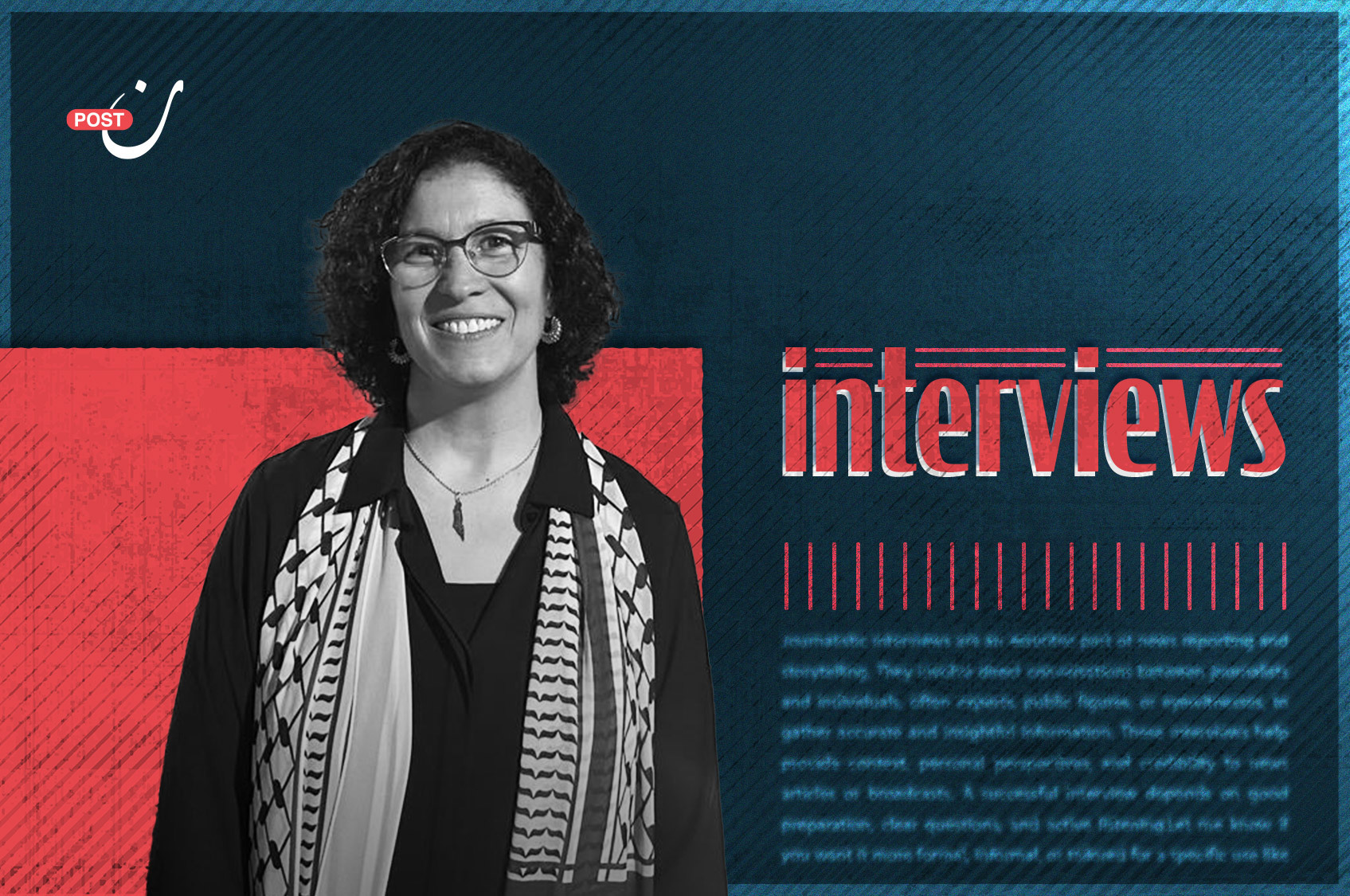
Dr. Samar Dwidar, an oral historian and the founder of the initiative, spoke to Noon Post about the importance of the platform in safeguarding Palestinian history—particularly because it centers on “family archives” as its primary source.
Since its launch in September 2019, the initiative has worked steadily to expand its documentation of personal testimonies.
What motivated you to launch “Palestinian Tales”? And what gap does this initiative seek to fill in the historical record?
The motivations were deeply personal and emotional. I was working on a novel about Palestine, and during the course of my research, I came across a profoundly personal letter written by my grandfather during the Nakba.
That letter had a lasting impact on me. For the first time, I felt I was getting to know Palestine through the voice of someone who had actually lived the experience—not through history books. It was as though I had been transported into the heart of the event itself.
That moment made me realize the power of personal narratives and their emotional and intellectual depth. Oral testimonies from people who lived through major historical events like the Nakba carry a resonance that is often deeper than academic or official accounts.
That’s when the project evolved from an attempt to document my own family’s history into a broader initiative aimed at empowering all Palestinians to tell their stories.
The goal of the initiative is to ensure these stories remain in the hands of those who lived them, told freely and without the interference of institutions or authorities that decide what is worth preserving and what should be discarded.
I wanted to create an open digital space where anyone could share their memories and experiences, so that every Palestinian voice would have a chance to be heard. This, I felt, was my own way of contributing to the Palestinian cause—a form of peaceful resistance when other forms of participation are not possible.
The initiative relies on family archives as its main source material. Why this particular focus? And what do these archives offer that official sources do not?
We chose to focus on family archives because they offer a genuine human portrait of Palestinians—one that goes beyond the tired stereotypes found in media or institutional narratives, where Palestinians are too often portrayed either as heroic martyrs or as terrorists, stripping them of their humanity and reducing them to abstract symbols.
Family archives allow us to see Palestinians as people living full lives with all their daily details: we see them as children, workers, students, celebrating, succeeding, and sometimes failing. These personal details are what make the Palestinian story more relatable, and they create space for empathy and human connection.
When we compare this with official sources, we find that those are often written by scholars or elites whose perspectives tend to reflect their own worldviews rather than the lived experiences of ordinary people. Every historical account, by its nature, carries the imprint of its author. In contrast, family archives are the voices of the people themselves—told in their own words and reflecting their real experiences.
In this way, personal archives not only fill in the gaps left by official narratives but also help reshape historical storytelling in a more balanced and human-centered way.
Was there a particular testimony or story that had a profound impact on you and highlighted the significance of this work?
Yes. What affected me most was my grandfather’s archive of letters—especially one engagement letter he wrote during the Nakba. His writing had a unique literary flair. The letters were meticulously organized, almost as if he had intended them to eventually reach someone who could understand and cherish them.
It’s hard to single out just one letter that moved me—they all carry something unique. But perhaps the most pivotal was the first letter I received from my grandfather’s archive, handed to me by my mother. Interestingly, it wasn’t written by my grandfather but by his nephew, who was forced to flee his home in Jerusalem with his mother and other relatives on a donkey, heading to Gaza where the family had taken refuge.
His vivid and intimate account of that journey deeply affected me. It underscored the value of oral history—hearing the past from those who lived it, rather than through sterile academic texts or detached analysis. That letter was a key that opened a door for me, showing that these stories hold immense value and must be told.
Personal documents are often dismissed as mundane details of daily life. How has your project helped shift that perception of personal archives?
In the context of war and hardship, it’s understandable that people may not prioritize preserving their family papers or personal archives—or even see them as worthy of preservation. Early on, I encountered a lot of skepticism, even accusations that asking people to share old letters and photos was insensitive given their difficult realities.
Over time, though, both I and others came to see things differently.
Many people still struggle to accept the idea or don’t see the value in documenting such materials. But I’ve become more determined to try, because I believe that personal archives are currently our only available means to safeguard our collective memory.
This work requires societal awareness, consistency, and—most importantly—a sense that the person reaching out genuinely understands and values the emotional weight of these memories.
What types of archives does the platform accept? And is there a time frame for the materials you’re documenting?
The initiative initially focused on documenting life in Palestine up to 1967, since the occupation after that year marked a pivotal shift in Palestinian history. But after the recent assault on Gaza in October 2023, we re-evaluated our documentation philosophy. It became clear that what’s happening now is a continuation of a long-standing Nakba. As such, it’s become vital to document daily life in Gaza before October 6, 2023—including simple, everyday moments that hold immense value in the context of loss and destruction.
What kinds of materials can people submit to Palestinian Tales?
Any Palestinian can share personal materials—whether their own or their family’s. These can include wedding photos, Ramadan moments, graduation celebrations, or simple scenes of daily life in Gaza or elsewhere. The key is that these items are part of the broader Palestinian collective memory.
The goal is to create a human map of Palestine through the lives of ordinary people, documenting the intimate details that, together, form a unique portrait of Palestinian history from a personal angle.
What are the main challenges you face in expanding participation in Palestinian Tales?
One major challenge is convincing Palestinians that they must play this role themselves—that personal archives are not trivial, but essential. We need widespread awareness of the importance of memory, and we must encourage people to take ownership of writing their own history.
Another challenge is direct outreach. For the initiative to grow and truly take root, more Palestinians need to know about it and feel confident sharing their materials. There are always concerns—people worry: What will happen to these documents? Will they be manipulated, stolen, or misused?
From a technical standpoint, how was the “Palestinian Tales” platform designed, and what principles underpin it?
Palestinian Tales was designed as a digital platform to preserve and showcase Palestinian family archives. Its core principles include protecting collective memory through personal materials, and ensuring that documentation remains in the hands of individuals, not institutions.
The platform was built using modern technologies that allow users to upload images, documents, and oral or written testimonies easily. These contributions are then made available to the public under privacy conditions that respect the archive owners.
The project began with a digital database that receives family archives through a user-friendly form. When a visitor accesses the website, they’re greeted with a call to action: “Share Your Memories.” With a simple registration requiring just a name, email, phone number, and password, users can begin uploading their family archives.