








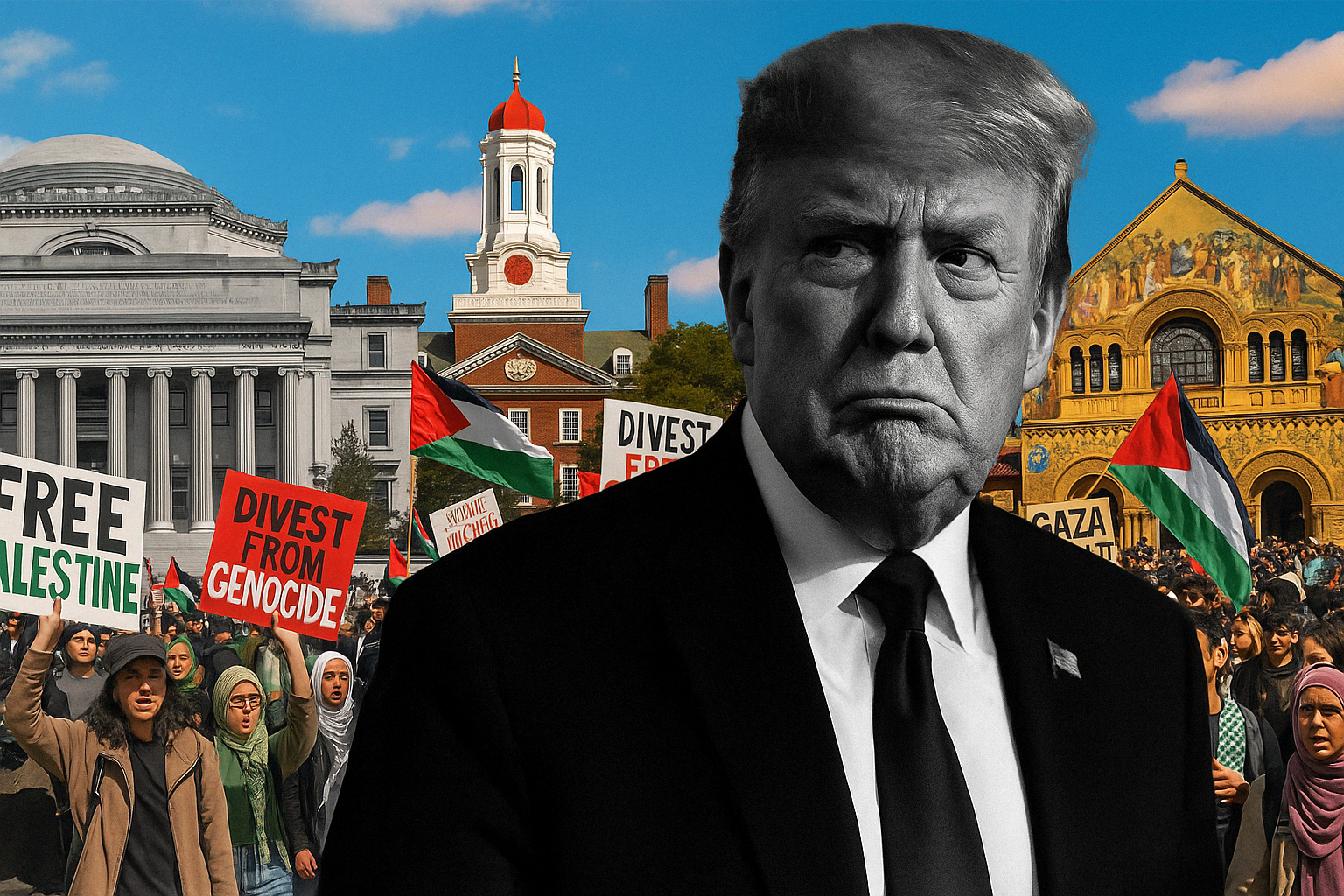
Donald Trump kept a promise he made during the height of the American campus uprisings in the spring of 2024. At that time, he vowed to deport those he labeled “terrorist sympathizers.” Upon his return to the Oval Office, he launched an unprecedented campaign in modern American history against university students who protested Israel’s genocidal war in Gaza.
In just the past two months, the visas of nearly 1,500 students from various American universities have been revoked under broad accusations, most notably “antisemitism” and “spreading propaganda in support of Hamas,” which is classified as a terrorist organization in the United States. Some students were ordered to leave the country within a week, while others were arbitrarily detained or summarily deported.
However, this deportation campaign goes beyond targeting student activism. It raises deeper, more alarming questions: What are its limits? What does the law say? What political battles is it igniting? How is it reshaping American identity? And finally, how does it echo the post-9/11 era?
Student Mahmoud Khalil: A First Shockwave
The crackdown began on March 8, when the most aggressive federal campaign to date targeted university students over their political support for Palestinian rights—particularly during the massive spring 2024 protests against Israel’s US-backed assault on Gaza, which began in October 2023.
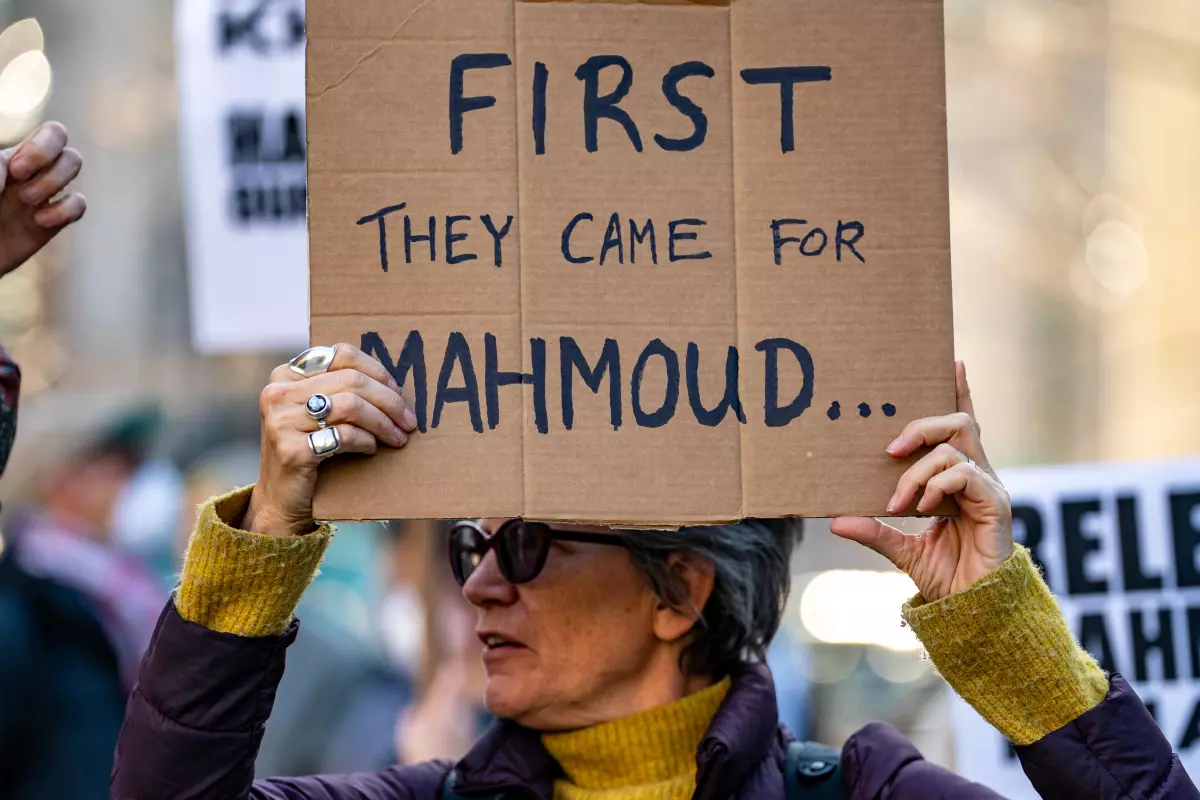
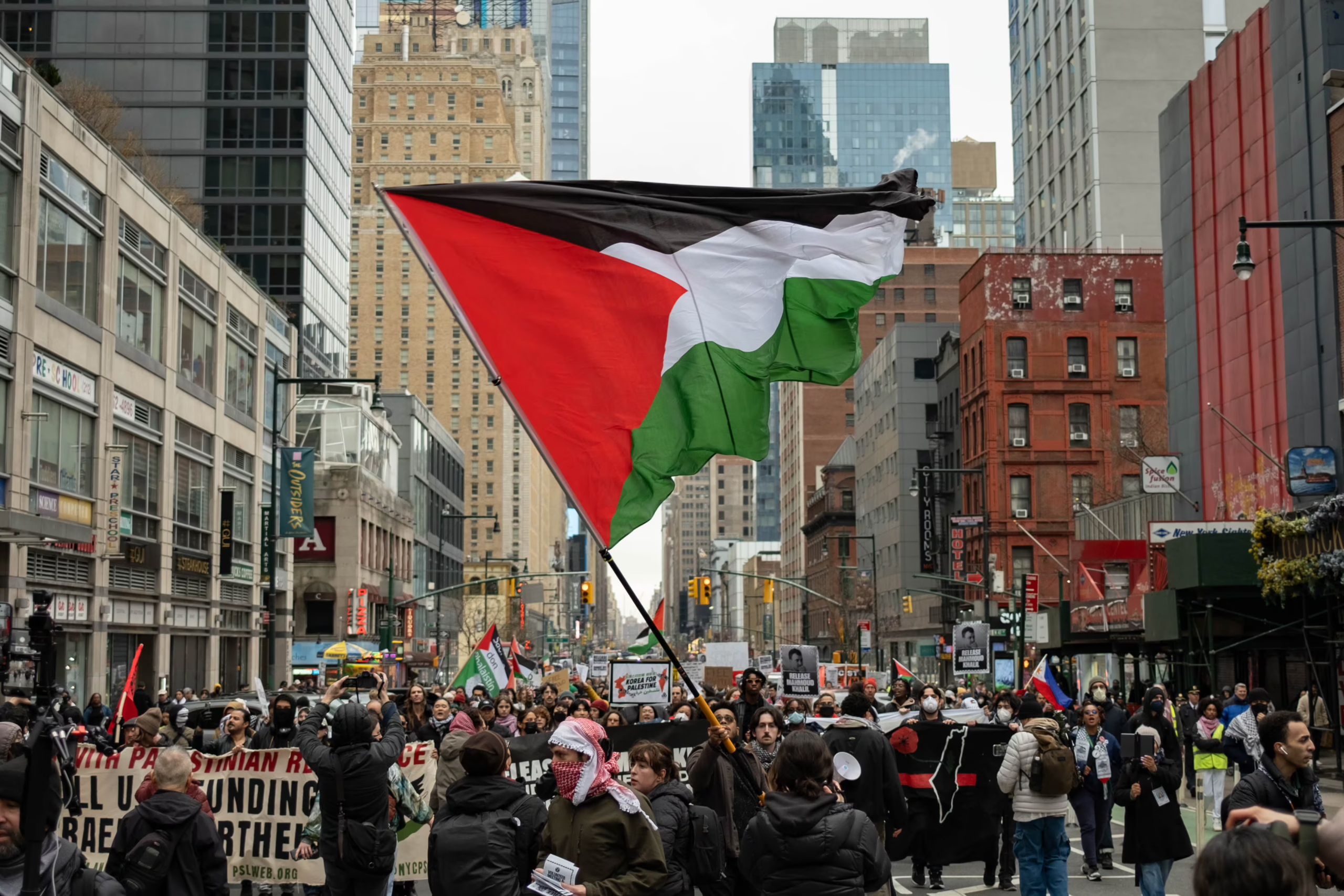
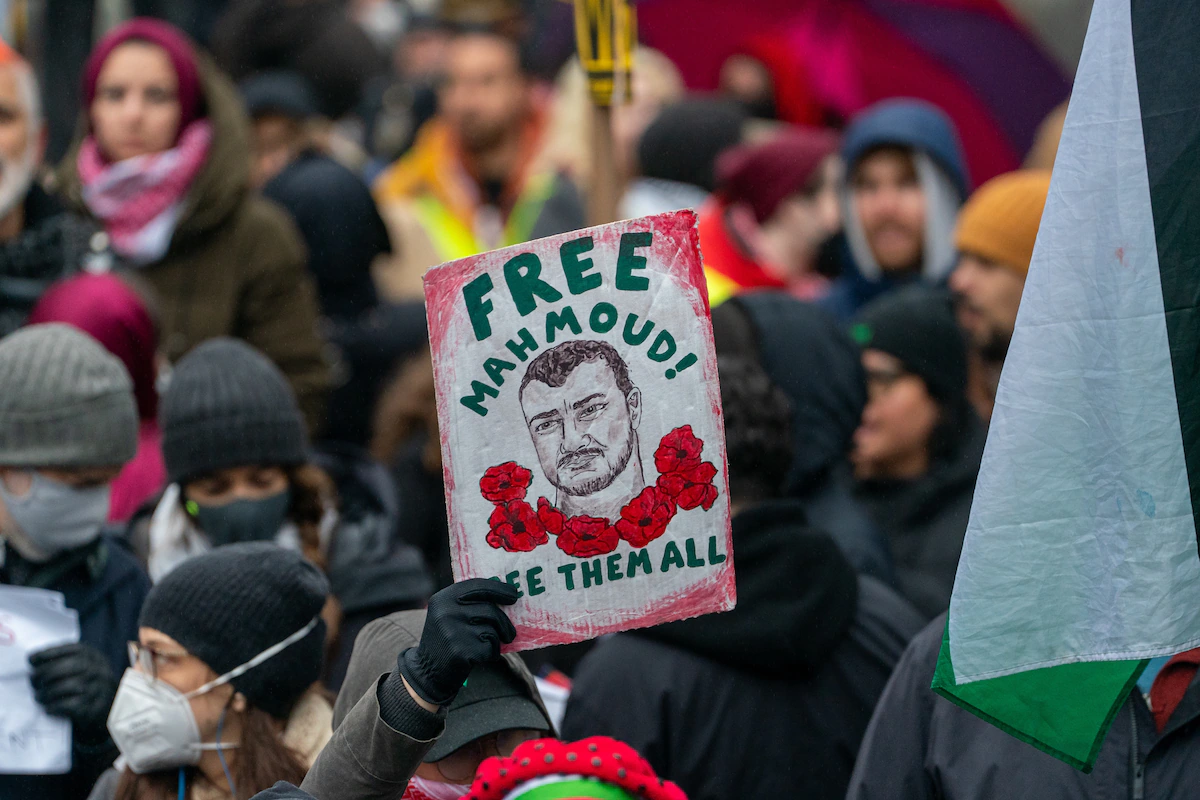
The arrest of Mahmoud Khalil, leader of Columbia University’s student movement, and his disappearance at the hands of immigration agents initially triggered a storm of anger and protest. Rights groups and student activists decried the Trump administration’s new policy as an attempt to silence dissent and suppress free speech.
Arrests and deportations soon swept through universities across the country. The campaign, described as the most aggressive suppression of student activism in modern American academic history, affected nearly 240 universities and colleges, according to Inside Higher Ed. International students—including both visa holders and green card residents—were among those targeted.
The campaign was not limited to public universities like the University of Maryland or Ohio State. Prestigious private institutions such as Columbia, Harvard, and Stanford were also impacted, threatening the autonomy of universities and their decision-making independence from federal interference.
Senator Marco Rubio claimed that no more than 300 students would be deported by the end of March, citing their engagement in “illegal activities.” However, the National Association of Foreign Student Affairs (NAFSA) estimated the number could reach 1,400 by mid-April.
Worse still, around 4,700 names disappeared from the SEVIS database (Student and Exchange Visitor Information System), maintained by Immigration and Customs Enforcement (ICE). This raised alarms over a potentially broader plan yet to be executed in the coming weeks or months.
SEVIS holds data on approximately 1.1 million international students enrolled in US institutions and is used to track their academic progress and compliance with legal requirements. Continued residency hinges on abiding by conditions such as avoiding unauthorized employment and refraining from activities deemed “violent crimes” punishable by a year or more in prison.
Yet the accusations brought against students far exceeded legal norms. Beyond “antisemitism,” “support for Hamas,” and “direct participation in the 2024 protests,” even tenuous connections to the Palestinian cause—including social media posts—were deemed grounds for deportation.
The Trump administration launched criminal investigations into students who had not even protested, citing minor infractions like traffic violations, alcohol consumption, or verbal disputes as pretexts for revoking visas. One judge in Wisconsin stated that these actions “clearly violate federal legal standards.”
This raises grave concerns about whether Trump’s campaign is a war on political expression and dissent or the groundwork for a broader social engineering project under the guise of national security.
Trump Above the Law
Under US law, visa holders who enter the country legally and obey the law are entitled to due process—a fundamental protection regardless of visa type. They can appeal deportation orders in court and seek compensation for damages. Emergency motions can also be filed to halt deportation pending judicial review.
Federal judges in seven states—including Montana, Massachusetts, Wisconsin, and Washington, D.C.—issued temporary halts on deportations while assessing whether legal procedures had been followed, such as proper notification and the right to appeal.
But the Trump administration flouted these rights. Many students received no official warnings or explanations for visa revocations. Hundreds were targeted outside public view, unlike Mahmoud Khalil and Mohsen Mahdawi of Columbia, whose detentions sparked widespread outrage.
The administration even ignored direct court orders. Lebanese physician Rasha Alawieh, for example, was denied entry despite a judicial ruling permitting her return. Authorities cited photos on her phone expressing support for Hezbollah.
In another case, a French scientist was turned away over opposition to Trump’s scientific policies, again with no further justification.
The American Civil Liberties Union (ACLU) has filed three class-action lawsuits in Indiana, Michigan, and Wayne County to stop student deportations and reinstate their visas. Federal courts responded positively, though final rulings are pending.
Green card holders can only lose their legal status via a decision by an immigration judge and only for serious offenses such as murder, rape, or fraud in obtaining residency. Mahmoud Khalil was accused of the latter, but the ACLU contends the charge is merely a legal smokescreen to violate his First Amendment rights.
Deporting permanent residents requires formal charges, immigration hearings, and compelling evidence, making the process far more complex than that for temporary visa holders.
Judicial Showdown: Democrats vs. Republicans
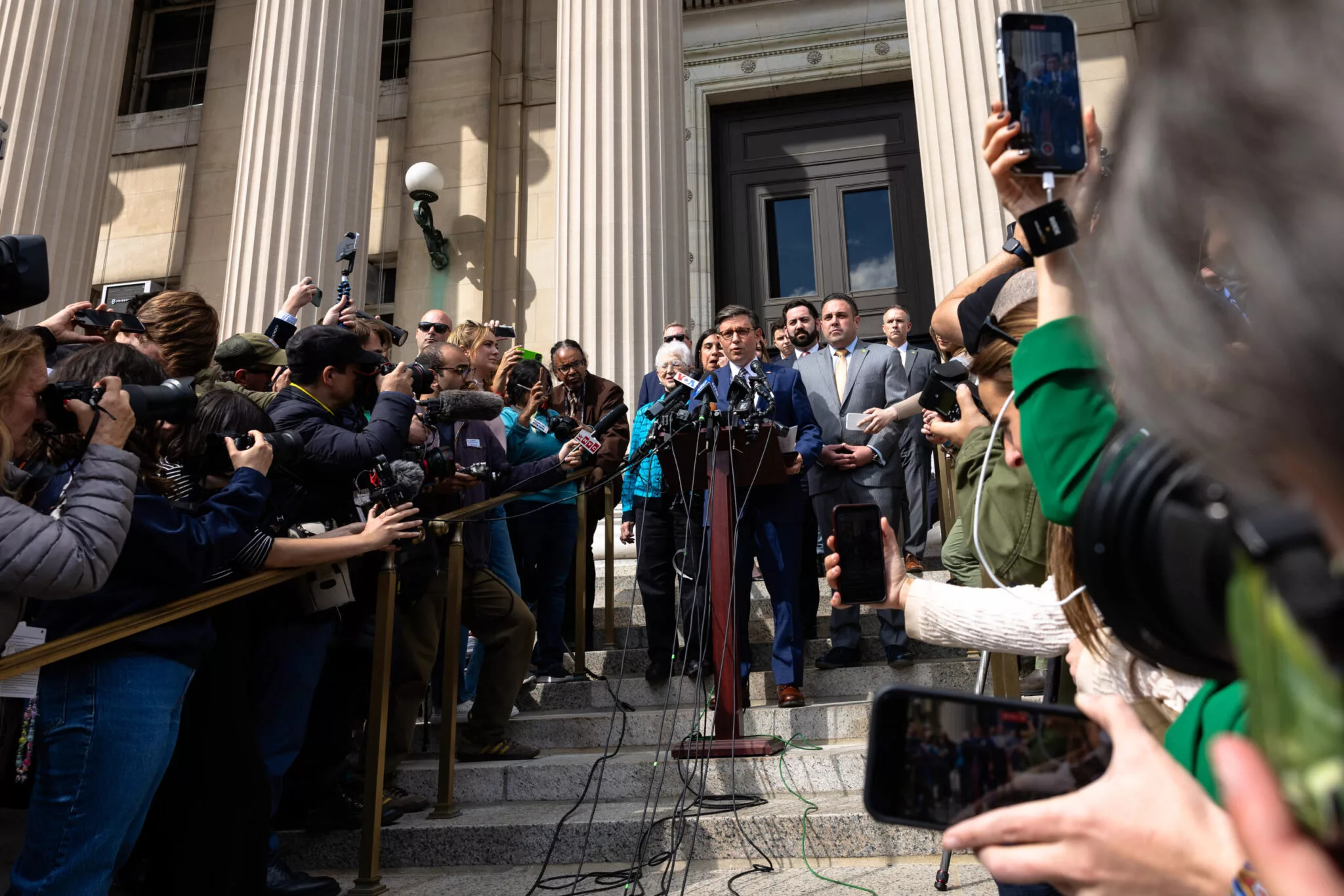
A quiet legal war has erupted between Republicans and Democrats over the deportation of international students. House Democrats condemned Khalil’s deportation as a blatant assault on free speech. Senate Judiciary Democrats called it a “clear act of dictatorship” on X.
Judicial responses have largely reflected political affiliations. Judge Victoria Calvert, appointed by President Biden, halted the deportation of 133 students in Atlanta and ordered their visas restored. Judge Naomi Reice Buchwald, a Clinton appointee, stopped the deportation of Columbia student Yoonseo Chang, a green card holder, pending a final ruling.
Conversely, Judge Jamie Cummins of the Justice Department deemed Mahmoud Khalil a “national security threat,” basing her ruling on Senator Rubio’s accusations.
Conservative federal judges, appointed by Republican presidents, broadly supported Trump’s immigration stance. Supreme Court Justices Samuel Alito and Clarence Thomas opposed an emergency order preventing the deportation of Venezuelan immigrants with criminal convictions, criticizing the court’s “hasty decision-making.”
The current Supreme Court, with a 6-3 conservative majority, recently upheld Trump’s authority to deport undocumented migrants but required judicial review before enforcement.
Other Trump-aligned judges, including Andrew Brasher and Campbell Barker, have called on schools to verify students’ immigration status. Justices Drew Tipton and Amy Coney Barrett (now on the Supreme Court) have also backed Trump-era immigration policies both during and after his first term.
The White Ideal
This aggressive campaign targeting international students reflects a broader reengineering of US immigration policy in line with Trump’s white nationalist and isolationist agenda. The focus on Arab, Muslim, and Latin American students and migrants suggests the effort goes far beyond support for Israel or cleansing “criminal bloodlines.” It marks a deeper effort to redefine American identity around white supremacy.
Although Trump previously claimed to support legal immigration for skilled individuals, recent developments indicate a dramatic policy shift. The administration now appears intent on eliminating foreign competition and insulating the US labor market—an interpretation of its “America First” doctrine.
In a notable March statement, Marco Rubio described international students as a “disruptive influence” and dismissed student visas as a “privilege” that does not extend to political activism, which the administration seemingly reserves for American-born citizens.
Even more alarming, the Trump administration has turned its sights on American citizens themselves—those it sees as “troublemakers.” Though official rhetoric still focuses on those with criminal records, there are signs of a loyalty-based purge targeting liberals and dissidents, particularly those opposing Trump’s Middle East policies.
This suggests a chilling question: Is Trump building an ideal white MAGA-dominated nation, marginalizing liberals and stripping them of constitutional rights and the immigrant communities that support them?
Universities are increasingly portrayed as hotbeds of opposition and ideological enemies. The crackdown on academic institutions and student activism appears to be part of a calculated effort to eradicate liberal thought’s intellectual roots in American society—roots that burst into public view in spring 2024 during massive protests against the war in Gaza.
Resurrecting the Post-9/11 Playbook
Trump is repurposing old anti-terror laws—originally enacted to combat threats to national security—to justify the deportation of even green card holders. This recalls the Bush-era “war on terror” following the September 11 attacks.
Then, emergency powers enabled sweeping ICE raids on immigrant communities, with thousands deported despite scant evidence of terrorist ties. An ACLU report later confirmed none of those deported were linked to terrorism.
Today, Trump is again weaponizing laws such as the Alien Enemies Act and national security provisions to expel students and residents, undermining due process and sidelining judicial oversight in favor of executive fiat.
This echoes a troubling security mentality that casts immigrants and people of color as default “suspects” rather than citizens or contributors to society.
As in the post-9/11 period, the current campaign is creating a climate of fear aimed at silencing dissent—this time, with the backing of Zionist organizations hostile to Islam. There is mounting evidence of direct cooperation between the Trump administration and these groups, including efforts to compile student watchlists.
Many students facing deportation have appeared on lists maintained by Zionist American organizations like Canary Mission, which has long targeted pro-Palestinian activists, or the Betar movement, with a history of violent operations in Palestine. These groups have also harassed activists in the US and Europe.
Although Trump’s campaign routinely violates legal and procedural norms—leaving open the possibility of legal recourse—many students avoid public attention out of fear of threats or immediate deportation, as has already occurred in several cases without opportunity for appeal or due process.