




NoonPost NoonPost

NoonPost

  • Home
  • Politics
  • Economy
  • Society
  • Culture
  • Files
  • Long Reads
  • Podcast
AR
Notification Show More
نون بوست
“There Are Nights I Can’t Close My Eyes”: How Gazans Are Living in Homes on the Brink of Collapse
نون بوست
From al-Jolani to Ahmad al-Shara: The Evolution of Syria’s New Leader
نون بوست
When Political Islam Receded in Egypt: Who Filled the Void?
نون بوست
An Extension of Genocide: Gaza’s Detainees Speak Out
نون بوست
A Tightrope Between Survival and Sovereignty: The Syrian Government Faces Normalization Pressures
نون بوست
American Aircraft Carriers: Has the Era of “100,000 Tons of Diplomacy” Ended?
نون بوست
U.S. Regime‑Change Policies: Why They Are Destined to Fail
نون بوست
Transformations of Israeli Judaism: Between the Victim Complex and the Colonizer’s Doctrine
نون بوست
The Gulf’s Balancing Act: Iran, Israel, and Hidden Links
نون بوست
Iraq–Turkey Oil Export Treaty: Why Did Ankara Cancel It After 52 Years?
نون بوست
Syria’s Northeast on Edge: QSD Between Ankara and Damascus
نون بوست
Has Europe Changed Its Stance on Israel… or Just Its Language?
NoonPost NoonPost
AR
Notification Show More
نون بوست
“There Are Nights I Can’t Close My Eyes”: How Gazans Are Living in Homes on the Brink of Collapse
نون بوست
From al-Jolani to Ahmad al-Shara: The Evolution of Syria’s New Leader
نون بوست
When Political Islam Receded in Egypt: Who Filled the Void?
نون بوست
An Extension of Genocide: Gaza’s Detainees Speak Out
نون بوست
A Tightrope Between Survival and Sovereignty: The Syrian Government Faces Normalization Pressures
نون بوست
American Aircraft Carriers: Has the Era of “100,000 Tons of Diplomacy” Ended?
نون بوست
U.S. Regime‑Change Policies: Why They Are Destined to Fail
نون بوست
Transformations of Israeli Judaism: Between the Victim Complex and the Colonizer’s Doctrine
نون بوست
The Gulf’s Balancing Act: Iran, Israel, and Hidden Links
نون بوست
Iraq–Turkey Oil Export Treaty: Why Did Ankara Cancel It After 52 Years?
نون بوست
Syria’s Northeast on Edge: QSD Between Ankara and Damascus
نون بوست
Has Europe Changed Its Stance on Israel… or Just Its Language?
Follow US

Why Is Iran Directing Its Strikes Toward the Gulf Rather Than the Caucasus and Central Asia?

فريق التحرير
Noon Post Published 26 March ,2026
Share
نون بوست
نون بوست

With the outbreak of the U.S.–Israeli war on Iran, Tehran began launching retaliatory strikes targeting American interests and military deployments across the Gulf. Regional anxiety quickly escalated, and questions multiplied over the logic, scope, and limits of Iran’s targeting strategy.

The debate intensified as some observers pointed to the presence of U.S. forces in Central Asia and the South Caucasus. For many, it appeared that Tehran was deliberately shifting the cost of war onto Gulf states, striking economically and strategically sensitive nodes in order to pressure Washington.

First: America’s Operational Center of Gravity in the Gulf

The geography of the Arabian Gulf represents the primary operational and military center of gravity for the United States in the region. Gulf Cooperation Council states host the core infrastructure of U.S. Central Command (CENTCOM).

Under the pretext of targeting “launch platforms and command centers,” Tehran has expanded the scope of its strikes toward the Gulf, where the most consequential and heavy American military assets are stationed.

Between 40,000 and 50,000 U.S. troops are deployed across the Middle East in roughly 19 sites and military bases.

The largest concentration of these forces, however, remains in the Gulf states, which host the bulk of American personnel and equipment, as illustrated in the accompanying infographic.

Second: The Energy Weapon and Global Economic Pressure

Iran is wagering on triggering a global economic shock by targeting energy infrastructure and threatening maritime navigation an approach aimed at rattling markets and compelling the international community to push for a ceasefire.

Gulf states serve as a lifeline of the global economy, as the world’s principal suppliers of energy resources. By targeting oil and gas infrastructure and attempting to disrupt navigation in the Strait of Hormuz, Iran is exerting maximum economic pressure by threatening the arteries of global energy and trade.

The immediate fallout underscored the rationale behind this Iranian approach. As soon as the attacks began, global energy markets were gripped by panic. Crude oil prices surged by more than 10 percent, with Brent crude jumping above $82 per barrel, while U.S. crude climbed to record levels.

Even more alarming was the meteoric rise in European natural gas futures, which soared by over 40 percent following an announcement by QatarEnergy suspending liquefied natural gas production as a precautionary measure due to security threats and damage to facilities.

Closing the Strait of Hormuz through which roughly 20 percent of global oil consumption passes and striking critical refining facilities, including the vicinity of the Ras Tanura refinery in Saudi Arabia, sends a clear message: the continuation of war could mean global economic upheaval and a surge in inflation.

Third: Shattering the “Safe Haven” Myth

Iran’s targeting of Gulf states also carries a political and psychological dimension: undermining the image of stability by striking civilian and economic landmarks to amplify fear and erode confidence.

In the years preceding the 2026 war, countries such as the United Arab Emirates, Bahrain, and Qatar invested heavily in branding themselves as financial capitals, secure tourist destinations, and global connectivity hubs.

Yet with the eruption of hostilities, explosions and fires were reported near the iconic Burj Al Arab and the Fairmont The Palm in Dubai. Plumes of smoke rose near the Burj Khalifa and the vital Jebel Ali Port, in addition to strikes targeting international airports in Doha, Kuwait, and Abu Dhabi.

The accompanying infographic highlights the most significant economic sites targeted by Iran across five Gulf states.

By targeting these locations, Tehran seeks to dismantle the psychological and economic image painstakingly constructed over years. Iranian drones and missiles have been deliberately directed at prominent tourist and civilian landmarks to maximize psychological impact and disrupt the perception of security and stability.

Why Avoid the South Caucasus and Central Asia?

1. The Absence of U.S. Bases

The American military presence in the South Caucasus and Central Asia has become largely marginal since the U.S. withdrawal from Afghanistan in 2021 and the subsequent restructuring of forces in the region.

Since then, facilities in Uzbekistan and Kyrgyzstan have been reduced to modest logistical hubs or centers for intelligence gathering and limited security training, amid a strong Russian military footprint and expanding Chinese economic influence.

This Asian geography does not provide the United States with a strategic offensive capability that poses a direct existential threat to Iran requiring large-scale preemptive or retaliatory action.

As such, launching long-range strikes against marginal targets there would not generate the same deterrent return for Tehran as operations in the Gulf, where the immediate impact on energy flows and markets is far greater.

A report by the Center for European Policy Analysis (CEPA) notes that U.S. ambitions in the South Caucasus “do not include a military presence” but are instead focused on economic projects, while Russia remains wary of their commercial implications.

2. Geographic Constraints and Political Calculations

Most Iranian missiles have a maximum range of around 2,000 kilometers. While this theoretically places capitals such as Baku and Tbilisi within reach, the operational conditions are more complex than the shorter-range trajectories toward the Gulf. Missiles would likely need to traverse airspace over Russia, Turkey, or Armenia, raising the risk of interception or the opening of a new front against Tehran.

Moscow regards the South Caucasus and Central Asia as integral to its sphere of influence and strategic depth. In 2023, former Russian Defense Minister Sergei Shoigu warned that Washington was attempting to “restore its military presence in Central Asia” under the guise of counterterrorism and pledged to enhance the readiness of Russian bases in Kyrgyzstan and Tajikistan to counter such efforts.

This underscores Moscow’s sensitivity to any American military activity in the region and suggests that Iranian strikes affecting Russian bases or Caucasus transport corridors could drag Tehran into confrontation with Russia or Turkey.

According to assessments by Russian strategic research centers, Moscow maintains approximately 5,000 troops in Armenia and controls its airspace, making any targeting of such sites a direct challenge to Russia. China, for its part, views Central Asia as the beating heart of its Belt and Road Initiative and a continental economic corridor vital to Beijing’s strategy.

Economically, Iran depends almost entirely on exporting its sanctioned oil to China which purchases roughly 80 percent of Iranian oil exports as a lifeline to circumvent Western sanctions. Expanding the war into Central Asia would therefore directly endanger Chinese commercial and investment interests.

3. Limited “Return” Compared to the Gulf

The American footprint in Central Asia and the Caucasus is primarily economic rather than military, centered on transportation and energy projects such as trans-Turkey gas corridors and Central Asia–Caucasus connectivity routes.

CEPA notes that Washington is developing nuclear and technological cooperation projects with Armenia and Azerbaijan without plans to deploy forces.

Given that the region is not a central hub of global oil trade, striking it would not produce the same global reverberations as targeting the Strait of Hormuz or Dubai International Airport.

For that reason, Iranian decision-makers appear to favor targets capable of shocking markets and raising the cost of U.S. support much as they did when Saudi oil facilities were hit in 2019.

Download this article as PDF
Share this Article
Facebook Twitter Whatsapp Whatsapp Telegram Email Copy Link
فريق التحرير
By فريق التحرير تقارير يعدها فريق تحرير نون بوست.
Follow:
Previous Article نون بوست Hormuz Strait Offline: The Scale of Disruption and the Cost of Alternative Routes
Next Article نون بوست A Multi-Front Battle: How Iran’s Proxies Are Managing the War

Read More

  • U.S. Regime‑Change Policies: Why They Are Destined to Fail U.S. Regime‑Change Policies: Why They Are Destined to Fail
  • The Gulf’s Balancing Act: Iran, Israel, and Hidden Links
  • Iraq–Turkey Oil Export Treaty: Why Did Ankara Cancel It After 52 Years?
  • Syria’s Northeast on Edge: QSD Between Ankara and Damascus
  • Has Europe Changed Its Stance on Israel… or Just Its Language?
part of the design
NoonPost Weekly Newsletter

You May Also Like

U.S. Regime‑Change Policies: Why They Are Destined to Fail

U.S. Regime‑Change Policies: Why They Are Destined to Fail

إسراء سيد Esraa sayed 8 April ,2026
The Gulf’s Balancing Act: Iran, Israel, and Hidden Links

The Gulf’s Balancing Act: Iran, Israel, and Hidden Links

فريق التحرير Noon Post 8 April ,2026
Iraq–Turkey Oil Export Treaty: Why Did Ankara Cancel It After 52 Years?

Iraq–Turkey Oil Export Treaty: Why Did Ankara Cancel It After 52 Years?

فريق التحرير Noon Post 8 April ,2026

الروهينجا المهاجرون: بين تجاهل ماليزيا وأهوال بحر أندامان

نيويورك تايمز
نيويورك تايمز Published 17 May ,2015
Share
Screenshot 2015-05-17 12

كتب توماس فيولر وجو كوتشرين:

ترجمة وتحرير نون بوست

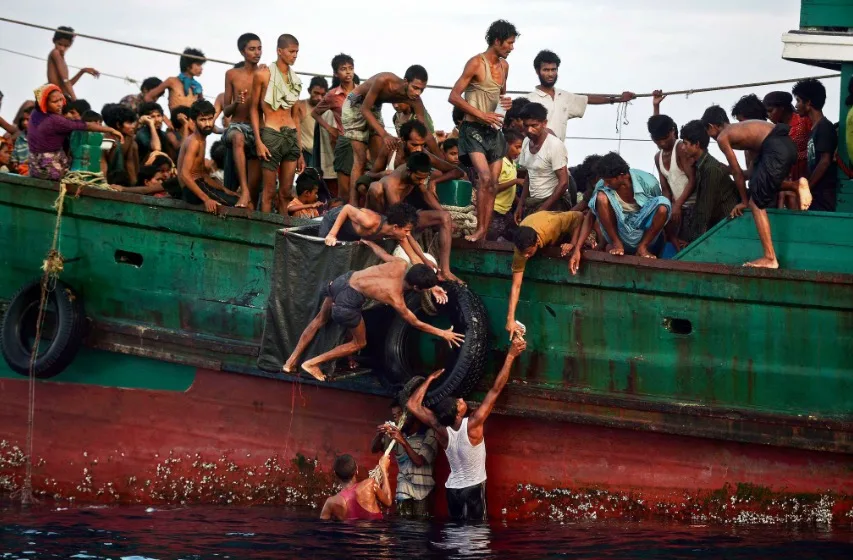
في بحر أندامان قبالة السواحل التايلاندية، شوهد يوم الخميس الماضي زورق صيد خشبي يحمل مئات المهاجرين اليائسين من ميانمار، يسير على غير هدى في المياه ما بين تايلاند وماليزيا، في إطار النزوح الجماعي الذي دفع الآلاف من الأشخاص إلى البحر في الأسابيع الأخيرة مع عدم وجود أي دولة على استعداد لاستقبالهم.

صرخات “الرجاء ساعدونا .. ليس لدينا ماء” ارتفعت من القارب بمجرد اقتراب سفينة تحمل الصحفيين إلى جانبه، وكانت أصوات الاستجداءات التي تقول “من فضلك أعطني ماء” من أكثر الصرخات المسموعة من على ظهر السفينة.

ركاب قارب الصيد الأخضر والأحمر، المتخم بالرجال والنساء والأطفال الذي يجلسون القرفصاء على سطحه، ولا يغطيهم سوى قطع بلاستيكية موضوعة فوق رؤوسهم لحمايتهم من أشعة الشمس، تم رفضهم وإبعادهم يوم الأربعاء الماضي من قِبل السلطات الماليزية، وأشار الركاب أنهم يعيشون على متن القارب منذ ثلاثة أشهر، وأن قبطان السفينة وطاقمها تخلى عنهم قبل ستة أيام، كما توفي حوالي عشرة ركاب أثناء الرحلة، وألقي بجثثهم في البحر.

“أنا جائع جدًا”، قال صبي يبلغ من العمر 15 عامًا اسمه محمد سراج، من غرب ميانمار، وتابع “أرجوكم، ساعدونا بسرعة”.

لم يكن من الواضح مدى المساعدة التي سيحصل عليها ركاب القارب، حين تم تنبيه الجيش التايلاندي إلى وجودهم من قِبل صحيفة نيويورك تايمز، وتبين فيما بعد أن تايلاند قدمت بعض الماء والطعام لهم يوم الخميس، ثم ساعدت القارب على الابتعاد إلى عمق البحر في وقت مبكر من يوم الجمعة، وفقًا لحاكم محافظة ساتون ديتشارت سيمسيري.

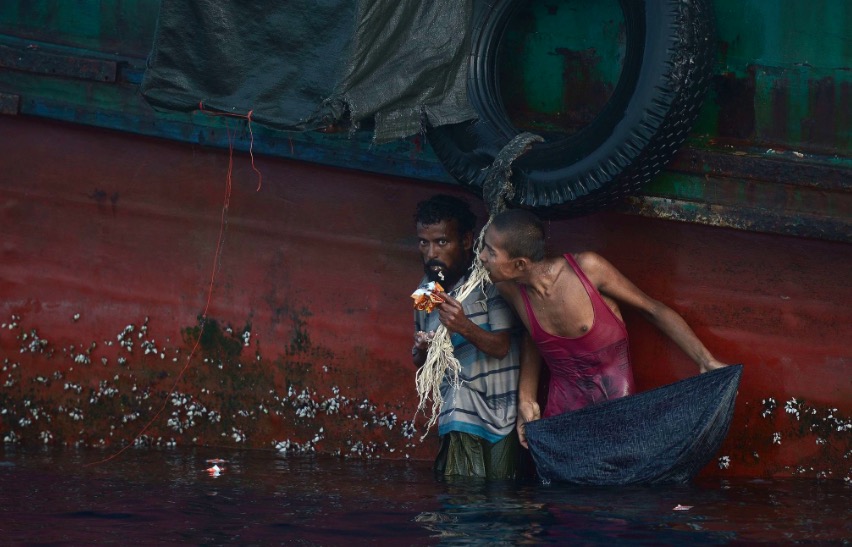
محنة القارب تبرز كمثال ساطع عن أزمة الهجرة التي تعصف بالمنطقة، حيث تقدر الأعداد ما بين 6000 إلى 20.000 مهاجر يعيشون في البحر هربًا من الاضطهاد العرقي في ميانمار والفقر في بنغلاديش، وفي خضم هذه الأزمة تتبادل البلدان الاتهامات ما بين بعضها البعض، وترفض تحمل المسؤولية عن هؤلاء المهاجرين.
نون بوست

يُعتقد أن معظم هؤلاء المهاجرين كانوا متوجهين إلى ماليزيا، ولكن بعد وصول أكثر من 1500 مهاجر إلى الشواطئ الماليزية والإندونيسية في الأسبوع الماضي، أعلن كلا البلدين عن عزمهما بإبعاد أي قوارب أخرى تحمل مهاجرين.

كما لم يقم المسؤولون التايلانديون بصياغة أي سياسة رسمية لمعالجة أزمة المهاجرين منذ بدايتها، سوى عقد مؤتمر إقليمي لمناقشة المشكلة هذا الشهر، وأشار قائد السفينة البحرية التي اجتمعت بقارب المهاجرين قبالة السواحل التايلاندية يوم الخميس، الملازم فيرابونج ناكبراسيت، أن القارب دخل إلى المياه الإقليمية التايلدنية بطريقة غير مشروعة.

ويوم الثلاثاء الماضي قامت البحرية الإندونيسية بإبعاد قارب يحمل آلاف الركاب وحثتهم على الاتجاه نحو ماليزيا، في حين قامت السلطات الماليزية بإبعاد قاربين يحملان ما مجموعه 800 راكب على الأقل يوم الأربعاء.

وقال جو لوري المتحدث باسم المنظمة الدولية للهجرة في بانكوك “ما يجري الآن هو لعبة بينغ بونغ، إنها لعبة تراشق بحياة البشر، ولكن ما هي نهاية هذه اللعبة؟ أنا لا أريد أن أكون دراميًا أكثر من اللازم، ولكن إذا لم يتم التعامل مع هؤلاء الأشخاص واستقبالهم في أحد الشواطئ في وقت قريب، فنحن سنحصل على قارب مليء بالجثث”.

كما صرّح جيفري سافاج، وهو ضابط حماية كبير يعمل في مكتب المفوضية السامية للأمم المتحدة لشؤون اللاجئين “لقد طلب مكتب المفوضية السامية للأمم المتحدة لشؤون اللاجئين من حكومات المنطقة القيام بعمليات البحث والإنقاذ ولكن دون جدوى”، وأضاف “إنها كارثة إنسانية محتملة، فالعديد من المهاجرين يتم التخلي عنهم من قِبل المهربين، ويتم تركهم مع قليل من الطعام أو الماء”.

وقال كبير المتحدثين باسم الجيش الأندونيسي، اللواء فؤاد بايسا يوم الخميس “إن الجيش سوف يبعد أي قارب سيدخل إلى المياه الإندونيسية من دون إذن، بما في ذلك لاجئي القوارب مثل الروهينجا”، وبعد إبعاد ماليزيا لقارب يضم حوالي 500 شخص قبالة جزيرة بينانج يوم الأربعاء، قال نائب وزير الداخلية وان جنيدي لوكالة الأسوشيتد برس “ماذا تتوقعون منا أن نفعل؟ لقد كنا لطفاء للغاية مع الأشخاص الذين اقتحموا حدودنا، وعاملناهم بإنسانية، لكن لا يمكنهم أن يتخموا شواطئنا بهذا الشكل، علينا أن نرسل رسالة واضحة إنهم ليسوا موضع ترحيب هنا”.

فر عشرات الآلاف من الروهينجا – وهي مجموعة عرقية مسلمة بلا جنسية –  من ميانمار على مدى السنوات القليلة الماضية هربًا من الاضطهادات العرقية، وأغلب الفارين اتجهوا نحو ماليزيا أو بنغلادش، لكن النزوح الجماعي الذي حصل على مدى الأسابيع القليلة الماضية، يبدو أنه قد فاجأ الجميع.

تشير كريس ليوا منسقة مشروع أراكان – وهي جماعة لحقوق الانسان تراقب تحولات الهجرة في بحر أندامان – إلى عدم وجود سبب معين لارتفاع حالات الهجرة من ميانمار وبنغلاديش بالنسبة للسكان العاديين، أما بالنسبة للروهينجا، فإن ازدياد الهجرة ناجم عن تراكم النكسات والخسائر، كما توضح ليوا، بما في ذلك تشديد تصاريح الصيد، مما أضرّ بالجماعة ماليًا وغذائيًا، وإصرار الحكومة أن مليون شخص من سكان الروهينجا ليسوا مواطنين ولا يتمتعون بحقوق المواطنة، وأضافت “إنها مجموعة من العوامل، فحياتهم تتحول من السيء إلى الأسوأ”.
نون بوست

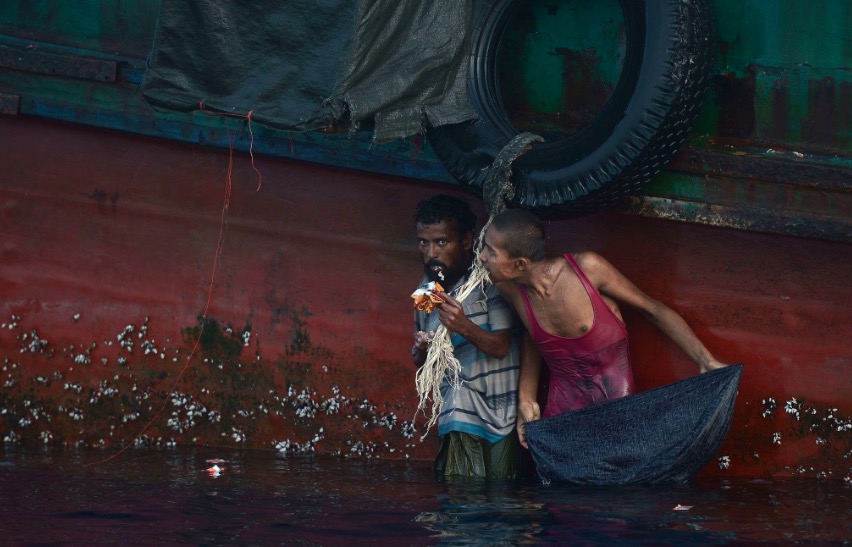
وجود الكثير من المهاجرين حاليًا ضمن البحر في وقت واحد، قد يكون نتيجة غير مقصودة لحملة القمع التايلاندية على تهريب البشر، وذلك بعد اكتشاف مقبرة جماعية هذا الشهر يُعتقد أنها تحتوي على جثث 33 مهاجرًا من بورما وبنغلاديش، حيث داهم مسؤولون عدة مخيمات التهريب في جنوب تايلاند، وتم اتهام العشرات من ضباط الشرطة وعدد من كبار المسؤولين بالتواطؤ في هذه التجارة.

هذه المخيمات كانت عبارة عن محطات طريق، حيث غالبًا ما يتم احتجاز المهاجرين في ظروف شبيهة بالسجن، حتى يتمكنوا من دفع المبالغ المالية المحددة للمهربين لتهريبهم نحو ماليزيا، ورغم سوء الأحوال في هذه المخيمات، إلا أنه من دونها، سيبقى المهاجرون في البحر كما حصل الآن، حيث يخشى المهربون أن يحضروا إلى تايلاند.

“لقد انقطعت أعمال المهربين من خلال الحملة التايلاندية الأخيرة”، قال لوري، وأضاف “المهربون سيعودون إلى تايلاند في النهاية، لأن الإتجار بتهريب البشر تجارة مربحة للغاية، لكنهم ينتظرون الآن”.

وقالت ليوا “يدفع المهاجرون عمومًا حوالي 1800 دولار لكل فرد لتهريبهم إلى ماليزيا، جنبًا إلى جنب مع وعدهم بالحصول على عمل عند وصولهم”، ولكن كثيرًا من هؤلاء المهاجرين يتم استغلالهم على طول طريق التهريب لزيادة مدفوعاتهم، وكثيرون منهم أيضًا لا يصلوا إلى ماليزيا، البلد المسلم الذي سمح – ضمنيًا – حتى وقت قريب بالهجرة المستترة للمسلمين من ميانمار وبنغلاديش.

المقابلات التي أجريناها يوم الأحد مع الركاب على متن القارب الذي جرفته المياه إلى الطرف الشمالي من جزيرة سومطرة التابعة لإندونيسيا، قدمت لنا لمحة عن الظروف القاسية التي يواجهها هؤلاء الأشخاص في البحر، واليأس التي دفع بهم للتجرؤ والخوض بغمار هذه الرحلة المحفوفة بالمخاطر.

يشير الركاب أنهم اضطروا للانتظار على متن القارب لمدة شهور قبل أن يبحر، لأن المهربين كانوا ينتظرون حتى تعبئة القارب بكامل قدرته بالركاب “الزبائن”، والكثير منهم اضطر للجلوس في وضعة القرفصاء بمسافة لا تزيد عن شبر واحد من الشخص الذي بجانبهم، وكل يوم كان يتم إطعامهم حفنة من الأرز والمعكرونة وكمية قليلة من الماء، ومرحاضهم كان عبارة عن حفرة في أرضية القارب مفتوحة مباشرة على المحيط.

الركاب كانوا يصلّون أو يتحدثون همسًا، ويكسر هدوء هذه التمتمات، الأصوات العرضية القادمة من الركاب الآخرين الذين يتقيؤن نتيجة لدوار البحر، “لم يكن هناك غناء، بل بكاء فقط”، قال محمد كاشيم من بنغلاديش وهو رجل يبلغ 44 عامًا.

وبعد رحلة بحرية استمرت سبعة أيام، توقف ربان القارب التايلاندي فجأة في عرض البحر، وفي اليوم التالي، وصل مسلحون على متن قارب سريع، وصعدوا لسرقة أشياء المهاجرين الثمينة، وهرب القبطان والطاقم معهم، وتركوا السفينة في عرض البحر.

يشير محمد هاشم 25 عامًا وهو روهينجا من ولاية راخين، أن مخاطر السفر في سفينة خشبية متهالكة مع القليل من الطعام أو الماء، أقل خطرًا من تلك التي تواجه من تبقى في ميانمار، وأضاف “نحن كنا ندرك أننا مقدمون على خطر لا محالة، ولكن لم يكن لدينا أي وسيلة أخرى، فنحن كنا نعيش في بلد أشد خطورة من البحر”.

ولكن ركاب هذا القارب كانوا محظوظين، فبعد يوم من هذه الحادثة، رسى بهم القارب على الأراضي الإندونيسية، التي تتبع سياسة عدم إعادة السفن بعد أن تصل إلى اليابسة، وبذلك فإن ركاب القارب الـ 584، بما في ذلك 59 طفلًا و86 إمرأةً، ستتاح لهم الفرصة لطلب اللجوء من وكالة اللاجئين التابعة للأمم المتحدة، وهي عملية من المتوقع أن تستغرق شهورًا، وفي الوقت الحالي، يقيم هؤلاء في مجمع حكومي في إقليم آتشيه، حيث ينامون على أرضيات خرسانية، ولكن لديهم بطانيات ومواد غذائية ومياه.

يوضح سافاج من الأمم المتحدة أن الروهينجا عديمي الجنسية سيكون لديهم حظوظ كبيرة في قبولهم كلاجئين، ولكن القادمين من بنغلادش البالغ عددهم 208 شخص ضمن هذه المجموعة، من المحتمل أن يعتبروا مهاجرين لأسباب اقتصادية، مما لا يعطيهم الحق في العمل في إندونيسيا، وسوف يكون لديهم الخيار في نهاية المطاف بالعودة إلى ديارهم.

ولكن بالنسبة لمحمد جهانكير حسين، وهو بنغلاديشي يبلغ من العمر 32 عامًا، العودة إلى الوطن ليست خيار، فوالده باع المنزل والأراضي الزراعية لتجميع مبلغ 3250 دولارًا ليدفعها ثمنًا للرحلة والعمل الذي وُعد به في ماليزيا، حيث يقول “إذا منعتنا الحكومة الإندونيسية من العمل، فجميع الرجال هنا سيقولون دعونا نعمل في بلد آخر، لن نعود إلى الوطن لأنه لم يعد لنا شيء هناك”.

وردًا على سؤالنا حول مستقبله، لوّح بذراعيه باتجاه تجمع للمهاجرين من حوله، وأشار إلى البناء الذي يقطن فيه وقال “هذا هو مستقبلي”.

المصدر: نيويورك تايمز
TAGGED: الروهينغيا ، مسلمو الروهينغيا ، مهاجرو الروهينغا
TAGGED: مسلمو ميانمار
Download this article as PDF
Share this Article
Facebook Twitter Whatsapp Whatsapp Telegram Email Copy Link
نيويورك تايمز
By نيويورك تايمز إدارة التحرير في صحيفة نيويورك تايمز الأمريكية
Follow:
Next Article نون بوست The Stigma of “ISIS”: A Heavy Legacy Haunting Women and Children of Former Members

Read More

  • U.S. Regime‑Change Policies: Why They Are Destined to Fail U.S. Regime‑Change Policies: Why They Are Destined to Fail
  • The Gulf’s Balancing Act: Iran, Israel, and Hidden Links
  • Iraq–Turkey Oil Export Treaty: Why Did Ankara Cancel It After 52 Years?
  • Syria’s Northeast on Edge: QSD Between Ankara and Damascus
  • Has Europe Changed Its Stance on Israel… or Just Its Language?
part of the design
NoonPost Weekly Newsletter
dark

An independent media platform founded in 2013, rooted in slow journalism, producing in-depth reports, analysis, and multimedia content to offer deeper perspectives on the news, led by a diverse young team from several Arab countries.

  • Politics
  • Society
  • Rights & Liberties
  • Opinions
  • History
  • Sports
  • Education
  • Technology
  • Economy
  • Media
  • Arts & Literature
  • Entrepreneurship
  • Travel
  • Cinema & Drama
  • Food
  • Health
  • Culture
  • Latest Reports
  • Files
  • Long Reads
  • Interviews
  • Podcast
  • Interactive
  • Encyclopedia
  • In Pictures
  • About Us
  • Our Writers
  • Write for Us
  • Editorial Policy
  • Advanced Search
Some rights reserved under a Creative Commons license

Removed from favorites

Undo
Go to mobile version