










On June 10, 2025—just days before the U.S. announced an operation it dubbed “Midnight Hammer” targeting Iranian nuclear facilities—the American broadcaster Tucker Carlson hosted Republican Senator Ted Cruz, representing the interventionist “hawk” wing advocating military action against Iran. Yet Cruz revealed a startling ignorance of even the basic facts about the country whose regime he seeks to topple.
During the interview, which showcased America’s internal rift over Iran policy, Cruz found himself in an embarrassing predicament when asked about Iran’s ethnic composition and population size—a nation whose nuclear ambitions Washington aims to dismantle, and against which Israel is waging war. He admitted he didn’t know the population figure and wasn’t interested in memorizing census tables.
Cruz isn’t an outlier. Throughout history, the United States has pursued regime change without sufficient understanding of target states, making “regime change” a shorthand in American national-security circles. More often than not, these interventions fail—and those that initially appear successful frequently produce devastating unintended consequences.
False American Promises
Since the end of the Cold War, almost every U.S. administration has pursued a foreign-policy agenda advertised as democracy promotion. While most stopped short of explicitly urging force, many have shown readiness—through military intervention or military threat—to topple regimes and install new leadership from Central America to Africa, the Middle East, and Asia.
In the Middle East, the U.S. has sought regime change roughly once per decade since WWII, driven by self‑interest. Justifications have varied: securing economic partnerships, benefiting U.S. corporations, countering geopolitical rivals, preventing WMD development, combating terrorism, protecting civilians, and opposing communism—with interventions in Argentina, Bolivia, Brazil, Cuba, the Dominican Republic, and others.
Another justification often advanced is that regime change fosters improved bilateral relations. Yet as political scientists Alexander Downes and Lindsey O’Rourke demonstrate, such externally imposed regime change rarely delivers—that outcome usually stagnates bilateral ties and deepens future conflict.
They cite the 1954 U.S.‑backed Guatemalan coup that installed General Miguel Idigoras Fuentes. His government allowed U.S.-trained Cuban mercenaries to plot against Fidel Castro. That coup sparked a civil war that raged for 30 years—and certainly did not enhance U.S.–Guatemala relations.
The common modern rationale—democracy—was cited by Bush-era officials to justify interventions in Afghanistan and Iraq. But, as history shows, forcibly imposing democracy via military means is deeply ineffective.
Washington’s techniques have ranged widely—covert coups, overt or secret military aid to opposition groups, full-scale invasions and occupations, even diplomacy combined with sanctions and threats. Yet in every instance, these efforts have repeatedly failed to achieve U.S. objectives, resulting in disastrous fallout, steep financial and human costs, destabilized regions, and strategic distractions that benefited China and Russia.
In recent years, consensus has grown that regime change—regardless of rationale—is often ineffective and carries harmful side effects borne by local populations. Research shows these interventions tend to suppress democracy, exacerbate repression, and leave all stakeholders worse off, often devolving into prolonged state‑building efforts.
As U.S. diplomat Philip Gordon—former White House coordinator for Middle East affairs under Obama and NSC advisor to Vice President Harris—has noted, regime change may appear successful in the short term, fueling premature triumphalism. Ultimately, escalating costs lead to abject failure.
Failure, Every Time
Proponents of regime change argue that it’s faster and cheaper than sustained diplomacy and avoids broader military campaigns. But the U.S.’s own record tells a different story: policymakers routinely overestimate threats, underestimate costs and risks, exaggerate successes, and prematurely declare victory once the target regime collapses.
Overall, no U.S. intervention has secured its intended political outcome. There have been six open regime‑change efforts during the Cold War and around 64 covert ones; many triggered civil wars, rights abuses, and regional instability.
Lindsey O’Rourke, in Covert Regime Change, concludes roughly 60% of covert regime change operations failed to meet their objectives. Even “successful” cases rarely remained secret and often triggered unintended backlash.
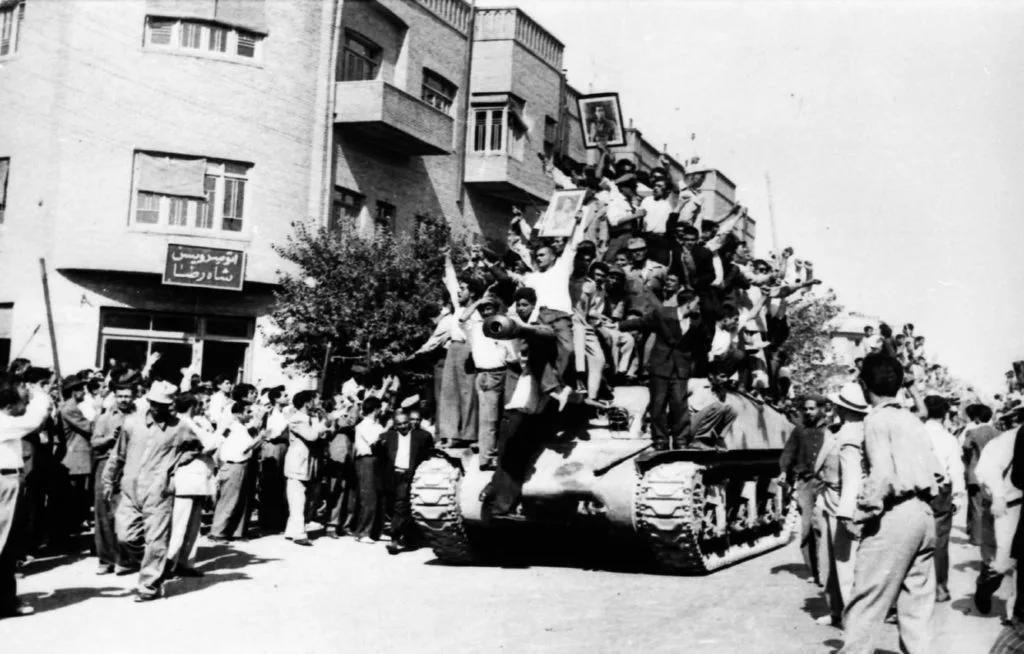
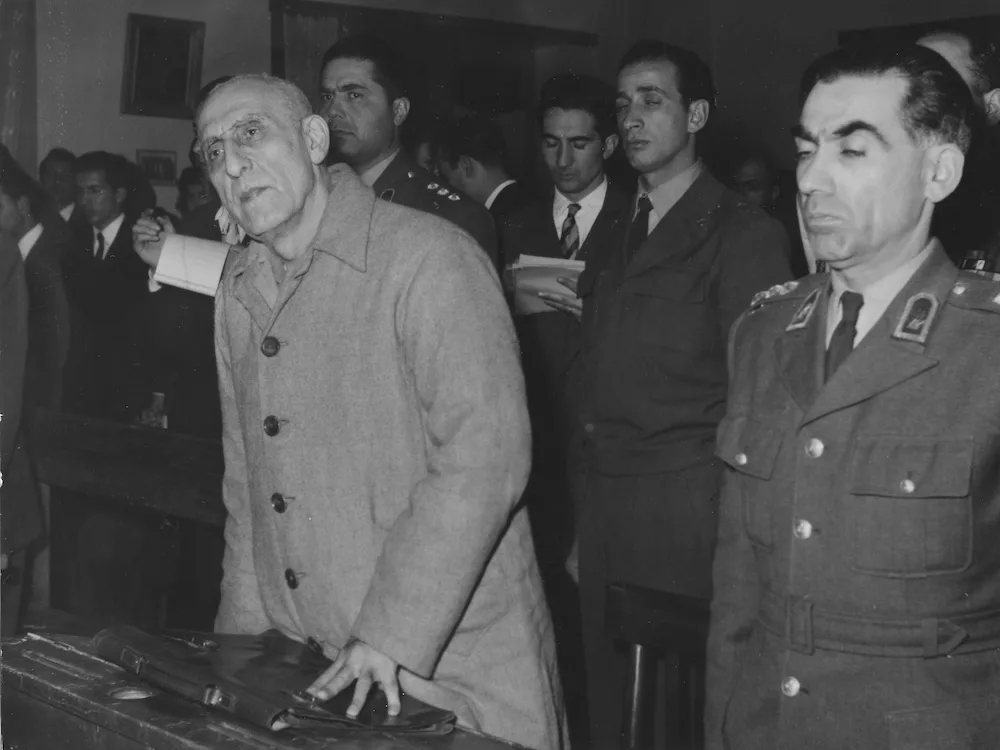
One early example is Iran 1953: the U.S. and Britain engineered a coup to overthrow Prime Minister Mohammad Mosaddegh after he nationalized oil. They reinstated the Shah, whose repressive rule fueled a revolution that installed the clerical regime Washington now aims to dislodge—and laid the groundwork for the very problems later generations would again cite to advocate for regime change.
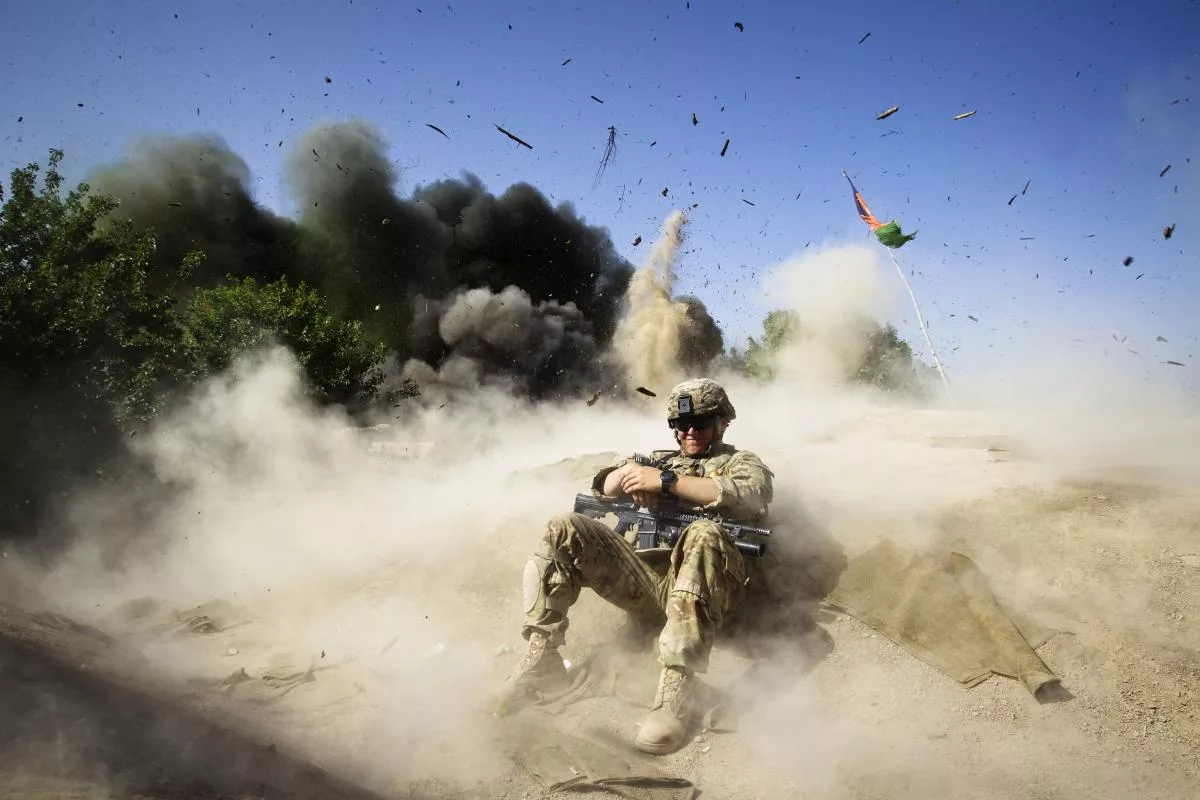
In Afghanistan post‑September 11, 2001, the Bush administration overthrew the Taliban, spent billions, trained local forces, and created institutions. It did dismantle al‑Qaeda’s structure, but 20 years of occupation crippled Afghanistan and depleted U.S. resources.
A long civil war followed, thousands of civilians died, the Taliban re-emerged stronger, global jihadism resurged, and Iran extended its influence in Baghdad.
Ultimately, the U.S. withdrawal drew international ridicule—and the Taliban reclaimed power in 2021—even more organized than before. Libya followed a similar arc after Muammar Gaddafi’s removal in 2011, with no external actor successfully rebuilding the state.
North Korea responded to Libya’s downfall by doubling down on nuclear development, declaring “strong nuclear deterrence is the strongest weapon to thwart any external aggression.”
In Iraq, after the 1991 Gulf War, President George H.W. Bush encouraged Iraqis to revolt against Saddam Hussein, expecting a swift collapse. It never came. Two presidencies later, George W. Bush led a full invasion in 2003—no weapons of mass destruction, a brutal sectarian conflict, mass theft, billions in contracts to U.S. companies, and more than 319,000 deaths.
Obama‑era interventions in Egypt, Libya, and Syria likewise serve as cautionary tales: different tactics, same result—failed transitions, sectarian violence, instability, and geopolitical rivalries.
Given this tragic history, the U.S. repeatedly falls into the same trap: catastrophic failures, staggering costs, unforeseen consequences far exceeding promises—even when no viable alternative existed.
Yet, despite decades of regime‑change failures, policymakers and analysts still routinely call for deposing foreign governments, hoping next time will work—ignoring better, less destructive alternatives.
Why the Failures Repeat
When America believes its interests are at stake, it assumes superior understanding. But critics note that previous interventions ignored social, tribal, religious, and ethnic dynamics; lacked credible post‑removal plans; and failed to account for regional shifts.
Historically, regime‑change outcomes stem not merely from poor execution or oversight—they reflect intrinsic, unavoidable costs, challenges, and unpredictable consequences: armed opposition among factions, disrupted resource distribution, enduring foreign dependency, loss of U.S. credibility, and reinforcement of America as a self-appointed global police force.
Though some regimes fell, the vacuum was often filled by actors more oppressive than their predecessors. As Gordon notes: “Whenever a regime collapses, a political and security vacuum emerges, often filled by actors even more repressive than the ousted regime…sectarian, ethnic, geopolitical and personal rivalries tend to surface that the U.S. cannot control, and a brutal power struggle ensues.”
Iraq’s collapse triggered militia growth and civil strife; Libya fractured into factions, and by June 2014 it had two rival governments, backed by militias and external patrons; a civil war with no clear end.
In Losing the Long Game, Gordon highlights factors behind these failures: imposing political outcomes externally, U.S. forces seen as occupiers not liberators, local actors prioritizing self-interest, regional meddling, and the flawed belief that more U.S. money and troops can fix problems.
As Time magazine’s political correspondent Philip Elliott argues, American interventions fail due to public fatigue—rising costs and diminishing returns exhaust congressional and popular support.
New administrations typically abandon prior initiatives, scapegoating mismanaged predecessors, only to often revisit regime‑change in the same countries later.
Perhaps the most telling example is Donald Trump’s June 2025 call—echoed by Israeli Prime Minister Netanyahu—to topple Iran’s clerical leadership, claiming Tehran has failed to make Iran “great again.” These calls ignore Iran’s 80-year record of U.S. regime‑change attempts.
Rather than targeting every regional government, a more constructive U.S. goal might be confronting apartheid within Israel—an actor whose regional dominance and hardline posture are seen by some as the primary destabilizing force in the Middle East.
The next time U.S. leaders call for regime change anywhere, one can safely assume it will be more costly, less effective, and more catastrophic than its proponents admit—and history offers zero counter‑examples.


