










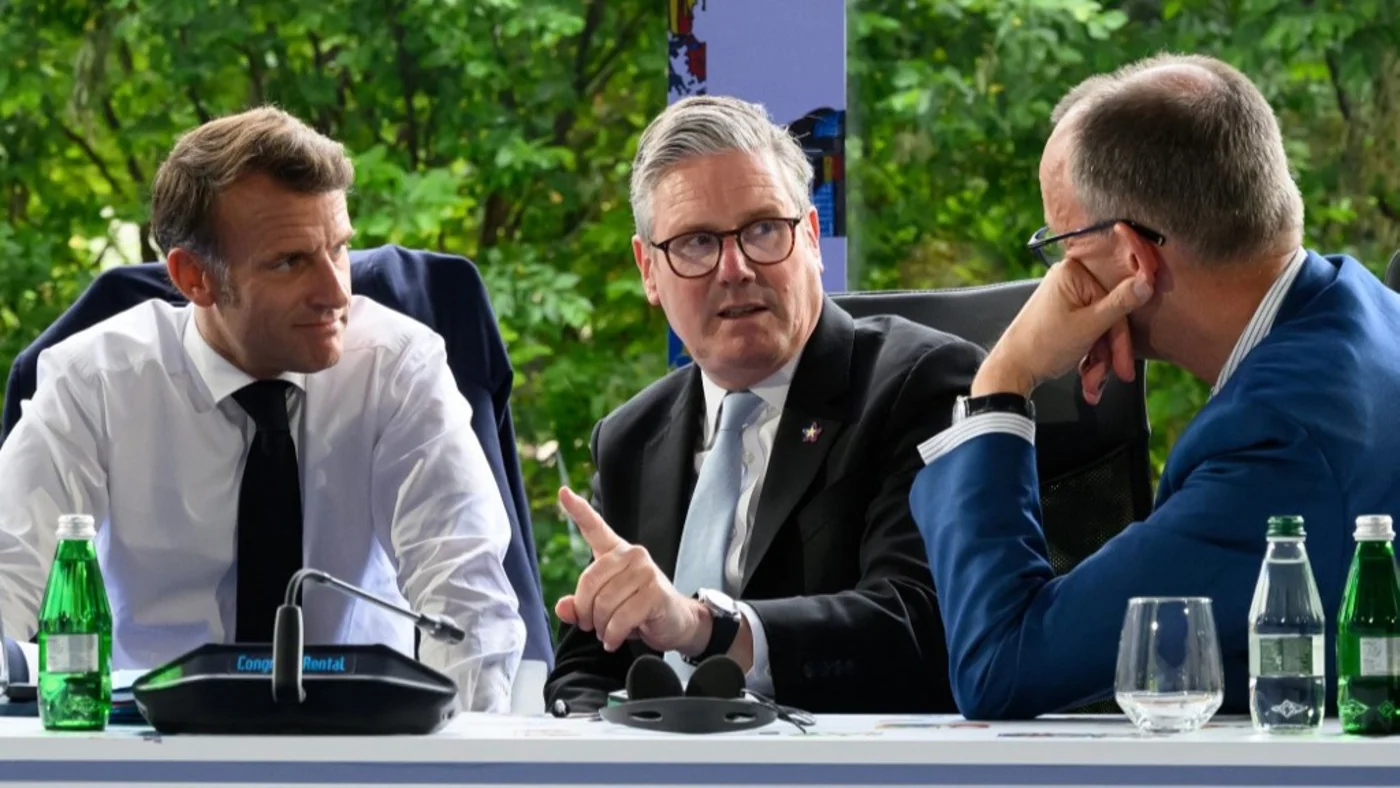
The international political stage is currently witnessing a surge of diplomatic activity, driven by accelerated European moves toward recognizing the State of Palestine. Around 15 European countries—including France, the United Kingdom, Canada, Norway, Portugal, and Spain—have announced their intention to take this step in the near future. Paris, for its part, has issued a collective call urging other European nations to join the initiative.
This flurry of diplomatic activity unfolds even as Gaza endures a full-scale campaign of extermination, ongoing for over 650 days. The Israeli military has seized every opportunity to unleash unrestrained brutality, subjecting the people of Gaza to one of the most appalling racial wars in modern history. The occupying forces have used every banned and brutal weapon in their arsenal—killing, burning, starvation, siege, torture, and forced displacement.
For more than 22 months, the international community has stood by in silence, bearing witness to a live-streamed massacre of an entire population. Beyond hollow statements of condemnation and empty political symposiums, no tangible action has been taken to deter Benjamin Netanyahu’s government from pressing forward with its campaign of annihilation—not even a single step backward.
Then suddenly, as the death toll in Gaza surpassed 60,000 Palestinians—including 18,600 children, 12,400 women, and 4,420 elderly—and over 100,000 wounded, nearly two million displaced, and roughly 90% of the enclave destroyed, with hundreds of thousands facing imminent starvation, international momentum began to shift.
Global public opinion tilted sharply in favor of the Palestinian cause, jolting European governments from their long slumber. A wave of diplomatic recognitions of Palestinian statehood followed.
This new movement, which some view as a political win for the Palestinian cause, has coincided with a noticeable shift in tone from the international community particularly Europe toward Israel’s continuing violations in Gaza. But this prompts important questions: Why now? After nearly two years of atrocities, what is motivating this timing? And will these recognitions have any real-world impact in the short term, or political significance in the long run?
Why Now?
A glaring contradiction underlies the current European drive: a rush to resuscitate the two-state solution as a political and diplomatic milestone for Palestinians, even as genocide continues unchecked in Gaza. Threats of renewed invasions and further land grabs persist.
This paradox reflects a kind of political schizophrenia afflicting both international and Arab actors. Rather than focusing efforts on halting the war and leveraging available pressure tools to end the humanitarian disaster, attention has turned to the diplomatic track of statehood recognition.
What deepens the irony is that Western media’s narrative of a moral awakening or humanitarian surge among European governments is, at best, naive—and at worst, disingenuous. European leaders acted not out of moral clarity but under pressure from several forces:
1. Popular Pressure
Mass protests erupted across European capitals, condemning Israel’s violations. These demonstrations, amplified by large Arab and Muslim diasporas, became a political headache for many governments.
Public sentiment increasingly favored Palestinians, creating a momentum that couldn’t be countered by force or dismissed outright. Accusations of European complicity in genocide intensified, compelling several states to reassess their stances.
2. Political Pressure
The relentless scenes of horror from Gaza placed European governments in a political bind—caught between their professed values and their inaction. The decisions by countries like Ireland, Spain, and Norway to recognize Palestine added pressure on their EU counterparts.
The situation was further complicated when the International Criminal Court issued arrest warrants in November 2024 for Netanyahu and former Defense Minister Yoav Gallant. Ignoring such rulings would undermine the very institutions Europe relies on to counter threats like Russian aggression.
3. European Pragmatism
The recognitions stem largely from pragmatic concerns. The spiraling situation in Gaza and Israel’s unchecked belligerence threaten regional stability and, by extension, European interests in the Middle East—especially those of France and Britain.
Some voices within Israel interpret these recognitions not merely as symbolic gestures, but as political pressure tactics aimed at forcing Israel into a ceasefire and negotiations. With diplomacy failing and the risk of escalation rising, Europe seeks to contain the crisis before it crosses red lines that could endanger its strategic interests.
Europe also views this moment as an opportunity to regain lost influence in the Middle East. By engaging through the Palestinian issue, the continent aims to reassert itself as a regional powerbroker—competing with the United States, which continues to monopolize political and economic influence.
Do These Recognitions Matter?
Back in 2011, under the banner of “Ending the Occupation and Establishing the State,” the Palestine Liberation Organization (PLO) launched a campaign to gain full UN membership, hoping it would shift global power dynamics in favor of Palestinian rights. Since then, roughly 150 countries have recognized Palestine—seemingly a political win.
But what has changed on the ground?
Essentially nothing. The recognitions reaffirm international acknowledgment of Palestinians’ right to self-determination, but they have not translated into tangible legal or political advancements. Symbolic support alone is insufficient. True statehood requires sovereignty, a unified government, a clear political vision, and full political, economic, and military independence—not subjugation under occupation.
Still, such recognitions carry political and symbolic weight. They signal a decline in Israel’s international support and the erosion of its once-solid diplomatic backing. If harnessed properly, this could lead to bolder initiatives at the UN Security Council and increase international accountability for Israeli actions—especially if major powers get involved.
Yet there is no consensus. Some argue the recognitions are mere gestures that change nothing for Palestinians enduring daily horrors. However, even symbolic moves could snowball into meaningful diplomatic pressure, particularly if they lead to sanctions or institutional actions.
But Europe Is Divided
Despite the pledges of 15 countries, a unified European stance remains unlikely. The EU has been deeply fractured since the Gaza war began, failing to reach consensus even on basic statements. Germany, a key EU power, firmly opposes recognition—further complicating the path toward collective action.
For now, these recognitions remain largely symbolic. Unless they are backed by concrete decisions within EU institutions, their potential impact is limited. And gaining consensus in Brussels is a long, complex process.
Is Israel Concerned?
History suggests otherwise. When Sweden recognized Palestine in 2014, the move was hailed as groundbreaking—but it yielded no meaningful shift. Israel faced no isolation, nor did its aggression abate.
Instead, Tel Aviv doubled down on its manipulation of the diplomatic track, leveraging Arab reliance on diplomacy as a substitute for resistance. Backed by unwavering US support, Israel avoided any serious international accountability.
Israel does not see European recognition as a real threat—so long as it remains confined to statements and ceremonies. What truly worries Israel is not the content of the recognitions, but their optics: diplomatic architecture that increasingly resembles a blueprint for meeting Israel’s “security conditions” rather than advancing Palestinian liberation.
The envisioned Palestinian “state,” as presented in these recognitions, would be demilitarized, lacking sovereignty and strategic autonomy—essentially an administrative entity with no bite, perpetuating rather than challenging Israeli hegemony.
What Is Europe Hiding?
The most pressing question: Is this recognition the most Europe can offer? Don’t European countries have more powerful tools at their disposal?
Despite announcing symbolic support, European military and economic dealings with Israel have only expanded—before and during the war. This contradiction reveals the limits of Europe’s moral posturing and the tangled web of interests that bind it to Israel.
Although Europe possesses a wide arsenal of pressure tools, it has consistently refused to wield them. This inaction casts serious doubt on its intentions and undermines its professed humanitarian values—reducing them to platitudes aimed at placating Palestinians rather than effecting real change.
Thus, the recent recognitions can be seen as a form of “political appeasement”—an offering to Palestinians, Arabs, and Muslim communities as a substitute for real accountability or meaningful pressure. Europe seeks to have it both ways: recognizing Palestine symbolically, while avoiding direct confrontation with Tel Aviv or its American backers.
The picture remains murky, contradictory, and politically fraught. It demands strategic calibration: leveraging the symbolic wins without succumbing to illusion. The key is to use these steps as building blocks toward real diplomatic momentum—reviving the political process and expanding international opposition to occupation.
But this must be done carefully, without overestimating Europe’s commitment—or underestimating the depth of its duplicity.


