
NoonPost NoonPost

NoonPost

  • Home
  • Politics
  • Economy
  • Society
  • Culture
  • Files
  • Long Reads
  • Podcast
AR
Notification Show More
نون بوست
“There Are Nights I Can’t Close My Eyes”: How Gazans Are Living in Homes on the Brink of Collapse
نون بوست
From al-Jolani to Ahmad al-Shara: The Evolution of Syria’s New Leader
نون بوست
When Political Islam Receded in Egypt: Who Filled the Void?
نون بوست
An Extension of Genocide: Gaza’s Detainees Speak Out
نون بوست
A Tightrope Between Survival and Sovereignty: The Syrian Government Faces Normalization Pressures
نون بوست
American Aircraft Carriers: Has the Era of “100,000 Tons of Diplomacy” Ended?
نون بوست
U.S. Regime‑Change Policies: Why They Are Destined to Fail
نون بوست
Transformations of Israeli Judaism: Between the Victim Complex and the Colonizer’s Doctrine
نون بوست
The Gulf’s Balancing Act: Iran, Israel, and Hidden Links
نون بوست
Iraq–Turkey Oil Export Treaty: Why Did Ankara Cancel It After 52 Years?
نون بوست
Syria’s Northeast on Edge: QSD Between Ankara and Damascus
نون بوست
Has Europe Changed Its Stance on Israel… or Just Its Language?
NoonPost NoonPost
AR
Notification Show More
نون بوست
“There Are Nights I Can’t Close My Eyes”: How Gazans Are Living in Homes on the Brink of Collapse
نون بوست
From al-Jolani to Ahmad al-Shara: The Evolution of Syria’s New Leader
نون بوست
When Political Islam Receded in Egypt: Who Filled the Void?
نون بوست
An Extension of Genocide: Gaza’s Detainees Speak Out
نون بوست
A Tightrope Between Survival and Sovereignty: The Syrian Government Faces Normalization Pressures
نون بوست
American Aircraft Carriers: Has the Era of “100,000 Tons of Diplomacy” Ended?
نون بوست
U.S. Regime‑Change Policies: Why They Are Destined to Fail
نون بوست
Transformations of Israeli Judaism: Between the Victim Complex and the Colonizer’s Doctrine
نون بوست
The Gulf’s Balancing Act: Iran, Israel, and Hidden Links
نون بوست
Iraq–Turkey Oil Export Treaty: Why Did Ankara Cancel It After 52 Years?
نون بوست
Syria’s Northeast on Edge: QSD Between Ankara and Damascus
نون بوست
Has Europe Changed Its Stance on Israel… or Just Its Language?
Follow US

Assassinating the Witnesses: Why Is Israel Targeting Gaza’s Doctors?

عماد عنان
Emad Anan Published 26 March ,2026
Share
نون بوست
نون بوست

American historian Alfred Crosby reminds us that wars are not won solely through conventional weapons, advanced technology, or military strategies. Other factors—often underestimated—can be equally, if not more, decisive in the long run than bullets, bombs, or missiles.

Crosby, who held prestigious academic posts at the University of Texas at Austin, Harvard University, and the University of Helsinki, argued that the spread of disease, the collapse of healthcare systems, and the deliberate creation of conditions conducive to epidemics often play pivotal roles in the theater of war.

He cited the Spanish conquest of Latin America, where the introduction of smallpox and the systematic dismantling of local medical infrastructure proved crucial in subjugating indigenous populations.

Beyond the economic and social devastation caused by the epidemics, the sharp rise in mortality rates severely weakened the natives’ capacity to resist—especially following the sudden death of their leader, Huayna Capac, which delivered a crippling blow to their morale and accelerated their collapse before the colonizers.

Since Israel launched its war on Gaza on October 7, 2023, it has become increasingly evident that the health sector has been placed squarely within the scope of Israel’s strategic targeting—and possibly at the very top of its priority list.

From day one, hospitals, medical centers, healthcare workers, paramedics, patients, their families, and displaced civilians sheltering in these facilities have all come under relentless attack.

International law grants special protection to medical facilities and personnel during armed conflict, as outlined in the Fourth Geneva Convention, the First and Second Additional Protocols of 1977, and the 1954 Hague Convention.

Yet Israel’s insistence on treating Gaza’s entire healthcare infrastructure as a legitimate military target—brazenly and in full view of the international community, despite widespread condemnation—raises urgent questions about its military doctrine and strategic objectives behind this campaign of destruction.

The Systematic Demolition of Gaza’s Healthcare Sector

The destruction of Gaza’s hospitals and medical facilities has not been random or incidental. Rather, it reflects a meticulously coordinated strategy involving Israel’s political, military, and intelligence institutions, aimed at dismantling the health sector from its foundations—clinically, structurally, and pharmaceutically.

Northern Gaza: Reduced to Ruins

The war machine effectively razed northern Gaza’s healthcare system. Most hospitals and clinics there have been rendered completely nonfunctional. The assault began with Kamal Adwan Hospital in Beit Lahia, which was subjected to repeated attacks. The most devastating came in December 2024, when Israeli forces stormed the hospital after a prolonged siege, set fire to its facilities, and forced medical staff and patients—numbering around 350 people, including 75 injured and 180 medical personnel—to strip down in the freezing cold before being taken to unknown locations.

In the same city and timeframe, the Indonesian Hospital was also targeted. Its CT scanner, oxygen stations, and power systems were destroyed. Patients, the injured, and displaced civilians were forcibly evacuated before Israeli forces stormed the facility. It was declared out of service entirely by January 2025.

At the start of 2025, the Israeli military laid siege to Al-Awda Hospital in Tel al-Zaatar, Jabalia Camp, cutting off medicine and fuel supplies after torching nearby homes. Medical staff were threatened with bombing unless they evacuated, and the threat was carried out.

Gaza City and Central Gaza

In Gaza City, Al-Shifa Medical Complex suffered multiple assaults, the most severe being the two-week siege in March 2024. Following the withdrawal of Israeli forces, the complex was left in ruins. Entire departments were burned, equipment destroyed, and more than 300 decomposed bodies were recovered, according to Palestinian sources.

In the Zeitoun neighborhood, the Baptist Hospital was bombed on October 17, 2023, killing nearly 500 patients, wounded individuals, and civilians seeking refuge. It was struck again 18 months later, disabling it completely and forcing patients onto the streets.

Rantisi Children’s Hospital, specializing in dialysis for children under 14, went out of service after its dialysis unit was destroyed, leading to the death of several children receiving treatment.

In November 2023, Turkish-Palestinian Friendship Hospital, Gaza’s only cancer treatment facility, was heavily bombed. It had been treating about 80 patients at the time.

Southern Gaza: No Safe Haven

In Khan Younis, Nasser Medical Complex was bombed repeatedly, most recently on March 23, 2025. Israeli forces stormed the facility, destroying its infrastructure, including water, electricity, sewage systems, and the oxygen station, rendering it completely inoperable.

Israeli troops also raided Al-Amal Hospital, operated by the Palestinian Red Crescent, in March 2024. Staff were forced to evacuate, and entrances were sealed with earth mounds. After limited services resumed, it was targeted again.

Kuwait Specialized Hospital in Rafah ceased operations in May 2024 following repeated strikes. Its medical teams were relocated to a field hospital in Al-Mawasi, which itself was not spared from attacks.

Targeting Medical Personnel

Israel’s assault on Gaza’s health system extends beyond infrastructure. Ambulances—180 in total—have been destroyed. Over 1,600 healthcare workers, including doctors, nurses, technicians, and paramedics, have been killed. Another 1,400 have been injured, many critically. At least 362 healthcare workers have been detained, and thousands more have been forced to cease working.

The British Channel 4 documentary Doctors Under Attack revealed disturbing details of the crisis. Originally commissioned by the BBC—who later refused to air it, citing fears of bias—the 30-minute investigative film documents the systematic targeting of medical personnel in Gaza. Drawing on firsthand testimony, it highlights severe violations committed against Gaza’s 36 hospitals.

Dr. Khaled Hammouda recounted how his home was bombed, killing ten family members. Survivors who took refuge elsewhere were attacked again. He and 70 other doctors were arrested and beaten in detention.

The film also featured the harrowing story of Dr. Adnan al-Barsh, who was stripped, tortured, and died in Israeli custody. Shocking footage depicted alleged deliberate attacks, secret arrests, and torture—including disturbing claims of mass rape by Israeli soldiers.

Why Target the Doctors?

Destroying the Last Refuge for Civilians

In wartime, hospitals and shelters offering medical relief serve as a final sanctuary—especially for children and women. Under international law, these spaces are considered sacred, untouchable, and vital for civilian protection.

When civilians flee to a hospital run by the UN or another humanitarian group, they do so believing it’s a relatively safe haven, not requiring the same precautions as life outside. Thus, attacks on these sites are especially devastating, often resulting in high civilian casualties due to overcrowding.

The Euro-Mediterranean Human Rights Monitor emphasized that systematically targeting Gaza’s healthcare infrastructure represents a war crime and a crime against humanity. Such attacks mark a dangerous phase in what it called a “deliberate strategy to eliminate the last remaining sanctuaries” for Palestinians, including the wounded and the medical teams struggling to save them.

Supporting a Strategy of Forced Displacement

Israel has deployed a range of tactics in its effort to depopulate Gaza—intense bombardment, infrastructure destruction, sieges, and starvation. Yet time and again, it was met with Palestinian resilience, as residents returned to their neighborhoods once Israeli forces retreated.

This prompted a new approach: the “scorched-earth strategy,” targeting even hospitals and shelters—the last remaining refuge. The documentary War on Hospitals: Doctrine of Displacement traced this logic, linking hospital attacks to a longstanding policy of forced displacement. The film, supported by satellite imagery and data analysis, argued that the aim of clearing hospitals of displaced people was to render them uninhabitable, thereby facilitating mass expulsion.

Historian Dr. Johnny Mansour of Beit Berl College drew parallels with the 1948 Nakba, when Zionist militias attacked Palestinian hospitals and clinics, and dropped leaflets urging people to flee—just as Israeli forces do today.

Elise Baker, from the Atlantic Council’s strategic litigation project, agreed. She pointed to the targeting of hospitals, demands to evacuate medical centers, and violence against health workers as clear signs of an orchestrated Israeli policy of forced displacement.

Erasing the Evidence to Escape Accountability

In criminal investigations, perpetrators often try to erase the evidence—by destroying the crime scene or silencing witnesses. This is precisely what Israel appears to be doing by targeting doctors and health professionals, who are among the most credible eyewitnesses to war crimes.

Medical workers often command the trust of international human rights organizations. They are both victims and primary witnesses. The humanitarian nature of their work, especially in war, affords them a unique moral standing in global legal discourse. International law explicitly protects them and calls for their neutrality in conflict.

By killing, arresting, or intimidating Gaza’s medical personnel, Israel seems intent on erasing witnesses—believing this will shield it from future prosecution. This concern is particularly acute now, as calls grow louder for senior Israeli officials to face justice for alleged war crimes in Gaza.

Download this article as PDF
Share this Article
Facebook Twitter Whatsapp Whatsapp Telegram Email Copy Link
عماد عنان
By عماد عنان كاتب صحفي وباحث في الإعلام الدولي
Follow:
Previous Article نون بوست Gaza’s Expectant Mothers Face Hunger, Fear, and Bombs
Next Article نون بوست Controversial Firms Guide Egypt’s Military Privatization

Read More

  • U.S. Regime‑Change Policies: Why They Are Destined to Fail U.S. Regime‑Change Policies: Why They Are Destined to Fail
  • The Gulf’s Balancing Act: Iran, Israel, and Hidden Links
  • Iraq–Turkey Oil Export Treaty: Why Did Ankara Cancel It After 52 Years?
  • Syria’s Northeast on Edge: QSD Between Ankara and Damascus
  • Has Europe Changed Its Stance on Israel… or Just Its Language?
part of the design
NoonPost Weekly Newsletter

You May Also Like

U.S. Regime‑Change Policies: Why They Are Destined to Fail

U.S. Regime‑Change Policies: Why They Are Destined to Fail

إسراء سيد Esraa sayed 8 April ,2026
The Gulf’s Balancing Act: Iran, Israel, and Hidden Links

The Gulf’s Balancing Act: Iran, Israel, and Hidden Links

فريق التحرير Noon Post 8 April ,2026
Iraq–Turkey Oil Export Treaty: Why Did Ankara Cancel It After 52 Years?

Iraq–Turkey Oil Export Treaty: Why Did Ankara Cancel It After 52 Years?

فريق التحرير Noon Post 8 April ,2026

ليبيا بين الصخيرات وداعش والتدخل الأجنبي

ماهر عدنان
ماهر عدنان Published 2 February ,2016
Share
2342343

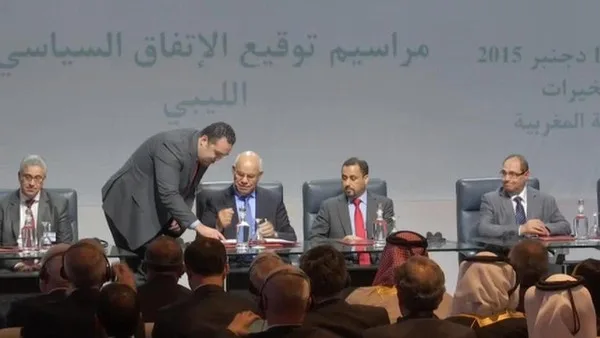
سيكون عنوان المرحلة المقبلة من الأزمة الليبية مشكلاً من ثلاث عناوين رئيسية: (1) مدى نجاح تنفيذ بنود الصخيرات بين الفرقاء، (2) تهديدات تنظيم الدولة، (3) إمكانية التدخل الأجنبي.

  مدى نجاح تنفيذ بنود الصخيرات بين الفرقاء: إشكاليات محلية عديدة وطوباوية دولية

يبدو أن الوضع في ليبيا يعرف منعرجاً حاسماً مع بداية السنة الجديدة، يتميز بالتوقيع التاريخي بين الفرقاء الليبيين المتمثلين بحكومة طبرق وحكومة طرابلس على بنود إتفاقية الصخيرات الداعية إلى توحيد الصفوف والجهود بينهما تحت رعاية الأمم المتحدة في سبيل مواجهة خطر تنظيم الدولة (داعش).

لكن تطبيق الإتفاقية لن يكون بتلك السهولة والطوباوية التي يتوقعها المجتمع الدولي، بل سيتوقف على مدى الوعي السياسي الذي يتمتع به الفرقاء الليبيين في محاولتهم لإخراج البلاد من هذه المحنة، ومدى وعيهم بالمخاطر التي ستؤول إليها ليبيا في حال عدم نجاح التطبيق الحرفي الدقيق لإتفاقية الوحدة على أرض الواقع.. أما التساؤل المهم الذي يجب طرحه الأن هل سيقتصر نجاح تنفيذ بنود إتفاقية الصخيرات في الأرض على فرقاء الداخل فقط؟ أم أنه يتعداه ليشمل فرقاء الإقليم الداعمين لهذا الطرف أو ذاك، خاصة أن الفرقاء الإقليميين هم من يملك الأدوات الأساسية (لوجيستيك عسكري، أموال، إعلام، تأثير دولي) لتحريك الصراع الداخلي بين طبرق وطرابلس.. وإن لم يتفق الفرقاء الإقليميين على الحل، كيف إذن سننتظر إتفاق الفرقاء المحليين؟

أما في حال تمتع الفرقاء الليبيين في الداخل وشركائهم الإقليميين في الخارج برزانة كبيرة، وتميزوا برؤية مستقبلية ثاقبة ومتنورة، وتمتعوا بروح توافقية، وتم التوحيد الفعلي لا الكلامي والورقي بين الحكومتين تحت مسمى حكومة وفاق وطني برئاسة “فايز السراج” ، فإن إشكاليات أخرى ستطفو للسطح كالألية الواجب إتباعها لمحاربة الجماعات المتشددة، وعن كيفية إسترجاع الأسلحة من الميليشيات العسكرية وعن محاولة إعادة إدماج عناصر المليشيات في جيش وطني موحد يكون نواة الجيش الليبي المستقبلي، وكل هذا يتطلب جهد وتنسيق كبيرين وعمل طويل لا يبدو الفرقاء في ليبيا مستعدين له على الأقل في الوقت الراهن.. بالإضافة إلى إشكالية أخرى قد تبدو هي الأغرب والمتعلقة بمدى السيطرة الفعلية للطبقة الفوقية السياسية والعسكرية عند الطرفين الموقعين في الصخيرات على الطبقة التحتية المتحاربة، خاصة أن الجماعات المتحاربة والأسلحة الموجودة داخل ليبيا لا تعد ولا تحصى..كل هذه الإشكاليات تبدو معيقة لأي تقدم فعلي لتنفيذ الإتفاقية على الأرض.

تهديدات تنظيم أبو بكر البغدادي: محاربة داعش ترمومتر دولي لقياس مدى تنفيذ بنود الصخيرات بين الفرقاء

التهديد الأبرز للفرقاء في ليبيا اليوم يتمثل في الصعود المتزايد لتنظيم الدولة (داعش) حيث أصبح يسيطر بشكل شبه كامل على مدينة “سرت” في وسط البلاد، وتتواجد عناصر داعش بكثافة لكنها لا تسيطر كلياً في مناطق أخرى “كدرنة” و”بنغازي” في شرق البلاد.. الصعود المستمر والمتزايد لتنظيم الدولة لا يهدد الحكومتين في طبرق وطرابلس فقط، بل يهدد وحدة وأمن المنطقة ككل، وعندما أقول المنطقة لا أقصد شمال إفريقيا والمغرب العربي وبعض مناطق الساحل الإفريقي كالتشاد والنيجر ومالي فقط، بل يتعداه على ما يبدو ليشمل أيضاً دولً أوروبية كإيطاليا وفرنسا (على الأقل هذا ما صرح به المسؤولين عندهم وهذا ما سأعود إليه لاحقاً)..

عودة إلى تهديد داعش الكبير للفرقاء في ليبيا، لن يكون هذا التهديد مقتصراً على الساحة الحربية الميدانية بل سيؤثر كذلك على التطور في الجانب السياسي، حيث سيكون تنظيم الدولة (داعش) “كالترمومتر” الذي سيقاس عليه مدى تطبيق بنود إتفاقية الصخيرات بين الفرقاء من طرف الأمم المتحدة والمجتمع الدولي.. فكلما صعد تنظيم الدولة (داعش) وإرتفعت أسهمه في ليبيا بتحقيق التقدم والإنتصارات يعني ذلك أن الفرقاء لا يقومون بواجبهم التوافقي الوحدوي، وكلما نزل ونقص تأثير داعش في ليبيا يعني أن الفرقاء في طبرق وطرابلس يقومون بعمل كبير وجبار في إطار تنفيذ بنود إتفاقية الصخيرات.. وهذه الحالة الفريدة الذي وصل إليها الوضع في ليبيا لن تنتهي إلا بإحدى السيناريوهات التالية: إما القضاء على داعش نهائياً وقيام حكومة وحدة وطنية حقيقية ستكون مخولة لقيادة ليبيا إلى بر الأمان مستقبلاً، أو بقاء الحال على ما هو عليه وزيادة تمدد داعش (ولو ببطئ) ما سيستلزم إحدى الأمرين التاليين: إما تدخل أجنبي لمحاربة تنظيم الدولة (داعش) وتوحيد البلاد بالقوة، أو تقسيم فعلي لليبيا بين طبرق وطرابلس وتشكيل كل من الحكومتين قوتها العسكرية لمحاربة داعش من حدود خريطتها وضيق أفق مصالحها..

تهديد تنظيم الدولة (داعش) يبدو أنه سيصبح العنوان الثاني الأبرز في المرحلة المقبلة لليبيا، وستكون مقاتلته فرصة لتوحيد الأذرع صوب هدفاً واحداً يجمع بين الفرقاء ما سيظهر حسن نيتهم من عدمها في تنفيذ بنود الصخيرات التوافقية التوحيدية.. فتهديد تنظيم الدولة (داعش) سيكون سلاحاً ذو حدين في الفترة المقبلة في ليبيا حيث سيكرم الفرقاء بتوحدهم لمواجهته أو يزيدهم إنقساماً وفوضى..

إمكانية التدخل الأجنبي: بين التاريخ والحاضر

التدخل الأجنبي لمحاربة داعش في ليبيا سيكون العنوان الثالث الأبرز في الفنرة المقبلة ليبياً.. خاصة مع إرتفاع عدد الأسطوانات التي ينتجها الغرب مؤخراً بدون كلل ولا ملل شارحاً مدى تهديدات داعش الكبيرة على أوروبا وسواحلها المتوسطية، والمفسرة لخطورة زيادة عدد اللاجئين الذين يفرون من داعش في ليبيا بالزوارق على أوروبا وأمنها.. وبالعودة قليلاً إلى التاريخ الليبي، وقبل أقل من مائة سنة، تحديداً عند إنتهاء الحرب العالمية الثانية بإنتصار الحلفاء وخسارة المحور والإيطاليين، ما أسفر عن خروج الإيطاليين الفاشستيين من ليبيا.. ترددت حينها نفس الأسطوانة تقريباً لكن بموسيقى مختلفة كانت النغمة فيها متمثلة بنشر الوعي بين عموم الشعب الليبي وتعليمهم كيفية تسيير شؤونهم، فتم على هذا الأساس تقسيم ليبيا سنة 1949 على ثلاثة أقسام تحت رعاية الأمم المتحدة، بريطانيا (إقليم برقة)، فرنسا (إقليم فزان)، وإيطاليا (إقليم طرابلس الغرب)، واليوم نسمع نفس الأطراف تقريباً تعيد تجديد الأسطوانة القديمة بتغيير الموسيقى قليلاً لتناسب العصر الحالي والنغمة الجديدة فيها هي محاربة التطرف ومنع اللاجئين من التدفق على سواحل أوروبا المتوسطية، والراعي في الحالتين هي منظمة الأمم المتحدة..

إمكانبة التدخل الأجنبي ستزيد كلما إبتعد تنفيذ إتفاق الصخيرات بين الفرقاء وكلما أخفقت حكومة الوحدة الوطنية في القيام بدورها التوافقي، هذا ما سيسمح بزيادة إنتشار داعش على الخريطة الليبية وإرتفاع الخطر على أوروبا سيجعل الأطراف الأجنبية تتدخل مباشرة.. خاصة أن بعض الدول بدأت من الأن الإستعداد لأي هفوة يقوم بها الفرقاء في ليبيا للإنقضاض على تنظيم الدولة (داعش)..

ونستطيع أن نقول في الأخير أن المرحلة المقبلة ستكون حاسمة كما أشرنا في البداية عناوينها الثلاثة تتراوح بين مدى التنفيذ الفعلي لإتفاقية الصخيرات ونجاح تشكيل حكومة وحدة وطنية، وعن تهديدات تنظيم الدولة (داعش)، وعن إمكانية التدخل الأجنبي لضرب تنظيم الدولة (داعش)..

في النهاية تبدو المعادلة الليبية في المرحلة المقبلة معقدة نوعاً ما والحل سيمر بإحدى الطريقين التاليتين إما إنجاح تنفيذ إتفاقية الصخيرات وتوحيد الحكومتين بالتوقف عن الإقتتال والتوافق على أليات عمل مشترك تكون تحت حكومة وفاق وطني يقودها “فايز السراج” والبدء بالعمل جدياً للقضاء على تنظيم الدولة (داعش) أو البقاء على هذا التشتت والتجزؤ والإنقسام ما سيسفر عن إمكانية تدخل أجنبي سيكون تحت بندين أولهما القضاء على تنظيم الدولة (داعش) والثاني مراقبة عمل قوى التوافق المحلي عن قرب.

TAGGED: أزمة الحكومة في ليبيا ، الإرهاب في ليبيا ، الانقلاب في ليبيا ، داعش في ليبيا
TAGGED: الأزمة الليبية
Download this article as PDF
Share this Article
Facebook Twitter Whatsapp Whatsapp Telegram Email Copy Link
ماهر عدنان
By ماهر عدنان كاتب سوري
Follow:
Next Article نون بوست The Stigma of “ISIS”: A Heavy Legacy Haunting Women and Children of Former Members

Read More

  • U.S. Regime‑Change Policies: Why They Are Destined to Fail U.S. Regime‑Change Policies: Why They Are Destined to Fail
  • The Gulf’s Balancing Act: Iran, Israel, and Hidden Links
  • Iraq–Turkey Oil Export Treaty: Why Did Ankara Cancel It After 52 Years?
  • Syria’s Northeast on Edge: QSD Between Ankara and Damascus
  • Has Europe Changed Its Stance on Israel… or Just Its Language?
part of the design
NoonPost Weekly Newsletter
dark

An independent media platform founded in 2013, rooted in slow journalism, producing in-depth reports, analysis, and multimedia content to offer deeper perspectives on the news, led by a diverse young team from several Arab countries.

  • Politics
  • Society
  • Rights & Liberties
  • Opinions
  • History
  • Sports
  • Education
  • Technology
  • Economy
  • Media
  • Arts & Literature
  • Entrepreneurship
  • Travel
  • Cinema & Drama
  • Food
  • Health
  • Culture
  • Latest Reports
  • Files
  • Long Reads
  • Interviews
  • Podcast
  • Interactive
  • Encyclopedia
  • In Pictures
  • About Us
  • Our Writers
  • Write for Us
  • Editorial Policy
  • Advanced Search
Some rights reserved under a Creative Commons license

Removed from favorites

Undo
Go to mobile version