






NoonPost NoonPost

NoonPost

  • Home
  • Politics
  • Economy
  • Society
  • Culture
  • Files
  • Long Reads
  • Podcast
AR
Notification Show More
نون بوست
“There Are Nights I Can’t Close My Eyes”: How Gazans Are Living in Homes on the Brink of Collapse
نون بوست
From al-Jolani to Ahmad al-Shara: The Evolution of Syria’s New Leader
نون بوست
When Political Islam Receded in Egypt: Who Filled the Void?
نون بوست
An Extension of Genocide: Gaza’s Detainees Speak Out
نون بوست
A Tightrope Between Survival and Sovereignty: The Syrian Government Faces Normalization Pressures
نون بوست
American Aircraft Carriers: Has the Era of “100,000 Tons of Diplomacy” Ended?
نون بوست
U.S. Regime‑Change Policies: Why They Are Destined to Fail
نون بوست
Transformations of Israeli Judaism: Between the Victim Complex and the Colonizer’s Doctrine
نون بوست
The Gulf’s Balancing Act: Iran, Israel, and Hidden Links
نون بوست
Iraq–Turkey Oil Export Treaty: Why Did Ankara Cancel It After 52 Years?
نون بوست
Syria’s Northeast on Edge: QSD Between Ankara and Damascus
نون بوست
Has Europe Changed Its Stance on Israel… or Just Its Language?
NoonPost NoonPost
AR
Notification Show More
نون بوست
“There Are Nights I Can’t Close My Eyes”: How Gazans Are Living in Homes on the Brink of Collapse
نون بوست
From al-Jolani to Ahmad al-Shara: The Evolution of Syria’s New Leader
نون بوست
When Political Islam Receded in Egypt: Who Filled the Void?
نون بوست
An Extension of Genocide: Gaza’s Detainees Speak Out
نون بوست
A Tightrope Between Survival and Sovereignty: The Syrian Government Faces Normalization Pressures
نون بوست
American Aircraft Carriers: Has the Era of “100,000 Tons of Diplomacy” Ended?
نون بوست
U.S. Regime‑Change Policies: Why They Are Destined to Fail
نون بوست
Transformations of Israeli Judaism: Between the Victim Complex and the Colonizer’s Doctrine
نون بوست
The Gulf’s Balancing Act: Iran, Israel, and Hidden Links
نون بوست
Iraq–Turkey Oil Export Treaty: Why Did Ankara Cancel It After 52 Years?
نون بوست
Syria’s Northeast on Edge: QSD Between Ankara and Damascus
نون بوست
Has Europe Changed Its Stance on Israel… or Just Its Language?
Follow US

Systematic Starvation in Gaza: The Numbers Scream

مرام موسى
Maram Musa Published 26 March ,2026
Share
نون بوست
نون بوست

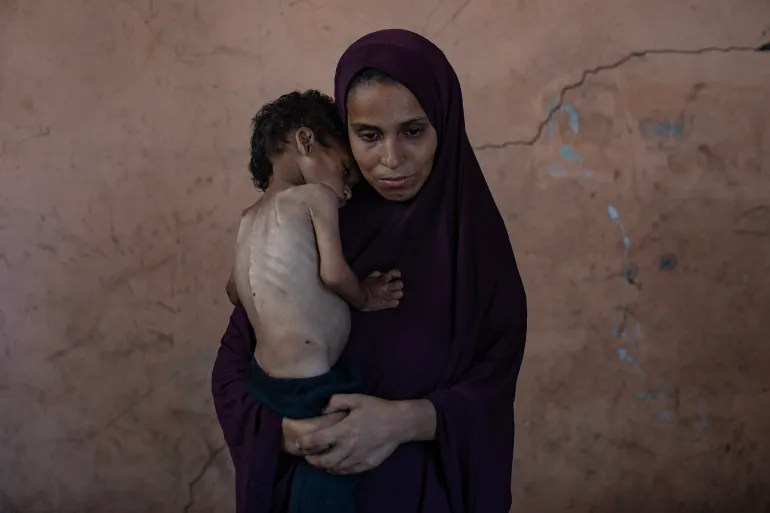
In recent days, you may have come across harrowing images of Gazan children whose features have faded to the point where they resemble shadows—skin stretched thin over bone—or videos of men and women collapsing in the streets, their bodies having gone days without a single bite of food.

Perhaps you’ve also seen scenes of long lines outside the few remaining soup kitchens, where children push and shove for a spoonful of rice or a sip of broth—anything to keep them alive for another day. The tragic irony is that these scenes are not isolated moments of suffering; they are the daily reality of a people being systematically denied their most basic right to food—while the world watches in silence.

Behind each of these silent images are numbers that scream, revealing the scale of the crime being committed by the Israeli occupation in Gaza. What was once a densely populated coastal enclave of two million people has become the epicenter of the most extreme famine of the century.

This report aims to tell the story of Gaza’s famine through hard facts and figures, highlighting international responses—or the lack thereof—and exploring whether there is still time to avert a mass-death catastrophe looming over Palestinians in the besieged Strip.

Hunger Is a Daily Threat in Gaza

Famine is no longer a looming threat—it is now a daily reality for Gaza’s residents, who are powerless to stop it. According to the Integrated Food Security Phase Classification (IPC), some 470,000 people in Gaza are enduring “catastrophic” hunger—Phase 5, the most severe level. The entire population is facing acute food insecurity.

The report warns that approximately 71,000 children and over 17,000 mothers could die unless they receive immediate treatment for severe malnutrition. The World Health Organization (WHO) states that over 90% of children under five suffer from critical levels of malnutrition. Many have already died from hunger.

UNRWA, the United Nations agency for Palestinian refugees, has echoed these concerns, noting that one in every ten children examined in its Gaza clinics is malnourished—signaling grave, long-term consequences for an entire generation.

Even more alarming: starvation is now a leading cause of death in Gaza. Local reports document daily fatalities from malnutrition. In the past 24 hours alone, the Gaza Ministry of Health reported 15 deaths, including four children, from hunger-related causes, bringing the total famine death toll to 101—including 80 children.

As essential goods vanish from shelves, prices for the few available items have soared due to Israel’s continued closure of border crossings since March. For many families, basic items are now out of reach. Flour has increased in price by 3,000 times its pre-war cost. Cooking fuel is nearly impossible to find, and food prices have surged by 500% since the blockade began five months ago.

Samir Abu Modallala, an economist based in Gaza, notes that the price of a kilo of flour has soared to 170 shekels—a 240% increase in just one week. A kilo of rice now costs 110 shekels, up 175%. These items once cost only a few shekels before the war.

Meanwhile, more than 116,000 tons of food aid are waiting at Gaza’s borders—enough to feed the entire population for two months, according to the World Food Programme.

A “Potential Death Sentence”

The effects of Israel’s systematic starvation policy are not limited to hunger alone. A broader collapse in health and society is already underway. WHO reports that children, in particular, are suffering from illnesses related to malnutrition and weakened immune systems. Diseases such as diarrhea, pneumonia, and measles—easily treatable under normal conditions—are now proving fatal.

The WHO describes a vicious cycle in which hunger and disease reinforce one another: malnutrition weakens the body’s defenses, making even minor infections potentially deadly, while illness worsens malnutrition by increasing nutritional needs and reducing nutrient absorption. The organization summarizes the threat of hunger for already ill patients as a “potential death sentence.”

Long-term, the consequences are even more devastating. Malnourished children face stunted growth, both physical and cognitive. WHO warns that those who survive the famine will likely suffer permanent damage, including developmental delays and reduced brain function.

Dr. Rana Zaiter, head of nutrition at Al-Awda Hospital in Gaza, says a significant number of children are now exhibiting signs of severe stunting—a condition that affects not just height but the development of vital organs like the liver and kidneys.

“Malnutrition is not just a physical issue,” Zaiter explains. “It also impairs cognitive and intellectual development. A lack of iodine, iron, and vitamin A during early childhood can lead to permanent brain damage, lower IQ, learning difficulties, and even lifelong disabilities.”

Compounding the crisis is the lack of resources to treat malnutrition. “In a perfect world, I would advise parents to give their children protein-rich meals and maintain a clean, healthy environment,” says Susan Ma’arouf, a nutritionist at the Friends of the Patient Society Hospital in Gaza City. “But in our reality, giving advice feels like rubbing salt in the wounds of desperate parents.”

Dr. Ragheb Warshagha, a pediatrician at Al-Rantisi Children’s Hospital, describes a heartbreaking trend: “Many mothers themselves are malnourished. This leads to a shortage of breast milk and severe malnutrition in their infants—sometimes even death due to infections and weakened immunity.”

Malnutrition and anemia have become so widespread among Palestinians in Gaza that blood donation has plummeted—posing yet another disaster for an already collapsing healthcare system. The Ministry of Health has repeatedly warned of a critical shortage of blood supplies across Gaza’s hospitals.

A Wake-Up Call for Humanity

Faced with the scale of the catastrophe, international voices have begun to sound the alarm.

UN Secretary-General António Guterres expressed horror at the accelerating humanitarian collapse in Gaza, warning that “the last lifelines keeping people alive are falling apart.” UNICEF described images of starving children too weak to stand as “a wake-up call for humanity.”

The WHO, in a joint statement with other UN partners, called the Gaza famine “one of the world’s worst hunger crises” and urged the international community not to wait for a formal famine declaration before acting to save lives.

Among human rights organizations, the language was even more direct. Amnesty International published a report documenting evidence that Israel is using starvation as a weapon of war—a tactic aimed at exterminating Gaza’s population. The organization also condemned the manipulation of aid distribution, accusing Israel of “constantly inventing new ways to destroy Palestinian life in Gaza.”

On the political front, the response from Arab governments has been disappointing. Despite hopes that Arab nations would stand firmly with Gaza, their reactions have been limited to statements of condemnation. The Gulf Cooperation Council issued a lukewarm denunciation of what it called Israel’s “unjust blockade”—labeling it a clear violation of international humanitarian law.

In a rare move, 25 Western nations—including the UK, France, and Australia—jointly demanded that Israel lift its restrictions on aid to Gaza immediately. Their statement condemned the slow pace of aid deliveries and the killings of civilians, including children.

Ultimately, the global response to Israel’s actions in Gaza remains depressingly familiar: condemnation without action. The world continues to bear witness to this unfolding catastrophe—with no real effort to end the Palestinians’ suffering, now entering its second year.

Download this article as PDF
Share this Article
Facebook Twitter Whatsapp Whatsapp Telegram Email Copy Link
مرام موسى
By مرام موسى صحافية سورية
Follow:
Previous Article نون بوست SDF and Damascus: From Negotiating Table to the Brink of Confrontation?
Next Article نون بوست Tehran and Washington: Roots of a Deep-Rooted Hostility

Read More

  • U.S. Regime‑Change Policies: Why They Are Destined to Fail U.S. Regime‑Change Policies: Why They Are Destined to Fail
  • The Gulf’s Balancing Act: Iran, Israel, and Hidden Links
  • Iraq–Turkey Oil Export Treaty: Why Did Ankara Cancel It After 52 Years?
  • Syria’s Northeast on Edge: QSD Between Ankara and Damascus
  • Has Europe Changed Its Stance on Israel… or Just Its Language?
part of the design
NoonPost Weekly Newsletter

You May Also Like

U.S. Regime‑Change Policies: Why They Are Destined to Fail

U.S. Regime‑Change Policies: Why They Are Destined to Fail

إسراء سيد Esraa sayed 8 April ,2026
The Gulf’s Balancing Act: Iran, Israel, and Hidden Links

The Gulf’s Balancing Act: Iran, Israel, and Hidden Links

فريق التحرير Noon Post 8 April ,2026
Iraq–Turkey Oil Export Treaty: Why Did Ankara Cancel It After 52 Years?

Iraq–Turkey Oil Export Treaty: Why Did Ankara Cancel It After 52 Years?

فريق التحرير Noon Post 8 April ,2026

الفدائيون الثلاثة.. هل دشنوا مرحلة جديدة من مراحل الانتفاضة؟

عبدالله داود
عبدالله داود Published 6 February ,2016
Share
screen_shot_2016-02-06_at_10

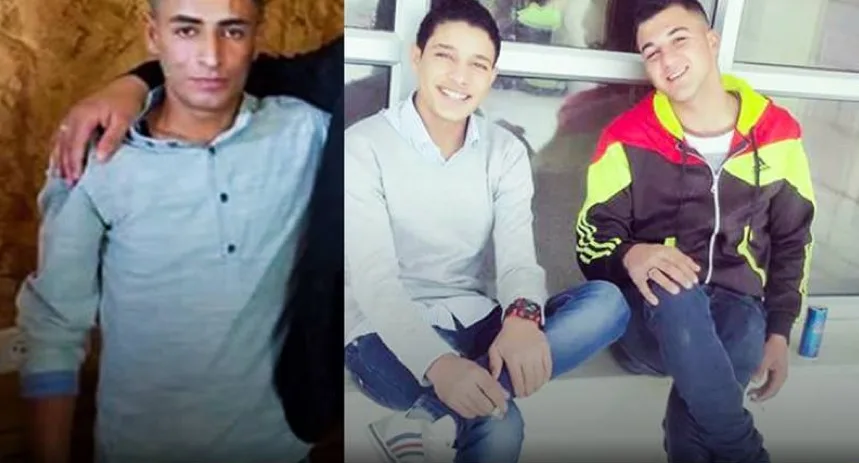
الأقصى ومحتلوه من أمامهم وحب الوطن من خلفهم، هكذا تقدم الفدائيون الثلاثة “أحمد راجح زكارنة”، “محمد أحمد كميل”، و”أحمد ناجح أبوالرب” من بلدة قباطية قضاء جنين ظهر يوم الأربعاء، لتنفيذ عملية طعن وإطلاق نار صوب جنود الاحتلال عند باب العامود المدخل الرئيسي للبلدة القديمة بالقدس المحتلة.

مصادر عبرية ذكرت أن الشبان استخدموا سلاحًا ناريًا وسكينًا ومجموعة من القنابل يدوية الصنع التي لم تنفجر، قبل إطلاق قوات الاحتلال النار عليهم واستشهادهم، ومصرع مجندة إسرائيلية هادار كوهين 19 عامًا وإصابتان من قوات الاحتلال وصفت جراح إحداهما بالبالغة.

وقامت قوات الاحتلال بتشديد الإجراءات الأمنية والعسكرية في المنطقة ودفعت بتعزيزات عسكرية وحملة تفتيش مستمرة للمارة والشبان.

جاء ذلك بعد توجيه الفدائيين الثلاثة صفعة للعمق الأمني الإسرائيلي وذلك بتخطيهم عددًا من الحواجز بكامل سلاحهم وعتادهم وقطعهم مسافة تزيد عن 100 كم من شمال الضفة الغربية حتى القدس، دون كشفهم من قِبل المنظومة الأمنية والعسكرية للاحتلال.

حصار وعقاب جماعي

كعادة الاحتلال الإسرائيلي بعد وقوع عملية طعن أو إطلاق نار ينفذها شبان فلسطينيون يقوم باستخدام سياسة الردع والعقاب الجماعي كأسلوب تعسفي ممنهج لمحاربة تكرار مثل هذه العمليات مرة أخرى.

بعد وقوع عملية القدس عقد رئيس الوزراء الإسرائيلي بنيامين نتنياهو اجتماعًا مع كبار المسؤولين الأمنيين وتم القرار على تنفيذ إجراءات انتقامية بالضفة الغربية والقدس؛ كانت هذه القرارت حصار بلدة قباطية وزيادة قوات الاحتلال في الضفة ومحيط القدس، وتكثيف حملات الاعتقالات في صفوف الفلسطينيين، وآخرها إعادة تقييم الموقف الإسرائيلي من انتفاضة القدس مرة أخرى وتوصيفها.

قامت قوات الاحتلال الإسرائيلي بالبدء بتنفيذ عملية عسكرية على بلدة قباطية جنوبي مدينة جنين بالضفة الغربية فجر يوم الخميس وفرض حصارٍ مشددٍ على البلدة وإغلاق جميع مداخلها الرئيسية والفرعية بالسواتر الترابية والمركبات العسكرية وإعلانها منطقة عسكرية مغلقة.

وقال رئيس بلدية قباطية محمود كميل “إن هذا الحصار كان له الأثر الواضح على أهالي البلدة بمختلف نواحي الحياة اليومية”، وأضاف كميل أن كل الشعب الفلسطيني في سجن كبير منذ عقود من الزمن، وعند وقوع عملية مثل هذه نصبح في سجن أصغر بحصارهم هذا.

كما منعت قوات الاحتلال الطلاب من الذهاب لمدارسهم وتشديد الحركة الداخلية على أهالي البلدة وسط إطلاق كثيف لقنابل الصوت والغاز المسيل للدموع.

وقال الصحفي محمد خزيمية من قباطية خلال حديثه لـ نون بوست “إن قوات الاحتلال انتشرت في شوارع بلدة قباطية وداهمت عشرات المنازل منها منازل ذوي الشهداء الثلاثة، وأخذت قياسات البيوت تمهيدًا لهدمها دون تبليغهم بموعد محدد للهدم”.

وواصلت قوات الاحتلال حصارها لقباطية لليوم الثاني على التوالي، فعمدت إلى تسكير كافة الطرق أمام المواطنين ومنعهم من المرور، فقامت طواقم الدفاع المدني وبالتعاون مع بلدية قباطية بإمداد بعض العائلات المحاصرة بالمواد التموينية وحليب الأطفال والأدوية.

ورغم الحصار المطبق على قباطية خرج الأهالي مساء الجمعة في تشييع مهيب لجثامين الشهداء إلى مقبرة آل أبو الرب لدفنهم عند صديقهم الشهيد “أحمد عوض أبو الرب” مسلمين راية الوطن لفدائي جديد.

مواجهات عنيفة

شهدت بلدة قباطية مواجهات عنيفة بين الشبان وقوات الاحتلال يوم الخميس ووقوع عدة إصابات في صفوف الشبان ما بين الرصاص المطاطي والحي والدهس بالمركبات العسكرية.

كما واعتقلت قوات الاحتلال عددًا من الشبان خلال المواجهات التي استمرت طوال اليوم، ومنعت قوات الاحتلال طواقم الدفاع المدني من إخماد حريق وقع في البلدة جراء إطلاق قنابل الصوت والغاز المسيل للدموع، واعترف الاحتلال بإصابة أحد جنوده خلال المواجهات.

ونصبت قوات الاحتلال خيمة عسكرية في إحدى الأراضي وسط البلدة واعتلت أسطح المنازل وجعلتها نقاط مراقبة لهم.

وتجددت المواجهات بين الشبان وقوات الاحتلال صباح يوم الجمعة على فترات وفي مناطق متفرقة بالبلدة مع اشتدادها على المدخل الشمالي، وأفاد شهود عيان تعرض قوات الاحتلال لإطلاق نار للمرة الثانية من قِبل المقاومين بالقرب من مثلث الشهداء وتواجد سيارة الإسعاف الإسرائيلية بالمنطقة.

وذكرت المصادر الطبية أن مواجهات الجمعة أدت لإصابة تسعة شبان بالرصاص الحي تم التعامل معهم من قِبل طواقم الهلال الأحمر.

هل نجح الحصار؟

لم تنجح مساعي الاحتلال في حصاره على بلدة قباطية وإخضاعها حتى اللحظة، فرغم إغلاق قوات الاحتلال لكافة الطرق الالتفافية للبلدة ومنع حركة المرور وإغلاق الطرق الرئيسية بين قباطية وجنين، إلى أن أهالي قباطية مستمرون بصمودهم ويد واحدة في مواجهة غطرسة الاحتلال.

يقول الناشط الإعلامي دجانة أبو الرب من قباطية في معرض حديثه مع نون بوست “الواضح من واقع البلدة اليوم أن هذا الحصار لن يردع الأهالي وسيشعل نار المقاومة في صدور الفلسطينيين من جديد والاحتلال أخطأ في ذلك”.

وأضاف أبو الرب أن المقاومة تكون بالسكاكين والسلاح وبالقلم والأغنية وكل ذلك له قيمة في دعم الوطن وقضيته ويؤدي إلى التحرير قريبًا.  

ورغم الأوضاع السيئة بالبلدة واشتداد المواجهات وتطورها من رمي الحجارة والقنابل الحارقة إلى إطلاق النار على جنود الاحتلال مساء الجمعة وإطباق قوات الاحتلال للحصار، فهل سينجح الاحتلال بحصاره في قمع الناس؟ أم أن ردة فعل الاحتلال ستدفع شرائح أخرى لمقاومته وبالتالي المزيد من العمليات النوعية؟

وسم العزة والانتصار

كان لوسم #الفدائيون_الثلاثة على مواقع التواصل الاجتماعي التفاعل الكبير من قِبل المغردين بآلاف التغريدات للعملية النوعية التي نفذها الشبان الثلاثة في القدس.

عبر الناشطون بتغريداتهم عن فرحتهم العارمة بهذه الضربة المؤلمة للاحتلال بعدما غُرزت سكين الفدائيين الثلاثة بخاصرة أسطورته الأمنية والعسكرية المزعومة، وأن أفعال شباب بمقتبل العمر فعلت بكيانه ما لم تفعله جيوش.

TAGGED: الاحتلال الإسرائيلي ، الشباب الفلسطيني ، القضية الفلسطينية ، انتهاكات جيش الاحتلال الإسرائيلي ، حصار بلدة قباطية
TAGGED: الانتفاضة الثالثة
Download this article as PDF
Share this Article
Facebook Twitter Whatsapp Whatsapp Telegram Email Copy Link
عبدالله داود
By عبدالله داود صحفي وكاتب فلسطيني
Follow:
Next Article نون بوست The Stigma of “ISIS”: A Heavy Legacy Haunting Women and Children of Former Members

Read More

  • U.S. Regime‑Change Policies: Why They Are Destined to Fail U.S. Regime‑Change Policies: Why They Are Destined to Fail
  • The Gulf’s Balancing Act: Iran, Israel, and Hidden Links
  • Iraq–Turkey Oil Export Treaty: Why Did Ankara Cancel It After 52 Years?
  • Syria’s Northeast on Edge: QSD Between Ankara and Damascus
  • Has Europe Changed Its Stance on Israel… or Just Its Language?
part of the design
NoonPost Weekly Newsletter
dark

An independent media platform founded in 2013, rooted in slow journalism, producing in-depth reports, analysis, and multimedia content to offer deeper perspectives on the news, led by a diverse young team from several Arab countries.

  • Politics
  • Society
  • Rights & Liberties
  • Opinions
  • History
  • Sports
  • Education
  • Technology
  • Economy
  • Media
  • Arts & Literature
  • Entrepreneurship
  • Travel
  • Cinema & Drama
  • Food
  • Health
  • Culture
  • Latest Reports
  • Files
  • Long Reads
  • Interviews
  • Podcast
  • Interactive
  • Encyclopedia
  • In Pictures
  • About Us
  • Our Writers
  • Write for Us
  • Editorial Policy
  • Advanced Search
Some rights reserved under a Creative Commons license

Removed from favorites

Undo
Go to mobile version