NoonPost NoonPost

NoonPost

  • Home
  • Politics
  • Economy
  • Society
  • Culture
  • Files
  • Long Reads
  • Podcast
AR
Notification Show More
نون بوست
“There Are Nights I Can’t Close My Eyes”: How Gazans Are Living in Homes on the Brink of Collapse
نون بوست
From al-Jolani to Ahmad al-Shara: The Evolution of Syria’s New Leader
نون بوست
When Political Islam Receded in Egypt: Who Filled the Void?
نون بوست
An Extension of Genocide: Gaza’s Detainees Speak Out
نون بوست
A Tightrope Between Survival and Sovereignty: The Syrian Government Faces Normalization Pressures
نون بوست
American Aircraft Carriers: Has the Era of “100,000 Tons of Diplomacy” Ended?
نون بوست
U.S. Regime‑Change Policies: Why They Are Destined to Fail
نون بوست
Transformations of Israeli Judaism: Between the Victim Complex and the Colonizer’s Doctrine
نون بوست
The Gulf’s Balancing Act: Iran, Israel, and Hidden Links
نون بوست
Iraq–Turkey Oil Export Treaty: Why Did Ankara Cancel It After 52 Years?
نون بوست
Syria’s Northeast on Edge: QSD Between Ankara and Damascus
نون بوست
Has Europe Changed Its Stance on Israel… or Just Its Language?
NoonPost NoonPost
AR
Notification Show More
نون بوست
“There Are Nights I Can’t Close My Eyes”: How Gazans Are Living in Homes on the Brink of Collapse
نون بوست
From al-Jolani to Ahmad al-Shara: The Evolution of Syria’s New Leader
نون بوست
When Political Islam Receded in Egypt: Who Filled the Void?
نون بوست
An Extension of Genocide: Gaza’s Detainees Speak Out
نون بوست
A Tightrope Between Survival and Sovereignty: The Syrian Government Faces Normalization Pressures
نون بوست
American Aircraft Carriers: Has the Era of “100,000 Tons of Diplomacy” Ended?
نون بوست
U.S. Regime‑Change Policies: Why They Are Destined to Fail
نون بوست
Transformations of Israeli Judaism: Between the Victim Complex and the Colonizer’s Doctrine
نون بوست
The Gulf’s Balancing Act: Iran, Israel, and Hidden Links
نون بوست
Iraq–Turkey Oil Export Treaty: Why Did Ankara Cancel It After 52 Years?
نون بوست
Syria’s Northeast on Edge: QSD Between Ankara and Damascus
نون بوست
Has Europe Changed Its Stance on Israel… or Just Its Language?
Follow US

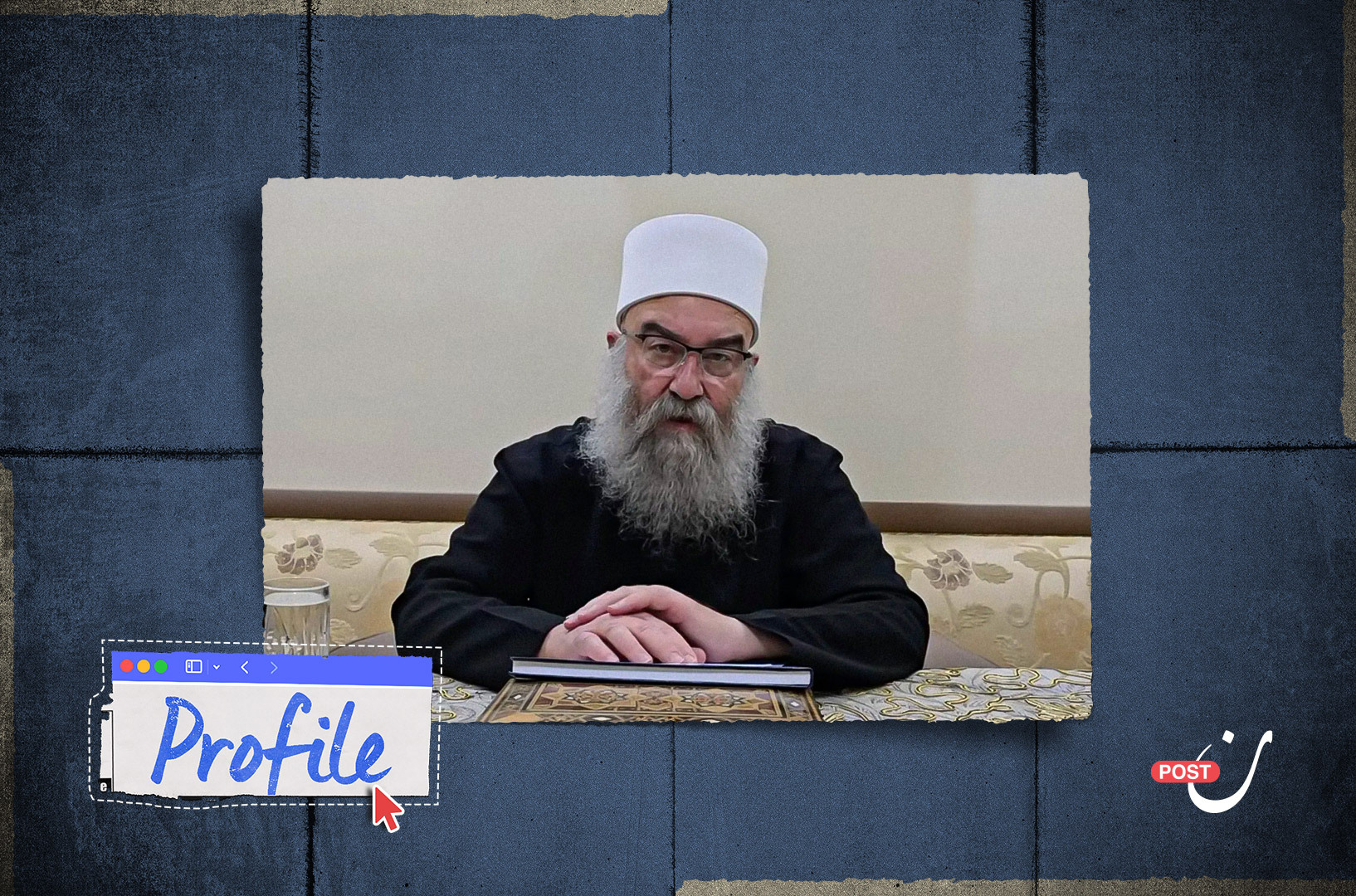
Hikmat al-Hijri: From Spiritual Authority to Political Instrument

يمان الدالاتي
Yaman Dalati Published 26 March ,2026
Share
نون بوست
نون بوست

In the city of Sweida, where Syrian security forces have clashed with armed groups labeled as “outlaws” by the government in a bloody confrontation, a familiar colonial rhetoric has resurfaced. The Israeli occupation has revived the language of “protection” in place of occupation, exploiting a moment of chaos to expand its influence under the pretense of defending “minorities.”

What is striking, however, is how shockingly this rhetoric mirrored recent statements by Sheikh Hikmat al-Hijri, one of the most prominent religious authorities among the Druze community in Syria.

Al-Hijri has made a series of public attacks on the Syrian government, issuing appeals for international intervention to foreign leaders, including Donald Trump and Benjamin Netanyahu—himself accused of war crimes. This political escalation raises many questions about al-Hijri’s position and historical allegiances.

This report explores the spiritual and political trajectory of Sheikh Hikmat al-Hijri, from his assumption of the Druze spiritual leadership in 2012 to his evolving role as a political actor amid Syria’s post-Assad landscape.

Origins and Social Background

Hikmat Salman al-Hijri was born on June 9, 1965, in Venezuela, where his father was working at the time. Soon after, the family returned to Syria, where he completed his primary and secondary education. He was raised in a prominent religious family in Sweida, long associated with the spiritual leadership of the Druze. His father, Sheikh Salman al-Hijri, was one of the community’s leading clerics.

In 1985, he enrolled in the Faculty of Law at the University of Damascus, graduating in 1990. After returning to his hometown, he eventually settled in the town of Qanawat in 1998. His legal background and familial status positioned him to take on advanced communal roles, leveraging his wide network across Jabal al-Arab.

Al-Hijri assumed the role of spiritual leader of Syria’s Druze in 2012, following the death of his brother Sheikh Ahmad al-Hijri in a car crash that same year—an incident some allege was orchestrated by the Assad regime due to Ahmad’s stance on Druze defections during the 2011 uprising. Ahmad had succeeded their father in 1989, marking three successive generations of the Hijri family in the role.

His succession faced unprecedented challenges, mainly due to his swift and vocal support for Bashar al-Assad. He issued several statements backing the regime amid rising anti-government sentiment in Sweida, which severely damaged his popularity—even tarnishing the broader reputation of the Hijri family as historic spiritual authorities.

This triggered deep divisions within the Druze community, raising contentious debates about religious and political leadership in Jabal al-Arab. The spiritual leadership split into two camps: one led by Sheikh Hikmat al-Hijri in Qanawat, and another led by Sheikh Yusuf Jarbou’ and Sheikh Hammoud al-Hanawi based at the Ain al-Zaman shrine—the community’s most revered religious site.

Relationship with Assad and Position on the Revolution

Since becoming the Druze spiritual leader in 2012, al-Hijri maintained a clear pro-Assad stance. In his first public appearance after his brother’s death, he delivered a speech during Assad’s condolence visit to Qanawat, declaring: “You are hope itself, Bashar the hope, Bashar of the homeland, Bashar of Arabism and the Arabs. May God prolong your life.” It was a striking expression of loyalty.

According to a 2020 report by the Jusoor Center, al-Hijri repeatedly aligned himself with the Syrian regime. He hosted delegations from Iraq’s Popular Mobilization Forces and, in March 2015, issued a statement calling for the arming of Druze youth. He also coordinated directly with the presidential palace on administrative matters, including reinstating dismissed public employees.

In November 2018, following a kidnapping operation by ISIS, he urged Druze youth to fulfill mandatory military service. He also oversaw the formation of an armed faction in coordination with Military Intelligence—laying the groundwork for what would become his militia.

Despite mounting protests in Sweida and fatal crackdowns by regime forces, al-Hijri remained loyal to Assad. Activists accused him of being a full-fledged regime ally, especially after the toppling of a Hafez al-Assad statue in central Sweida—arguably the most symbolic act of defiance in the city’s revolutionary history.

Al-Hijri’s support for the regime extended beyond rhetoric. In 2015, he joined other clerics in issuing a decree from the Druze leadership expelling Sheikh Wahid al-Balous—founder of the anti-Assad “Men of Dignity” movement—and other dissenting clerics, accusing them of deviating from religious principles.

Sheikh al-Balous, widely popular and a key anti-regime figure, was assassinated in a car bombing in Sweida, followed by a second explosion targeting the hospital treating him. In 2021, his son Laith al-Balous accused Iran and Hezbollah of orchestrating the killing.

Less than a year after the incident, al-Hijri defended General Issam Zahreddine—a Republican Guard officer from Sweida accused of severe human rights violations—in a media interview, describing him as “devoted to serving his nation and army.”

A pivotal moment came in early 2021 when al-Hijri was publicly insulted by a Military Intelligence officer, sparking outrage across Sweida. Damascus later issued a formal apology.

This event marked a shift in al-Hijri’s stance. He began voicing increasing criticism of regime policies and, by 2023, expressed open support for protest demands calling for radical political change and regime withdrawal from the province.

His Role in the Current Political Crisis

After Bashar al-Assad fled in late 2024, al-Hijri found himself sidelined in the emerging political order. The interim government led by Ahmad al-Shara’ did not recognize him as the legitimate representative of Syria’s Druze, curbing his influence and excluding him from official delegations visiting Damascus and meeting the new president.

Instead, official recognition went to national figures such as Suleiman Abdel Baqi, commander of the “Free Druze Gathering,” and Laith al-Balous, son of Sheikh Wahid and leader of Muthafaat al-Karama. Both were featured in meetings with the new government, signaling an effort to dismantle the Hijri family’s long-standing dominance.

In response, al-Hijri escalated his rhetoric. He rejected the outcomes of the National Dialogue Conference and issued repeated criticisms of government policies. Eventually, he called for international intervention to guarantee a “political transition.”

On February 17, 2025, he issued a statement framing the relationship with the new government as a “partnership”—a belated attempt to reassert his relevance.

Then, on March 6, Sweida witnessed protests in which demonstrators raised al-Hijri’s portrait and Druze flags, chanting against the Shara’ administration. The protests included groups like the Syrian Brigade Party, the Sweida Military Council, and secular and federalist movements calling for autonomy or secession.

Amid this turmoil, on March 15, al-Hijri declared that “no reconciliation or agreement” was possible with the current government, labeling it “extremist and wanted for justice,” and warning that the country had reached a “do or die” moment.

His public appeals for foreign intervention—and, most controversially, his outreach to foreign leaders including Israeli Prime Minister Benjamin Netanyahu—marked the most dangerous turn in his trajectory. Under the pretext of “protecting the Druze,” al-Hijri opened the door to direct Israeli involvement, which soon included airstrikes on Damascus. The resulting backlash among Syrians—Druze included—was fierce.

In this transformation, al-Hijri has moved beyond the role of a local religious figure to become entangled in foreign agendas that threaten national unity. His shift from Assad loyalist to opponent of the new government appears less a move toward independence than a strategic alignment with regional interventions now leveraging him as an internal front under the guise of sectarian representation—while ultimately targeting Syria’s sovereignty.

Download this article as PDF
Share this Article
Facebook Twitter Whatsapp Whatsapp Telegram Email Copy Link
يمان الدالاتي
By يمان الدالاتي صحفية ومحررة في موقع نون بوست
Follow:
Previous Article نون بوست What’s Behind Iran’s Shift in Policy Toward Afghan Refugees?
Next Article نون بوست Behind Trump’s Tariffs on Algeria: What Does Washington Want?

Read More

  • U.S. Regime‑Change Policies: Why They Are Destined to Fail U.S. Regime‑Change Policies: Why They Are Destined to Fail
  • The Gulf’s Balancing Act: Iran, Israel, and Hidden Links
  • Iraq–Turkey Oil Export Treaty: Why Did Ankara Cancel It After 52 Years?
  • Syria’s Northeast on Edge: QSD Between Ankara and Damascus
  • Has Europe Changed Its Stance on Israel… or Just Its Language?
part of the design
NoonPost Weekly Newsletter

You May Also Like

U.S. Regime‑Change Policies: Why They Are Destined to Fail

U.S. Regime‑Change Policies: Why They Are Destined to Fail

إسراء سيد Esraa sayed 8 April ,2026
The Gulf’s Balancing Act: Iran, Israel, and Hidden Links

The Gulf’s Balancing Act: Iran, Israel, and Hidden Links

فريق التحرير Noon Post 8 April ,2026
Iraq–Turkey Oil Export Treaty: Why Did Ankara Cancel It After 52 Years?

Iraq–Turkey Oil Export Treaty: Why Did Ankara Cancel It After 52 Years?

فريق التحرير Noon Post 8 April ,2026

هل سينتهي دور المليشيات في العراق؟

مجاهد الطائي
مجاهد الطائي Published 8 February ,2016
Share
_49218_tt3

بعد تسرب السلطة بيد المليشيات الشيعية في العراق على إثر التغيير الذي حصل بعد 2003م وتفكيك الأجهزة الأمنية وحل الجيش والذي لم يكن مبررًا أبدًا، ملأت تلك المليشيات فراغ السلطة فورًا بعد تحضيرات في إيران، إلا أنه ومن غير المعقول على من يَطمح بناء الدولة العراقية الجديدة أن يُشكل أجنحة مليشياوية حزبية طائفية، يُقدر تعدادها بالآلاف لحماية المقدسات على حد تبريرهم، علمًا أن تلك المقدسات لم تكن تتعرض للخطر أساسًا، فما هو الهدف المفترض الذي شُكلت من أجله المليشيات؟ وهل هناك عدو حقًا؟

ولو افترضنا جدلاً أن هناك عدو مُحتمل لتلك المقدسات بغض النظر عمن هو ذلك العدو، ألا ينبغي أن تُحل تلك المليشيات بعد تشكيل القوات الأمنية العراقية بعد 2005م بإقرار الدستور وإجراء انتخابات فازت الأحزاب الشيعية ومليشياتها بأغلبية مقاعدها؟ لماذا بقيت تحمل السلاح وتَعمل جنبًا إلى جنب مع القوات الأمنية والجيش العراقي والتي تعج تلك المؤسسات الحساسة بتلك العناصر المليشياوية ذات الولاءات غير الوطنية، أليس الهدف والطموح كان بناء دولة أم ماذا؟

إن أحد الأهداف وراء تلك المليشيات بالسماح لها بالعمل، هو تفكيك الدولة والمجتمع بالطائفية ومن خلال الدفع بها لإبراز هوياتها الفرعية غير الوطنية السنة والشيعة والأكراد، وإرجاع المجتمع العراقي على عوامله الأولية، تكونت أرضية ما قبل الدولة في المجتمع العراقي، وبإدارة إيران للمليشيات الشيعية واستخدامهم كأوراق فاعلة لخلق عدم الاستقرار والفوضى؛ تمايز المجتمع طائفيًا وعرقيًا خاصة أثناء المفاوضات النووية، إضافة إلى التغيير الديمغرافي والاستيلاء على المناطق النفطية أو الإستراتيجية كالمناطق المتداخلة السنية الشيعية والمناطق المهمة والقريبة من الحدود كالنخيب في الأنبار ومناطق متعددة في ديالى، لعلمها بمستقبل العراق الفيدرالي.

أما سوريا المتحالفة مع إيران فهي الأخرى كانت تدير المناطق السنية بالقاعدة والجماعات المتطرفة وبعض البعثيين السابقين لجعل التطرف الطائفي هو السائد بدل الوطنية والمشاريع الجامعة للعراقيين، إن ذلك كله كان بعلم الولايات المتحدة التي أرادت معاقبة العرب السنة الذين حملوا السلاح ورفعوا شعار المقاومة ضد المحتل وأجبروها على الانسحاب من العراق.

إلا أن أحد الأهداف الأمريكية وراء السماح لإيران وسوريا تفعلان بالعراق كل تلك الفوضى، هو لتغيير البنية الاجتماعية والسياسية العراقية لتنسجم مع فكرة تطبيق الفيدرالية التي كانت مرفوضة جملة وتفصيلاً، ولأن الفيدرالية لا يمكن تطبيقها إلا للبلدان المفككة والدول الفاشلة والمجتمعات المتصدعة، أما اليوم انتهى الدور المليشياوي بإكمال المهمة وتراجعت إيران إقليميًا وتراجعت سوريا النظام إلى حدود العلويين الديمغرافية وحدود أركان النظام المتهالك.

لقد انتهى على ما يبدو ما يُبرر دور الفاعلين غير الدولتيين كالمليشيات وداعش وغيرهم، فطائفية المليشيات أنتجت داعش، وداعش أنهت حدود العراق وسوريا وجلبت التحالف الدولي لمحاربة الإرهاب، مما يعني أن القرار سينتهي بيد القوى الدولية التي جاءت إلى المنطقة باسم الإرهاب، وبإنهاء دور المليشيات ستُصاغ أسس سليمة لإعادة بناء الأمن في العراق كتسليح العرب السنة ودمجهم بالجيش العراقي لاحقًا أو إقرار قانون الحرس الوطني المُعطل برلمانيًا، أي إعطاء دور القضاء على داعش للسنة وبالدعم الأمريكي والسعودي وخلق توازن داخلي إقليمي دولي من أجل الاستقرار وبناء الدولة بأسس سليمة وبالشراكة الحقيقية في الحكم وبالصيغة اللامركزية الواسعة أو الفيدرالية وهي حلول مطروحة منذ عام 2005م لكنها لم تنفذ لعد قبولها اجتماعيًا آنذاك.

إن مستقبل العناصر الفاعلة غير الدولتية في العراق كالمليشيات بدأ ينتهي بإبلاغ الولايات المتحدة بغداد من أنها لم تَعد بحاجة لقوات الحشد الشعبي التي شُكلت لمحاربة داعش والتي تتكون من عدد كبير من المليشيات الحزبية كمليشيا بدر وعصائب أهل الحق وغيرهم، فالولايات المتحدة بدأت بالتواجد الفعلي في القواعد العسكرية في العراق ولا ترغب بالتعامل مع العناصر الفاعلة غير الدولتية التي نشط دورها بعد الانسحاب الأمريكي من العراق خاصة بعد عام 2011م ، فقد انتهى دورها بالمنظور الأمريكي وما يجري هو إعادة بناء العراق بأسس سليمة وبتوازن طائفي على الواقع العراقي الجديد وبوعود دعم العشائر السنية وتمثيل سياسي حقيقي في الدولة؛ لتكون ذلك الوضع الجديد نواة عسكرية لقوة سنية محلية حقيقية تحفظ الأمن الداخلي وبإدارة سياسية محلية تؤسس ربما لإقليم سني بالمستقبل القريب وتصلح تفاعلات وصِدامات القوى الإقليمية على أرض بلاد الرافدين.

TAGGED: آثار الحرب على العراق ، الملشيات الشيعية ، داعش ، ملشيات الحشد الشعبي
TAGGED: محاربة الإرهاب
Download this article as PDF
Share this Article
Facebook Twitter Whatsapp Whatsapp Telegram Email Copy Link
مجاهد الطائي
By مجاهد الطائي كاتب و باحث عراقي في المجالات السياسية ، ماجستير علوم سياسية جامعة الاردن
Follow:
Next Article نون بوست The Stigma of “ISIS”: A Heavy Legacy Haunting Women and Children of Former Members
part of the design
NoonPost Weekly Newsletter
dark

An independent media platform founded in 2013, rooted in slow journalism, producing in-depth reports, analysis, and multimedia content to offer deeper perspectives on the news, led by a diverse young team from several Arab countries.

  • Politics
  • Society
  • Rights & Liberties
  • Opinions
  • History
  • Sports
  • Education
  • Technology
  • Economy
  • Media
  • Arts & Literature
  • Entrepreneurship
  • Travel
  • Cinema & Drama
  • Food
  • Health
  • Culture
  • Latest Reports
  • Files
  • Long Reads
  • Interviews
  • Podcast
  • Interactive
  • Encyclopedia
  • In Pictures
  • About Us
  • Our Writers
  • Write for Us
  • Editorial Policy
  • Advanced Search
Some rights reserved under a Creative Commons license

Removed from favorites

Undo
Go to mobile version