NoonPost NoonPost

NoonPost

  • Home
  • Politics
  • Economy
  • Society
  • Culture
  • Files
  • Long Reads
  • Podcast
AR
Notification Show More
نون بوست
“There Are Nights I Can’t Close My Eyes”: How Gazans Are Living in Homes on the Brink of Collapse
نون بوست
From al-Jolani to Ahmad al-Shara: The Evolution of Syria’s New Leader
نون بوست
When Political Islam Receded in Egypt: Who Filled the Void?
نون بوست
An Extension of Genocide: Gaza’s Detainees Speak Out
نون بوست
A Tightrope Between Survival and Sovereignty: The Syrian Government Faces Normalization Pressures
نون بوست
American Aircraft Carriers: Has the Era of “100,000 Tons of Diplomacy” Ended?
نون بوست
U.S. Regime‑Change Policies: Why They Are Destined to Fail
نون بوست
Transformations of Israeli Judaism: Between the Victim Complex and the Colonizer’s Doctrine
نون بوست
The Gulf’s Balancing Act: Iran, Israel, and Hidden Links
نون بوست
Iraq–Turkey Oil Export Treaty: Why Did Ankara Cancel It After 52 Years?
نون بوست
Syria’s Northeast on Edge: QSD Between Ankara and Damascus
نون بوست
Has Europe Changed Its Stance on Israel… or Just Its Language?
NoonPost NoonPost
AR
Notification Show More
نون بوست
“There Are Nights I Can’t Close My Eyes”: How Gazans Are Living in Homes on the Brink of Collapse
نون بوست
From al-Jolani to Ahmad al-Shara: The Evolution of Syria’s New Leader
نون بوست
When Political Islam Receded in Egypt: Who Filled the Void?
نون بوست
An Extension of Genocide: Gaza’s Detainees Speak Out
نون بوست
A Tightrope Between Survival and Sovereignty: The Syrian Government Faces Normalization Pressures
نون بوست
American Aircraft Carriers: Has the Era of “100,000 Tons of Diplomacy” Ended?
نون بوست
U.S. Regime‑Change Policies: Why They Are Destined to Fail
نون بوست
Transformations of Israeli Judaism: Between the Victim Complex and the Colonizer’s Doctrine
نون بوست
The Gulf’s Balancing Act: Iran, Israel, and Hidden Links
نون بوست
Iraq–Turkey Oil Export Treaty: Why Did Ankara Cancel It After 52 Years?
نون بوست
Syria’s Northeast on Edge: QSD Between Ankara and Damascus
نون بوست
Has Europe Changed Its Stance on Israel… or Just Its Language?
Follow US

Behind Trump’s Tariffs on Algeria: What Does Washington Want?

فريق التحرير
Noon Post Published 26 March ,2026
Share
نون بوست
نون بوست

These days, few topics dominate the discourse of economists and policymakers more than the United States’ newly imposed tariffs on much of the world—including Arab nations like Algeria. Framed by Donald Trump as part of his “Restore American Wealth” initiative, the move has triggered pressing questions:

Is Trump’s decision purely economic, or is it loaded with political subtext? And how should Algeria position itself within the shifting global geo-economic order?

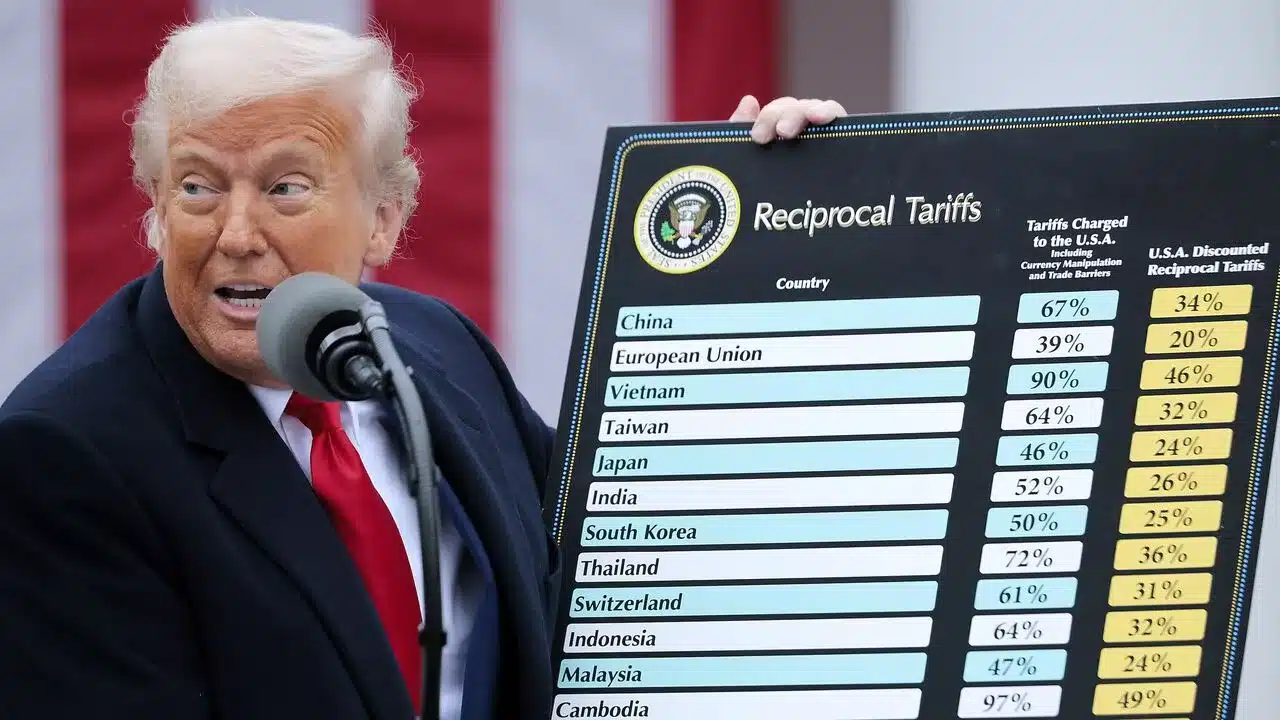
On July 8, 2025, former U.S. President Donald Trump announced sweeping new tariffs targeting most of the world, including Algeria. The general rate was set at 30 percent on goods. Trump stated that formal notifications outlining the exact rates for smaller countries would be sent soon, with most expected to face tariffs “a little over 10 percent.”

Algerian President Abdelmadjid Tebboune, speaking in a televised interview two days later, dismissed the U.S. decision as “a sovereign matter” that concerns Washington alone. “It affects American consumers,” he said. “Our exports to the U.S. are minimal—just 0.5% of our total—and it’s not worth turning into a battle.”

The Motivations Behind the Decision

At this stage, it’s becoming increasingly evident that the tariffs are not purely economic. They are clearly political as well. The steep rates—comparable to those levied against China (around 34 percent), the world’s second-largest economy—are far above the 10 percent tariffs applied to countries like Egypt, the Gulf states, Morocco, Lebanon, Sudan, Yemen, Djibouti, Mauritania, and the Comoros. The discrepancy is telling.

Mohamed Zennasni, an Algerian researcher in strategic and security studies, told Noon Post: “Algeria is a key regional actor in North and West Africa. The U.S. has strategic goals in the region, especially in terms of security and military cooperation. The visit of U.S. Africa Command (AFRICOM) Commander Gen.

Michael Langley to Algeria reflects this interest. But Algeria has consistently rejected any form of foreign military presence on its soil, as reaffirmed by senior Algerian officials.”

Trump’s tariffs also resonate with the logic of what’s known as “preemptive shock” theory—a tactic designed to disorient adversaries and impair their capacity to react effectively. This creates a situation in which the affected country, under duress, becomes more susceptible to the dominant party’s terms—whether militarily or economically.

This approach has long been part of Trump’s diplomatic playbook, particularly in his dealings with NATO and the European Union over European security strategy. A similar method was employed in the 1980s to integrate Latin American economies into the capitalist system, especially in countries like Chile and Argentina.

Economist Abdessamed Saoudi elaborated to Noon Post: “While Algeria is not among the top exporters globally, the high tariffs may be a bargaining chip in talks over bilateral agreements and opening strategic sectors to U.S. companies in exchange for lower tariffs.

Recently, energy giants like Chevron and ExxonMobil visited Algeria and met with President Tebboune and Energy Minister Mohamed Arkab, expressing interest in entering the Algerian market on a permanent basis.”

Zennasni also emphasized what he described as the “psychology of the primary decision-maker” in the U.S.—that is, Trump himself. “Coming from a business background and identifying with the isolationist current in U.S. politics, Trump prioritizes domestic interests over foreign expansion,” he said.

“Given America’s debt, its structural economic vulnerabilities, and the ongoing trade war with China, Trump is attempting to reduce import costs and boost American companies’ profit margins in the global economy.”

Trump’s Tariffs: Impact and Ramifications

This raises two critical questions: What does Trump gain from this decision? And what impact will it have on the Algerian economy?

Answering these requires a look at the volume of trade between the two countries. While up-to-date trade statistics are scarce, data from Algerian customs—tasked with monitoring foreign trade—show that the U.S. ranks fifth among Algeria’s export clients, accounting for 5.75 percent of its exports, worth about $25.92 billion. These consist mainly of crude oil, petroleum products, steel, cement, fertilizers, and foodstuffs.

The top four importers of Algerian goods are Italy (21.83%), Spain (12.13%), France (9.94%), and the Netherlands (7.38%). These figures suggest that the short-term impact of U.S. tariffs will be relatively limited. However, longer-term consequences could be significant.

Especially if oil and gas prices fall, as they did in April when similar announcements led Brent crude to drop from around $73 to $66 per barrel within 24 hours. For oil-dependent states like Algeria—where hydrocarbons make up over 97% of exports—that scenario could be devastating.

Zennasni observed: “The tariffs themselves won’t hurt Algeria much, given the low volume of trade. And economically, tariffs typically burden the importer more than the exporter, as they increase import costs. In that sense, the U.S. might import less or seek cheaper alternatives. From a security perspective, Algeria’s concern lies more with the broader U.S. strategic approach than the tariffs themselves.”

Strategic Responses and Policy Shifts

Because the U.S. decision carries political and economic messages, Algeria must respond with a multi-pronged counterstrategy. Chief among them is diversifying its international partnerships, particularly with Asia, Africa, and Latin America. This pivot was signaled by Algeria’s accession to the Treaty of Amity and Cooperation with ASEAN—a move widely interpreted as a deliberate economic reorientation toward the East.

Algeria has also made diplomatic inroads with BRICS, culminating in its accession to the BRICS New Development Bank (NDB) during its 9th annual meeting in Cape Town on August 31, 2024. The country is currently reviewing its long-standing Association Agreement with the European Union, in place since 2005 under former President Abdelaziz Bouteflika.

Earlier, Algeria joined China’s Belt and Road Initiative—an alignment that holds major strategic value. Beyond infrastructure projects like the Hamdania Port in Tipaza, poised to become the largest in Africa and the Mediterranean, Algeria serves as a gateway to the African continent for Chinese investment.

Another suggested remedy is to attract non-U.S. investors into sectors targeted by Trump’s tariffs, such as fertilizers and steel. Algeria’s steel exports to the U.S. have surged in recent years, thanks in part to new industrial facilities like the Qatari-backed Bellara complex in Jijel and the Tosyali partnership in Oran.

Similar strategies could be extended to food and electronics sectors, effectively neutralizing the U.S. tariffs by stripping them of real-world impact.

Download this article as PDF
Share this Article
Facebook Twitter Whatsapp Whatsapp Telegram Email Copy Link
فريق التحرير
By فريق التحرير تقارير يعدها فريق تحرير نون بوست.
Follow:
Previous Article نون بوست Hikmat al-Hijri: From Spiritual Authority to Political Instrument
Next Article نون بوست The Return of George Ibrahim Abdallah

Read More

  • U.S. Regime‑Change Policies: Why They Are Destined to Fail U.S. Regime‑Change Policies: Why They Are Destined to Fail
  • The Gulf’s Balancing Act: Iran, Israel, and Hidden Links
  • Iraq–Turkey Oil Export Treaty: Why Did Ankara Cancel It After 52 Years?
  • Syria’s Northeast on Edge: QSD Between Ankara and Damascus
  • Has Europe Changed Its Stance on Israel… or Just Its Language?
part of the design
NoonPost Weekly Newsletter

You May Also Like

U.S. Regime‑Change Policies: Why They Are Destined to Fail

U.S. Regime‑Change Policies: Why They Are Destined to Fail

إسراء سيد Esraa sayed 8 April ,2026
The Gulf’s Balancing Act: Iran, Israel, and Hidden Links

The Gulf’s Balancing Act: Iran, Israel, and Hidden Links

فريق التحرير Noon Post 8 April ,2026
Iraq–Turkey Oil Export Treaty: Why Did Ankara Cancel It After 52 Years?

Iraq–Turkey Oil Export Treaty: Why Did Ankara Cancel It After 52 Years?

فريق التحرير Noon Post 8 April ,2026

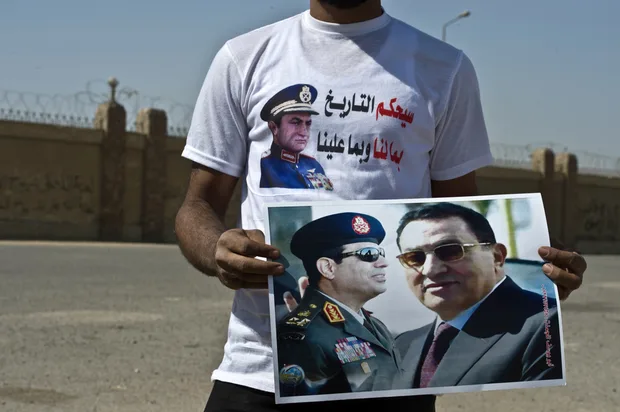
مصر السيسي ليست كمصر مبارك

إيميلي كرين
إيميلي كرين Published 8 February ,2016
Share
sisi_mubarak_afp

ترجمة وتحرير نون بوست

كثيرًا ما يتم تصوير الرئيس المصري عبد الفتاح السيسي من قِبل منتقديه باعتباره نسخة من سلفه، الرئيس المخلوع حسني مبارك، حيث يتم وصف فترة رئاسة السيسي باعتبارها استمرارية أكثر إجرامًا واستبدادية من حكم مبارك.

بشكل ظاهري، يبدو سهلًا للغاية تشبيه السيسي بمبارك، فكلاهما من ضباط الجيش المتقاعدين اللذين أضحيا حكامًا طغاة سيئي السمعة، ولكن هذا الأمر هو القاسم الوحيد المشترك بينهما،  فهما يختلفان تمامًا عن بعضهما البعض سواء في رحلتهما السياسية، سياساتهما الداخلية والخارجية، مستشاريهما، وأساليب حكمها؛ فالسيسي ليس مبارك، ولقد آن الآون ليقر الجميع بذلك.

بادئ ذي بدء، يتمتع السيسي ومبارك بالرحلة بمسار مختلف جذريًا في رحلة رئاسة الجمهورية؛ فمبارك بدأت حياته السياسية في عام 1975، واستغرق الأمر منه ست سنوات كاملة قبل أن يصبح رئيسًا لمصر، وخلال السنوات التي قضاها في منصب نائب الرئيس في عهد أنور السادات، انخرط مبارك بشكل كامل في المؤسسة السياسية في مصر، وخلال رحلاته الدبلوماسية العديدة، طور علاقات شخصية قوية مع أهم القادة العرب، بما في ذلك ولي العهد الأمير فهد من المملكة العربية السعودية وسلطان عمان قابوس بن سعيد، وبحكم منصبه كنائب لرئيس الحزب الوطني الديمقراطي، كثيرًا ما دُعي لترؤس الاجتماعات بدلًا من السادات، حتى تم اعتباره كزعيم للحزب قبل توليه الرئاسة، وبطبيعة الحال، ولكونه بطل حرب ونائب وزير دفاع سابق، كان يتمتع بولاء القوات المسلحة أيضًا.

عندما اغتيل السادات في عام 1981، تم اختيار مبارك للرئاسة بدعم كامل من حلفاء مصر الغربيين، نخبة رجال الأعمال، القوات المسلحة، ورجالات الحزب الوطني، وعلى مدى العقود التي تلت ذلك، اطردت قوة موقف مبارك ضمن المؤسسة السياسية، حيث استمر بسياسة السادات بالخصخصة التي منحته ميزات عديدة؛ فباع الشركات العامة للحلفاء السياسيين الأشد أهمية، وأعطى بقية الحصة التافهة للقوات المسلحة، والأمر الأهم من ذلك ربما، قيامه بتحويل الحزب الوطني إلى المؤسسة السياسية الرئيسية في مصر، بحيث كان يتوجب على جميع الأشخاص الذين ينوون الانخراط بالسلك السياسي، على جميع الأصعدة، الحصول على تأييد الحزب الوطني للوصول إلى المنصب.

السيسي على الناحية الأخرى، يعد شخصية جديدة على المشهد السياسي في مصر؛ فقبل تعيينه من قِبل محمد مرسي كوزير للدفاع في عام 2012، لم يسمع أحد تقريبًا بالسيسي، وخلافًا لمبارك، ارتقى السيسي بشكل مفاجئ وقوي وغير تقليدي إلى السلطة؛ فبعد أقل من عام على تعيينه كوزير للدفاع، خلع مرسي من منصب الرئاسة بانقلاب عسكري مدعوم شعبيًا، ومن ثم، وبعد الانقلاب بحوالي شهر ونصف، أمر بتفريق احتجاجين إسلاميين بشكل دموي، مزهقًا أراوح أكثر من 1000 شخص؛ مما جعله عرضة لموجة صلدة من الإدانة الدولية، حيث علّقت الولايات المتحدة مساعداتها العسكرية السنوية لمصر للمرة الأولى منذ أكثر من 30 عامًا، استقال نائب الرئيس محمد البرادعي من منصبه احتجاجًا على المجزرة، وأعرب أنصار الإخوان المسلمين في جميع أنحاء البلاد عن غضبهم.

عندما ترشح السيسي لمنصب الرئاسة في الانتخابات التي جرت في ربيع ذلك العام، لم يتمتع بأي دعم من أي مؤسسة سياسية، ولكن، وعلى أرض الواقع، كان المشهد السياسي في حالة من الفوضى في تلك المرحلة، لذا بالكاد ترشح أي خصم سياسي مُعتبر لخوض الانتخابات ضد السيسي، خاصة في ظل منع رجالات مبارك من الترشح لمنصب الرئاسة، وإعلان أكبر حركة معارضة في البلاد، الإخوان المسلمين،كمنظمة إرهابية، وبالمحصلة، ظفر السيسي، بدون منافسة تقريبًا، بالانتخابات الرئاسية بنسبة مشاركة بلغت 37%.

لا يتمتع السيسي إلا ببعض الكماليات التي كان يحظى بها مبارك، فعند تسلمه حكم البلاد، نفدت الشركات العامة التي يمكن له خصخصتها ومبادلتها بالولاء السياسي، كما وأن علاقته مع كبار رجال الأعمال في البلاد لا يمكن اعتبارها مستقرة جرّاء الحالة الاقتصادية المزرية التي وصلت لها مصر إثر سنوات من انعدام الاستقرار السياسي، وعلاوة على كل شيء، يفتقر السيسي لوجود الحزب الوطني أو أي مؤسسة سياسية قادرة على منحه الشرعية.

ومن هذا المنطلق، فإن المؤسسة الوحيدة التي تدعم السيسي هي الجيش المصري، وهذا هو السبب الرئيسي الذي يحذو بنا للقول بأن السيسي ليس مبارك ولا يمكن له أن يكون كذلك، وهذه النقطة هامة لسببين.

أولًا وقبل كل شيء، هذا يعني أن موقف السيسي كرئيس للجمهورية أبعد ما يكون عن كونه آمنًا؛ مبارك كان قد أنشأ أساسًا متينًا لإمبراطوريته السياسية، بينما يقف السيسي على مملكة من الرمال المتحركة متكئًا على مؤسسة الجيش فقط، حيث تمكّن من استغلال النعم الطيبة للقوات المسلحة حتى الآن من خلال تزويد شركات القوات المسلحة بالتدفق المستمر للعقود والمشاريع، كمشروع قناة السويس ومشروع استصلاح الأراضي الزراعية.

لكن تمويل هذه المشاريع في المستقبل يعتمد إلى حد كبير على الاستثمارات الخليجية، ومع هبوط أسعار النفط إلى أدنى مستوياتها خلال العقد الحالي، يبدو تمويل الدول الخليجية لمصر أمرًا مستبعدًا، وإذا جفت منابع المال، قد يجد السيسي نفسه بمواجهة ضغوط ليست متأتية عن الشعب فحسب، بل من القطاع الخاص، ناهيك عن ضباط الجيش.

في مثل هذه الحالة، قد لا تعترض القوات المسلحة على قيام انتفاضة شعبية أخرى للإطاحة بالسيسي، والأخير يدرك ذلك جيدًا؛ فسلطته لا يمكن تأمينها إلا من خلال إبقاء الضباط سعداء، والسيسي ملتزم بشكل تام بضمان حصول ذلك.

ثانيًا، ولكون السيسي يدين بالفضل لما هو عليه للقوات المسلحة، فإن هذا يسمح للأخيرة بالتدخل بشكل مباشر في السياسة المصرية أكثر من أي وقت مضى في تاريخ مصر الحديث؛ فعلى الرغم من أن مبارك ينحدر من خلفية عسكرية، إلا أنه تحول إلى رجل سياسي بالكامل بمجرد اعتلائه دفة الرئاسة، وخلال ذلك، كان مبارك يدرك، بطبيعة الحال، أهمية الحفاظ على ولاء القوات المسلحة، ولكنه لم يسمح لها بالانخراط بشكل سافر في مجال الحكم.

من الجهة الآخرى، بقي السيسي في سلك القوات المسلحة حتى أعلن عن ترشحه لمنصب الرئاسة، وحينذاك تحول إلى حاكم مدني ولكن على الورق فقط؛ فهو لا يزال رجلًا عسكريًا بكامل جوارحه، ومن خلاله، استطاعت القوات المسلحة إملاء القوانين التي تعطيها صلاحيات موسعة ضمن النظام المدني للعدالة الجنائية، كما استغلته لتوسيع حصتها من الاقتصاد المدني.

أصدر السيسي 263 مرسومًا رئاسيًا في فترة غياب البرلمان، 32 مرسومًا منها يخص قوات الأمن والقوات المسلحة، حيث أصدر مراسيمًا لزيادة المعاشات العسكرية في عدة مناسبات، ومنح القضاء العسكري سلطة وامتيازات على المؤسسات العامة، بما في ذلك المدارس، كما أدخل تعديلات على القوانين التي تحكم رتب ضباط الجيش وفوائدها.

مبارك كان ديكتاتور الديكتاتورين، حيث حافظ على ولاء المؤسسات الرئيسية في جميع أنحاء الطبقة الحاكمة دون أن يعدهم بأي ولاء بالمقابل، ولم يكن مسؤولًا أمام أحد، كما لم يدن بالفضل لأحد، وحكم مصر لمدة 30 عامًا متمتعًا بالحصانة من العقاب، أما السيسي فهو ديكتاتور عسكري، يدين بولائه للقوات المسلحة علاوة على كل شيء، ويتصرف بالنيابة عنها، وكرئيس، بدأ السيسي لتوه بإقحام مصر في حقبة غير مسبوقة من الحكم العسكري.

المصدر: ميدل إيست آي

TAGGED: السيسي ، الوضع المصري ، حكم مصر ، مبارك ، مقارنة
Download this article as PDF
Share this Article
Facebook Twitter Whatsapp Whatsapp Telegram Email Copy Link
إيميلي كرين
By إيميلي كرين متخصصة في الاجتماع والأنثروبولوجيا، تقيم في القاهرة
Follow:
Next Article نون بوست The Stigma of “ISIS”: A Heavy Legacy Haunting Women and Children of Former Members
part of the design
NoonPost Weekly Newsletter
dark

An independent media platform founded in 2013, rooted in slow journalism, producing in-depth reports, analysis, and multimedia content to offer deeper perspectives on the news, led by a diverse young team from several Arab countries.

  • Politics
  • Society
  • Rights & Liberties
  • Opinions
  • History
  • Sports
  • Education
  • Technology
  • Economy
  • Media
  • Arts & Literature
  • Entrepreneurship
  • Travel
  • Cinema & Drama
  • Food
  • Health
  • Culture
  • Latest Reports
  • Files
  • Long Reads
  • Interviews
  • Podcast
  • Interactive
  • Encyclopedia
  • In Pictures
  • About Us
  • Our Writers
  • Write for Us
  • Editorial Policy
  • Advanced Search
Some rights reserved under a Creative Commons license

Removed from favorites

Undo
Go to mobile version