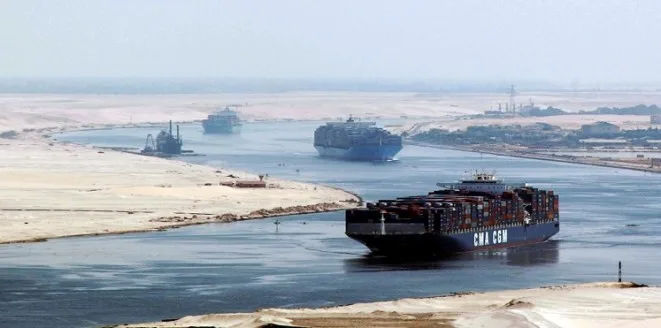

Since the advent of Islam and until the discovery of oil, Mecca welcomed around 100,000 pilgrims annually. They arrived on foot, by sea, or riding animals. But this scene changed drastically with the development of modern transportation. Today, nearly three million Muslims perform the Hajj each year.
This massive increase in pilgrims has been accompanied by an accelerated pace of modernization projects adopted by Saudi Arabia. While the kingdom’s leaders view these changes as necessary to meet the needs of contemporary Hajj, they have had severe consequences, undermining the ritual itself and neglecting Mecca’s historical identity.
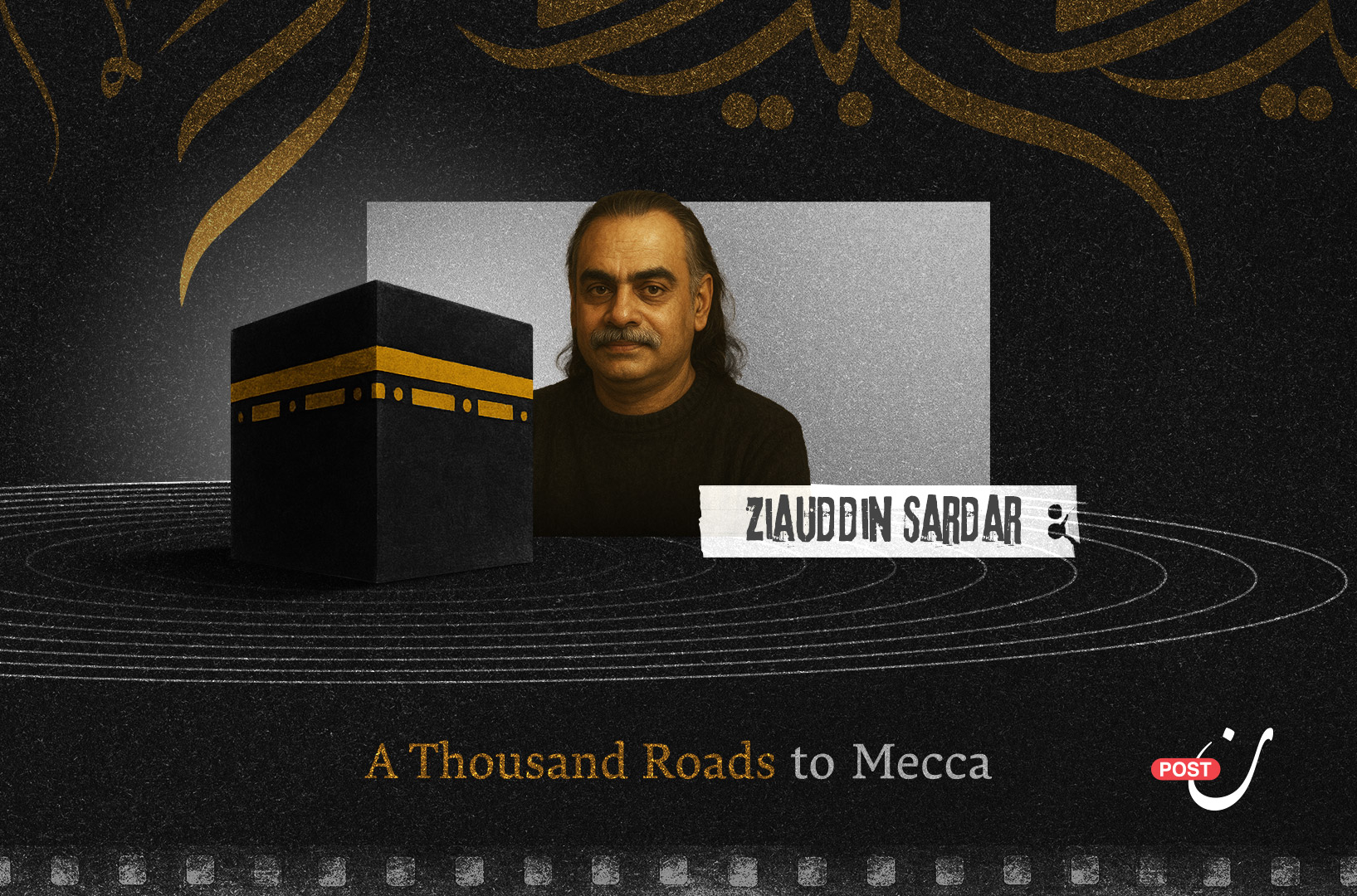
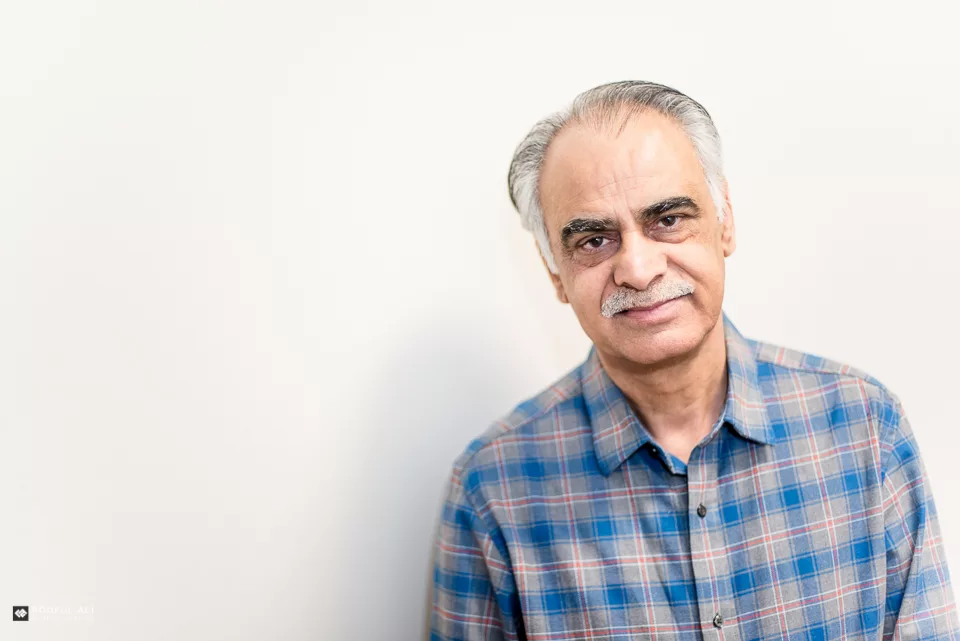
Amid this rapid transformation, Ziauddin Sardar performed the Hajj five times during his residence in Saudi Arabia in the late 1970s. Over the years, he developed a deep familiarity with Mecca and witnessed firsthand the sweeping changes it underwent.
His account stands out as one of the most prominent modern critiques of the pilgrimage, offering a comprehensive assessment of the Hajj experience in its contemporary context. He compiled his reflections in his 2014 book, Mecca: The Sacred City.
What Led Him to Hajj?
Born in 1951 in Pakistan, Sardar was raised between Pakistan and London during the 1960s. His connection to Mecca began in childhood—an image of the Kaaba was the only decoration in his family’s home. Through stories of the Prophet’s life, Mecca became more familiar to him than his own homeland.
He memorized the rites of Hajj and envisioned sites like Mina, Arafat, and Muzdalifah, dreaming of one day turning that imagined Mecca into a lived reality.
To Sardar, Mecca was a spiritual and moral compass. “I never doubted,” he writes, “that I must always turn to Mecca if I wanted to achieve anything of value in life.”
In his mid-twenties, Sardar’s dream materialized. He joined the newly founded Hajj Research Center in Jeddah in 1975. Over the next five years, he immersed himself in studies on the pilgrimage, contributing technical recommendations aimed at preserving the sacred city’s urban and historical character.
On Foot to Reclaim a Lost Experience
During his stay in Saudi Arabia, Sardar observed profound changes in Mecca. The idealized image he carried since childhood clashed with the reality unfolding each Hajj season.
When the Grand Mosque underwent expansion in the late 1970s, it no longer resembled the Mecca etched in his heart. This dissonance prompted him to perform his fifth Hajj on foot, hoping to recapture the essence of a pilgrim’s journey through history.
In an effort to replicate the traditional journey, Sardar sought an animal—opting for a donkey over a camel, which he felt had become too aristocratic. After a two-week search in and around Jeddah, he bought a donkey for 5,000 riyals after tough negotiations.
On the sixth of Dhu al-Hijjah, Sardar set off with his friend Zafar, their guide Ali, and the donkey, whom he named “Genghis.” They left Jeddah via the highway, then veered toward the Hejaz mountains, camping at night in remote valleys. Bedouins looked on in astonishment, as if witnessing time travelers.
Eventually, the donkey became too burdensome. Sardar tied it beside an old well, and Ali arranged for it to be transported to Mina by truck—after negotiating with reluctant drivers for a steep fee.
Sardar resumed his journey on foot via the highway, but regretted this choice due to the dangers posed by heavy traffic. Exhausted, he finally reached the Grand Mosque.
At his tent atop a hill in Mina, he reflected on the spiritual essence of Hajj—only to be humbled when a fellow pilgrim introduced him to a man from Somalia who had walked for seven years to reach Mecca. Sardar’s pride evaporated.
The core lesson, he realized, was the need to accept reality and seek solutions. His romanticized vision of crossing the desert to reach the Kaaba did not produce the spiritual elation he expected. Instead, it revealed a darker side of Mecca’s transformation.
Recurring Disasters and Ignored Warnings
Sardar was not merely a pilgrim—he contributed to institutional efforts to improve the Hajj. At the Hajj Research Center, he advocated for fire-resistant tents, shaded rest areas, and pedestrian movement to key sites. He called for restrictions on private vehicles and emphasized eco-conscious alternatives. Saudi authorities ignored these proposals.
He fiercely criticized the third Grand Mosque expansion (1988–2005), particularly the radical changes it brought: new minarets, air conditioning systems, expanded roads, tunnels, and infrastructure in Mina, Arafat, and Muzdalifah. He noted the expansion of the Jamarat area into a five-level complex capable of accommodating 300,000 pilgrims per hour.
Despite their scale, these projects posed safety risks. Sardar recalled that the Hajj Research Center strongly opposed tunnel construction, labeling them “death traps.” These warnings went unheeded.
He cited multiple disasters as consequences of flawed planning: the 1990 Mina tunnel stampede that killed 1,426 pilgrims; and further tragedies at the Jamarat site in 1994, 1998, 2001, 2003, 2004, and most notably in 2006, when 346 died in a stampede. That same year, the Gaza Hotel collapsed, killing 76.
Despite adjustments after each disaster, design flaws persisted—prompting Sardar to predict a major tragedy every three years, a grim forecast that came true. His frustration eventually led him to resign from the center.
The Rise of Skyscrapers and Spiritual Decline
Sardar believes Mecca changed dramatically in the late 20th century. Real estate speculation exploded, skyscrapers rose, and traditional architecture gave way to chaos. Cars dominated the urban landscape, green spaces vanished, and spiritual calm was replaced by noise and congestion. In his view, only the Kaaba retains the old city’s soul.
He criticizes the construction of the Abraj Al-Bait complex and likens modern Mecca to Disneyland or Las Vegas—glorifying luxury, wealth, and consumption rather than faith. The Clock Tower, the world’s second tallest building, visually dominates the Kaaba, reshaping Mecca’s skyline.
Sardar compares Mecca to Houston, Texas—an oil-rich city lacking identity. He argues that members of the Saudi royal family were inspired by Houston’s modernity and climate, aiming to remake Mecca in its image.
He warns that plans to build 130 skyscrapers overlooking the Grand Mosque and increase capacity to five million worshippers could erase Mecca’s Ottoman heritage—particularly the ornate columns inscribed with Companions’ names. Even sites like the Cave of Hira are at risk of demolition.
Erasing History
From the 1950s, Mecca began expanding to accommodate pilgrims. While early urban policies respected the city’s sacred character, and historical preservation efforts emerged, the tide turned in the mid-1970s.
Sardar witnessed the bulldozing of historic buildings and entire neighborhoods to expand the mosque and create open spaces. After the 1976 reconstruction, the mosque grew from 2.9 to 19 hectares, with its interior dramatically altered—including the demolition of traditional Islamic school arcades.
Surrounding areas filled with modern high-rises, stripping Mecca of its Islamic character and weakening the spiritual dimension of the Hajj. The city began to resemble any other noisy, polluted metropolis.
In response, Sami Angawi founded the Hajj Research Center to preserve Mecca’s spirit, with Sardar joining him to document the city’s history and environment. They warned that unchecked development would erase Mecca’s identity and displace its native population.
When King Fahd came to power in 1982, a second major expansion followed—introducing 15 new gates, two domes, and two minarets. Though capacity increased significantly, the mosque’s traditional aesthetic was irreversibly altered.
Mecca’s original residents, whose families had lived there for generations, felt alienated. Youths struggled to relate to the city, while elders mourned the loss of their neighborhoods and social bonds.
Sardar left the Hajj Research Center upon realizing that Saudi authorities were intent on turning Mecca into a spiritual theme park. He laments that 95% of Mecca’s ancient architecture—some dating back a millennium—has been destroyed. In 2012, entire neighborhoods were razed to make way for the Clock Tower complex.
He decries the destruction of sacred heritage without global consultation or the input of Islamic architecture experts. Despite drafting urban plans to preserve Mecca’s identity, the authorities—fueled by Wahhabism and oil wealth—dismissed his efforts.
“Where,” he asks, “are Muslims as their past is erased at the birthplace of their identity?” He’s troubled by the global silence. Only Turkey and Iran have protested the destruction. Other Muslim nations remain silent, fearful of Saudi Arabia’s economic and political influence, especially its control over Hajj quotas.
Consumerism and the Hollowing of Hajj
Sardar argues that a forgotten Mecca lies hidden behind a veil of sanctity. Except for the Kaaba, the city has lost its connection to its environment and heritage. Some visitors even describe it as “homeless,” comparing its streets to those of Houston—a symbol of its loss of spirituality.
To Sardar, Mecca is full of contradictions. The sacred sanctuary has been engulfed by hyper-consumerism. The city has been turned into a glass-and-steel commercial complex, where Hajj now revolves around retail rather than worship.
Even the rituals have become commodified. Pilgrims no longer share common tents but are grouped by tour companies into air-conditioned accommodations, tiered by luxury. Hajj packages now range from one to seven stars, undermining the principle of equality at the heart of the pilgrimage.
Saudi Arabia, he notes, targets wealthy pilgrims who spend freely in luxury malls rivaling those of Paris, London, or New York. Through public-private partnerships, it has focused on high-end services to attract “premium pilgrims.”
Vanishing Religious Diversity
Sardar believes Mecca’s transformation has erased its religious diversity. While it never rivaled major Islamic centers like Cairo or Damascus in scholarship, Mecca once embraced multiple schools of thought. Today, a single interpretation of Islam prevails.
Hajj has become a tightly regulated tourism operation. Affluent pilgrims travel privately, rarely engaging with others from different backgrounds. The pilgrimage has become a ritualized market.
Sardar laments the loss of scholarly gatherings that once animated the Hajj. These forums allowed for rich theological and philosophical exchanges, reflecting the diversity of the Muslim world. Today, Saudi authorities prohibit political discourse during Hajj. He accuses the kingdom’s religious establishment of monopolizing the Hajj experience and diminishing its deeper meanings.
Environmental Harm
During his first pilgrimage in 1975, Sardar was struck by the contrast between his spiritual expectations and the harsh reality. By the late 1970s, he grew alarmed by the environmental toll of Mecca’s expansion. Water pollution and toxic emissions worsened due to traffic congestion.
Sardar noted that vehicles in Mina alone produced 80 tons of emissions daily during Hajj, exposing pilgrims to harmful smog, heat, and fatigue. His proposed solutions were ignored.
Despite its glittering surface, Mecca suffers from poor infrastructure. Sardar notes that outdated sewage systems still cause water leaks near the Grand Mosque and other sites—including sacred cemeteries—highlighting the gap between superficial modernity and structural decay.
Despite his scathing critique, Sardar affirms that Mecca remains a dream for every Muslim—a source of enduring inspiration, regardless of political upheavals or urban changes.