NoonPost NoonPost

NoonPost

  • Home
  • Politics
  • Economy
  • Society
  • Culture
  • Files
  • Long Reads
  • Podcast
AR
Notification Show More
نون بوست
“There Are Nights I Can’t Close My Eyes”: How Gazans Are Living in Homes on the Brink of Collapse
نون بوست
From al-Jolani to Ahmad al-Shara: The Evolution of Syria’s New Leader
نون بوست
When Political Islam Receded in Egypt: Who Filled the Void?
نون بوست
An Extension of Genocide: Gaza’s Detainees Speak Out
نون بوست
A Tightrope Between Survival and Sovereignty: The Syrian Government Faces Normalization Pressures
نون بوست
American Aircraft Carriers: Has the Era of “100,000 Tons of Diplomacy” Ended?
نون بوست
U.S. Regime‑Change Policies: Why They Are Destined to Fail
نون بوست
Transformations of Israeli Judaism: Between the Victim Complex and the Colonizer’s Doctrine
نون بوست
The Gulf’s Balancing Act: Iran, Israel, and Hidden Links
نون بوست
Iraq–Turkey Oil Export Treaty: Why Did Ankara Cancel It After 52 Years?
نون بوست
Syria’s Northeast on Edge: QSD Between Ankara and Damascus
نون بوست
Has Europe Changed Its Stance on Israel… or Just Its Language?
NoonPost NoonPost
AR
Notification Show More
نون بوست
“There Are Nights I Can’t Close My Eyes”: How Gazans Are Living in Homes on the Brink of Collapse
نون بوست
From al-Jolani to Ahmad al-Shara: The Evolution of Syria’s New Leader
نون بوست
When Political Islam Receded in Egypt: Who Filled the Void?
نون بوست
An Extension of Genocide: Gaza’s Detainees Speak Out
نون بوست
A Tightrope Between Survival and Sovereignty: The Syrian Government Faces Normalization Pressures
نون بوست
American Aircraft Carriers: Has the Era of “100,000 Tons of Diplomacy” Ended?
نون بوست
U.S. Regime‑Change Policies: Why They Are Destined to Fail
نون بوست
Transformations of Israeli Judaism: Between the Victim Complex and the Colonizer’s Doctrine
نون بوست
The Gulf’s Balancing Act: Iran, Israel, and Hidden Links
نون بوست
Iraq–Turkey Oil Export Treaty: Why Did Ankara Cancel It After 52 Years?
نون بوست
Syria’s Northeast on Edge: QSD Between Ankara and Damascus
نون بوست
Has Europe Changed Its Stance on Israel… or Just Its Language?
Follow US

Ceasefire in Sweida: Agreement Details and Implementation Challenges

يمان الدالاتي
Yaman Dalati Published 26 March ,2026
Share
نون بوست
نون بوست
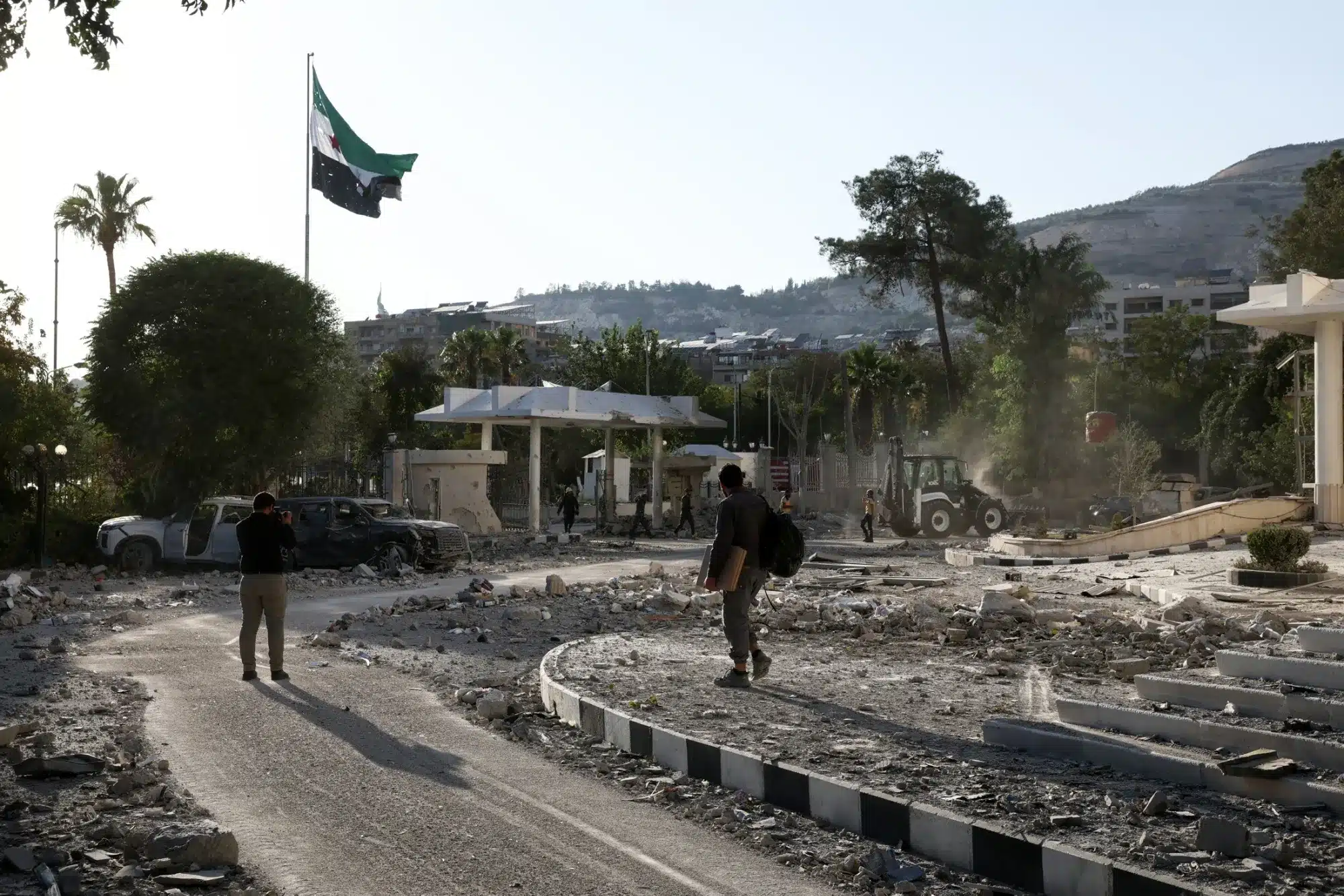
Syrian security forces near a damaged military compound in Damascus, July 16. Photo: Bakr Alkasem / Agence France-Presse.

In the early hours of July 17, Syrian President Ahmad al-Shara announced a ceasefire agreement in Sweida Province, coordinated with the leadership of the Druze Unitarian Muslim community.

The goal: to end the armed clashes that have gripped the city in recent days and restore stability to southern Syria. In his statement, al-Shara emphasized that “building a new Syria requires all citizens to rally around the state, adhere to its principles, and prioritize national interests over personal considerations.”

The agreement follows a dramatic escalation in southern Syria, which in recent hours included Israeli airstrikes on the capital Damascus that killed a civilian woman and wounded others, alongside concurrent ground movements in Daraa and Quneitra provinces.

In Sweida alone, the Syrian Network for Human Rights documented over 369 casualties—killed and injured—since the outbreak of clashes on July 13, among them security personnel, local fighters, and civilians.

What’s in the Ceasefire Agreement?

The ceasefire, announced by President al-Shara and confirmed by the Ministry of Interior, outlines a series of clear provisions aimed at restoring stability in Sweida and reintegrating the province fully into the Syrian state’s institutional framework.

At its core, the agreement mandates an immediate and comprehensive halt to all military operations. Local actors are required to cease any form of escalation or attacks on security forces or checkpoints. In return, army units will reposition to their barracks.

To enforce the truce, a joint monitoring committee comprising representatives from the state and Druze religious leaders will oversee implementation and ensure compliance. Internal security forces and police—bolstered by recruits from Sweida—will be deployed across the city and surrounding areas to safeguard civilians and strengthen public security. Leadership roles in the security file will be prioritized for officers native to the province.

The agreement also emphasizes the sanctity of private homes and property, prohibiting any assaults or vandalism in or around the city. Authorities pledged to protect civilians from violations.

A central clause addresses the issue of arms: a mechanism will be established, in coordination with the Ministries of Interior and Defense and local notables, to regulate heavy weaponry outside the framework of the state—while recognizing Sweida’s unique character.

The agreement reaffirms Syria’s unity and sovereignty over the entire province, including the reactivation of all state institutions and the restoration of basic public services such as water, electricity, healthcare, and fuel.

Additional provisions include state-secured access to the Damascus–Sweida highway, safe travel guarantees, and commitments to release detainees and reveal the fate of those forcibly disappeared during the recent events.

A fact-finding committee will also be formed to investigate violations, hold perpetrators accountable, and compensate victims according to the law. A follow-up committee will be established to oversee the agreement’s full implementation.

How Did Druze Religious Leaders Respond?

Reactions among Druze religious leadership varied sharply—from pragmatic endorsement by some clerics to outright rejection by the highest spiritual authority. In a video statement, Sheikh Youssef Jerbou‘ expressed support for the agreement, calling it a positive step toward restoring peace and stability in Sweida. He stressed that returning to state institutions was the only viable path to protect the province from disintegration.

Conversely, Sheikh Hikmat al-Hijri, the spiritual leader of Syria’s Druze community, categorically rejected the deal, reiterating that there had been no “negotiations or authorization” granted to the Syrian government.

He warned of social retribution against anyone who engaged with the state individually—a continuation of his confrontational stance and institutional defiance, even as southern Syria faces blatant Israeli interventions that exploit the current disorder.

Meanwhile, Israeli media circulated footage of Sheikh Mowafaq Tarif, the Druze spiritual leader in Israel, in a closed meeting with Israeli military officers. In the video, Tarif urged aerial intervention to “protect the Druze in Syria,” claiming an imminent “genocidal threat.”

The footage sparked widespread Syrian outrage online, with many denouncing it as a clear act of treason—evidence of collusion between Hijri and Israeli Druze leaders, who are also accused of complicity in the ongoing war against Gaza.

On the other side of the Druze spectrum, Laith al-Balous, a leader of the “Men of Dignity” movement, reaffirmed his group’s staunch opposition to any Israeli meddling in Sweida. He reiterated the movement’s commitment to Syria’s territorial integrity and declared the province an inseparable part of the Syrian state.

Al-Balous dismissed the appeals issued by the Druze spiritual leadership as “an unacceptable political ploy” that seeks to impose a foreign agenda unrepresentative of the broader Druze community.

Regional and International Reactions

Washington launched an intensive diplomatic effort led by President Donald Trump and Secretary of State Marco Rubio, while both Turkey and Qatar stepped in to mediate amid a flurry of regional diplomatic exchanges.

In a press briefing, U.S. State Department spokesperson Tammy Bruce characterized the events between Israel and Syria as a “misunderstanding rooted in historical tensions among southern factions like the Druze and Bedouins.” She emphasized that Secretary Rubio fully endorsed this interpretation.

Syria, in turn, called for an emergency UN Security Council session on Thursday, July 17, blaming Israel for the escalation and affirming its right to defend national sovereignty.

UN Secretary-General António Guterres condemned the Israeli airstrikes as an unacceptable escalation, citing “confirmed reports” of Israeli troop redeployments within the occupied Golan Heights. He reiterated the need to uphold the 1974 Disengagement Agreement.

UN Special Envoy for Syria Geir Pedersen called for an immediate ceasefire across all fronts and urged a return to local and international dialogue mechanisms to avoid a broader explosion in southern Syria.

Former Progressive Socialist Party leader Walid Jumblatt also weighed in, calling for direct talks between the Syrian government and Sweida’s key actors. He warned that “Israel does not protect the Druze—it exploits certain factions to advance its own agenda.”

Several Arab nations—including the UAE, Qatar, Saudi Arabia, Kuwait, Egypt, Algeria, Lebanon, and Iraq—issued official statements through the Arab League, the Gulf Cooperation Council, the International Union of Muslim Scholars, Hamas, and Hezbollah, all condemning the Israeli attacks and calling for urgent international action.

Challenges Facing the Ceasefire

Despite the agreement, multiple political and security challenges lie ahead. Rather than marking a definitive end to the crisis, the deal represents a transitional pause. Politically, the most pressing concern is the continued attempt to bypass state sovereignty by granting informal legitimacy to Israeli involvement through Sheikh al-Hijri’s religious authority under the guise of “protecting the Druze.”

On the security front, the risk of renewed clashes remains. Armed groups from both sides—including tribal militias from rural Daraa and factions loyal to Hijri—may reignite hostilities in Sweida or its surroundings. Such a relapse would reset the conflict to square one, now further complicated by heightened international entanglements that could constrain Damascus’s ability to respond.

Alongside these hurdles are growing social repercussions. Sweida’s reputation within broader Syrian society is taking a hit, especially following the Israeli strike on Damascus, which shocked millions. Local campaigns have emerged urging an economic boycott of Sweida residents.

While still limited in scope, such sentiment could escalate into broader social exclusion, threatening the province’s integration. University students and government employees from Sweida may soon face hostility simply for leaving the province.

Syria today is confronting more than a local skirmish in the south—it faces a national reckoning. The true test lies in citizens’ ability to discern real threats from fleeting allegiances. President al-Shara’s speech laid out the roadmap: rallying behind the state and adopting institutional solutions over factional impulses. As for confronting Israel—long skilled in exploiting internal fractures—it begins with denying it the opportunity to turn the south into a bargaining chip.
Download this article as PDF
Share this Article
Facebook Twitter Whatsapp Whatsapp Telegram Email Copy Link
يمان الدالاتي
By يمان الدالاتي صحفية ومحررة في موقع نون بوست
Follow:
Previous Article نون بوست The Lost Mecca: Ziauddin Sardar’s Pilgrimage Experience Amid Expansion and Demolition
Next Article نون بوست What’s Being Planned for Northern West Bank Refugee Camps?

Read More

  • U.S. Regime‑Change Policies: Why They Are Destined to Fail U.S. Regime‑Change Policies: Why They Are Destined to Fail
  • The Gulf’s Balancing Act: Iran, Israel, and Hidden Links
  • Iraq–Turkey Oil Export Treaty: Why Did Ankara Cancel It After 52 Years?
  • Syria’s Northeast on Edge: QSD Between Ankara and Damascus
  • Has Europe Changed Its Stance on Israel… or Just Its Language?
part of the design
NoonPost Weekly Newsletter

You May Also Like

U.S. Regime‑Change Policies: Why They Are Destined to Fail

U.S. Regime‑Change Policies: Why They Are Destined to Fail

إسراء سيد Esraa sayed 8 April ,2026
The Gulf’s Balancing Act: Iran, Israel, and Hidden Links

The Gulf’s Balancing Act: Iran, Israel, and Hidden Links

فريق التحرير Noon Post 8 April ,2026
Iraq–Turkey Oil Export Treaty: Why Did Ankara Cancel It After 52 Years?

Iraq–Turkey Oil Export Treaty: Why Did Ankara Cancel It After 52 Years?

فريق التحرير Noon Post 8 April ,2026

النفايات بين إنتاج للكهرباء في تركيا وإنتاج للسرطانات في لبنان

مناف قومان
مناف قومان Published 10 February ,2016
Share
d389b33c-6f3b-4d58-adc7-ec5f07634329

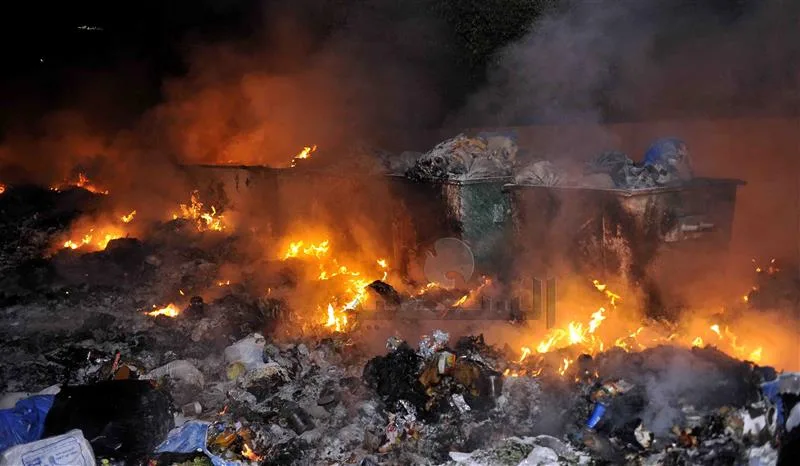
لم يعد المواطن اللبناني يتمتع برائحة القهوة اللذيذة صباحًا، فرائحة النفايات المحترقة أو كما يقال بالعامية “الزبالة” طغت على كل رائحة طيبة، ففي يوليو/ تموز العام الماضي بدأت النفايات تتكدس في الحاويات على إثر إغلاق مكب رئيسي وتم إلغاء مناقصة لاختيار ست شركات لجمع ومعالجة النفايات بدعوة ارتفاع تكلفة العروض المالية المقدمة، حتى استثارت الرائحة الحراك المدني في أغسطس من العام الماضي فخرج آلاف المدنيين متهمين الحكومة والمسؤولين بالتقصير ورافعين شعار “طلعت ريحتكم”.

وقد ازدحمت مواقع التواصل الاجتماعي بالصور والانتقادات والتعليقات ضد أداء الحكومة التي عجزت عن حل مشكلة نفايات ونُشرت هاشتاجات كثيرة تصف الحال المزري الذي وصلت إليه البلاد بعد غرقها بالنفايات من قبيل “#يا_خوفي_عهلبلد” “#لبنان_يغرق”، “#اقترح _اسم _للعاصمة”.

نون بوست

يعاني العالم اليوم من فيروس “زيكا” الذي أعلنت منظمة الصحة العالمية حالة الطوارئ لمواجهته لما يسببه من أمراض عضال و تضافر الجهود العلمية في شتى أنحاء العالم لابتكار مصل لهذا الفيروس الخطير . أما نفايات لبنان التي يؤدي حرقها إلى تضاعف المادة المسرطنة وانتشار الأمراض, فقد اعلنت الحكومة  حالة الطوارئ لمواجهة الأزمة علما ان حلها لا يحتاج  لاختراع أو ابتكار، و ما زالت الأزمة حتى يومنا هذا أي سبعة أشهر منذ بدئها، ما ينم عن تباطؤ وتكاسل من قبل الحكومة والجهات المعنية في حل هذه المشكلة التي يؤدي تفاقمها إلى أمور لا يحمد عقباها خصوصًا بعد قدوم فصل الشتاء، حيث إن الأمطار والنفايات تشكلان بيئة مناسبة لانتشار الأوبئة ونمو القوارض والبكتيريا وهو ما يهدد بأمراض خطيرة يأتي في أولها الكوليرا والسل.

قامت عدة بوادر للحل في الأشهر الماضية من قبيل ما تقرر بعد الاجتماع الطارئ الذي عقدته الحكومة بعد اندلاع الاحتجاجات حيث تقرر العمل بفكرة جمع النفايات المكدسة في الطرقات وتفعيل عمل البلديات وفتح مكبين جديدين لطمر ومعالجة النفايات في منطقة سرار بعكار شمالي لبنان ومنطقة المصنع في سلسلة جبال لبنان الشرقية، إلا أن عوائق سياسية ورفضًا شعبيًا لإقامة مطامر في مناطق معينة أعاق تنفيذها.

ومن ثم ظهرت حلول أخرى على السطح من قبيل صفقات ترحيل النفايات إلى الخارج التي فشلت بعد مدة بسبب عدم استيفاء الشروط الكافية للشركات، وتم ترويج أن السلطة تنوي جلب 50 محرقة للنفايات ستوزع على كل الأراضي اللبناينة تقوم على مبدأ التفكيك الحراري للنفايات واستخلاص ما يمكن استخلاصه منها، إلا أن هذا لم يتم و لاقى رفضًا شعبيًا كذلك.

وبعد هذه الفترة خلت الساحة اللبنانية من أي حل جذري علمي لهذه الأزمة؛ فبدأت البلديات في بيروت وغيرها بإحراق النفايات في الحاويات مرتأية أنها أسهل طريقة للتخلص من النفايات المتكدسة، علمًا أنه حسب نتائج الوحدة البحثية المشتركة بين الجامعة الأمركية في بيروت والمجلس الوطني للبحوث العلمية فإنه خلال الأيام التي تُحرق فيه النفايات تزيد فيه المواد المسرطنة بنسبة 2300% على الأقل.

حيث قامت الدراسة بقياس بعض المركبات السامة على أحد أسطح المباني قرب موقع حرق مفتوح وقورنت بقياسات أخذت بعد أسبوع من أي عملية حرق فتبين أن الخطر القصير الأمد للإصابة بالسرطان زاد من نحو شخص في كل مليون إلى 18 شخص في الأيام التي تم خلالها حرق النفايات.

كما تشير دراسات أخرى أن عملية طمر النفايات العشوائي مرتبطة بارتفاع نسبة الإصابة بسرطان البنكرياس والجلد عند الرجال، وبالتشوهات الخلقية كالعيوب الخلقية في النظام العصبي، وبانخفاض وزن الرضع، وبزيادة معدلات الإصابة بالربو، وبالأمراض التنفسية، وترتبط عملية حرق النفايات بارتفاع خطر الإصابة بسرطانات القولون، الحنجرة، المعدة، والتشوّهات الخلقية كالعيوب في المسالك البولية، وبخلل في الجهاز التنفسي وزيادة معدل الوفيات الناجمة عن الأمراض التنفسية.

اقترحت العديد من الفعاليات والندوات والورش حلولاً علمية للتخلص من الأزمة بشكل نهائي من قبيل الاستفادة من النفايات بطمرها وإحراقها بطرق علمية تفيد الاقتصاد والبلاد من حيث إنتاج الكهرباء من الغازات الصادرة من النفايات والسماد وما يتبقى يمكن الاستفادة منه بعمل بلاط للرصيف في الطرقات.

وحسب الخطة التي قدمها العميد البروفيسور تيسير حمية، مدير مشروع الإدارة المشتركة لبرنامج التعاون المشترك عبر الحدود لدول حوض البحر الأبيض المتوسط في الجامعة اللبنانية التي وصفها “بالخطة السريعة والمربحة للحكومة والاقتصاد” تقوم على إنشاء ستة مصانع في ست مناطق منها اثنان لبيروت وضواحيها وأربعة أخرى لمناطق الجنوب والبقاع والشمال وجبل لبنان بحيث إن كل مصنع Biogas Plant من المصانع الستة يعالج يوميًا حوالي ألف طن من النفايات الصلبة ويقوم على مبدأ إنتاج الغاز الحيوي، وتبلغ كلفة المصنع الإجمالية حوالي 50 مليون دولار، ويولد حوالي 65 مليون كيلووات سنويًا وينتج 25 ألف طن سنويًا من الأسمدة.

وعليه فإن لبنان لا ينقصه خبراء أو جامعات أو مراكز بحوث لحل الأزمة وبالأخص أنها ليست فريدة من نوعها والحلول موجودة على أرض الواقع فكثير من الدول تخلصت من جبال النفايات التي تنتجها بالطرق العلمية، كما أن كثيرًا من رجال الأعمال حولوا النفايات إلى عمل تجاري وربحوا ملايين الدولارات منها.

في تركيا مثلاً 22 محطة لتوليد الكهرباء من غاز الميثان الذي تطلقه النفايات وتتوزع في 11 محافظة وتعد المحطة الموجودة في إسطنبول الأضخم في أوروبا بقدرة إنتاج كهرباء تصل إلى 35 ميغاوات، حيث تخزن النفايات تحت الأرض على مساحة 55 هكتارًا بعد عملية فرز لها، ومن ثم تسحب الغازات الناتجة عنها وتُجمّع في أنابيب وترسل للحرق بغية تشغيل محركات ضخمة تحول الطاقة الحركية إلى كهربائية وبهذه الطريقة يتم التخلص من الكميات الكبيرة للغازات التي تتسبب في ظاهرة الاحتباس الحراري، إضافة إلى التخلص من غاز الميثان الضار جدًا والأساسي في عملية الاحتراق ومن ثم فالمحطة تعمل على امتصاص 2 مليون طن من ثاني أوكسيد الكربون في الغلاف الجوي وهذا يعادل قدرة 2.5 مليون شجرة في الطبيعة.

كما أن كل مليون طن من النفايات ينتج 1 ميغاوات من الكهرباء وفي المحطة المتواجدة في إسطنبول توفر 10% من احتياجات إسطنبول للكهرباء أي ما يعادل حاجة مليون شخص في هذه المدينة.

وفي النهاية بين متهم لفُلان وعلنتان وإلقاء اللوم على هذا وذاك بالتقصير لحل لغز الأزمة تبقى رائحة النفايات المحترقة تطغى على رائحة القهوة في الصباح ويبقى المواطن البسيط يتحمل هذه التكلفة الصحية والبيئية وحده، فالحكومة بنت لنفسها بيوتًا عالية في مناطق خاصة لا تصل إليها الرائحة، ومن استعصى عليه حل أزمة نفايات فليس جديرًا أن يحل أزمة رئاسة فشل في التوافق علىه  للمرة الـ 35.   

TAGGED: سيول ، غاز الميثان ، نفايات
TAGGED: أزمة النفايات في لبنان
Download this article as PDF
Share this Article
Facebook Twitter Whatsapp Whatsapp Telegram Email Copy Link
مناف قومان
By مناف قومان كاتب سوري، ماجستير اقتصاد سياسي في الشرق الأوسط
Follow:
Next Article نون بوست The Stigma of “ISIS”: A Heavy Legacy Haunting Women and Children of Former Members
part of the design
NoonPost Weekly Newsletter
dark

An independent media platform founded in 2013, rooted in slow journalism, producing in-depth reports, analysis, and multimedia content to offer deeper perspectives on the news, led by a diverse young team from several Arab countries.

  • Politics
  • Society
  • Rights & Liberties
  • Opinions
  • History
  • Sports
  • Education
  • Technology
  • Economy
  • Media
  • Arts & Literature
  • Entrepreneurship
  • Travel
  • Cinema & Drama
  • Food
  • Health
  • Culture
  • Latest Reports
  • Files
  • Long Reads
  • Interviews
  • Podcast
  • Interactive
  • Encyclopedia
  • In Pictures
  • About Us
  • Our Writers
  • Write for Us
  • Editorial Policy
  • Advanced Search
Some rights reserved under a Creative Commons license

Removed from favorites

Undo
Go to mobile version