NoonPost NoonPost

NoonPost

  • Home
  • Politics
  • Economy
  • Society
  • Culture
  • Files
  • Long Reads
  • Podcast
AR
Notification Show More
نون بوست
“There Are Nights I Can’t Close My Eyes”: How Gazans Are Living in Homes on the Brink of Collapse
نون بوست
From al-Jolani to Ahmad al-Shara: The Evolution of Syria’s New Leader
نون بوست
When Political Islam Receded in Egypt: Who Filled the Void?
نون بوست
An Extension of Genocide: Gaza’s Detainees Speak Out
نون بوست
A Tightrope Between Survival and Sovereignty: The Syrian Government Faces Normalization Pressures
نون بوست
American Aircraft Carriers: Has the Era of “100,000 Tons of Diplomacy” Ended?
نون بوست
U.S. Regime‑Change Policies: Why They Are Destined to Fail
نون بوست
Transformations of Israeli Judaism: Between the Victim Complex and the Colonizer’s Doctrine
نون بوست
The Gulf’s Balancing Act: Iran, Israel, and Hidden Links
نون بوست
Iraq–Turkey Oil Export Treaty: Why Did Ankara Cancel It After 52 Years?
نون بوست
Syria’s Northeast on Edge: QSD Between Ankara and Damascus
نون بوست
Has Europe Changed Its Stance on Israel… or Just Its Language?
NoonPost NoonPost
AR
Notification Show More
نون بوست
“There Are Nights I Can’t Close My Eyes”: How Gazans Are Living in Homes on the Brink of Collapse
نون بوست
From al-Jolani to Ahmad al-Shara: The Evolution of Syria’s New Leader
نون بوست
When Political Islam Receded in Egypt: Who Filled the Void?
نون بوست
An Extension of Genocide: Gaza’s Detainees Speak Out
نون بوست
A Tightrope Between Survival and Sovereignty: The Syrian Government Faces Normalization Pressures
نون بوست
American Aircraft Carriers: Has the Era of “100,000 Tons of Diplomacy” Ended?
نون بوست
U.S. Regime‑Change Policies: Why They Are Destined to Fail
نون بوست
Transformations of Israeli Judaism: Between the Victim Complex and the Colonizer’s Doctrine
نون بوست
The Gulf’s Balancing Act: Iran, Israel, and Hidden Links
نون بوست
Iraq–Turkey Oil Export Treaty: Why Did Ankara Cancel It After 52 Years?
نون بوست
Syria’s Northeast on Edge: QSD Between Ankara and Damascus
نون بوست
Has Europe Changed Its Stance on Israel… or Just Its Language?
Follow US

Digital Repression in Yemen: The Internet Became a Tool of Intimidation

بشرى الحميدي
Bushra Alhomidy Published 26 March ,2026
Share
نون بوست
نون بوست

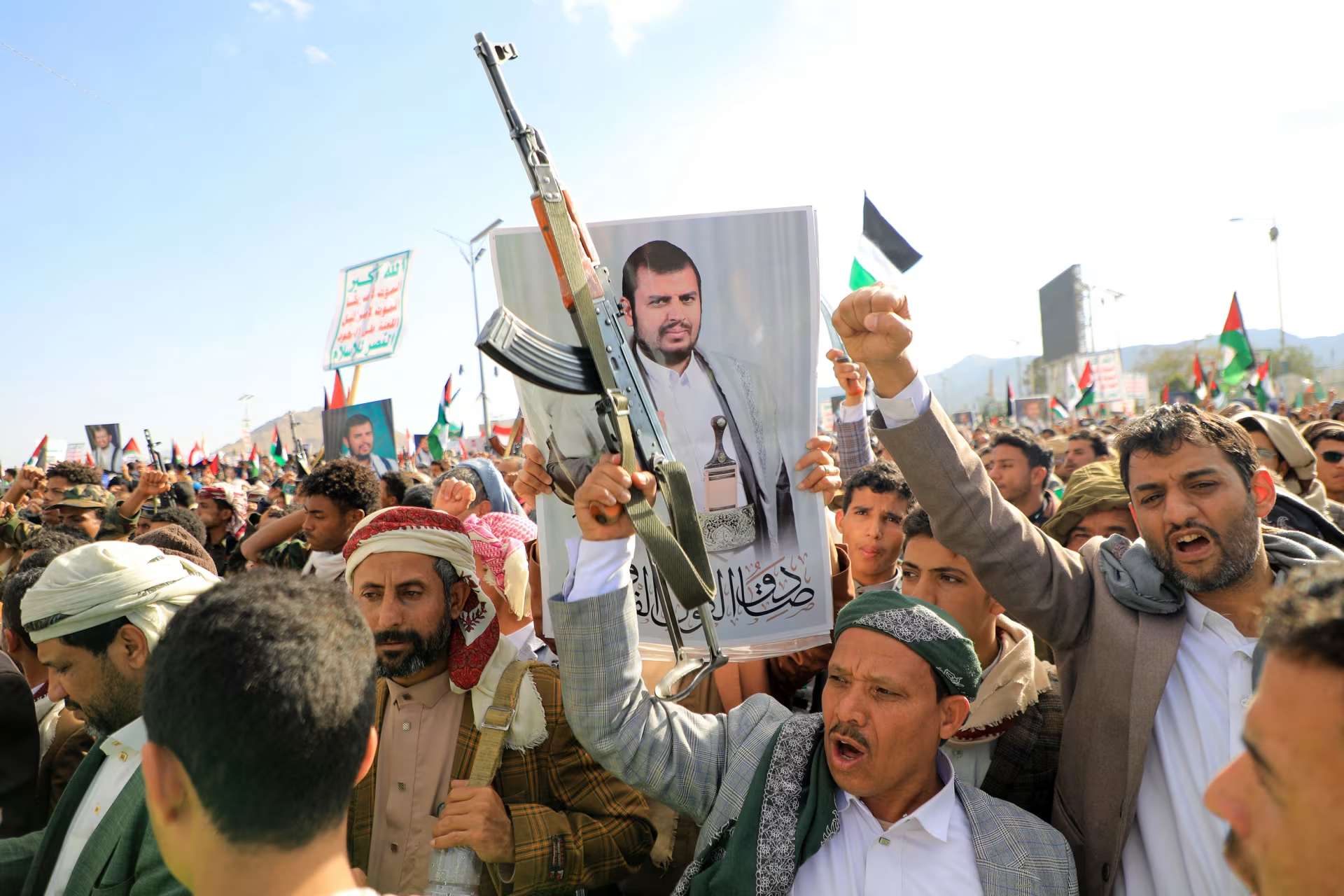
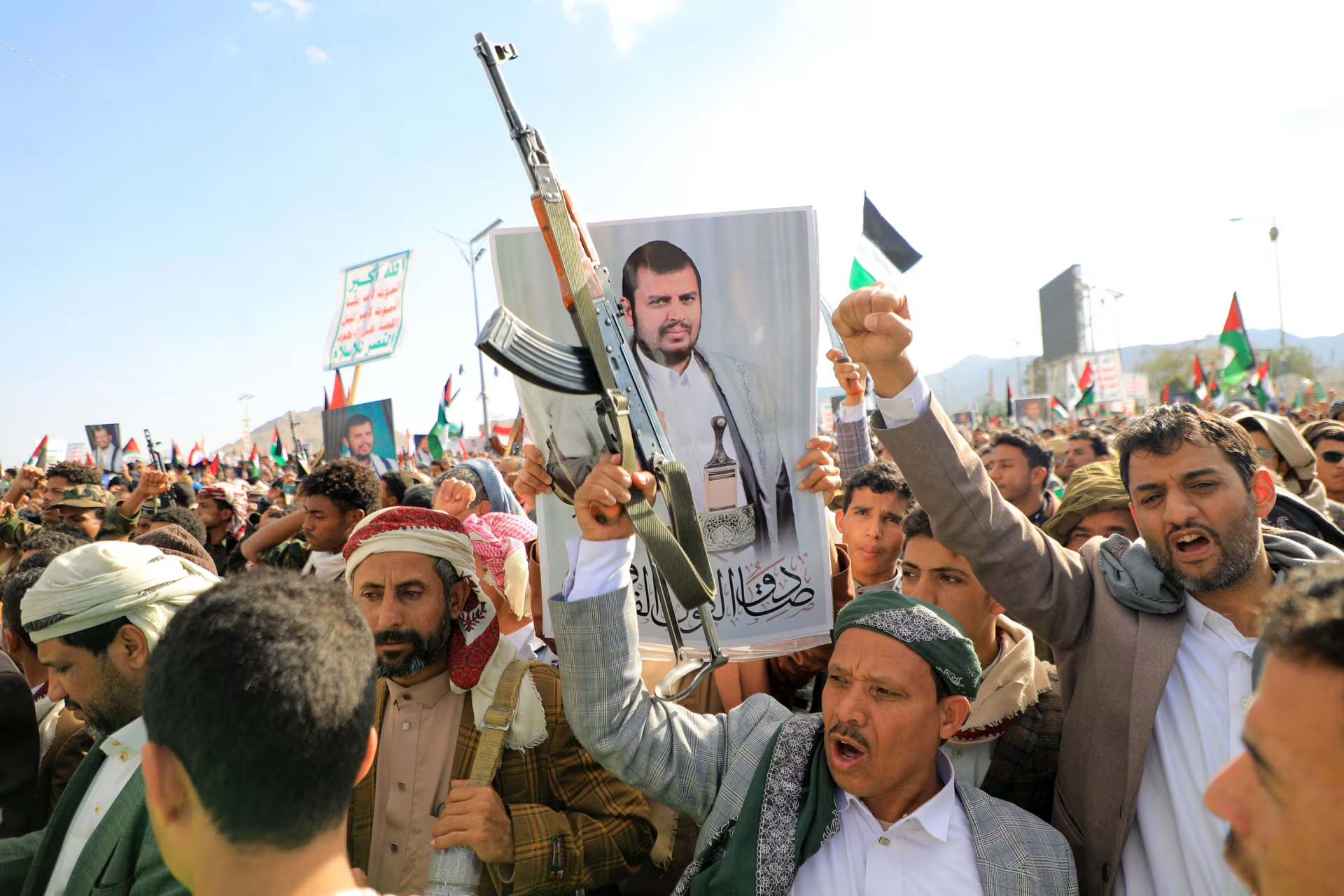
Since the Houthi movement seized control of Yemen’s capital, Sana’a, in 2014, the country has undergone radical political and social transformations. Chief among them is the systematic crackdown on freedom of expression and the imposition of tight censorship on the digital space.

Social media, once seen as a vital platform for exchanging opinions and engaging in political discourse, has been weaponized by the Houthis to entrench their rule and impose their narrative on the public.

Over time, Yemen’s digital sphere has turned into a battleground between the right to free expression and an unrelenting campaign of repression. The censorship has extended beyond content control to the outright persecution of political activists, journalists, and ordinary citizens.

Many of whom face arrest and torture merely for sharing dissenting views online. The internet has thus become an instrument of coercion used to silence any call for freedom or reform.

Nashwan (a pseudonym) was detained and pursued by security forces in September last year because of his posts on social media. He had used his Facebook platform to express his political and social opinions, never imagining that such activity would result in persecution by the Houthis.

“I was just sharing my thoughts on Facebook, like any young person my age,” Nashwan told Noon Post. “I didn’t expect it to matter, but things escalated far beyond what I ever imagined.”

“When I saw them outside to arrest me, it felt like the ground swallowed me up,” he continued. “I couldn’t believe expressing an opinion would make me a target like this.”

Despite a military siege imposed on his home, Nashwan chose to remain in hiding there for a month, constantly on edge. Eventually, under mounting pressure, his family intervened and negotiated with the authorities.

He was forced to sign a pledge to refrain from posting any political content online. As the danger persisted, his family smuggled him to Taiz, and later, out of the country.

“Abu Yazan” (a pseudonym) was subjected to heavy pressure ten days before his arrest. He was coerced into deleting all his videos and posts from social media platforms.

“They came to my workplace and forced me to erase every bit of political content,” he told Noon Post. “We even signed a pledge not to publish anything critical of the Houthis.”

Despite complying, he was arrested on September 26, 2024, just as he was preparing to mark the anniversary of the September Revolution—a yearly tradition for him—even after having deleted the requested posts and videos.

His arrest marked the beginning of a harrowing ordeal of interrogations and psychological torment. “Psychological torture is far worse than physical,” he said. “They told me every day I’d be released today or tomorrow. That mental game was pure agony.”

He was released on November 14, 2024. “Despite everything I endured, I still remember the voices of women and children suffering in that prison with me,” he added.

Journalist Mohammed Dubwan Al-Mayyahi was arrested on September 20, 2024, when armed men stormed his home at 6 a.m.

According to a relative, six plainclothes gunmen raided Al-Mayyahi’s home, arresting him in front of his wife and two children in a terrifying scene. The raid was described as violent and degrading, with no regard for the family’s privacy or humanity.

The assailants not only detained the journalist but also confiscated all his personal belongings, including IDs, phones, laptop, documents—even stationery.

Al-Mayyahi remains imprisoned in a Houthi jail. He was sentenced to one and a half years in prison, followed by three years of surveillance after his release.

The Fear of Checkpoints and Routine Surveillance

Arrests are not limited to homes or workplaces. Houthi checkpoints during travel have become notorious for inspecting travelers’ phones.

Marwan (pseudonym) shared his experience with Noon Post while traveling between Taiz and Sana’a. “Every time I traveled, I had to wipe my phone and log out of all accounts to avoid being searched,” he said.

“These checkpoints were like identity checks—you had to present your best self to avoid trouble.”

In 2021, Marwan was stopped at the entrance to Sana’a, where his phone was searched. Authorities discovered a satirical post he had published criticizing Yemen’s political situation. They saw it as a threat.

He was detained for several hours under threat of arrest if he repeated such actions. “Even a joke or a sarcastic post is now considered a crime,” he said.

Another man, Saddam (pseudonym), recounted how social media posts landed him in the National Security’s secret prisons in Sana’a. After receiving threatening calls, he refused to comply and was soon surrounded by military forces who raided his home and arrested him in September last year.

“I was taken to a dark underground prison, held in solitary confinement and tortured for over a month,” he said. “They accused me of treason just for criticizing the political situation. I wasn’t even allowed a fair trial.”

“They targeted me for my posts and threatened my family. They wanted to silence me at any cost.” Saddam was eventually released in exchange for deleting his social media accounts and pledging not to post again.

Targeting Digital Journalism

In this oppressive environment, journalist Taha Ahmed Rashid Al-Maamari’s story stands as a powerful testament to the risks faced by media workers in Yemen.

A pioneer in Yemen’s digital media space, Al-Maamari paid dearly for his vision of a free press. In 2003, he founded Yemen Digital Media, aiming to transform the media landscape.

The company provided production and broadcasting services to over 25 local and international channels, offering journalists, human rights advocates, and activists a platform to reach the world—especially when traditional media was tightly controlled.

But these ambitions collapsed on April 18, 2021, when Houthi forces raided his company’s headquarters in Sana’a and confiscated all media and broadcasting equipment—a move clearly aimed at eradicating any free media outlet.

“In that moment, everything crumbled,” Al-Maamari told Noon Post. “I never imagined the digital media I worked so hard to build would become a target for suppression.”

He added, “A Houthi-appointed judicial guard claimed he was enforcing a protective seizure order. Soon after, I was charged with ‘collaborating with the enemy.’”

Later that year, Al-Maamari’s digital freedoms work was reframed as a criminal offense. All his equipment was confiscated. What was once a platform for citizen and journalist voices became a pretext for repression.

On September 24, 2024, the Houthis sentenced Al-Maamari to death and seized all his property. He was not even allowed legal representation.

Cyber Threats and the Expanding Crackdown

As the Houthis tighten their grip on Yemen, digital surveillance and repression have intensified. The crackdown now extends across all forms of digital communication—from the internet and social media to phone calls—entrenching authoritarian control in cyberspace.

“Since the early days of the Houthi coup, Yemen has seen a drastic deterioration in digital freedoms,” said Fahmi, a researcher and digital rights advocate, in an interview with Noon Post. “They began by blocking news websites and opposition pages—clear signals of intent to suppress free speech.”

Fahmi explained that the repression goes beyond censorship. It includes arrests of journalists and activists simply for expressing their views online. “People are now afraid to publish anything that might be construed as critical—especially in Houthi-controlled areas,” he added.

He noted that the Houthis have taken control of Yemen’s telecom companies and internet service providers, granting them sweeping surveillance powers. “They monitor calls, track individuals, and harvest sensitive data, severely threatening privacy and civil liberties.”

Abdulrahman Barman, Executive Director of the American Center for Justice, echoed these concerns. “Social media is the last refuge for Yemenis to speak out,” he said. “But even that space has become a weapon in the hands of the Houthis.”

“Many journalists and activists have had to flee Houthi areas or use fake accounts to stay safe. Digital repression has become a defining feature of Houthi governance. The internet is now a surveillance tool used to crush dissent,” Barman said.

He added that digital repression isn’t limited to surveillance—it includes arrests and torture. “Threats are growing daily. Many citizens now avoid posting online altogether, fearing they might become the next target.”

Lawyer and human rights advocate Abdulmajid Sabra emphasized that freedom of expression is protected under Yemen’s constitution and international law. Yet in Houthi-controlled regions, digital rights are under severe threat.

Sabra told Noon Post that the Houthis prosecute journalists, activists, and even ordinary users in special security courts, often imposing harsh sentences—including death. He cited the case of ten journalists sentenced to death for their posts, and the continued detention of journalist Mohammed Dubwan Al-Mayyahi.

Sabra pointed out that the crackdown isn’t limited to direct critics. “Hundreds have been targeted just for showing support for the September 26 Revolution. It’s a blatant violation of human rights.”

“Forcing people to sign pledges not to publish content is unconstitutional,” he added. “It directly violates Yemen’s laws and guarantees of free expression.”

He concluded: “Only the judiciary has the authority to impose publication bans in legitimate national security cases. Arbitrary bans violate the law. These abuses are evidence of mounting repression against press freedoms in Yemen. The international community must act swiftly to defend these fundamental rights.”

Download this article as PDF
Share this Article
Facebook Twitter Whatsapp Whatsapp Telegram Email Copy Link
بشرى الحميدي
By بشرى الحميدي
Follow:
Previous Article نون بوست SDF Between Damascus Pressure and Waning U.S. Support
Next Article نون بوست Muhammad Asad and the Pilgrimage That Reshaped His Worldview

Read More

  • U.S. Regime‑Change Policies: Why They Are Destined to Fail U.S. Regime‑Change Policies: Why They Are Destined to Fail
  • The Gulf’s Balancing Act: Iran, Israel, and Hidden Links
  • Iraq–Turkey Oil Export Treaty: Why Did Ankara Cancel It After 52 Years?
  • Syria’s Northeast on Edge: QSD Between Ankara and Damascus
  • Has Europe Changed Its Stance on Israel… or Just Its Language?
part of the design
NoonPost Weekly Newsletter

You May Also Like

U.S. Regime‑Change Policies: Why They Are Destined to Fail

U.S. Regime‑Change Policies: Why They Are Destined to Fail

إسراء سيد Esraa sayed 8 April ,2026
The Gulf’s Balancing Act: Iran, Israel, and Hidden Links

The Gulf’s Balancing Act: Iran, Israel, and Hidden Links

فريق التحرير Noon Post 8 April ,2026
Iraq–Turkey Oil Export Treaty: Why Did Ankara Cancel It After 52 Years?

Iraq–Turkey Oil Export Treaty: Why Did Ankara Cancel It After 52 Years?

فريق التحرير Noon Post 8 April ,2026

حسن البنا .. التجربة هي الحد الفاصل

ياسر فتحي
ياسر فتحي Published 12 February ,2016
Share
hsn_lbn

” إلى فضيلة الإمام الأكبر وهيئة كبار العلماء الموقرة وإلى رجال الجماعات الإسلامية والفكر الإسلامي  .. فكرت طويلا في هذا الخلاف العلمي بين الجماعات الإسلامية في مصر أولا ثم في بلدان العالم الإسلامي ثانيا وتلمست طويلا السبيل إلى جمع القلوب حول هدف أسمى تلتقي عنده الأرواح المؤمنة وتتجه إليه الجهود العاملة وتقوم على أساسه النهضة المنتظرة .. “

قد لا يعرف كثيرون أن تحت هذه المقدمة مضمونا من أهم المضامين التي يتم تدريسها داخل جماعة الإخوان المسلمين وفيها ما يُعرف بالأصول العشرين، وقد كانت ضمن رسالة أرسلها حسن البنا – كما ذكر الأستاذ أنور الجندي في كتابه حسن البنا – إلى شيخ الأزهر وهيئة كبار العلماء وكثير من رجال الفكر والعمل الإسلامي منذ ما يقارب ال 8 عقود دون تفسير أو شروح خاصة، بغرض قال عنه :

” وقد أردت أن أضع أمام أنظار المفكرين من رجال الإسلام هذه ( الصيغ ) والبنود التي أعتقد أنها تقرب إلى أقصى حد وجهات النظر المختلفة مع موافقتها للحق إن شاء الله، رجاء أن يطيلوا فيها النظر فإذا رأوها صالحة لجمع الكلمة اتخذنا منها أساسا للأخوة وجمعنا عليها شعب الخلاف ورددنا المفترقين إلى هذا الأصل “

قد تكون مفارقة كبيرة أن تكون رسائل عامة لرموز ومفكرين أو رسائل أخرى ألقيت في محاضرات ومؤتمرات أو كانت اشتباكا وسجالا عمليا مع الواقع أو إجابة على أسئلة وقضايا مثارة تحولت إلى رسائل للدراسة الخاصة يتتابع عليها الأجيال بالدراسة وبمزيد من الشروح والتفاسير.

كانت حياة حسن البنا عصارة لا يمكن فصل أفكاره وتكوينه عن حركته وأفعاله، لم يكن رجلا بيروقراطيا ولا رجلا منعزلا يتعرف على مشاكل الناس بالتقارير، أو من خلال الإعلام أو من خلال أفراد ولجان الإخوان، كان حسن البنا يشتبك مع القضايا العامة من داخلها، فلا يتكلم عن الإسلام والمحبة والأخوة والقيم العامة دون أن يكون ملما وفاعلا في قضية الاستقلال ومشاكل الأمن القومي والحدود والحالة الاجتماعية والاقتصادية ومشاكل المجتمع والناس، هو هو الذي يتحدث عن خواطر القرآن يتلمس بالأرقام معيشة الفلاح المصري وحالة الريف فتجده يقول مثلا :

” إن أربعة ملايين من المصريين لا يحصل أحدهم على ثمانين قرشا في الشهر بشق النفس، فإذا فرضنا أن له زوجة وثلاثة أولاد وهو متوسط ما يكون عليه الحال في الريف المصري بل الأسر المصرية عامة، كان متوسط ما يخص الفرد في العام جنيهين، وهو أقل بكثير مما يعيش به الحمار، فإن يتكلف صاحبه (140 قرشا خمس فدان برسيم و 30 قرشا حملا ونصف الحمل من التبن و 150 قرشا أردب فول و 20 قرشا أربعة قراريط عفش ذرة ومجموعها 340 قرشا) وهو ضعف ما يعيش به الفرد من هؤلاء الآدميين في مصر، وبذلك يكون أربعة ملايين مصري يعيشون اقل من عيشة الحيوان. ”   من هم الإخوان المسلمون

كان أغلب وقته بين الناس وفي القرى والنجوع والمحافظات وليس في الغرف المغلقة، يتحدث عن مشاكل العمال ومعاناتهم كأنه واحد منهم يقول :

” لقد بلغت أرباح شركة المياه منذ تأسست في 27 مايو سنة 1865 إلى سنة 1933 عشرين مليونا من الجنيهات , وقد بلغ التفريط والتهاون بالحكومة المصرية أن باعت حصتها في أرباح الشركة في عهد وزارة رياض باشا (وكان ناظر الشغال حينذاك محمد زكي باشا) بمبلغ عشرين ألفا من الجنيهات مع أن حصتها في صافي الربح من تاريخ البيع وهو 10 يوليو سنة 1899 إلى سنة 1934 فقط مبلغ مليونين ونصف من الجنيهات . إن في مصر 320 شركة أجنبية تستغل جميع مرافق الحياة , وقد بلغت أرباحها في سنة 1938 الماضية (7.637.482 جنيها) وهذه الشركات جميعا تخالف نصوص العقود في كثير من التصرفات ثم لا يكون التصرف معها إلا متراخيا ضعيفا يفوت الفائدة على الحكومة والجمهور معا. ”    من هم الإخوان المسلمون

عجيب أن يكون مؤتمرا لرؤساء المناطق، لا يتحدث فيه عن نفسه ولا عن شأن التنظيم وأحواله بل شأن البلاد هو شأنه، فقناة السويس ومستقبلها حاضر في هذه الاجتماعات :

” وقناة السويس ـ أرض مصرية حفرت بدماء مصرية وجهود أبنائها فيجب أن يكون لمصر حق الإشراف عليها وحمايتها وتنظيم شأنها، ولقد قارب أمد امتيازها الانتهاء وتفكر بعض الدول في التدخل في شأنها أنها قد اشترت عدداً كبيراً من أسهمها. إن مصير هذه القناة إلينا بعد عدد قليل من السنين، ومن واجبنا أن نتنبه لذلك من الآن وأن نطالب بزيادة عدد الموظفين من المصريين في الأقسام المختلفة وبخاصة الأقسام الفنية التي تحتاج إلي دراية ومران. يجب أن نستعد للمستقبل وألا ننتظر الحوادث حتى تفاجئنا ونحن علي غير استعداد. ويجب أن تعترف لنا الدول بهذا الحق الثابت وتقرنا عليه . ” في اجتماع رؤساء المناطق – ومراكز الجهاد

ومن حديثه عن الاقتصاد وعن استقلال النقد :

” ومن أفظع التغرير بهذا الشعب، أن يسلم جهوده ومنتجاته نظير أوراق لا قيمة لها إلا بالضمان الإنجليزي، وإن مصر إذا حزمت أمرها، وأحكمت تصرفاتها، ستصل ولا شك إلى هذا الاستقلال … ولقد انفصلنا عن الكتلة الإسترلينية، وفكرنا في تأميم البنك الأهلي، وطالبنا بالديون التي لنا على الإنجليز، وكل هذه ونحوها مشروعات تؤمن النقد المصري … فماذا فعل الله بها ؟ وماذا أعددنا العدة لإنقاذها ” النظام الاقتصادي

” ولقد أنتج ضعف الرقابة على النقد , والاستهانة بأمره استهانة بلغت حد الاستهتار، هذه المآسي التي نصطلي بنارها من التضخم الذي استتبع غلاء المعيشة، وصعوبة الاستيراد والتصدير. ” النظام الاقتصادي

كان حسن البنا رجل العمل لا رجل الغرف، ورجل الاشتباك العملي والتجربة والفعل لا رجل اللطم والبكاء على الماضي والأمجاد، لم يكن منعزلا ولا مترددا ولا خائفا ولا منكفئا ويبدو أنه عبّر عن مفتاح أساسي من مفاتيح شخصيته حين جادله البعض في بداية دعوته عندما طرح فكر ة البدء برواد المقاهي بأسلوب جاذب وطريقة مناسبة، ولما أطالوا الجدل عقّب فقال ” ولما طال بنا الجدل حول هذا الموضوع قلت لهم : ولم لا تكون التجربة هي الحد الفاصل .. ”  حسن البنا تأليف أنور الجندي

إن أحوج ما يحتاجه من يظن أنه من تلاميذ البنا أن يتنافس في فهمه للمجتمع ومشاكله بعمق بالفعل والتجربة لا بالشعارات واللوائح، ويتنافس في حركته بين الناس وفي قدرته على وضع حلول للواقع ولايتنافس في بيروقراطية الغرف المغلقة، من يتأمل مسيرة البنا عليه أن يجعل التجربة والممارسة العملية هي الحد الفاصل للتقييم والنظر، فما تم تجربته هو حصيلة فكر واجتهاد وعمل عبر سنين طويلة، لا يمكن أن نتجاهله أو أن نخترع العجلة بعده ، بل واجب أن نستخلص خلاصات تلك التجارب، ولا ندور كحمار الرحى المكان الذي ارتحل منه هو الذي وصل إليه.

TAGGED: أزمة الإخوان ، اغتيال حسن البنا ، انقسام الإخوان ، جماعة الإخوان المسلمين ، ذكرى استشهاد حسن البنا
TAGGED: أزمة الإخوان
Download this article as PDF
Share this Article
Facebook Twitter Whatsapp Whatsapp Telegram Email Copy Link
ياسر فتحي
By ياسر فتحي باحث مصري
Follow:
Next Article نون بوست The Stigma of “ISIS”: A Heavy Legacy Haunting Women and Children of Former Members
part of the design
NoonPost Weekly Newsletter
dark

An independent media platform founded in 2013, rooted in slow journalism, producing in-depth reports, analysis, and multimedia content to offer deeper perspectives on the news, led by a diverse young team from several Arab countries.

  • Politics
  • Society
  • Rights & Liberties
  • Opinions
  • History
  • Sports
  • Education
  • Technology
  • Economy
  • Media
  • Arts & Literature
  • Entrepreneurship
  • Travel
  • Cinema & Drama
  • Food
  • Health
  • Culture
  • Latest Reports
  • Files
  • Long Reads
  • Interviews
  • Podcast
  • Interactive
  • Encyclopedia
  • In Pictures
  • About Us
  • Our Writers
  • Write for Us
  • Editorial Policy
  • Advanced Search
Some rights reserved under a Creative Commons license

Removed from favorites

Undo
Go to mobile version