




NoonPost NoonPost

NoonPost

  • Home
  • Politics
  • Economy
  • Society
  • Culture
  • Files
  • Long Reads
  • Podcast
AR
Notification Show More
نون بوست
“There Are Nights I Can’t Close My Eyes”: How Gazans Are Living in Homes on the Brink of Collapse
نون بوست
From al-Jolani to Ahmad al-Shara: The Evolution of Syria’s New Leader
نون بوست
When Political Islam Receded in Egypt: Who Filled the Void?
نون بوست
An Extension of Genocide: Gaza’s Detainees Speak Out
نون بوست
A Tightrope Between Survival and Sovereignty: The Syrian Government Faces Normalization Pressures
نون بوست
American Aircraft Carriers: Has the Era of “100,000 Tons of Diplomacy” Ended?
نون بوست
U.S. Regime‑Change Policies: Why They Are Destined to Fail
نون بوست
Transformations of Israeli Judaism: Between the Victim Complex and the Colonizer’s Doctrine
نون بوست
The Gulf’s Balancing Act: Iran, Israel, and Hidden Links
نون بوست
Iraq–Turkey Oil Export Treaty: Why Did Ankara Cancel It After 52 Years?
نون بوست
Syria’s Northeast on Edge: QSD Between Ankara and Damascus
نون بوست
Has Europe Changed Its Stance on Israel… or Just Its Language?
NoonPost NoonPost
AR
Notification Show More
نون بوست
“There Are Nights I Can’t Close My Eyes”: How Gazans Are Living in Homes on the Brink of Collapse
نون بوست
From al-Jolani to Ahmad al-Shara: The Evolution of Syria’s New Leader
نون بوست
When Political Islam Receded in Egypt: Who Filled the Void?
نون بوست
An Extension of Genocide: Gaza’s Detainees Speak Out
نون بوست
A Tightrope Between Survival and Sovereignty: The Syrian Government Faces Normalization Pressures
نون بوست
American Aircraft Carriers: Has the Era of “100,000 Tons of Diplomacy” Ended?
نون بوست
U.S. Regime‑Change Policies: Why They Are Destined to Fail
نون بوست
Transformations of Israeli Judaism: Between the Victim Complex and the Colonizer’s Doctrine
نون بوست
The Gulf’s Balancing Act: Iran, Israel, and Hidden Links
نون بوست
Iraq–Turkey Oil Export Treaty: Why Did Ankara Cancel It After 52 Years?
نون بوست
Syria’s Northeast on Edge: QSD Between Ankara and Damascus
نون بوست
Has Europe Changed Its Stance on Israel… or Just Its Language?
Follow US

Why Has Artifact Smuggling from Yemen Increased During the War?

فريق التحرير
Noon Post Published 26 March ,2026
Share
نون بوست
نون بوست

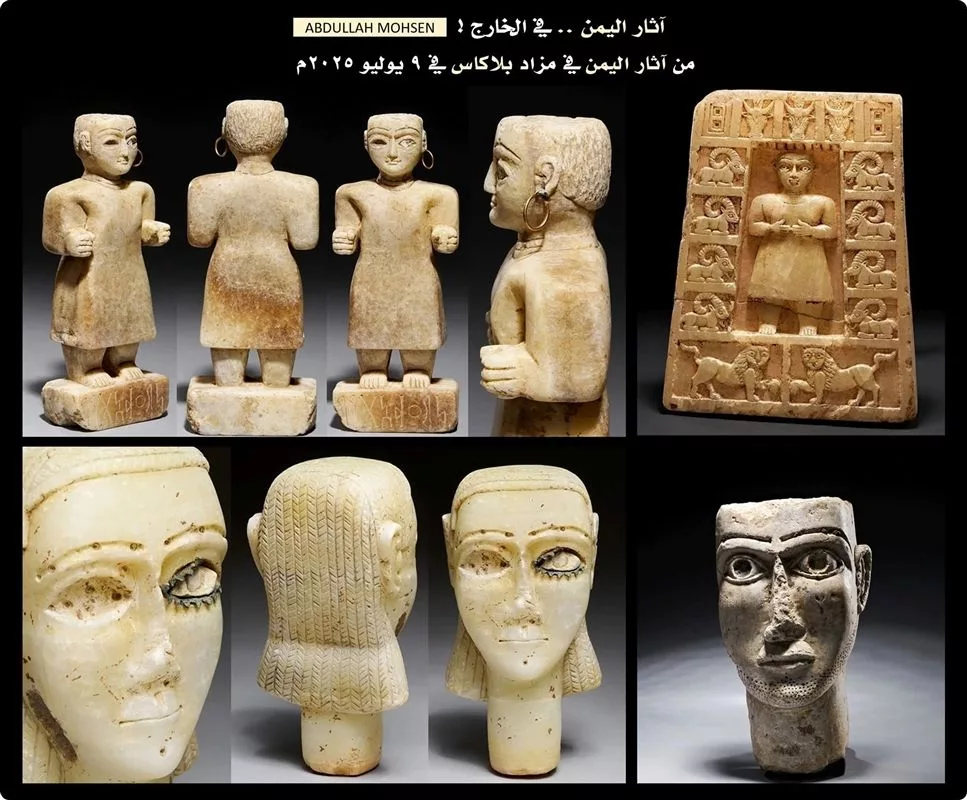
On June 26th, a Yemeni artifact dating back to the first century BCE was put up for auction in Barcelona, Spain, after having been smuggled out of Yemen at an unspecified time.

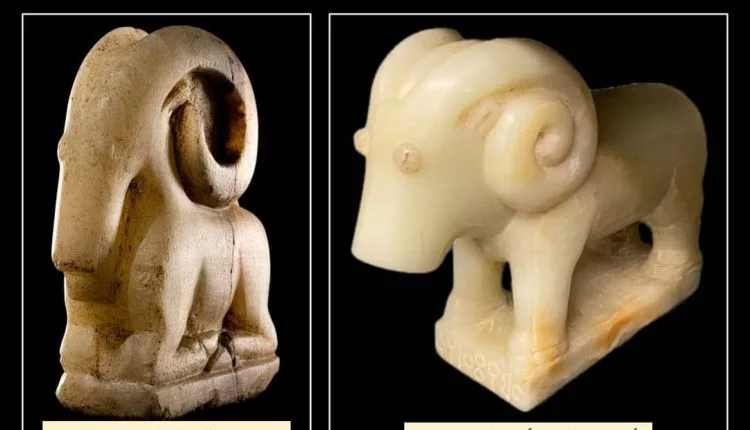
On July 13th, a rare bull statue from ancient Yemen, made of calcite and inlaid with green glass, was featured in a global auction held by the American auction house “Artemis.” Earlier this year, on January 13th, Yemeni antiquities researcher Abdullah Mohsen revealed that a statue from Yemen was on display in Tel Aviv among a private collection owned by Jewish businessman Shlomo Moussaieff.

Such discoveries are not rare. From time to time, Yemeni artifacts appear in auctions across Europe and the United States. The smuggling and sale of Yemeni relics and manuscripts have surged since the start of Yemen’s ongoing war a decade ago.

According to a Yemeni Ministry of Culture official who spoke to Noon Post, over 3,200 artifacts have been smuggled out of the country—figures that align with a report by the Malcolm H. Kerr Carnegie Middle East Center, which noted that more than 2,000 smuggled Yemeni artifacts, valued at $12 million, are currently in the United States. An additional 1,000 artifacts are housed in museums around the world.

Yemeni relics are now openly listed in online auction catalogs, visible to all. Experts in antiquities have described the war years in Yemen as a “golden age” for artifact smuggling networks.

Why the Surge?

The illicit trade in Yemeni antiquities is not new. In 1862, British officer Sir William Marcus donated 27 bronze tablets from Ma’rib and 13 stone inscriptions from Shabwa and Ma’rib to the British Museum—pieces smuggled out of Yemen via trafficking routes.

During the 1994 civil war over Yemeni unification, hundreds of artifacts were looted and smuggled. Provinces like Al-Jawf, Ma’rib, and Shabwa—rich in archaeological heritage—served as key departure points for the stolen items. Several foreign archaeological missions were implicated in the trafficking.

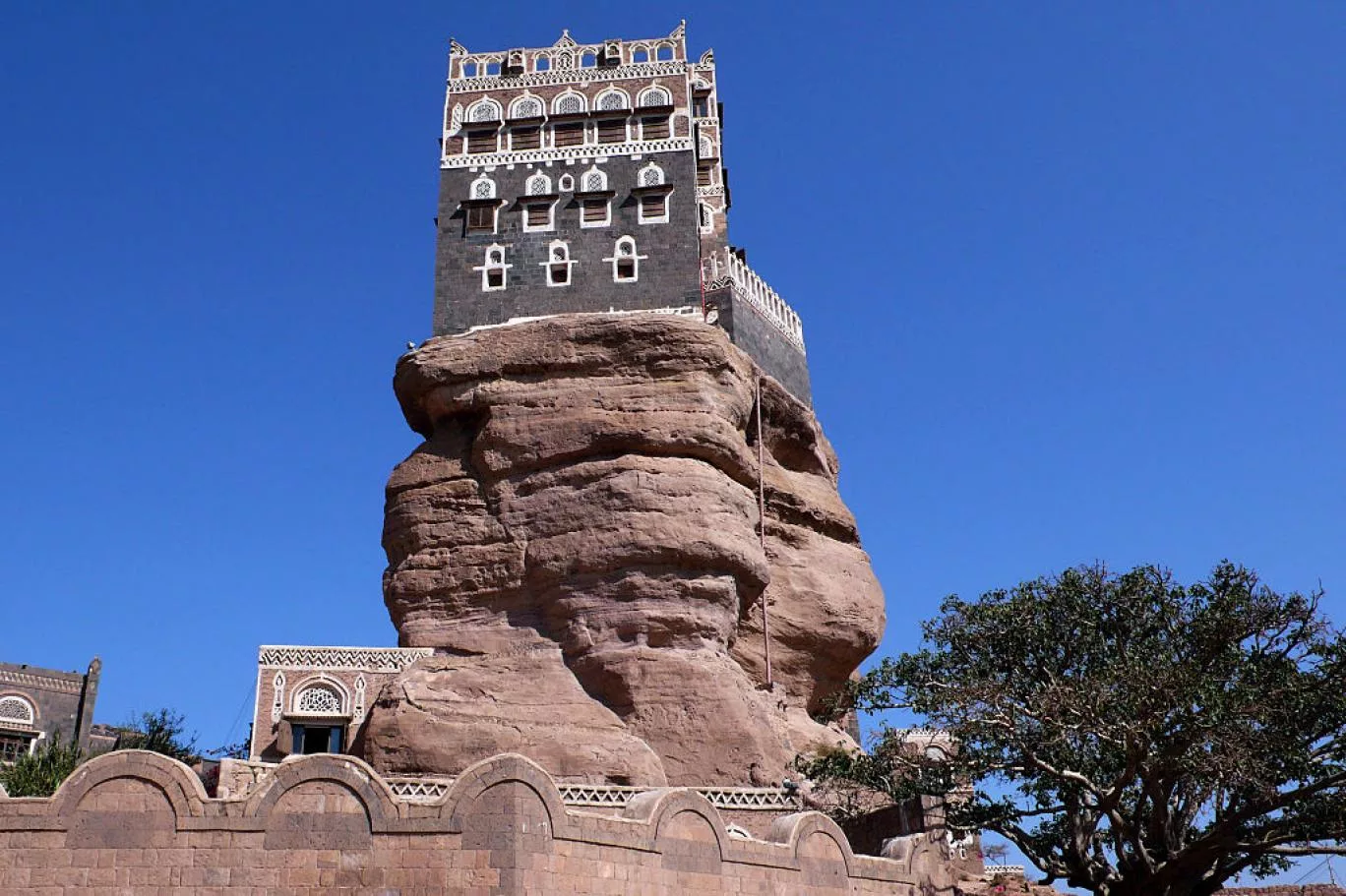
Since 2014, Yemen’s archaeological sites have been bombarded by both the Saudi-led coalition and the Houthi movement. According to Abdullah Mousa of the Hudhud Center for Archaeological Studies, Saudi-led forces have bombed 100 archaeological sites.

Activists also accuse the Houthis of looting and destroying antiquities. Marwan Dammaj, cultural advisor to Yemen’s Presidential Leadership Council, told Noon Post that five museums across Yemen have been damaged in the crossfire between government forces and the Houthis, prompting the internationally recognized Yemeni government to move many valuable pieces into bank vaults for safekeeping.
نون بوست

Meanwhile, unregulated excavation by civilians has become common in historic regions like Al-Jawf, Ma’rib, and Hadhramaut. Many items have also disappeared from museums, including the Military Museum in Sanaa, according to Yemeni antiquities researcher Adnan Al-Qayz.

Al-Qayz notes that the largest smuggling operations during the war have involved high-ranking officials, tribal leaders, and influential figures working with organized crime syndicates, a claim corroborated by the Ministry of Culture and the General Authority for Antiquities.

Abdulbasit bin Sariyah, Deputy Minister of Culture, told Noon Post that his ministry is not solely responsible for the looting of Yemeni antiquities. The ministries of security and commerce, along with local organizations, must also be held accountable.

Bin Sariyah attributes the rise in theft and smuggling to several key factors: rampant insecurity across the country, the high profits that antiquities fetch, competition among locals to trade in artifacts, and the complicity of officials who facilitate smuggling operations.

“The gravest problem,” he said, “is that those involved in these crimes know they will face no consequences. Security agencies fail to arrest or prosecute them.”

Who Is Tracking the Looters?

A group of Yemeni researchers—among them Dr. Ameeda Shaalan, researcher Riyadh Al-Farah, antiquities expert Abdullah Mohsen, and archaeologist Dr. Yusuf Mohammed Abdullah—have taken it upon themselves to track and expose artifact smuggling using personal resources.

Some of these experts monitor international auctions and collections for smuggled Yemeni artifacts, publishing their findings on social media. Abdullah Mohsen argues that Yemeni diplomatic missions abroad should play a vital role in halting or at least curbing the smuggling—but they largely remain inactive.

The Yemeni government, he adds, turns a blind eye to the fact that the UAE, Djibouti, and Oman are key transit points for smuggling Yemeni heritage.
نون بوست

According to Mohsen, artifacts are transported from archaeological sites to hidden storage spaces across various provinces. From there, they are smuggled overland, or through seaports—and in fewer cases, through airports.

Many of these pieces make their way to the UAE and neighboring countries like Djibouti and Somalia, with Europe and the US as final destinations for this stolen heritage. This was confirmed in a joint article by Deborah Lehr, Director of the Antiquities Coalition, and Yemen’s former ambassador to the US, Ahmed Awad Bin Mubarak.

Trading Blame

The Houthis and the Yemeni government routinely accuse each other of enabling artifact smuggling.

According to the Houthi-controlled Ministry of Culture and Tourism in Sanaa, “the legitimate government is orchestrating the organized looting, destruction, and sale of archaeological sites and artifacts, as well as legitimizing the bombardment of these sites by the aggression’s airstrikes [referring to the Saudi-Emirati coalition]. It is part of a broader scheme to erase Yemen’s cultural and historical identity.”

Conversely, the internationally recognized government accuses the Houthis of being the main perpetrators. Yemen’s Minister of Information and Culture, Muammar Al-Eryani, said the Houthis are “systematically looting and smuggling Yemeni antiquities as part of a criminal scheme to erase the Yemeni identity and enrich their leadership while funding their terrorist operations.”

What Can Be Done?

On September 22, 2023, Yemen’s Ambassador to the US, Mohammed Al-Hadhrami, and Max Hollein, Director of the Metropolitan Museum of Art, signed an agreement to cooperate in recovering Yemeni artifacts and protecting the country’s cultural heritage. However, according to Yemeni researchers who spoke to Noon Post, the smuggling of artifacts to the United States continues.

Wadie Aman, head of the Heritage Protection Authority in Aden, says that finding a comprehensive solution to artifact smuggling during wartime is extremely difficult. However, he stresses the need for cooperation among all relevant agencies—including Yemen’s customs authority and the ministries of defense, interior, culture, and commerce—along with tribal leaders and local community figures to help prevent smuggling.

On the diplomatic front, Yemen’s UNESCO ambassador, Mohammed Jumeh, is working to compile a comprehensive database of missing Yemeni artifacts. This database could serve as a reference for UNESCO in reaching out to countries and institutions harboring smuggled Yemeni antiquities.

UNESCO announced an emergency plan in July 2015 to preserve Yemen’s cultural heritage, but the plan has stalled due to funding shortfalls.

Yemeni antiquities experts are also calling for reform of the country’s antiquities law. Law No. 21 of 1994, which remains in force, is widely criticized for imposing lenient penalties on smugglers and traffickers. Researchers urge the revitalization of the Antiquities Authority to facilitate the recovery of looted items both inside and outside Yemen.

Download this article as PDF
Share this Article
Facebook Twitter Whatsapp Whatsapp Telegram Email Copy Link
فريق التحرير
By فريق التحرير تقارير يعدها فريق تحرير نون بوست.
Follow:
Previous Article نون بوست The Extraordinary Journey of Lady Evelyn Cobbold to Mecca
Next Article نون بوست The Disappearance of “Israel” as a Model: Why Do We Believe in Prophecies?

Read More

  • Memory of Genocide in Srebrenica, Rwanda, and Gaza: How Do Survivors Remember Their Tragedies? Memory of Genocide in Srebrenica, Rwanda, and Gaza: How Do Survivors Remember Their Tragedies?
  • Bilad al-Amirin Tiberias: The Story of Algerian Villages Before and After the Nakba
  • The Layers and Masks of the Nakba: What Was Left Untold About the Fragmentation of Palestinian Society and the "Favored Minorities"
  • Embroidered Memory: Palestine in Exile and Diaspora
  • From Marseille to Marrakech: How Europe Imagined the Maghreb
part of the design
NoonPost Weekly Newsletter

You May Also Like

Memory of Genocide in Srebrenica, Rwanda, and Gaza: How Do Survivors Remember Their Tragedies?

Memory of Genocide in Srebrenica, Rwanda, and Gaza: How Do Survivors Remember Their Tragedies?

حنان سليمان Hanan Sulaiman 26 March ,2026
Bilad al-Amirin Tiberias: The Story of Algerian Villages Before and After the Nakba

Bilad al-Amirin Tiberias: The Story of Algerian Villages Before and After the Nakba

فريق التحرير Noon Post 26 March ,2026
The Layers and Masks of the Nakba: What Was Left Untold About the Fragmentation of Palestinian Society and the “Favored Minorities”

The Layers and Masks of the Nakba: What Was Left Untold About the Fragmentation of Palestinian Society and the “Favored Minorities”

سجود عوايص Sujoud Awais 26 March ,2026

احذروا “زوهر هدروم”

مصطفى يوسف
مصطفى يوسف Published 15 February ,2016
Share
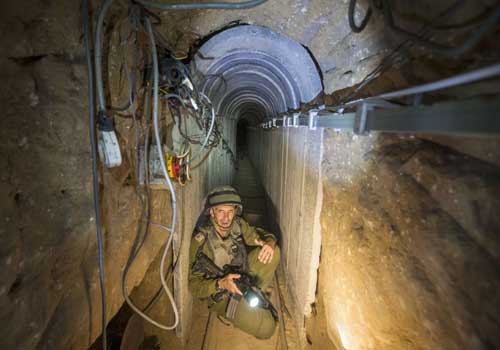
solders-tunels1

زوهر هدروم هو الاسم العبري الذي أطلقه جيش العدو ومخابراته على عملية مكافحة أنفاق المقاومة في قطاع غزة، وهو بالعربية يعني “توهج الجنوب”، حيث يقصد به حماية مستوطنات جنوب فلسطين، التي تسمى عادةً بمستوطنات الغلاف، وهي المستوطنات التي علا صوتها، وزادت شكواها، وشهد كثيرٌ من سكانها أنهم يسمعون دبيباً تحت أقدامهم، وحركةً تحت بيوتهم، تشبه أصوات آليات الحفر ومعدات البناء، وقد حذروا حكومتهم من أنهم يسمعون هذه الأصوات يقيناً وليس خيالاً، وهي واقعٌ وليست وهماً، ووصلت بهم حالة الوهم والقلق إلى متابعة مكان بلاطة منزوعة من مكانها من أحد أرصفة المستوطنات، وقد سيج الأمن مكانها، ووفد إلى مكانها ضباطٌ كبارٌ ومسؤولون أمنيون وخبراء هندسيون كبار لمعاينة المكان ومعرفة سبب عدم وجود البلاطة في مكانها، وما إذا كانت قد انتزعت من فوق الأرض أم من تحتها.

العدو الإسرائيلي أحسن استغلال “زوبعة” الأنفاق التي أثار مستوطنوه مخاوفهم منها، وأشعروا حكومتهم بالتقصير فيها تجاههم، وأنهم يهملون شكواهم، ويستخفون بالخطر المحدق بهم، ولا يهتمون بمحاربة الأنفاق بما يكفي، وأنهم سكتوا طويلاً عنها حتى وصلت إلى بيوتهم، وتكاد تخترق أرض غرف نومهم، الأمر الذي يجعل من قدرة رجال المقاومة على الوصول إليهم كبيرة وسريعة.

استغلت مجموعاتٌ صهيونية عديدة التهديدات التي أطلقتها المقاومة، والتصريحات التي أدلى بها بعض مسؤوليها، والتي أكدوا فيها عن أن أنفاق المقاومة قد نجحت في الوصول إلى عمق الأرض المحتلة، وأنها قادرة على الوصول إلى المستوطنات الإسرائيلية، وأنهم سيفاجئون في أي حربٍ قادمةٍ بما يصدمهم، وغير ذلك من التصريحات التي استفزت الإسرائيليين ودعتهم إلى التعامل مع موضوع الأنفاق بجديةٍ ومسؤولية، وعدم الاستخفاف بها والانتظار دونما فعلٍ جادٍ ريثما تقع الحرب وتستخدمها المقاومة، ويزداد عددها، ويتحسن إعدادها ويتفاقم خطرها، وما انهيار بعضها إلا حافزاً على إعادة ترميمها وتحصينها بأقوى مما كانت عليه.

كان من نتيجة هذه الشكاوى أن قررت حكومة العدو تخصيص مبالغ كبيرة لحماية مستوطنات الغلاف، وتكليف وحداتٍ فنية مدربة من سلاح الهندسة في جيش العدو للبحث عن الأنفاق وتدميرها، في الوقت الذي قامت فيه الإدارة الأمريكية بتخصيص مبلغ مائتي مليون دولار لإجراء أبحاثٍ علميةٍ ودراسات ميدانيةٍ لمكافحة ظاهرة الأنفاق، والعمل على تدميرها، ووضع آلية علمية سرية للتنبؤ بها واستكشافها مبكراً. 

بلغت الميزانية التقديرية التي أعدتها قيادة أركان جيش العدو لمحاربة الأنفاق ثلاثة مليارات دولار، وهي ميزانية مقررة من قبل الحكومة الإسرائيلية، وقد تعهدت جهاتٌ عدة بتغطيتها منها الإدارة الأمريكية ودولٌ أوروبية عدة أبدت استعدادها لتقديم خدماتٍ لوجستية إلى جانب المساهمات المالية، خاصةً أن هذا المشروع يلزمه أبحاثٌ ودراساتٌ ونظريات وتجارب ومعدات وآليات، وهو ما قد يكون متوفراً لدى الدول الغربية والولايات المتحدة الأمريكية، فضلاً عن أنه متاحٌ في الجيوش وفي القطاعات الهندسية العسكرية والمدنية، التي تستطيع أن تقدم من خلال علوم الجيولوجيا والطبوغرافيا والتصوير الفضائي الكثير من الخدمات.

كما أعلنت منظمات صهيونية عالمية المباشرة في جمع التبرعات والمساعدات للمباشرة في تنفيذ هذا المشروع، الذي يرون أنه ينقذ شعبهم من خطرٍ حقيقي داهمٌ، ويرون أن التهديد الذي تشكله الأنفاقُ تهديدٌ حقيقي لأمنهم وسلامة مستوطنيهم، وقد أعلنت قيادة أركان جيش العدو أن الميزانية المقترحة ليست نهائية، بل هي قابلة للزيادة، نظراً لأن عالم الأنفاق مجهولٌ بالنسبة لهم، وقد تجد معطياتٌ تفرض عليهم التعامل معها، خاصةً أن قوى المقاومة الفلسطينية قد أسست الأنفاق لتكون ذراعها الاستراتيجية الطولى في مواجهة القدرات العسكرية الضخمة للجيش الإسرائيلي.

لا يتطلع العدو الإسرائيلي من خلال هذا المشروع إلى هدم الأنفاق أو تفجيرها، أو الاكتفاء بمعرفتها ومراقبتها، أو إغلاقها ومنع استخدامها فقط، فهذه هي الخطة الظاهرة من مشروعه الكبير، ولكن مخططاته في هذا المشروع أكبر من مكافحة الأنفاق فقط، بل إن الخطة تنص على تحصين ملاجئ المستوطنين وتوسيعها، وربطها بطرقٍ جديدة تحت الأرض، تستطيع أن تقلهم بسرعة كبيرةٍ  وبسريةٍ تامةٍ عن مناطق الخطر، وتوصلهم إلى مناطق آمنة نسبياً، فضلاً عن تحصين المستوطنات نفسها، بزيادة أعداد الحامية العسكرية لها، ومرافقة الحافلات وسيارات المدارس والجامعات، وتزويدهم بمهابط طائرات، وغير ذلك من وسائل الحماية والتحصين والنقل الآمن السريع، وهو ما يفسر ارتفاع الميزانية المخصصة لهذا المشروع.

كما أن المشروع في الجانب الاستخباري يقوم على جمع المعلومات والبيانات، ومعرفة عدد الأنفاق واتجاهاتها ومساراتها ومهامها، وعدد العاملين فيها أو المقيمين داخلها، وما تتميز به من تحصينات وتتمتع به من مزايا ومواصفات، وغيرها من المعلومات الهامة، الذي تكلف بها جهاز المخابرات الإسرائيلي، الذي يحاول استعادة نشاطه في قطاع غزة، بعد الحملات الأمنية الناجحة التي نفذها أمن المقاومة ضد العملاء الفلسطينيين والمتعاونين مع العدو الإسرائيلي بعلمٍ أو بجهالةٍ وقلة وعي، حيث أن العدو يسلك طرقاً عديدة للحصول على المعلومات التي يريدها، وليس بالضرورة أن يعتمد كلياً على العملاء والمتعاونين، بل يقوم إلى جانب جهودهم التي لا يستغني عنها، باستراق السمع والتنصت، والتصوير والمراقبة، وتحليل التصريحات ومتابعة الأخبار، وتفقد الغائبين وتحديد فترات غيابهم واتجاهات عملهم.

في المقابل وهو ما نحذر منه ونخشى، فإنه يوجد أصواتٌ هامسةٌ وفي الخفاء، بعيداً عن الإعلام وضجيجه، تطمئن المستوطنين، وتؤكد لهم أن الأنفاق تحت السيطرة، وأنه لا يوجد منها خطرٌ حقيقي، فهي في أغلبها باتت معروفة للجيش ومخابرات العدو، كما أن عيون بعضها معروفة ومرصودة، ولكن ليس من الحكمة الإعلان عن اكتشافها حالياً، أو تدميرها فور اكتشافها، فهذه الطريقة لن تمنع الفلسطينيين من المحاولة من جديد، والحفر في مناطق أخرى بعيداً عن مناطق الاشتباه، والأجدى من ذلك إفشالها وإحباط أي هجومٍ عبرها خلال أي مواجهاتٍ عسكرية، واستخدامها نفسها في مواجهة المقاومة الفلسطينية، واستغلال استخدامهم لها وعدم حذرهم منها في تفخيخها أو تسريب الغازات السامة إليها، أو تفجيرها وهم فيها، وعليه ينبغي الحذر والحيطة فهذا عدوٌ ماكرٌ محتال، وعلينا أن نتوقع منه كل شئ.

TAGGED: أنفاق غزة ، إنتصرت غزة ، الحرب الإسرائيلية على قطاع غزة
TAGGED: أنفاق غزة
Download this article as PDF
Share this Article
Facebook Twitter Whatsapp Whatsapp Telegram Email Copy Link
مصطفى يوسف
By مصطفى يوسف كاتب فلسطيني
Follow:
Next Article نون بوست The Stigma of “ISIS”: A Heavy Legacy Haunting Women and Children of Former Members

Read More

  • U.S. Regime‑Change Policies: Why They Are Destined to Fail U.S. Regime‑Change Policies: Why They Are Destined to Fail
  • The Gulf’s Balancing Act: Iran, Israel, and Hidden Links
  • Iraq–Turkey Oil Export Treaty: Why Did Ankara Cancel It After 52 Years?
  • Syria’s Northeast on Edge: QSD Between Ankara and Damascus
  • Has Europe Changed Its Stance on Israel… or Just Its Language?
part of the design
NoonPost Weekly Newsletter
dark

An independent media platform founded in 2013, rooted in slow journalism, producing in-depth reports, analysis, and multimedia content to offer deeper perspectives on the news, led by a diverse young team from several Arab countries.

  • Politics
  • Society
  • Rights & Liberties
  • Opinions
  • History
  • Sports
  • Education
  • Technology
  • Economy
  • Media
  • Arts & Literature
  • Entrepreneurship
  • Travel
  • Cinema & Drama
  • Food
  • Health
  • Culture
  • Latest Reports
  • Files
  • Long Reads
  • Interviews
  • Podcast
  • Interactive
  • Encyclopedia
  • In Pictures
  • About Us
  • Our Writers
  • Write for Us
  • Editorial Policy
  • Advanced Search
Some rights reserved under a Creative Commons license

Removed from favorites

Undo
Go to mobile version