
Over the past several weeks, the Palestinian resistance in Gaza has ramped up its military operations, launching a series of deadly and highly coordinated ambushes from the south of the Strip to its northern tip. Resistance factions carried out sophisticated missions in areas such as Shuja’iyya, Beit Hanoun, Jabalia, and eastern Khan Younis, directly targeting Israeli occupation forces with striking precision in both timing and execution.
These operations come at an extremely sensitive political moment, coinciding with renewed negotiation efforts in Doha and Washington. Talks have resumed over the future of the war in Gaza, the fate of the Israeli military presence, and post-war scenarios, including efforts to dismantle and disarm the resistance.
In this context, the resistance has sent a clear message: escalate in response to escalation, and impose a rising human cost on the occupation—through the return of soldiers in coffins—amid a rapidly eroding legitimacy for the war among Israeli settlers and growing doubts within the military establishment, especially as deep political divisions paralyze Israel’s leadership.
The “Gideon Chariots” Shattered
Operation “Gideon’s Chariots” represented the pinnacle of the Israeli military’s doctrine under the leadership of Chief of Staff Herzi Halevi, and was promoted by his successor, Herzi Halevi, as the most effective method of exerting “maximum pressure” on the Palestinian resistance in Gaza.
The plan was based on two central pillars. The first was a slow, calculated advance supported by relentless artillery and aerial bombardment—a scorched-earth approach designed to neutralize the resistance’s combat infrastructure and eliminate any pre-laid ambushes, whether involving fighters, fortifications, or suppressive fire.
The second pillar was the strategy of prolonged occupation of territory, intended to conduct meticulous clearance operations against remaining resistance pockets while completely leveling targeted urban areas—a model first implemented in Rafah, and now replicated in northern and eastern Gaza, as well as in Khan Younis.
On the ground, however, the dynamics told a different story. In response, the Palestinian resistance launched a campaign dubbed “David’s Stones,” a symbolic and historical counter to the Israeli operation, whose name draws from biblical imagery.
This marked the beginning of a dual confrontation by the resistance—military and psychological—aimed at reversing the propagandistic intent of the Israeli operation and transforming it into a liability for the occupying army.
Tactically, the resistance opted for patience, avoiding early direct engagement. This allowed it to study the new patterns emerging within the Israeli General Staff and to carefully identify the flaws and vulnerabilities of the “Gideon’s Chariots” doctrine.
While the occupation forces bet that prolonged presence would eventually dismantle resistance cells, the Palestinian factions deployed a counter-strategy: letting the Israeli advance proceed while preserving their readiness, then striking at the moment of Israeli exhaustion and complacency. What Israel perceived as “strength” became fatal weakness.
More than two months into the operation, the resistance began launching attacks behind Israeli lines, effectively dismantling the foundations of the campaign.
The resistance successfully reversed Israel’s “cleared land” narrative—once proclaimed by Israeli commanders—into zones of bloody attrition. The slow advance, intended to minimize losses, instead drove up the combat toll, with nearly 30 Israeli soldiers killed in less than a month—approaching a daily casualty rate—as ambushes became a routine feature of the battlefield following a period of stagnation.
Thus, the resistance dealt a decisive blow to a military operation once touted as a game-changer, turning its core strategies into dramatic failures for both the Israeli army and its command.
Reverse Military Pressure
As negotiations restarted in Doha and Washington, Israel intensified its military pressure on Gaza. This escalation included heavier air and artillery strikes and faster-paced incursions and demolitions—a dual strategy aimed at securing quick battlefield achievements while inflicting human and infrastructural costs to politically corner the resistance.
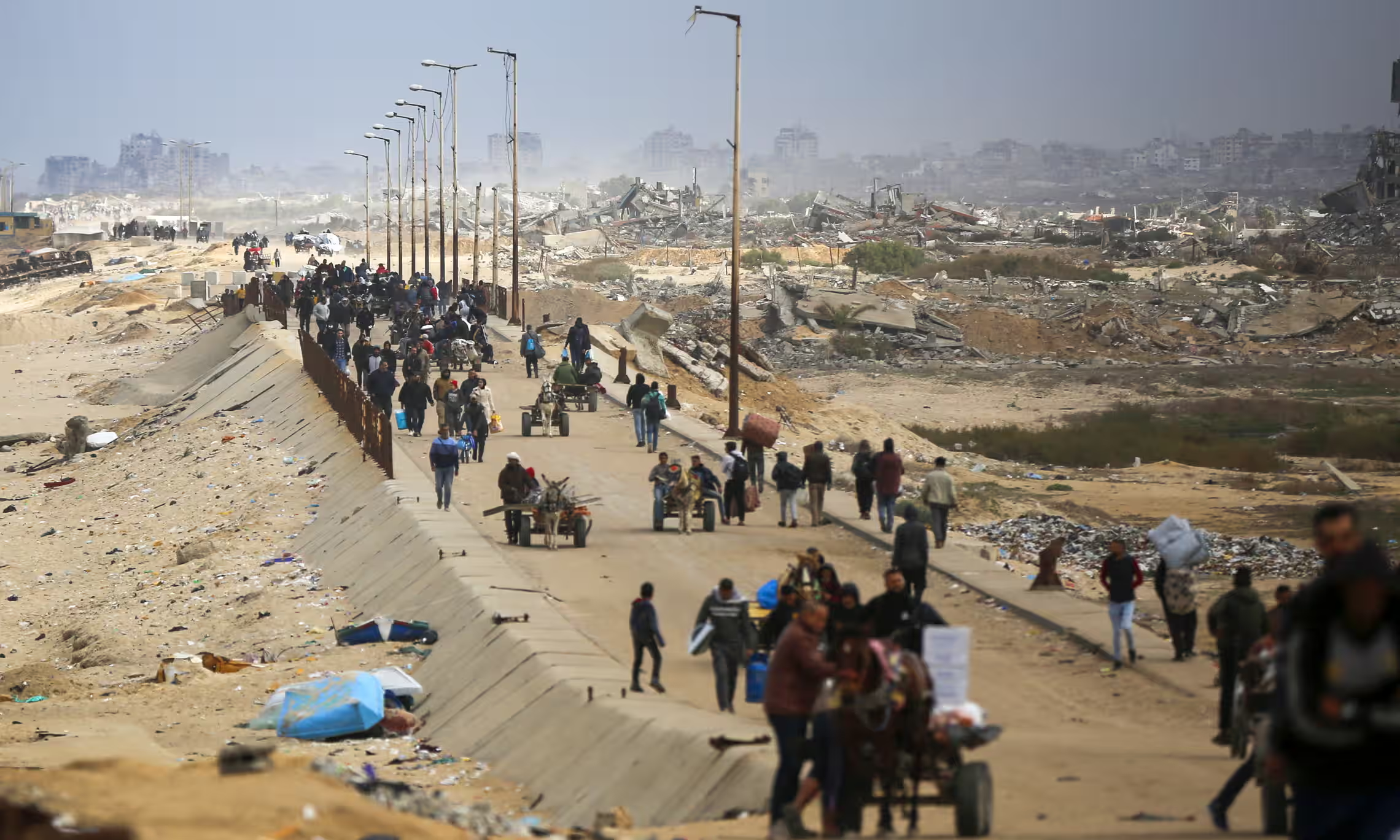
Alongside this escalation came the issuance of sweeping evacuation orders, extending from Khan Younis to al-Mawasi in the west and from Gaza City’s eastern neighborhoods to its heart, as well as the continued emptying of northern Gaza. Forced evacuations have become a recurring tactic of pressure targeting the civilian population, with the intent of coercing concessions from the resistance at the negotiating table.
In response, the resistance refused to allow negotiations to proceed under the threat of fire. Instead, it launched a string of strategic operations and ambushes targeting Israeli troops along the front lines—especially in the eastern corridors—advancing a doctrine of “reverse pressure”: flipping Israel’s military pressure back onto itself, so that the battlefield no longer burdens Palestinian negotiators, but rather empowers them.
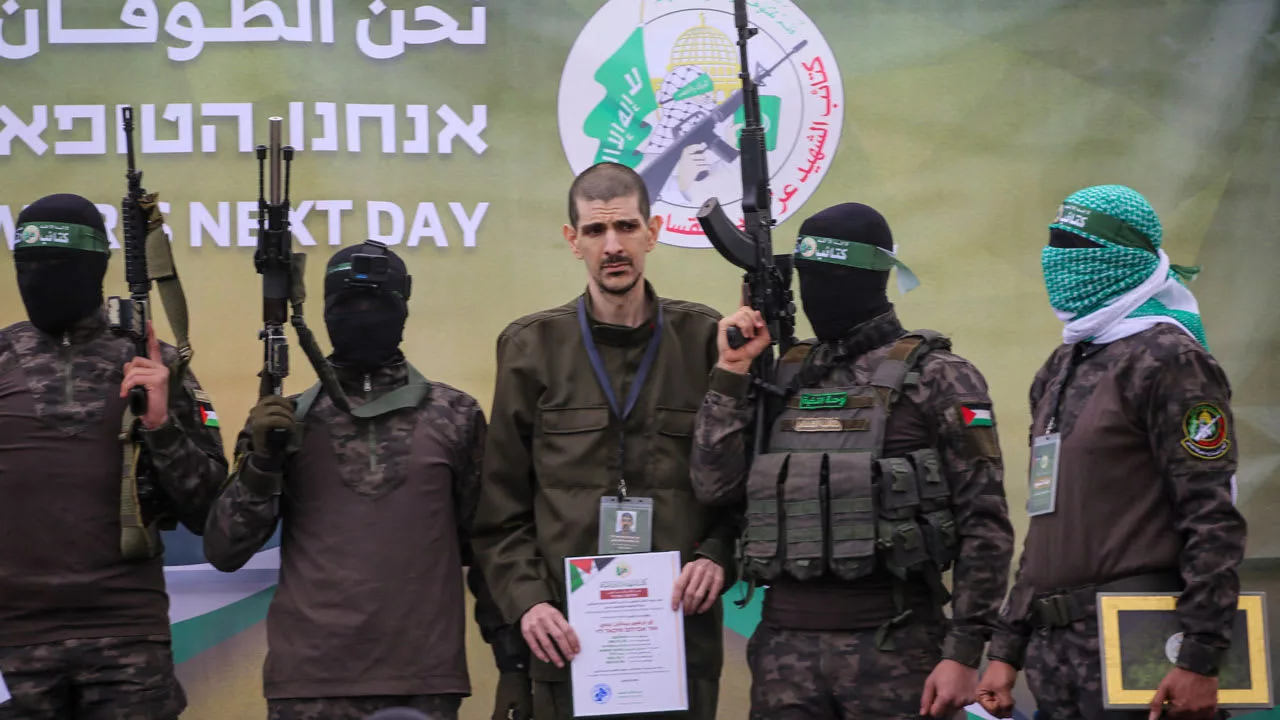
This phase introduced a significant shift: the threat of capturing Israeli soldiers from the battlefield—a dimension largely absent from previous months. In a statement following the Beit Hanoun ambush, Al-Qassam Brigades spokesman Abu Ubaida declared, “Though [the army] recently managed to extract its soldiers from hell by a miracle, it may not be so lucky next time—and we could end up with more prisoners in our hands.”
Mere hours later, Al-Qassam fighters attempted a capture operation in eastern Khan Younis. Though the attempt was ultimately unsuccessful—the soldier was killed and his weapon seized—the details, as documented by the Brigades, revealed an unprecedented proximity to achieving the goal. Video footage showed two fighters surrounding an Israeli soldier in an area under Israeli control for months, undermining the military’s efforts to downplay the incident.
This marks a qualitative evolution in the resistance’s approach: Israeli losses are now measured not just in numbers, but in symbolism. The army that entered Gaza to retrieve hostages now risks adding new ones to the tally—an outcome that could dramatically complicate the political and security landscape.
The resistance has thus adopted a new field strategy—one that multiplies Israel’s costs and broadens the risks to its troops, reintroducing the psychological specter of capture. Military pressure is no longer Israel’s exclusive weapon; it has become a tool the resistance now wields with calculated precision.
The Battlefield Redraws Political Boundaries
“The steadfastness of our people and the bravery of our fighters alone define the next stage—and the most foolish decision Netanyahu could make now is to keep his forces in Gaza.” With these words, Abu Ubaida concluded a statement following the latest ambushes, offering a concise articulation of the resistance’s vision for the war’s trajectory and its political and military consequences.
The message transcends the battlefield. It outlines a coherent political doctrine, showing how the resistance integrates military performance with political calculation. Through coordinated operations and precise messaging, the resistance has demonstrated that its command and control structure remains intact and operational—despite Israel’s targeted assassinations and intensive bombings.
Conversely, Israel’s internal landscape is one of deepening fracture, visible in debates over Gaza’s “day after.” While hardline ministers like Itamar Ben Gvir and Bezalel Smotrich insist on completing the military campaign and fully occupying the Strip, the military establishment—led by the Chief of Staff—advocates a different course: arguing that the operation has exhausted its utility and that the preferable path now is a prisoner exchange deal tied to military withdrawal, to avoid sinking further into a quagmire of attrition.
Today, the Israeli military controls or dominates by firepower roughly 70% of Gaza. Yet it faces a strategic conundrum: conquering the remaining 30% would not only endanger Israeli hostages, but also force Israel into direct military governance—shattering the illusion of “withdrawal with control.”
Here, the resistance enters decisively, asserting that the battlefield is not merely a space of combat, but a lever of political influence. The daily ambushes in eastern Gaza and the audacious capture attempts signal that any further military escalation will carry unbearable costs—military and political alike.
The resistance also rejects US-led efforts to “engineer” the day after by tying Gaza’s reconstruction to the dismantling and disarmament of its fighting forces. In the words of its fighters—and the barrels of their rifles—the response is unambiguous: the only way to disarm the resistance is through explosive devices and shells targeting soldiers and their tanks.
In this sense, any approach that assumes the resistance can be dismantled—while it remains standing, initiative-driven, and in command of the battlefield—is doomed to fail. All wartime efforts to cultivate alternative collaborators have collapsed against the resistance’s enduring strength.
That said, Hamas has made clear it does not intend to remain in power or to unilaterally govern Gaza. Along with other national factions, it supports building the future on a foundation of Palestinian unity and under a professional transitional administration, echoing the Egyptian reconstruction initiative.
The resistance understands that the full-scale war is nearing its end. What remains is a decisive struggle over how it will end—and who will shape the post-war reality. Given the extensive American involvement in post-conflict arrangements, the real battle has shifted from the battlefield to the political table.
Accordingly, the resistance now navigates this phase with a hybrid approach, blending national responsibility with battlefield resilience. The steadfastness of Gaza’s people and the valor of its fighters demand a response that is responsible, balanced, and uncompromising—one that rejects blackmail, foreign tutelage, and strategic surrender.