














A flurry of political activity continues to unfold in Washington, D.C., where Israeli Prime Minister Benjamin Netanyahu and his negotiating team have been engaged in high-stakes talks with U.S. President Donald Trump and his diplomatic and congressional staff. The focus: finding a way out of the Gaza quagmire through a ceasefire agreement and a potential prisoner swap deal.
Trump held two meetings with Netanyahu within just 24 hours. The first was a dinner at the White House on Monday, July 6, and the second occurred the following evening in a session that lasted around 90 minutes. According to sources, Gaza dominated the agenda at Trump’s request. Both meetings concluded without any public statements or disclosures regarding the content of the discussions.
This diplomatic push comes as indirect negotiations continue in Doha, Qatar, mediated by international actors aiming to broker a ceasefire and bridge key points of contention between the two sides. Media outlets reported that a Qatari delegation traveled to the United States to participate directly in talks with the Biden administration.
U.S. envoy for the Middle East, Steve Witkoff, expressed optimism about the progress in negotiations between Hamas and Israel, noting that three out of four contentious issues have been resolved. He voiced hope for a final agreement by week’s end—even as Netanyahu persists with his usual tactics of delay, evasion, and political brinkmanship.
The Morag Corridor: The Remaining Sticking Point
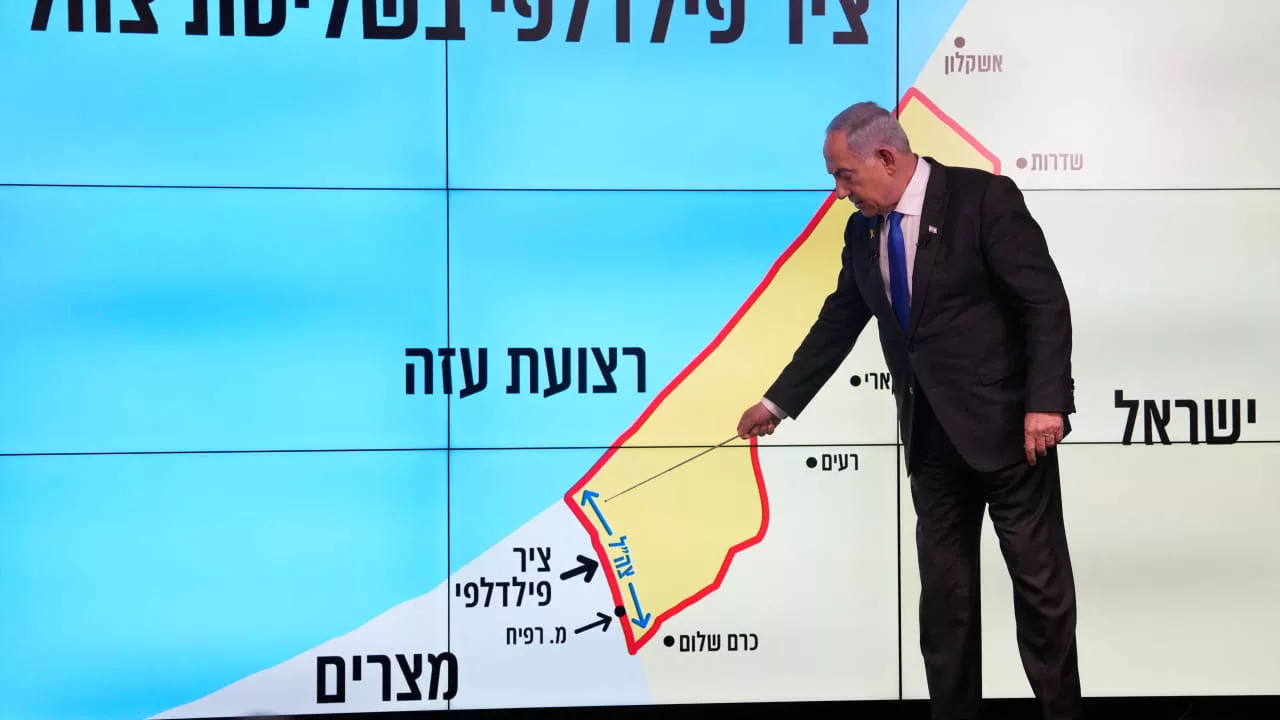
According to Axios, the sole remaining dispute in the talks centers on the withdrawal of Israeli forces from Gaza. Hamas insists on a complete and total withdrawal, considering this a non-negotiable red line. In contrast, Israel demands a continued presence along the so-called “Morag Corridor,” a strategic strip between Khan Younis and Rafah in southern Gaza.
Netanyahu’s insistence on maintaining a military foothold in this corridor—established in April—is reportedly at odds with recommendations from Israel’s own security establishment and contradicts the initial purpose of the zone. It was designed as a temporary operational zone, contingent on the war’s end and the success of a negotiated deal.
Israeli opposition leader Yair Lapid questioned Netanyahu’s insistence on the corridor, characterizing it as a tactical field decision rather than a strategic imperative. “Is it reasonable to believe this corridor will determine the fate of hostages buried underground?” he asked. “Has Morag suddenly become our existential cornerstone?”
So why the insistence on Morag? The corridor effectively severs Rafah from the rest of Gaza. Maintaining Israeli military presence there allows for logistical control and the freedom to resume military operations at will—unhindered by any agreement.
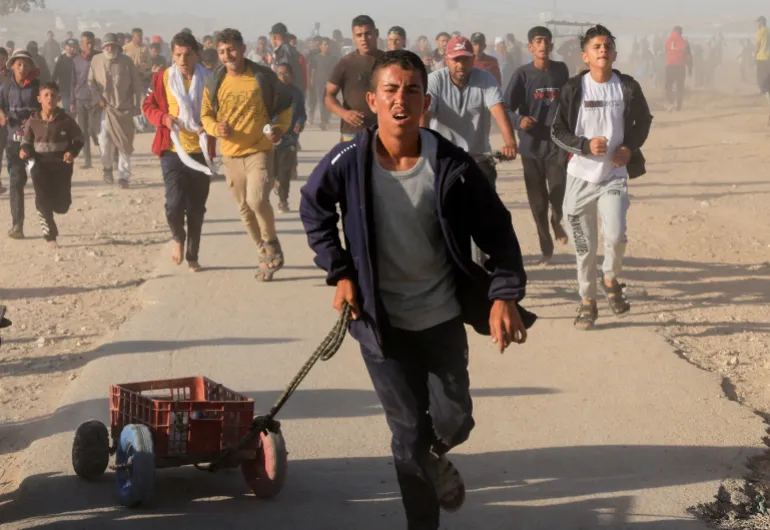
Even a limited Israeli presence in the corridor supports what critics say is a broader plan for forced displacement, long envisioned by Netanyahu and his far-right allies—with tacit support from Trump. By cramming hundreds of thousands of Gazans into an isolated strip, the plan seeks to drive them out—voluntarily or forcibly.
This, they argue, is the primary logistical objective, even more pressing than the issue of Israeli hostages.
In effect, Netanyahu and his allies are deploying a transparent political maneuver: to neutralize Gaza demographically and reengineer it geopolitically, effectively removing it from the equation of the Palestinian cause. Once that’s done, they can turn their attention to gradually annexing the West Bank and even eyeing broader regional ambitions.
Breakthroughs on Other Key Issues
Compared to previous rounds, the current negotiations have seen significant progress. One notable breakthrough involves Hamas’s increased flexibility over the number of Israeli hostages to be released during the proposed 60-day ceasefire. Reports suggest Hamas is prepared to release half of the living hostages—10 individuals—alongside the remains of 18 others, delivered in five phases over the ceasefire period.
According to the Israeli newspaper Haaretz, the proposed schedule includes the release of 8 live hostages on day one of the ceasefire, and 2 more on day 50. The bodies of 5 Israeli soldiers would be returned on day 7, another 5 on day 30, and the final 8 on day 60. In exchange, Israel would release a large but unspecified number of Palestinian prisoners.
Another contentious issue now apparently resolved concerns who will deliver humanitarian aid to Gaza. Hamas objected to the continued involvement of the “Gaza Humanitarian Aid Foundation,” citing its alleged complicity in systematic Israeli targeting of civilians.
Negotiators have reportedly agreed that aid will instead be handled by the United Nations or other international bodies unaffiliated with either Israel or Hamas. This move effectively sidelines the U.S.- and Israeli-backed foundation, which may be forced to scale back its operations in Gaza.
As for guarantees that Israel will not unilaterally resume hostilities after the 60-day truce—as it did in the previous ceasefire—Hamas requested the U.S. to serve as guarantor. Steve Witkoff sent a message to Hamas via Palestinian-American businessman Bishara Bahbah, who manages backchannel communication between the U.S. and Hamas, assuring them that Trump is committed to extending the truce if talks continue beyond the initial timeframe.
Netanyahu’s Pursuit of a “Free Deal”
When Netanyahu boarded the “Wings of Zion” jet en route to Washington, his primary goal was to tout what he claims are victories across multiple fronts—from Gaza to Lebanon, Syria, Yemen, and even Iran. His first meeting with Trump was celebratory in tone, emphasizing shared achievements.
But mounting domestic and international pressure over the Gaza situation led Netanyahu to attempt leveraging these “victories,” especially on Iran, into a prisoner swap deal that would seal what he portrays as a comprehensive military triumph.
The Israeli prime minister—wanted by the International Criminal Court for alleged war crimes in Gaza—framed his agenda with Trump around hostage release, dismantling Hamas’s military and administrative capabilities, and capitalizing on what he termed a “major victory” over Iran.
In meetings with U.S. House Speaker Mike Johnson and Vice President Mike Pence, Netanyahu claimed that the endgame would be the release of all Israeli hostages and the submission of Hamas, rendering Gaza no longer a threat. However, he declined to set a timeline for the negotiations’ conclusion.
Ultimately, Netanyahu appears to be angling for a “free deal” with Hamas: to secure the return of hostages during the 60-day truce without making political concessions or agreeing to a permanent ceasefire. Once the hostages are returned and public pressure eases, he would resume military operations at will.
Trump’s Pressure: Real or Political Theater?
According to Yedioth Ahronoth, Trump exerted significant pressure on Netanyahu to end the war in Gaza. An Israeli official told the newspaper that Trump insisted their discussions focus solely on Gaza, stating, “The situation in Gaza is tragic.” Netanyahu left the meeting without making any public remarks.
Trump has previously pledged to resolve the conflict in Gaza and emphasized the urgent need for peace. Sky News quoted sources close to the negotiations as saying that Trump plans to intensify pressure on Netanyahu. “The pressure began Monday night,” said a U.S. official, “and it will be intense,” a view echoed by a senior Middle Eastern diplomat.
Clearly, Trump is looking to capitalize on recent developments and burnish his image as a peacemaker—perhaps even positioning himself for a Nobel Peace Prize. The Gaza file may be the final card he needs to strengthen his case. Continued war and instability in Gaza would undermine that goal, especially amid growing criticism of Trump’s unwavering support for Israel.
But is Trump truly willing to pressure Netanyahu into accepting any ceasefire arrangement? There’s a difference between possessing the ability to apply pressure and the willingness to do so. Trump certainly has the tools—politically and financially—to compel Israeli compliance. But his calculations involve appeasing the pro-Israel lobby and white evangelical base, which complicates matters.
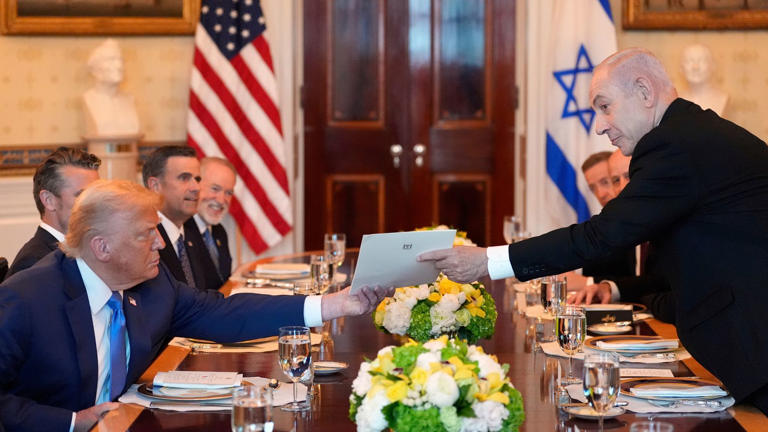
This dynamic fuels speculation about a rift between Trump and Netanyahu. But despite differing personalities, they remain two sides of the same coin—pursuing the same strategic goals, albeit through different tactics. The appearance of divergence is more likely a division of labor than genuine disagreement.
Most observers believe that the same Trump who ended the Iran war in just 12 days could, if he chose, end the Gaza war—now well into its 640th day. After all, a president who can order Israeli bombers to abort a strike over Tehran can surely rein in an Israeli military that wouldn’t last a month without U.S. support.
The Battlefield Will Decide
The Palestinian resistance knows it enters these negotiations under immense internal and external pressure. Yet its leadership remains acutely aware of Israeli maneuvering and the U.S. cover enabling it. Hamas is particularly wary of a ceasefire deal that excludes a firm commitment to ending the war.
Resistance leaders, both political and military, suspect that Netanyahu is angling for a hostage deal that binds him to nothing—freeing Israeli captives without agreeing to a permanent ceasefire. Meanwhile, Israel seeks to retain its gains in the Morag Corridor, undermining any potential agreement from the outset.
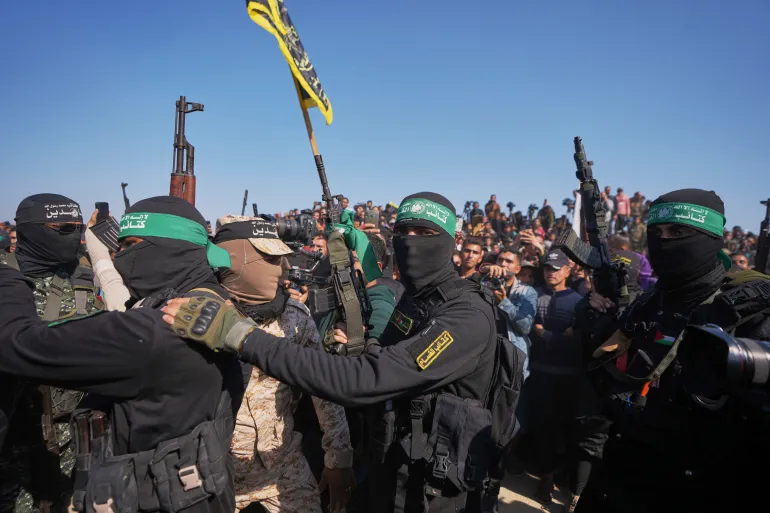
The resistance has imposed conditions in the past and is now doing so again through a campaign of high-precision operations and ambushes that have inflicted heavy losses on Israeli forces. These actions have forced Israel to reassess the situation on the ground and rethink its military strategy.
Ultimately, it is the battlefield—not political theater—that will dictate the outcome of these negotiations. Hamas’s categorical refusal to even discuss an Israeli presence in Morag could force Trump to pressure Netanyahu into compromise.
Such a concession would give Netanyahu cover to claim he yielded under U.S. pressure—thereby appeasing his far-right base while potentially extracting compensatory gains elsewhere, whether in the West Bank, with Iran, or through enhanced U.S. military and economic support. Legal assurances regarding international prosecution might also sweeten the deal.
In the end, the resistance has little choice but to insist on a full Israeli withdrawal from Gaza—even if phased—and to protect its leverage through the prisoner file. Now, the ball is in Trump’s court. He faces a defining test: Will he prove himself the peacemaker he claims to be, or merely a puffed-up balloon—quick to deflate under the first breeze of Netanyahu’s resistance?


