NoonPost NoonPost

NoonPost

  • Home
  • Politics
  • Economy
  • Society
  • Culture
  • Files
  • Long Reads
  • Podcast
AR
Notification Show More
نون بوست
“There Are Nights I Can’t Close My Eyes”: How Gazans Are Living in Homes on the Brink of Collapse
نون بوست
From al-Jolani to Ahmad al-Shara: The Evolution of Syria’s New Leader
نون بوست
When Political Islam Receded in Egypt: Who Filled the Void?
نون بوست
An Extension of Genocide: Gaza’s Detainees Speak Out
نون بوست
A Tightrope Between Survival and Sovereignty: The Syrian Government Faces Normalization Pressures
نون بوست
American Aircraft Carriers: Has the Era of “100,000 Tons of Diplomacy” Ended?
نون بوست
U.S. Regime‑Change Policies: Why They Are Destined to Fail
نون بوست
Transformations of Israeli Judaism: Between the Victim Complex and the Colonizer’s Doctrine
نون بوست
The Gulf’s Balancing Act: Iran, Israel, and Hidden Links
نون بوست
Iraq–Turkey Oil Export Treaty: Why Did Ankara Cancel It After 52 Years?
نون بوست
Syria’s Northeast on Edge: QSD Between Ankara and Damascus
نون بوست
Has Europe Changed Its Stance on Israel… or Just Its Language?
NoonPost NoonPost
AR
Notification Show More
نون بوست
“There Are Nights I Can’t Close My Eyes”: How Gazans Are Living in Homes on the Brink of Collapse
نون بوست
From al-Jolani to Ahmad al-Shara: The Evolution of Syria’s New Leader
نون بوست
When Political Islam Receded in Egypt: Who Filled the Void?
نون بوست
An Extension of Genocide: Gaza’s Detainees Speak Out
نون بوست
A Tightrope Between Survival and Sovereignty: The Syrian Government Faces Normalization Pressures
نون بوست
American Aircraft Carriers: Has the Era of “100,000 Tons of Diplomacy” Ended?
نون بوست
U.S. Regime‑Change Policies: Why They Are Destined to Fail
نون بوست
Transformations of Israeli Judaism: Between the Victim Complex and the Colonizer’s Doctrine
نون بوست
The Gulf’s Balancing Act: Iran, Israel, and Hidden Links
نون بوست
Iraq–Turkey Oil Export Treaty: Why Did Ankara Cancel It After 52 Years?
نون بوست
Syria’s Northeast on Edge: QSD Between Ankara and Damascus
نون بوست
Has Europe Changed Its Stance on Israel… or Just Its Language?
Follow US

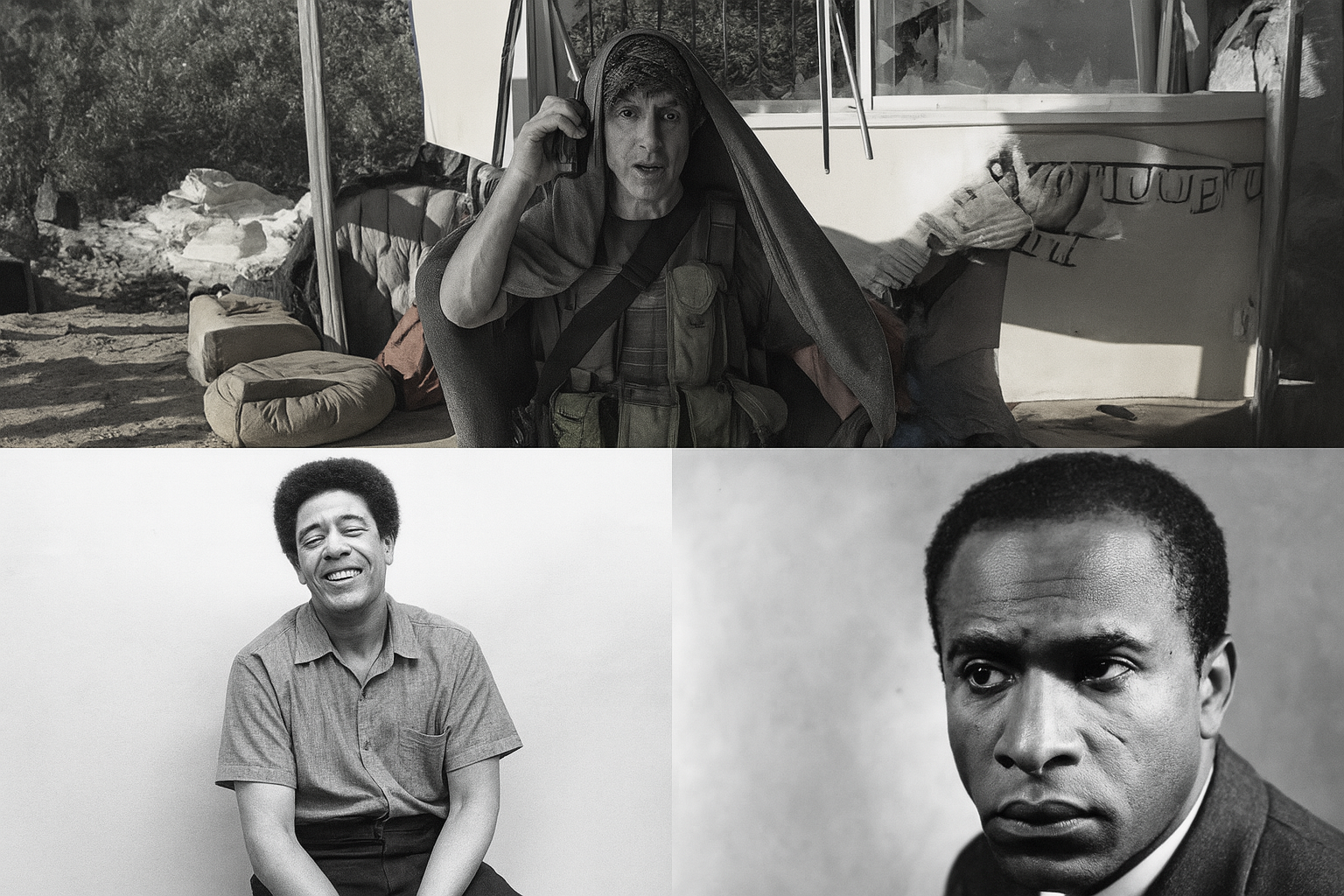
Jackson, Sinwar, and Fanon: Intersections of Anti-Colonial Death

فريق التحرير
Noon Post Published 26 March ,2026
Share
نون بوست
نون بوست

“The tragedy of the white man lies in the fact that he once killed another person, and to this day, they continue to rationalize this inhumane act.” This quote encapsulates a long and harrowing history of white violence—not only against colonized peoples, but even against their own so-called “countrymen” whom they deem as other, as less human, solely because of the color of their skin.

Such was the case of George Jackson, the African American political prisoner and revolutionary, who was killed by the U.S. prison system. Before his death, however, Jackson left behind a legacy of thought and radical praxis that, along with the circumstances of his killing, shaped one of the most profound anti-imperialist struggles in modern history.

But how did Jackson’s political thought and revolutionary journey take shape? And how did his internationalist ideology—developed from within prison walls—intersect with the Palestinian struggle against Israeli occupation?

Blackness: From Criminal Consciousness to Revolutionary Consciousness

George Jackson, born September 23, 1941, was imprisoned at the age of eighteen for stealing $70 from a gas station. In 1961, he was sentenced to one year to life in prison—a legal paradox that led to him spending eleven years behind bars, eight of them in solitary confinement.

Like tens of thousands of other Black Americans, Jackson belonged to what Marx called the lumpenproletariat—a destitute class of workers who didn’t even have steady capitalist employment. Instead, Jackson spent his days with other outcasts, drifting between street corners and cafés, living a life devoid of basic human dignity.

In prison, Jackson encountered a microcosm of systemic neglect and brutality. The incarcerated were not just isolated; they were dehumanized—deprived of food, sleep, and medical care. The prison system exploited their bodies as a source of cheap labor: cooking, baking, cleaning, and manufacturing.

As Jackson came to understand it, prisons—both in America and the Arab world—functioned as industrial machines, turning human beings into captive laborers serving the interests of the state and capital.

“I met Marx, Lenin, Trotsky, Engels, and Mao when I entered prison—and they redeemed me from prison,” Jackson wrote in Soledad Brother: The Prison Letters of George Jackson. In that book, he described his transformation through political education, and how the writings of these revolutionary thinkers illuminated a new path for collective liberation—especially for Black and marginalized communities in the United States.

To Jackson, the prison was not a place for reform, but a mechanism to erase the humanity of its captives and turn them into disposable tools. Through reading and study, Jackson sharpened his understanding of imperialism and systemic oppression.

He also engaged with the works of Frantz Fanon, whose decolonial philosophy helped Jackson frame questions like: How does one live under domination? How does one resist? How can the colonized reclaim their humanity?

“In the early history of industrialization, workers demanded the right to work. To this day, masses of Black Americans are still denied this basic right. They live as precarious laborers—last hired, first fired. We must not ignore the revolutionary potential of organizing the unemployed and the lumpenproletariat.”

In this passage, Jackson showed his commitment not just to political elites or intellectuals but to the disenfranchised, including gang members. He worked with inmates like Louis and James Carr, W.L. Nolen, Bill Christmas, and Ture Gibson—helping transform their rebellious energies into revolutionary consciousness. The goal was no longer crime, but collective liberation.

Jackson later joined the Black Panther Party, which had emerged after the assassination of Malcolm X in 1965. Through the Party, Jackson published articles in its international magazine, reaching tens of thousands of readers around the world.

After his death, two major works were published: Blood in My Eye and Soledad Brother: The Prison Letters of George Jackson. These writings form the theoretical core of his vision for liberation from both imperialism and the prison-industrial complex.

Resisting Death with Death

Jackson was not content with theory alone. He scrutinized every aspect of prison life and understood that prisons are not reformative but carceral tools that serve the state’s desire to contain and control the marginalized. From this understanding, Jackson spearheaded movements of unrest and resistance inside prison walls—organizing protests and strikes that eventually spread to dozens of U.S. prisons.

These uprisings weren’t isolated. The late 1960s and early 1970s were a time of massive social upheaval. Black, working-class, and student movements across the U.S. rose in opposition to the Vietnam War. Simultaneously, student and labor protests erupted across Europe, particularly in France, echoing similar demands for justice and dignity.

The resistance inside prisons mirrored and amplified the protests outside. Jackson and others understood the prison as a concentrated form of the state—a miniature replica of capitalist and imperialist society. Conversely, rebellion within prisons could ignite external uprisings, especially when prisoners had political affiliations and media connections—as was the case with the Black Panther Party.

On August 21, 1971, George Jackson was killed by prison authorities at San Quentin. Accounts of his death vary. One version suggests that Jackson and his comrades—Fleeta Drumgo and John Clutchette—were framed for the murder of a prison guard and then executed by firing squad. Another, more widely accepted account, says he was shot during an attempted escape that involved taking prison guards hostage.

Due to the secrecy of prison systems, the exact details remain unclear. What is certain is that Jackson was silenced violently, his body marked by the repressive state he spent his life resisting.

The Colonial Death Machine and Palestine

Today, the Palestinian struggle stands at the center of global consciousness, especially since the October 7 Hamas-led operation and Israel’s ongoing war of extermination in Gaza. Palestine was present in George Jackson’s political imagination as well. Through reading Sartre, Marx, Fanon, and Trotsky, he came to see Palestine as a critical node in the global anti-colonial network.

Among the revolutionary literature that accompanied him in prison was the poem Enemy of the Sun by Palestinian poet Samih al-Qasim. One verse reads:
“You may raise around me a wall, and a wall, and a wall.
You may crucify my days upon humiliating visions,
O enemy of the sun—
But I shall not compromise,
And to my last heartbeat, I shall resist.”

Jackson was deeply moved by the poem. “Who is the enemy of the sun,” he asked, “if not the occupier or the jailer?” The poem was later published in the Black Panther Party’s magazine alongside his photograph.

“When I discovered this, I realized how the words of a poet from Galilee could be read by Black people in America and make us say: Yes! This poem was written for us!” said Black American scholar Greg Thomas in an interview with Lebanese researcher Sabah Jalloul for The Arab Reader.

Jackson understood the link between the oppression of Black people in America and the broader colonial exploitation of the Global South—especially in Palestine, where the U.S. plays a central role in upholding the Israeli settler regime. For Jackson, there was no dividing line between anti-Black racism and the expropriation of Palestinian land. His revolutionary praxis was global, connecting north and south, prison and homeland, in one unified struggle.

He knew that death awaited him in prison. He often said he was “slowly waiting to die.” But he chose to rebel, to make his death part of the fight. His decision was not a personal act of desperation—it was a collective revolutionary gesture, much like that of Hamas leader Yahya Sinwar in Gaza.

Sinwar, often called “the George Jackson of Palestine,” spent 22 years behind Israeli bars—twice the duration of Jackson’s imprisonment. Though the contexts of Gaza and U.S. prisons are vastly different, symbolically and philosophically, their struggles intersect. Both men were shaped by incarceration and chose to resist—even at the cost of their lives.

Jackson was killed—according to the most credible account—while fighting prison guards for his freedom and dignity. Sinwar is believed to have been killed fighting the occupying force, defending his land and people.

As we began with Fanon, we return to him. “Capitalism created Marx, Sicilian poverty created Garibaldi, Russian autocracy created Lenin, and British colonialism created Gandhi. As for Fanon, he was created by the white man.” The Martinican philosopher—whose dark skin was once pointed at by French children—knew that systems of domination forge our resistance.

Jackson, Sinwar, Fanon—they were not anomalies. They were products of their oppressive environments, shaped by imperialism, colonialism, and systemic dehumanization. In return, they crafted revolutionary philosophies, practices, and legacies of resistance.

This transformation has its costs: years of brutal imprisonment, destroyed families, razed cities, and lost lives. For those resisting darkness and bondage—individually or collectively—the only path forward is through critical awareness, historical study, and strategic action, so that future generations can chart freer, more conscious paths in a world still shackled by colonial power.

Download this article as PDF
Share this Article
Facebook Twitter Whatsapp Whatsapp Telegram Email Copy Link
فريق التحرير
By فريق التحرير تقارير يعدها فريق تحرير نون بوست.
Follow:
Previous Article نون بوست Gaza Talks: Resistance Flexes, Netanyahu Stalls at Morag
Next Article نون بوست Iraqi Armed Factions: Domestic Pressures and Regional Shifts

Read More

  • U.S. Regime‑Change Policies: Why They Are Destined to Fail U.S. Regime‑Change Policies: Why They Are Destined to Fail
  • The Gulf’s Balancing Act: Iran, Israel, and Hidden Links
  • Iraq–Turkey Oil Export Treaty: Why Did Ankara Cancel It After 52 Years?
  • Syria’s Northeast on Edge: QSD Between Ankara and Damascus
  • Has Europe Changed Its Stance on Israel… or Just Its Language?
part of the design
NoonPost Weekly Newsletter

You May Also Like

U.S. Regime‑Change Policies: Why They Are Destined to Fail

U.S. Regime‑Change Policies: Why They Are Destined to Fail

إسراء سيد Esraa sayed 8 April ,2026
The Gulf’s Balancing Act: Iran, Israel, and Hidden Links

The Gulf’s Balancing Act: Iran, Israel, and Hidden Links

فريق التحرير Noon Post 8 April ,2026
Iraq–Turkey Oil Export Treaty: Why Did Ankara Cancel It After 52 Years?

Iraq–Turkey Oil Export Treaty: Why Did Ankara Cancel It After 52 Years?

فريق التحرير Noon Post 8 April ,2026

تونس تلجأ إلى صندوق النقد الدولي لدعم اقتصادها

فريق التحرير
Noon Post Published 20 February ,2016
Share
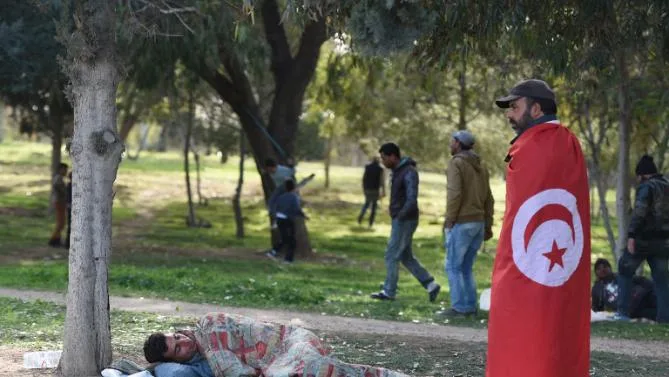
من تظاهرات البطالة في مدينة قفصة التونسية

يعيش الاقتصاد التونسي منذ عدة سنوات على وقع أزمات متكررة، ما إن يحاول تجاوز إحداها حتى يجد أخرى أمامه، الأمر الذي حتم على مسؤولي الدولة اللجوء إلى القروض محليًا ودوليًا لتغطية العجز المتواصل في الموازنة العامة للبلاد في عدة مرات.

وأعلن رئيس مجلس التحاليل الاقتصادية (حكومي) توفيق الراجحي في تونس أمس الجمعة أنه يمكن  لبلاده أن تطلب من صندوق النقد الدولي قرضًا بقيمة 12 مليار دينار (نحو 6 مليار دولار) لتونس على 4 سنوات بفائض 2%.

وأوضح الراجحي أن “المحادثات مع وفد صندوق النقد الدولي في بدايتها وأن هناك لقاءات تمت مع رئيس الحكومة التونسية الحبيب الصيد ومع محافظ البنك المركزي الشاذلي العياري وتعلقت بالإصلاحات الاقتصادية التي يجب القيام بها، وتابع أن الهدف اليوم هو المحافظة على نسبة المديونية أو التخفيض فيها وأن النقاشات مع وفد صندوق النقد تدور حول هذا الأساس.

وبدأ وفد من صندوق النقد الدولي، الخميس، محادثات مع تونس بخصوص برنامج ائتمان جديد قد تبلغ قيمته 1.7 مليار دولار على الأقل يمتد لأربع سنوات ويتضمن إطلاق حزمة إصلاحات جديدة لإنعاش الاقتصاد، وتستمر زيارة وفد صندوق النقد التي بدأت اليوم حتى الثالث من مارس المقبل وتتضمن لقاءات مع عدد من الوزراء، ومن المنتظر أن يجتمع مجلس إدارة صندوق النقد الدولي بنهاية شهر أبريل المقبل لتحديد موقفه من البرنامج الائتماني.

ومن المقرر أن تحصل تونس على نصف مليار يورو من الاتحاد الأوروبي لدعم اقتصادها، كما تعهدت فرنسا بمنح تونس مساعدات مالية تصل إلى مليار دولار على خمس سنوات.

كانت تونس قد اتفقت مع الصندوق في 2013 على برنامج ائتمان بحوالي 1.74 مليار دولار، ووافقت تونس بمقتضاه على تطبيق سياسات اقتصادية معينة مثل إبقاء العجز تحت السيطرة وزيادة مرونة سوق الصرف الأجنبي، وشهد هذا القرض الذي حصلت عليه البلاد من صندوق النقد الدولي، ووُزع على مراحل منذ عام 2012، عدة تعقيدات، بسبب مطالبة الصندوق لتونس، تنفيذ مزيد من الإصلاحات السياسية والاقتصادية.

من المتوقع أن يصل التداين إلى 50.354 مليون دينار تونسي (الدينار = 0.48 دولار أمريكي)، في العام 2016 أي بنسبة 53.4% من الناتج المحلي الإجمالي، وفق إحصائيات لوزارة المالية التونسية.

أما بخصوص الإصلاحات فقد أردف المسؤول الحكومي قائلًا “سيكون لدينا برنامج وطني للإصلاحات الكبرى على مدة 5 سنوات، وهي منقسمة إلى 5 محاور هي تمويل الاقتصاد والموازنات الاقتصادية وإيجاد شبكات الضمان الاجتماعي وتنمية الموارد البشرية وتطوير الإطار الترتيبي والمؤسساتي”، وتابع “الهدف من الإصلاحات هو حل الإشكال الذي وقعت فيه تونس منذ الثورة حين كان معدل النمو في حدود 5.2 % ولم يكن قادرًا على الرغم من ذلك من حل مشكلة البطالة التي كانت تقدر بـ 13% انهار إلى 3%.

كما دعا الراجحي إلى “إعادة النسق القديم للاقتصاد لحل أزمة البطالة التي تقدر حاليًا بـ 15.4% ، فضلًا على إرساء اقتصاد ديناميكي وذي قدرة تشغيلية مرتفعة”، وطالب الراجحي كذلك بتغليب الأجندة الاقتصادية على الأجندة السياسية حتى يتم إنجاح هذه الإصلاحات.

ويُعزى سبب تواصل تردي الوضع الاقتصادي بحسب ما أكده عدد من المراقبين إلى غياب برنامج تنموي واضح للحكومة فضلًا عن تواتر العمليات الإرهابية وتدهور القطاع السياحي الذي يمثل أحد أعمدة الاقتصاد في تونس، إذ يشتغل بها 400 ألف شخص بشكل مباشر وغير مباشر، وتساهم بنسبة 7% من إجمالي الناتج المحلي، وتدرُّ ما بين 18 و20% من العملات الأجنبية.

وبحسب تقديرات المركز التونسي لليقظة والذكاء الاقتصادي التابع للمعهد العربي لرؤساء المؤسسات فإنّ خسائر تونس بسبب حربها ضد الإرهاب تصل إلى 12.1 مليار دينار تونسي سنويًا ( 580 مليون دولار) أي ما يعادل 1.8% من الناتج المحلي الإجمالي لتونس، ويقول المركز إن الجزء الأكبر من تلك الخسائر تتضمن السيولة التي خصصتها الحكومة لتمويل ميزانيتي الداخلية والدفاع والمقدرة بـ500 مليون دينار لدعم جهود مكافحة الإرهاب ضمن الموازنة التكميلية لسنة 2015.

وحذر سليم شاكر في تصريحات سابقة من أن تونس ستعيش أوقاتًا صعبة، والعاصفة قد تتحول إلى إعصار، إذا أحجم المجتمع الدولي عن برنامج اقتصادي كبير لمساعدة تونس، وأضاف وزير المالية ، أن تونس تحث المجتمع الدولي ومجموعة الثماني على تمويل برنامج إنقاذ كلفته 25 مليار دولار يخصص لتطوير البنية التحتية ودعم السلم الاجتماعي وتقوية الأمن وسد العجز في الميزانية.

وذكر سليم شاكر أن احتياجات تونس من التمويل الأجنبي في 2016 ستبلغ 3.6 مليارات دينار، مضيفًا أن تونس ستعود للسوق المالية من جديد سنة 2016، وستصدر سندات بقيمة تصل إلى مليار دولار في يناير أو فبراير 2016، على أقصى تقدير.

وتتوقع تونس حسب وثيقة ميزانية الدولة لسنة 2016 تحقيق نمو اقتصادي بنسبة 2.5% لسنة 2016 .

وحصلت تونس سنة 2015 على حوالي 15 قرضًا من جهات مختلفة أبرزها الاتحاد الأوروبي والمفوضية الأوروبية والبنك العالمي والوكالة اليابانية للتعاون الدولي وألمانيا وإيطاليا والمملكة العربية السعودية.

من جهته دعا وزير الخارجية التونسي خميس الجهيناوي، الأربعاء، خلال اجتماع للوزير بسفراء الدول الأوروبية في تونس حضره وزيرا الداخلية والسياحة التونسيان، الدول الأوروبية إلى إعادة النظر في تحذيرات سابقة لرعاياها بعدم السفر إلى تونس التي تضررت سياحتها منذ مقتل 59 سائحًا أجنبيًا العام الماضي في هجومين دمويين تبنّاهما تنظيم الدولة الإسلامية.

وقالت الوزارة في بيان إن الجهيناوي “شدد على أن تكريس موقف التضامن والدعم لتونس في هذه المرحلة يستدعي مراجعة الدول الأوروبية الصديقة، تحذيرات السفر لرعاياها باتجاه تونس بما يساعد القطاع السياحي على استعادة نسقه الطبيعي”.

ففي 2015، قتل 59 سائحًا أجنبيًا في هجومين داميين استهدف الأول متحف باردو الشهير قرب العاصمة، والثاني فندقًا في ولاية سوسة (وسط شرق) وتبناهما تنظيم الدولة الإسلامية، وتراجعت إيرادات السياحة في تونس عام 2015 بأكثر من 35% وعدد السياح بأكثر من 30%، مقارنة بسنة 2014 بسبب الهجمات، وفق إحصاءات البنك المركزي.

وتراجع عدد السياح الأوروبيين الوافدين إلى تونس في 2015 بنحو 54% مقارنة بسنة 2014، بحسب إحصاءات وزارة السياحة.

من جهة أخرى يؤكد العديد من المراقبين في تونس خطورة الحرب على ليبيا على الاقتصاد التونسي باعتبار أنّ هناك تدفقات كبيرة من الليبيين والتونسيين المقيمين هناك، وانتقل إلى تونس، نحو 2.6 مليون ليبي، للعيش في البلاد، وفق إحصاءات صادرة الأسبوع الجاري، عن وزارة الداخلية التونسية، ما دفعها لإعلان خطة طوارئ مع احتمالية دخول المزيد.

وأعلن المعهد التونسي للإحصاء (حكومي)، الأربعاء الماضي، أن نسبة النمو في الناتج المحلي الإجمالي للبلاد، بلغ 0.8 % خلال العام الماضي 2015، مقارنة مع 2.3 % في العام 2014، ويعود ذلك إلى تراجع غالبية القطاعات الاقتصادية.

ووفقًا لمعطيات حديثة للمعهد التونسي، فإن نسبة البطالة في البلاد، ارتفعت إلى 15.4% في الربع الأخير من العام الماضي، مقارنة مع 15.3% مسجلة في الربع الثالث.

TAGGED: الاقتصاد التونسي ، البطالة في تونس ، السياحة في تونس ، صندوق النقد الدولي ، عجز الموازنة في تونس
Download this article as PDF
Share this Article
Facebook Twitter Whatsapp Whatsapp Telegram Email Copy Link
فريق التحرير
By فريق التحرير تقارير يعدها فريق تحرير نون بوست.
Follow:
Next Article نون بوست The Stigma of “ISIS”: A Heavy Legacy Haunting Women and Children of Former Members

Read More

  • U.S. Regime‑Change Policies: Why They Are Destined to Fail U.S. Regime‑Change Policies: Why They Are Destined to Fail
  • The Gulf’s Balancing Act: Iran, Israel, and Hidden Links
  • Iraq–Turkey Oil Export Treaty: Why Did Ankara Cancel It After 52 Years?
  • Syria’s Northeast on Edge: QSD Between Ankara and Damascus
  • Has Europe Changed Its Stance on Israel… or Just Its Language?
part of the design
NoonPost Weekly Newsletter

You May Also Like

U.S. Regime‑Change Policies: Why They Are Destined to Fail

U.S. Regime‑Change Policies: Why They Are Destined to Fail

إسراء سيد Esraa sayed 8 April ,2026
The Gulf’s Balancing Act: Iran, Israel, and Hidden Links

The Gulf’s Balancing Act: Iran, Israel, and Hidden Links

فريق التحرير Noon Post 8 April ,2026
Iraq–Turkey Oil Export Treaty: Why Did Ankara Cancel It After 52 Years?

Iraq–Turkey Oil Export Treaty: Why Did Ankara Cancel It After 52 Years?

فريق التحرير Noon Post 8 April ,2026
dark

An independent media platform founded in 2013, rooted in slow journalism, producing in-depth reports, analysis, and multimedia content to offer deeper perspectives on the news, led by a diverse young team from several Arab countries.

  • Politics
  • Society
  • Rights & Liberties
  • Opinions
  • History
  • Sports
  • Education
  • Technology
  • Economy
  • Media
  • Arts & Literature
  • Entrepreneurship
  • Travel
  • Cinema & Drama
  • Food
  • Health
  • Culture
  • Latest Reports
  • Files
  • Long Reads
  • Interviews
  • Podcast
  • Interactive
  • Encyclopedia
  • In Pictures
  • About Us
  • Our Writers
  • Write for Us
  • Editorial Policy
  • Advanced Search
Some rights reserved under a Creative Commons license

Removed from favorites

Undo
Go to mobile version