













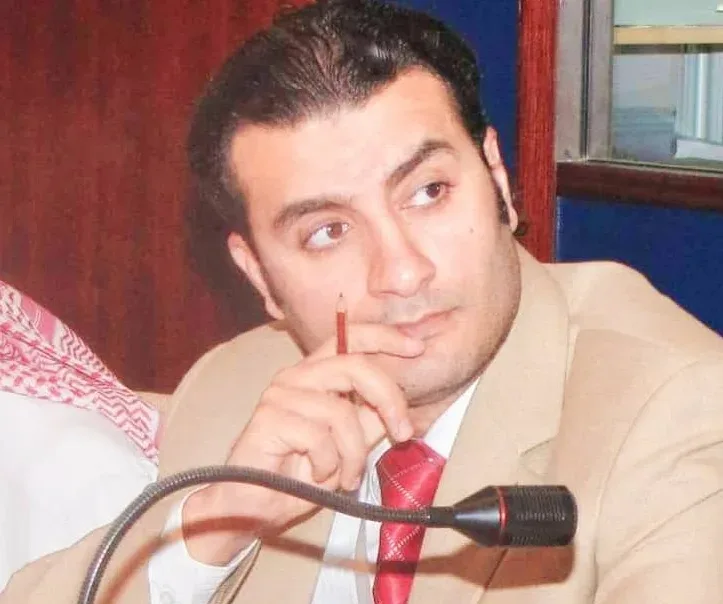


“A New Palestinian Offer for Peace with Israel”—under this headline, The Wall Street Journal published an extensive report by American writer and editorial board member Elliot Kaufman. In it, he proposed what he described as a “new alternative” to the two-state solution, which he argued had become even more absurd following the events of October 7, 2023.
The alternative solution, according to Kaufman, is based on a proposal put forth by five tribal elders from the city of Hebron in the West Bank, led by Sheikh Wadieh al-Jaabari, known as “Abu Sinad.” They signed a letter pledging peace and full recognition of Israel as a Jewish state, and expressed their intent to secede from the Palestinian Authority and establish their own “emirate” in Hebron that would eventually join the Abraham Accords.
In their letter, titled “We Want to Cooperate with Israel,” the sheikhs declared: “The Emirate of Hebron will recognize the State of Israel as the national homeland of the Jewish people, and Israel will in turn recognize the Emirate of Hebron as the representative of the Arabs in the Hebron area.” This level of recognition goes far beyond anything the Palestinian Authority has ever offered and effectively disregards decades of national resistance.
Al-Jaabari’s efforts in the West Bank cannot be viewed in isolation from those of “Abu Shabab” in Gaza. Both moves, in context and intent, appear to be driven by explicit Israeli backing and incitement, framed under the convenient diplomatic slogan of “peace for security,” but functionally amounting to a pact of “protection in exchange for betrayal.”
The use of tribal affiliations as a tool for promoting secessionist projects—whether in the West Bank or Gaza—seeks to fracture the Palestinian national fabric, sowing societal and political division that facilitates Israel’s broader expansionist plans. It is a strategy well-known within Israeli political doctrine, which has historically exploited tribal dynamics to deepen the rift between the Palestinian public and both the Palestinian Authority and Hamas.
Despite a swift and unequivocal rejection by Hebron’s influential Jaabari clan—who, in a statement, disavowed any attempt to undermine the Palestinian leadership, regardless of their political disagreements—the mere introduction and circulation of such ideas, however limited for now, reflects a dangerous moment. It underscores both the precarious state of Palestinian cohesion and the ongoing Israeli efforts to dismantle any unified national project.
Details of the Proposal
Wadieh al-Jaabari, 48, bases his proposal on an Israeli narrative that sees the establishment of a Palestinian state as impossible “even after a thousand years.” He argues that focusing on statehood will lead only to disaster, citing the Oslo Accords as the origin of what he describes as a “corrupt Palestinian Authority” that replaced the country’s “authentic traditional leadership”—namely the dominant clans still prevalent in Palestinian society.
Kaufman says he reviewed video footage of al-Jaabari signing the letter, along with documents outlining the plan. These include the creation of a joint economic zone spanning more than 1,000 acres near the separation wall between Hebron and Israel, which is projected to generate tens of thousands of jobs.
The Hebrew-language document listed the names of the signatory sheikhs, grouped into two blocs representing the majority of Hebron’s 700,000 residents. The first bloc includes eight senior sheikhs said to represent 204,000 people; the second includes 13 others who supposedly represent another 350,000. All have pledged allegiance to al-Jaabari, according to the report—even some members of the Palestinian Authority’s local security forces.
The sheikhs proposed a phased entry of laborers from Hebron into Israel, beginning with 1,000 workers, then expanding to 5,000, and eventually reaching 50,000. They pledged “zero tolerance” for terrorism among workers—“unlike the current situation, where the Palestinian Authority pays salaries to terrorists,” as stated in the letter addressed to Israeli Economy Minister Nir Barkat.
Barkat, former mayor of Jerusalem, was entrusted with delivering the proposal to Prime Minister Benjamin Netanyahu. A formal response is pending.
The Kedar Proposal: An Old Israeli Plan Reborn
Al-Jaabari’s plan is not an original idea; it is, in effect, a practical execution of an older Israeli scheme designed with precision. Its ideological seeds were sown in Hebron years ago and have since taken root—nurtured by decades of Israeli efforts to reshape the West Bank to its advantage and cultivate collaborators amid the failures of the Palestinian leadership.
Economy Minister Barkat recalls that five years ago, when international actors asked Israel, “You reject both the two-state and one-state solutions—so what do you want?” his answer was: “The emirates solution.” This idea had originally been put forward by Israeli scholar and Arab world expert Mordechai Kedar, now 72, over a decade ago.
In 2012, Kedar—who served 25 years in the IDF’s military intelligence and specializes in Islamist movements and Arab political discourse—promoted what he called the “Eight-State Solution” or “Palestinian Emirates Plan.” It proposed dividing Palestinian territories into eight clan-based city-states: Gaza, Jenin, Nablus, Ramallah, Jericho, Tulkarm, Qalqilya, and the Arab part of Hebron.
Kedar based his model on Middle Eastern sociology, arguing that the tribe, not the nation-state, is the primary organizing unit of society. He claimed that Arab national states like Syria, Iraq, Yemen, Libya, and Lebanon have failed, whereas tribal monarchies like Qatar, Kuwait, Saudi Arabia, and the UAE have thrived. The tribal identity, he asserted, remains stronger than the national one in places like Hebron, making it a prime testing ground.
Thirteen years after the proposal’s debut, Netanyahu’s government is now attempting to implement it, capitalizing on the current extraordinary geopolitical moment. The Wall Street Journal reports that Minister Barkat has hosted al-Jaabari and other sheikhs at his home, meeting them more than a dozen times since February to discuss the plan—beginning with the division of Hebron.
Barkat and his supporters believe the proposal will enjoy strong support among Israelis. “No one in Israel trusts the Palestinian Authority, and not many Palestinians do either,” Barkat says. “Sheikh al-Jaabari wants peace and to join the Abraham Accords, with the backing of his fellow sheikhs. Who in Israel would say no?”
Retired General Amir Avivi, founder of the Israeli Defense and Security Forum, also met with al-Jaabari multiple times. He says the sheikh is serious about his proposal, especially given his success in rallying other tribal leaders. “If the official stance is that the PA cannot govern Gaza due to terrorism and corruption,” Avivi asks, “why allow it to govern the West Bank?”
Israeli Belief in the Plan
Despite the boldness of the proposal, al-Jaabari’s language drew skepticism. His rhetoric seemed tailored to appeal to far-right figures like Itamar Ben Gvir and Bezalel Smotrich, aligning closely with their vision of full Israeli annexation of the West Bank. This raises doubts about the proposal’s authenticity and practicality—especially given the declining influence of the signatory sheikhs, who lack the legitimacy and popular support needed to enforce the plan.
The sheikhs warned Israel that the Palestinian Authority might allow an attack similar to October 7 and expressed fears that the West Bank could become another Gaza. One senior sheikh reportedly said: “If we receive the blessing of President Trump and the United States, Hebron could become like the Gulf—like Dubai.”
According to Minister Barkat, the five sheikhs were ready to act after Ramadan, believing they outnumber and outmatch the Palestinian Authority. But Netanyahu’s delayed response held them back. “The PA is the problem,” Barkat insists. “These sheikhs are the solution.”
Israel’s Shin Bet declined to comment on the proposal, viewing the PA as essential to counterterrorism in the West Bank. The Israeli military expressed concerns as well. Government insiders, meanwhile, remain doubtful, viewing the Palestinian tribal system as too fragmented for governance or security roles.
Engineering the West Bank
Since the occupation of the West Bank, Israel has consistently sought to elevate tribal and clan figures into political roles, promoting them as alternatives to the PA and unofficial representatives of the West Bank municipalities. Figures like Abu Yasser Shabab in Gaza and Wadieh al-Jaabari in Hebron are products of this strategy.
These moves fit into Israel’s broader vision: to maintain control without the political and military costs of full occupation by fragmenting Palestinian governance into localized administrative bodies—essentially, “municipal micro-states.”
This serves the long-standing “cantonization” project, adopted by Israel after the repeated failure of peace talks. It involves dividing the West Bank into geographically isolated enclaves surrounded by settlements and bypass roads, lacking territorial continuity or sovereignty. This effort began in earnest after the Oslo Accords in 1993.
The West Bank was then divided into Areas A, B, and C—with Area C, under full Israeli control, comprising over 60% of the territory. Policies such as the separation wall, bypass roads, checkpoints, construction bans in Area C, and strict control over borders and resources have effectively created fragmented cantons unable to function independently or interconnect freely.
Today, the West Bank is a patchwork: the north (Jenin, Tulkarm, Nablus) is surrounded by settlements and the wall; the central region (Ramallah, al-Bireh) is choked by bypass roads; the south (Hebron, Bethlehem) is cut off from Jerusalem; and Gaza has been entirely severed since 2007.
This demographic and geographic redesign aims to prevent a contiguous Palestinian state, dismantle national cohesion, suppress the economy, and enforce full Israeli security control—thus weakening Palestinian sovereignty claims in future negotiations.
A Dangerous Precedent
The choice of Hebron for this proposal was no accident. It is the most populous Palestinian governorate, a vital industrial hub, and home to the sacred Ibrahimi Mosque—known to Jews as the Cave of the Patriarchs—making it a site of intense religious and political sensitivity.
In practice, Hebron already suffers from de facto separation. The H2 zone, home to more than 30,000 Palestinians and just 400–800 settlers, is under Israeli military control. The area is riddled with checkpoints, isolating its residents, and movement through the Old City and Shuhada Street is heavily restricted. Commercial and transport links between northern and southern West Bank, many of which run through Hebron, are also under constant threat of closure.
The Jaabari proposal failed to generate the anticipated Palestinian reaction. The tribe swiftly disavowed the initiative, describing its originator as an unknown individual not recognized by the clan or residing in Hebron. In a statement, the tribe reaffirmed its commitment to Islamic and national principles, rejecting all attempts at division and reaffirming loyalty to Palestinian unity and resistance.
The proposal, however unlikely to materialize, raises serious concerns. It points to two key realities:
-
Israel’s unwavering commitment to its fragmentation strategy via apartheid and cantonization.
-
The deeply fractured state of Palestinian societal cohesion—making segments of the population vulnerable to manipulation.
Rebuilding the Palestinian national fabric has never been more urgent. It remains the most vital barrier against colonial expansion—today and in the future.


