
While Israeli Prime Minister Benjamin Netanyahu was shuttling between sensitive meetings with U.S. Secretary of State Marco Rubio and Middle East envoy Steve Witkoff, ahead of a much-anticipated dinner with President Donald Trump, a breaking news alert suddenly disrupted his calculated composure and upended his strategic expectations.
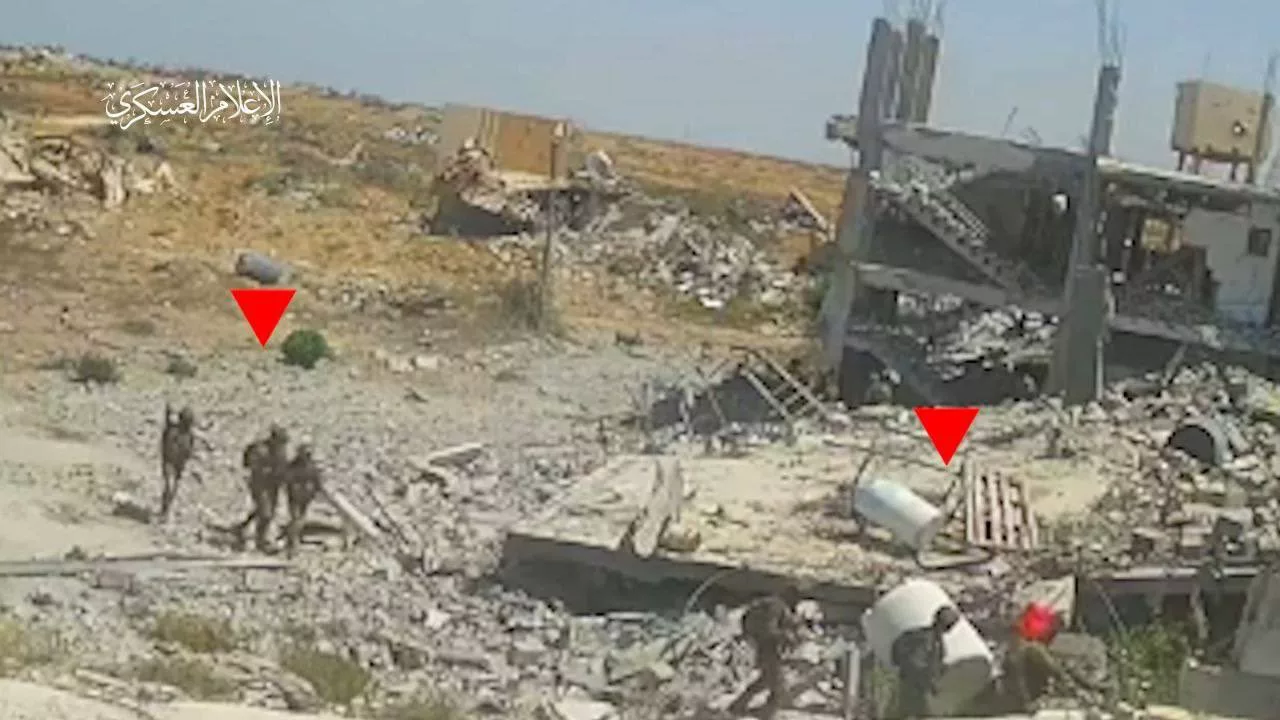
“A complex security incident in Beit Hanoun, in the far north of the Gaza Strip,” read the terse headline in Hebrew media. Israeli military censorship imposed a tight blackout on the details, but unofficial sources gradually began revealing the contours of the ambush, indicating that a mechanized Israeli unit had fallen into a well-planned, multi-phase resistance operation.
The Beit Hanoun ambush was the latest in a string of concentrated attacks carried out by the Palestinian resistance in recent weeks, targeting Israeli forces along various axes of incursion both north and south, particularly in areas where the army is believed to be attempting to establish buffer zones.
But this ambush carried significance beyond the battlefield—it unfolded at a politically charged moment, coinciding with indirect ceasefire talks in Doha and intensifying internal Israeli debate over the future of its military presence in Gaza.
Compound and Escalating Ambushes
According to Hebrew media reports, six Israeli soldiers were killed and at least ten others wounded in a sophisticated resistance operation in Beit Hanoun. The attack was described as “one of the most complex and severe” the Israeli army has faced since the war began.
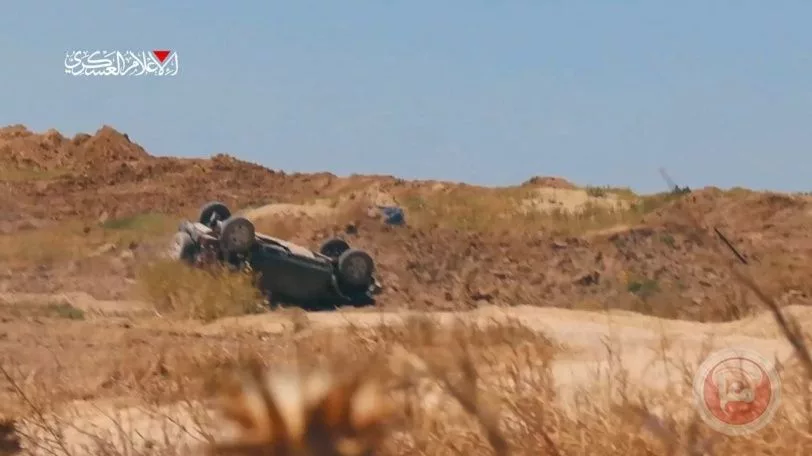
Preliminary reports, leaking beyond the bounds of military censorship, indicated that the attack began with an explosive device targeting an armored vehicle carrying soldiers. This was followed by an anti-tank missile strike on a military robot loaded with ammunition and in the process of being deployed.
At the height of the escalation, a loud explosion was heard as far as Ashkelon. Israeli helicopters rushed to the scene to evacuate the wounded amid chaos and heavy gunfire, underscoring the magnitude of the losses and the shock.
Hebrew sources confirmed that the ambush was intricately staged in multiple phases: an initial explosive hit a tank, followed by a second blast targeting the evacuation unit, then a third striking another rescue team. A fourth device detonated in tandem with direct fire on the wounded.
The targeted unit reportedly belonged to the “Netzah Yehuda” Battalion, which consists largely of ultra-Orthodox Haredi soldiers.
Despite the media blackout, subsequent Hebrew reports acknowledged missing soldiers in the initial hours, before confirming the discovery of fully charred bodies. Multiple hospitals prepared for helicopter landings, and Netanyahu was briefed on the incident while at the White House.
This attack was not an isolated event. The Gaza Strip has seen a sharp rise in ambushes and high-impact operations over recent weeks, causing numerous casualties among Israeli forces. Hebrew statistics confirm that June was the deadliest month since the war began, with at least 20 soldiers and officers killed.
Roughly ten days earlier, the Israeli army admitted to the deaths of a commander and six soldiers in battles in the south. Additional reports detailed a compound ambush in Khan Younis that killed four soldiers and injured 17 others.
Last week, resistance fighters targeted the elite “Egoz” unit in three successive operations in the north, killing one soldier and injuring eight—three of them critically.
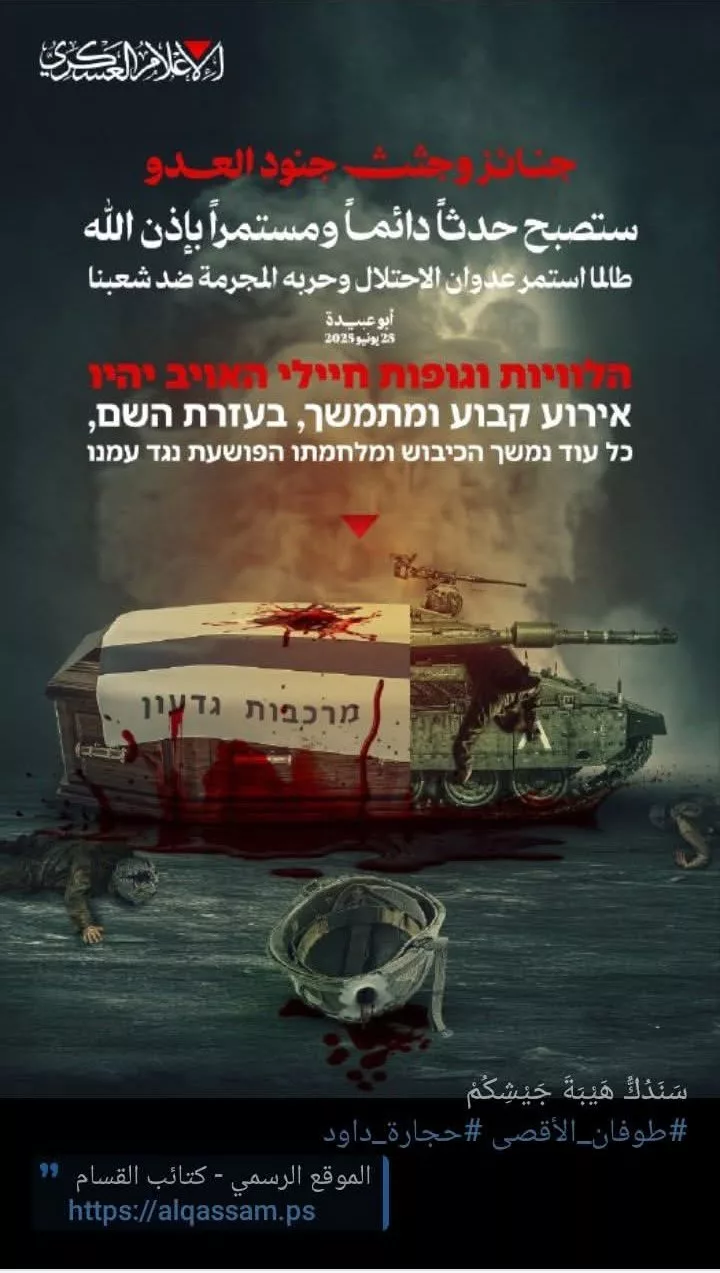
These ambushes represent a direct blow to the Israeli army’s doctrine of “cautious advance and long-term presence,” embedded in Chief of Staff Herzi Halevi’s “Gideon Chariots” strategy, which seeks to create “cleansed” zones with minimal troop casualties.
But the battlefield is telling a different story: the chariots have stalled, the terrain is ablaze, and “Gideon” finds himself bruised and bewildered.
“They Will Not Go Unpunished”
That the resistance was able to carry out such a sophisticated ambush after months of attrition is remarkable in itself. But the fact that it happened in Beit Hanoun, of all places, elevates the operation to a new level, shattering Israeli military assumptions.
Located in northern Gaza, Beit Hanoun is one of the most sensitive and exposed areas since the outbreak of the war, subjected to unrelenting fire and reduced to a testing ground of endurance.
Beit Hanoun lies within North Gaza Governorate, standing 50 meters above sea level. It borders the 1948 Armistice Line to the northeast, lies near Beit Lahia to the southwest, and is just 3 kilometers from the provincial center.
Its strategic importance is underscored by its proximity to the Erez/Beit Hanoun crossing—Gaza’s main land gateway to Israel—and its nearness to the town of Sderot, a mere 6 kilometers away, as well as its vantage over key military installations such as Nativ HaAsara and Military Site 16.
During the October 7, 2023 Al-Aqsa Flood operation, Beit Hanoun played a pivotal role in the assault on the Erez military post, which involved the capture of Shin Bet personnel and the seizure of a critical intelligence station.
Local fighters also joined the attack on Sderot, where fierce battles culminated in the temporary capture of the town’s police headquarters—one of the most iconic moments of that day.
Following the outbreak of war, Israeli leaders explicitly called for Beit Hanoun’s annihilation. It became a prime target of the ground invasion launched on October 27, 2023, and was subjected to carpet bombing and incendiary barrages that devastated its urban and agricultural infrastructure.
In December 2023, the Israeli army declared “full control” over Beit Hanoun, claiming to have dismantled its military battalion and assassinated its commander, Hussein Fayyad. Yet the town soon proved otherwise: its resistance had not been crushed but had merely adopted tactical silence—silence that soon erupted into a series of devastating counterattacks.
Commander Abu Hamza, who had been reported killed, appeared alive in a video leading the latest ambush, refuting claims of resistance collapse.
As the “Generals Plan” shifted focus to Jabalia refugee camp, Beit Hanoun reemerged from behind the frontlines in mid-January with a dramatic ambush that killed an entire Nahal Brigade team, including its deputy commander—one of the war’s most punishing blows ahead of a temporary ceasefire agreement.
During the early hours of that ceasefire, returning residents were met with a stunning scene: Qassam Battalion commander Hussein Fayyad, previously presumed dead, was alive and inspecting the ambush site.
In a recorded statement, Fayyad declared the operation a retaliation for the assassination of Yahya Sinwar, adding that the slain Israeli soldiers—including the Nahal deputy commander—had participated in that mission.
“If the Nahal Brigade commander himself had been here in Beit Hanoun,” Fayyad said, “he would have met his death right here. They will not go unpunished. Beit Hanoun will remain a thorn in their throat and a boulder on their chest until they leave our land.”
Strategic and Negotiation Dynamics
The ambushes are not mere battlefield tactics—they represent a deliberate, strategic response by the Palestinian resistance to leaks about Israeli plans to fully occupy Gaza and impose direct military control.
Through these high-precision attacks, the resistance articulates its own vision of Gaza’s future: that stability cannot be forged through brute force but can only be unraveled by it.
This counter-vision has materialized in a string of successful ambushes from Khan Younis in the south, through Jabalia and Shujaiya, all the way to Beit Hanoun in the north. Notably, many of these operations occurred within the so-called “buffer zone”—a contested area where Israel is attempting to entrench a permanent military presence through a parallel track of negotiations and force.
The most recent Beit Hanoun ambush, with its direct toll on Israeli troops, has reignited debate within Israeli society and decision-making circles over the feasibility of continuing the ground war and the mounting cost of the army’s presence in Gaza.
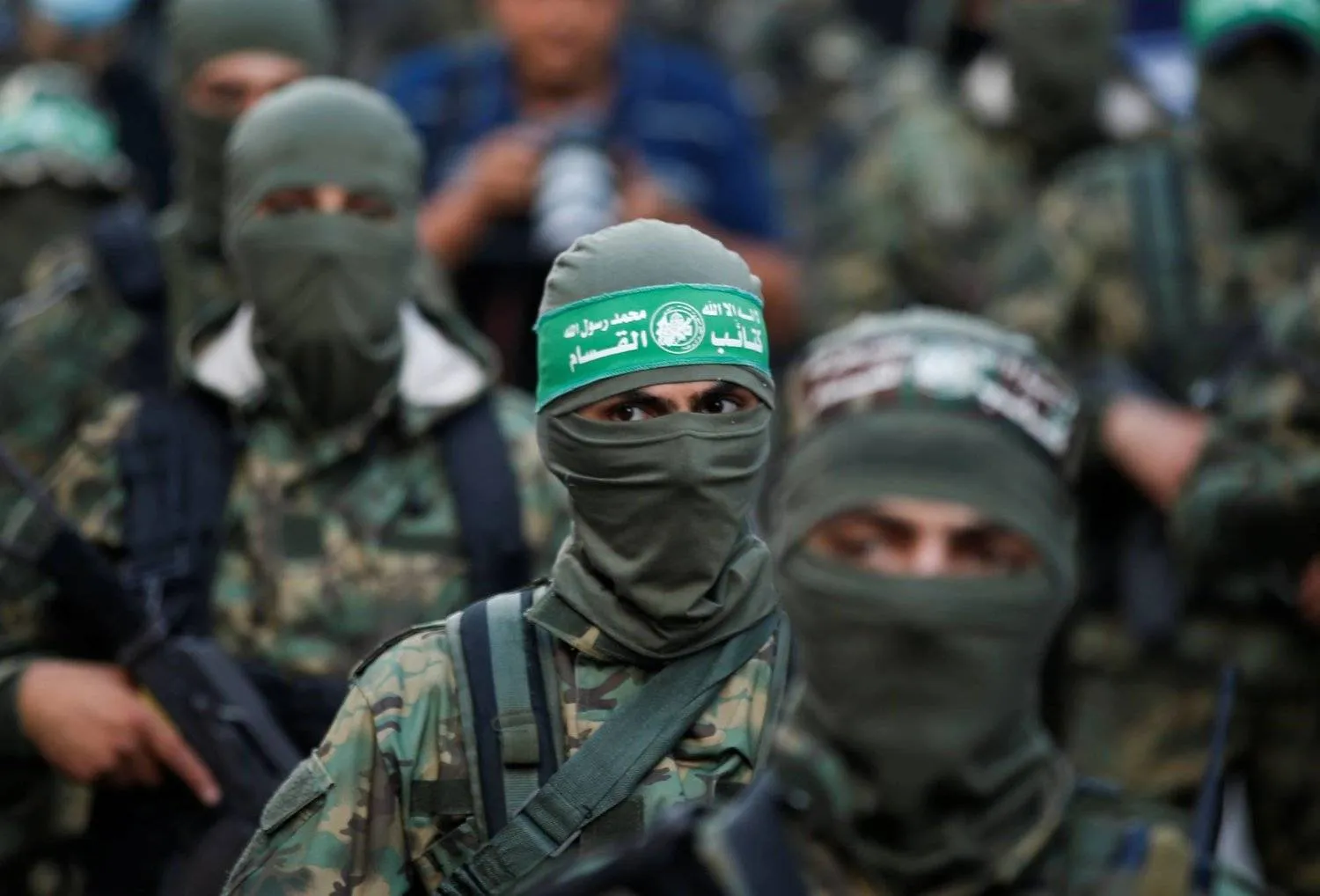
After more than twenty months of brutal conflict in which Israel has employed its full destructive arsenal, the illusion of “military resolution” is rapidly eroding.
The human toll is not a secondary consideration in Israel’s strategic calculations—it is a central one. History has shown that long-term attrition accelerates withdrawal, no matter how defiant the public rhetoric.
Historical Precedents and Strategic Memory
The continuous and rising human cost remains one of the defining constraints of Israeli strategic policy. Past experiences have left a lasting imprint on the collective memory of Israel’s political and military establishment.
In 2003–2004, a wave of suicide bombings inside Gaza placed immense pressure on Ariel Sharon’s government. Growing doubts in the Knesset and among military leaders about the viability of the occupation gave rise to the 2005 unilateral disengagement plan, which dismantled settlements and pulled Israeli troops out of the Strip.
But the blueprint for that decision originated earlier—in South Lebanon. In May 2000, Prime Minister Ehud Barak ordered a sudden withdrawal from the occupied buffer zone after years of relentless resistance attacks on Israeli fortifications.
It had become clear that the southern front was an unsustainable strategic burden that drained troops and resources without delivering any strategic gains.
Today, Palestinian resistance in Gaza is reactivating that very logic: calculated escalation through ambushes and precise strikes, wagering that sustained losses among Israeli troops will revive the internal debate on the war’s purpose—just as it did in previous conflicts.
This equation is proving particularly effective amid a deepening Israeli domestic crisis: political polarization, no clear pathway to victory, and diminishing room for maneuver under Netanyahu’s embattled government. Among segments of the Israeli public, the idea of reoccupying Gaza is increasingly seen not just as a costly gamble—but a strategic suicide.