

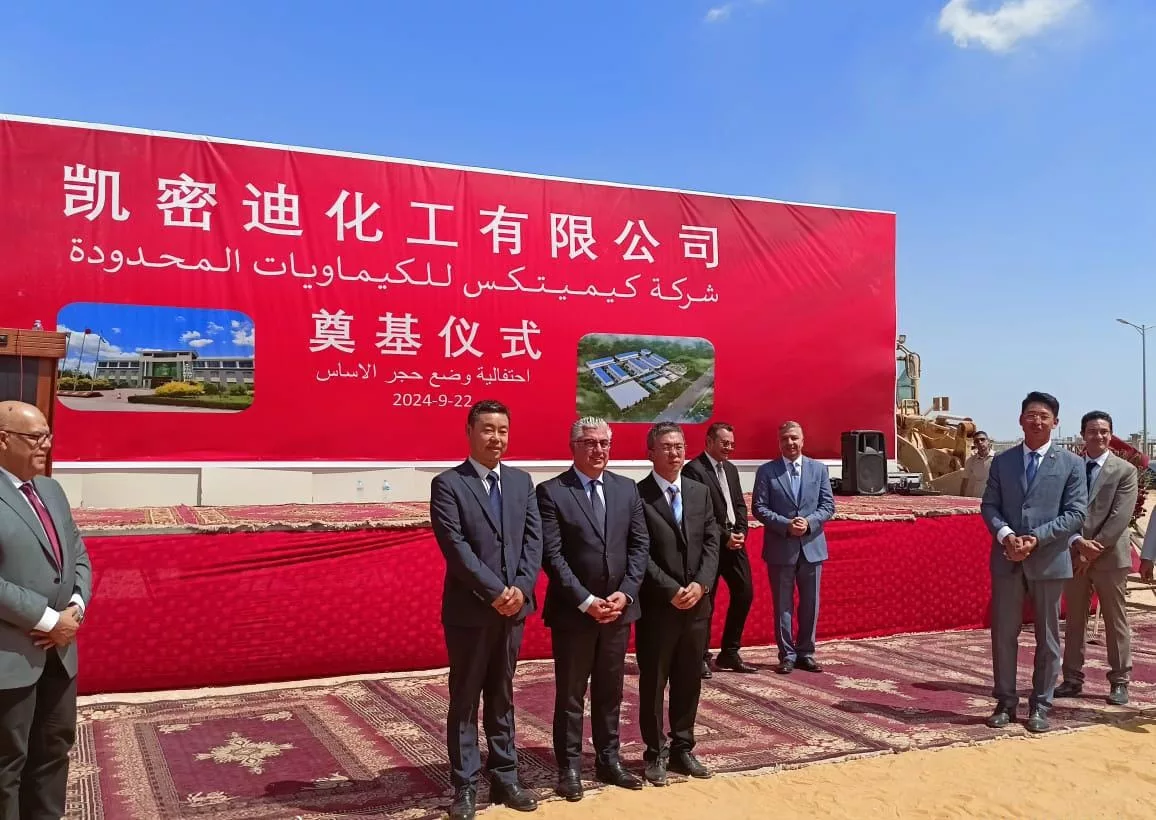
During my participation in the 7th “Promotional Conference for the China International Import Expo,” held at the Four Seasons Hotel in Cairo on Tuesday, April 23, 2024—at the invitation of the Chinese Embassy—I listened to Sherif Yahia, Vice President of the Egyptian Chamber of Commerce. He announced that the Suez Canal Economic Zone has officially become a primary gateway for Chinese investments to access many countries worldwide.
He explained that in recent years, China has shifted its view of the Egyptian market, recognizing it as the primary bridge to access the African market—an arena Beijing views through economic, political, and security lenses—especially amid the intensifying U.S.–China economic rivalry, which has escalated from soft diplomacy to a harsh, yet non-military, contest.
Less than a year later, in March 2025, Mustafa Ibrahim, Vice President of the Egyptian–Chinese Business Council within the Federation of Egyptian Businessmen, made controversial remarks. He stated that the council had received delegations from China approximately every two weeks to explore establishing or expanding Chinese investments in Egypt.
By early 2025, over 300 Chinese companies had launched projects in Egypt, with forecasts predicting this number would multiply by year’s end. China is increasingly focusing on the Egyptian market across all sectors, aiming to cement its status as Egypt’s largest trading partner. Bilateral trade reached nearly $30 billion in 2023.
While growing Chinese investment is vital to revitalizing Egypt’s struggling economy over the past decade, it has triggered significant and justified concerns. This accelerated expansion goes beyond short‑term financial gains and harbors economic, political, and security threats to Egypt.
Logistics and Infrastructure Investments
China’s investments in Egypt span strategic locations, most prominently the Suez Canal Economic Zone—a global logistics hub at the heart of international trade routes.
Chinese investors account for 40% of the 128 projects established in the Suez Zone over the past two years, representing $6 billion in investments. Additionally, by late 2023, China signed forward-looking agreements worth $15.5 billion for the TEDA industrial park along the canal axis.
An estimated 2,066 Chinese companies operate in Egypt across diverse sectors, investing approximately $8 billion. Annual Chinese imports into Egypt amount to around $17 billion, compared with Egypt’s meager $0.5 billion worth of exports to China—revealing a trade imbalance disproportionately in China’s favor.
China also fields a $7 billion Egyptian–Chinese agricultural alliance to cultivate one million feddans, finances and builds the “Iconic Tower” in Egypt’s New Administrative Capital through a $3 billion loan via the Chinese firm CSCEC, and ranks electrical appliances ($2.6 billion) and mechanical/industrial equipment ($1.9 billion) among Egypt’s top-10 imports from China in 2022.
Egypt’s exports to China that year focused primarily on petroleum oils ($1.3 billion), followed by cotton ($104 million), fruits ($77 million), and other agricultural products—highlighting the stark asymmetry in trade dynamics.
In October 2023, China launched a novel debt-swap program for selected markets, including Africa. Under an official agreement with Cairo, Egypt converted over $9.4 billion in Chinese debt into developmental projects and investments, with China acquiring some state assets as part of the deal.
Why Egypt?
China’s targeted strategy for Egypt rests on three pillars:
-
Domestic Market Advantages
Egypt offers a large consumer base (114.5 million people), strategic trade routes via the Suez, competitive labor, and incentives—such as subsidized loans, land allocation, and tax breaks. -
Tariff Diversion
Faced with U.S. import duties totaling nearly 145%, China seeks alternative markets and distribution channels. Egypt serves as a logistical haven for Chinese goods. -
Gateway to Africa
Egypt is Beijing’s principal hub for deeper penetration into Africa, a continent where China aims to rival U.S. influence. China–Africa trade reached $282.1 billion in 2023, up 1.5% year-on-year; bilateral trade exceeded $166.6 billion in the first half of 2024. Leveraging over $120 billion in African debt, China is preparing to finance an additional $50 billion in continental projects over the next three years.
Legitimate Concerns Over Chinese Expansion
Despite the economic benefits, experts urge rigorous oversight of Chinese investments, highlighting several worries:
-
Market Saturation
China’s strategy of flooding markets with low-cost products risks turning Egypt into a consumer base rather than a constructive partner. Chinese goods, supported by advanced technology and state subsidies, are outcompeting Egyptian manufacturers. -
Threat to Local Industry
Heavy imports may undermine domestic production, leading to factory closures, rising unemployment, and inflation. For instance, Egypt’s furniture industry has suffered from cheap Chinese timber-based imports, prompting wood manufacturers to downsize or pivot away. -
Raw Material Extraction
Chinese firms acquire Egyptian raw materials (like cotton and timber) at low prices, process them abroad, and re-export finished goods to Egypt at higher costs, exacerbating the trade imbalance. -
Strained U.S. Relations
America views China’s growing Egyptian and African presence with suspicion. Washington may counterbalance this influence, potentially complicating Cairo–Washington ties.
Chinese investment could be a powerful catalyst for Egypt’s development, provided it is managed with strategic oversight. Egypt must transform such investments into true partnerships that bolster its industries—not just inject capital or absorb Chinese exports. The goal should be sustainable advancement, not dependence.