
When the Ottoman Empire extended its authority over the Hijaz in the early 16th century, it sought to bolster its prestige and role within the Islamic world by organizing and securing pilgrimage caravans. They rebuilt the walls of Medina, extensively renovated areas around the Grand Mosque in Mecca, and established a network of fortresses, caravanserais, water stations, and infrastructure along the main pilgrimage routes.
Indeed, the two holy mosques held a central place for the Ottomans, who supported the residents of Mecca and Medina with endowments and financial aid, granted them tax exemptions, while maintaining the established Sharif administrative order. Between the 16th and 17th centuries, there was a notable increase in pilgrims arriving from Anatolia and the Balkans.
In our series “A Thousand Paths to Mecca,” we trace the magnetism that drew countless caravans across continents, seas, and deserts to the sacred qibla that beckoned souls and feet alike. We explore the pilgrims’ journeys as they immortalized them in their writings, spanning various eras, cultures, and affiliations—each carrying a personal story that culminates at the House of God.
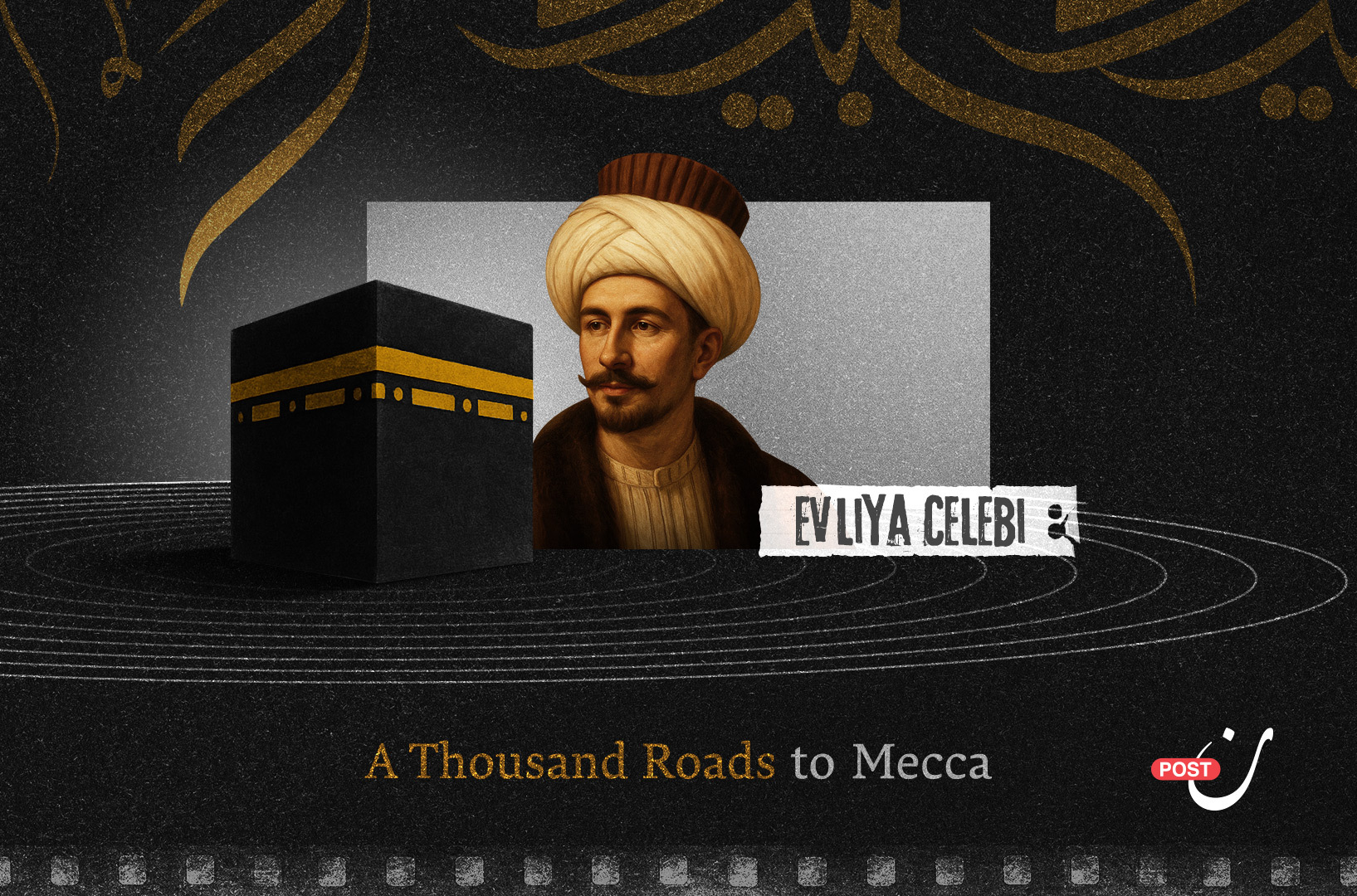
Within this context, the Ottoman voyager Ulūyā Julbī undertook the Hajj pilgrimage in 1671, meticulously documenting his experiences in his encyclopedic work Seyāhatnāme. It remains one of the most important sources describing the pilgrimage experience in that era.
Vision of the Pilgrimage
Born in Istanbul in 1611, Ulūyā mastered Arabic, Persian, and Turkish, as his narrative demonstrates. Raised in a well-off family closely connected to the Ottoman court, he never sought a formal position. Instead, he dreamed of travel and viewed the performance of the Hajj and visiting the Prophet’s grave as his greatest ambition. As he wrote:
“Since youth, Ulūyā, humble before his Lord, wished with all his heart and soul to be passionate about travel … to race the morning winds across lands until reaching the resting place of the beloved Prophet.”
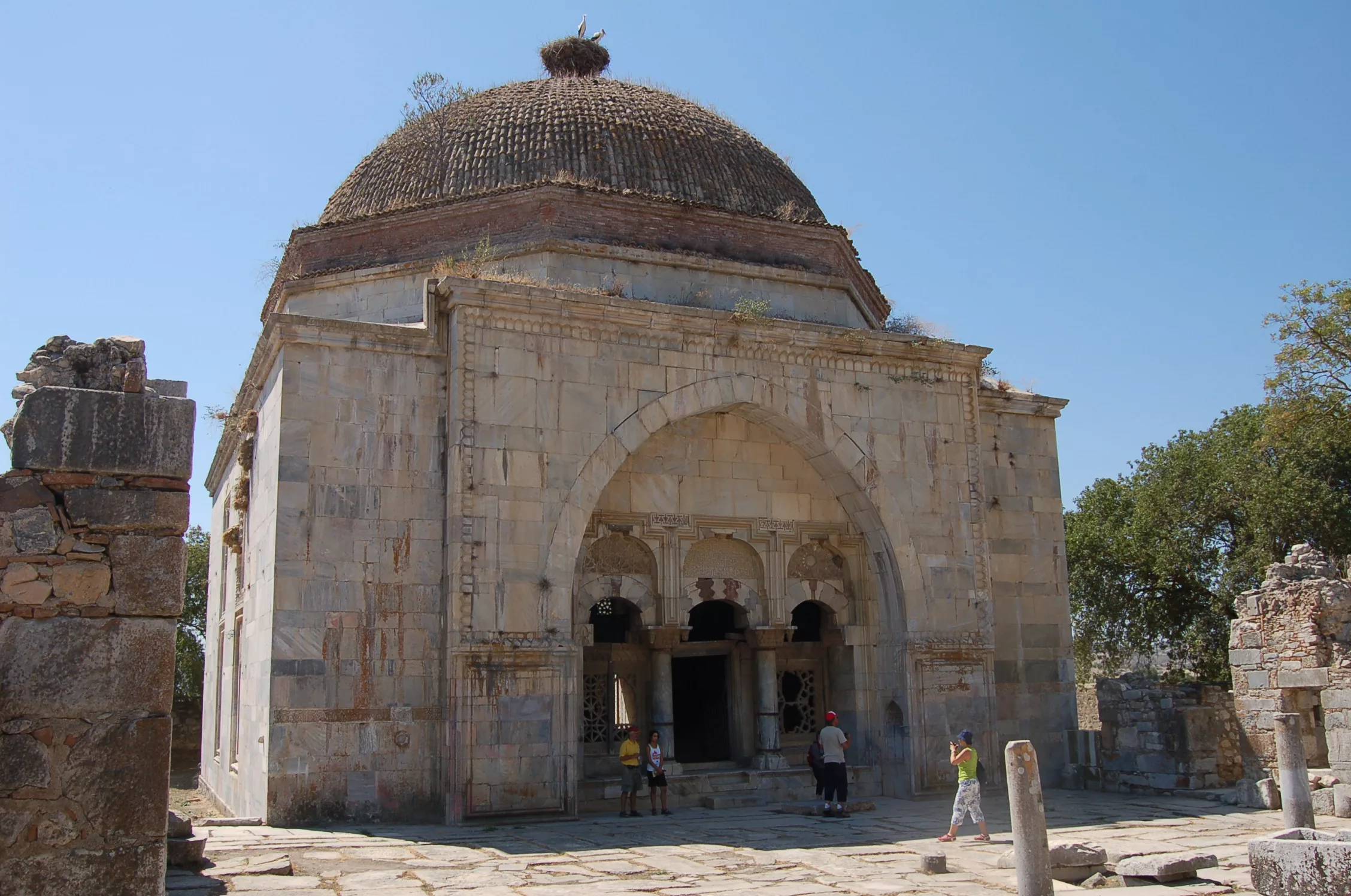
On the night of Ashura in 1630, he dreamt of performing Fajr prayers at Istanbul’s Akhī Julbī Mosque. In his vision, the Prophet Muhammad appeared surrounded by companions. Overjoyed, Ulūyā kissed his hand but faltered when speaking; instead of asking for intercession, he requested permission to journey.
The Prophet smiled and promised intercession, travel, and a visit to the Sacred House. Saʿd ibn Abī Waqqās then addressed him: “Depart like an arrow into the lands of God.”
This vision became a turning point. When interpreted by his sheikhs, they urged him to heed Saʿd ibn Abī Waqqās’s words, and so he traveled through various lands—though his connections delayed his actual pilgrimage.
Years later, on a night during Laylat al-Qadr in 1671, after visiting the tomb of Abū Ayyūb al-Anṣārī, he had another dream in which his father and his mentor Muhammad Effendi urged him to perform Hajj. He regarded this dream as definitive and immediately began preparations.
On 12 Muḥarram 1082 AH (21 May 1671), he departed Istanbul with three companions and seven servants, taking an unusual route to avoid the Celali disturbances in Anatolia. He passed through Bursa, Kütahya, Afyon, Izmir, and the Aydın and Manşha coasts and islands, including Rhodes, before moving on through Adana, Maraş, Ayntab, Kilis, reaching Aleppo and Damascus, where he stayed for fifteen days, exploring its landmarks and markets.
Pilgrimage Stations in the Ottoman Route
Ulūyā joined the Syrian Hajj caravan led by Damascus governor Ḥusayn Pasha and accompanied by senior Ottoman officials. He recorded the stages:
“On the twentieth of Shawwal, year 1081 AH, we departed Damascus amid a magnificent celebration the likes of which the region had never witnessed. After traveling about an hour, we reached Ahmed Pasha’s palace.”
The caravan, protected by Janissary units, passed through villages such as Kasweh, Khan Ṭārkhānah, and Ṣanamayn Castle, then on to Daraa, Busrā al-Ṣughra, and Ḥawrān to stock up on water. They reached al-Muzayrib Fortress and camped near the Hawrān valley for ten days, where locals traded goods with pilgrims.
Continuing through towns including al-Nawā, Abū al-Faraj, and Ṭūrānā to Mazraq Castle and ʿAyn al-Zarqā’, then Tabrukah, and entered the Balqa Desert. Heavy rains caused fatalities among both pilgrims and livestock. The route proceeded to Qatrānā Castle, then al-Karak via al-Ṭābūt and ʿAnzah, then to Maʿān Fortress and ʿAqaba. Due to difficult terrain, pilgrims traveled on foot and some were robbed.
The caravan reached Ḥūzaymān Castle via Nabi al-Nabī spring—built during Muʿāwiya’s time—housing some 200 soldiers with a mosque and bath. Next was “Nakhla al-ʿĀṣiya” midway to Mecca, then Maqābir town, and Ḥaydar Fortress, where the Janissary camp had 40–50 rooms and also accommodating the Egyptian caravan.
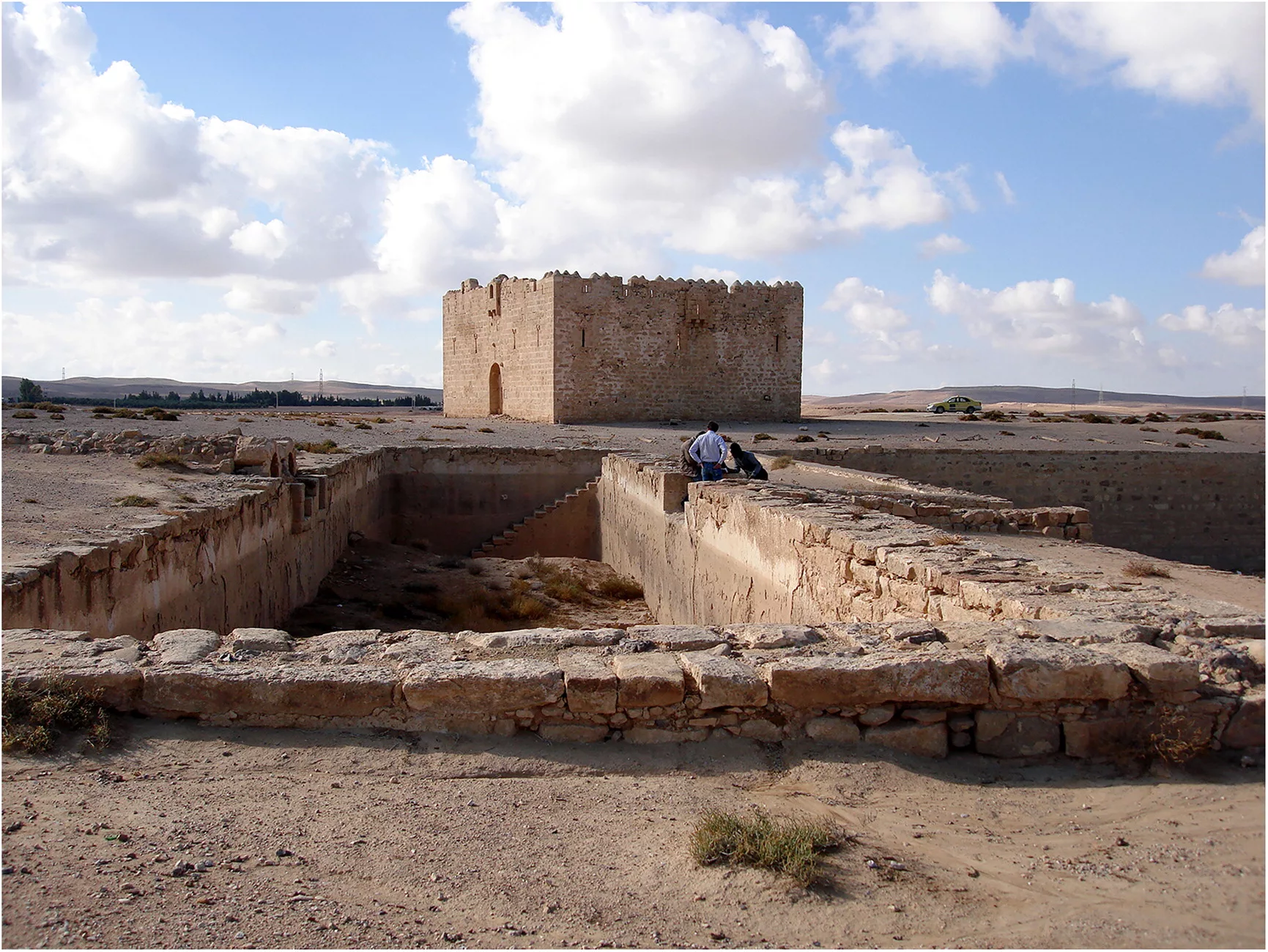
They continued to Shīrin Fortress, Shaqq al-ʿAjūz station, ʿAqīyat al-Rimāl, Thamūd and Ṣāliḥ towns, Dibl and al-ʿUlā Fortresses, Bīr Zumurrud station, and the “New Well” funded by Sultan Muḥammad IV’s mother. Finally, they passed Nabʿ al-Hudā, al-Faḥlatayn Fortress, and Wādī al-Qurā before reaching Dār al-Wadāʿ (also known as Wādī al‑Istiqbāl), the pilgrims’ last station before Medina, where they were warmly received with hymns, dates, and hospitality.
From Damascus to Dār al‑Wadāʿ encompassed 24 stations, covered in 350 hours (14½ days) due to pilgrims’ exhaustion and tired animals—though Ulūyā believed it could be done in just 100 hours under better conditions.
Within Medina
He vividly describes his radiant emotions upon seeing Medina, rushing to pray at the Prophet’s grave, composing devotional poetry, and pinning it on the walls of the Prophet’s Mosque. He notes that prayers followed a sectarian order—Shāfiʿī, then Ḥanafī, Mālikī, and lastly Ḥanbalī—reflecting the era’s fiqh plurality.
He documented Ottoman-era expansions and restorations of the mosque, noted Medina’s population of about 14,000, most working in trade or finance. He described imports from Egypt, city homes, kitchens, schools, gardens, and agricultural produce.
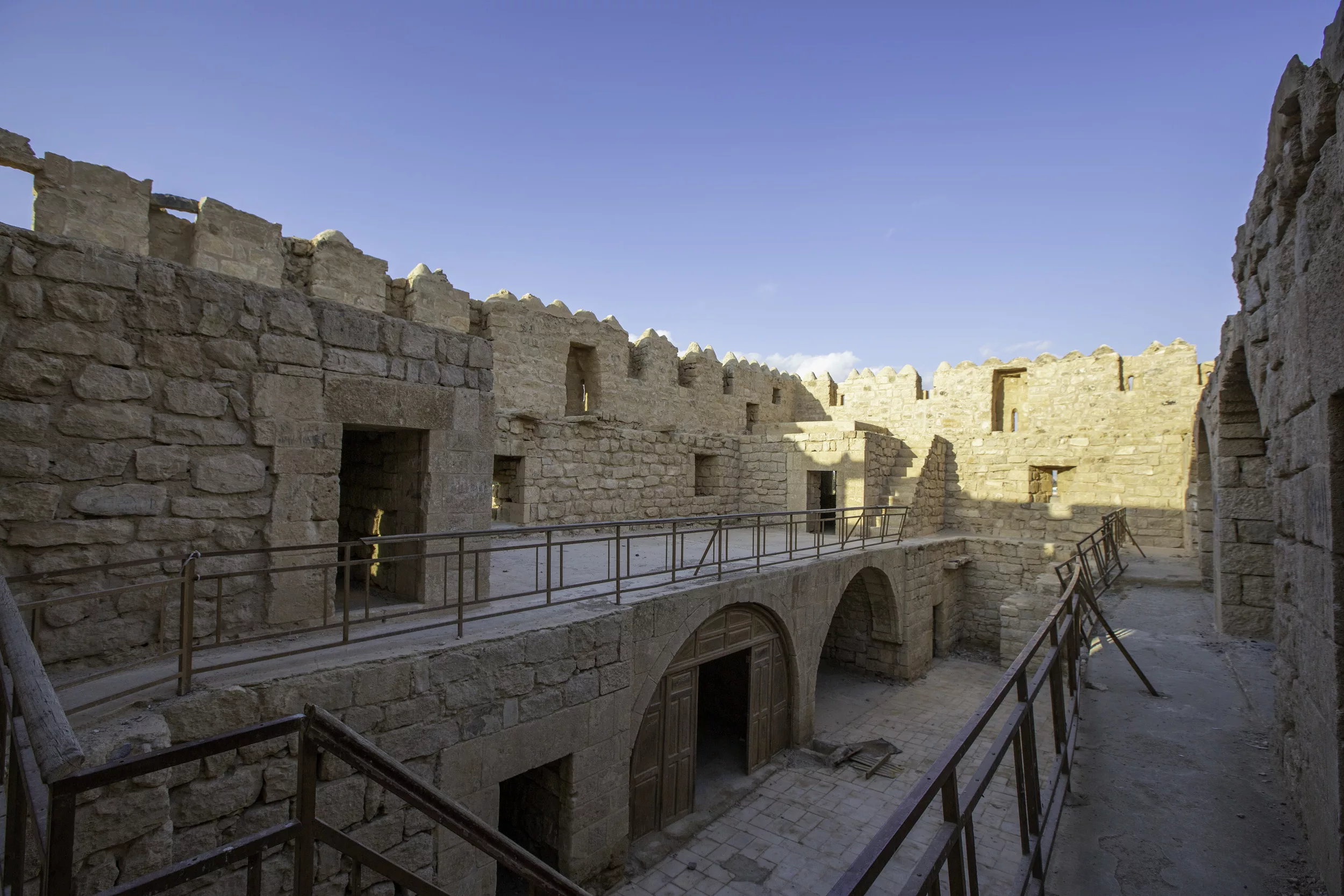
During his stay, Ulūyā visited the graves of Abū Bakr and ʿUmar, prominent mosques like al-Qiblatayn and ʿĀ’isha’s Mosque, and chronicled Medina’s fortress, baths, caravanserais, and schools. He observed more than 100 schools and 70 water fountains outside the city walls, funded by annual endowments.
He explored Qubāʾ village, the site of the Battle of Uhud, Ali’s wells, Maimūna bint al‑Ḥārith’s fountain, Wādī Fāṭima, Badr fortress, the ʿUmra site, and especially Nabʿ Rabīʿa village—home to over 200 houses, a mosque, and about 50 shops—where Egyptian pilgrims donned the ihrām.
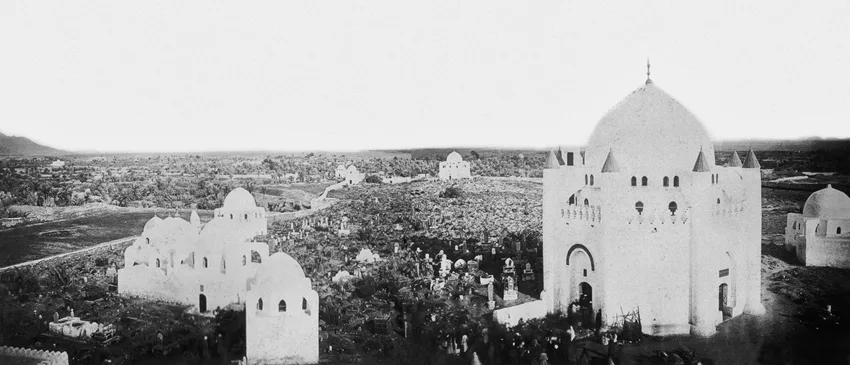
He accompanied pilgrims on a devotional visit to the grave of Ḥamza b. ʿAbd al‑Muṭṭalib, an hour from Medina, equating it to the spiritual merit of participating in Uhud. He recorded specific rituals: visits to the companions’ graves had to take place before dawn, with barefooted, head‑uncovered pilgrims.
After pilgrims performed the farewell visit to the Prophet, Ḥusayn Pasha ordered cannons fired to herald departure from Medina toward Mecca. For two hours they marched southward to Ali’s Wells, the place marking ihrām for Mecca.
Approaching Mecca
On the final stages to Mecca, Ulūyā noted stops at the Martyrs’ Tomb House, the Jadīda family’s station, and many villages en route to Badr Fortress, Jabal al-Raḥmān (the Cave of Hira), Baraka Fortress, the ʿUmra station—where Meccans welcomed pilgrims—after which it was a one‑hour journey to the Kaʿba.
Next, they reached Wādī Fāḥ, where Mecca’s elite came to receive Ottoman gifts—signifying the final stop before entering Mecca.
Within Mecca
Upon first sighting the Kaʿba, Ulūyā wept as he circumambulated it. He visited Maqām Ibrāhīm, performed the Saʿy between Safā and Marwa, and narrated how Zamzam’s water carried different scents throughout the day: rose in the morning, violet in the afternoon, jasmine in the evening, and lily with milk at night.
He documented the mosques, houses of the companions, the Haram’s nineteen gates and seven minarets, including their inscriptions and dates.
He was struck by Mecca’s festive atmosphere during the Hajj, noting how shops, palaces, and pilgrims’ tents were decorated. He focused on the Ottoman-funded ṣirra (gift caravan) from Istanbul, considering it the pilgrimage’s most salient feature. He mentioned that the famous Kiswah of the Kaʿba is woven in Cairo in its distinctive black.
Ulūyā painted a detailed portrait of Meccan residents: predominantly brown‑skinned with reddish complexions, large, deer-like eyes, generally mild-mannered but occasionally coarse in speech. Many used Kohl, dyed their hair and beards, and exhibited conspicuous consumption.
He observed that men were dominated by women at home while women did not cook. The Sharīfiyah (notables) lived off Islamic‑world patronage, indulging in lavish spending.
He said most Meccans were engaged in trade and showed little interest in education, despite a wide educational infrastructure. He recorded 150 abjad (alphabet-learning) schools, 40 Qurʾān memorization centers, and 40 ḥadīth-teaching houses, noting genuine scholarly interest was mostly limited to residents of al-Muğāwirīn (pilgrim host quarters).
On Meccan food habits, he noted a preference for light foods—dates, rice, soups—and that haleem was especially popular. He noted Mecca’s food and water scarcity made them reliant on Ottoman aid and Egyptian wheat and rice.
Ulūyā praised Mecca’s vibrant commercial life: pilgrims often traded to finance their journey, and the Damascus caravan afforded opportunities to small traders. He, too, engaged in trade to cover his extra expenses. He reported around 1,300 shops in Mecca, including specialty markets labeled by pilgrims’ homelands—Egyptian, Syrian, Yemeni, Iraqi, Indian—as well as by goods (perfumes, luxury fabrics, jewelry, spices, medicines). He was dismayed by Mecca’s high prices and noted that haggling was frowned upon and considered offensive to merchants.
He admired Mecca’s cafés—about seventy—describing them as leisure and social-cultural venues for pilgrims, where Abyssinian slaves performed musical and singing performances. Pilgrims, including himself, enjoyed coffee and the lively atmosphere.
Challenges & Security Threats
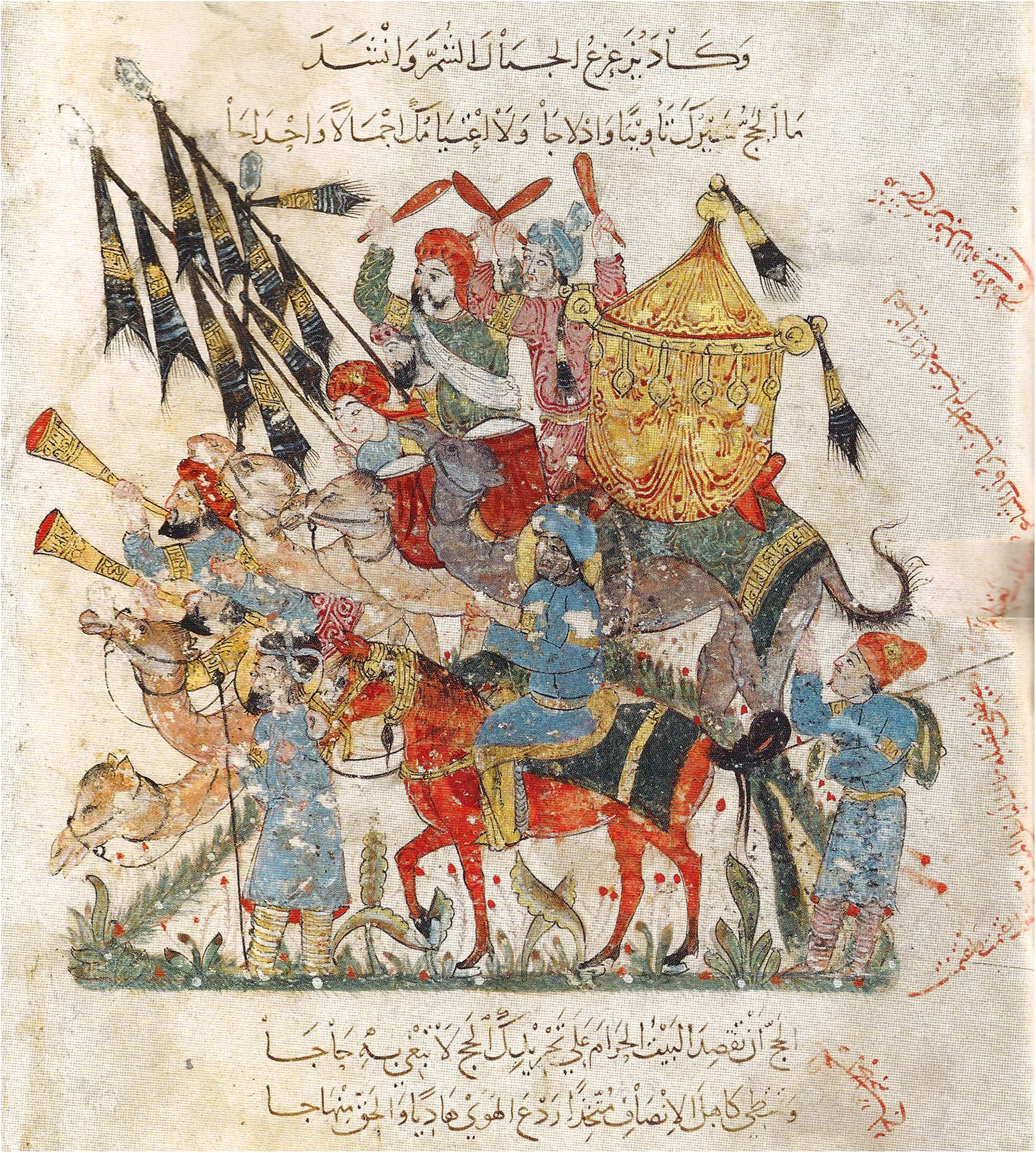
The Ottoman Hajj caravans followed strict organization under a full administrative team responsible for leadership, provisioning, finance, coordination of pilgrims, and included judges, zakat supervisors, imams, mu’adhdhin, and musicians. These caravans were typically escorted by military guards. In 1672, Ulūyā accompanied such a caravan.
Despite the spiritual atmosphere, Ulūyā noted threats encountered by pilgrims, documenting tensions between Ottoman authorities and local forces such as the Sharīf of Mecca and Bedouin tribes—tensions that threatened pilgrims.
In 1670–1671, conflict erupted between the Jeddah governor and the Sharīf of Mecca, inciting fear among pilgrims. The Haram’s gates were closed to prevent Bedouins—who fired from Jabal Abū Qubays and surrounding heights—from attacking, resulting in around 200 deaths and 700 injuries.
In 1672, Ulūyā again joined a caravan led by Ḥusayn Pasha amid political tension following the assassination of Jeddah’s governor Ḥasan Pasha by Meccan Sharīf forces over port revenue disputes. To assert Ottoman authority, Ḥusayn Pasha entered Mecca with 5,000 soldiers, bolstered by 3,000 Egyptians.
Ulūyā detailed the danger posed by Bedouins to pilgrims and merchants: while they were key suppliers of camels and provisions, they also posed significant threats—blocking passage, robbing, and attacking caravans in regions like al-Karak, Maʿān Castle, and al-ʿUlā. Yet he records that he personally was spared.
He noted some locals refused to supply provisions unless his caravan paid higher prices—a maneuver for profit. He also reported that the Ottoman Hajj commander sometimes used force to secure provisions. In some cases, Ottoman officials reacted with violent reprisals, even killing Bedouins.
The Ottoman state adopted a dual strategy: paying sheikhs tribute through the ṣirra’s supervisor as caravans passed tribal lands, while simultaneously deploying military escorts to protect pilgrims. Ulūyā observed that Bedouin threats were so severe that Hajj without military guard and guarded camp sites was impossible. He criticized the tribes’ tactics and suggested those impeding caravans be treated like non-Muslims—echoing Ibn Jubayr’s anger .
Beyond security, pilgrims endured logistical and environmental challenges: Ulūyā narrated how the Damascus caravan was struck by a violent rainstorm at Muzayrib, delaying the pilgrims just before the final rites . He also noted the extensive suffering of the camels in those harsh conditions.