NoonPost NoonPost

NoonPost

  • Home
  • Politics
  • Economy
  • Society
  • Culture
  • Files
  • Long Reads
  • Podcast
AR
Notification Show More
نون بوست
“There Are Nights I Can’t Close My Eyes”: How Gazans Are Living in Homes on the Brink of Collapse
نون بوست
From al-Jolani to Ahmad al-Shara: The Evolution of Syria’s New Leader
نون بوست
When Political Islam Receded in Egypt: Who Filled the Void?
نون بوست
An Extension of Genocide: Gaza’s Detainees Speak Out
نون بوست
A Tightrope Between Survival and Sovereignty: The Syrian Government Faces Normalization Pressures
نون بوست
American Aircraft Carriers: Has the Era of “100,000 Tons of Diplomacy” Ended?
نون بوست
U.S. Regime‑Change Policies: Why They Are Destined to Fail
نون بوست
Transformations of Israeli Judaism: Between the Victim Complex and the Colonizer’s Doctrine
نون بوست
The Gulf’s Balancing Act: Iran, Israel, and Hidden Links
نون بوست
Iraq–Turkey Oil Export Treaty: Why Did Ankara Cancel It After 52 Years?
نون بوست
Syria’s Northeast on Edge: QSD Between Ankara and Damascus
نون بوست
Has Europe Changed Its Stance on Israel… or Just Its Language?
NoonPost NoonPost
AR
Notification Show More
نون بوست
“There Are Nights I Can’t Close My Eyes”: How Gazans Are Living in Homes on the Brink of Collapse
نون بوست
From al-Jolani to Ahmad al-Shara: The Evolution of Syria’s New Leader
نون بوست
When Political Islam Receded in Egypt: Who Filled the Void?
نون بوست
An Extension of Genocide: Gaza’s Detainees Speak Out
نون بوست
A Tightrope Between Survival and Sovereignty: The Syrian Government Faces Normalization Pressures
نون بوست
American Aircraft Carriers: Has the Era of “100,000 Tons of Diplomacy” Ended?
نون بوست
U.S. Regime‑Change Policies: Why They Are Destined to Fail
نون بوست
Transformations of Israeli Judaism: Between the Victim Complex and the Colonizer’s Doctrine
نون بوست
The Gulf’s Balancing Act: Iran, Israel, and Hidden Links
نون بوست
Iraq–Turkey Oil Export Treaty: Why Did Ankara Cancel It After 52 Years?
نون بوست
Syria’s Northeast on Edge: QSD Between Ankara and Damascus
نون بوست
Has Europe Changed Its Stance on Israel… or Just Its Language?
Follow US

12 Years Since the July 3 Declaration… Where Are al‑Sisi’s Partners Today?

فريق التحرير
Noon Post Published 26 March ,2026
Share
نون بوست
نون بوست

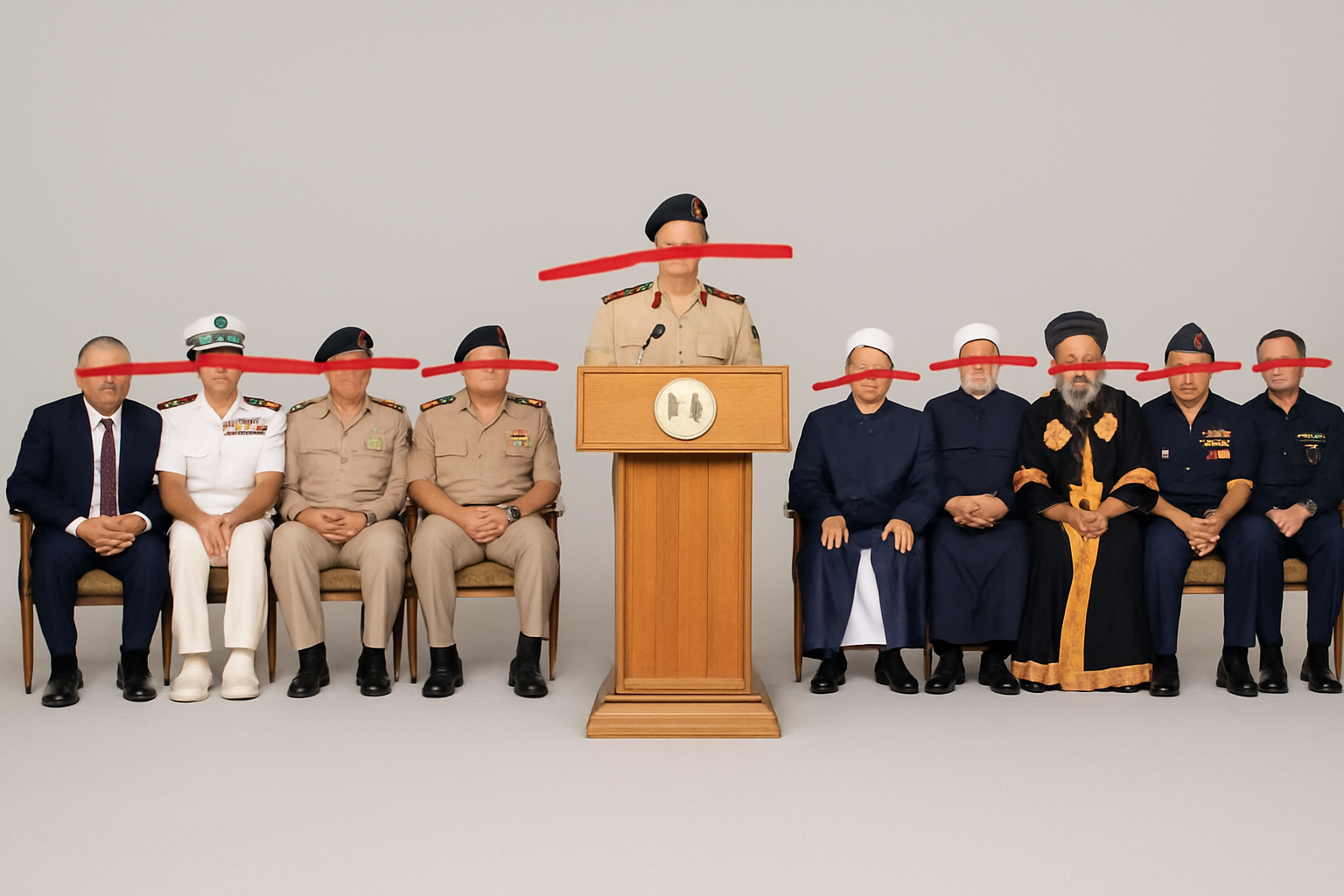
At precisely 6 p.m. on this very day 12 years ago, then‑Minister of Defense Abdel Fattah al‑Sisi, flanked by a carefully selected cross‑section of Egyptian society, announced the ouster of the democratically elected President Mohamed Morsi. He suspended the constitution and called for early presidential elections, with the head of the Supreme Constitutional Court appointed to oversee the transitional phase until a new president was elected.

In a masterstroke of intelligence‑style media management, al‑Sisi ensured that his visual backdrop comprised a ‘coalition of representatives of Egyptian society,’ lending legitimacy and breadth to his announcement. This carefully choreographed scene aligned with his narrative that the decision followed “consultation with national, political and youth figures without exclusion,” and operated on the principle of “‘from every tribe, a man.”

Standing alongside him were ten key figures representing religious, political, judicial, civic, and military institutions:

  • Sheikh Ahmed al‑Tayeb, Grand Imam of al‑Azhar

  • Pope Tawadros II, head of the Coptic Orthodox Church

  • Mohamed ElBaradei, prominent political figure

  • Jalal Morra, representative of Salafi Nour Party

  • Hamid Abdullah, head of the Supreme Judicial Council

  • Mamdouh Badr and Mohamed Abdel Aziz, from the “Tamarod” movement

  • Lt. Gen. Sedki Sobhi, then‑Chief of Staff

  • Adm. Osama El‑Gendy, Head of the Navy

  • Air Chief Marshal Younes El‑Masry, Commander of the Air Force

These ten individuals—each with their own constituencies and aspirations—participated in this moment with hopes of rewards and influence. Yet, as years passed and al‑Sisi consolidated power, each followed a distinct fate: some were sidelined, others relegated, and a few either tamed or tokenized.

The Imam Who Exhausted the President

Al‑Sisi placed Sheikh Ahmed al‑Tayeb front and center, granting the declaration religious legitimacy. Although Tayeb had opposed the 2011 revolution, deeming it “chaos and un-Islamic,” he supported removing Morsi, endorsing early elections.

However, after the 2013 Rabaa dispersal, which claimed thousands of lives, Tayeb released an audio statement saying he had not been consulted beforehand and retreated to Upper Egypt in seclusion “to prevent civil war and make all parties aware of their responsibility in stopping the bloodshed.”

This post-fact rebuke enraged al‑Sisi. The relationship grew increasingly confrontational as al‑Sisi’s calls for a “religious revolution” and purification of religious discourse—alongside parliamentary proposals to limit the Grand Imam’s tenure or make him removable—challenged al‑Azhar’s autonomy.

Though none of these proposals passed, pro-regime media persistently criticized al‑Azhar, labeling it reactionary and resistant to reform.

Since 2013, the effort to weaken al‑Tayeb continued. He reflects that he “always wore him out,” a statement confirmed by al‑Sisi himself when he said, “You’ve worn me out, Your Eminence, imam.”

Privileges That Failed to Match Aspirations

Pope Tawadros II’s presence was expected amid Coptic fears of Islamist rule and hostile media narratives. His participation aimed to reassure the Christian community and promise a new era of inclusion after years of marginalization.

Under al‑Sisi’s rule, Coptic Christians have seen modest improvements: al‑Sisi regularly visits the Coptic Cathedral at Christmas, a church‑building law was passed in 2016, thousands of unlicensed churches were legalized, and Christians were appointed to key positions—including the historic appointment of Damietta’s first Coptic governor (Mona Gerges in 2018).

However, real representation remains limited. Tensions persist, particularly in Upper Egypt, and bureaucratic obstacles still hinder church constructions in rural areas. Some Christians criticize the church for politicizing its role instead of focusing solely on spiritual matters—fueling internal dissent against Pope Tawadros.

The Nour Party… Gradual Exclusion

Salafi Nour Party, represented by General Secretary Jalal Morra, believed it might replace the Muslim Brotherhood in Islamist politics following Morsi’s removal. Morra described the July 3 actions as “necessary to save our children,” justified by patriotism.

However, the party’s influence sharply declined:

  • In 2012, the Islamic Bloc (including Nour) won 123 parliamentary seats.

  • By 2015, Nour held just 11 seats—in seventh place.

  • In 2020, it won only 7 seats, ranking tenth.

The state systematically marginalized Nour, curtailing its Islamist activities and reducing it to a symbolic presence without real power or grassroots support.

ElBaradei & Fouad… The Civil‑Bloc Co‑opted by the Military

Representatives of the civil bloc—Mohamed ElBaradei and journalist‑consultant Sakeena Fouad—joined in hopes of fostering inclusivity. Yet within six weeks, after the Rabaa crackdown, ElBaradei resigned. He criticized the deviation from peaceful consensus and later labeled al‑Sisi’s move a coup, rather than a constitutional correction.

Fouad, having previously resigned in protest against Morsi’s November 2012 decree, briefly served as adviser to interim President Adly Mansour before vanishing from public view.

Twelve years later, civil‑bloc figures remain confined within a militarized political landscape—allowed only narrow, controlled space for expression—asserting that nothing moves without regime approval.

Military Generals… None Remain

Every senior military official photographed on July 3 has since disappeared:

  • Sedki Sobhi, promoted in 2012, became defense minister in 2014 but was ousted—and formally “promoted” to a ceremonial advisory role—in June 2018.

  • Osama El‑Gendy was dismissed in April 2015 and reassigned to the Suez Canal Authority.

  • Younes El‑Masry, removed in 2018, later served briefly as Aviation Minister and then disappeared from public life after 2019.

Personal Rewards for the Revolutionaries

The Tamarod leaders seated behind al‑Sisi, Mahmoud Badr and Mohamed Abdel Aziz, were among the revolution’s greatest beneficiaries. Badr became a member of parliament and owns a state-linked food factory; Abdel Aziz joined the National Human Rights Council and later became an MP.

A third Prophet, Hassan Shaheen, less fortunate, took part in Hamdeen Sabbahi’s run but disappeared after losing. To this day, Badr and Abdel Aziz remain vocal regime defenders, despite declining popularity.

Though less visible, the left‑wing bloc—led by Hamdeen Sabbahi, Khaled Youssef, and others—enthusiastically supported July 30 protests, expecting to claim the presidency. Instead, al‑Sisi’s rise crushed their hopes. Leftist parties were marginalized, some faced arrests and legal harassment (e.g., lawyer Khaled Ali), and internal fragmentation has plagued the movement, leading to its decline and isolation.

Over 12 years since the July 3 gathering, only al‑Sisi remains in power. Having shed his partners, either by sidelining or co‑opting them, he dismantled the tableau that once legitimized his rise—along with the many promises that accompanied it, including his initial denial of any presidential ambitions.

Download this article as PDF
Share this Article
Facebook Twitter Whatsapp Whatsapp Telegram Email Copy Link
فريق التحرير
By فريق التحرير تقارير يعدها فريق تحرير نون بوست.
Follow:
Previous Article نون بوست Scientific Research in Egypt: Abundant Output, Migrating Minds
Next Article نون بوست Nāṣir Khusraw: A Pilgrimage of Transformation

Read More

  • U.S. Regime‑Change Policies: Why They Are Destined to Fail U.S. Regime‑Change Policies: Why They Are Destined to Fail
  • The Gulf’s Balancing Act: Iran, Israel, and Hidden Links
  • Iraq–Turkey Oil Export Treaty: Why Did Ankara Cancel It After 52 Years?
  • Syria’s Northeast on Edge: QSD Between Ankara and Damascus
  • Has Europe Changed Its Stance on Israel… or Just Its Language?
part of the design
NoonPost Weekly Newsletter

You May Also Like

U.S. Regime‑Change Policies: Why They Are Destined to Fail

U.S. Regime‑Change Policies: Why They Are Destined to Fail

إسراء سيد Esraa sayed 8 April ,2026
The Gulf’s Balancing Act: Iran, Israel, and Hidden Links

The Gulf’s Balancing Act: Iran, Israel, and Hidden Links

فريق التحرير Noon Post 8 April ,2026
Iraq–Turkey Oil Export Treaty: Why Did Ankara Cancel It After 52 Years?

Iraq–Turkey Oil Export Treaty: Why Did Ankara Cancel It After 52 Years?

فريق التحرير Noon Post 8 April ,2026

الاقتصاد الهاجس الأبرز للمواطنين الإيرانين

فريق التحرير
Noon Post Published 27 February ,2016
Share
b48c46f6b105bc667112a088acf5adde

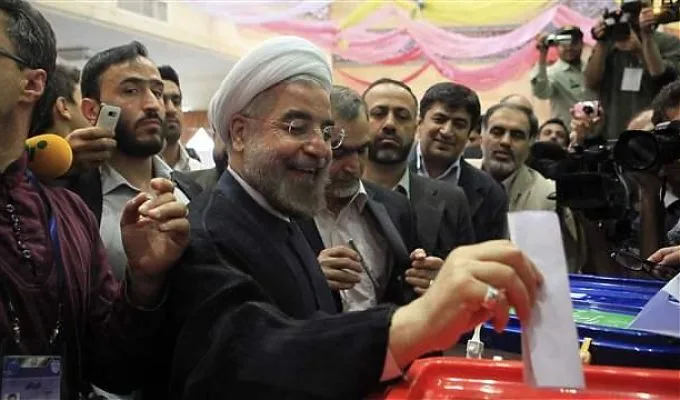
تحمل المواطن الإيراني العبء الأكبر بسبب العقوبات الغربية على طهران لسنوات طويلة مضت لذلك يفضل الناخب الإيراني اليوم من يقدم في برنامجه الانتخابي حلولاً اقتصادية للخروج من الحنق الاقتصادي في البلاد وتقديم برامج اقتصادية تنعش الأسواق وتحل مشاكل المواطن المعيشية والاجتماعية.

وبين شعارات يقدمها المحافظون والإصلاحيون في برامجهم الانتخابية ينتظر المواطن ما هو أكثر من الشعار؛ حيث أظهر استطلاع للرأي نشره موقع تابناك المقرب من المحافظ المعتدل محسن رضائي أن الوضع الاقتصادي يشكل الهاجس الأبرز لدى المواطنين بنسبة 64% من الذين استطلعت آراؤهم مقابل 17% تهمهم القضايا السياسية و11.5% تشغلهم قضايا مجتمعية.

رفع التيار المحافظ في حملته الانتخابية شعار “المعيشة، الأمن، التطور” مؤكدًا على تواجد العنصر الاقتصادي في حملته الانتخابية ورشح مرحشين اقتصاديين في قائمته الموحدة تحت اسم “ائتلاف محافظين” أو “الجبهة المتحدة للمحافظين”، وتكلم مرشحوهم في كل المدن الإيرانية على تحسين الوضع الاقتصادي في البلاد بعيدًا عن الانفتاح الكبير على الغرب الذي يتخوف منه معظم المحافظين ولا سيما المتشددين، حيث أعلن رئيس قائمة المحافظين والرئيس السابق للبرلمان “غلام علي حداد عادل”، أنه من الضروري التركيز على ثغرات الاقتصاد الإيراني وحل مشكلات المواطنين داعيًا الإيرانيين للاقتراع لصالح برلمان قوي قادر على إرشاد السياسات الاقتصادية للحكومة الحالية.

فالجدير بالذكر أن الساسة المحافظين يرفضون ما تنتهجه الحكومة الحالية من انفتاح نحو الخارج على حساب الداخل؛ فبحسب رأي غلام فإن هذا الارتباط يدعو للقلق، وتكررت هذه التصريحات من العديد من المرشحين المحافظين أيضًا، وأشار غلام إلى أن قائمته الموحدة عن العاصمة طهران وحدها تتضمن ما يزيد عن عشرة متخصصين اقتصاديين وكلهم قادرون على وضع حلول للمشكلات الراهنة.

وفي محاولة للترويج لبرنامجهم الاقتصادي تحدث المرشحون في “مهرجان الشباب الفاطميين الكبير” الإثنين الماضي للفوز بمعظم أصوات المقترعين، بغية الحصول على أكبر عدد ممكن من مقاعد البرلمان الجديد، وقال المرشح يحيى آل اسحاق إن المهم حاليًا هو التركيز على مطالب الشباب وحل مشكلاته، كذلك عبر المرشح “مهرداد بذرباش” في تصريحات أنه من الضروري تحسين القدرة الاقتصادية للمواطن الإيراني، مشيرًا إلى مشكلات من قبيل ارتفاع مستوى الواردات الإيرانية مقارنة بصادراتها وقال إنه بسبب انخفاض القردة الإنتاجية للبلاد أصبحت إيران تستورد 90% من بضائعها من الصين كما حصل خلال العامين الماضيين.

كما أشار بذرباش إلى أنه في الأعوام الماضية أيضًا كان ما يقارب 200 إيراني يخسرون عملهم يوميًا ليزيد عدد من يعانون من البطالة إلى 3 ملايين شخص تقريبًا، مضيفا أنه إذا ما وصل المحافظون للبرلمان القادم سيعملون على حلحلة المشكلات التي تواجه مختلف المؤسسات الإيرانية.

وتكلم في ذات المهرجان الانتخابي وزير النفط السابق في عهد الرئيس المحافظ محمود أحمدي نجاد وهو من أشد منتقدي الحكومة المعتدلة الحالية حيث قال إنه من الضروري إقرار خطط لبناء اقتصاد مقاوم يعتمد على الاكتفاء الذاتي وعلى الموارد الداخلية ويرفع مستوى الإنتاج وهو ما من شأنه رفع مستوى معيشة الإيرانيين.

وعليه يكون التيار المحافظ قد دخل سباق الانتخابات من بوابة محاربة الفساد وإيجاد فرص عمل للمواطنين وبناء الاقتصاد بعيدًا عن العلاقات مع الغرب والتوجه للداخل الإيراني أكثر من الانفتاح على الخارج.

أما الإصلاحيون فقد دخلوا الانتخابات بقائمة تسمى “أميد” والتي تعني “الأمل” بالعربية، وهي لائحة مشتركة بينهم وبين مرشحين معتدلين يأتي على رأس القائمة المرشح الرئاسي الإصلاحي السابق محمد رضا عارف، وقد رافعوا شعار “الأمل، الاستقرار، التطور الاقتصادي” في الترويج لحملتهم الانتخابية.

ويرى الإصلاحيون أن البلاد تحتاج إلى خطط واقعية للخروج من الركود الاقتصادي الذي تعيشه البلاد وهذا برأيهم لا يتم إلا عبر علاقات اقتصادية جيدة مع الآخرين حسب المرشحة الإصلاحية “إلهة كولايي” في مؤتمر عقده الإصلاحيون في جامعة أمير كبير في مدينة طهران، وأضافت أن التصويت للقوائم التي يتواجد فيها مرشحو الإصلاح أمر ضروري فالبلاد تمر بظروف غير مرضية منتقدة تشكيلة البرلمان الأخير حيث سيطر المحافظون عليه لثلاث دورات متتالية، معتبرة أن النواب صوتوا على قوانين دفعت بمعيشة الإيرانيين واقتصاد إيران نحو ظروف أسوأ.

أما تيار الاعتدال والذي يشترك مع الإصلاحيين في عدد من القوائم الانتخابية فيعتمد على الاتفاق النووي كشعار قوة سيشد المقترع الإيراني نحو صناديقه وهناك لوائح ترفع شعارات اقتصادية واضحة كلها تدعو للتنمية وحل المشكلات.

وبالنسبة لسياسة الرئيس الحالي حسن روحاني فهو يأمل الحصول على غالبية مؤيدة له في مجلس الشورى الإيراني في الانتخابات حتى يتمكن من إنعاش الاقتصاد لاسيما بعد أن عارض كثير من المحافظين سياساته التي تهدف لإفساح مجال واسع للشركات الأجنبية بعد رفع العقوبات الغربية عن إيران.

وقال رئيس مجلس الشورى المنتهية ولايته علي لاريجاني، الذي يوصف بالمحافظ المعتدل ويدعم روحاني، قبل أيام قليلة، إن الاستثمارات الأجنبية من شأنها “زيادة الإنتاج الوطني من أجل خفض البطالة” مؤكدًا أن التضخم والانكماش والبطالة من أبرز مشاكل البلاد، وبعد الاتفاق النووي ورفع العقوبات تمر البلاد بوضع صعب.

يذكر أن وزارة الداخلية الإيرانية قد أعلنت أمس الجمعة تمديد فترة التصويت لخمس مرات بسبب كثافة المقترعين في سابقة تسجلها الانتخابات التشريعية في إيران، حيث أعلنت وزارة الداخلية أن عدد المشاركين في الانتخابت التشريعية ومجلس خبراء القيادة تجاوز 32 مليون ناخب وهو مايمثل 57%.

وفي انتظار إعلان نتائج التصويت اليوم مساءً بعد فرز إجمالي الصناديق في المراكز الانتخابية المقدرة بـ 53 ألف مركز في عموم البلاد.   

TAGGED: الأمل ، الاستقرار ، الاقتصاد الإيراني ، الانتخابات الإيرانية ، تيار الإصلاحيين
TAGGED: الانتخابات الإيرانية
Download this article as PDF
Share this Article
Facebook Twitter Whatsapp Whatsapp Telegram Email Copy Link
فريق التحرير
By فريق التحرير تقارير يعدها فريق تحرير نون بوست.
Follow:
Next Article نون بوست The Stigma of “ISIS”: A Heavy Legacy Haunting Women and Children of Former Members

Read More

  • U.S. Regime‑Change Policies: Why They Are Destined to Fail U.S. Regime‑Change Policies: Why They Are Destined to Fail
  • The Gulf’s Balancing Act: Iran, Israel, and Hidden Links
  • Iraq–Turkey Oil Export Treaty: Why Did Ankara Cancel It After 52 Years?
  • Syria’s Northeast on Edge: QSD Between Ankara and Damascus
  • Has Europe Changed Its Stance on Israel… or Just Its Language?
part of the design
NoonPost Weekly Newsletter
dark

An independent media platform founded in 2013, rooted in slow journalism, producing in-depth reports, analysis, and multimedia content to offer deeper perspectives on the news, led by a diverse young team from several Arab countries.

  • Politics
  • Society
  • Rights & Liberties
  • Opinions
  • History
  • Sports
  • Education
  • Technology
  • Economy
  • Media
  • Arts & Literature
  • Entrepreneurship
  • Travel
  • Cinema & Drama
  • Food
  • Health
  • Culture
  • Latest Reports
  • Files
  • Long Reads
  • Interviews
  • Podcast
  • Interactive
  • Encyclopedia
  • In Pictures
  • About Us
  • Our Writers
  • Write for Us
  • Editorial Policy
  • Advanced Search
Some rights reserved under a Creative Commons license

Removed from favorites

Undo
Go to mobile version