NoonPost NoonPost

NoonPost

  • Home
  • Politics
  • Economy
  • Society
  • Culture
  • Files
  • Long Reads
  • Podcast
AR
Notification Show More
نون بوست
“There Are Nights I Can’t Close My Eyes”: How Gazans Are Living in Homes on the Brink of Collapse
نون بوست
From al-Jolani to Ahmad al-Shara: The Evolution of Syria’s New Leader
نون بوست
When Political Islam Receded in Egypt: Who Filled the Void?
نون بوست
An Extension of Genocide: Gaza’s Detainees Speak Out
نون بوست
A Tightrope Between Survival and Sovereignty: The Syrian Government Faces Normalization Pressures
نون بوست
American Aircraft Carriers: Has the Era of “100,000 Tons of Diplomacy” Ended?
نون بوست
U.S. Regime‑Change Policies: Why They Are Destined to Fail
نون بوست
Transformations of Israeli Judaism: Between the Victim Complex and the Colonizer’s Doctrine
نون بوست
The Gulf’s Balancing Act: Iran, Israel, and Hidden Links
نون بوست
Iraq–Turkey Oil Export Treaty: Why Did Ankara Cancel It After 52 Years?
نون بوست
Syria’s Northeast on Edge: QSD Between Ankara and Damascus
نون بوست
Has Europe Changed Its Stance on Israel… or Just Its Language?
NoonPost NoonPost
AR
Notification Show More
نون بوست
“There Are Nights I Can’t Close My Eyes”: How Gazans Are Living in Homes on the Brink of Collapse
نون بوست
From al-Jolani to Ahmad al-Shara: The Evolution of Syria’s New Leader
نون بوست
When Political Islam Receded in Egypt: Who Filled the Void?
نون بوست
An Extension of Genocide: Gaza’s Detainees Speak Out
نون بوست
A Tightrope Between Survival and Sovereignty: The Syrian Government Faces Normalization Pressures
نون بوست
American Aircraft Carriers: Has the Era of “100,000 Tons of Diplomacy” Ended?
نون بوست
U.S. Regime‑Change Policies: Why They Are Destined to Fail
نون بوست
Transformations of Israeli Judaism: Between the Victim Complex and the Colonizer’s Doctrine
نون بوست
The Gulf’s Balancing Act: Iran, Israel, and Hidden Links
نون بوست
Iraq–Turkey Oil Export Treaty: Why Did Ankara Cancel It After 52 Years?
نون بوست
Syria’s Northeast on Edge: QSD Between Ankara and Damascus
نون بوست
Has Europe Changed Its Stance on Israel… or Just Its Language?
Follow US

How the Palestinian Peasant Built His Home

فريق التحرير
Noon Post Published 26 March ,2026
Share
نون بوست
نون بوست
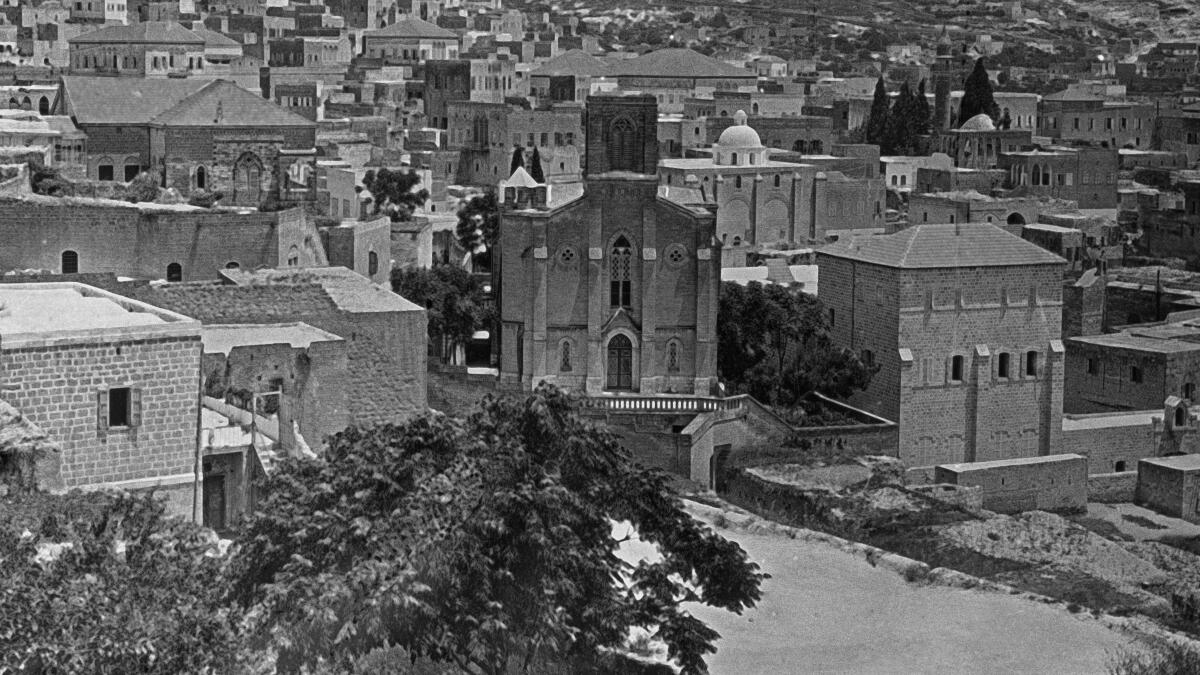
Nazareth in the 1920s. (Karl Simon / Ullstein Bild / Getty Images.

Since the start of Operation Al-Aqsa Flood by the Israeli occupation forces on October 7, 2023, up to early 2025, approximately 69 percent of Gaza’s buildings have been destroyed, according to a UN satellite assessment (UNOSAT).

Day after day, the devastation grows—and official figures likely understate the truth. In May 2025, an Israeli soldier captured footage in Rafah, southern Gaza, showing the city in near-total ruin, with just one house still standing.

Reconstruction of Gaza is projected by the United Nations to take around 15 years, at a cost estimated between USD 30 and 53 billion. Yet Palestinians—ever resilient—have previously astonished the world by reusing rubble from destroyed buildings to construct homes anew.

It’s as though they echo an ancestral folk song—sung before the Nakba of 1948—as their elders built homes:
“O our home, we shall build you tall and proud…
With our swords we shield you from every approaching danger, O protector…”

In this refrain, “O protector” (يا واو) is not merely poetic—it stands for the jackal, a symbol of lurking menace; “from every approaching danger” asserts a defiant promise of protection. Palestinians, it affirms, will raise their homes and guard them with swords against any threat.

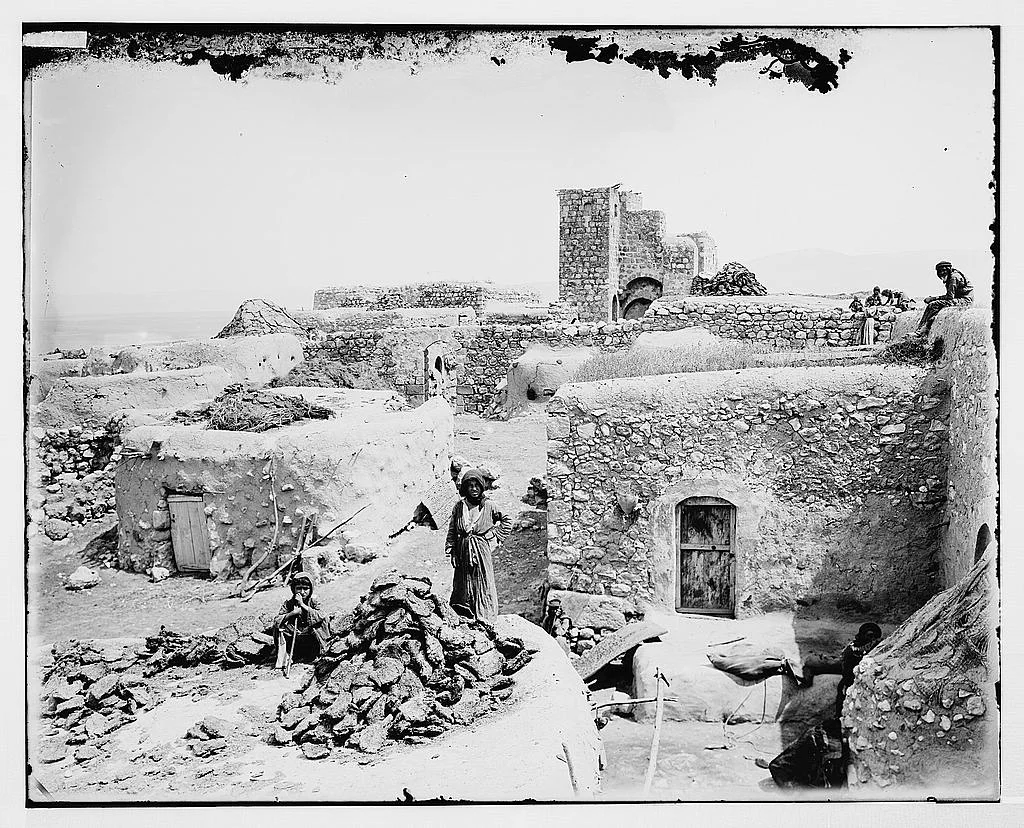
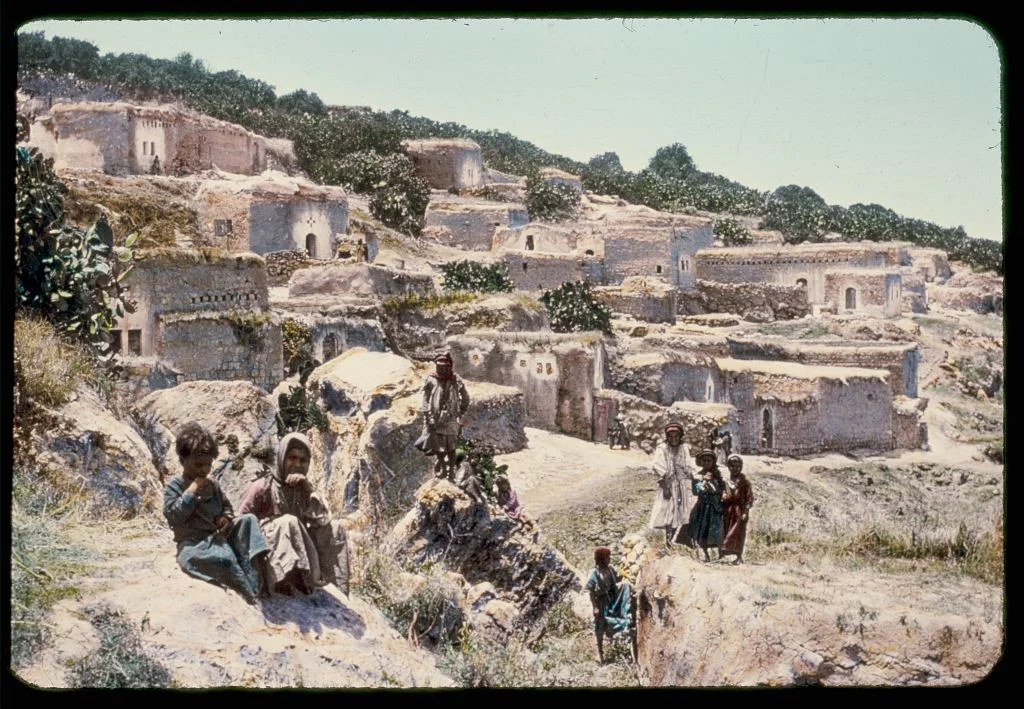
And why not? Pre-1948 Palestinian homes embodied self-sufficiency. Crafted from local materials—clay, stone, wood—they reflected faith, joy, community life, and rich traditions.

More than structures, these homes were social and spiritual creations, woven into community gatherings and religious customs. Eyewitness accounts and scholarly works—such as the late Tofig Kanaan’s “The Palestinian Arab House: Its Architecture and Folklore” (1964), Gustav Dalman’s “Work, Customs, and Traditions in Palestine,” along with Antonin Gossen’s studies on Nablus and Moab—document these homes in detail.

Below, we explore how the Palestinian farmer built his house from local resources, turning humble construction into a source of pride, spiritual celebration, and communal connection.

The Rural Palestinian House

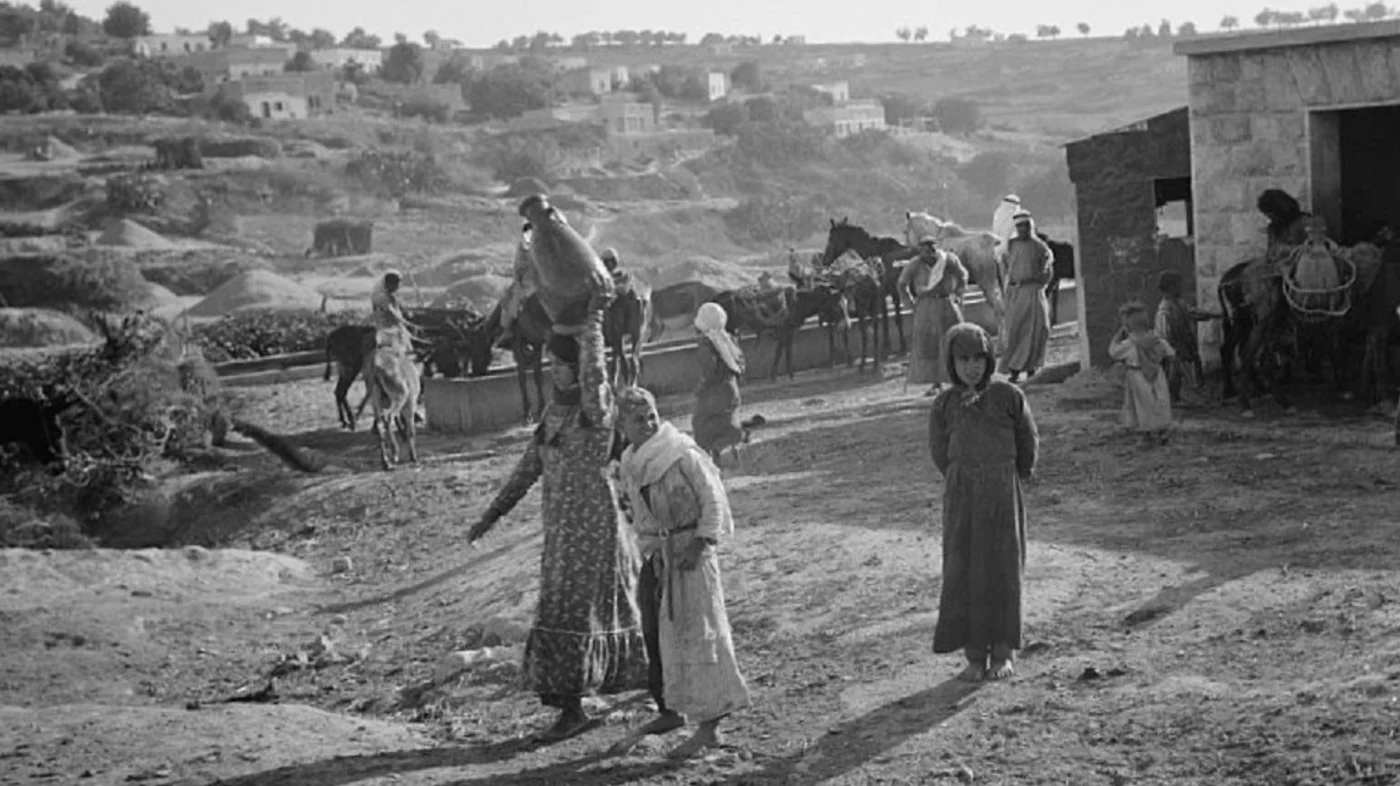
  • Community-built simplicity: Rural homes were built with the direct labor of the farmer, his children, neighbors, and relatives. Even when a professional mason was hired, the homeowner’s own hands remained involved.

  • Water management: A trench was dug around the house to channel rainwater into a well. Roofs, made of wood and brush with a clay‑straw mix, required annual maintenance—a challenge during winter rains.

  • Roof life: Birds sprouted grass—or even wheat—on these roofs, though the plants soon withered.

  • Colorful metaphors: Farmers joked that their four walls were like “four thieves wearing caps” or “four corpses carrying a corpse” (the heavy roof), while the creaky door was likened to a hung man crying out in vain.

  • Support structures: Roofs were sometimes held up by interior wooden or stone pillars—or built directly onto the walls.

    نون بوست
  • Ventilation and light: Windows were rare, to deter thieves. Small openings near the roof—called “ṭāqāt”—provided air and allowed cooking smoke to escape; doors often stayed open during the day.

    Villagers warned that cold blasts through a “ṭāqa” could be brutal—some even said, “Better to sleep outside than beside a drafty opening”—so farmers boarded them up in winter.

  • Interior layout: Most rural homes had one or two stories, with a single ground-floor bedroom, a small hall, and sometimes an extra room. A rooftop room called the “ʿuliyya” might be added—accessed by ladder, often opening onto a balcony.

    Bathrooms were absent in many. Basic chamber pots were used indoors, while needs at night were taken care of behind the house. Urban homes, by contrast, typically featured bathrooms.

  • The courtyard world: A spacious front courtyard featured a shaded “maṣṭaba” (bench) under trees and trellised roofing, often accompanied by a large shade tree nearby. Nighttime summer respite came under these beams.

    Courtyards also held a chicken coop, livestock pen, straw storage, cooking hearth, and traditional oven—all enclosed by a low wall, crafting a self-contained microcosm reflecting interdependence with the land.
Local Materials—From Land to Home

Materials depended on wealth and local environment:

  1. Stone construction: In Jerusalem and hill areas, farmers used local rock. Large slabs were sometimes blasted with explosives, then shaped with primitive tools crafted by blacksmiths—axes, picks, adzes, chisels, levers.

  2. Mud-brick building: In the coastal plain, red clay soil was mixed with water, molded, dried in frames, and sometimes baked in kilns for extra strength.

  3. Mortar and plaster: Stone homes used lime mortar; mud-brick builders used red or yellow clay mixed with straw and plastered walls and roofs annually.

Stone houses also received lime-sand and marble-powder whitewash, reinforced joints, sealed with a blend of lime and indigo, and polished.
نون بوست
  1. Woodwork: Timber from pine, oak, kermes oak, pistachio, cypress, hackberry—but not olive wood (too twisted)—formed beams and supports. Roofs in the north were flat, thanks to straighter local timber; in the south, curved roofs reflected scarcity of long beams.

Farmers harvested and prepared wood themselves, using simple tools; wealthier ones hired carpenters for structural features, doors, and windows.

Building Rituals: Sacrifices, Songs & Blessings

Building was steeped in ritual:

  • Foundation sacrifice: With the laying of the first stone or brick, a sheep was slaughtered and its blood let into the foundation trench—a ritual believed to ward off spirits and seek divine blessing. The meat was shared with family, laborers, neighbors, and the poor.

  • Regional traditions: In Northwest Jerusalem, builders laid the first stone on the southeast corner, invoked the name of God (“O God, O friend of God”), and recited Al-Fatiha; some communities performed this again on the threshold and read scriptural passages or used holy water and buried silver or gold.

  • Shadow superstition: Owners avoided letting their shadow cross the foundation stone—believing it portended death.

    نون بوست
  • Protective charms: Christian builders stuffed items like eggshells, evil‑eye beads, garlic, glass shards, bright beads, bracelets, pomegranate seeds, and ostrich feathers over doors to guard against evil, or adorned them with crosses or verses (for Muslims), with the “Hand of Fatima” across faiths.

  • Ceremonial meals & songs: Neighboring folk joined the builders, sharing food and drinks. Celebratory melodies filled the air—chants like “Praise be to God, bless the Prophet!” and lyrical refrains celebrating the new home.

    At completion, another sheep was sacrificed, a feast held, and another celebration if a rooftop room was added.

    نون بوست
  • Roof tokens and blessings: On walls, farmers planted a white “flag of God”—a cloth tied to a stick—to be bleached by sun, wind, and rain, symbolizing lasting happiness; olive branches atop roofs promised long life and enduring faith.

    Among Bedouins around Nabi Musa’s shrine, they sacrificed and anointed tent poles with blood for spiritual protection.
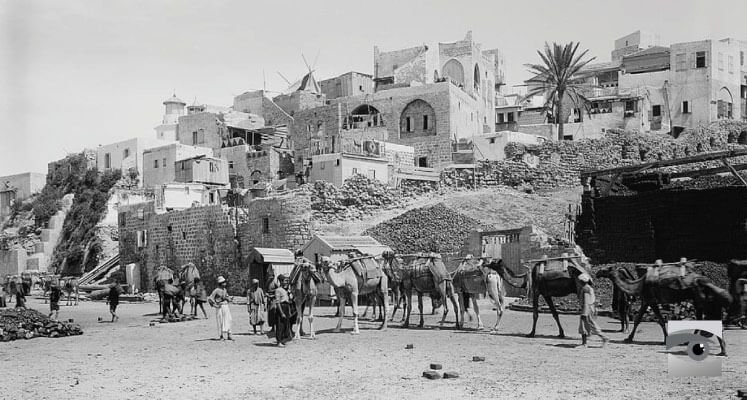
For the Palestinian farmer, building a home was more than construction—it was a testament to resolve, community, faith, and cultural identity. Crafted entirely from local clay, stone, wood, and straw, homes were raised with collective labor, spiritual rites, joyous songs, and heartfelt blessings. In simplicity lay profound strength: a home was built by hand, blessed by tradition, and held together by unity, pride, and the blessings of the land itself.

Download this article as PDF
Share this Article
Facebook Twitter Whatsapp Whatsapp Telegram Email Copy Link
فريق التحرير
By فريق التحرير تقارير يعدها فريق تحرير نون بوست.
Follow:
Previous Article نون بوست Nāṣir Khusraw: A Pilgrimage of Transformation
Next Article نون بوست Sisi’s Projects Lost Between Identity and Development

Read More

  • Memory of Genocide in Srebrenica, Rwanda, and Gaza: How Do Survivors Remember Their Tragedies? Memory of Genocide in Srebrenica, Rwanda, and Gaza: How Do Survivors Remember Their Tragedies?
  • Bilad al-Amirin Tiberias: The Story of Algerian Villages Before and After the Nakba
  • The Layers and Masks of the Nakba: What Was Left Untold About the Fragmentation of Palestinian Society and the "Favored Minorities"
  • Embroidered Memory: Palestine in Exile and Diaspora
  • From Marseille to Marrakech: How Europe Imagined the Maghreb
part of the design
NoonPost Weekly Newsletter

You May Also Like

Memory of Genocide in Srebrenica, Rwanda, and Gaza: How Do Survivors Remember Their Tragedies?

Memory of Genocide in Srebrenica, Rwanda, and Gaza: How Do Survivors Remember Their Tragedies?

حنان سليمان Hanan Sulaiman 26 March ,2026
Bilad al-Amirin Tiberias: The Story of Algerian Villages Before and After the Nakba

Bilad al-Amirin Tiberias: The Story of Algerian Villages Before and After the Nakba

فريق التحرير Noon Post 26 March ,2026
The Layers and Masks of the Nakba: What Was Left Untold About the Fragmentation of Palestinian Society and the “Favored Minorities”

The Layers and Masks of the Nakba: What Was Left Untold About the Fragmentation of Palestinian Society and the “Favored Minorities”

سجود عوايص Sujoud Awais 26 March ,2026

ما الذي يعنيه فوز الإصلاحيين بانتخابات إيران؟

فريق التحرير
Noon Post Published 28 February ,2016
Share
الانتخابات الإيرانية

استطاع شركاء الرئيس الإيراني حسن روحاني من الإصلاحيين تحقيق فوز مؤكد في انتخابات جرت الجمعة لاختيار أعضاء البرلمان ومجلس الخبراء.
ووفقا للنتائج شبه النهائية للانتخابات الأولى التي تجري بعد الاتفاق النووي مع الغرب، فقد تم تأكيد أن قائمة مرشحين يدعمها التيار الإصلاحي وتناصر روحاني في طريقها للفوز بكل المقاعد البرلمانية في طهران وعددها 30 مقعداً وأن المرشح المحافظ البارز غلام علي حداد عادل في طريقه لخسارة مقعده.

مكاسب الإصلاحيين والمعتدلين وأيضا تخفيف بضة المحافظين المناهضين للغرب الذين يسيطرون حالياً على البرلمان المؤلف من 290 مقعداً قد يعني تعزيز سلطة روحاني لفتح البلاد أكثر أمام التجارة الخارجية والاستثمارات بعد الاتفاق النووي العام الماضي.

 وتشير الإحصائيات الرسمية التي نشرتها وزارة الداخلية الإيرانية إلى نجاح الرئيس الإيراني الأسبق علي أكبر هاشمي رفسنجاني، بجانب الرئيس الإيراني الحالي حسن روحاني، في انتخابات مجلس خبراء القيادة، وبهذا يسجل الإصلاحيون عودة قوية واختراقا كبيرا داخل أهم مؤسسة يهيمن عليها الحرس الثوري وخامنئي في إيران.

 وبحسب الإحصائيات الرسمية، التي سجلت تقدما ونجاحا ملحوظين لقائمة مرشحي الإصلاحيين في العاصمة الإيرانية طهران، بفارق كبير على قائمة مرشحي التيار المحافظ في انتخابات مجلس خبراء القيادة والبرلمان، فإن أبرز ملامح فشل المحافظين هو خسارة بعض مرشحي خامنئي -ومن بينهم مصباح يزدي ومهدوي كني- في مجلس خبراء القيادة.

 وفي الوقت ذاته، سجل الإصلاحيون فوز 29 مرشحا من التيار الإصلاحي في انتخابات البرلمان بالعاصمة طهران من بين 30 مرشحا ضمن قائمة “الإصلاحات” الموحدة التي قدمها الإصلاحيون.

وقال فؤاد إزادي وهو أستاذ مساعد في كلية الدراسات الدولية بجامعة طهران “وفقاً للنتائج التي لدينا حتى الآن يبدو أن المحافظين سيفقدون الأغلبية في المجلس المقبل بأقل من 50%، وحصل الإصلاحيون على 30% وأبلى المرشحون المستقلون بلاء أفضل مما سبق ففازوا بنسبة 20%.”

ويشغل المحافظون 65% من مقاعد البرلمان المنتهية ولايته وينقسم العدد الباقي بين الإصلاحيين والمستقلين الذين عادة ما يكونوا مؤيدين لروحاني.

 من جهته، علق رفسنجاني على نتائج الانتخابات قائلا: “نحن بحاجة لوحدة وطنية في مرحلة ما بعد الانتخابات، لنرسم مستقبل إيران؛ ولذلك علينا أن ننحي خلافاتنا جانبا ونتفرغ لبناء هذا البلد”.

 وينظر مراقبون للشأن الإيراني إلى أن نجاح الإصلاحيين والمعتدلين في انتخابات مجلس خبراء القيادة والبرلمان شكل مفاجأة كبيرة للمحافظين، الذين ينظرون للإصلاحيين على أنهم ينفذون أجندات الغرب والأمريكان في إيران .

 يذكر أن الرئيس الإيراني الأسبق محمد خاتمي كان مهندس نجاح الإصلاحيين في الانتخابات البرلمانية، رغم رفض ترشيحات أغلبية مرشحي التيار من قبل مجلس صيانة الدستور؛ حيث حرص خاتمي على كسب المستقلين والشخصيات المحافظة المعتدلة إلى جانب الإصلاحيين في إيران، وعمل على دمجهم بالمرشحين المستقلين والمحافظين المعتدلين في قوائم موحدة؛ حتى يتمكن من توحيد الأصوات المختلفة وهزيمة التيار المحافظ ومرشحي الحرس الثوري الإيراني، الذين يحظون بدعم سخي من المرشد خامنئي.

 ورغم فوزهم في الانتخابات، فإن الإصلاحيين لا يستطيعون التدخل في رسم السياسة الخارجية الإيرانية، خصوصا في الملفات المتعلقة بسوريا والعراق واليمن والبحرين ولبنان؛ لوجود خامنئي على رأس السلطة في البلاد.

 ولكن مراقبين للشأن الإيراني يؤكدون بأن غياب خامنئي سيضع المحافظين أمام معركة مصيرية مع الإصلاحيين الذين لا يريدون وصول أي مرشح من التيار المحافظ أو من غلاة المراجع المتشددين لحكم البلاد بعد وفاة خامنئي؛ ولهذا ستبقى الملفات الخارجية الإيرانية المرتبطة بالمنطقة العربية بيد الجنرال قاسم سليماني قائد فيلق قدس؛ لأن الخطاب السياسي للإصلاحيين بقي مرتبطا حتى هذه اللحظة بمواقف المرشد خامنئي.

 الإصلاحيون سيصبون اهتمامهم بعد نجاحهم في الانتخابات البرلمانية على تطبيع علاقات إيران مع أمريكا وأوروبا؛ لإكمال صفقة الاتفاق النووي ورفع العقوبات الاقتصادية بشكل كامل، وفقا لمراقبين.

من الجدير بالذكر، أنه وبعد إعلان نجاح روحاني ورفسنجاني في انتخابات مجلس خبراء القيادة، علق بعض الإيرانيين بالقول: “إن المرشد القادم بعد غياب خامنئي سيكون رفسنجاني؛ لأن مرشحي التيار المحافظ لا يمتلكون نفوذ الرجل وتأثيره داخل مجلس خبراء القيادة في حال غياب المرشد عن حكم البلاد”.

المصدر: عربي 21 + وكالات

TAGGED: الإصلاحيون في إيران ، المحافظون في إيران ، انتخابات إيران
TAGGED: الانتخابات الإيرانية
Download this article as PDF
Share this Article
Facebook Twitter Whatsapp Whatsapp Telegram Email Copy Link
فريق التحرير
By فريق التحرير تقارير يعدها فريق تحرير نون بوست.
Follow:
Next Article نون بوست The Stigma of “ISIS”: A Heavy Legacy Haunting Women and Children of Former Members

Read More

  • U.S. Regime‑Change Policies: Why They Are Destined to Fail U.S. Regime‑Change Policies: Why They Are Destined to Fail
  • The Gulf’s Balancing Act: Iran, Israel, and Hidden Links
  • Iraq–Turkey Oil Export Treaty: Why Did Ankara Cancel It After 52 Years?
  • Syria’s Northeast on Edge: QSD Between Ankara and Damascus
  • Has Europe Changed Its Stance on Israel… or Just Its Language?
part of the design
NoonPost Weekly Newsletter
dark

An independent media platform founded in 2013, rooted in slow journalism, producing in-depth reports, analysis, and multimedia content to offer deeper perspectives on the news, led by a diverse young team from several Arab countries.

  • Politics
  • Society
  • Rights & Liberties
  • Opinions
  • History
  • Sports
  • Education
  • Technology
  • Economy
  • Media
  • Arts & Literature
  • Entrepreneurship
  • Travel
  • Cinema & Drama
  • Food
  • Health
  • Culture
  • Latest Reports
  • Files
  • Long Reads
  • Interviews
  • Podcast
  • Interactive
  • Encyclopedia
  • In Pictures
  • About Us
  • Our Writers
  • Write for Us
  • Editorial Policy
  • Advanced Search
Some rights reserved under a Creative Commons license

Removed from favorites

Undo
Go to mobile version