



NoonPost NoonPost

NoonPost

  • Home
  • Politics
  • Economy
  • Society
  • Culture
  • Files
  • Long Reads
  • Podcast
AR
Notification Show More
نون بوست
“There Are Nights I Can’t Close My Eyes”: How Gazans Are Living in Homes on the Brink of Collapse
نون بوست
From al-Jolani to Ahmad al-Shara: The Evolution of Syria’s New Leader
نون بوست
When Political Islam Receded in Egypt: Who Filled the Void?
نون بوست
An Extension of Genocide: Gaza’s Detainees Speak Out
نون بوست
A Tightrope Between Survival and Sovereignty: The Syrian Government Faces Normalization Pressures
نون بوست
American Aircraft Carriers: Has the Era of “100,000 Tons of Diplomacy” Ended?
نون بوست
U.S. Regime‑Change Policies: Why They Are Destined to Fail
نون بوست
Transformations of Israeli Judaism: Between the Victim Complex and the Colonizer’s Doctrine
نون بوست
The Gulf’s Balancing Act: Iran, Israel, and Hidden Links
نون بوست
Iraq–Turkey Oil Export Treaty: Why Did Ankara Cancel It After 52 Years?
نون بوست
Syria’s Northeast on Edge: QSD Between Ankara and Damascus
نون بوست
Has Europe Changed Its Stance on Israel… or Just Its Language?
NoonPost NoonPost
AR
Notification Show More
نون بوست
“There Are Nights I Can’t Close My Eyes”: How Gazans Are Living in Homes on the Brink of Collapse
نون بوست
From al-Jolani to Ahmad al-Shara: The Evolution of Syria’s New Leader
نون بوست
When Political Islam Receded in Egypt: Who Filled the Void?
نون بوست
An Extension of Genocide: Gaza’s Detainees Speak Out
نون بوست
A Tightrope Between Survival and Sovereignty: The Syrian Government Faces Normalization Pressures
نون بوست
American Aircraft Carriers: Has the Era of “100,000 Tons of Diplomacy” Ended?
نون بوست
U.S. Regime‑Change Policies: Why They Are Destined to Fail
نون بوست
Transformations of Israeli Judaism: Between the Victim Complex and the Colonizer’s Doctrine
نون بوست
The Gulf’s Balancing Act: Iran, Israel, and Hidden Links
نون بوست
Iraq–Turkey Oil Export Treaty: Why Did Ankara Cancel It After 52 Years?
نون بوست
Syria’s Northeast on Edge: QSD Between Ankara and Damascus
نون بوست
Has Europe Changed Its Stance on Israel… or Just Its Language?
Follow US

How Israel Weaponizes Hunger

مرام موسى
Maram Musa Published 26 March ,2026
Share
نون بوست
نون بوست

Since the onset of its aggression on October 7, 2023, the Israeli occupation has employed a variety of genocidal tactics in Gaza. It has not been content with indiscriminate bombing; instead, it has repeatedly devised novel, atypical methods in a persistent effort to pursue its unspoken aim: the depopulation of Gaza and its erasure from the map.

From the use of artificial intelligence to select targets for indiscriminate bombardment, to torching entire neighborhoods and blowing up infrastructure, and driving the population into forced displacement—each method in this war follows its own methodology, and each instrument serves in orchestrating mass death under the guise of “deterrence” or “self-defense.”

Starvation has long been among the strategic tools used by commanders of war. Just two days after the war erupted, former Israeli Defense Minister Yoav Galant announced a total starvation siege on Gaza: “No electricity, no food, no water, no fuel—everything is closed. We are fighting human animals, and we act accordingly.”

Other Israeli officials have echoed this consensus on starvation as a tactic. Finance Minister Bezalel Smotrich said it might be just and moral to starve two million people in Gaza, and recently the Interior Minister of Israel condemned the resumed entry of aid as providing “oxygen to our enemies.”

The occupation does not merely wield bread to break Palestinian will; it is conducting an organized famine-as-war that seeks to weaponize starvation for the long term. This report outlines how the occupation uses starvation as a component of a methodical genocide targeting not only Palestinians’ bodies, but their will and their right to remain on their land.

Mass Death

In Gaza, no one is safe from death, in whatever form it takes. If you survive a bullet piercing your home today, tomorrow hunger may claim your life after months of siege and malnutrition. Even if your body is stronger and can withstand deprivation, you risk bombardment at aid distribution centers—the only hope for your family’s survival.

A UN report has confirmed that Gaza faces a catastrophic emergency—Phase 5, the most critical on the Integrated Food Security Phase Classification (IPC). According to IPC projections for May 11–September 30, 2025, the number of people in crisis-level starvation could escalate to 470,000 individuals—22% of Gaza’s population—threatening mass famine .

This alarming figure is underscored by the rising death toll among children from malnutrition—66 children, according to the Gaza government media office—and the daily arrival of 5,000 malnutrition cases in hospitals, overwhelming the health system’s capacity.

Euro-Med Human Rights Monitor has reported a silent wave of death among the elderly and children due to starvation crimes, severe deprivation, and absence of healthcare.

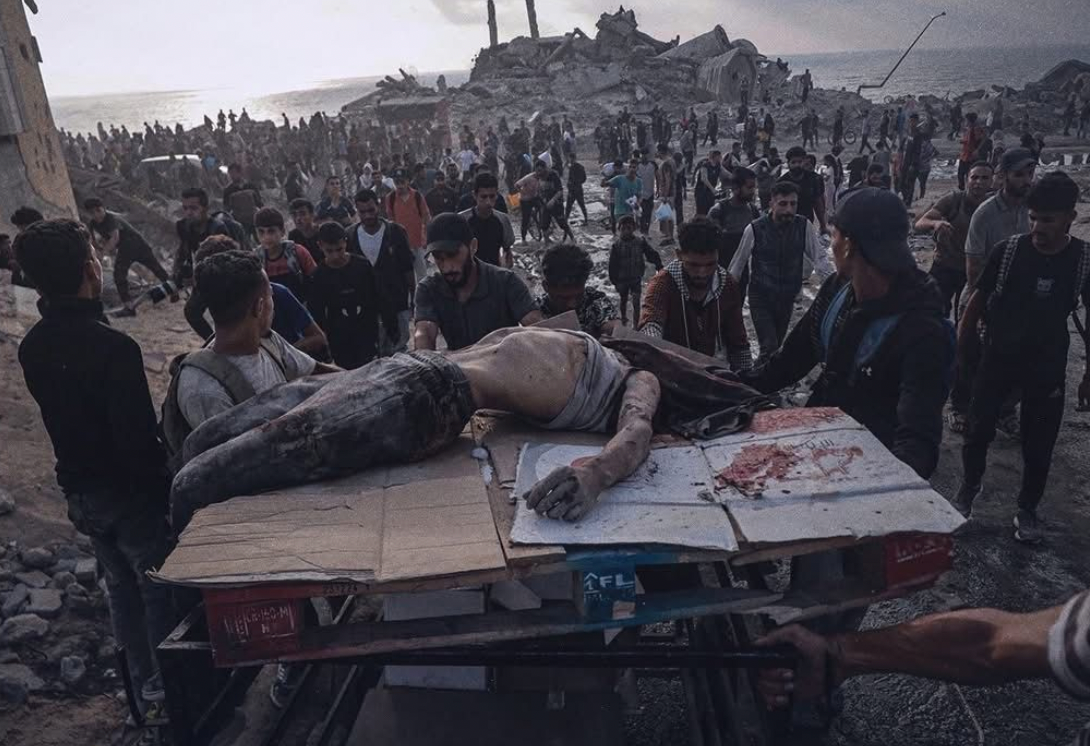
The occupation does not wait for starvation to finish the job—it accelerates it. After intensifying the siege and then allowing meager humanitarian aid, Palestinians are drawn to aid centers—only to be massacred at the flour gates.

Since May 27, at least 549 Palestinians have been gunned down by Israeli forces while trying to obtain food from centers run by the Gaza Humanitarian Foundation, which Euro-Med describes as “death traps” used as instruments of genocide .

Israeli authorities deliberately assigned aid distribution to the Gaza Humanitarian Foundation—a body created in February 2025 with direct support from Israel and the U.S.—instead of entrusting seasoned international relief agencies, according to Euro-Med.

These massacres have become almost daily. On June 11, 2025, Israeli shelling killed 57 and injured 363 near an aid center. In Khan Younis, artillery killed 51 and wounded over 200 near Gaza Valley bridge .

UN Secretary-General António Guterres described the aid distribution mechanism supported by the U.S. as “unsafe and resulting in the killing of civilians.”

These tactics are not new. One of the most notorious incidents happened at the Nabulsi roundabout on February 29, 2024, when Israeli fire killed at least 112 Palestinians and injured 760 as they sought aid .

Forced Displacement

From the very first hours of the aggression, the occupation transformed starvation into a coercive arm to push residents of northern Gaza southward: choking off food supply and coupling it with relentless bombardment to make staying unbearable.

Aid distribution sites—such as those in Nitsarim and Morag—are strategically placed in the south, creating a cruel incentive for people to flee north, according to Human Rights Watch.

The International Committee of the Red Cross and other international bodies have warned that this aid strategy could lead to “mass forced displacement,” especially impacting vulnerable groups such as mobility-impaired people and children.

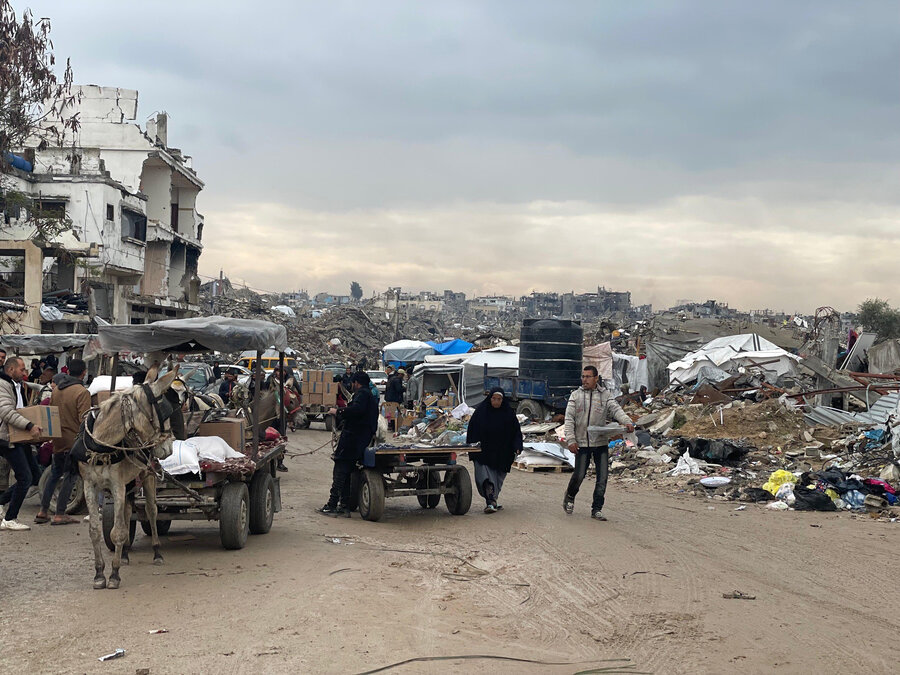
Since May 19, only 28 WFP trucks have reached northern Gaza, while over 9,500 tons of wheat flour have been delivered to southern centers by June 22.
نون بوست
Amid the devastation around Beit Lahia in the north of Gaza, more food is circulating thanks to the ceasefire. WFP/Suzanne Fenton

Israeli Prime Minister Benjamin Netanyahu has endorsed the military plan “Gideon’s Vessels,” which entails three phases beginning with the expulsion of northern residents to Rafah in the south, under the guise of “safe zones” for aid distribution.

The UN estimates that 1.9 million people—around 90% of Gaza’s population—are internally displaced, with many forced to move multiple times to areas lacking adequate infrastructure.

Euro-Med states that the occupation is corralling Gaza residents into a narrow southern coastal strip in preparation for forced expulsion, aligning with Netanyahu’s political condition tied to the “Trump plan.”

Some Israeli officials have even openly linked starvation to forced displacement. National Security Minister Itamar Ben-Gvir, for instance, insisted that aid should only enter Gaza with the consent of those emigrating .

Aid as a Surveillance Tool

Once starvation drives masses to aid centers, Israel reportedly exploits the desperation of Palestinians to recruit intelligence sources. An investigation by Arabi Post revealed that the occupation uses aid crowds to identify resistance members and gather information.

Eye-witnesses said distributions begin around 2–3 a.m., when Israeli forces dim lights to blend agents into the crowd and collect intelligence undetected.

Biometric scanning at aid sites, managed by the Gaza Humanitarian Foundation, further allows the identification and later apprehension or targeting of resistance-affiliated individuals .

The Gaza Interior Ministry warned that biometric checks could be utilized to trace and target Palestinians after distribution.

Israeli officials acknowledge that the new aid system enables checking whether recipients are connected to Hamas—a tacit admission of intelligence-driven intent .

This intelligence gathering extends beyond identification. Israeli security agencies, including Shin Bet, are reported to support gangs such as “Abu Shabab” in looting aid and collecting extortion at aid trucks, according to Haaretz .

The gang, led by Yasser Abu Shabab, a fugitive from Gaza prisons, reportedly includes some 100 members recruited by Shin Bet. They hijacked UN aid convoys, resold humanitarian supplies, and set fire to a gas truck to block aid routes.

They operated near Kerem Shalom crossing and at aid distribution points in western Rafah .

Where Aid Means Death

“I stood helpless as my child starved; I told him to sip the little water we had,” said Palestinian mother Zeinat, capturing the plight of tens of thousands of mothers in Gaza whose voices echo unheard.

This helplessness forces mothers and fathers to queue for hours at aid centers turned death traps, living a surreal scenario that resembles an apocalyptic end. Waiting children burst with hunger, hoping for crumbs that never come.

“We arrived at 6 a.m., and in the end got nothing. Here children wait for a free meal and water; people have no means of living,” said displaced father Atef Ma’rouf from Beit Lahia.
نون بوست

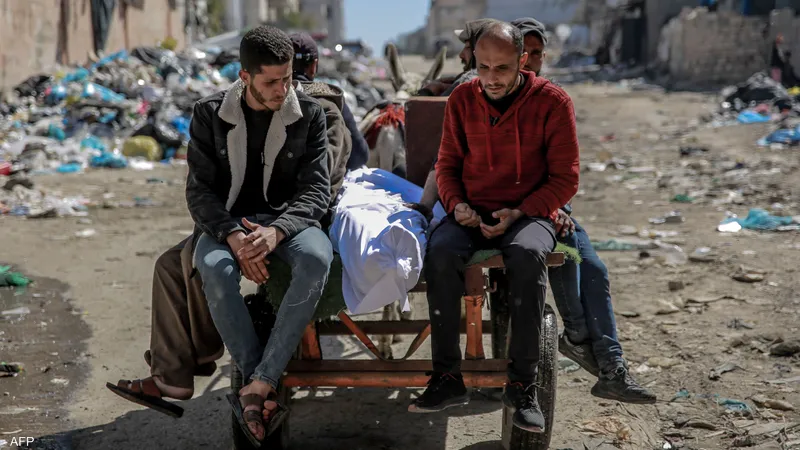
Yet these attempts do not always end peacefully. Palestinians are faced with the choice: starve or get shot. Dozens of massacres have occurred at aid distribution points.

Médecins Sans Frontières criticized the mechanism as designed to humiliate Palestinians—forcing them to choose between starvation or risking their lives for basic aid—and UNRWA said it represented a new form of killing by herding them to die at distribution points .

Israeli occupation shows chilling sophistication in weaponizing starvation not only to deprive Gazans of food and water, but to inflict psychological torture and humiliation. This is part of a broader ethnic-cleansing scheme, unfolding amid global complicity and silence as children die of hunger in a world that, one would think, has no place for hunger.

Download this article as PDF
Share this Article
Facebook Twitter Whatsapp Whatsapp Telegram Email Copy Link
مرام موسى
By مرام موسى صحافية سورية
Follow:
Previous Article نون بوست Palestinian Motherhood Before Zionism
Next Article نون بوست Sisi’s Waning Narrative on June 30 Anniversary

Read More

  • U.S. Regime‑Change Policies: Why They Are Destined to Fail U.S. Regime‑Change Policies: Why They Are Destined to Fail
  • The Gulf’s Balancing Act: Iran, Israel, and Hidden Links
  • Iraq–Turkey Oil Export Treaty: Why Did Ankara Cancel It After 52 Years?
  • Syria’s Northeast on Edge: QSD Between Ankara and Damascus
  • Has Europe Changed Its Stance on Israel… or Just Its Language?
part of the design
NoonPost Weekly Newsletter

You May Also Like

U.S. Regime‑Change Policies: Why They Are Destined to Fail

U.S. Regime‑Change Policies: Why They Are Destined to Fail

إسراء سيد Esraa sayed 8 April ,2026
The Gulf’s Balancing Act: Iran, Israel, and Hidden Links

The Gulf’s Balancing Act: Iran, Israel, and Hidden Links

فريق التحرير Noon Post 8 April ,2026
Iraq–Turkey Oil Export Treaty: Why Did Ankara Cancel It After 52 Years?

Iraq–Turkey Oil Export Treaty: Why Did Ankara Cancel It After 52 Years?

فريق التحرير Noon Post 8 April ,2026

قناص الخليل .. احترافية التنفيذ والانسحاب أعجزت الشاباك

عبدالله داود
عبدالله داود Published 1 March ,2016
Share
Sniper

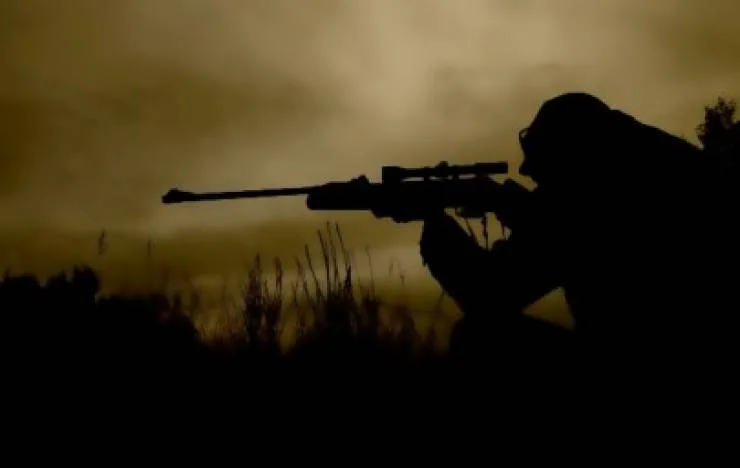
يزعم جهاز الشاباك الإسرائيلي تمكنه مؤخرًا من اعتقال الشقيقين أكرم بدوي (33عامًا) وناصر بدوي (23عامًا)، حيث يتهمهما بالمسؤولية عن تنفيذ عمليات القنص التي تعرض لها مستوطنو وجنود الاحتلال خلال العامين الماضيين في محيط المسجد الإبراهيمي بالخليل، أدت لمقتل جندي وإصابة 4 آخرين.

وبحسب تصريحات الشاباك فقد تم تسليم بندقية القنص التي استخدمت في العمليات، وكذلك تسليم بندقية من نوع “كارلو” كان أحد الشقيقين ينوي تنفيذ عملية إطلاق نار بها على جنود الاحتلال.

صراع العقول

فشل جهاز الشاباك في العثور على الشقيقين لمدة طويلة، رغم قوة استخباراته وشبكة العملاء التابعين له في مدينة الخليل، واعتبرهم الاحتلال شبحًا يهدد المستوطنين والجنود في المدينة، وكان الخلاف قائمًا بين الشاباك والجيش، على أن القناص يستخدم سلاحًا دقيقًا يصوبه ضد المستوطنين والجنود، أم أنه محترفٌ يستخدم سلاحًا عاديًا وخبرته الطويلة تساعده على الاستهداف عن بُعد 500 متر.

حيث كانت عمليات القنص تتم عن بعد، ودون ترك آثار خلفهم، وتم قنص الجندي بالعنق ومن خلفه مكان مفتوح لكي تواصل الرصاصة طريقها ولا يتم العثور عليها ومعرفة نوع البندقية المستخدمة، مما صعّب على الاحتلال الوصول لمعلومات أولية تدلهم على المنفذ وتعقبه.

وأوضح خبراء الاحتلال أن عملية القنص تتطلب القيام بخطوات ثلاث: جمع للمعلومات المسبقة عن المكان والهدف الأنسب واللحظة الأفضل لتنفيذ الهجوم، وهذه الخطوات تحتاج وقتًا طويلاً وتخطيطًا محكمًا ثم الانسحاب بأمان، وقناص الخليل تجاوز ذلك بحرفية عالية.

تفاصيل عمليات القنص

وذكر الاحتلال أن أولى عمليات القنص حسب اعترافات الشقيقين كانت يوم الجمعة 6 نوفمبر من العام الماضي 2015، حيث تم إخفاء بندقية القنص في مسجد “المجاهدين” في المدينة، تم إحضارها من المكان وتوجهوا بها إلى عمارة يملكها والدهم، ومن الطابق الثالث نفذ أكرم أول عملية قنص باتجاه مجموعة من المستوطنين بالقرب من المسجد الإبراهيمي وأصاب مستوطنين بجراح.

وكانت العملية الثانية في يوم 25 من الشهر نفسه، نفذها ناصر من نفس الشقة، حيث انتظر مرور الجنود والمستوطنين بالمكان وأطلق النار باتجاههم وأعاد بندقية القنص لمخبئها في المسجد، وأصيبت سيارة للمستوطنين كانت متوقفة في المكان دون وقوع إصابات.

وفي الثالث من يناير عام 2016  رصد ناصر عددًا من الجنود يقفون بالقرب من المسجد الإبراهيمي، فاتصل بشقيقه أكرم وطلب منه إحضار البندقية، وقام بإطلاق النار تجاه ضابطة من قوات الاحتلال أصابها بجراح.

وبعد ساعات الظهيرة من نفس اليوم، نفذا عملية إطلاق نار من داخل سيارة تجاه حاجز عسكري جنوبي مدينة الخليل، وأصيب جندي بجروح وصفت بالمتوسطة، ونفذوا عدة عمليات إطلاق نار تجاه هذا الحاجز دون وقوع إصابات.

قوات الاحتلال اعتقلت ناصر في التاسع من يناير 2016 للتحقيق لدى المخابرات الإسرائيلية، قام أكرم بتنفيذ عملية قنص جديدة في السادس عشر من نفس الشهر دون وقوع إصابات، وذلك لإبعاد الشبهة عن شقيقه ناصر المعتقل.

واقع الضفة ومخاوف الاحتلال

من جانبه قال والد الشقيقين أن اجراءات الاحتلال وقمعه المواطنين في الضفة واعتقال أبنائهم لن يثني عزيمتهم، وتمارس قوات الاحتلال سياسة التضييق على المواطنين في الضفة لمنع تكرار عمليات إطلاق النار والطعن، وتنظم حملات اعتقالات وتفتيش مستمرة للعثور على أسلحة ومعدات تساعد على تنفيذ هذه العمليات بأيدي الفلسطينيين.

الاحتلال بات يفقد زمام الأمور في الضفة، وهو متخوف من انفلات الحالة الأمنية وزيادة وتيرة هذه العمليات العسكرية من قِبل الفلسطينيين، حيث تشهد يوميات انتفاضة القدس تطورات عديدة على مستوى نوعية العمليات للمقاومة، والفئات المنفذة لها والمشاركة في المظاهرات اليومية، ويعتبر الاحتلال أن الفلسطيني قنبلة موقوتة لا يُعرف متى موعد انفجارها في إشارة لكثرة العمليات الفردية المنظمة ضد المستوطنين وقوات الاحتلال، وعدم معرفته السيطرة عليها وإيقافها.

ونبقى أمام تساؤل مهم: هل ستبقى العمليات الفردية هي السمة الواضحة للانتفاضة؟ أم أنها ستشهد عمليات نوعية أخرى منظمة تتبناها فصائل المقاومة بالضفة، لتجعل العدو أكثر إيلامًا وتفقده السيطرة الحقيقية والفعلية على مناطق الضفة؟

TAGGED: الاحتلال الإسرائيلي ، الانتفاضة الثالثة ، الشباب الفلسطيني ، جهاز الشاباك ، عمليات القنص
TAGGED: الانتفاضة الثالثة
Download this article as PDF
Share this Article
Facebook Twitter Whatsapp Whatsapp Telegram Email Copy Link
عبدالله داود
By عبدالله داود صحفي وكاتب فلسطيني
Follow:
Next Article نون بوست The Stigma of “ISIS”: A Heavy Legacy Haunting Women and Children of Former Members

Read More

  • U.S. Regime‑Change Policies: Why They Are Destined to Fail U.S. Regime‑Change Policies: Why They Are Destined to Fail
  • The Gulf’s Balancing Act: Iran, Israel, and Hidden Links
  • Iraq–Turkey Oil Export Treaty: Why Did Ankara Cancel It After 52 Years?
  • Syria’s Northeast on Edge: QSD Between Ankara and Damascus
  • Has Europe Changed Its Stance on Israel… or Just Its Language?
part of the design
NoonPost Weekly Newsletter
dark

An independent media platform founded in 2013, rooted in slow journalism, producing in-depth reports, analysis, and multimedia content to offer deeper perspectives on the news, led by a diverse young team from several Arab countries.

  • Politics
  • Society
  • Rights & Liberties
  • Opinions
  • History
  • Sports
  • Education
  • Technology
  • Economy
  • Media
  • Arts & Literature
  • Entrepreneurship
  • Travel
  • Cinema & Drama
  • Food
  • Health
  • Culture
  • Latest Reports
  • Files
  • Long Reads
  • Interviews
  • Podcast
  • Interactive
  • Encyclopedia
  • In Pictures
  • About Us
  • Our Writers
  • Write for Us
  • Editorial Policy
  • Advanced Search
Some rights reserved under a Creative Commons license

Removed from favorites

Undo
Go to mobile version