NoonPost NoonPost

NoonPost

  • Home
  • Politics
  • Economy
  • Society
  • Culture
  • Files
  • Long Reads
  • Podcast
AR
Notification Show More
نون بوست
“There Are Nights I Can’t Close My Eyes”: How Gazans Are Living in Homes on the Brink of Collapse
نون بوست
From al-Jolani to Ahmad al-Shara: The Evolution of Syria’s New Leader
نون بوست
When Political Islam Receded in Egypt: Who Filled the Void?
نون بوست
An Extension of Genocide: Gaza’s Detainees Speak Out
نون بوست
A Tightrope Between Survival and Sovereignty: The Syrian Government Faces Normalization Pressures
نون بوست
American Aircraft Carriers: Has the Era of “100,000 Tons of Diplomacy” Ended?
نون بوست
U.S. Regime‑Change Policies: Why They Are Destined to Fail
نون بوست
Transformations of Israeli Judaism: Between the Victim Complex and the Colonizer’s Doctrine
نون بوست
The Gulf’s Balancing Act: Iran, Israel, and Hidden Links
نون بوست
Iraq–Turkey Oil Export Treaty: Why Did Ankara Cancel It After 52 Years?
نون بوست
Syria’s Northeast on Edge: QSD Between Ankara and Damascus
نون بوست
Has Europe Changed Its Stance on Israel… or Just Its Language?
NoonPost NoonPost
AR
Notification Show More
نون بوست
“There Are Nights I Can’t Close My Eyes”: How Gazans Are Living in Homes on the Brink of Collapse
نون بوست
From al-Jolani to Ahmad al-Shara: The Evolution of Syria’s New Leader
نون بوست
When Political Islam Receded in Egypt: Who Filled the Void?
نون بوست
An Extension of Genocide: Gaza’s Detainees Speak Out
نون بوست
A Tightrope Between Survival and Sovereignty: The Syrian Government Faces Normalization Pressures
نون بوست
American Aircraft Carriers: Has the Era of “100,000 Tons of Diplomacy” Ended?
نون بوست
U.S. Regime‑Change Policies: Why They Are Destined to Fail
نون بوست
Transformations of Israeli Judaism: Between the Victim Complex and the Colonizer’s Doctrine
نون بوست
The Gulf’s Balancing Act: Iran, Israel, and Hidden Links
نون بوست
Iraq–Turkey Oil Export Treaty: Why Did Ankara Cancel It After 52 Years?
نون بوست
Syria’s Northeast on Edge: QSD Between Ankara and Damascus
نون بوست
Has Europe Changed Its Stance on Israel… or Just Its Language?
Follow US

Harvard Under Fire: The Future of U.S. Higher Education

هبة بعيرات
Hiba Birat Published 26 March ,2026
Share
نون بوست
نون بوست

The Trump administration continues to shock the world with its aggressive policies—both domestically and internationally—since taking power in Washington. From waging war on undocumented immigrants and launching a sweeping trade conflict with global partners to confronting higher education institutions, the administration seems determined to rapidly impose its conservative agenda.

Harvard University, at the forefront of Trump’s campaign against elite academia, is the oldest, wealthiest, and one of the most prestigious institutions in the United States. Founded in 1636 in Cambridge, Massachusetts—as Harvard College—it predates the United States itself by more than a century.

Its alumni include influential figures such as John F. Kennedy, Barack Obama, Bill Gates, and Mark Zuckerberg.

A series of questions arises amid this confrontation: How did this current war begin, and how has it escalated? How far will this populist administration go in demonizing Harvard and undermining its legitimacy?

What does the future hold for the university, and how is it preparing to defend its identity? Why is Harvard being targeted specifically, and is this connected to its stance on the Palestinian issue? This article delves into these and other pressing questions.

How did the crisis begin?

Trump’s criticism of Ivy League universities, with Harvard as a prime target, predates his presidency. He has described them as “institutions above scrutiny” operating like businesses, leaving students drowning in debt—even before assuming office.

But the current escalation—which The Atlantic characterized as “an attempt to nationalize a private university”—stemmed from last spring’s student protests against Israel’s “genocidal war” in Gaza. Upon ascending to power earlier this year, the Trump administration repeatedly accused universities staging these protests of anti-Semitism.

In February, officials launched a “Task Force to Combat Anti-Semitism,” comprising the Departments of Justice, Education, Health, and Civil Rights, to investigate “anti-Semitic incidents,” especially within campuses. It issued letters to university presidents—chiefly those with visible student dissent—demanding more than policy tweaks: they threatened sweeping political intervention and oversight incompatible with academic freedom and institutional traditions.

Harvard received such a letter in April, demanding substantial curricular changes, government involvement in student admissions and faculty appointments deemed “anti-American” (with no clear definition), and routine reporting on the conduct of students and staff—conditions the university firmly rejected.

In February, the Department of Health studied medical students displaying pro‑Palestinian symbols at the 2024 graduation ceremony. This probe quickly expanded to encompass the entire university since October 7, 2023.
نون بوست
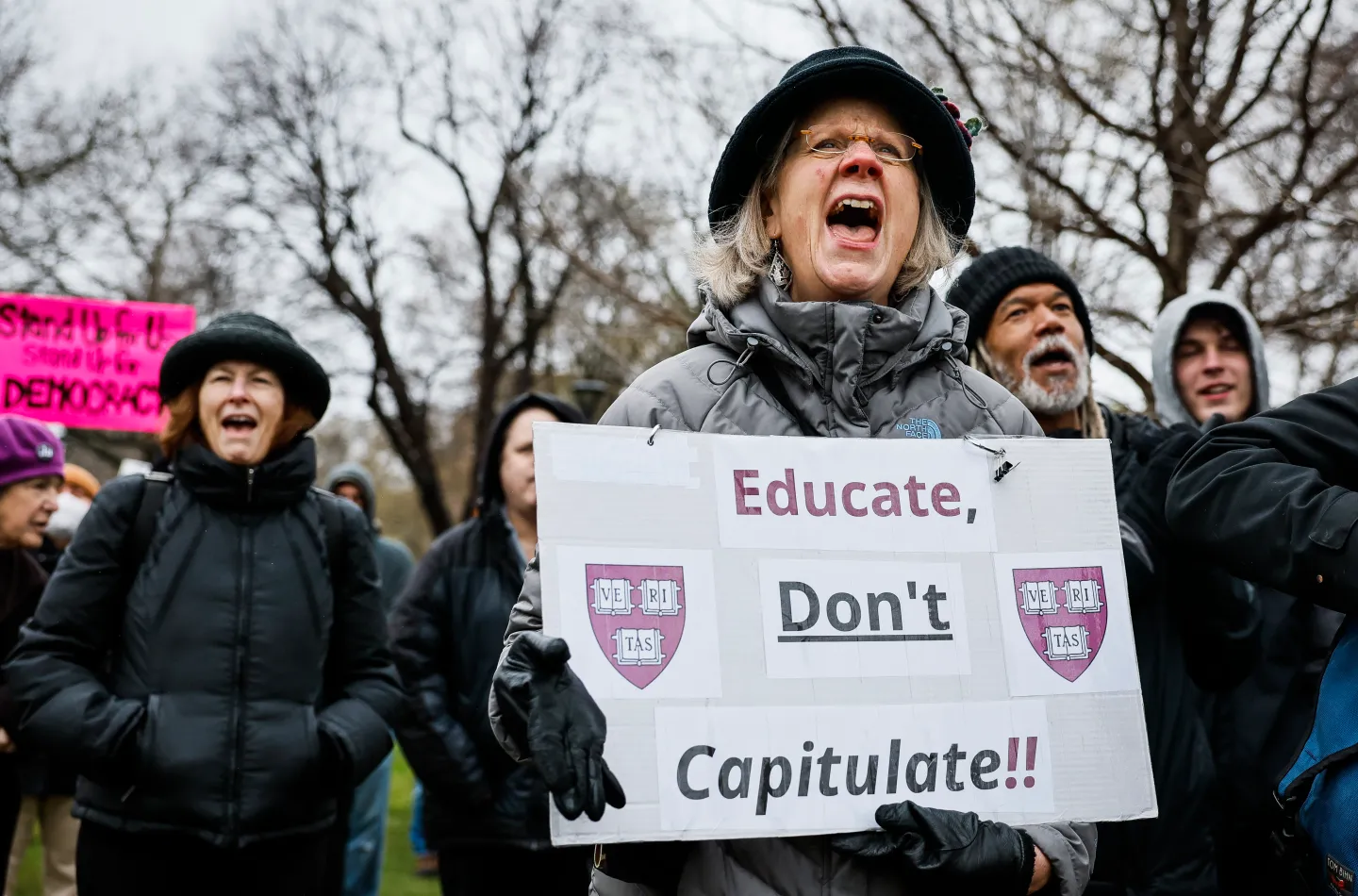
A pro-Harvard demonstrator stands against government pressure. Photo: Erin Clark / Getty Images.

Investigations have since charged Harvard with fostering “a climate encouraging foreign radicals and extremists,” prompting Department of Homeland Security Secretary Kristi Noem to demand the names and information on all students – even international ones – a request Harvard refused, citing privacy and safety concerns.

Noem then announced a suspension on Harvard admitting international students, jeopardizing the visas of roughly 6,800 foreign students—around 27% of the student body. Although she asserted the task force had found “overwhelming evidence” of Harvard’s anti-Semitism and damaging Jewish students—ironically, the visa ban threatened Jewish as well as non-Jewish students.

Demonizing the institution

Noem went further, accusing Harvard of “endorsing terrorism.” The Department of Homeland Security sought audio/video recordings of campus protests over the past five years, including those by domestic students. They implicated Harvard in training members of the Chinese Communist Party “involved in the Uyghur genocide” and accepting funding linked to Iran.

These claims stripped Harvard of its “American identity,” signaling a relentless federal campaign against what is deemed a national-security threat.
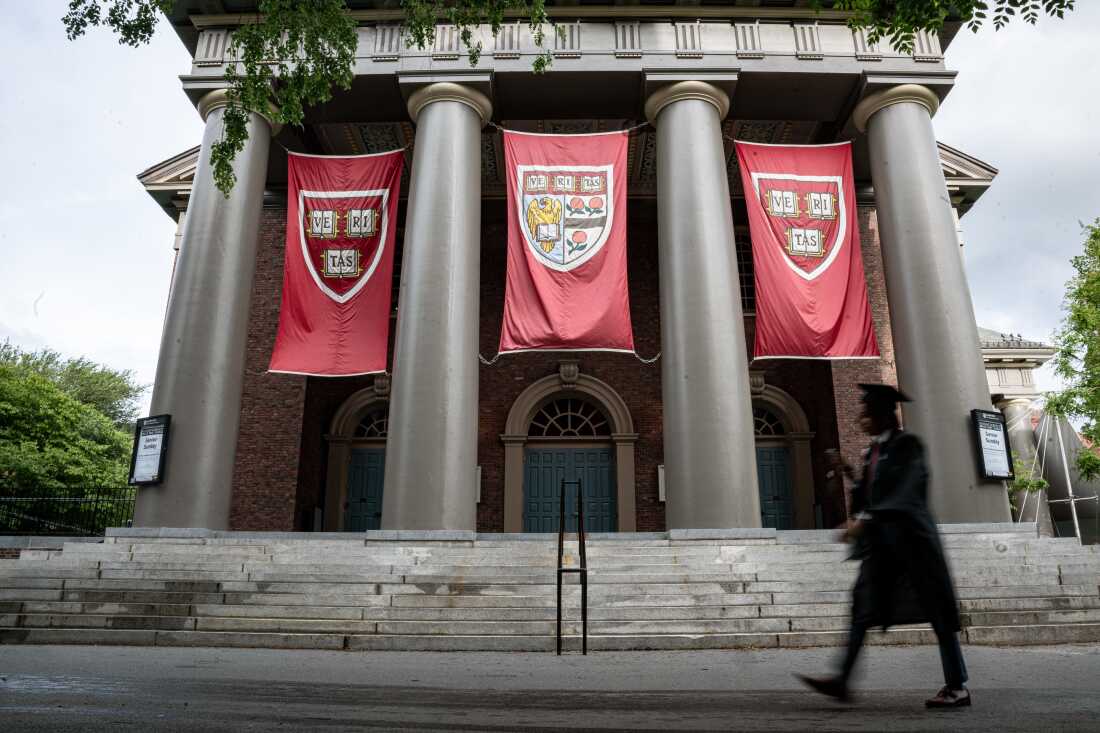
نون بوست
Harvard University campus in Cambridge, Massachusetts. Photo: Cho Ziyu / Getty Images.

Trump intensified the populist angle, tweeting on Truth Social that he might reallocate $3 billion in federal research funding from Harvard to working-class-focused colleges, framing it as a win for the “little guy” against “elite” universities. Education Secretary Mickey Biederman echoed that Harvard “fails to protect its students or fulfill federal obligations.”

Yet Trump’s proposed congressional bill threatens protections for students if admitted programs fail them after graduation—often hitting part-time or vocational learners hardest. In addition, Justice and Education departments have launched simultaneous investigations into alleged admissions discrimination, including claims Harvard violated the Supreme Court’s 2023 ruling banning racial quotas.

Funding as leverage

After Harvard rebuffed the administration’s demands, Washington retaliated—cutting $2.2 billion in federal research funding and $60 million in NIH contracts. A further 500 federal grants to affiliated institutions were frozen, and existing federal contracts—including $60 million from the CDC—were canceled.

Trump also threatened to strip Harvard of its tax-exempt status, which, if implemented, could cost the university hundreds of millions annually—though this requires IRS approval and has yet to be enacted.

Reports indicate the possibility of cutting the full $9 billion in projected funding—only a third of which has been affected to date.

Approximately $6 billion of this is tied to Harvard-affiliated hospitals and $2.7 billion to scientific and medical research—the administration’s moves are widely seen as political pressure rather than public-interest decisions.

Harvard fights back

Harvard filed legal suits to block federal overreach and restore funding, arguing the actions violate the university’s constitutional liberties. The case concerning the international-student ban prompted a federal judge to halt the policy, citing due process and free expression concerns. The matter is pending full resolution.

President Alan Garber defended Harvard on public radio, stating the institution is determined to protect its “students, history, and long tradition of free speech and diversity.”

He called out the administration’s attacks particularly over labeling Harvard elitist as misleading, noting that long-term federal research yields critical benefits, especially in medicine and chronic disease.

On alleged bias against conservative white men, Garber asserted that university diversity is “legitimate and beneficial,” reinforcing that ideological variety strengthens American innovation and excellence.

Why Harvard specifically?

According to a Guardian investigation, this campaign traces back to Attorney General Bill Barr and White House Chief of Staff Stephen Miller. Barr reportedly said in 2022 that conservatives should “purge traditional liberal strongholds,” with Miller labeling Harvard a tool of Democrats to undermine Americans through discriminatory, illegal practices.

Political analyst Jason Johnson at Morgan State University calls elite institutions like Harvard vanguards in resisting authoritarian impulses: undermining them would open the way to subjugate others. Economically, Harvard’s $53 billion endowment makes it both resilient and politically valuable.
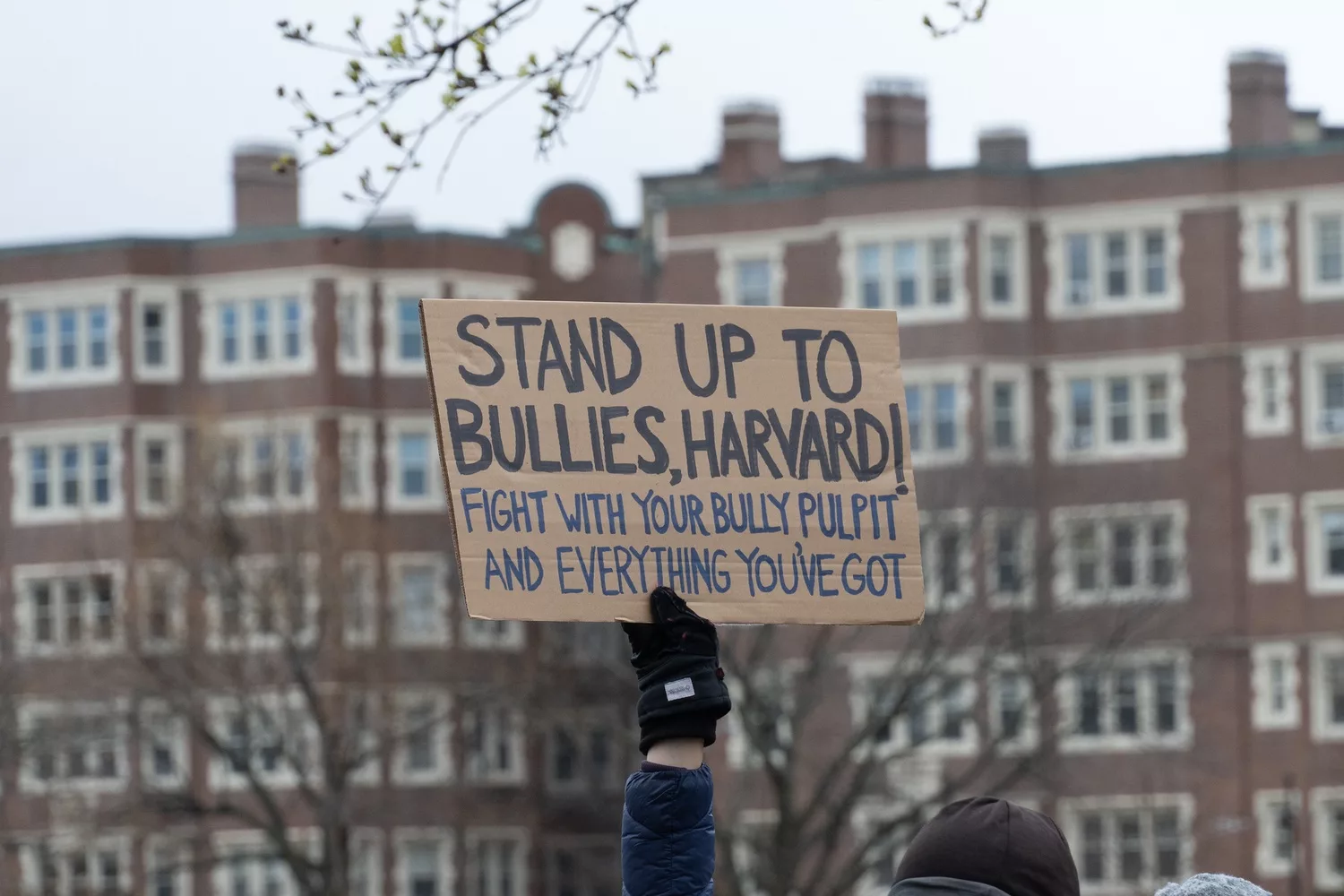
نون بوست

Where Columbia buckled under similar pressure, Harvard has vowed not to back down, hoping its defiance will galvanize other universities to resist governmental coercion.

Harvard isn’t a perfect champion

It’s important to note Harvard is not a radical voice for Palestinian rights. In fact, the university disciplined pro-Palestine student groups, suspended events, launched internal probes, and expelled staff involved in Gaza protests—even before the funding freeze.

Those internal measures aligned with adopting the controversial IHRA definition of anti-Semitism—leading to stricter protest policies, training for Israel supporters, and a curricular shift that some critics view as favoring the Israeli narrative.

Leaked reports suggest covert negotiations between Harvard and the administration, seeking “middle ground” to ease tensions. One step: this year the university quietly dropped funding for minority-only graduation ceremonies—a symbolic move aligned with the administration’s stance against race- or identity-based privileges.

The bottom line: over a quarter of Harvard’s students are international—a vital intellectual community facing forced departure, potentially relocating to institutions in China or Russia, as noted by former U.S. Ambassador Michael McFaul. Nevertheless, Harvard is standing firm, aware that its fate may set a precedent for the nearly 2,400 U.S. colleges and universities watching closely.

The lawsuits Harvard has filed do more than protect the institution during Trump’s presidency—they may determine the future of higher education in the United States: can universities resist White House overreach, or will federal research grants exceeding $60 billion annually be weaponized for political gain? The answer awaits the verdict of the courts.

Download this article as PDF
Share this Article
Facebook Twitter Whatsapp Whatsapp Telegram Email Copy Link
هبة بعيرات
By هبة بعيرات كاتبة، ومحامية ممارسة في ولاية نيويورك الأمريكية، ماجستير في القانون الدولي وحقوق الإنسان.
Follow:
Previous Article نون بوست Egypt’s Security Narrative: A Tool of Repression
Next Article نون بوست How Palestinian Resistance Interprets the Iran–Israel Ceasefire

Read More

  • U.S. Regime‑Change Policies: Why They Are Destined to Fail U.S. Regime‑Change Policies: Why They Are Destined to Fail
  • The Gulf’s Balancing Act: Iran, Israel, and Hidden Links
  • Iraq–Turkey Oil Export Treaty: Why Did Ankara Cancel It After 52 Years?
  • Syria’s Northeast on Edge: QSD Between Ankara and Damascus
  • Has Europe Changed Its Stance on Israel… or Just Its Language?
part of the design
NoonPost Weekly Newsletter

You May Also Like

U.S. Regime‑Change Policies: Why They Are Destined to Fail

U.S. Regime‑Change Policies: Why They Are Destined to Fail

إسراء سيد Esraa sayed 8 April ,2026
The Gulf’s Balancing Act: Iran, Israel, and Hidden Links

The Gulf’s Balancing Act: Iran, Israel, and Hidden Links

فريق التحرير Noon Post 8 April ,2026
Iraq–Turkey Oil Export Treaty: Why Did Ankara Cancel It After 52 Years?

Iraq–Turkey Oil Export Treaty: Why Did Ankara Cancel It After 52 Years?

فريق التحرير Noon Post 8 April ,2026

الأنظمة العربية والمفهوم الجديد للسيادة الوطنية

أسامة الرشيدي
أسامة الرشيدي Published 5 March ,2016
Share
%D8%B1%D8%A6%D9%8A%D8%B3%D9%8A%D8%A97

منذ اندلاع ثورات الربيع العربي عام 2011، لم يتوقف حكام الأنظمة العربية على اتهام الثوار بالعمالة والتنسيق لصالح جهات أجنبية، مقدمين أنفسهم باعتبارهم حماة للسيادة الوطنية.

لكن توالي الأحداث كشف عن انتهاكات عديدة لمفهوم السيادة الوطنية قام بها هؤلاء الحكام على مدار السنوات الماضية، عن طريق الاتفاق مع حلفائهم للتدخل في بلادهم لحمايتهم، بالتوازي مع استمرار اتهاماتهم لمعارضيهم بالخيانة.

سوريــا

اعتبر الأمين العام لحزب الله اللبناني حسن نصر الله في خطابه الذي ألقاه منتصف فبراير الماضي، أن اعتزام تركيا والسعودية إرسال قوات برية إلى سوريا “إنما هو ذريعة لهما لاكتساب موطئ قدم هناك”.

يأتي هذا التصريح رغم أن لحزب الله “موطئ قدم” منذ عدة سنوات في سوريا، إذ يحارب إلى جانب القوات النظامية ضد المعارضة، رغم حديثه الدائم السابق عن تركيزه على محاربة إسرائيل بهدف تحرير الأراضي اللبنانية المحتلة فقط، ولا يرى الحزب مشكلة أو تناقضًا في رفضه تدخل دول خارجية في سوريا في الوقت الذي يقدم فيه الدعم الكامل لبشار الأسد.

وكان الحزب قد رحب بالثورة المصرية التي أطاحت بالرئيس المصري المخلوع حسني مبارك، لكنه رأى في الثورة السورية “مؤامرة خارجية”، نظرًا لتحالفه الوثيق مع نظام بشار الأسد ووالده من قبله، اللذين يحكمان سوريا منذ عام 1970.

أما وليد المعلم، وزير خارجية النظام السوري، فقد اعتبر أن قيام تركيا بإسقاط الطائرة الروسية في نوفمبر من العام الماضي يمثل “عدوان على سيادة سوريا”، وهو تصريح يمثل رؤية النظام السوري وحليفيه الروسي والإيراني.

فدائمًا ما تؤكد روسيا في تصريحات مسؤوليها رفضها ما تسميه “التدخل الخارجي” في سوريا، رغم تدخلها العسكري المباشر هناك لصالح النظام، ودعمها السياسي المستمر له منذ اندلاع الثورة السورية، وهو نفس الموقف الذي تعبر عنه إيران دائمًا، رغم تواجدها بقوات الحرس الثوري ومليشيات أخرى إيرانية وأفغانية.

كما لم يمانع النظام السوري في قيام التحالف الدولي بتوجيه ضربات جوية لمواقع تنظيم الدولة الإسلامية داخل أراضيه، مشترطًا وجود تنسيق مسبق للحصول على اعتراف دولي بشرعيته.

وقد كشفت روسيا أوائل العام الجاري عن بنود اتفاقية سرية وقعتها مع نظام الأسد (الذي يسيطر على أقل من ربع مساحة البلاد وفقًا لتقديرات غربية)، بعد نحو 5 أشهر من توقيعها في 26 أغسطس 2015، تفيد بأن تدخلها العسكري في سوريا كان بطلب من الأسد لحمايته من تراجع قواته أمام المعارضة خلال الأشهر التي سبقت التدخل الروسي، وهي الاتفاقية التي اعتبرتها موسكو بمثابة تبرير قانوني لتدخلها، كما أنها تعفي الجنود الروس من أي ملاحقة قانونية على خلفية نشاطهم.

وتتضمّن المعاهدة 11 مادة، منها منع دخول السوريين إلى القواعد العسكرية إلا بموافقة قادتها الروس، وضمان حرية تنقل القوات الروسية عبر الحدود السورية وداخلها من دون عوائق، ولا توقيف عناصرها أو تعريضهم لتفتيش من جانب أي سلطة سورية، ويمنح هؤلاء وعائلاتهم حصانة كاملة من أي ملاحقات قضائية أو إدارية، كما لا يجوز مصادرة أو تفتيش معداتهم وممتلكاتهم، ويتحمل النظام السوري مسؤولية أي شكوى من أي طرف في حال تعرّض هذا الطرف لأضرارٍ، بسبب نشاط القوات الروسية في سوريا، كما ينص الاتفاق على استمراره لأجل “غير محدد”.

ووفقًا للاتفاق أيضًا، يقدم الجانب السوري قاعدة حميميم الجوية في محافظة اللاذقية مع بنيتها التحتية، فضلاً عن الأراضي المطلوبة المتفق عليها بين الطرفين من دون أي أجور.

كما تتحدث الاتفاقية في ديباجتها عن اتفاقات سابقة بين الجانبين، تعطي الجانب الروسي حق إدخال أو إخراج أي أسلحة أو ذخائر أو معدات أو مواد لازمة، لتلبية أغراضه العسكرية وضمان أمن أفراد وضباط القوات الروسية، مع إعفائهم كليًا عن دفع أي ضرائب أو رسوم.

العــراق

أما في العراق، فقد هاجم رئيس الوزراء حيدر العبادي دخول قوات تركية إلى بلاده في ديسمبر الماضي، مؤكدًا رفضه “دخول قوات برية أجنبية”، مهددًا باتخاذ إجراءات إذا لم تسحب أنقرة جنودها، كما تقدم العراق بشكوى رسمية ضد تركيا أمام مجلس الأمن الدولي بدعوى انتهاك أحكام ومبادئ ميثاق الأمم المتحدة، حيث وصفت بغداد نشر تلك القوات على أراضيها “بالعمل العدائي”، رغم تأكيد الرئيس التركي رجب طيب أردوغان أن قوات بلاده موجودة في قاعدة عسكرية بشمال العراق بناء على طلب رئيس الوزراء العراقي منذ عام 2014.

 من ناحية أخرى، لم يعد خافيًا التواجد الإيراني العسكري الكثيف في العراق، وسيطرتها على جانب مهم من القوات العراقية، إضافة إلى تكوينها العديد من المليشيات التي تدين لها بالولاء، إضافة إلى إرسالها مستشارين وخبراء عسكريين لتعزيز موقف بغداد في مواجهتها لتنظيم الدولة الإسلامية.

ومنذ سيطرة تنظيم الدولة في العراق على عدة محافظات عراقية تزايد ظهور قائد فيلق القدس الإيراني قاسم سليماني في بغداد بشكل معلن على العكس مما كان عليه في سوريا، الأمر الذي دفع محللين للقول أن هذا الظهور ضمن خطة مدروسة لزيادة النفوذ الإيراني في العراق وتؤكدها تصريحات المسؤولين الإيرانيين التي تقول “نحن نسيطر على العراق”.

ودائمًا ما يظهر قادة مليشيات الحشد الشعبي في العراق وهم يقدمون الشكر لإيران لدعمها العراق في الحرب ضد تنظيم الدولة، ويهاجمون التحالف الدولي الذي تقوده الولايات المتحدة، ويعلنون مساندتهم للتحالف الرباعي الذي يضم روسيا وإيران والعراق وسوريا، في المقابل تؤكد الحكومة على أن إيران أرسلت مستشارين عسكريين فقط للمساهمة في محاربة الإرهاب.

وكان العبادي قد أكد في تصريحات منتصف يونيو الماضي أمام مؤتمر جماهيري أنه لا يقاتل على أرض العراق إلا العراقيين، معتبرًا أن هذا متفق عليه بإجماع من الكتل السياسية والحكومة ومجلس النواب.

وفي أغسطس الماضي، قال عبد الرحيم سادتي القنصل الإيراني في محافظة النجف العراقية إن إيران هي الدولة الوحيدة التي قدمت “شهداءً” في العراق وهي تدافع عن العراق وحكومته ضد تنظيم الدولة.

وأكد الكاتب والباحث السياسي العراقي وليد الزبيدي، في حلقة من برنامج “ما وراء الخبر” على قناة الجزيرة الإخبارية أواخر أغسطس الماضي، أن تصريحات القنصل الإيراني صادقة “مائة بالمائة” وكشف عن حصوله على معلومات تفيد بمقتل 154 جنديًا إيرانيًا في سامراء وفي مناطق أخرى بالعراق، وأن هناك 7000 على الأقل من الحرس الثوري الإيراني يقاتلون في العراق.

بدوره، رأى الدكتور غسان العطية مدير المعهد العراقي للتنمية والديمقراطية أن العراق أصبح ساحة مكشوفة لتدخل كل الدول، سواء بشكل مباشر أو غير مباشر، وأكد أن التدخل الإيراني في كل من لبنان واليمن وسوريا والعراق حول هذه الدول إلى ساحات للحرب والمآسي.

على الجانب الآخر، لازالت هناك قواعد عسكرية أمريكية في العراق منذ الاحتلال الأمريكي لها عام 2003، وترتبط الولايات المتحدة مع العراق باتفاقية إطار إستراتيجي تتركز أغلب بنودها على المجالين الأمني والعسكري.

ليبيــا

بعد بروز اللواء المتقاعد خليفة حفتر على الساحة بصورة مفاجئة عام 2014، لمحاربة قوات “فجر ليبيا” الموالية للمؤتمر الوطني العام، دعا نظام الرئيس المصري عبد الفتاح السيسي أكثر من مرة إلى التدخل العسكري في ليبيا بزعم محاربة ما يسميها “الجماعات الإرهابية”.

وبعد الضربة الجوية المصرية لمدينة درنة شرق ليبيا في فبراير 2015، أبدت حكومة عبد الله الثني الموالية لمجلس النواب المنحل تأييدها للضربة، داعية إلى الاستمرار فى توجيه ضرباتها الجوية لـ “أوكار الإرهاب فى ليبيا بعد التنسيق مع القيادة الليبية” على حد قولها، معتبرة أن تلك الضربة لا تمثل انتهاكًا للسيادة.

مصــر والإمــارات

في سبتمبر عام 2013، احتجت دولة الإمارات على تصريحات الرئيس التونسي السابق “المنصف المرزوقي” التي طالب فيها بإطلاق سراح الرئيس المصري المعزول محمد مرسي، وقامت باستدعاء سفيرها في تونس للتشاور.

ووصفت صحيفة الخليج الإماراتية تصريحات المرزوقي بأنها “كانت تدخلاً فجًا وغير مدروس في شأن دولة ذات سيادة بحجم مصر، إضافة إلى أنها تشكيك في إرادة الشعب المصري”.

 واللافت أن الإمارات اعتبرت تلك التصريحات “تدخلاً في الشأن الداخلي المصري” رغم أن ما تقوم به الإمارات يدخل أيضًا في هذا الإطار، كما أن النظام المصري لم يعلق على رد الفعل الإماراتي وكأنه أمرًأ طبيعيًا ومتوقعًا ولم يعتبره تدخلاً في شؤونه الداخلية.

TAGGED: أزمات الشرق الأوسط ، الحرب على الإرهاب ، الربيع العربي ، الشرق الأوسط ، تنظيم الدولة
Download this article as PDF
Share this Article
Facebook Twitter Whatsapp Whatsapp Telegram Email Copy Link
أسامة الرشيدي
By أسامة الرشيدي صحفي وكاتب مصري، شارك في إنجاز أفلام وحلقات وثائقية عن قضايا مصرية وعربية، وكتب دراسات ومقالات نشرت في مجلات ومواقع إلكترونية
Follow:
Next Article نون بوست The Stigma of “ISIS”: A Heavy Legacy Haunting Women and Children of Former Members

Read More

  • U.S. Regime‑Change Policies: Why They Are Destined to Fail U.S. Regime‑Change Policies: Why They Are Destined to Fail
  • The Gulf’s Balancing Act: Iran, Israel, and Hidden Links
  • Iraq–Turkey Oil Export Treaty: Why Did Ankara Cancel It After 52 Years?
  • Syria’s Northeast on Edge: QSD Between Ankara and Damascus
  • Has Europe Changed Its Stance on Israel… or Just Its Language?
part of the design
NoonPost Weekly Newsletter

You May Also Like

U.S. Regime‑Change Policies: Why They Are Destined to Fail

U.S. Regime‑Change Policies: Why They Are Destined to Fail

إسراء سيد Esraa sayed 8 April ,2026
The Gulf’s Balancing Act: Iran, Israel, and Hidden Links

The Gulf’s Balancing Act: Iran, Israel, and Hidden Links

فريق التحرير Noon Post 8 April ,2026
Iraq–Turkey Oil Export Treaty: Why Did Ankara Cancel It After 52 Years?

Iraq–Turkey Oil Export Treaty: Why Did Ankara Cancel It After 52 Years?

فريق التحرير Noon Post 8 April ,2026
dark

An independent media platform founded in 2013, rooted in slow journalism, producing in-depth reports, analysis, and multimedia content to offer deeper perspectives on the news, led by a diverse young team from several Arab countries.

  • Politics
  • Society
  • Rights & Liberties
  • Opinions
  • History
  • Sports
  • Education
  • Technology
  • Economy
  • Media
  • Arts & Literature
  • Entrepreneurship
  • Travel
  • Cinema & Drama
  • Food
  • Health
  • Culture
  • Latest Reports
  • Files
  • Long Reads
  • Interviews
  • Podcast
  • Interactive
  • Encyclopedia
  • In Pictures
  • About Us
  • Our Writers
  • Write for Us
  • Editorial Policy
  • Advanced Search
Some rights reserved under a Creative Commons license

Removed from favorites

Undo
Go to mobile version