






NoonPost NoonPost

NoonPost

  • Home
  • Politics
  • Economy
  • Society
  • Culture
  • Files
  • Long Reads
  • Podcast
AR
Notification Show More
نون بوست
“There Are Nights I Can’t Close My Eyes”: How Gazans Are Living in Homes on the Brink of Collapse
نون بوست
From al-Jolani to Ahmad al-Shara: The Evolution of Syria’s New Leader
نون بوست
When Political Islam Receded in Egypt: Who Filled the Void?
نون بوست
An Extension of Genocide: Gaza’s Detainees Speak Out
نون بوست
A Tightrope Between Survival and Sovereignty: The Syrian Government Faces Normalization Pressures
نون بوست
American Aircraft Carriers: Has the Era of “100,000 Tons of Diplomacy” Ended?
نون بوست
U.S. Regime‑Change Policies: Why They Are Destined to Fail
نون بوست
Transformations of Israeli Judaism: Between the Victim Complex and the Colonizer’s Doctrine
نون بوست
The Gulf’s Balancing Act: Iran, Israel, and Hidden Links
نون بوست
Iraq–Turkey Oil Export Treaty: Why Did Ankara Cancel It After 52 Years?
نون بوست
Syria’s Northeast on Edge: QSD Between Ankara and Damascus
نون بوست
Has Europe Changed Its Stance on Israel… or Just Its Language?
NoonPost NoonPost
AR
Notification Show More
نون بوست
“There Are Nights I Can’t Close My Eyes”: How Gazans Are Living in Homes on the Brink of Collapse
نون بوست
From al-Jolani to Ahmad al-Shara: The Evolution of Syria’s New Leader
نون بوست
When Political Islam Receded in Egypt: Who Filled the Void?
نون بوست
An Extension of Genocide: Gaza’s Detainees Speak Out
نون بوست
A Tightrope Between Survival and Sovereignty: The Syrian Government Faces Normalization Pressures
نون بوست
American Aircraft Carriers: Has the Era of “100,000 Tons of Diplomacy” Ended?
نون بوست
U.S. Regime‑Change Policies: Why They Are Destined to Fail
نون بوست
Transformations of Israeli Judaism: Between the Victim Complex and the Colonizer’s Doctrine
نون بوست
The Gulf’s Balancing Act: Iran, Israel, and Hidden Links
نون بوست
Iraq–Turkey Oil Export Treaty: Why Did Ankara Cancel It After 52 Years?
نون بوست
Syria’s Northeast on Edge: QSD Between Ankara and Damascus
نون بوست
Has Europe Changed Its Stance on Israel… or Just Its Language?
Follow US

Siberia: An Islamic Enclave at the Edge of the World

أحمد سيف النصر
Ahmed Seif EL-Nasr Published 26 March ,2026
Share
نون بوست

Siberia, encompassing most of northern Asia and parts of Eurasia, stretches from the Pacific Ocean in the east to the Ural Mountains in the west. It borders Kazakhstan, Mongolia, and China to the south, and Russia to the north and south, yet remains
scarcely connected to Moscow—linked by only a few major roads and railways. Geographically, it lies much closer to China and other Pacific Rim countries than to Russia’s capital.

Covering over 13 million square kilometers—over three-quarters of Russia’s territory—Siberia is sparsely populated. In 2021, its population stood at just over 37 million, 90% residing in the south, mostly ethnic Russians, Ukrainians, and Belarusians.

Siberia’s greatest asset is the abundance of its territory and strategic resources. It holds immense deposits of cobalt, zinc, copper, lead, tin, mercury, nickel, iron ore, coal, silver, gold, and diamonds, along with mountains, forests, and rivers. It also hosts the world’s largest reserves of oil and natural gas.

These resources underpin Russia’s status as a great power—but their revenues flow to Moscow, not locals. Nearly 70% of Russia’s wealth derives from Siberia, yet Siberians have no independent claim to these riches.

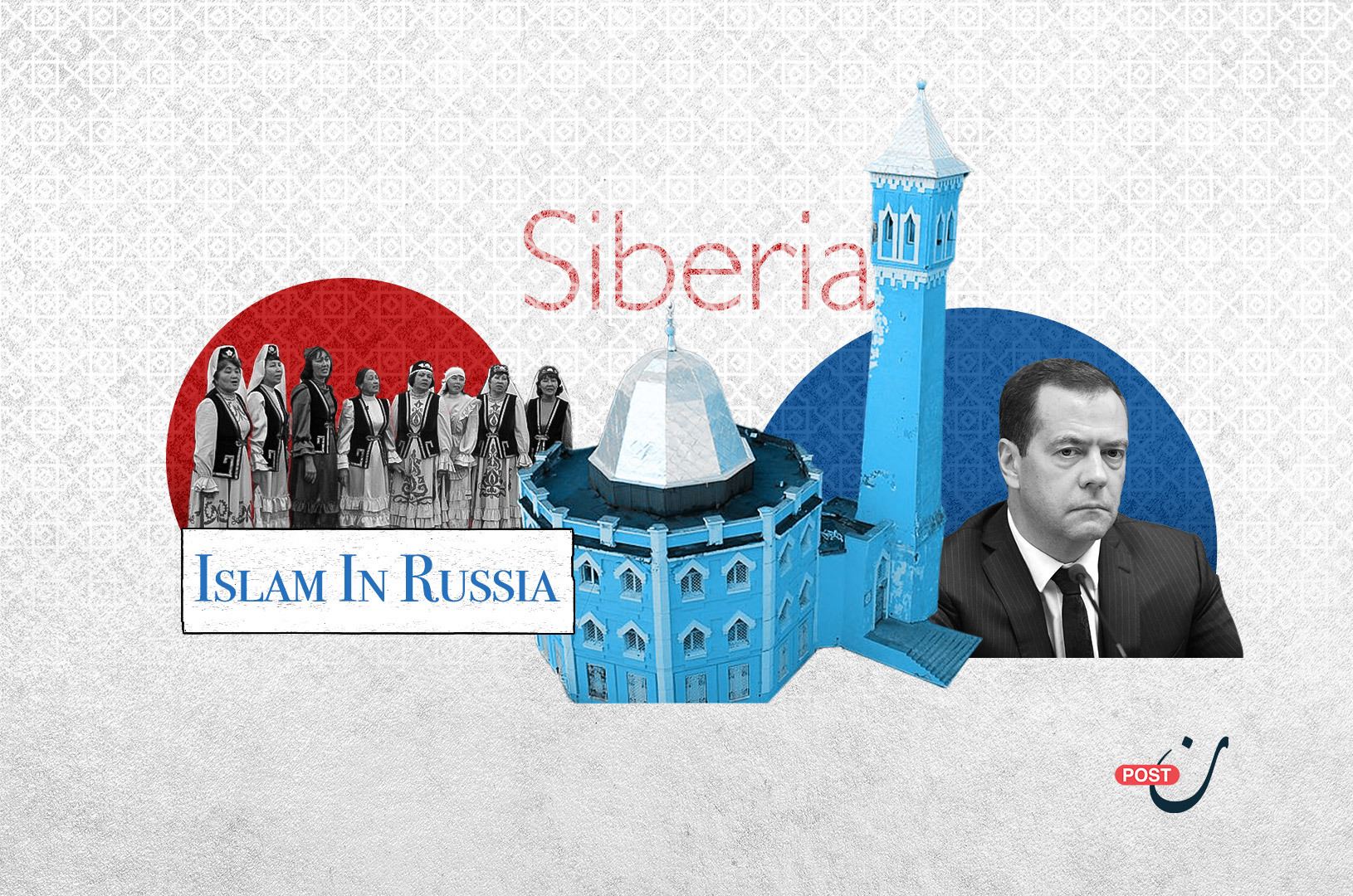
This region is explored within the series “Islamic Heartlands in Russia,” alongside North Caucasus republics like Chechnya, Ingushetia, Dagestan, Kabardino‑Balkaria, and Karachay–Cherkessia, as well as Tatarstan and Bashkiria.
نون بوست

These republics—home to approximately 25 million, predominantly Sunni Muslims of Hanafi and Shafi‘i schools, with Shia concentrations mainly among Azerbaijanis and Tajiks in Dagestan—frame the historical and contemporary role of Islam within the Russian Federation.

We examine each republic’s social and religious character, the challenges and turning points shaping its identity and role, and its relations with governing authorities—all under the influence of Russian geopolitical dynamics.

Siberian Society: Ethnic and Religious Composition

Siberia is ethnically and culturally diverse, though ethnic Russians dominate, mainly in cities near Kazakhstan, Mongolia, and China. Indigenous communities include Siberian Tatars and Turkic groups in Yakutia, Tuva, Altai, and Khakassia, among others.

The region hosts multiple religions: Buddhism, Judaism, Christianity—and Islam ranks second after Christianity. Three groups predominate among Siberian Muslims: Siberian Tatars (180,000+), Siberian Kazakhs (160,000+), and Volga–Ural Tatars (60,000).

Most Siberian Muslims are Sunnis of the Hanafi school, speaking Siberian Tatar—a language distinct from Volga and Crimean Tatar, though historically written in Arabic script. Other indigenous languages are still spoken, especially in rural areas.

The Muslim population divides into two major groups: indigenous Siberian Muslims tracing roots back to the 6th–9th centuries, and those who migrated from Central Asia and the Caucasus since the 1990s, drawn by oil and gas opportunities.

For millennia, nomadic tribes roamed Siberia. From the 7th century, Turkish tribes settled, with indigenous religions predominating at first. By 1206, Genghis Khan had conquered southern Siberian Turks. His son Jochi ruled the region from 1207, and after Genghis’s death in 1227, Siberia formed part of the Golden Horde—which conquered the Bulgars by 1236.

From the 13th to the 15th centuries, the Golden Horde ruled Turks, Bulgars, Siberians, Russians, and Tatars. In the early 14th century, Uzbek Khan adopted Islam as the state religion, promoting mosque, school, and library building.

Archaeological studies suggest Islam entered Siberia in the 13th–14th centuries, evidenced by period grave inscriptions. Some historians argue an earlier introduction in the 10th century via Volga Bulgar Islamization.

Islam’s expansion was fueled by Muslim merchants—Uzbeks, Tajiks, Kazakhs, Uyghurs—along newly established trade routes. According to local tradition, in 1394–95, 366 Naqshbandi sheikhs arrived from Central Asia to preach; 300 perished, but three stayed and continued teaching. Bukharan manuscripts supporting this narrative are kept in Tobolsk’s museum. Today, Siberian Muslims commemorate this annual celebration.

Islam arrived in waves—first with Bulgar influence, merchants, and missionaries; then under the Golden Horde; and through increasing adoption by Siberian khanates, culminating in full integration by the 16th century.

The Khanate of Sibir: Rise and Fall

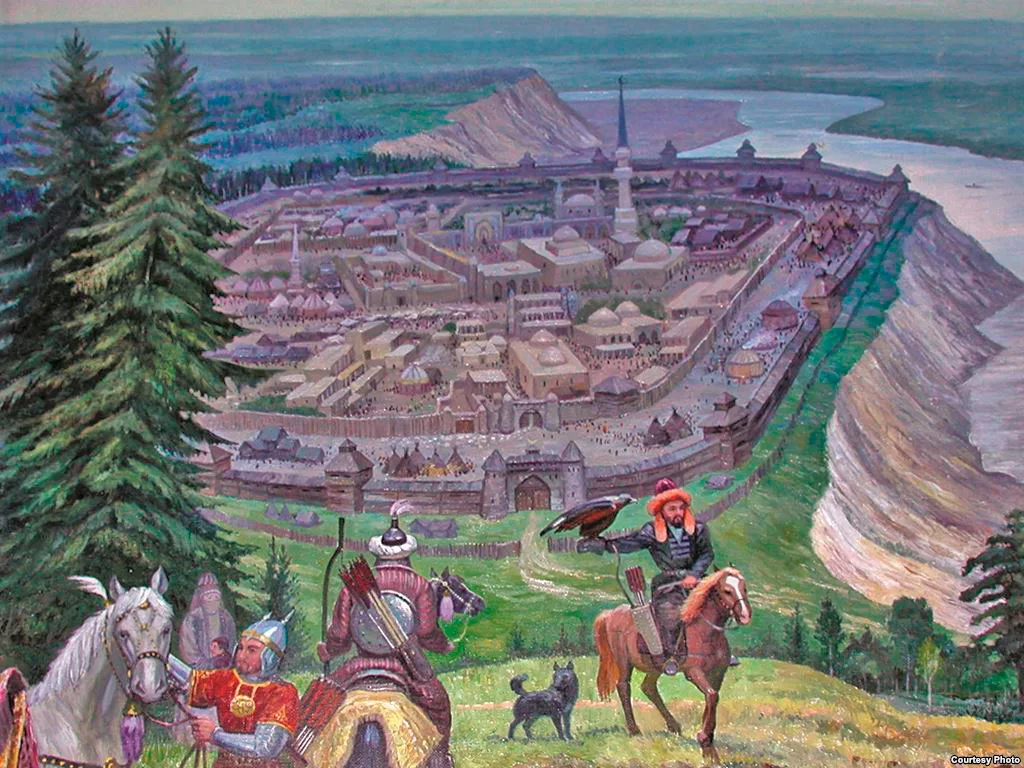
In the early 15th century, the Golden Horde fragmented into separate khanates (Crimea, Kazan, Astrakhan, Nogai, Sibir). A struggle between the Tyubygid and Shibanid clans in 1420 led to the founding of the Tyumen Khanate. In 1495, Taibuga Khan established the Sibir Khanate, centered on the city of Sibir, situated on the Irtysh River.

The Sibir khans, known ethnically as Nogais and Altaians, ruled over western Siberia, raising livestock, fishing, pottery, and weaving. They maintained political and economic links with Kazan and traded heavily with Central Asia and China. Volga Tatar clergy supported Islamic schools across the region.

With a multi-ethnic population of around 300,000 by the 14th century, western Siberia became a pioneer of Islam under the Hanafi school.

Following the collapse of the Golden Horde in the late 15th century, Russia, under Ivan the Terrible, conquered Kazan (1552) and Astrakhan (1556), paving the way eastward.

Despite geographical barriers, internal rivalries persisted. When Kazan fell, Yadigar Khan of Sibir paid tribute to Moscow in furs, but Shibanid Kushum Khan rebelled, strengthening Islamic influence.
نون بوست
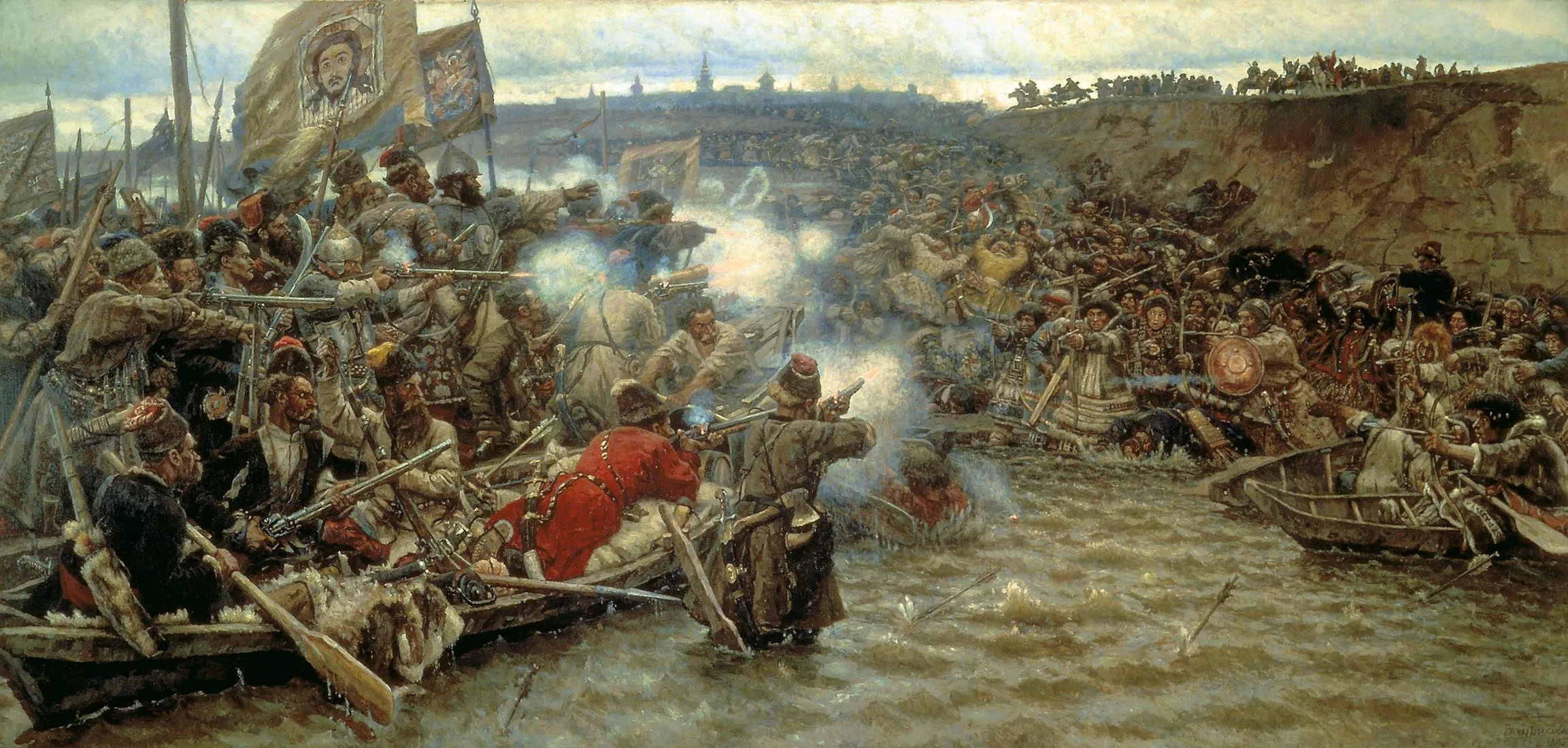
A painting by the artist Vasily Surikov depicting Yermak’s conquest of Siberia.

In 1582, the Cossack leader Yermak launched Russia’s first military campaign against Sibir, seizing its capital.

A 14‑year war ensued. In 1598, the Sibir Khanate fell. Kushum famously declared: “I will not live as a prisoner or die as a slave—I do not mourn my lands, but for those who fell under Russian bondage.”

Resistance persisted into the 17th century. By the mid-19th century, Russia had conquered all of Siberia and founded Vladivostok on the Pacific coast in 1860.

Imperial Russification and Christianization

Russia’s conquest devastated Siberian Muslims. Following subjugation, Russia launched resettlement programs in 1590, populating Siberia with Russian peasants, drastically changing its ethnic makeup.

The czars launched campaigns to destroy Islamic heritage. Ivan’s son Feodor I ordered mosques and madrassas demolished. In 1742, Empress Elizabeth decreed the destruction of 98 of Siberia’s 133 mosques by 1745.
نون بوست
The Khanate of Sibir before its fall to the Russians.

Waqf properties were seized. The Orthodox Church led forced conversions from 1718 to 1758 until Catherine the Great curbed these excesses in 1762. By the late 19th century, Orthodox missionary societies had eight missions in Siberia.

Although forced conversions waned, linguistic russification intensified: Islamic education was replaced by Russian-language instruction.

Soviet Repression and Post‑Soviet Revival

Despite early Bolshevik promises of religious freedom, the Soviet Union soon banned religious activity. Throughout the 1920s, mosques were demolished, books burned, and clergy persecuted. In 1936, Arabic alphabets for the Tatar and Bashkir languages were replaced with Cyrillic, effectively dismantling Islamic education.

The Soviet regime succeeded in eradicating organized Islam in Siberia. With the collapse of the USSR, a resurgence began. While exact figures are hard to ascertain, estimates suggest over 2.7 million Muslims in Siberia, with community leaders citing upwards of 4 million today.

Modern Siberian Muslims lead lives similar to their neighbors—working in livestock, fishing, leatherwork, crafts, oil, gas, and commerce. However, they retain their distinct cultural and social fabric. Migrants from the Caucasus—Dagestanis, Chechens, Ingush (estimated 200,000), along with Uzbeks, Tajiks, and Kyrgyz—have enriched Siberia’s Islamic landscape, opening halal shops, cafes, religious clothing stores, building mosques, schools, and distributing religious publications.

Today, Islam is expressed through Sufi orders, and increasingly via youth leaders. Salafist movements and the Tablighi Jamaat have expanded their presence. Yet, Muslim communities still face state oppression, proselytization by Orthodox missionaries, obstacles in building mosques, and occasional raids.
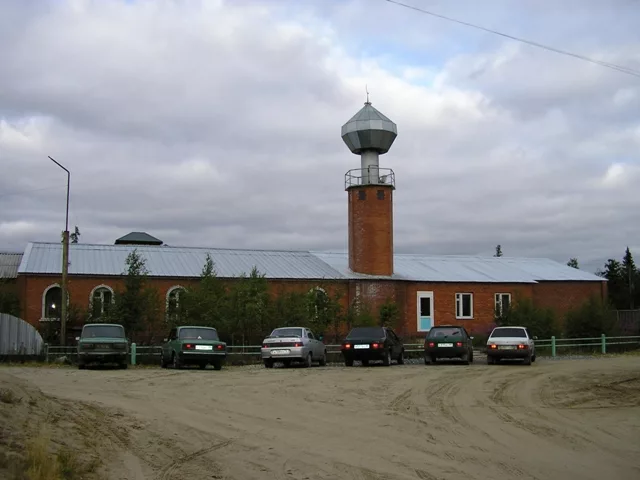
نون بوست
The Nur al-Islam Mosque in Siberia was razed by Russian authorities in 2015.

For instance, in 2013, the first Islamic school started construction but faced local harassment. In Chita, security forces intensified surveillance, raided mosques, and demolished sites citing “counter-terrorism.” Meanwhile, Tyumen offers relatively greater religious freedom.

The Kremlin has pursued divisive administrative policies, re-zoning Siberian Muslim-majority regions to fragment their political cohesion. Buryat activist Radghana Dugarova has called Russia “a colonial prison of national minorities.”

Russian dominates education, business, and public life. Only 57 out of 119 schools offer instruction in native languages; 70% of young Tatar Muslims are denied mother-tongue education. Since 2018, Muslim-region schools are state-administered in Russian.

Following the 2022 war in Ukraine, Moscow called on Siberian Muslims to enlist. Recruitment drives have allegedly drawn heavily from Muslim areas, prompting protests. Some Siberian Muslims have joined Ukrainian forces, marking a symbolic break with Kremlin influence.
Download this article as PDF
Share this Article
Facebook Twitter Whatsapp Whatsapp Telegram Email Copy Link
أحمد سيف النصر
By أحمد سيف النصر كاتب وصحفي مصري
Follow:
Previous Article نون بوست Israel on the Brink: A Turning Point for the Middle East
Next Article نون بوست Dagestan: A Dormant Powder Keg Facing Russia

Read More

  • U.S. Regime‑Change Policies: Why They Are Destined to Fail U.S. Regime‑Change Policies: Why They Are Destined to Fail
  • The Gulf’s Balancing Act: Iran, Israel, and Hidden Links
  • Iraq–Turkey Oil Export Treaty: Why Did Ankara Cancel It After 52 Years?
  • Syria’s Northeast on Edge: QSD Between Ankara and Damascus
  • Has Europe Changed Its Stance on Israel… or Just Its Language?
part of the design
NoonPost Weekly Newsletter

You May Also Like

U.S. Regime‑Change Policies: Why They Are Destined to Fail

U.S. Regime‑Change Policies: Why They Are Destined to Fail

إسراء سيد Esraa sayed 8 April ,2026
The Gulf’s Balancing Act: Iran, Israel, and Hidden Links

The Gulf’s Balancing Act: Iran, Israel, and Hidden Links

فريق التحرير Noon Post 8 April ,2026
Iraq–Turkey Oil Export Treaty: Why Did Ankara Cancel It After 52 Years?

Iraq–Turkey Oil Export Treaty: Why Did Ankara Cancel It After 52 Years?

فريق التحرير Noon Post 8 April ,2026

ما الذي تعنيه السعادة؟

فريق التحرير
Noon Post Published 10 March ,2016
Share
happiness-09

يتابين البشر في رأيهم عن السعادة، فالسعادة بالنسبة للكثير هي وسيلة، بينما هي غاية لآخرين، أو هي مجرد شعور لحظي، يتابين في شدته وضعفه مع الزمن وعلى حسب الحالة المزاجية والعوامل المحيطة، فعلى سبيل المثال عند ابن حزم، المفكر في الفلسفة الإسلامية، أنه مهما تباين الناس فإن هدفهم في هذه الحياة هو إزالة الهم، فهو مذهب اتفقت عليه الأمم منذ بدأ الخليقة وحتى يوم الحساب، الناس في دائرة مستمرة عن البحث عن راحة البال، وإزالة الهم، وصولًا إلى السعادة، يقول ابن حزم في كتابه الأخلاق والسير في مداولة النفوس: “طلبْتُ غرضًا يستوي الناس كلهم في استحسانه وفي طلبه، فلم أجده إلا واحدًا، وهو طرد الهم، فلما تدبرته علمْتُ أن الناس كلهم لم يستووا في استحسانه فقط، ولا في طلبه فقط، ولكن رأيتهم على اختلاف أهوائهم ومطالبهم وتبايُن هممهم وإراداتهم، لا يتحركون حركة أصلاً إلا فيما يعانون به إزاحته عن أنفسهم”.

هناك فرق بين الوصول إلى الرضا عن النفس، والوصول إلى السعادة، الرضا عن النفس ينعكس على أدائك واختياراتك في الحياة، أما السعادة فهي مجرد شعور، لا يمكن لإنسان أن يكون سعيدًا للأبد، ولا حتى طوال يومه، السعادة تأتي وتذهب كما يفعل الحزن، فالبعض يحب أن يصفها بأنها الموقف الذي تتمنى فيه للزمن أن يتوقف، على الرغم من أنك متأكد أنه لحظي وسيمر بأسرع مما تتخيل.

كيف هي السعادة عند فلاسفة المسلمين؟

الفارابي، والذي يحتل وزنًا استثنائيًا في الفلسفة الإسلامية، فهو المعلم الثاني بعد أرسطو، والمؤسس الثاني للفلسفة الذي قام بـإعادة تأسيس مصداقيتها في الملة الإسلامية، يقول الفارابي عن السعادة، “العلم المدني يفحص عن أصناف الأفعال والسير الإرادية، وعن الملكات والأخلاق والسجايا والشيم التي عنها تكون تلك الأفعال والسير، وعن الغايات التي لأجلها تفعل، وكيف ينبغي أن تكون موجودة في الإنسان، وكيف الوجه في ترتيبها فيه على النحو الذي ينبغي أن يكون وجودها فيه، والوجه في حفظها عليه، ويميز بين الغايات التي لأجلها تفعل الأفعال وتستعمل السير، ويبين أن منها ما هي في الحقيقة سعادة، وأن منها ما هي مظنون أنها سعادة من غير أن تكون كذلك، وأن التي هي في الحقيقة سعادة لا يمكن أن تكون في هذه الحياة، بل في حياة أخرى بعد هذه، وهي الحياة الآخرة”.

ببساطة يحاول الفارابي القول بأن غاية الإنسان في تحصيل السعادة تبدأ قي تحصيله لها في الدنيا في الحياة الأولى، والسعادة القصوى في الحياة الآخرة، بحيث يتوقف ذلك على النيل والمعرفة.

هل السعادة إرضاء لشهوات البدن، أو العقل أم القلب؟

المذهب الأفلاطوني – الأرسطي يمجد العقل، ويجد أن إشباع رغباته أسمى منزلة من إشباع رغبات البدن، اعتبر هذا المذهب أن من يؤمنون بأن السعادة هي إشباع للشهوات واللذات هم من العامة الرعاع، واختزلوا كل قوى الإنسان في إشباع رغباته البدنية، كما صور هذا المذهب بأن من يُكرس حياته من أجل تحصيل الملذات فإنه قد رضى بأرخص أنواع العبودية.

هذه بعض الإجابات العشوائية من مختلف الأجناس عن السعادة وما تمثله لهم

نون بوست

لندن، إنجلترا

أعتقد بأنني إذا أحببت نفسي بالشكل الكافي فهذا يُعتبر نوعًا من السعادة، السعادة بالنسبة لي هي أن أتحدى كل الصعوبات التي أواجهها في يومي وحياتي، وأن أعتبرها دروسًا تساعدني في النضوج، وأن تكون سببًا آخر لسعادتي.

نون بوست

تكساس، الولايات المتحدة

يمكنني القول بأن أسعد لحظات حياتي كانت عندما توقفت عن التفكير في نفسي، وبدأت في التفكير فيمن هم حولي، عائلتي وأصدقائي، وأي شخص سواي، فاستطعت أن أتوقف عن قلقي المستمر في البحث عن سعادتي الخاصة، فكلما استطعت جعل من حولي سعداء، صب ذلك في ميزاني أنا، وأصبحت سعيدًا بالتبعية.

نون بوست

كوستاريكا

أعتقد بأن السؤال يضعنا في دوامة من التحدي بعض الشيء، “ما هو السبيل إلى السعادة؟”، كما لو كانت السعادة هدفًا، أو كأنها مخرج في نهاية الطريق، تنتظره أثناء قيادتك بفارغ الصبر، وهذا ما يجعل الأمر أكثر صعوبة، في حين أن الاستمتاع بالرحلة ذاتها التي يخوضها الإنسان من أجل الوصول إلى راحة البال هي السعادة الحقيقية.

ترتبط السعادة عند أرسطو بفعل الخير، والسعادة تتحدد باللذة، والفضيلة التي تقود إلى السعادة ليست عاطفة أو قوة، بل هي عادة إرادية، ففي النهاية السعادة بالنسبة لأرسطو هي مسألة جماعية أكثر منها فردية.

لا تصدق من يخبرك بأن للسعادة مفاتيح، وأن لها معايير خاصة بها وحدها تختلف عن أي شعور إنساني آخر، وأنها مرتبطة بأشياء كثيرة على الشخص السعيد امتلاكها أو فعلها، السعادة ليست غاية يبحث الإنسان عنها، ولا هي نهاية رحلته في الدنيا، ولا هي المرحلة الأخيرة من تحقيق الذات والشعور بالراحة المطلقة، السعادة ليست بهذه الأهمية، هي تأتي وتذهب، وهي ليست المفتاح للنجاح، ولا يمكن التعامل معها على أنها النهاية على الإطلاق.

TAGGED: أسباب السعادة ، الشعور بالسعادة ، الفلسفة ، الفلسفة الإسلامية
TAGGED: المجتمع
Download this article as PDF
Share this Article
Facebook Twitter Whatsapp Whatsapp Telegram Email Copy Link
فريق التحرير
By فريق التحرير تقارير يعدها فريق تحرير نون بوست.
Follow:
Next Article نون بوست The Stigma of “ISIS”: A Heavy Legacy Haunting Women and Children of Former Members

Read More

  • U.S. Regime‑Change Policies: Why They Are Destined to Fail U.S. Regime‑Change Policies: Why They Are Destined to Fail
  • The Gulf’s Balancing Act: Iran, Israel, and Hidden Links
  • Iraq–Turkey Oil Export Treaty: Why Did Ankara Cancel It After 52 Years?
  • Syria’s Northeast on Edge: QSD Between Ankara and Damascus
  • Has Europe Changed Its Stance on Israel… or Just Its Language?
part of the design
NoonPost Weekly Newsletter
dark

An independent media platform founded in 2013, rooted in slow journalism, producing in-depth reports, analysis, and multimedia content to offer deeper perspectives on the news, led by a diverse young team from several Arab countries.

  • Politics
  • Society
  • Rights & Liberties
  • Opinions
  • History
  • Sports
  • Education
  • Technology
  • Economy
  • Media
  • Arts & Literature
  • Entrepreneurship
  • Travel
  • Cinema & Drama
  • Food
  • Health
  • Culture
  • Latest Reports
  • Files
  • Long Reads
  • Interviews
  • Podcast
  • Interactive
  • Encyclopedia
  • In Pictures
  • About Us
  • Our Writers
  • Write for Us
  • Editorial Policy
  • Advanced Search
Some rights reserved under a Creative Commons license

Removed from favorites

Undo
Go to mobile version