















Dagestan, a republic covering 50,300 square kilometers, lies near the geographical boundary between Europe and Asia, on the eastern tip of the northern flank of the Greater Caucasus Mountains, in the far south of Russia. It borders Chechnya, Kalmykia, Stavropol, and Georgia, and has maritime boundaries via the Caspian Sea with Kazakhstan, Turkmenistan, Azerbaijan, and Iran.
While northern Dagestan is part of the vast Eurasian steppe, the south and west are extremely mountainous—except for a narrow coastal plain wedged between the Caspian Sea and the end of the Caucasus range. For thousands of years, this narrow strip has been the primary transport route linking the Eurasian steppe to the lands beyond the Caucasus.
This article is part of our “Lands of Islam in Russia” series, in which we delve into the history and dynamics of Siberia and the North Caucasus republics—Chechnya, Ingushetia, Dagestan, Kabardino-Balkaria, Karachay-Cherkessia, Tatarstan, and Bashkortostan—regions within Russia that are predominantly Muslim, with a combined population estimated at around 25 million.
Ethnic Roots and Religious Identity
Dagestan is one of the most ethnically and linguistically diverse regions in the Caucasus and has long been a crossroads of cultures and geopolitical rivalries. The 10th-century Arab geographer al-Mas‘udi dubbed it “The Mountain of Tongues”—a name that reflects one of its most enduring features.
By land area and population, Dagestan is the largest republic in the North Caucasus. In recent years, its population has grown rapidly, while the proportion of ethnic Russians has declined—driven by low birth rates and emigration.
As of the 2024 census, Dagestan’s population exceeds 3.2 million, comprising more than 30 ethnic groups. The Avars are the largest, accounting for 30.53% of the population. Although they dominate political and social life, they are not a homogenous group but rather a collection of ethnographic and linguistic subgroups.
They are followed by the Dargins (16.63%) and the Kumyks (15.84%), who live mainly in central Dagestan. Other significant groups include the Lezgins and Laks in the south near the Azerbaijani border, along with the Tabasarans, Azerbaijanis, Russians, Chechens, Nogais, and others.
Each of these groups has its own language, customs, and often complex and overlapping administrative divisions. Intergroup hostilities are not uncommon, making Dagestan a potential flashpoint for ethnic conflict. Some warn that the region risks disintegration, as its ethnic diversity undermines a cohesive Dagestani identity.
Dagestan also has territorial disputes with neighbors—most notably Chechnya and Azerbaijan. Historically, however, inter-ethnic and cross-border hostilities were rare.
There are 12 officially recognized languages in Dagestan among the 40 spoken. Avar is the most widely spoken, with nearly half a million speakers. Russian, however, remains the primary language for education and administration.
According to Russia’s 2024 official statistics, over 90% of Dagestanis are Sunni Muslims of the Shafi‘i school. The Nogai minority in the north follow the Hanafi school. There is also a Shiite minority of around 4%, in addition to small, longstanding Jewish and Christian—mainly Orthodox—communities.
The Land and Its Challenges
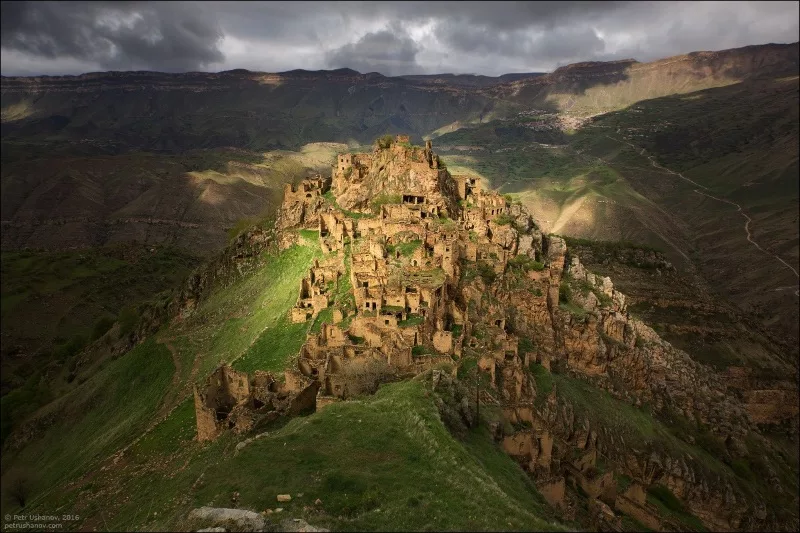
Dagestan boasts dramatic natural beauty and over 1,800 rivers. Yet unlike many mountainous regions, it is not rich in resources. Its harsh terrain, lack of arable land, and complex topography have historically impeded its economic development.
Nonetheless, Dagestan is strategically vital due to its location linking Europe and Asia. It holds immense potential for international transport and trade, connecting Russia with the Caucasus, Central Asia, Kazakhstan, Turkey, and Iran. Its geography positions it as a possible transit hub for global shipping routes.
But today, Dagestan remains one of Russia’s poorest regions, plagued by high unemployment and serious social and economic issues—chiefly a lack of investment. Its distorted economy fails to meet local needs, and corruption is widespread.
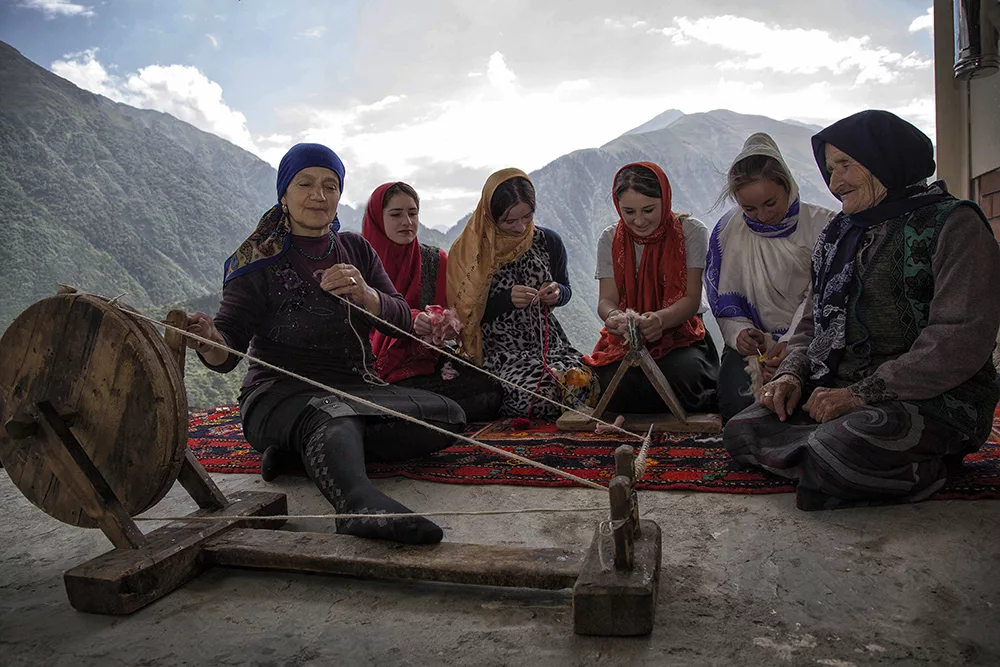
There is little industrial activity; the Soviet era left a legacy of underdevelopment. Industry accounts for only about 15% of GDP, while agriculture—especially livestock—makes up over 20%. Handicrafts, particularly carpet weaving, remain vital traditional occupations.
Culturally, Dagestanis are deeply conservative, much like other North Caucasian peoples. Over 60% follow one of three Sufi orders: Naqshbandi, Qadiriyya, and Shadhiliyya. A Salafi minority has grown in recent years, sometimes facing state repression. Still, religious groups do not play a major role in politics.
Islam, however, remains central to Dagestani social life. Nearly every village has a mosque, and their number has increased sixtyfold in the last two decades. Islamic education is offered in public schools. Yet, Dagestan’s Muftiate recently aligned with Moscow’s decision to ban women’s face veils (niqab).
Despite religious homogeneity, each city in Dagestan has a unique ethnic composition. The society remains clan- and tribe-based, and ethnic loyalty often outweighs both national identity and Islamic unity. No single ethnic group dominates, and societal stability now depends on the balance of clan elites.
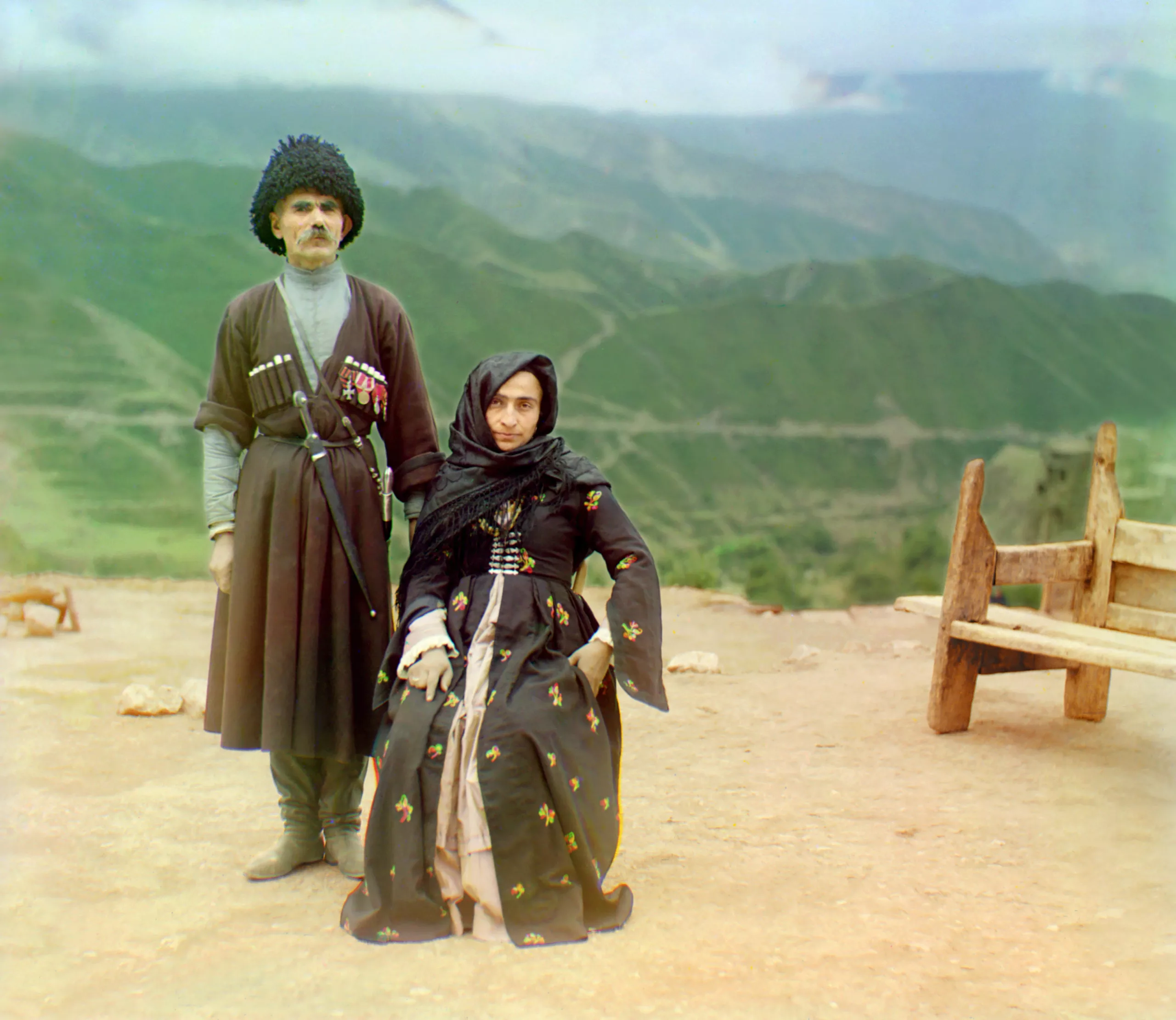
Apart from the Nogais and Russians, most Dagestanis are indigenous mountain dwellers, closely related to other Caucasian peoples like the Chechens, Circassians, Kabardians, Adyghe, and Abkhazians. Each ethnic group consists of smaller tribal units and village communities, which serve as the rural foundation of society.
Political Landscape
Politically, Dagestan is relatively liberal compared to Chechnya. Civil society is stronger, and its political diversity is partially sustained by an ethnic quota system for distributing power and resources.
Yet this quota system has arguably exacerbated tensions, encouraging ethnic competition rather than merit-based governance.
Dagestani society today is split into three main ideological camps. The largest supports traditional Islam and works with the authorities. A smaller but more dynamic second group supports Salafi ideas and opposes the regime, but both support the idea of Islamizing Dagestan.
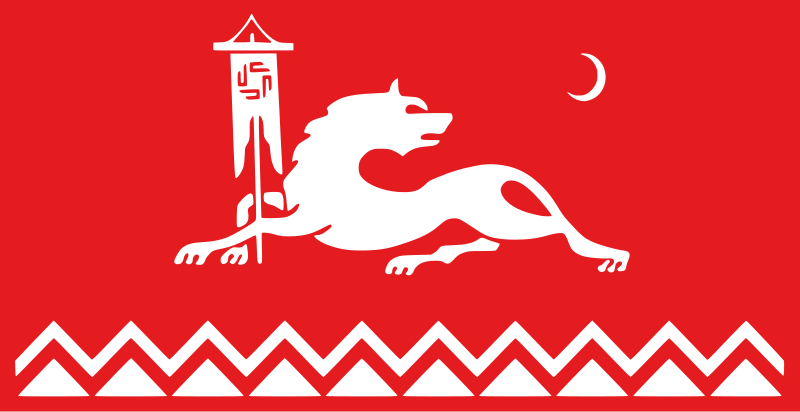
The first group believes this can be achieved within the Russian Federation, adapting or sidestepping restrictions. The second group believes an Islamic state is only possible through independence from Russia.
In contrast, the third group defends secularism, fearing Islamization would alienate Dagestan from Russia. Yet this group is steadily losing influence.
The core problem in Dagestan today is less about inter-clan rivalries or jihadist fighters and more about Moscow’s policies. The Russian state has entrenched territorial disputes and applied only short-term fixes. Recently, Moscow’s increasing influence among local clans has sparked fears of undermining the region’s fragile balance.
Instability is rising. Since Russia’s 2022 invasion of Ukraine, unrest has resurged in Dagestan. Many Dagestanis, driven by poverty, were mobilized to fight for Moscow. In October 2022, mass protests erupted across towns and cities after young men were forcibly conscripted.
Although President Putin and the defense minister claimed the mobilization was “partial” and limited to those with military experience, widespread reports showed anyone capable of holding a weapon was being drafted.
A History of Resistance
Dagestan has been inhabited for thousands of years, and its history is marked by upheaval and conquest. In the first millennium BCE, it was part of Caucasian Albania.
Its strategic location near competing empires, along with its ethnic heterogeneity, made it a battleground for powers including the Romans and Persians.
In the 7th century CE, Arab tribes introduced Islam to the region, followed by Turkish Seljuks in the 10th century, then Mongols, the Golden Horde, Timurids, Ottomans in the 16th century, and Persians in the 18th.
Islamization began early, and by the late 15th century, all Dagestani peoples were Muslim. Dagestan became the intellectual center of Islam in the North Caucasus, renowned for its scholars and madrasas. Other ethnic groups sent their children to study there, reinforcing Dagestani religious authority.
Despite nominal foreign rule, Dagestanis retained substantial autonomy. The Avar Khanate was established in the 13th century and lasted until 1864. From 1829 to 1859, parts of Dagestan came under the rule of the Caucasus Imamate.
Russia’s conquest of Dagestan was finalized in 1868, after fierce resistance. The famed Avar leader Imam Shamil led a 25-year guerrilla war during the Caucasus War (1816–1864), turning the region into a graveyard for Russian soldiers.
After his surrender in 1859, Russia conducted ethnic cleansing, displacing and killing thousands. The influx of Russians and Christian settlers altered the region’s demographics.
Soviet Repression
Dagestan rebelled again in the early 20th century. In December 1917, it joined other North Caucasian peoples in declaring the Mountain Republic. Later, Dagestanis supported the Bolsheviks, who promised autonomy. But the Red Army only gained control after prolonged conflict.
A major anti-Soviet rebellion erupted in 1920, led by Naqshbandi sheikh Najmuddin al-Hutsi al-Awari. He fought Bolsheviks and their allies until his execution in 1925. The Red Army crushed the remaining resistance by 1926.
The Soviets dissolved the Mountain Republic and created the Dagestan ASSR in 1921. Before 1917, there were some 2,000 religious schools with 40,000 students. The Soviets dismantled this system: Islamic courts were abolished in 1927, hundreds of clerics were killed or jailed, and by 1941 all Islamic institutions were shut down.
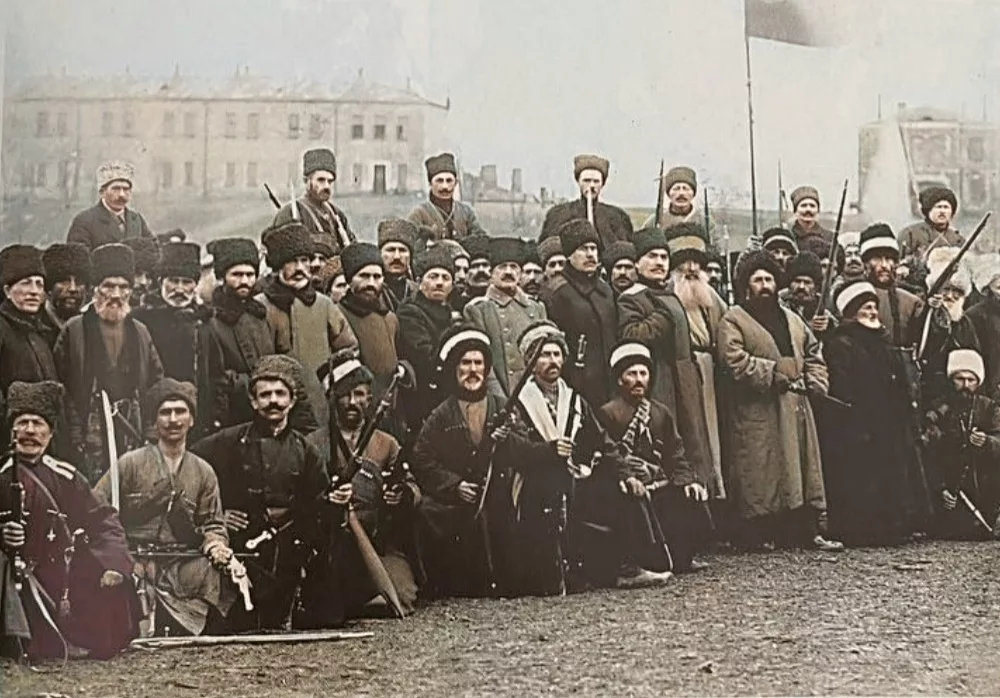
The last armed revolts were defeated by the late 1930s. Dagestan became one of the Soviet Union’s poorest areas. Unlike in Chechnya, Dagestanis were not deported, and their relationship with Soviet authorities was comparatively less confrontational.
Islam survived underground, sustained by Sufi networks, family traditions, and secret worship spaces.
Post-Soviet Balancing Act
Following the Soviet collapse, Islamic revival accelerated. Mosques and Islamic institutions multiplied, and Dagestanis flocked to pilgrimage and religious media.
Unlike Chechnya or Tatarstan, Dagestan never sought independence. Its leaders cooperated with Moscow and endorsed Yeltsin’s 1991 union treaty, which Chechnya and Tatarstan rejected.
In the 1990s, Dagestan crafted political structures accommodating its ethnic complexity. It avoided civil war despite challenges.
In 1992 and 1993, Dagestanis rejected referendums to create a directly elected presidency, fearing such a system would destroy ethnic balance. The 1994 constitution enshrined ethnic pluralism, with executive authority shared via a 14-member State Council, each representing a different ethnic group.
Yet, instability persisted. Fighting between Russian forces and Islamist insurgents spilled over from Chechnya. Over the past two decades, Russian security forces have battled Islamist militants in Dagestan, including ISIS’s “Caucasus Province,” which claimed recent attacks.
Thousands of Dagestanis have reportedly joined ISIS, especially among younger Salafi adherents. Moscow still struggles to stabilize the region.
Though Dagestan serves as Russia’s gateway to the Caspian and the Muslim world, sociologist Franz Schurmann warned decades ago: the republic might trigger the unraveling of the Russian Federation—and possibly the wider destabilization of the North Caucasus.


