NoonPost NoonPost

NoonPost

  • Home
  • Politics
  • Economy
  • Society
  • Culture
  • Files
  • Long Reads
  • Podcast
AR
Notification Show More
نون بوست
“There Are Nights I Can’t Close My Eyes”: How Gazans Are Living in Homes on the Brink of Collapse
نون بوست
From al-Jolani to Ahmad al-Shara: The Evolution of Syria’s New Leader
نون بوست
When Political Islam Receded in Egypt: Who Filled the Void?
نون بوست
An Extension of Genocide: Gaza’s Detainees Speak Out
نون بوست
A Tightrope Between Survival and Sovereignty: The Syrian Government Faces Normalization Pressures
نون بوست
American Aircraft Carriers: Has the Era of “100,000 Tons of Diplomacy” Ended?
نون بوست
U.S. Regime‑Change Policies: Why They Are Destined to Fail
نون بوست
Transformations of Israeli Judaism: Between the Victim Complex and the Colonizer’s Doctrine
نون بوست
The Gulf’s Balancing Act: Iran, Israel, and Hidden Links
نون بوست
Iraq–Turkey Oil Export Treaty: Why Did Ankara Cancel It After 52 Years?
نون بوست
Syria’s Northeast on Edge: QSD Between Ankara and Damascus
نون بوست
Has Europe Changed Its Stance on Israel… or Just Its Language?
NoonPost NoonPost
AR
Notification Show More
نون بوست
“There Are Nights I Can’t Close My Eyes”: How Gazans Are Living in Homes on the Brink of Collapse
نون بوست
From al-Jolani to Ahmad al-Shara: The Evolution of Syria’s New Leader
نون بوست
When Political Islam Receded in Egypt: Who Filled the Void?
نون بوست
An Extension of Genocide: Gaza’s Detainees Speak Out
نون بوست
A Tightrope Between Survival and Sovereignty: The Syrian Government Faces Normalization Pressures
نون بوست
American Aircraft Carriers: Has the Era of “100,000 Tons of Diplomacy” Ended?
نون بوست
U.S. Regime‑Change Policies: Why They Are Destined to Fail
نون بوست
Transformations of Israeli Judaism: Between the Victim Complex and the Colonizer’s Doctrine
نون بوست
The Gulf’s Balancing Act: Iran, Israel, and Hidden Links
نون بوست
Iraq–Turkey Oil Export Treaty: Why Did Ankara Cancel It After 52 Years?
نون بوست
Syria’s Northeast on Edge: QSD Between Ankara and Damascus
نون بوست
Has Europe Changed Its Stance on Israel… or Just Its Language?
Follow US

Sisi Opens Tehran’s Gate: Diplomatic Maneuver or a New Regional Realignment?

عماد عنان
Emad Anan Published 26 March ,2026
Share
نون بوست

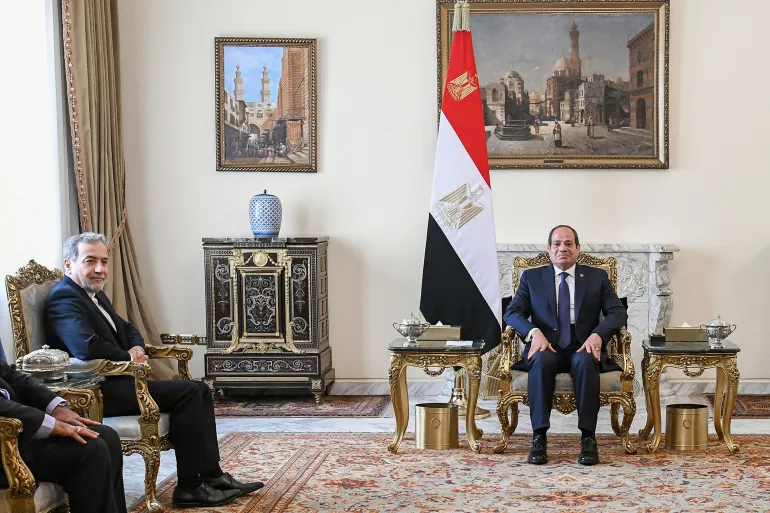
In a gesture reminiscent of French President Emmanuel Macron, Iranian Deputy Foreign Minister Abbas Araghchi made a brief evening visit on Monday, June 3, to the famed Khan El-Khalili heritage district in the heart of Cairo. He strolled through its historic alleyways and performed the Maghrib prayer at the Imam Hussein Mosque, during his regional tour that includes stops in Egypt and Lebanon.

During his two-day visit to the Egyptian capital, Araghchi met with President Abdel Fattah el-Sisi and his Egyptian counterpart, Badr Abdel Aaty. According to Iran’s state news agency IRNA, Foreign Ministry spokesperson Esmail Baghaei reported that the talks focused on bilateral relations and consultations on regional and international developments, especially the situation in occupied Palestine and water security issues in the Red Sea.

This visit cannot be viewed as routine or part of a traditional diplomatic agenda. It comes amid intense regional and global pressures on both countries—efforts to marginalize Egypt and diminish its regional role on one side, and mounting pressure on Iran over its nuclear program on the other.

Over the past two years, there have been signs of a mutual and growing desire between Cairo and Tehran to reach a diplomatic convergence that could restore relations to their pre-1979 rupture. Both foreign ministries have been working extensively to craft a new normalization roadmap, based on entirely different premises than in the past.
نون بوست

Redrawing the Middle East

Araghchi’s visit comes at a time when the Middle East is undergoing a profound reengineering of its regional architecture. Longstanding foreign policy paradigms are being upended, compelling both Cairo and Tehran to reassess their positions in light of the evolving landscape.

Among the most consequential shifts has been the rapprochement between Tehran and Gulf states, along with pressure on Syria’s new administration to normalize ties with Israel—whose growing influence in Syria, Lebanon, and Palestine is raising alarms. Recently reopened channels between Riyadh and Damascus and the signing of multiple economic agreements have further unsettled Cairo, particularly amid rising tensions with Ethiopia over the Grand Renaissance Dam.

These developments unfold against a backdrop of mounting—though officially denied—tensions between Egypt and Washington, as well as with Gulf capitals, notably Riyadh and Abu Dhabi. Meanwhile, Iran’s nuclear negotiations have entered a new phase of complexity, with the Trump administration again hinting at renewed sanctions.

Added to this is the uptick in regional security tensions, including intermittent Israeli military operations against Iran, which threaten regional stability and maritime safety in the Red Sea—developments that could have disastrous ripple effects throughout the region.

At the same time, Washington is attempting to impose a new regional alignment shaped by different rules—ones that suit the Israeli agenda. This emerging order places Gulf capitals at the center of influence, often at the expense of traditional powerhouses like Cairo, Damascus, Baghdad, and Tehran.

In such a climate, traditional alliances have become practically irrelevant. Marginalized and ineffective, they have prompted regional powers—including Egypt, Iran, and Iraq—to explore alternative alignments that could restore balance and counter the influence of new coalitions inviting Western military re-engagement in the region.

What Does Cairo Want?

Crucially, it was Egypt that extended the invitation to Araghchi—perhaps for the first time as a standalone bilateral initiative, rather than within the context of multilateral conferences or regional forums. This marks a clear indication of Cairo’s intent to step up rapprochement with Tehran.

The invitation coincides with a notable decline in Egypt’s regional clout. Once a key player in Sudan, Libya, Yemen, Lebanon, and Syria, Cairo now finds itself increasingly sidelined—even in the Palestinian file, where its geographic proximity once ensured a pivotal role. That influence has diminished considerably, especially since the U.S. administration opened direct lines of communication with Hamas.

This marginalization may be both a cause and a result of Cairo’s strained relations with the U.S. and Israel, particularly over its public opposition to population displacement schemes and its refusal to comply with American demands. President Biden seems intent on punishing his regional ally by pushing him off the regional stage—a reality underscored by Sisi’s exclusion from the most recent Gulf-Islamic summit in Riyadh following Trump’s visit.

The aggressive regional diplomacy of Egypt’s Gulf allies—often excluding or overlooking Cairo’s views—has compounded the tension. Whether it’s their warming ties with Washington and Tel Aviv or their unilateral meddling in files critical to Egyptian national security, the result is an increasingly isolated Egypt facing a political conundrum.

From this context emerged Egypt’s latest push to reclaim regional relevance—and Tehran may now be a key gateway. Cairo appears poised to act as a mediator between Iran and the U.S. in the nuclear file. Araghchi’s visit coincided with that of IAEA Director General Rafael Grossi, also in Cairo—an alignment too precise to be mere coincidence.

Indeed, a trilateral meeting was held between the Egyptian and Iranian foreign ministers and the IAEA chief, signaling Cairo’s bid to mediate. This comes on the heels of a recent IAEA report accusing Iran of escalating uranium enrichment. From the American side, Egypt’s foreign minister received a call from U.S. Middle East envoy Steve Witkoff regarding the latest developments.

Thus, Egypt views rapprochement with Tehran as a means to expand its restricted regional maneuvering space and reassert its diplomatic agency. The strategic use of Iranian relations is also a message to Washington, Tel Aviv, and the Gulf capitals: Egypt’s regional presence is far from over, despite ongoing efforts to isolate it.

What Does Tehran Want?

Tehran, meanwhile, is facing mounting American and European pressure over its nuclear ambitions and steadfast rejection of U.S. demands to cease uranium enrichment and abandon its bomb-making capabilities. Iran’s defiance has triggered threats of additional sanctions and prolonged its international isolation.

Iran sees Egypt—alongside Riyadh, Doha, and Muscat—as a potential intermediary in bridging the chasm with Washington. Cairo’s historical and cultural weight, coupled with its generally stable U.S. ties—despite recent turbulence—make it a valuable diplomatic conduit.

After setbacks in Syria and Lebanon, Iran is seeking a foothold to maintain at least a minimal level of regional influence. Hence Araghchi’s diplomatic whirlwind in recent months, seeking dialogue with powers across the region, even those with historically frosty ties to Tehran.

In particular, Iran aims to forge an informal regional front with Egypt against American threats, leveraging Cairo’s geopolitical stature to deter the U.S.—and by extension Israel—from military escalation. A full-scale war would be catastrophic, potentially dooming Iran’s long-cherished nuclear aspirations and even threatening the core of its political system.

A Pragmatic Rapprochement

Contrary to common media narratives portraying Egypt-Iran relations as entirely severed, the truth is more nuanced. Since the 1979 Iranian Revolution, ties have been more dormant than nonexistent, marked by periods of stagnation rather than total rupture.

Over the past four decades, bilateral relations have seen various fluctuations—often dictated by Cairo’s alignment with Gulf states, which historically discouraged rapprochement with Tehran.

Today, that obstacle no longer exists. The restoration of full diplomatic ties between Iran and several Gulf states has paved the way for Cairo to explore a similar path—especially given the shared regional challenges making such a rapprochement more necessity than luxury.

From a purely pragmatic standpoint, Egypt is now looking to deepen ties with Iran—a country it was once related to by marriage, when the late Shah wed Princess Fawzia, sister of King Farouk, who briefly became Empress of Iran before their divorce.

Many analysts suggest that constructive dialogue and a potential thaw between Tehran and Cairo could unlock significant opportunities for cooperation, particularly in energy and trade. With both countries possessing considerable potential and facing daunting challenges, the conditions seem favorable for a promising partnership that could yield strategic gains on both sides.

Since 2021, early signs of secret diplomatic engagement have emerged. The first came in November 2022, when then-Foreign Minister Sameh Shoukry met Iranian Vice President Ali Salajegheh on the sidelines of COP27 in Sharm El-Sheikh.

The following month, President Sisi met then-Iranian Foreign Minister Hossein Amir-Abdollahian during the “Baghdad II” conference in Jordan. Several other meetings followed—at the Asian Infrastructure Investment Bank gathering in Sharm El-Sheikh in September 2023, and again two months later between Iranian parliament speaker Mohammad Bagher Ghalibaf and Egyptian House Speaker Hanafy Gebaly at the BRICS Parliamentary Forum in South Africa.

The rapprochement culminated in the December 2024 visit of Iranian President Masoud Pezeshkian to Cairo for the 11th D-8 summit—marking the first visit by an Iranian president to Egypt in 11 years, and only the second in 45 years, following Mahmoud Ahmadinejad’s 2013 trip.

Clearly, both Cairo and Tehran now recognize that the current geopolitical climate demands a new level of engagement—one that transcends superficial diplomacy. For Egypt, this relationship could serve as a pressure lever and regional reentry point; for Iran, it may be a lifeline for preserving influence and deterring aggression.

The potential for this rapprochement is vast, grounded in shared interests and historical ties. But its success will largely depend on both sides adopting a rational and balanced strategy—one that advances their mutual goals without jeopardizing their ties with Gulf and Western allies.

Download this article as PDF
Share this Article
Facebook Twitter Whatsapp Whatsapp Telegram Email Copy Link
عماد عنان
By عماد عنان كاتب صحفي وباحث في الإعلام الدولي
Follow:
Previous Article نون بوست Kabardino-Balkaria: Orbiting in Russia’s Axis of Oppression
Next Article نون بوست The American Muzzle at Our Chests

Read More

  • U.S. Regime‑Change Policies: Why They Are Destined to Fail U.S. Regime‑Change Policies: Why They Are Destined to Fail
  • The Gulf’s Balancing Act: Iran, Israel, and Hidden Links
  • Iraq–Turkey Oil Export Treaty: Why Did Ankara Cancel It After 52 Years?
  • Syria’s Northeast on Edge: QSD Between Ankara and Damascus
  • Has Europe Changed Its Stance on Israel… or Just Its Language?
part of the design
NoonPost Weekly Newsletter

You May Also Like

U.S. Regime‑Change Policies: Why They Are Destined to Fail

U.S. Regime‑Change Policies: Why They Are Destined to Fail

إسراء سيد Esraa sayed 8 April ,2026
The Gulf’s Balancing Act: Iran, Israel, and Hidden Links

The Gulf’s Balancing Act: Iran, Israel, and Hidden Links

فريق التحرير Noon Post 8 April ,2026
Iraq–Turkey Oil Export Treaty: Why Did Ankara Cancel It After 52 Years?

Iraq–Turkey Oil Export Treaty: Why Did Ankara Cancel It After 52 Years?

فريق التحرير Noon Post 8 April ,2026

لماذا يعد فوز اليمين الألماني المتطرف أمرًا بالغ الخطورة؟

زاك بيتشام
زاك بيتشام Published 15 March ,2016
Share
018883254_30300

ترجمة وتحرير نون بوست

عقدت ألمانيا يوم الأحد المنصرم انتخابات إقليمية ضمن ثلاث ولايات، وتمخضت عن نتائج مذهلة، حيث فاز الحزب اليميني المتطرف، البديل من أجل ألمانيا (AFD)، الذي تقوم حملته على منصة كراهية الأجانب ومعاداة للمهاجرين، بـ12.5% من الأصوات في ولاية راينلاند بالاتينات، 15% من الأصوات في بادن فورتمبيرغ، و 24% من الأصوات في ولاية سكسونيا أنهالت، وبالمقابل، فَقَدَ حزب المستشارة الألمانية أنغيلا ميركل اليميني الوسطي، الاتحاد الديمقراطي المسيحي، والحزب اليساري الوسطي، الحزب الديمقراطي الاجتماعي، العديد من أسهمها خلال حملة التصويت الأخيرة.

لم يظفر حزب البديل من أجل ألمانيا بأصوات كافية للسيطرة على الحكومة في أي من الولايات الثلاث، ولكنه أضحى الآن يحوز حضورًا قويًا ضمن السلطة التشريعية في كل ولاية من الولايات الثلاث، وفي الواقع، تمثل النتائج الأخيرة أفضل نتيجة يحصل عليها حزب يميني متطرف في أي انتخابات الألمانية عُقدت منذ انتهاء الحرب العالمية الثانية.

لنكون صريحين، لا تشابه سياسة حزب البديل من أجل ألمانيا سياسية النازيين السامة، ولكن صعوده يُشكّل علامة فارقة مثيرة للقلق بالنسبة لألمانيا، وللغرب بشكل عام، وإليكم الأسباب:

1- تنامي شعبية حزب البديل من أجل ألمانيا في الداخل الألماني أمر مخيف للغاية

نون بوست

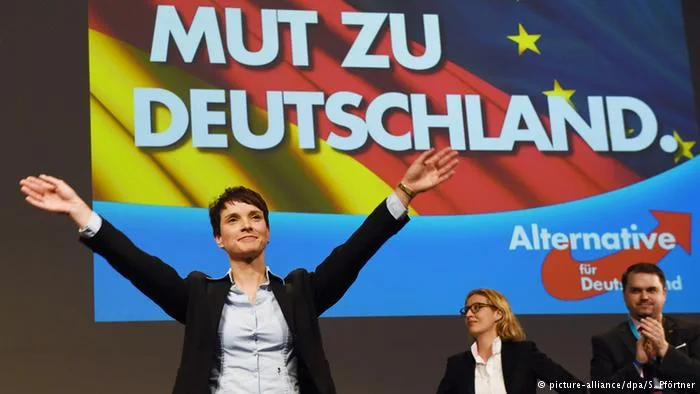
زعيمة حزب البديل لأجل ألمانيا فروك بيتري.

أكبر استنتاج يمكن أن نستخصله من نتائج الانتخابات الأخيرة يبدو واضحًا، فهناك صعود مقلق لحزب يميني في أهم بلد في منطقة اليورو.

بدأ حزب البديل من أجل ألمانيا حياته السياسية في عام 2013 كحزب هامشي معارض للاتحاد الأوروبي، ومن ثم ارتفعت شعبيته في الأشهر القليلة الماضية؛ فمنذ نوفمبر، أظهرت استطلاعات الرأي بأن الحزب أضحى ثالث أكثر الأحزاب شعبية في البلاد.

السبب الرئيسي لصعود الحزب يبدو واضحًا للعيان: أزمة اللاجئين وتزايد المشاعر المعادية للمهاجرين.

تتمثل السياسات الأساسية التي يقيم عليها حزب البديل من أجل ألمانيا حملته بعكس سياسات الهجرة المفتوحة نسبيًا التي تنتهجها ميركل وعكس سياسات استقبال اللاجئين، حيث اقترح الحزب إغلاق الحدود الألمانية بوجه المهاجرين الجدد، تعليق حق اللجوء، وإنهاء سياسة فتح الحدود الداخلية ما بين بلدان الاتحاد الأوروبي، التي تسمى بالشنغن.

زعيمة الحزب، فروك بيتري، تدافع عن هذه السياسات باستخدام لغة يمكن اعتبارها بأحسن الأحوال وطنية، وفي أسوئها عنصرية صريحة، “حثت بيتري الألمان على إنجاب ثلاثة أطفال للحد من الحاجة إلى الهجرة” أشار تقرير في صحيفة بلومبرغ، وتابع التقرير موضحًا: “وأشارت بأن السياسة الألمانية يحركها الشعور بالذنب من الهولوكوست”.

في أواخر شهر يناير، صرّحت بيتري بأن على الشرطة الألمانية “أن تمنع المرور من المعابر الحدودية غير الشرعية مستخدمة الأسلحة النارية إذا لزم الأمر”، وكان من المتوقع أن يسفر تصريحها بإطلاق النار على المهاجرين واللاجئين عن انخفاض شعبية الحزب، ولكن بدلًا من ذلك أشارت صحيفة دير شبيغل مقتبسة من ملاحظات الحزب، بأن أرقامه تصاعدت بشكل أكبر.

صعود الحزب مخيف بما فيه الكفاية لدرجة أن وزير العدل الألماني ناقش علنًا ما إذا كان يتوجب على مكتب الـBFV، وهو المعادل الألماني لمكتب التحقيقات الفيدرالي الأميركي، أن يراقب الحزب لمعرفة ما إذا كان غير دستوريًا؛ فالمادة 21 من الدستور الألماني تحظر الأحزاب التي “تسعى إلى تقويض أو إلغاء النظام الأساسي الديمقراطي الحر”.

“حزب البديل من أجل ألمانيا أصبح حوض تجمع للمتطرفين اليمينيين، ولأنصار معادي اللاجئين، ومثيري قلاقل الإسلاموفوبيا” أوضحت دير شبيغل، وتابعت: “وجود الحزب، وتزايد شعبيته، يثير التساؤلات حول ما إذا كانت ألمانيا قد تعلمت حقًا من الدروس المستفادة من الحرب العالمية الثانية والدكتاتورية النازية”.

لأسباب واضحة، كانت الأحزاب اليمينية المتطرفة في حقبة ما بعد الحرب العالمية بألمانيا تعد من المحرمات، فرغم وجودها على أرض الواقع بالتأكيد، إلا أنها لم تستطع، حتى وقت قريب، أن تستقطب مستويات عالية من الدعم الشعبي، وحقيقة أن أحد هذه الأحزاب آخذ في الصعود، ويظفر على أرض الواقع بنسبة أصوات مهمة في الانتخابات، تشير إلى أن الإجماع الليبرالي ضمن السياسة الألمانية قد لا يكون قويًا كما كان يُعتقد سابقًا.

“قبل الآن، نادرًا ما فازت الأحزاب الشعبية أو التي تحفز على كراهية الأجانب في ألمانيا بأكثر من 5% من الأصوات”، كتبت جودي ديمبسي، وهي باحثة بارزة في جامعة كارنيجي بأوروبا، بعد التصويت، وتابعت: “ولكن نجاح حزب البديل من أجل ألمانيا غيّر ذلك، على الأقل في الوقت الراهن”.

2- تنامي صعود الأحزاب اليمينية المتطرفة في الغرب بشكل عام

الفوز الكبير لحزب البديل من أجل ألمانيا يؤكد على اتجاه مهم للغاية آخذ بالاطراد ضمن سياسات الدول الغربية الحديثة يتمثل بتنامي صعود الأحزاب اليمينية المتطرفة في جميع أنحاء أوروبا.

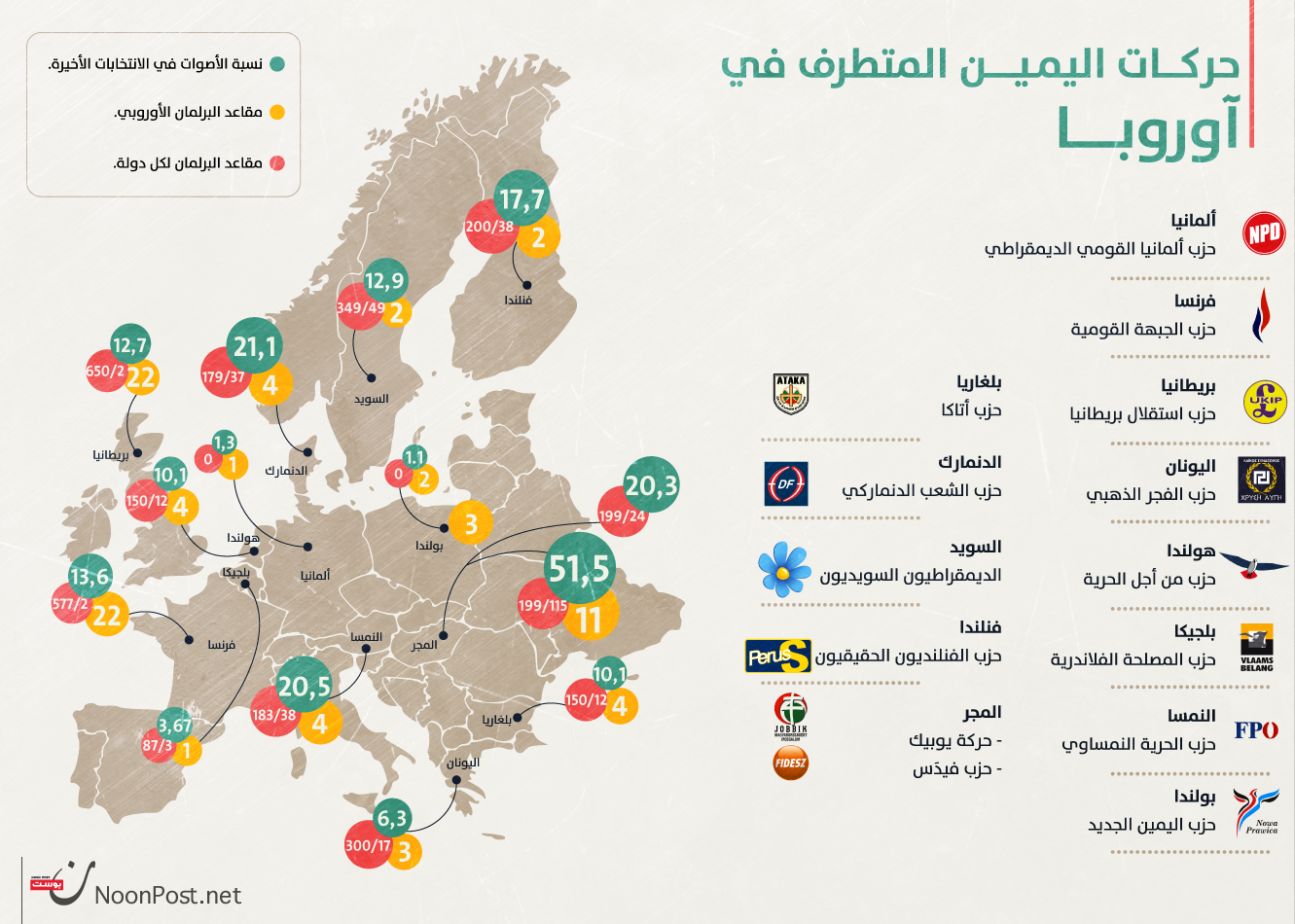
نشرت صحيفة دير شبيغل مخطط إنفوجرافيك يوضح هذه النقطة بشكل ممتاز، حيث يوضح الرسم أدناه البلدان التي تتمتع فيها أحزاب اليمين المتطرف بوجود في البرلمان، ممثلة بالنقاط الصفراء، أو بوجود ضمن ائتلاف حكومي، ممثلة بالنقاط الحمراء، ويتبين من الرسم بأن أحزاب اليمين المتطرف التي تنتهج سياسات معاداة الأجانب شهدت صعودًا في بلدان مختلفة ومتنوعة كالسويد، المملكة المتحدة، هولندا، والمجر.

في الإنفوجرافيك التالي توضيح لهذه النقطة، إذ يظهر الرسم البلدان التي تتمتع بها أحزاب اليمين المتطرف بوجود في البرلمان، أو بوجود في البرلمان الأوروبي، ويظهر من ذلك الدولة الأكثر ميلا نحو اليمين في أوروبا. يمكنك الضغط هنا لرؤية الإنفوجرافيك بحجمه الأصلي

نون بوست

اضغط هنا للتكبير

في معظم الحالات، استغلت هذه الأحزاب وركبت على موجة اللاجئين والمهاجرين الأوروبية لتثبيت موطئ قدم لها في السلطة؛ ففي الوقت الذي بدا فيه الأوروبيون متشككين لبعض الوقت من الهجرة، أججت الزيادة الكبيرة في أعداد المهاجرين في العام الماضي مشاعر معاداة اللاجئين لديهم بشكل كبير؛ مما أدى بالتبعية إلى زيادة أعداد أصوات أحزاب اليمين المتطرف حول أوروبا، فشبيعة رابطة الشمال في إيطاليا على سبيل المثال، ازدات بنسبة أربعة أضعاف عمّا كانت عليه في عام 2013.

تظهر أبحاث العلوم السياسية بأن الدعم الأوروبي لأحزاب اليمين المتطرف مدفوع أساسًا بمشاعر الخوف من الهجرة، حيث حاولت إليزابيث إيفارسفلاتن، أستاذة العلوم السياسية المقارنة في جامعة بيرغن في النرويج، تحديد سبب صعود أحزاب اليمين المتطرف في سبع دول أوروبية في ورقة بحثية لعام 2008، محاولة استطلاع الأسباب التي تدفع الشعب إلى أحضان اليمين الشعبوي، هل هي عدم الرضا عن الاقتصاد، عدم الثقة في المؤسسات السياسية، أو المشاعر المناهضة للمهاجرين.

النتائج التي توصلت إليها كانت واضحة بشكل لا لبس فيه، حيث تقول “مع تحول تفضيلات سياسة الهجرة لتضحي أكثر صرامة، ازدات نسبة احتمال زيادة التصويت لأحزاب اليمين الشعبوي بشكل كبير”، وعلى النقيض من ذلك، تبين بأن الناخبين الذي يحوزون وجهات نظر اقتصادية يمينية بالكاد كانوا أكثر ميلًا من الناخبين العاديين للتصويت لأحد أحزاب اليمين المتطرف، والأمر عينه ينطبق على أولئك الذين لا يثقون بالسياسيين بشكل كبير، والرسوم البيانية أدناه توضح ذلك:

الاحتماليات المتوقعة للتصويت لأحزاب اليمين المتطرف في سبع دول أوروبية خلال عامي 2002 و2003.

نون بوست

المحور الأفقي في جميع الصور البيانية يمثل احتمالية التصويت للأحزاب اليمينية المتطرفة، أما المحور العمودي فيمثل نسبة الدعم الشعبي لتقييد سياسات الهجرة (المخطط في أعلى اليسار)، وجهات النظر الاقتصادية اليمينية (المخطط في أعلى اليمين)، عدم الثقة بالسياسيين (المخطط في أسفل اليسار)، وعدم الثقة البرلمان الأوروبي (المخطط في أسفل اليمين).

“هذه الدراسة تنهي إلى حد كبير النقاش الدائر حول أي نوع من المظالم يوحد جميع أحزاب اليمين الشعبوية، والجواب هو المظالم الناشئة عن أزمة الهجرة المستمرة في أوروبا”، اختتمت إيفارسفلاتن.

بطبيعة الحال، أزمة الهجرة اليوم هي أشد سوءًا مما كانت عليه عندما نشرت إيفارسفلاتن بحثها في عام 2008، وهذا يفسر بالتالي سبب صعود حزب كحزب البديل من أجل ألمانيا في بلاد كان يرعبها صعود أحزاب اليمين المتطرف على مدار السنوات الـ70 الماضية، كما ويفسر السبب في استمرار صعود أحزاب اليمين المتطرف على نطاق أوسع في كامل أنحاء أوروبا.

3- سياسة ميركل حول اللاجئين تحيي آمال تقويض اليمين المتطرف في الوقت الراهن

نون بوست

المستشارة الألمانية أنغيلا ميركل.

هناك شعاع جيد من الأمل ضمن هذه الأخبار السيئة؛ فأولًا، لم يكتسب حزب البديل من أجل ألمانيا ما يكفي من القوة لتشريع جدول أعماله، وثانيًا ليس من المرجح أن يسفر صعوده عن الضغط على ميركل للتخلي عن موقفها المؤيد للاجئين.

من خلال النظرة المتفحصة التي أجراها كاتب صحيفة الجارديان، ألبرتو نارديلي، على النتائج التي صدرت يوم الأحد، يتبين بأن المرشحين الذين كانوا موالين للاجئين أو مؤيدين للمهاجرين لم يكونوا الخاسرين دائمًا؛ ففي بادن فورتمبيرغ، على سبيل المثال، فَقَدَ حزب ميركل، الاتحاد الديمقراطي المسيحي، عددًا كبيرًا من الأصوات، لأن مرشح الحزب الرائد لرئاسة وزراء الولاية قد نأى بنفسه عن نهج فتح الحدود الذي تنتهجه ميركل تجاه أزمة المهاجرين، ولكن على النقيض من ذلك، فاز مرشح حزب الخضر، الذي تبنى موقف ميركل، في انتخابات الولاية لأول مرة في التاريخ الألماني.

“ضمن انتخابات الولايات الثلاثة ككل، أيّد غالبية الناخبين سياسة المستشارة بشأن الهجرة”، قال نارديلي، وتابع: “الرواية السائدة في أغلب عناوين الصحافة التي صدرت صباح يوم الاثنين، والتي تقول بأن النتائج تعبّر عن رفض سياسة أنغيلا ميركل تجاه اللاجئين، هي سطحية وساذجة”.

بدلًا من ذلك، يفسّر نارديلي نتائج الانتخابات باعتبارها تفصح عن أن جزءًا من المجتمع الألماني قد أضحى مخلصًا على نحو متزايد في معارضته لسياسة الترحيب باللاجئين والمهاجرين، وهذه المجموعة ما تزال في الوقت الحاضر أقلية نسبية، وهذا يعني بأنه من المستبعد للغاية أن تغيّر ميركل سياساتها نحو اللاجئين، سواء في ألمانيا أو في المفاوضات الأوروبية المقبلة.

“ليس صحيحًا بأن سياسة اللاجئين ككل خسرت ببساطة دعم الشعب الألماني” قال أندرياس كلوث، مدير صحيفة الإيكونوميست في برلين، في مقابلة مع قناة CNBC، وتابع: “هنا، اكتشفت ميركل بأنها بحاجة إلى اتخاذ موقف محدد”.

ولكن مع ذلك، ليس هناك ضمانة بأن هذا الأمر سيبقى صحيحًا في المستقبل، حيث يتحدد السؤال الكبير فيما إذا كانت الأحزاب المتطرفة، كحزب البديل من أجل ألمانيا، ستكون قادرة على بناء قاعدة دعم لها، أو ستبدأ المشاعر الأساسية التي تدعم حملتها، كالمشاعر المعادية للمهاجرين، بالتلاشي والاضمحلال.

“المزيد من الناخبين أصيبوا بالملل وتحولوا إلى التطرف، وهذا أكثر خطرًا من أي تغيير فوري لسياسات اللاجئين قد تتخذه أنغيلا ميركل، وهو أمر أستبعد شخصيًا حدوثه”، خلص كلوث.

المصدر: فوكس

TAGGED: أحزاب اليمين المتطرف ، الاتحاد الأوروبي ، الانتخابات الألمانية ، الشنغن ، سياسة ألمانيا تجاه اللاجئين
TAGGED: الانتخابات الألمانية
Download this article as PDF
Share this Article
Facebook Twitter Whatsapp Whatsapp Telegram Email Copy Link
زاك بيتشام
By زاك بيتشام باحث أميركي مهتم بجميع الأخبار غير الأمريكية وعمل سابقًا كمحرر للفكر السياسي لصالح موقع ثينك بروغرس.
Follow:
Next Article نون بوست The Stigma of “ISIS”: A Heavy Legacy Haunting Women and Children of Former Members

Read More

  • U.S. Regime‑Change Policies: Why They Are Destined to Fail U.S. Regime‑Change Policies: Why They Are Destined to Fail
  • The Gulf’s Balancing Act: Iran, Israel, and Hidden Links
  • Iraq–Turkey Oil Export Treaty: Why Did Ankara Cancel It After 52 Years?
  • Syria’s Northeast on Edge: QSD Between Ankara and Damascus
  • Has Europe Changed Its Stance on Israel… or Just Its Language?
part of the design
NoonPost Weekly Newsletter
dark

An independent media platform founded in 2013, rooted in slow journalism, producing in-depth reports, analysis, and multimedia content to offer deeper perspectives on the news, led by a diverse young team from several Arab countries.

  • Politics
  • Society
  • Rights & Liberties
  • Opinions
  • History
  • Sports
  • Education
  • Technology
  • Economy
  • Media
  • Arts & Literature
  • Entrepreneurship
  • Travel
  • Cinema & Drama
  • Food
  • Health
  • Culture
  • Latest Reports
  • Files
  • Long Reads
  • Interviews
  • Podcast
  • Interactive
  • Encyclopedia
  • In Pictures
  • About Us
  • Our Writers
  • Write for Us
  • Editorial Policy
  • Advanced Search
Some rights reserved under a Creative Commons license

Removed from favorites

Undo
Go to mobile version