

In a rare departure from Europe’s traditionally cautious foreign policy stance, several European nations have adopted an increasingly confrontational tone toward Israel—politically and in the media. Their rhetoric has ranged from condemnation and denunciation to threats of sanctions and calls to reassess the EU-Israel partnership.
The catalyst: more than 19 months of relentless Israeli attacks on Gaza, where the civilian population—particularly women and children—has borne the brunt of what many observers are now calling a campaign of genocide.
The former Israeli ambassador to France, Avi Pazner, described the shift as “extremely dangerous,” warning, “For the first time, the West is threatening us with sanctions. A snowball is beginning to roll.” He added, “There is a huge difference between condemnations and sanctions.
Sadly, for the first time in Israel’s diplomatic history, we are in a crisis with a significant portion of Europe—nations historically and culturally close to us—who are now acting against us through sanctions. This is unprecedented, and it is serious. This is just the beginning. If the war continues, the sanctions will grow.”
For the first time in decades, Europe’s relationship with Tel Aviv is being openly scrutinized, with calls to reevaluate long-standing partnerships and legal frameworks. A new, more forceful language has entered European diplomatic discourse—one marked by legal terminology and an uncharacteristically harsh tone in relations with Israel.
This abrupt shift raises pressing questions: Why now? What’s driving this awakening? Is it a genuine ethical and humanitarian reckoning—or merely symbolic posturing to placate a surge in public outrage?
A European Reawakening Disrupts Diplomatic Norms
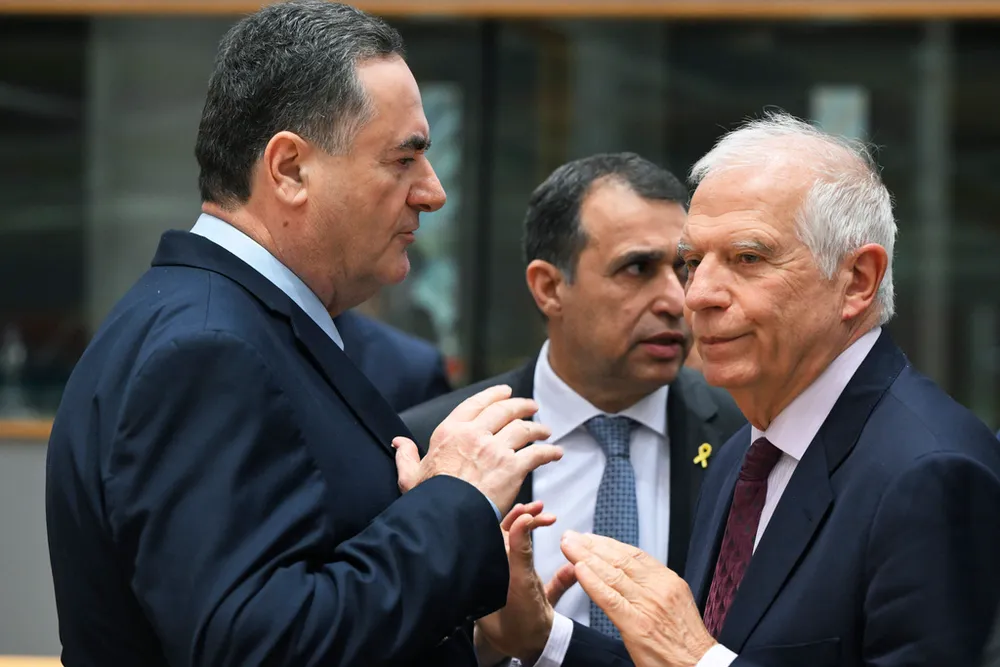
In recent weeks, many European capitals have abandoned their usual diplomatic restraint with Israel, opting instead for unusually aggressive language. Some countries have gone further, threatening sanctions and brandishing the political equivalent of a yellow card against Israel.
-
Norway (though not an EU member), Spain, Ireland, and Slovenia have officially condemned what they termed a campaign of genocide in Gaza and announced their intention to recognize the State of Palestine.
-
Seventeen of the EU’s 27 member states support reviewing Article 2 of the EU-Israel Association Agreement, which mandates respect for human rights. EU foreign policy chief Kaja Kallas declared on May 20, “We have a strong majority in favor of reviewing Article 2. So we will proceed.”
-
On May 7, six European countries (Ireland, Spain, Slovenia, Luxembourg, Norway, and Iceland) issued a joint statement denouncing Israel’s attempts to alter Gaza’s demographic composition as forced displacement and a violation of international law. They asserted that Gaza is an “integral part of the State of Palestine”—a position rarely stated so explicitly before.
-
On May 19, twenty-two countries—including France, Germany, the UK, and Canada—rejected a new aid distribution mechanism for Gaza proposed by Israel and the US. In a joint statement, they called it ineffective, politically motivated, and dangerous to humanitarian workers and recipients. They emphasized that Gaza’s population faces famine and must receive critical aid.
-
Dutch Foreign Minister Caspar Veldkamp called for a “red line” by revisiting the EU-Israel agreement and announced a freeze on any government support for its renewal. The Netherlands also tightened export controls on dual-use goods in April.

-
In late April, Ireland’s Senate voted to impose sanctions on Israel and prohibit US arms shipments through Irish airspace—a symbolic move that still marks a notable institutional shift.
-
Several nations—France, Luxembourg, Spain, Ireland, and Slovenia—have argued that recognizing Palestine is a necessary political step to preserve the two-state solution. Ireland, Spain, and Norway formally recognized Palestine in May 2024, followed by Slovenia in June. With these additions, at least ten EU states—most from Western Europe—have now recognized the Palestinian state.
-
On May 20, 2025, UK Foreign Secretary David Lammy announced the suspension of free trade negotiations with Israel and the imposition of sanctions on three settlers and two Israeli organizations implicated in violence in the West Bank. He labeled the blockade on Gaza “immoral and indefensible.” Prime Minister Keir Starmer also called for a ceasefire and expanded humanitarian aid, stating, “The suffering in Gaza is unbearable.”
A Long-Delayed Awakening
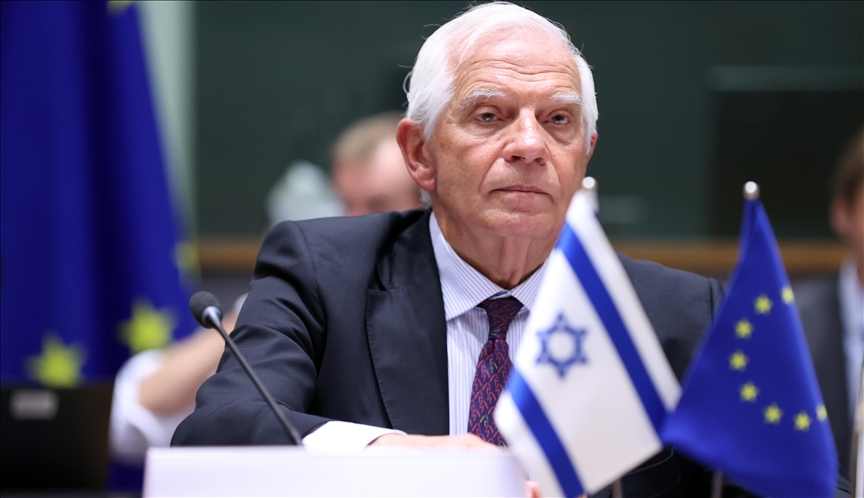
Back in February 2024, Spanish Prime Minister Pedro Sánchez and his Irish counterpart Leo Varadkar sent a letter to the European Commission requesting an urgent review of Israel’s compliance with the 1995 EU-Israel Association Agreement, the cornerstone of their economic relationship.
Article 2 of the agreement requires signatories to uphold democratic principles and human rights—standards Israel has increasingly been accused of violating. The move came in response to catastrophic conditions in Gaza, where observers describe the situation as genocidal. Yet the Commission initially dismissed the request, turning a blind eye to mounting atrocities.
Now, some 15 months later, the Commission has finally responded. With the crisis exposed globally—on camera, in real time—EU officials can no longer ignore the atrocities. Kaja Kallas has since pledged to investigate Israel’s compliance with human rights commitments.

This is no minor development. The EU is Israel’s largest trading partner, accounting for 32% of its global trade. Israel imports 34.2% of its goods from the EU and exports 28.8% of its products there, with total trade reaching €42 billion in 2024.
This overdue European awakening, driven by a convergence of political, media, and ethical pressures, places Israel’s allies in a deeply uncomfortable position. Their continued support now risks being interpreted as complicity in crimes against humanity. As the Arabic proverb goes: Better late than never.
A Crucial American Context
This European pivot cannot be fully understood without accounting for recent geopolitical shifts—particularly within US foreign policy. Under Donald Trump’s renewed presidency, Washington has started distancing itself from Israel on key Middle East issues.
The change began with Iran: Trump’s administration initiated indirect talks with Tehran—mediated by Oman—without Israeli involvement. In a historic first, US officials also held direct talks with Hamas to explore a potential ceasefire in Gaza. Meanwhile, despite designating the Houthis as a terrorist group, the US opened direct negotiations with them, agreeing to pause attacks in the Red Sea in exchange for an end to US airstrikes on Yemen.
Trump’s break with Israel-centered policy marks a shift from traditional alliances to pragmatic realpolitik—prioritizing American interests even at the expense of Israeli sensitivities. This approach appears to have emboldened European countries, offering them political cover to adopt tougher stances against Tel Aviv.
European officials interpreted America’s initial silence on their escalating criticism as tacit approval—if not outright endorsement—of a new, more assertive posture toward Israel.
Pressure That Can No Longer Be Delayed
Despite attempts to frame this shift as a moral reckoning, the truth is more pragmatic: Europe is responding to mounting pressures that have made silence untenable and increasingly dangerous to its global image.
First, there is the on-the-ground reality in Gaza: a humanitarian nightmare defined by starvation, mass displacement, and unyielding military brutality. The Israeli army has ignored UN appeals and blocked aid convoys, effectively turning Gaza into an open-air prison for over two million people.
Second, there is the surge in global public opinion favoring Palestinian rights and condemning Israeli actions. This sentiment, once confined to protests, has spilled into universities, labor unions, and civil society. From Washington to Paris, Stockholm to Berlin, public outrage has become a serious political liability for governments.
Faced with these pressures, European capitals found themselves cornered—compelled to distance themselves, at least symbolically, from Netanyahu’s government. But the central question remains: Can this European “revolt” translate into real consequences for Israel?
Could This Lead to Real Consequences?
So far, concrete action has not matched the fiery rhetoric. The threat of sanctions remains largely symbolic.
First, suspending the 1995 EU-Israel Association Agreement requires unanimous approval from all EU members—currently an unlikely scenario given resistance from Germany, Italy, Greece, Cyprus, Croatia, the Czech Republic, Hungary, and Bulgaria.
Still, unanimity is not always necessary. The EU has previously imposed sanctions over human rights violations more than 26 times without full consensus. Researcher Hugh Lovatt of the European Council on Foreign Relations argues that Israel should not be exempt from such measures.
Second, some countries—like the UK, France, and Canada—are considering individual sanctions outside the EU framework. On May 19, 2025, British Prime Minister Keir Starmer, French President Emmanuel Macron, and Canadian Prime Minister Mark Carney issued a joint statement threatening “concrete actions,” including potential sanctions, if Israel’s offensive continues.
Starmer confirmed the UK would suspend trade talks with Israel, decrying the limited aid allowed into Gaza as woefully inadequate. He emphasized the need for international coordination and warned that starvation cannot be used as a weapon of war.
The coming weeks will test whether this European momentum is a genuine reckoning—or merely a PR maneuver to salvage the West’s credibility after months of unconditional support for Israeli policies.
What About the Arab Response?
Amid this European recalibration, the most glaring absence is the Arab world. While Europe inches toward holding Israel accountable, Arab capitals remain largely silent—trapped in inertia and political caution.
Trade between Arab states and Israel has surged since the war began in October 2023, defying the global trend toward disengagement. Not one of the five countries that normalized relations with Israel under the Abraham Accords—Egypt, Jordan, the UAE, Bahrain, and Morocco—has considered reevaluating ties as a pressure tactic.
While France, Ireland, and others recognize Palestine and speak of sanctions, many Arab governments have offered little more than rhetorical support. The once-vibrant Arab street, long a source of moral outrage, now lies dormant—subdued by repression or indifference.
In conclusion, even if European threats have yet to materialize into full-fledged sanctions, the shift remains symbolically powerful. It exposes Israel’s impunity and places Western civilization itself on trial—morally, historically, and politically.
Meanwhile, the official Arab stance remains a stain that will not be erased—unless these governments reclaim their moral bearings and prioritize humanity over hollow slogans and regional calculations.