








In the midst of a systematic campaign of genocide that has ravaged every aspect of life in the Gaza Strip, holding on to hope has become, in and of itself, an act of resistance. As the Israeli occupation escalates its efforts to extinguish life and any vision of the future, preserving the educational process has emerged as one of the most difficult—and most vital—forms of steadfastness.
Education, as a symbol of continuity, meaning, and the will to live, has become a daily battleground against bombardment, hunger, psychological collapse, and the absence of even the most basic infrastructure.
Yet the academic, despite being a human being crushed by the weight of suffering, continues to carry a noble message. Clinging to this message amid massacre is a testament to the Palestinian capacity to create life from beneath the rubble.
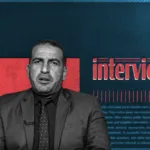
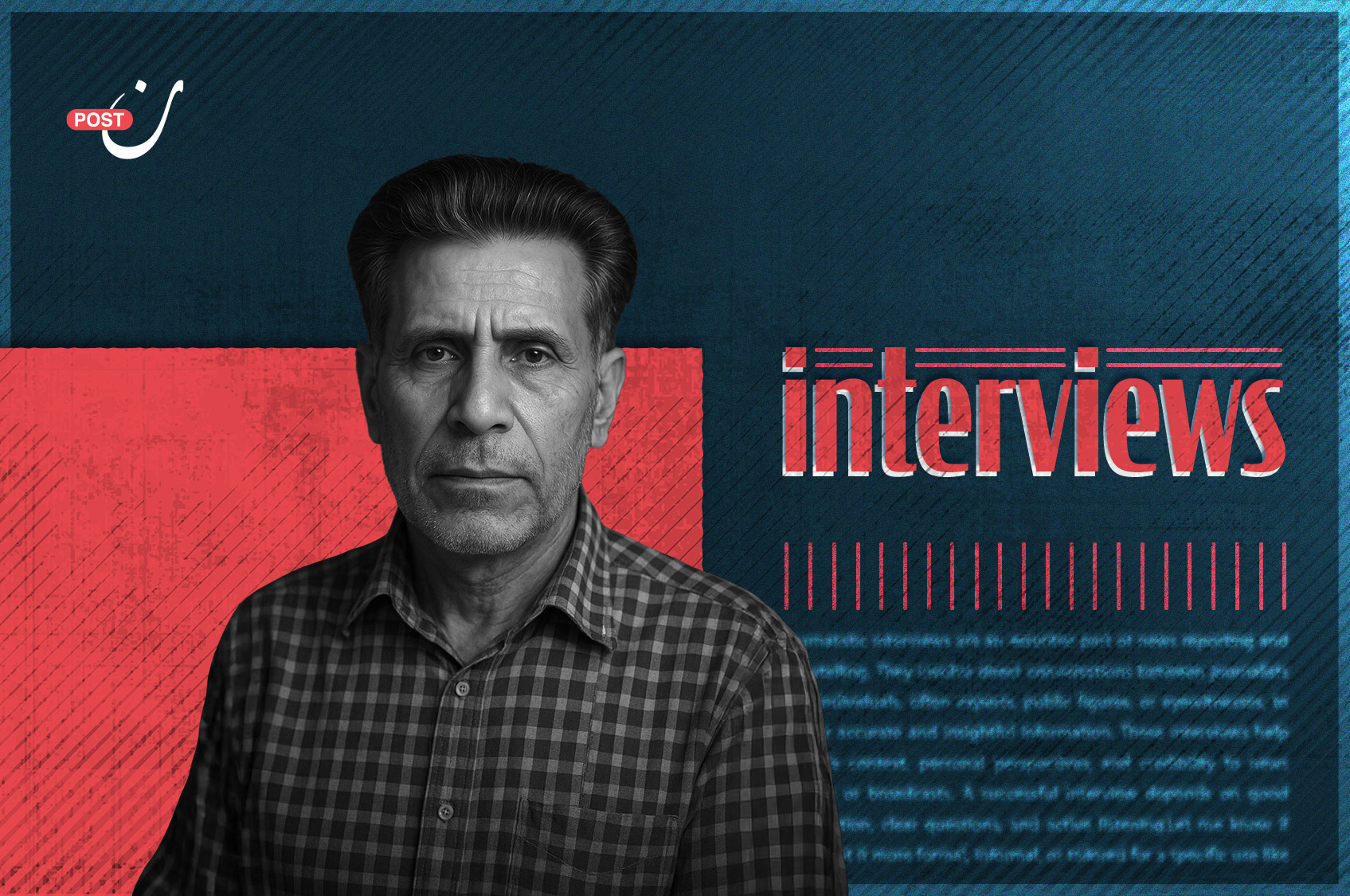
In this context, inspiring figures emerge—individuals who have chosen to remain, and to continue fulfilling their roles under the harshest of conditions. Among them is Dr. Abdul Rabbo Al-Enzi, head of the Political Science Department at Al-Azhar University in Gaza.
In this exclusive interview with Noon Post, Dr. Al-Enzi shares his personal experience as an academic teaching in the midst of genocidal war. He speaks of his daily struggle between airstrikes and death on one side, and his educational duty on the other. He recounts the moment he lost his personal library, the students who defied war to continue their studies, and the relentless psychological toll paid by academics day after day.
He also offers an assessment of the educational experience in Gaza during the war, concluding with a direct appeal to the international academic community: “What we need are not slogans, but real support that can restore hope to what remains of our educational infrastructure—and its deeper meaning.”
To begin, how would you describe your academic and professional experience during this protracted war?
Undoubtedly, this prolonged war has rendered the academic and professional experience among the most arduous imaginable—impacting every facet: students, faculty, teaching tools, and the broader environment essential for any educational process to succeed.
Education is not merely about delivering lectures; it is a comprehensive system involving educators, students, and teaching materials within a secure and stable academic climate. In the context of the genocide we are enduring, this entire system has been compromised, subjected to abuse, sabotage, and, at times, complete destruction.
Ultimately, I am a Palestinian citizen residing in Gaza, experiencing daily the same ordeals as my students and fellow citizens—bombardments, constant displacement, targeted assassinations of friends and loved ones, and harsh living conditions threatening the fundamentals of survival.(The Guardian)
Despite all this, I continue to fulfill my academic role, striving to teach students, prepare lectures, and maintain communication with the university administration. However, all this transpires within a psychologically drained environment, under constant pressure and perpetual fear.
The psychological exhaustion we endure as academics here is indescribable and unparalleled elsewhere in the world.
What are the main challenges you faced at Al-Azhar University to maintain the continuity of the educational process? How did you cope with frequent internet and electricity outages, and the targeting of university premises? Did you resort to any alternatives to ensure communication with students?
The challenges were numerous and complex, starting with the complete loss of the educational environment. Without a campus, without students able to focus on learning under normal conditions, and amidst psychological, social, and material collapse affecting everyone, the educational process becomes nearly impossible.
Even we, as faculty members, experienced what can be described as “moral assassination,” facing pressures from all directions. I am not exaggerating when I say we struggled psychologically before we could even engage academically.
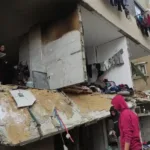
The university premises themselves were subjected to bombardment and destruction. The campus in the Al-Mughraqa area was completely destroyed, and the main building in Gaza City was bombed, bulldozed, and later looted and vandalized. Nothing remained—no furniture, no equipment, no documents, no scientific resources. Even the university’s servers and core databases were targeted and destroyed.
This devastation was not solely due to the bombings but also resulted from the ensuing chaos, which, unfortunately, indirectly contributed to the occupation’s objectives.
The ultimate challenge, however, is simply the “challenge of survival.” Many of our students and colleagues in the faculty were martyred; some had their entire families killed, their names erased from the civil registry. We are not merely talking about difficult circumstances but about a daily life-or-death battle we live as academics and students.
In previous experiences, such as the COVID-19 pandemic, we faced significant challenges, but we had at least a minimal digital infrastructure, electricity, and internet access, allowing us to communicate through digital platforms and create a remote learning environment.
What we face today is entirely different—no electricity, no internet, not even the ability to make cellular or landline calls. The infrastructure has been completely destroyed, and even our basic academic communication tools no longer exist.
Therefore, we cannot claim to have addressed these challenges through practical alternatives; rather, we have repurposed whatever is available in this harsh and unprecedented reality to ensure the continuity of the educational process.
On a personal level, what were the most challenging moments you faced while trying to maintain educational continuity?
I personally encountered numerous difficult situations, but the most harrowing was the destruction of my home by the occupation forces. In our culture, a home is not just a shelter; it is an extension of the soul, a repository of memories, a place of familial security, and a symbol of stability and tranquility. Losing it in such a manner felt like having a part of myself torn away.(Al Jazeera)
Additionally, my mother’s house in Al-Mughraqa was completely destroyed and bulldozed as part of the occupation’s efforts to establish what is now known as the “Netzarim” military site. This was not merely an attack on a location but a destruction of my childhood, my memories, and the roots of my emotional and familial belonging.
One of the most painful experiences was the martyrdom of my niece and her entire family—she, her husband, and their children—in a direct bombing by the occupation. Seven individuals were annihilated in a single moment; words cannot describe this pain.
Moreover, my car was bombed and destroyed, and the plot of land I owned was completely bulldozed. I narrowly escaped death multiple times, sometimes by mere seconds. I would leave a location, only for it to be bombed moments later. These repeated near-death experiences were only survived by the grace of God.
The daily reality is one of continuous torment. Following news about loved ones—neighbors, students, family, and fellow citizens—and witnessing them fall one after another is an unending psychological drain.
The images we see daily surpass in horror everything I have read or seen about historical genocides, whether the Holocaust, the Armenian genocide, Rwanda, or Bosnia.
What is happening in Gaza today is one of the most horrific manifestations of genocide in modern history.
Here, people are not only killed by bombs but also for a piece of bread, a dose of medicine, or a sip of water. They are killed by the most advanced missiles in the world’s arsenal, which shatter bones, stones, and roads, shaking even solid ground. Living amidst all this while trying to maintain educational continuity is an incredibly difficult endeavor, unlike anything else.
We know that your personal library was burned due to the bombings. Could you tell us about that moment and how it affected you academically and psychologically?
Yes, my library was destroyed and completely burned, and that was one of the most painful losses I suffered during this war. While the bombings affected my home, car, and all my material possessions, losing the library was the deepest and most painful wound, a feeling that persists despite the passage of time.
It was not just a collection of books; it held immense academic and emotional significance for me. I began assembling it in the early 1990s, even before I entered the field of university teaching. I treated each book as if it were one of my children, caring for and preserving them with great diligence.
Over more than 35 years, I painstakingly enriched this library, especially under the siege on Gaza. I seized every travel opportunity, whether mine or my friends’, to acquire new books to add to my collection.
The library housed thousands of books across various disciplines. In recent years, I had distributed its contents across multiple locations: part in my home, another in my mother’s house, and a third in my university office. Unfortunately, all these places were bombed and destroyed, leaving me without a single page from the books I had gathered over decades.
This loss, though not more precious than losing loved ones, was a severe blow to me personally and academically. The books were my lifelong companions, sources of inspiration, and daily arenas for enjoyment, contemplation, and knowledge. Today, I feel as though I have lost a part of myself with the burning of that library, which encapsulated my journey with knowledge and life.
Do you recall a specific incident that marked a turning point in your experience, such as seeking internet access under dangerous conditions or delivering a lecture from an unsafe location?
Yes, there were many challenging moments that became part of the daily routine for any academic striving to fulfill their mission in Gaza today. From the simplest tasks to the most perilous, we were compelled to undertake daily challenges to find sources of electricity or internet access just to communicate with our students or deliver a lecture.
Often, I had to travel long distances searching for a spot with internet and power, only to find the connection severed upon arrival, prompting me to restart the arduous search for another location. This repetition was mentally and physically exhausting.
One incident that remains etched in my memory is when I frequented a café with my colleague, the Dean of the Faculty of Law at Al-Azhar University, to use the internet and deliver remote lectures. That particular place was bombed one evening, resulting in the martyrdom of several patrons and injuries to others.
Had we been present at the time of the bombing, we would undoubtedly have been among the casualties.
These moments are not exceptions but daily occurrences we experience as academics in our relentless pursuit to complete our educational mission despite the war and danger.
Amid daily dangers, what gave you the drive to keep going and not abandon your academic role? Do you feel your personal determination had an impact on your colleagues or students and helped lift their spirits?
What motivates me to continue in academia, even in the heart of this war, is that teaching has become, for me, a psychological lifeline—a personal mechanism of resistance in the face of oppression, death, and destruction. Amid a daily massacre and ongoing genocide, we needed a window to something different, something that could restore internal balance and remind us that we are still alive.
Work, teaching, and engaging with students became a kind of “forward escape”—but a positive one. It wasn’t an escape from reality, but toward hope. I would place my soul on the ledge of academic work to glimpse something more beautiful beyond the rubble: a student engaging, a scientific dialogue igniting, life being reclaimed from beneath the ruins.
My persistence wasn’t just a personal stance; it was an expression of my attachment to this land, to life itself, and to my deep conviction that existence in Gaza should not be passive endurance, but active, affirmative resistance through knowledge and education.
As for the impact on my colleagues and students, I believe my resolve had a positive effect—it radiated energy to those around me. I always tried to pull them out of the despair and darkness that this war has imposed, to open a window of hope for them as I had done for myself.
The effect, of course, varied—just like in any human environment. Some colleagues were deeply moved, others only partially. But I felt the message got through, that my spirit of resistance echoed, even slightly, through our academic community.
How do you evaluate this experience overall? Has higher education in Gaza managed to persevere and fulfill its role despite the war?
I can say with confidence that, in terms of the educational experience, we have achieved something significant—an extraordinary breakthrough against this catastrophic backdrop. Reviving the educational process in the midst of genocide and daily massacres is, in and of itself, a major accomplishment.
We carried on while surrounded by every form of human misery: bombing, killing, hunger, displacement, fear, and psychological and moral collapse. And yet we chose to continue, to offer our students a glimmer of hope for a better future, to tell them: there is still something worth living for, and the dream is still worth holding onto.
Here, education was not just an academic endeavor—it was an act of resistance and a lifeline. Every lecture, every interaction with a student, was a testament to the will to live. Continuing the educational process did more than transmit knowledge—it kept the thread of hope alive in the hearts of many students who still believe in tomorrow, who want to live, and who dream of being part of a different future.
In that sense, education in this context remains a vital driver of survival. It is a chance to reclaim meaning in life amid destruction and abuse—a reality we are now approaching two full years of. Whoever survived death achieved a victory. And whoever continued their education despite everything has defended their dream, their self, and their people.
So yes, continuing education under these conditions was not merely an admirable effort—it was a human, national, and moral imperative.
Given your field of expertise in international relations and diplomacy, how have your students engaged with this subject during the war? Have you noticed a change in their awareness or perception of their discipline, especially in light of the international community’s response and the performance of global legal institutions?
What I can say with certainty is that the students I teach today—now in the fifth semester of teaching during wartime—have surprised me with the depth and positivity of their engagement, despite the severe conditions they endure.
A significant number of them, especially in graduate programs, possess both intellectual and emotional maturity. I can confidently say they are among the finest students I’ve taught over my nearly two decades in academia.
I’ve encountered students with great ambition: they follow attentively, analyze with insight, and approach the field with a sense of responsibility. As an academic, I was genuinely impressed. I felt I was witnessing promising energies—individuals who could become valuable contributors to the future of the Palestinian people in the realms of politics and international affairs.
On the level of awareness, I have seen a clear evolution in how students understand their field and its role—particularly in light of the international community’s behavior, the positions of UN institutions, and the evident impotence of international law in responding to Gaza’s tragedy.
All of this has led them to reconsider many assumptions, to develop more mature critical thinking, and to pose deep questions about global power dynamics, double standards, and the effectiveness of diplomatic tools.
I believe this harsh experience—despite its brutality—has provided a unique analytical and educational context, grounding their studies in real-life experience that will stay with them both academically and personally, during the war and beyond.
Finally, what would you like to say to the international academic community in response to what education in Gaza is going through?
In truth, we’ve received several communications from international parties in recent months. I even gave a recent interview with Le Monde on this exact topic. And I will say this clearly: we do not need symbolic support, empty words of solidarity, or even prayers and well-wishes. If someone genuinely wants us to live and continue, they must provide real, tangible support.
The education sector in Gaza—especially higher education—urgently needs material resources to regain its ability to function and contribute. We cannot enhance our performance or expand our role when universities are in ruins, servers are destroyed, and infrastructure is decimated.
We need direct support to provide internet access, equipment, and safe spaces for teaching, alongside a serious initiative to rebuild educational institutions.
This is not a call for mere solidarity; it is a call for active participation in rebuilding an educational infrastructure that will allow us to rise from the rubble.
On the political level, the international academic and political communities must shoulder their moral and humanitarian responsibility. There must be real pressure to end this criminal occupation, which flagrantly disregards international law and the principles of human rights.
This genocide against the Palestinian people cannot be allowed to continue—and education must be one of the primary lines of defense for life, dignity, and the right to a future.