




While historical accounts may not position the United States as a direct participant in the 1948 Nakba—especially when contrasted with Britain’s overt colonial role—archival records from the U.S. Consulate in Jerusalem offer scant evidence of direct intelligence regarding Zionist militias’ intentions or the specifics of the forced displacement and ethnic cleansing that befell the indigenous population of historic Palestine.
Yet, the Nakba—marked by the displacement of two-thirds of the Palestinian people within their homeland, the establishment of Israel, and the perpetuation of its policies over 77 years—leaves little doubt about the United States’ pivotal role in entrenching and amplifying the catastrophe’s enduring consequences.
From undermining Palestinian rights to orchestrating both material and symbolic erasure of Palestinian existence, Washington has not merely been complicit but has often acted as a proactive partner—frequently preceding Israeli actions in executing these strategies.
Given the breadth of U.S. involvement in the Palestinian Nakba, this article concentrates on a critical facet: America’s role in erasing one of the Nakba’s central pillars—the refugee issue and the right of return.
This focus gains urgency as efforts to dismantle refugee camps in the West Bank intensify and a new Nakba unfolds in Gaza, where even the designation of “refugee” is withheld from the indigenous population.
What mechanisms does the United States employ to close the chapter on the Nakba and erase its memory? What motivated the Trump administration’s aggressive campaign against UNRWA? How does Washington perceive initiatives to dismantle camps in the West Bank and displace Palestinians beyond Gaza?
A Peace Without Refugees
If the United States seeks a historical scapegoat for the failure of the Middle East peace process—while its ally Israel deepens colonial policies—it invariably points to the right of return. American policymakers have consistently labeled this right as an “obstacle to peace,” arguing it threatens Israeli security and represents an “unrealistic and unfeasible solution.”
This perspective has permeated all American peace initiatives over the past four decades. Beginning with the 1982 Middle East peace proposal under President Ronald Reagan, which explicitly advocated for resettling Palestinian refugees in host countries.
The Clinton administration, despite incorporating the refugee issue within the final status negotiations of the Oslo Accords, effectively nullified the right of return during the 2000 Camp David Summit. The proposed plan involved resettling refugees in Areas A and B of the West Bank or third countries, alongside establishing an international fund to provide a “humanitarian alternative solution” focused on integrating refugees outside the camps and gradually phasing out UNRWA’s role.
The “Roadmap for Peace” presented by President George W. Bush similarly omitted the right of return from its two-state solution framework. Washington viewed the institutionalization and conditional funding of the Palestinian Authority as a practical substitute for UNRWA, which maintained a degree of independence from U.S. directives.
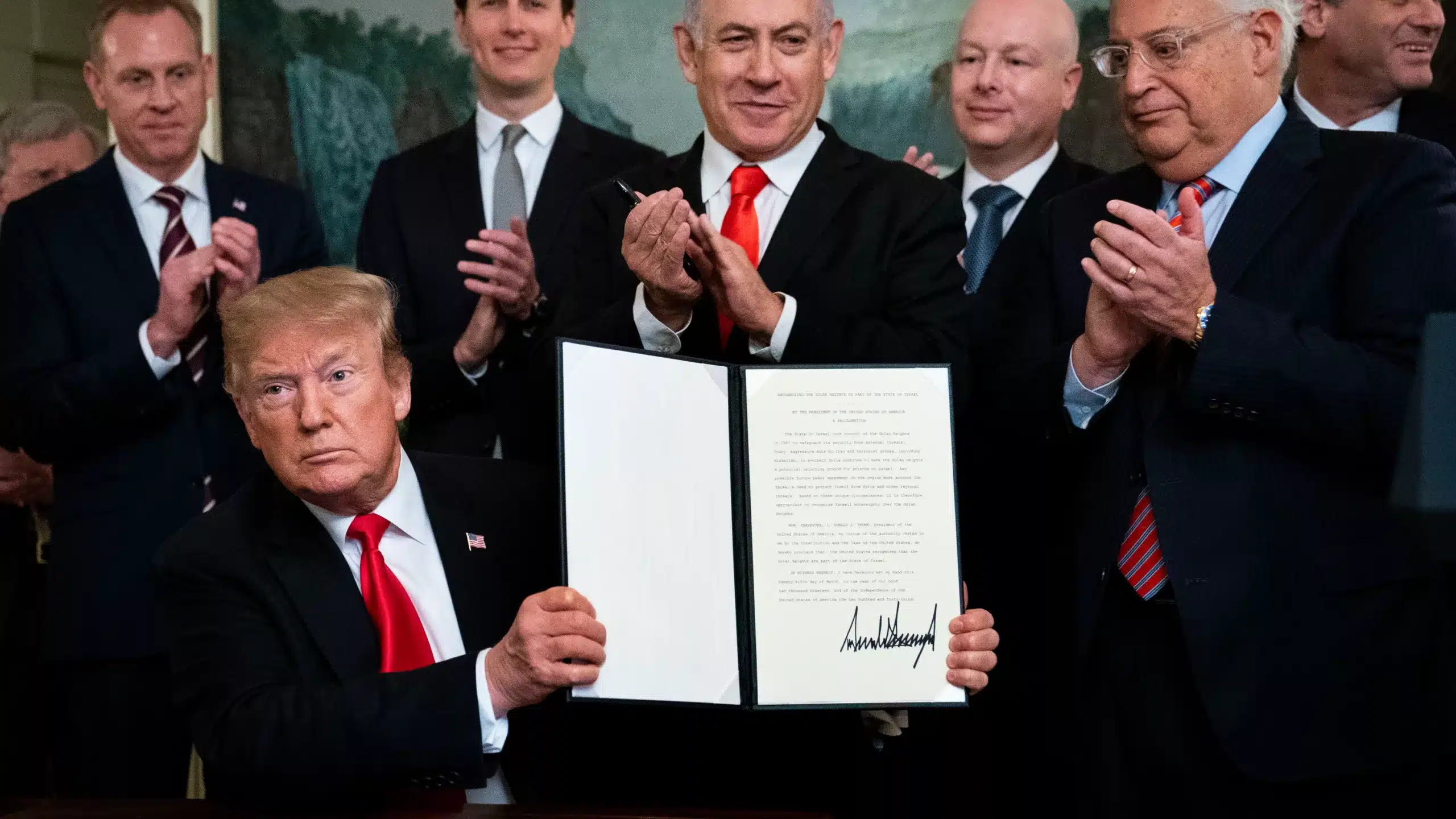
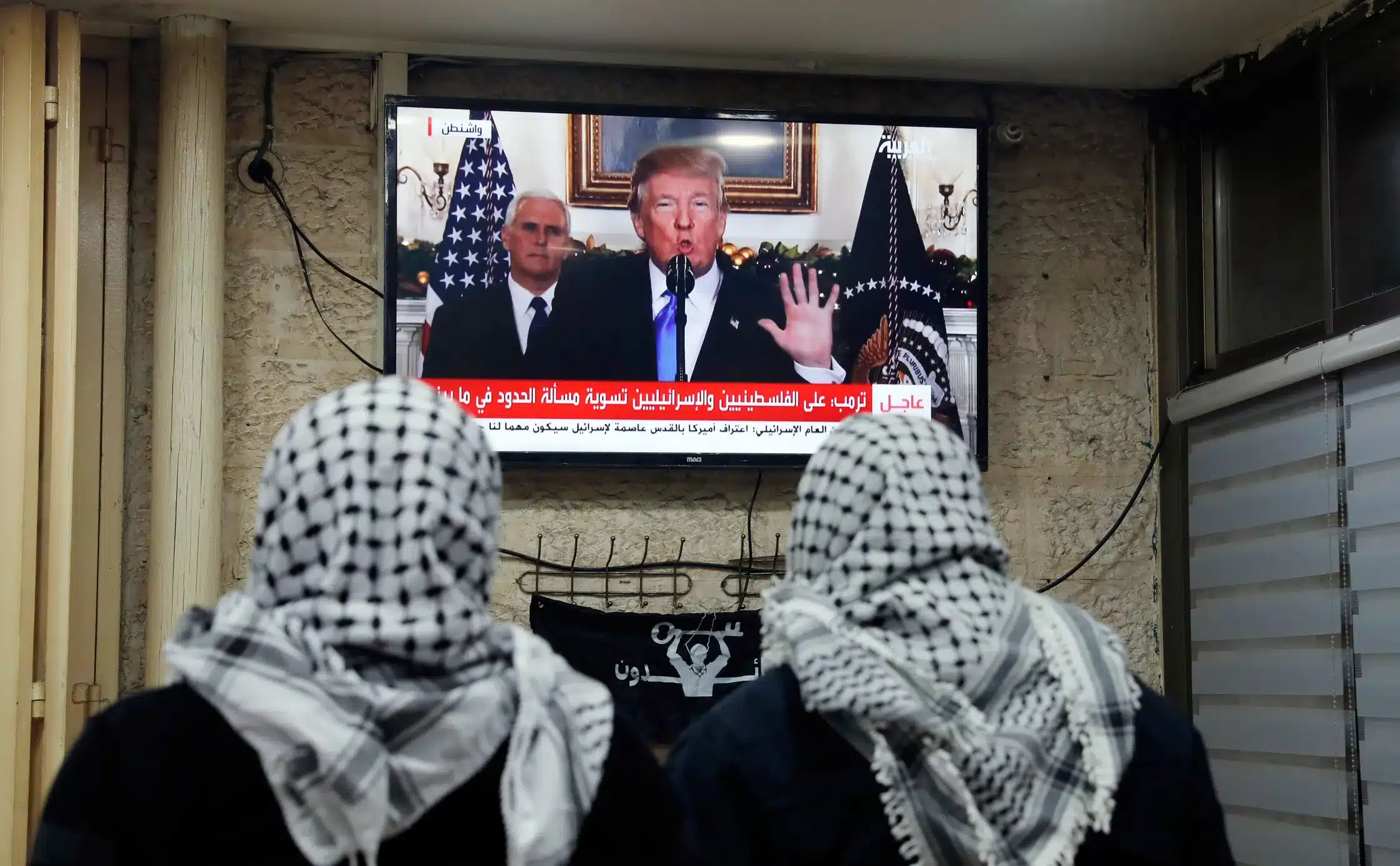
Subsequently, the “Deal of the Century” proposed by the Trump administration (2017–2018) openly declared what previous administrations had only insinuated: the cessation of UNRWA funding and the definitive resolution of the refugee issue through normalizing their status in host countries and stripping them of their “refugee” designation. Jared Kushner, the plan’s architect, exerted covert pressure on Lebanon and Jordan to naturalize Palestinian refugees, aiming to dissolve their legal and political identities.
Internal communications revealed Kushner’s concerted efforts to dismantle UNRWA and integrate its services into the United Nations High Commissioner for Refugees (UNHCR), thereby diluting the Palestinian cause within a broader context of global displacement and humanitarian crises.
Over decades, the United States has opposed UN Resolution 194, the legal foundation for the right of return. Beyond mere opposition, it has supported an Israeli counter-narrative, developed by the Israeli National Security Council under Prime Minister Benjamin Netanyahu, which promotes the story of approximately 800,000 Jews forcibly displaced from Arab and Muslim countries between 1947 and 1970.
This narrative seeks financial compensation for these “Jewish refugees” and presents their plight as a balanced counterpart to the Palestinian refugee issue, pressuring Palestinians to relinquish their right of return under the guise of “equitable solutions.”
Back to the Beginning
With the onset of Israel’s genocidal war on Gaza on the evening of October 7, 2023, U.S. complicity in the forced displacement of Palestinians—amounting to a new phase of ethnic cleansing—became starkly evident. Following Israel’s initial response to Operation Al-Aqsa Flood, reports reached the White House indicating the internal displacement of one million Palestinians within the first week alone.
A subsequent leak, disclosed by Reuters, unveiled a series of emails among senior officials from the White House, Pentagon, and State Department. These communications revealed that the International Committee of the Red Cross had alerted U.S. officials to Israel’s potential plans for organized mass displacement, causing internal shock and prompting some to express profound unease.
Nevertheless, this revelation did not alter the administration’s course. The White House maintained unwavering support for Israel’s war, escalating financial and military aid to unprecedented levels.
After a year of massacres, Secretary of State Antony Blinken dismissed reports from human rights organizations indicating the displacement of nearly two million Gazans—approximately 90% of the Strip’s population.
This pattern mirrors events from 77 years prior. Archives from the U.S. Consulate in Jerusalem document America’s stance during the 1948 Nakba and the widespread, systematic displacement it entailed. Despite Israeli attempts to justify these crimes to U.S. envoy James McDonald—wherein Israel’s first president, Chaim Weizmann, claimed Palestinian migration was a “divine miracle” facilitating statehood—McDonald quickly recognized the orchestrated nature of the violence, rooted in calculated massacres and terror tactics designed to depopulate the land.
Throughout 1948, American officials at the Jerusalem consulate documented massacres perpetrated by Zionist militias, notably the Irgun and Lehi, against Palestinian villagers. Their reports indicated that the primary objective of these attacks—which were expected to recur—was to instill fear among civilians and compel them to flee. Both Wasson and Robert McAtee submitted reports to the State Department confirming that most victims were unarmed women and children.
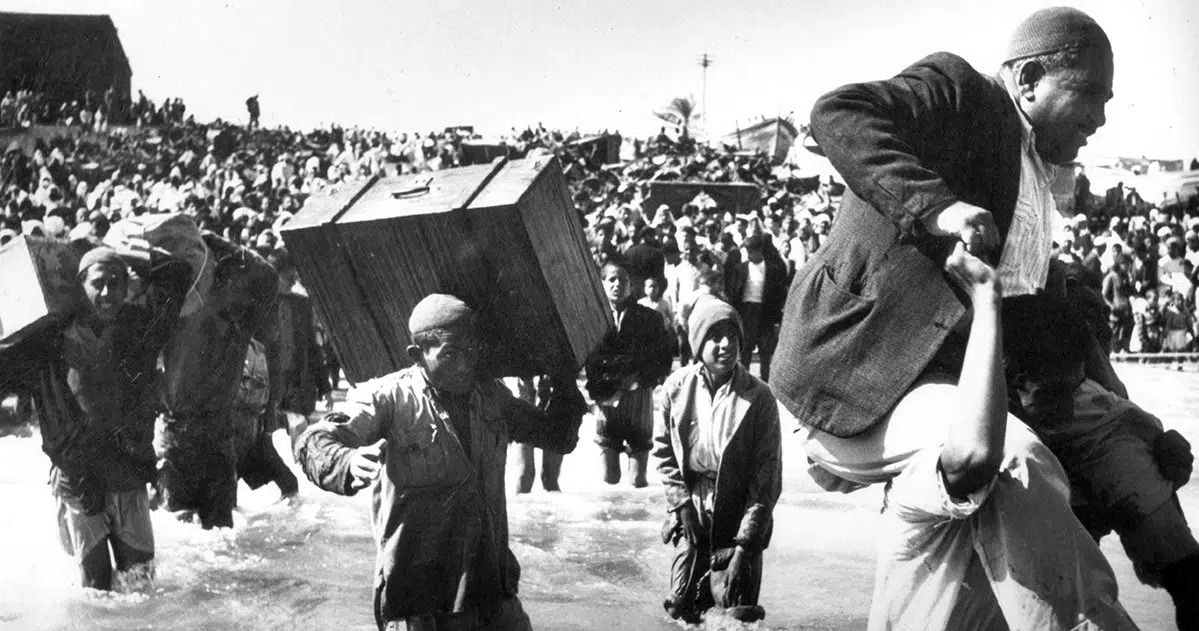
American diplomats also observed the systematic looting and deliberate destruction of Palestinian properties, aimed at preventing the return of displaced residents. Consul General John McDonald explicitly reported on the demolition of Arab neighborhoods in Jerusalem and the subsequent permanent displacement of their inhabitants.
Despite this early awareness, the United States took no action to halt these atrocities. On the contrary, it accelerated financial and military support for the nascent Israeli state, becoming the primary sponsor of the settler-colonial project that involved expelling indigenous populations. Substantial budgets were allocated for this purpose from the 1950s onward, with funding levels continuing to rise to this day.
UNRWA and the Redefinition of Refugees
American political efforts to dismantle UNRWA date back decades. Beginning in the early 1990s, the U.S. Congress, influenced by pro-Israel legislators, persistently questioned the agency’s definition of “Palestinian refugee,” its educational curricula, and its perceived “bias” in the occupied territories.
This scrutiny led to repeated delays in U.S. funding, often tied to stringent conditions aimed at “reforming what Congress viewed as political extremism in UNRWA’s policies.”
Following the September 11 attacks, a new front opened under the pretext of “supporting terrorism.” UNRWA’s existence itself came under fire as a security threat in Washington’s discourse, paving the way for intensified institutional pressure.
The Trump administration took this campaign further. In 2018, after a letter from 22 Republican senators calling for the elimination of the right of return, Trump froze $65 million in funding and soon cut off the U.S. contribution entirely—around $300 million per year, or 30–40% of the agency’s budget.
Though the Biden administration later resumed partial funding, new accusations in 2024 against UNRWA staff in relation to the October 7 attacks prompted Congress to pass a law freezing aid through March 2025. Trump’s second administration then formally ended funding via executive order.
The drive to dismantle UNRWA reflects a strategic goal: to erase the refugee issue by dismantling the institution that sustains its legal and symbolic presence. Since its establishment in 1949, UNRWA’s mandate has narrowed due to host countries’ resistance to resettlement.
Over time, the agency expanded its definition of “refugee” to include descendants of 1948 refugees, reinforcing the idea that refugee status persists until the right of return is realized.
This evolution, which increased the registered Palestinian refugee population to nearly 6 million, has alarmed U.S. legislators who view it as an obstacle to “peace.” Thus, the campaign has included diplomatic and legal maneuvers: Israel’s Knesset has passed laws banning UNRWA from operating inside Israeli-defined areas. The U.S. has backed this move, calling it Israel’s “sovereign right.”
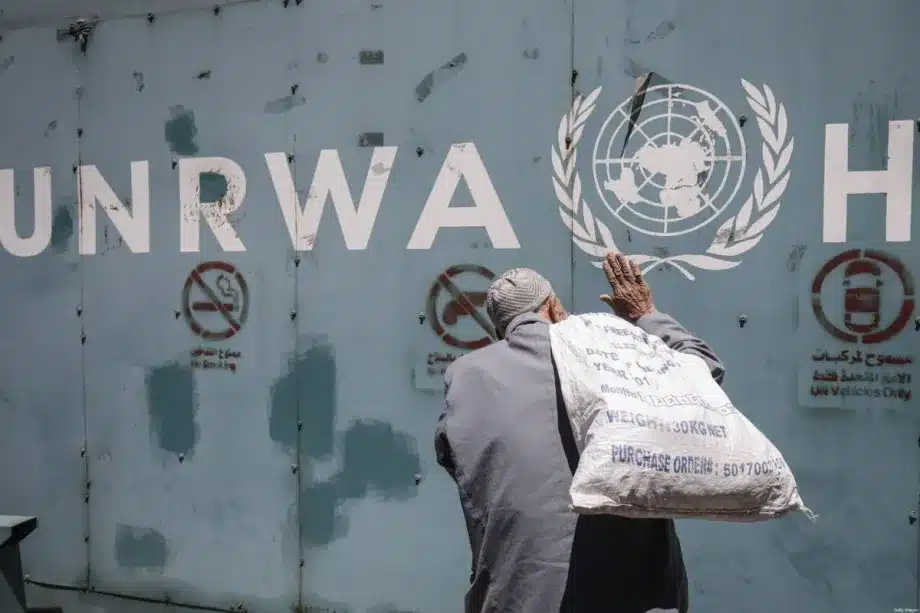
In the U.S., a series of legal and legislative offensives have aimed to delegitimize UNRWA. Trump’s administration went so far as to demand the UN change its definition of Palestinian refugees, limiting it to those directly displaced in 1948—a generation nearly gone—rendering the refugee issue a symbolic and extinguishable memory.
The most extreme development came with U.S. courts lifting UNRWA’s diplomatic immunity, allowing lawsuits against it in American courts. In early 2025, a U.S. federal court accepted a case from Israeli plaintiffs seeking $1 billion in damages, accusing UNRWA of supporting “terrorism” in Gaza.
The Iron Wall: Killing the Memory of the Nakba
In January, Israel launched its Iron Wall military operation targeting refugee camps in Tulkarem, Nur Shams, and Jenin, displacing more than 40,000 people. These are descendants of the original 1948 refugees. The UN has called this the most extensive displacement in the West Bank since 1967.
The U.S. has remained silent, signaling alignment with Israel’s goals. These demolitions seek not just security, but the erasure of refugee identity. Camps carry architectural memory—a physical reminder of the Nakba and the right of return. Israel aims to sever that link.
Using pretexts like “overcrowding” and “resistance fighters hiding in alleys,” Israel is reshaping these areas to erase their symbolic and spatial distinction. The UN and human rights groups argue this is part of a broader ethnic cleansing project—not a mere security operation.
Gaza Without Palestinians
Donald Trump proposed a chilling vision: to “cleanse Gaza of Palestinians” and permanently resettle its population, most of whom are descendants of 1948 refugees. His administration has pressured Egypt and Jordan to accept them and scouted other countries to absorb displaced Gazans.
This vision is backed by academic policy work, such as a 2024 paper by Dr. Joseph Belzman, proposing Gaza be turned into an investment zone managed by U.S. firms with eventual relocation to Sinai. These ideas revive a plan first floated after Israel’s 2005 withdrawal from Gaza.
Despite public backlash, Trump persists. Since February 2025, his rhetoric and pressure have continued, emboldening Israel to abandon ceasefire commitments and prevent displaced Gazans from returning. Netanyahu reportedly told reservists the aim was “to destroy Gaza so Palestinians have nowhere to return to.”
The United States’ policies toward Gaza and the West Bank are not anomalies—they are the long-gestating realization of a strategy to eliminate Palestinian presence geographically and politically. Refugees abroad are to be permanently absorbed; those inside are to be stripped of status and history.
In Gaza, refugee identity is omitted entirely—even though the majority of its people descend from those displaced in 1948. In the West Bank, refugee camps are dismantled and reengineered to sever their connection to memory and return.
All of this reflects the delayed, systematic implementation of the so-called Deal of the Century. A plan many assumed was dead continues to be executed—line by line.