















In a controversial move, the Syrian Democratic Forces (SDF) have recently opened new camps in the city of Raqqa aimed at recruiting girls from Syria’s coastal provinces and Sweida, in parallel with propaganda campaigns promoting the concept of “decentralization” in the country.
This initiative is part of the “Tamasok” project, which seeks to disseminate ideological principles inspired by the Kurdistan Workers’ Party (PKK). The project is managed by the “Future Syria Party” and affiliated institutions under the umbrella of the Syrian Democratic Council (SDC).
However, these camps are not merely centers for ideological and intellectual training; they also serve as platforms for forcibly recruiting girls from diverse religious and sectarian backgrounds, drawing them into military and ideological activities aligned with the interests of the SDF and its allies.
This development underscores the SDF’s expanding influence in new regions of Syria and raises critical questions about its real objectives, particularly in the absence of transparency or accountability.
Movements and Agendas
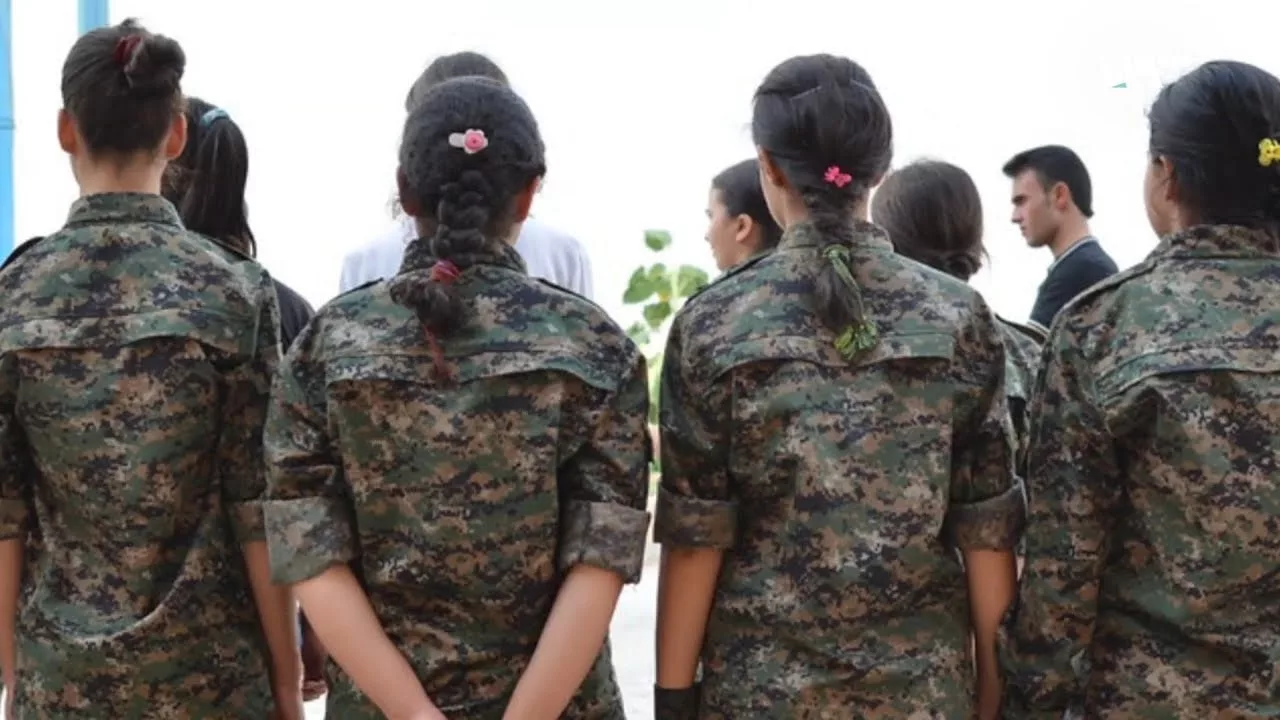
Following the collapse of the Assad regime’s control in various regions, including Damascus, Latakia, Tartus, and Sweida, women’s groups affiliated with the YPJ—an armed Kurdish faction under the SDF umbrella—have become increasingly active. While these delegations carry various nominal identities, they share a unified ideology rooted in the PKK.
In early April, the SDF launched five camps in Raqqa to attract girls from the Alawite and Druze communities in Syria’s coastal regions and Sweida, according to sources speaking to Noon Post.
These camps follow the same ideological curriculum implemented by the PKK and enforced by the SDF and its political arms. The model is identical to the training imposed on children abducted by the militias—now being applied to young women from western and southern Syria.
The activities have been carried out by envoys from the so-called “Future Syria Party” and the Women’s Coordination Committee, an offshoot of the SDC, under the guise of a project titled “The Alliance for Equal Syrian Citizenship” (Tamasok).
At its core, the initiative seeks to promote decentralization, reject the current Syrian government, and publicize models akin to the Kurdish self-administration—hoping to replicate this system in coastal regions and Sweida.
The events of March 6 in the coastal areas were used to amplify and advance these objectives, which are central to the SDF’s broader ambitions via the Tamasok initiative—a preliminary test for what appears to be a much larger strategic rollout.
According to an investigation by Naher Media, the idea of forming three federal regions is not new within the SDF’s agenda. It dates back to two years before the Assad regime’s decline.
At the time, the concept of three autonomous zones—northeastern Syria, the Alawite coast, and the Druze south—was proposed by prominent SDF representatives, including Ali Rahmoun, Hassan Zuhat, Fayrouz Khalil, and Layla Qahraman.
Intensive meetings were held with various minority figures across Syria ahead of the regime’s downfall to explore these plans. The first tangible step came with the formal announcement of the Tamasok project in March at a conference held at the Hermitage Hotel in Damascus.
Attendees included representatives from the mentioned regions and various communist parties.
Though it may seem marginal, the project clearly reflects the SDF’s strategic intentions in Damascus. It also offers the group flexible communication channels with different parts of the country—an opportunity the organization has seized upon.
In late March, the SDF organized a series of conferences and meetings in Damascus with activists, primarily from Sweida, the coast, and Salamiyah. All discussions concluded with rejection of the current Syrian constitution and support for decentralization and self-governance.
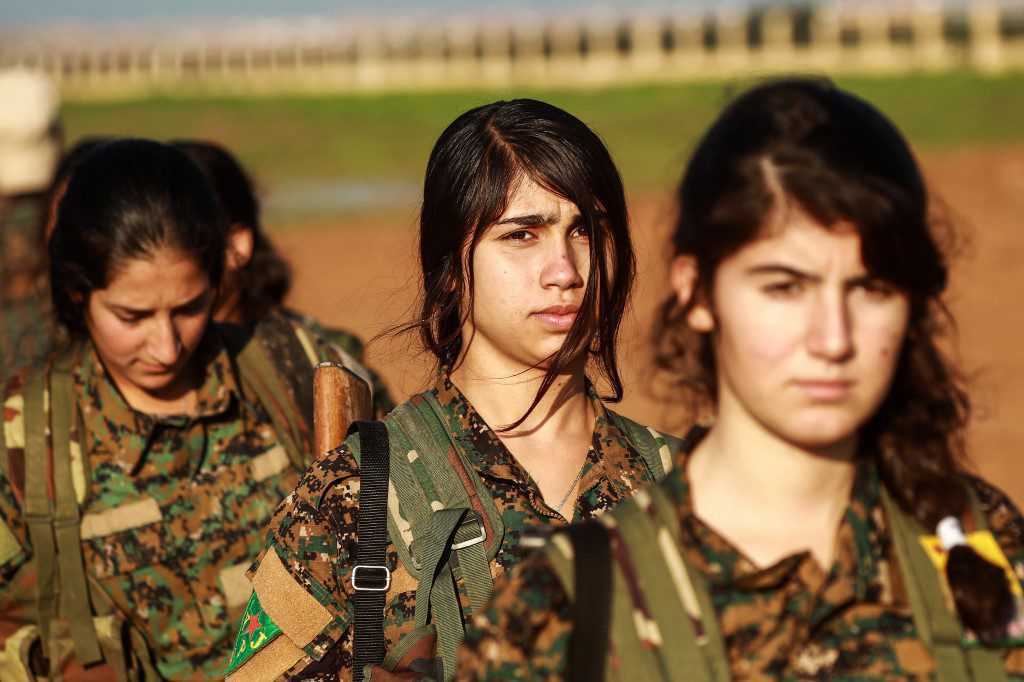
Subsequently, SDF-affiliated political groups extended invitations to these activists to attend training sessions at SDF academies in Raqqa and Hasakah.
Other SDF-aligned groups, particularly the “Revolutionary Youth” (Jawanen Shorishger) militia, issued similar invitations to those interested in working within SDF institutions in Raqqa and Hasakah. According to Naher Media, these efforts included special incentives for minority youth from the Druze and Alawite communities.
By late March, groups of young men and women from Sweida and the coast had begun traveling to Raqqa. They were admitted to closed SDF academies that mandate ideological and military training for anyone seeking employment in institutions affiliated with the so-called “Autonomous Administration.”
These academies are known for their ideological alignment with Abdullah Öcalan, the imprisoned leader of the PKK. The SDF is actively working to disseminate his ideas in the areas under its control.
In early April, Syrian security forces in Homs arrested a delegation of more than 20 individuals affiliated with the “Syrian Democratic Identity Party” en route from Sweida to Raqqa in coordination with the SDF. The incident caused widespread confusion and unrest in Sweida at the time.
Who’s Involved?
The Revolutionary Youth (Jawanen Shorishger), a PKK-affiliated militia, has a strong presence in Syria’s Jazira region and Aleppo. Operating alongside the SDF, the group is involved in child abductions for forced recruitment and has carried out acts of violence and kidnapping against dissenters in areas under SDF control.
Between mid-February and mid-April, the group’s activities intensified, with more than 30 documented child abductions. These minors were taken from their families and subjected to ideological indoctrination at PKK-run camps, eventually pushed into military training with the aim of enlisting them in the ranks of an internationally designated terrorist organization.
The group’s reach has extended beyond Jazira and Aleppo into coastal Syria and Sweida. According to Raqqa Is Being Slaughtered Silently, the militia has lured numerous girls, including minors, from these areas with false promises of prestigious jobs, generous salaries in dollars, and opportunities matching their academic qualifications.
These girls were instructed to travel to Raqqa for job interviews arranged by the SDF-affiliated Syrian Women’s Council.
Instead, the girls were transferred to military camps—including the Tala’i Camp in Raqqa and the Jaabar Camp near Tabqa—where they underwent intensive ideological and combat training. Personal information was recorded, and they were later deployed in combat zones, unable to refuse or withdraw, with their families having no means of contacting or locating them.
These practices have primarily targeted girls from the Druze and Alawite sects, suggesting a systematic policy rather than isolated incidents, according to Raqqa Is Being Slaughtered Silently.
Sources told Noon Post that the SDF has established five academies in Raqqa to recruit girls from within Syria: the Government Academy north of Raqqa, Tala’i Camp Academy south of the city, the Research Center Academy in southern Raqqa, an academy in the Karien area near Tabqa, and another near Jaabar Castle.
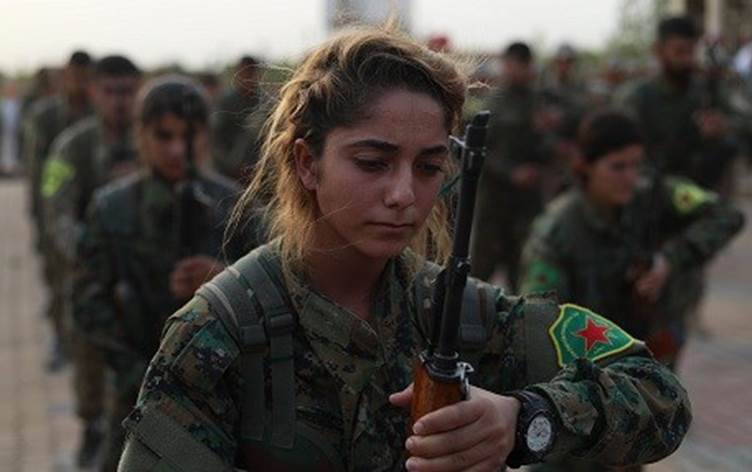
These efforts by the Future Syria Party and the Revolutionary Youth are supported by a large-scale media campaign launched on SDF-affiliated platforms targeting the coast and Sweida, alongside field visits under the guise of aid or educational workshops.
One key figure is Kurdish commander Aytan Farhad, who oversees the recruitment of women from across Syria—especially from coastal areas—to Raqqa. Her team regularly tours various Syrian provinces, with Sheikh Maqsoud district serving as a transit point for recruits heading to Raqqa.
Raqqa Is Being Slaughtered Silently reports that Aytan manages a hostel in Raqqa used as a temporary reception center for new arrivals. She currently serves as deputy spokesperson for the Syrian Women’s Council within the Future Syria Party and is known for her direct ties to PKK leadership. A veteran from the Qandil Mountains, she has held multiple leadership positions in SDF military structures.
Activists’ Warnings
In this context, activists from Syria’s Jazira region have issued warnings to all Syrians against being deceived by the SDF’s slogans, asserting that the group does not represent the people’s aspirations. Instead, they argue it acts as a front for the PKK’s external agenda—an organization designated as a terrorist group—while disregarding Syria’s unity, sovereignty, and the dignity of its people.
Salal Maftah, a journalist with Raqqa Is Being Slaughtered Silently, told Noon Post that the SDF recently established camps in Raqqa for Alawite, Ismaili, and Druze youth under the pretense of offering jobs aligned with their academic degrees. Upon arrival, however, these individuals were forced into closed ideological and military training programs.
Maftah called on the Syrian Ministry of Interior to intervene urgently to prevent the kidnapping of youth en route to Raqqa through Hama, Homs, and Aleppo.
Activists have also urged all Syrian Army checkpoints—particularly those surrounding Raqqa—to tighten security and verify the identities and intentions of girls arriving from outside the province to prevent them from falling victim to the PKK’s forced recruitment campaigns under the SDF’s military arm.
According to Maftah, the SDF’s media campaign simultaneously demonizes the Syrian government and seeks to win over religious and ethnic minorities—an old tactic used repeatedly by the group.
He concluded: “Repeated incidents in the Jazira region prove we are dealing with an organization governed by a single-party mindset—chauvinistic, self-serving, and ruthless toward anyone who opposes its agenda.”
The SDF’s activities under the Tamasok project have raised serious concerns over the fate of young people recruited under false pretenses. Mounting evidence suggests these policies do not serve a unified Syrian future but rather contribute to divisive projects aligned with foreign agendas.
As these violations continue unchecked, the need for a national response has become urgent—to protect Syrian youth from coercive recruitment and safeguard their futures from dangerous ideological exploitation masked by hollow rhetoric.


