






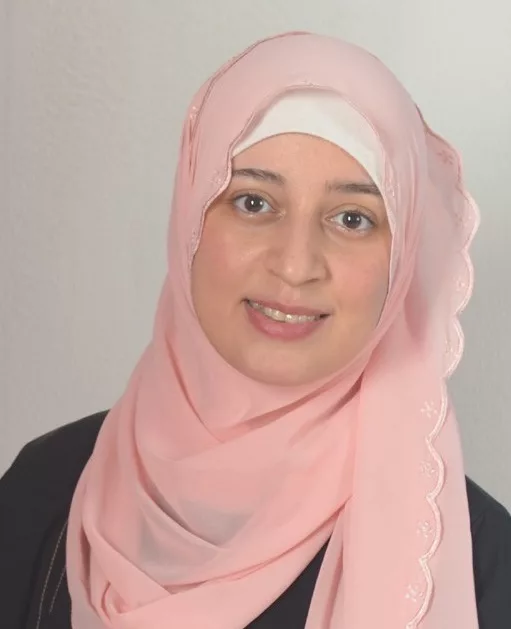

From Amira Hass, who has spent most of her life among Palestinians, to Gideon Levy, the Arab affairs analyst who doesn’t speak Arabic, Haaretz has long promoted a lineup of leftist journalists as the “moderate” face of Zionism, marketing them to the world and the region alike.
This curated image gives Israel a perennial democratic edge over its authoritarian neighbors, allowing its journalists—whether writing in Hebrew or English—to enjoy privileged access to Palestinian affairs, and to project the illusion of a Zionism reconciled with its own imperialism, magnanimously offering Palestinians the crumbs.
Some critics argue Haaretz treats Palestinians like children incapable of agency, while others see the paper’s narrative as one that serves Israel’s image more than it reflects its reality: it promises more than Israelis are willing to concede and far less than Palestinians would ever accept.
This article examines Haaretz as the first media organ to openly champion the Zionist project, tracing its origins, evolution, challenges, and present role in Israeli, Arab, and global media landscapes, all within the ethical framework of journalism.
This is part of the broader investigation, “Haaretz and Its Sisters,” which follows the trajectory of Israeli journalism since its inception and its deep ties to the military establishment, with a focus on how it shapes political discourse, public perception, and opinion—both within Israeli society and across Arab and Western audiences over decades of conflict, uprisings, and alliances.
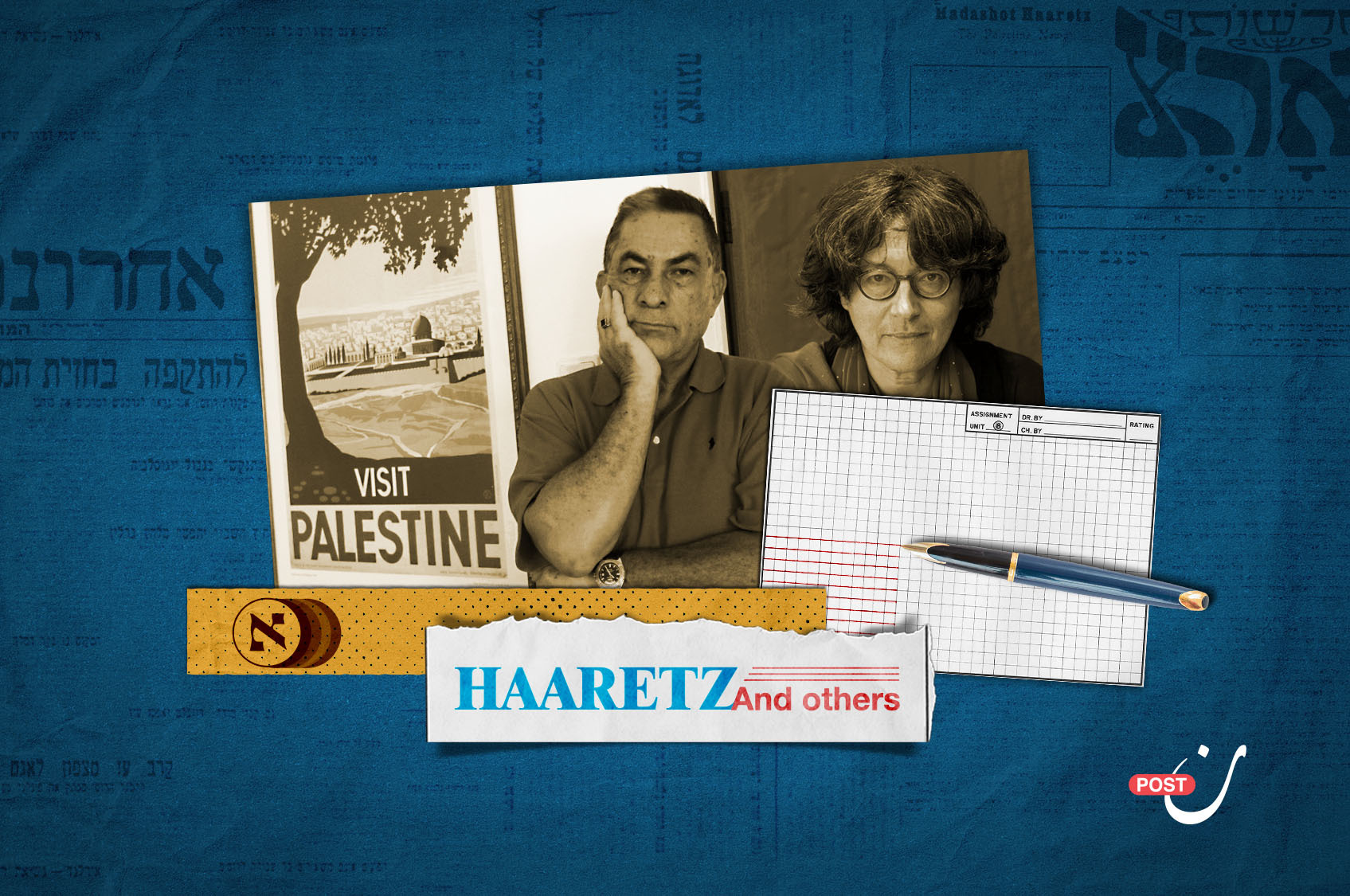
“News from the Land”: Zionism Manufactures Its Pens
In November 1917, as British forces began consolidating control over parts of Palestine, troops advancing from Egypt occupied the southern region and imposed military rule.
Soon after, British General Edmund Allenby entered Jerusalem through Jaffa Gate, accompanied by a Jewish military battalion, a moment that stirred jubilation across Europe and America and bolstered Zionist leaders’ confidence in the British Foreign Secretary Arthur Balfour’s week-old declaration promising a national home for Jews in Palestine.
To inform its multinational troops, the British Mandate began publishing a weekly newspaper on April 4, 1918, titled News from the Holy Land, in six languages: English, Arabic, Hebrew, and three Indian dialects. The name was later changed to News from the Land after authorities recognized the phrase “Holy Land” conferred undue emphasis on Hebrew.
Though short-lived, the paper was eventually shut down and offered for sale. The Socialist-Zionist labor union Ahdut HaAvoda attempted to purchase it and enlisted Zionist leader Chaim Weizmann, who appealed to Russian-Jewish philanthropist Isaac Leib Goldberg for funding.
Goldberg provided generous support, donating land for olive cultivation, contributing property to the nascent Hebrew University, and financing key Zionist enterprises like JNF, Gula (which purchased Arab land), and Carmel (which produced kosher wine). He also helped buy the newspaper license.
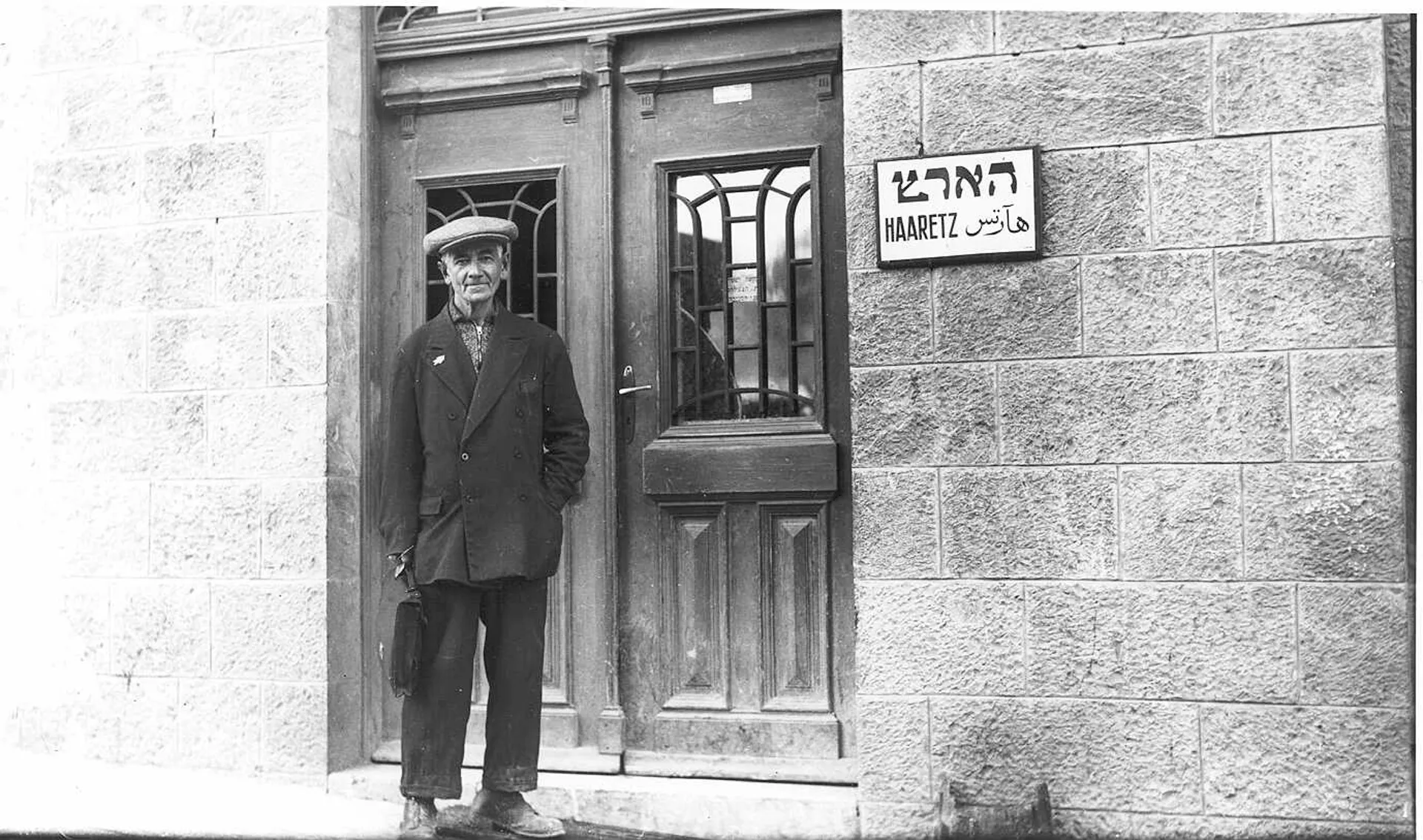
By June 1919, the paper launched under the name Hadashot Haaretz (News from the Land), calling itself a “daily newspaper for life and literature,” led by Russian-Jewish journalist Shlomo Zalzman. It soon moved from Jaffa to Jerusalem, became a daily, and shortened its name to Haaretz. It gained popularity among Ashkenazi intellectuals.
A series of notable editors followed, including Belarusian Zionist Leib Yaffe, who used the paper to promote the Zionist cause while serving as an emissary in Russia and the U.S. Financial troubles led to its closure and eventual reopening in 1923 in Tel Aviv under Moshe Glickson.
Thanks to Tel Aviv municipal support and contributions from Zionist writers such as Moshe Smilansky, Mordechai Ben Hillel Hacohen, and Eliezer Ben-Yehuda (reviver of the Hebrew language), the paper gained traction. Daily eight-page editions covered Jewish settler life, military battalions, Zionist leaders, and Histadrut achievements.
By the late 1920s and early 1930s, though officially unaffiliated with any party, Haaretz gravitated toward centrist Zionism, balancing between labor and religious factions. This allowed it to champion liberal ideas, positioning it as the most progressive of Jewish dailies at the time.
Still, operational struggles persisted: erratic electricity, poor-quality materials, and absentee religious workers strained the paper, compounded by insufficient ad revenue. The board was dissolved, and the paper was sold to the Cohen family, who modernized its facilities.
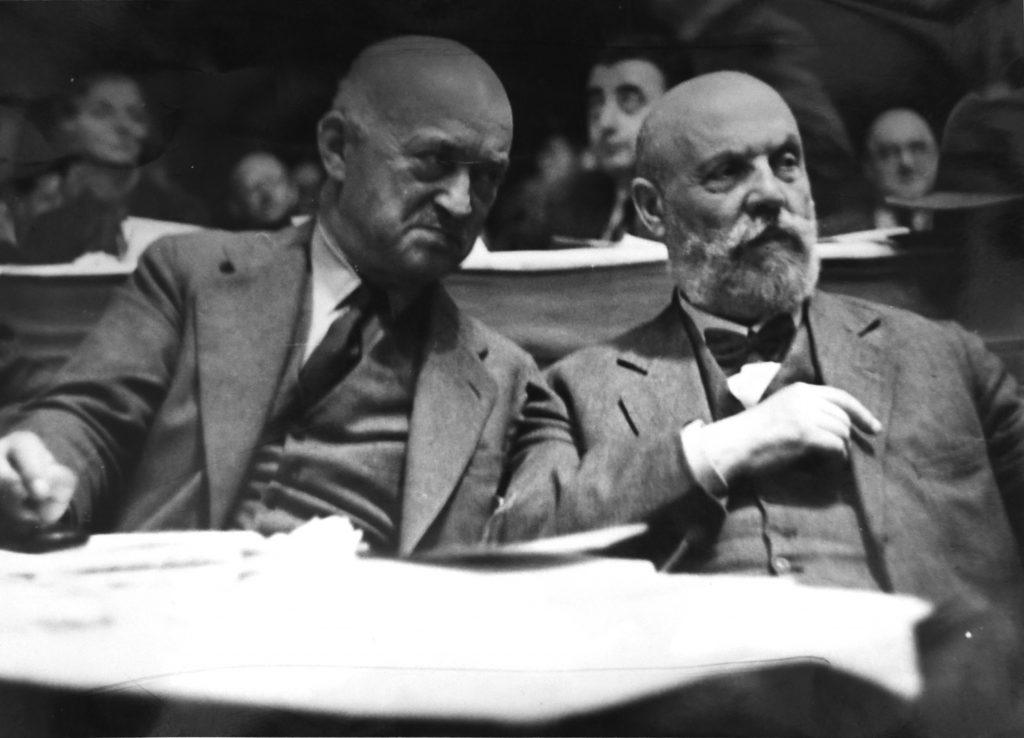
Eventually, the paper came under the control of the wealthy German-Jewish Zionist Shlomo Zalman Schocken, who installed his son Gershom as editor in the 1930s. Under the Schockens, the paper stabilized financially, and Gershom’s experience in American journalism shaped its path for over five decades.
In 2006, the Schocken family sold a stake to German publisher M. DuMont Schauberg, and in 2011, Russian-Israeli businessman Leonid Nevzlin acquired a 20% share. By 2019, the Schockens repurchased Schauberg’s shares, leaving ownership divided between the family and Nevzlin.
Two Voices, One Crime: The Jabotinsky Legacy
Despite its liberal branding, Haaretz’s early voice aligned with militant Zionism. Ze’ev Jabotinsky, alongside figures like Moshe Smilansky and Mordechai Ben Hillel Hacohen, featured prominently in the paper’s formative years. Jabotinsky, a vocal advocate for excessive force in advancing Zionism, used Haaretz to push for aggressive settlement and attack Arabs.
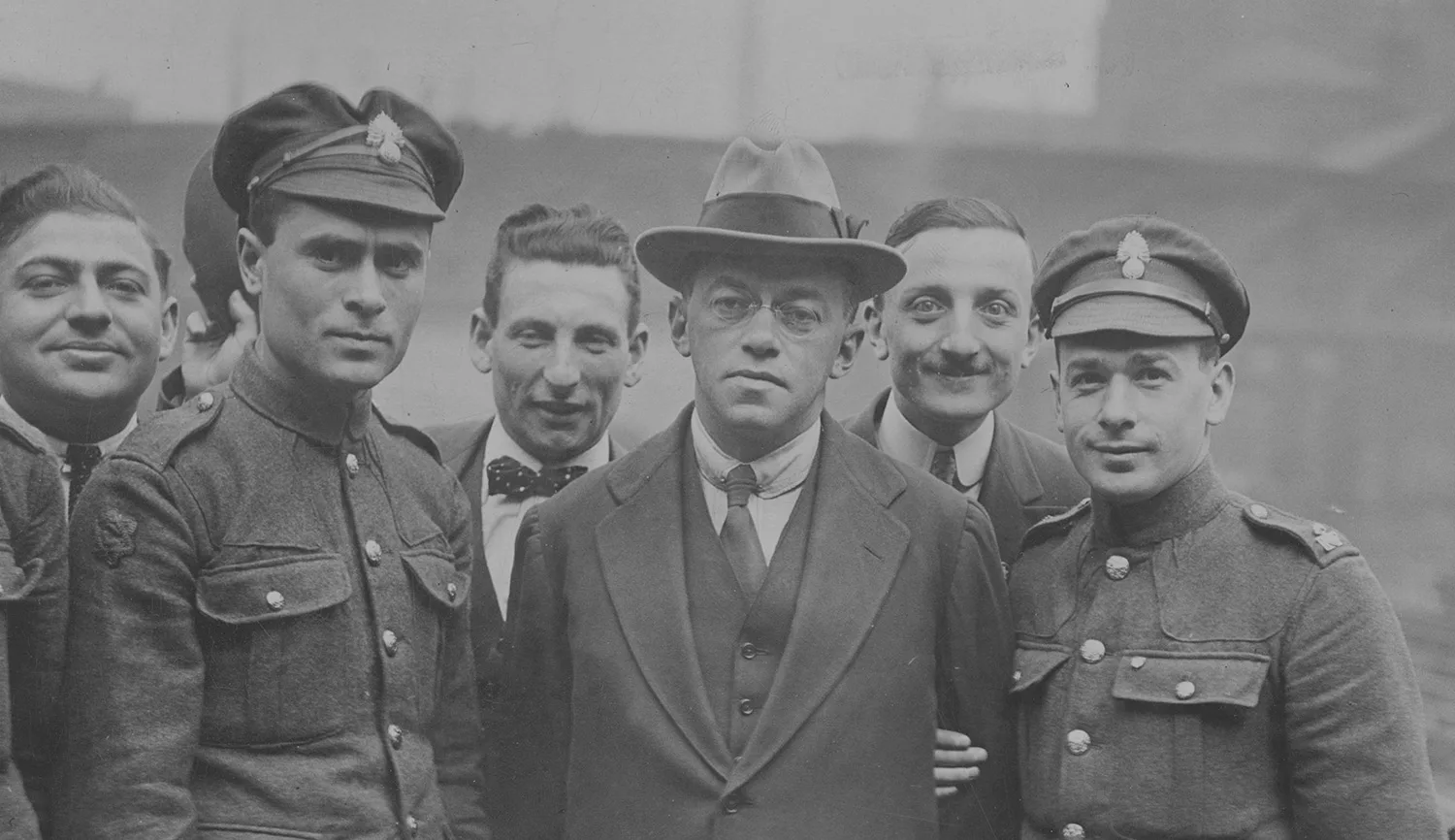
Zalzman, the first editor, noted that Jabotinsky often published under the pseudonym “Altalena” and even designed the paper’s enduring logo. He praised Jabotinsky as the most active member of the editorial board, contributing daily and offering sharp, if unpolished, prose.
Jabotinsky distanced the paper from Orthodox Zionist circles and promoted women’s suffrage, arguing that excluding women would reduce Judaism to a mere religion rather than a national movement. His focus also extended to supporting the yishuv (settlement community), advocating Hebrew education and compulsory land acquisition, including across the Jordan River.
Eventually, friction over the pace of Zionist settlement led Jabotinsky to part ways with Haaretz in 1933. However, his ideology lingered, continued by editors like Moshe Gloiberman, who promoted the same goals with more elite discourse.
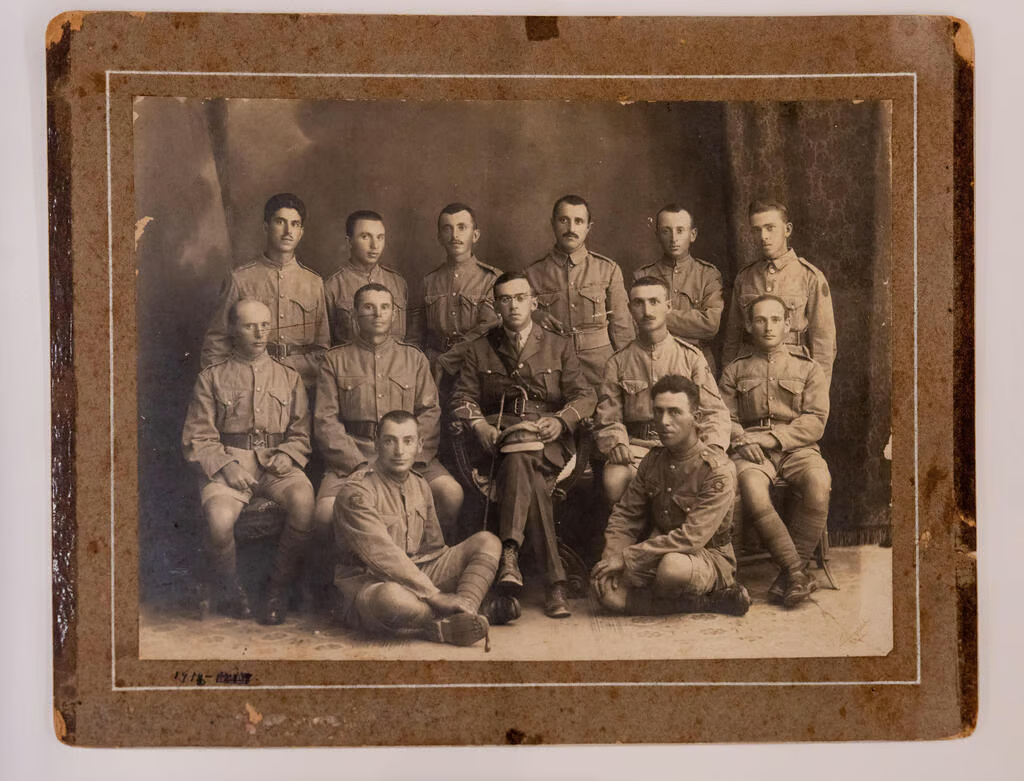
Others joined in: Moshe Samuel Glickson emphasized Jewish immigration and dispersed settlement, Yisrael Yitzhak Levin covered global Jewish politics, and Shmuel Tamir championed revisionist Zionism.
The Schocken Shift
When the Schockens took over, Haaretz took a decidedly left-liberal turn, engaging in the “Brit Shalom” initiative, which advocated a shared Jewish-Arab homeland based on political equality and cultural autonomy. While critical of Zionist extremism, the paper never wavered in its support for a Jewish state.
Gershom Schocken, lauded as the beacon of Israeli liberalism, sat on the JNF board and contributed to land purchases in Haifa. His son served in the Haganah and later led personnel in the IDF, while another son became editor.
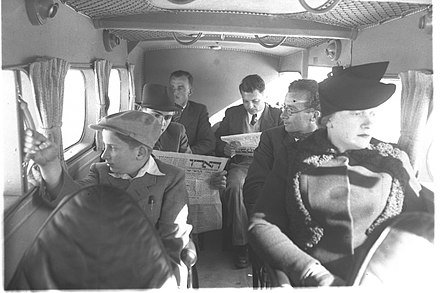
Even “liberal” figures like military analyst Ze’ev Schiff upheld militarist views, backing Israeli wars as security necessities. Arab affairs analyst Danny Rubinstein, though sympathetic to Palestinians, defended Israeli military actions and denied apartheid comparisons.
Yossi Melman, an intelligence correspondent identifying as leftist, opposes occupation but rejects the right of return. Akiva Eldar supports a two-state solution but insists on preserving Israel as a Jewish state.
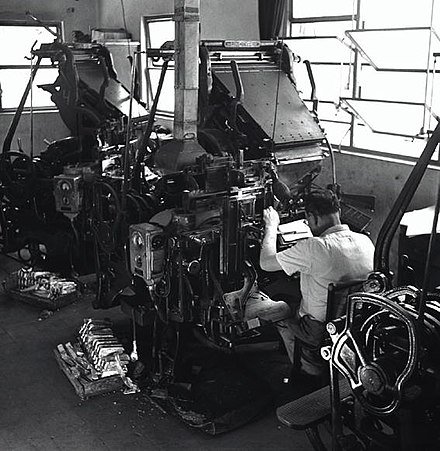
Gideon Levy, internationally known for spotlighting Palestinian suffering, and historian Tom Segev, a post-Zionist critic, still hold views shaped by Israeli statehood. Only Amira Hass has never served in the IDF and uniquely embedded herself with Palestinians.
The Liberal Illusion: Between the Lines
Haaretz’s banner headlines during key moments expose the gap between its professed liberalism and nationalist fervor. In May 1948, it announced: “The Dream of Generations Has Come True: The State of Israel Has Been Established.” In June 1967: “After 60 Hours of Glorious Campaign: Jerusalem’s Old City, Gaza, Sinai, and the West Bank Are in Israeli Hands.”
Though now a darling of Western media for its critical tone, Haaretz has done little to truly help Palestinians or challenge systemic oppression. Its journalists are often praised for bravery in critiquing the same army they once served, but they stop short of rejecting the military itself.
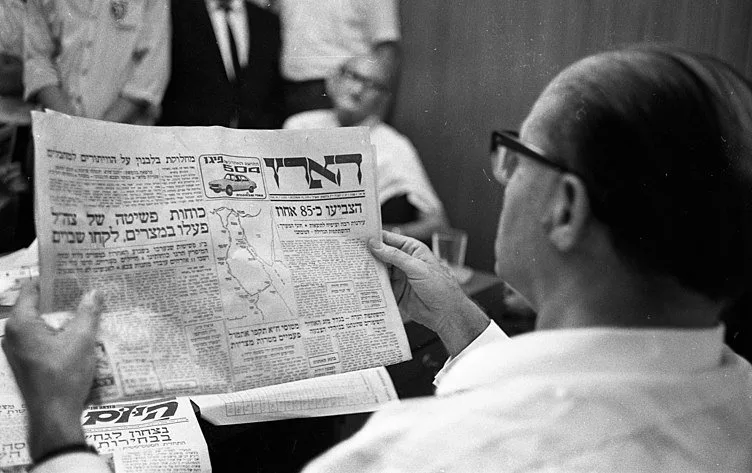
In the early 1990s, Haaretz expanded internationally, launching an English edition in partnership with The International Herald Tribune. By 2005, its English website drew 1.7 million users, becoming a key resource for policymakers, academics, and business leaders.
Editor David Landau even launched a program to recruit Palestinian-Israeli journalists. But most were Druze—the only Arab group serving in the IDF—and their articles appeared in back pages, edited and censored by Jewish editors.
Despite being third in domestic readership by 2022, Haaretz’s influence far outweighs its circulation. Following the events of October 7, 2023, as Israeli media turned rabidly anti-Palestinian, Haaretz stood out for maintaining a liberal façade, reinforcing Israel’s image as a democracy.
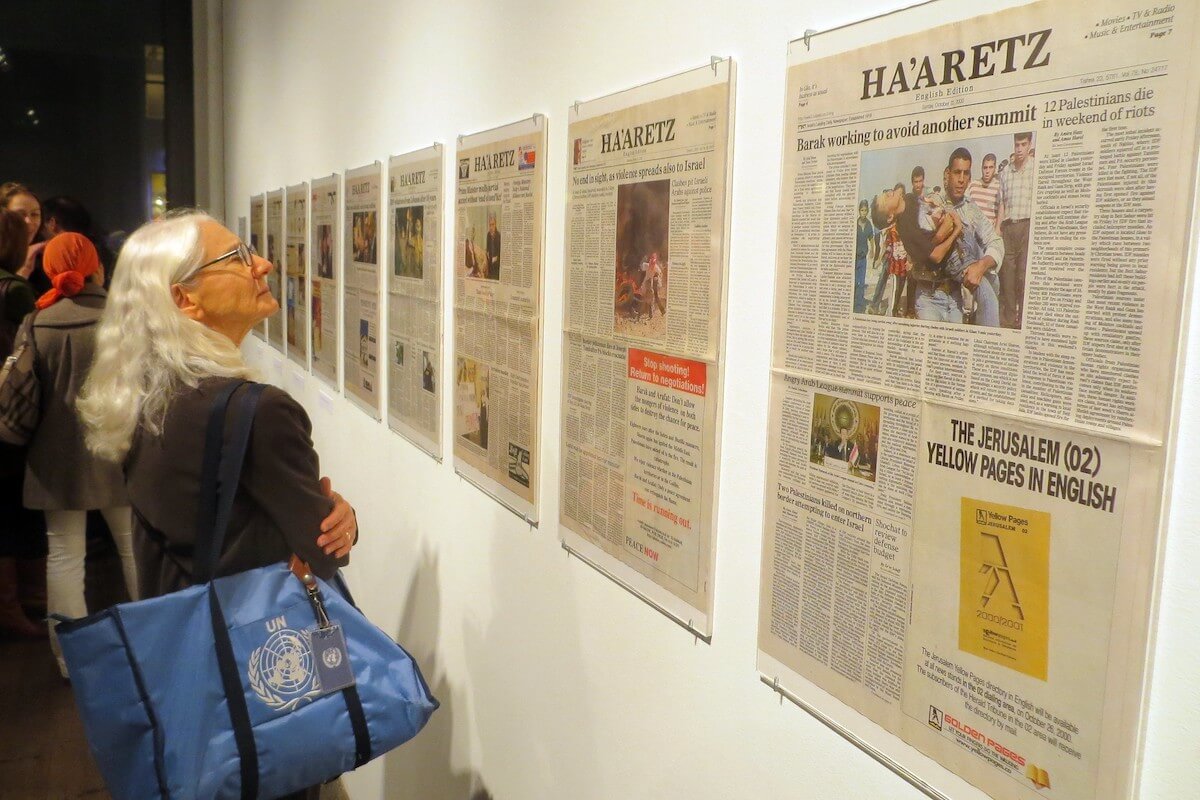
This image, however, excludes Palestinian voices, who faced arrests and attacks for expressing solidarity with Gaza. Meanwhile, Haaretz’s moderate tone comforts liberal Western audiences but does little to challenge the structure of Israeli power.
With Palestinians, Against Their Liberation
According to media professor Mohammad Ishtaywi, Haaretz helps create a dual narrative of “bad occupier” vs. “good liberal occupier.” Arab analysts and regimes often prefer the latter, even though both reject Palestinian sovereignty and the right of return.
Leftist journalists in Haaretz gain global prestige by presenting Israel as a democratic oasis. But their ideological loyalties often shift, hopping between outlets like Haaretz, Jerusalem Post, Yedioth Ahronoth, and Israel Hayom, many of which support the occupation.
Ishtaywi argues Haaretz has lost its relevance amid normalization with Arab states and Israeli consensus on Palestinian removal. In 2024, the Israeli government officially boycotted Haaretz, banning officials from engaging with it or placing ads.
At a London conference, publisher Amos Schocken said Israel enforces “an apartheid regime on Palestinians” and “fights freedom fighters it calls terrorists.” He later clarified he did not mean Hamas.
Former correspondent Shmuel Rosner remarked that Haaretz readers are more educated but represent a niche. Former editor Hanoch Marmari called the paper “disconnected” from Israeli political life.
Today, Haaretz editors highlight how their English-language site attracts both pro-Israel and pro-Palestine readers, claiming to offer a rare middle ground. But studies show its reporting still skews toward Israeli narratives, offering only surface-level acknowledgment of Palestinian rights.
Haaretz critiques settlements while referring to Palestinian villages as outlying parts of larger Jewish areas. It champions Palestinian freedom but condemns resistance. It calls Israeli bombings “brutal” but stops short of labeling them war crimes.
Gideon Levy defends the paper’s role, saying, “If Yedioth Ahronoth disappears, Israel will stay the same. If Haaretz disappears, no one will talk about Palestinians, the environment, or women’s oppression.” For him, these struggles are one and the same.
Still Performing Its Role
Haaretz continues to fulfill its role: protecting what remains of Western Zionism under the guise of liberalism. It crafts narratives that resonate with Western ideals of freedom and justice, while subtly reinforcing the legitimacy of the Israeli state.
It offers a carefully curated version of critique that appeals to Arab and Palestinian audiences, who often mistake it for dissent. But most of its writers once wore the uniform of the Israeli military before taking up the pen.
And under Western skies, Israel remains a “democracy,” where Haaretz can ask for scraps for Palestinians while Israeli authorities enjoy the liberty of punishing it without threatening its global prestige.
Meanwhile, dozens of Palestinian journalists are killed with little outcry.
Haaretz’s Israeli affairs analyst mourns the loss of space for criticism—not only from Palestinians but even from Jewish Israelis. It’s “very convenient,” she says, to blame the conflict on the shrinking space for critique. One might almost forget the conflict is about land, identity, and the right to exist. But that, after all, is precisely why Haaretz exists—to shift the focus from liberation to commentary, from occupation to nuance.