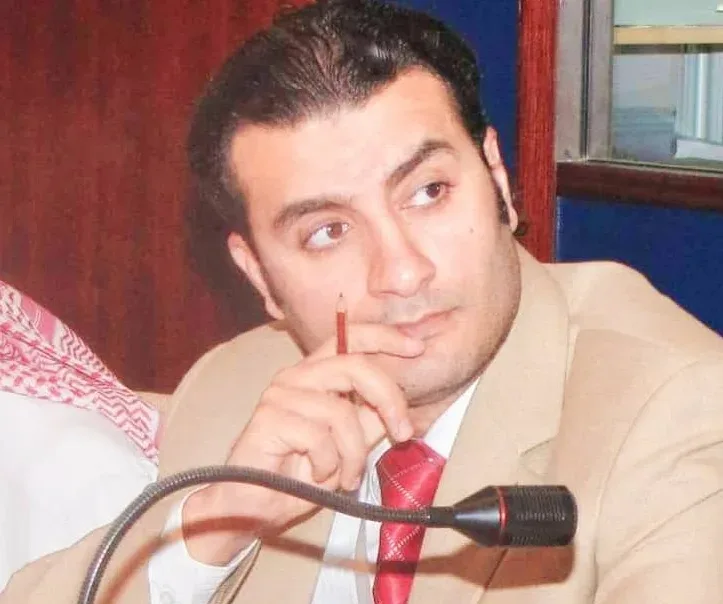

The assassination of the Secretary of Iran’s Supreme National Security Council, Ali Larijani, marks a critical turning point that could propel the political landscape into a new phase of open-ended escalation. Larijani was not merely a senior official within Iran’s power structure; he was a central pillar of its decision-making apparatus and widely regarded as the figure most capable of steering the system through its current sensitive phase particularly amid challenges tied to the effective absence of Supreme Leader Ali Khamenei from the political scene.
Larijani’s stature stemmed from more than his high-ranking position. He was seen as one of the principal architects of Iranian policy and a key shaper of its strategic direction, drawing on nearly five decades of political, personal, and familial influence. Over those years, he maintained a weighty and consequential presence at the heart of Iran’s political arena, enjoying considerable trust and credibility within decision-making circles, making him a formidable figure in the equations of power, security, and strategy.
From this perspective, his absence extends beyond domestic implications, opening the door to a wide array of repercussions that may shape the trajectory and direction of the war, as well as the nature and limits of Iran’s response. The assassination also raises a deeply sensitive question: does targeting a figure like Larijani truly serve American and Israeli objectives of weakening Iran’s decision-making structure, or could it yield counterproductive results?
The System Loses Its Political Lung
In January 2020, the assassination of Qassem Soleimani, commander of the Quds Force of the Islamic Revolutionary Guard Corps, dealt a devastating strategic blow to the Iranian system. Soleimani had been entrusted with managing and executing Iran’s regional expansion project and served as its most effective military arm beyond its borders.
He was not merely a prominent military leader but one of the regime’s foundational pillars in consolidating its influence and projecting its regional presence. His death was a seismic shock one whose effects Tehran has yet to fully overcome, despite multiple attempts to fill the void he left behind.
Today, with the loss of Ali Larijani, Iran appears to be losing its political lung after having already lost its military one. Larijani was not just a senior official or a visible diplomat; he was arguably the most powerful political figure within the system. He played a critical role in engineering the delicate balance between centers of power and served as a vital link between the military and political pillars of the regime.
Moreover, he was the architect behind several approaches that granted the system a measure of rationality domestically and calculated flexibility in managing complex external files.
In this sense, if Iran lost its military lung in 2020 with Soleimani’s assassination, it now faces an equally dangerous loss in 2026 with Larijani’s death. And just as Tehran failed over the past years to produce a viable successor to Soleimani, it is likely to face an even greater challenge in replacing Larijani, whose political acumen, institutional influence, and domestic and international presence are exceedingly difficult to replicate.
Diverging Target Banks: Trump vs. Netanyahu
The assassination of Larijani who embodied rationality, political flexibility, and a centrist option within Iran’s ruling structure has exposed a widening gap between the target priorities of Donald Trump and Benjamin Netanyahu, as well as a deep divergence in their respective approaches to the war, its limits, and its outcomes.
Trump, facing mounting domestic and international pressure and aware of the costs of prolonged confrontation particularly for U.S. standing and alliances, especially with Europe appears inclined, to some extent, to seek a swift exit from the Iranian quagmire. His initial entry into the confrontation was driven by specific security and economic considerations, yet the conflict quickly exceeded its anticipated scope.
In contrast, the operation underscores the ideological and doctrinal nature of Netanyahu’s view of the conflict with Iran. For him, the issue transcends immediate political or security calculations and evolves into an existential vision aimed at dismantling the Iranian regime, uprooting its foundations, and permanently foreclosing any possibility of negotiation.
From this standpoint, Netanyahu appears intent on undermining any potential pathway toward de-escalation or settlement and on obstructing any effort led by Trump to end the war in a manner inconsistent with the agenda of Israel’s far right.
Within this framework, the assassination of Larijani preceded by the targeting of first-tier leadership figures, from the inner circle closest to the Supreme Leader to prominent military commanders fits into a broader trajectory that serves Israel’s objective of entrenching a long-term, ideologically driven war.
This approach moves beyond limited deterrence toward a comprehensive attrition strategy one that fundamentally clashes with the American preference for containing the conflict and preventing its transformation into an open-ended confrontation without temporal or political limits.
The System Between Two Scenarios
Amid such turbulent and disorienting conditions, developments appear to be heading toward one of two possible trajectories.
The first is that the assassination strategy aimed at eroding the leadership structure of the Iranian regime could trigger internal fragmentation and open the door to factional struggles among competing power centers and political currents. This seems to be a scenario Netanyahu is betting on, particularly given his early adoption of an inciting speech directed at the Iranian public, urging it to rise against the regime.
The second trajectory is that these strikes, with their shock value and deep reverberations, could produce entirely opposite outcomes to those Israel anticipates. Rather than weakening the regime, they may drive it toward greater cohesion and resilience.
This pattern is not unfamiliar in ideological systems, which often capitalize on external blows to reinforce internal unity and reconfigure their structures for survival provided they retain a minimum cadre of capable leadership.
In Iran’s case, the nationalist and ideological discourse that dominates the regime’s political mindset suggests that targeting the top leadership or eliminating the first tier of alternatives is insufficient in itself to bring about regime collapse.
The assassination of senior figures does not necessarily translate into the fall of the governing structure, nor does dismantling the inner circles automatically lead to state disintegration.
Thus, relying on this scenario as a rapid pathway to dismantling the Iranian system may prove premature especially given Tehran’s long track record of absorbing major shocks and adapting to severe blows since the founding of the Islamic Republic.
The Israeli Narrative: Between Victory and Risk
For years, Larijani represented the voice of disciplined reason within the Iranian Republic and embodied its pragmatic current in its most complete form. Although often classified within the “moderate conservative” camp, he was never confined by narrow ideological boundaries.
He maintained channels of communication and political coordination across the spectrum from the far right to less hardline factions granting him exceptional maneuverability within the system and cementing his role as a key balancer of internal contradictions.
From this perspective, Larijani’s assassination—within the Israeli narrative—fits into a broader effort to target the regime’s pool of potential alternatives, paving the way for eroding its ability to reproduce itself. Accordingly, the incident has been framed in Israeli discourse as a qualitative achievement and a political-security victory, as it struck one of Iran’s most powerful and influential figures during a critical phase.
This explains the scale of Israeli celebration of the news, viewing it as a blow to a sensitive artery within Iran’s power structure.
However, a deeper reading of the event challenges this triumphalist narrative promoted by Benjamin Netanyahu. Removing a pragmatic figure of Larijani’s caliber does not necessarily pave the way for a more flexible or open alternative toward Tel Aviv and the West. On the contrary, it may yield the exact opposite outcome.
Targeting such figures could effectively close off space for any reformist or pragmatic current within the system, tipping the balance decisively in favor of the most hardline factions those that view the United States as the “Great Satan” and Israel as an existential threat that must be eradicated sooner or later.
Accordingly, what is being marketed in Israel as a successful strike could, if Iran manages to absorb the shock and reorganize its ranks, become a source of strategic miscalculation for Israel itself.
Rather than weakening the regime and opening internal fissures, this approach may result in a more rigid and closed system, narrowing opportunities for political penetration and rendering any negotiation or reform pathway more distant and complex.
Where Is the War Heading?
Israel’s broader assassination strategy and its targeting of politically pragmatic and high-impact figures such as Ali Larijani in particular is likely to push Iran toward deeper militarization. The issue is no longer confined to the militarization of the regime alone, as was previously argued; it now threatens the militarization of the state as a whole.
This raises the likelihood that the Islamic Revolutionary Guard Corps may assume a more direct role in steering the next phase, leveraging the escalation climate to impose its approach as the dominant voice and decisive authority within the power structure.
At this juncture, the ongoing war appears to stand before two principal scenarios.
The first is that Tehran fully embraces the logic of escalation, adopting a more hardline discourse that abandons any reliance on negotiation or political pathways, recognizing only the language of force and open confrontation. Under such a scenario, Iran may expand its targeting of U.S. and Israeli interests across the region, potentially adopting a scorched-earth strategy.
The scope of confrontation could extend beyond the immediate regional theater, with additional arenas most notably the Houthi front and other allied networks drawn into the conflict.
The second scenario involves Tehran attempting to absorb this acute leadership attrition by pursuing a tactical pause that allows it to regroup internally, restore coherence, and open space for quiet diplomatic maneuvering at both regional and international levels.
In this context, Iran may move toward indirect de-escalation initiatives through channels mediated by international and regional powers, particularly China and Russia, aiming to contain the escalation and explore a political formula to halt or freeze the war at certain limits.
Within such a trajectory, Tehran may view diplomacy not as a reflection of full conviction, but as a necessity dictated by the need to preserve what remains of the regime’s structure, repair the damage it has sustained, and consolidate gains from the current round laying the groundwork for reconstruction and rebalancing in a later phase.
In sum, Larijani’s assassination should not be treated as an isolated incident or merely another stage in an incremental conflict. Rather, it represents a clear structural transation in the logic of the confrontation itself. The struggle is no longer confined to Iran’s nuclear program or the boundaries of its regional influence; it is increasingly resembling a project aimed at uprooting the regime entirely and dismantling its internal alternatives.
As such, the war is shifting from a contest over influence to an open-ended existential confrontation, where all scenarios remain on the table from comprehensive escalation to forced settlements that precede further rounds of conflict.