














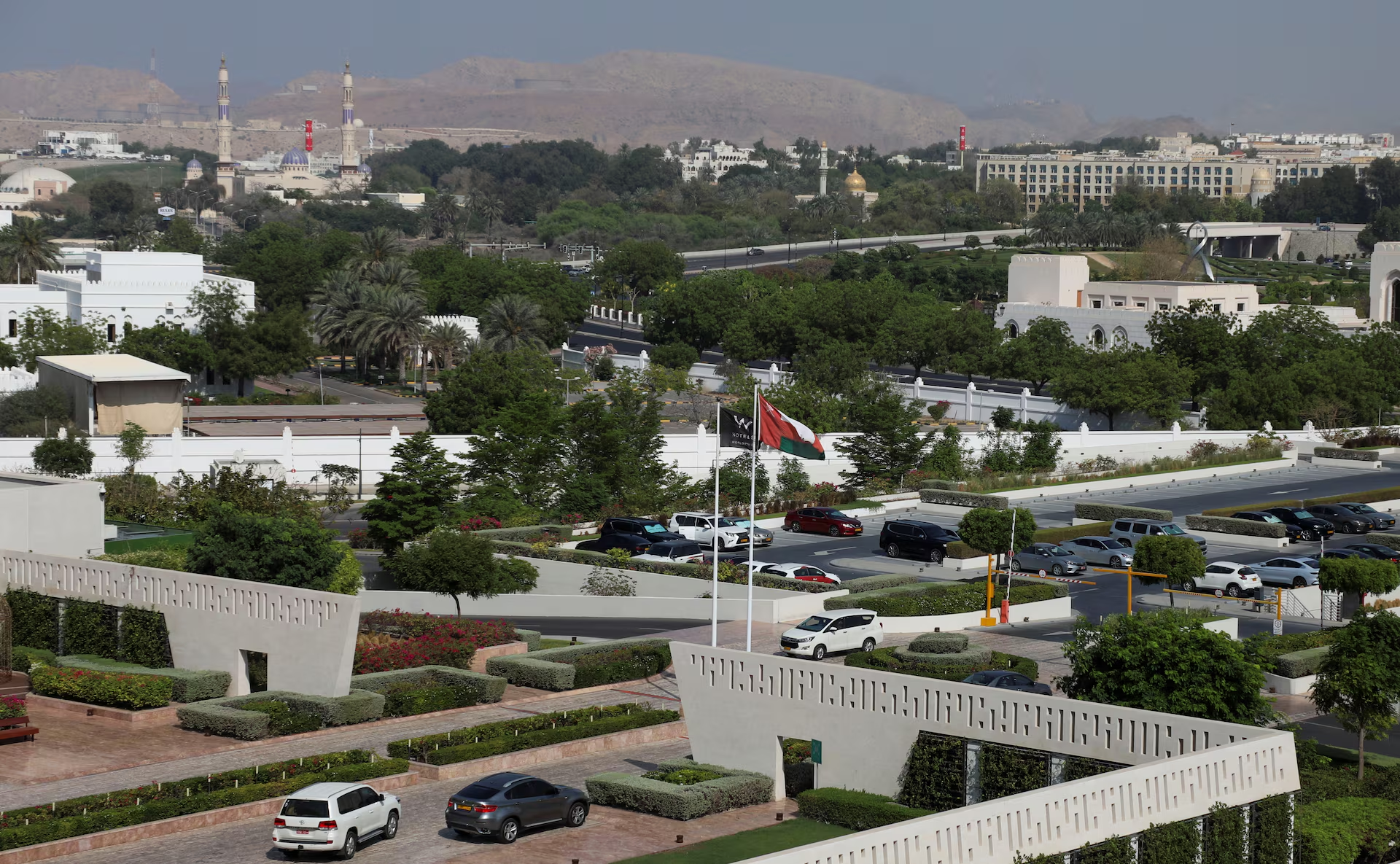
The United States and Iran are preparing to resume negotiations in the Omani capital, Muscat, on February 6, 2026, after the round had been on the brink of cancellation amid sharp disagreements over the venue initially slated to be held in Turkey and the scope of the agenda.
These diplomatic efforts come against the backdrop of severe regional tension. Washington has deployed significant naval and air forces to the region, as fears mount that a military confrontation could erupt should diplomatic avenues fail.
U.S. President Donald Trump warned Iran’s Supreme Leader Ali Khamenei that he “should be deeply concerned” if the talks falter an unmistakable signal of the seriousness of Washington’s threat of military action.
Scope and Terms of the Negotiations
Although the talks are formally framed as an effort to revive the nuclear agreement, a fundamental dispute has emerged over the agenda and whether it should extend beyond the nuclear file. Tehran has repeatedly stressed that discussions must be limited strictly to the nuclear issue and the lifting of related sanctions.
A senior Iranian official told Reuters that Iran’s ballistic missile program is “off the table” and will not be discussed, warning that Washington’s insistence on broadening the talks to include non-nuclear issues could derail the negotiations altogether.
The official added that while Iran rejects any preconditions for talks, it is prepared to take “flexible steps” regarding uranium enrichment levels if sanctions are lifted.
Tehran had announced a complete halt to uranium enrichment following U.S. military strikes on its nuclear facilities last June a move widely seen as an attempt to de-escalate tensions and open the door to a settlement in exchange for lifting Western sanctions that have battered Iran’s economy.
Washington, by contrast, has adopted a far broader vision of what should be addressed. The stark divergence in agendas nearly caused the talks to collapse before they even began. The Jerusalem Post quoted sources as saying the gap was “unbridgeable” when Iran insisted on confining discussions to the nuclear file, while the United States demanded the inclusion of missiles and Iran’s regional proxies.
The temporary compromise that allowed the Muscat meeting to go ahead came after Washington—under mediator pressure—agreed that this round would focus solely on the nuclear issue. Even so, the Trump administration has continued to emphasize that all of these files will eventually be addressed in any comprehensive negotiating process.
In parallel, informed sources say the preliminary framework delivered by mediating states already includes restrictions on Iran’s missile program and its regional role within the clauses of a prospective final agreement suggesting that postponing these issues may be a tactical delay rather than a definitive concession.
Iran enters the talks under suffocating domestic pressure. Its sanctions-hit economy has been a key driver of the recent wave of widespread protests against the regime, which authorities suppressed with deadly force leaving the leadership in urgent need of economic relief to stem further deterioration and absorb popular anger.
Washington, meanwhile, arrives at the table armed with leverage: the revival of a “maximum pressure” sanctions policy, recently intensified, alongside a visible readiness to resort to military strikes if diplomacy fails.
U.S. Secretary of State Mike Rubio has hinted that Washington may be open to partial arrangements at the “margins” if Iran commits to the core demand of not acquiring a nuclear weapon raising the possibility that issues such as regional activities and missiles could be deferred or addressed outside the nuclear framework.
Israel’s Role in the Process
Although Israel is not formally represented at the negotiating table, it looms large behind the scenes in shaping the contours of any potential agreement between Washington and Tehran.
The U.S. administration has made a point of coordinating closely with Israel ahead of renewed contacts with Iran. In recent days, U.S. special envoy Steve Witkoff met with Israeli Prime Minister Benjamin Netanyahu, alongside senior security officials including IDF Chief of Staff Eyal Zamir and Mossad Director Mossad chief David Barnea.
Israel has openly demanded that any final deal with Iran dismantle what it describes as “strategic threats” directed at it foremost among them long-range ballistic missiles and Tehran’s precision-weapons arsenal, as well as those of its proxies.
The Netanyahu government has made no secret of its opposition to any arrangement that fails to eliminate what it calls the “Iranian threat in its entirety.”
In June 2025, Tel Aviv launched extensive airstrikes on Iran, claiming the aim was to prevent Tehran from nearing the threshold of military nuclear capability. The campaign escalated into a direct confrontation, culminating in U.S. strikes on multiple Iranian nuclear sites.
That round of escalation inflicted heavy damage on Iran’s nuclear and missile infrastructure, but it also demonstrated Tehran’s ability to retaliate on multiple fronts, as it fired missiles and drones deep into Israeli-held territory.
As talks resume, concern is growing within Israel over Washington’s current approach. Israeli analysts have warned that Trump may pursue a deal that serves U.S. interests and delivers a personal political win, without necessarily satisfying all of Israel’s security demands.
Former Netanyahu aides have suggested that Trump’s electoral and personal priorities could push him toward accepting a deal “less than ideal” from Israel’s perspective particularly if it ensures Iran does not produce a nuclear weapon during his term.
In response, the Netanyahu government insists it has received U.S. assurances that no sanctions will be lifted and no concessions granted to Tehran before addressing the risks that “worry Israel.”
Israel has also raised its military readiness, with reports indicating its forces are on heightened alert for a potential confrontation with Iran’s proxies such as the Houthi movement should Washington opt for military action against Iran.
Prospects for an Agreement
With the venue dispute resolved and both sides finally seated at the table, many hope the Muscat talks can defuse the fuse of an imminent military clash.
Yet the deep gaps between the two sides raise serious questions about the prospects for a comprehensive and durable agreement in this round. It appears that the immediate objective is to avert an outright collapse and calm the cycle of military escalation.
The most realistic best-case scenario may be the extraction of preliminary understandings—or a partial deal—focused on reimposing constraints on Iran’s nuclear program in exchange for limited sanctions relief, buying time and keeping diplomacy alive.
Mediator proposals suggest it may be possible to reach agreement on a tangible reduction in Iran’s enrichment levels and assurances that no weapons-grade material is produced.
They also include reciprocal commitments to avoid regional escalation for instance, Iran restraining its allies’ activities in return for a U.S. pledge to refrain from military action as long as Tehran complies with the agreement.
Even if such a preliminary formula is reached, the broader deferred issues remain the greatest challenge. Files such as Iran’s missile program and regional influence may have been frozen temporarily to salvage the talks, but they are certain to return to the fore in negotiations over a longer-term deal.
Herein lies the risk of renewed deadlock. If Iran maintains its categorical refusal to discuss these files, while Washington insists on resolving them comprehensively, the result may be a negotiating impasse that postpones the crisis rather than resolving it.


