















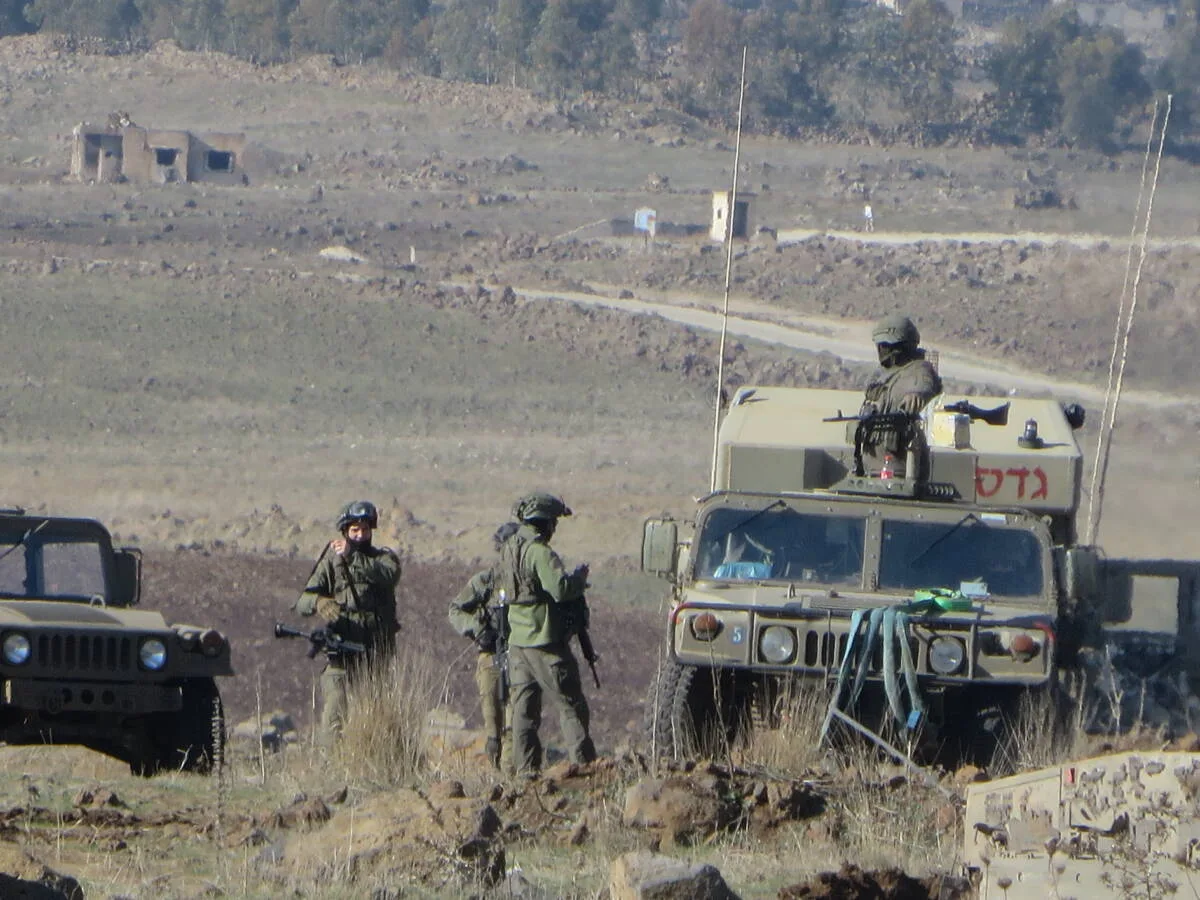
Israeli occupation forces continue to escalate their operations in towns and villages across Syria’s Quneitra province part of the demilitarized zone since the regime’s fall in December 2024 through increasing military incursions, the imposition of checkpoints, and redrawing lines of control. This represents a striking shift from previous strategies of containment and surveillance to a more direct military presence in the area.
According to field developments, this escalation points to an Israeli trajectory that transcends limited breaches. It seeks instead to exploit the security vacuum accompanying Syria’s fragile transitional phase to impose new geopolitical realities on the ground effectively undermining the 1974 Disengagement Agreement.
This report by Noon Post tracks the implications of Israel’s intensifying campaign in southern Syria and analyzes its political and security ramifications in consultation with regional experts.
Ongoing Violations
Over recent months, Israeli forces have stepped up operations in southern Syria through repeated incursions involving the demolition of civilian structures, installation of metal gates and checkpoints at village entrances, bulldozing of farmland, and spraying of unknown substances. There have also been reports of shepherds being kidnapped and their livestock seized, along with shooting incidents meant to intimidate locals.
Israeli aircraft were observed spraying unidentified substances most recently on Friday, January 30, covering areas from Jubata al-Khashab to al-Hamidiyah via the village of al-Hurriya in northern Quneitra. Two days earlier, similar sprays were carried out near Abu Madhrah Farm and the village of al-Hanout in southern Quneitra. Prior to that, the spraying targeted forests, farmlands, and grazing fields in the villages of al-Asha, Kodna, al-Asbah, and the town of al-Rafid.
Amid uncertainty about the nature of these substances, Quneitra’s Directorate of Agriculture announced it had collected soil, plant, and herb samples from affected areas for laboratory analysis to determine the materials’ composition and potential threats to human health and the environment.
A health alert was issued urging residents and farmers to avoid contact with sprayed land or consuming its produce until official test results are released.
Noon Post contacted Jamal al-Ali, Quneitra’s Director of Agriculture, who said that samples had been sent to the Atomic Energy Commission, with results expected within two or three days.
Based on preliminary analysis and his expertise, al-Ali suspects the substances are likely herbicides, posing no direct threat to livestock or humans. “Sheep were grazing in the area during the spraying and appeared unaffected,” he noted.
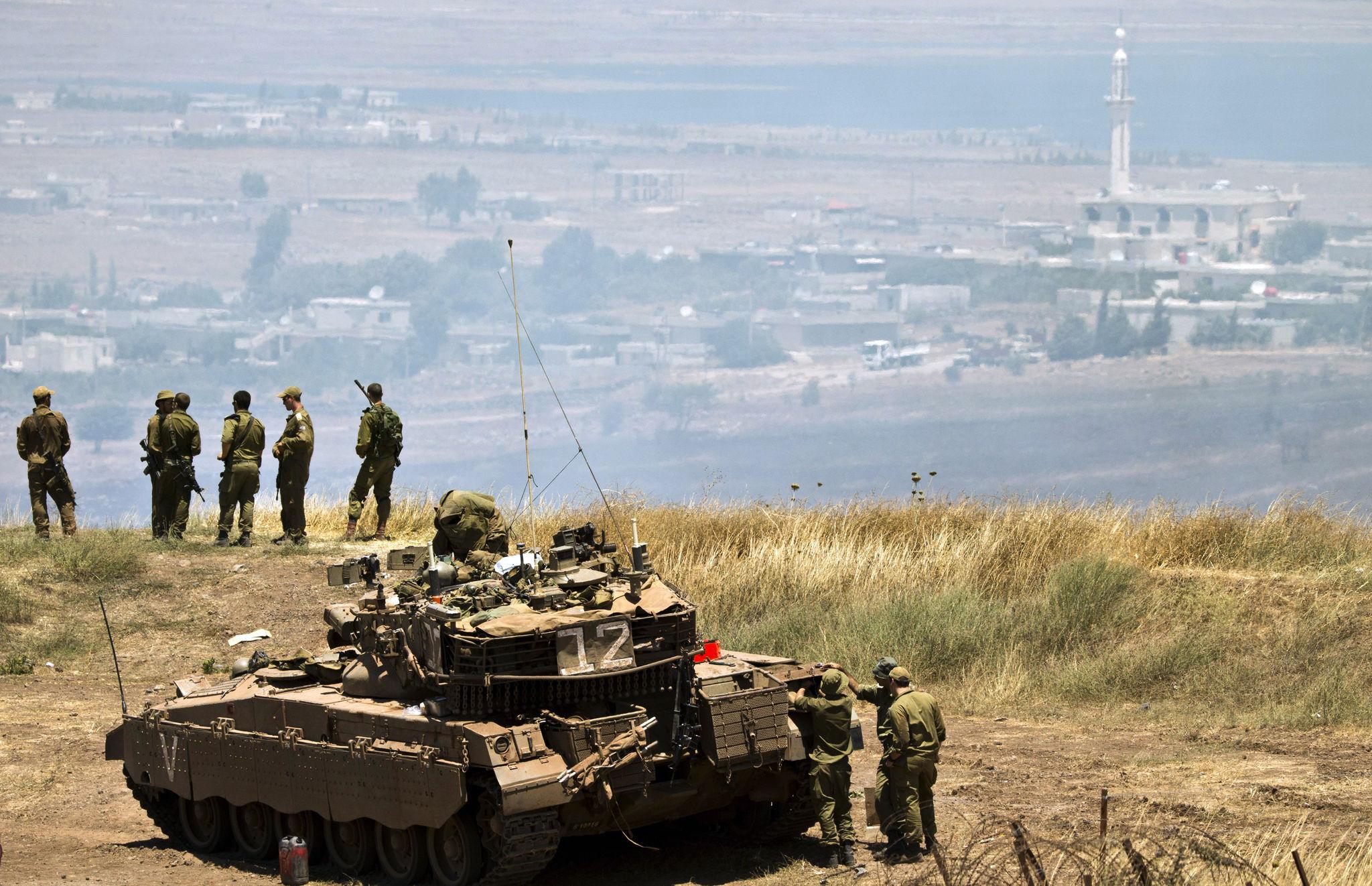
According to al-Ali, the aim of the spraying is to deter weed growth and prevent herders from approaching the border strip or areas deemed sensitive by Israeli forces.
“The sprayed area is forestland previously bulldozed by Israeli forces. Rainfall later turned it into lush pasture, attracting shepherds. When firing warning shots failed to deter them, Israeli forces resorted to spraying,” he added.
The Directorate has also reported these violations to the United Nations forces stationed at the border, but violations persist without meaningful response.
The January 30 incident marked the third spraying operation that month alone, raising serious concerns among locals about the safety of their crops, especially in light of the unknown nature of the chemicals used.
Hassan Saad al-Din Ahmad, a farmer in Quneitra, told Noon Post that Israeli aircraft sprayed unknown substances over his farmland near the border, prompting fear and avoidance in case the chemicals were toxic. He now awaits the official results, concerned about long-term effects on the soil, livestock, and residents.
Al-Ali added that Ahmad’s land had already been bulldozed by Israeli forces two months before the regime fell. The recent spraying targeted what remained.
Locals are increasingly concerned that Israel may be aiming to inflict long-term damage on Quneitra’s agricultural and livestock resources as part of broader strategic objectives.
Militarized Landscape
Colonel Abdullah al-Asaad, a military expert, argues that Israel is preparing a new operational theater in southern Syria to complement existing ones. The goal is to reshape the field reality in a way that secures strategic and security advantages.
He explains that the intensive engineering of open zones through land clearing and infrastructure building—provides Israel with operational superiority.
Al-Asaad, also a professor at the College of Political Science at al-Ahliya University, sees these land-clearance efforts as part of strategic preparations for combat operations, all rooted in what he calls Israel’s evolving military doctrine in the region.
He notes that Israel’s ambitions extend to annexing fertile and water-rich areas of southern Syria, including springs and rivers.
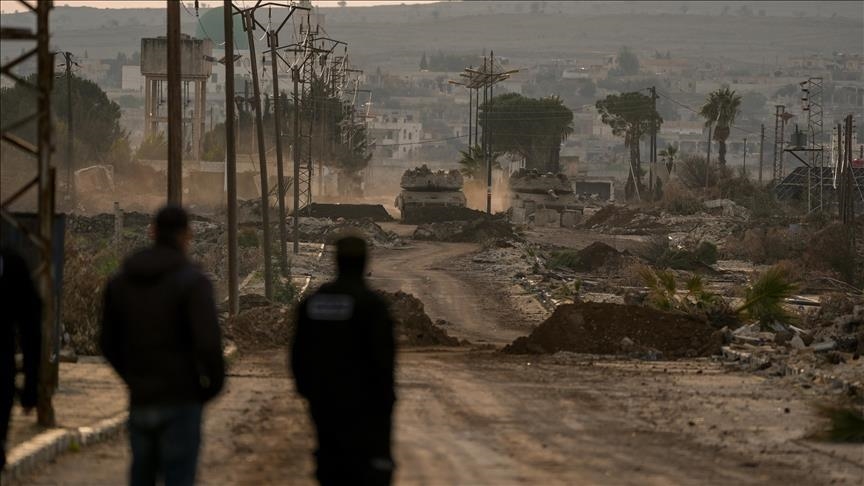
Shepherds have also borne the brunt of these actions, facing increased restrictions on grazing lands, financial losses, and constant fear. Repeated shootings, arrests, and bans on accessing their lands have threatened their livelihoods.
Yazan al-Oqla, from the village of Maariyah in western Daraa, told Noon Post that Israeli forces seized 130 of his sheep while he was grazing near Maariyah in the Yarmouk Basin roughly a month ago.
On January 24, Israeli troops detained two young men from al-Hanout while they were herding sheep and transported them into occupied territory.
On January 28, an Israeli patrol consisting of eight military vehicles entered Ain al-Qadi in southern Quneitra, arresting a local before withdrawing, according to the Quneitra Media Center.
Earlier, on December 30, 2025, Israeli forces raided the village of al-Asha, detained a shepherd after shooting at him, and installed temporary checkpoints between Ain Zawan and Kodna. A military convoy of around 100 troops moved from western to eastern Tal al-Ahmar under heavy drone surveillance.
Between August 25, 2025, and January 29, 2026, the Syrian observatory “Sijil” recorded 953 Israeli violations across various regions 801 of which occurred in Quneitra alone, including 281 incursions, 158 checkpoints, 62 raids, and 71 detentions.
Israel’s Security Playbook
Security and military affairs researcher Nawwar Shaban says Israel is implementing a multilayered strategy across the region, not just in Syria, under the pretext of preventing a repeat of the October 7 attack.
One tactic, he explains, is the creation of buffer zones where all signs of life are suppressed via land clearing and chemical spraying making the area uninhabitable and turning it into a purely militarized space.
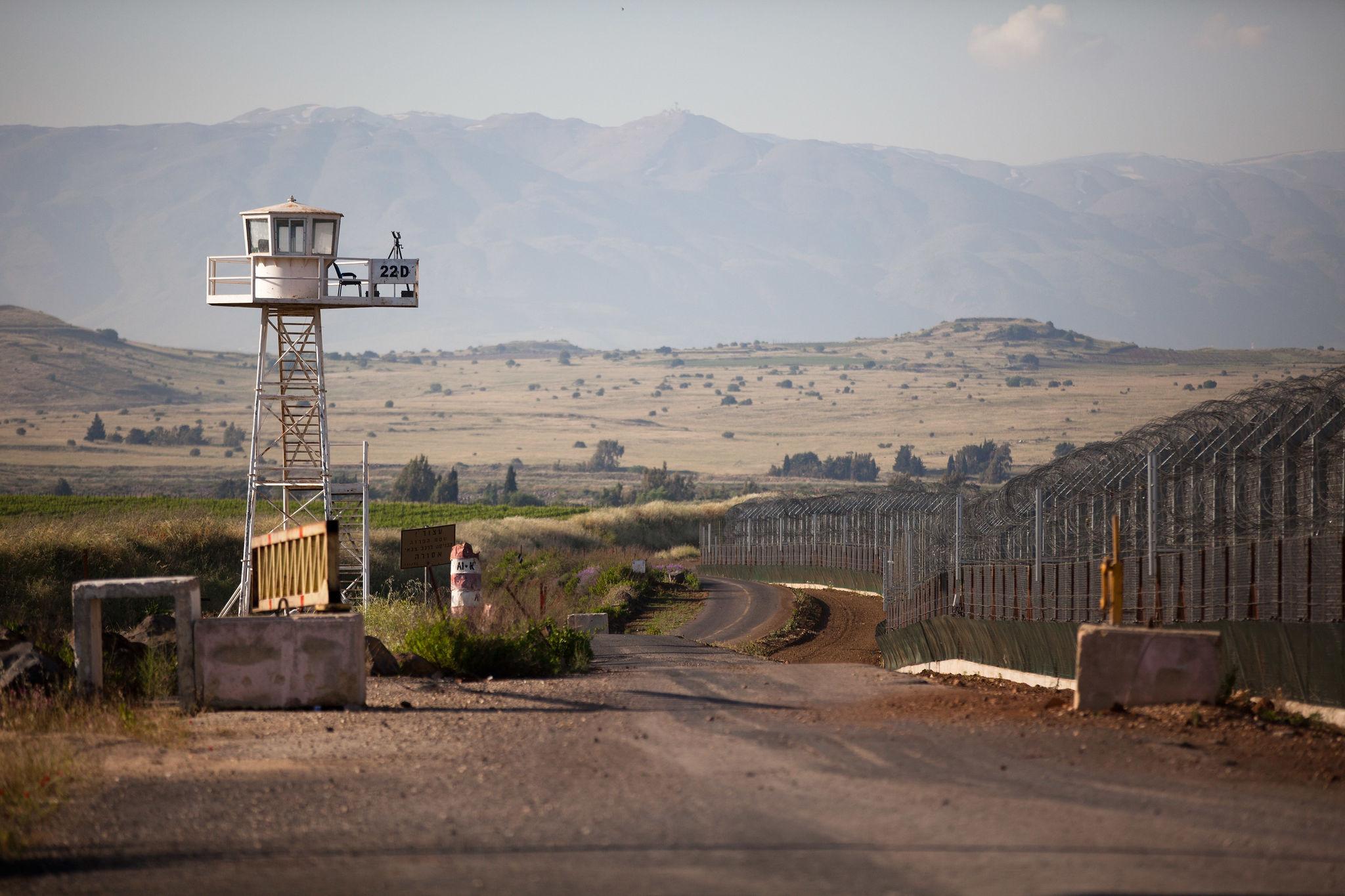
Speaking to Noon Post, Shaban emphasized that Israel is reshaping geographic zones adjacent to southern Lebanon and southern Syria using different tools. In Syria, due to international pressure and the complexity of negotiations, Israel’s military options are limited. It has resorted to incursions and civilian harassment to push populations away from contested zones.
“Israel may negotiate,” says Shaban, “but that doesn’t mean it will stop using coercive tools to shape the landscape according to its vision of national security or a self-declared buffer zone.”
This dual-track policy allows Israel to engage in talks while continuing ground violations. Shaban stresses this is not about settlement expansion, but about redefining Israel’s regional security doctrine.
Notably, on October 31, 2025, Israeli forces installed a metal gate at the entrance of western al-Samadaniyah in Quneitra to isolate the village and tighten control near the ceasefire line a move locals view as an attempt to impose a new status quo.
While some draw parallels between these actions and settlement tactics in Palestine, Shaban argues that in southern Syria, such gates are primarily a security tool, not part of a broader settlement agenda.
A Mirror of the West Bank
Khaled Khalil, an expert on Syrian-Israeli relations, told Noon Post that Israel’s escalating campaign in southern Syria represents a full-fledged occupation and a flagrant violation of international law posing a direct threat to Syrian sovereignty.
Khalil believes Israel is attempting to replicate the West Bank model in southern Syria through a system of population control, geographic fragmentation, small military bases, arrests, and, in some cases, even encouraging settlement outposts all illegal under Israeli law itself.
He warns that these threats are among the most serious challenges facing post-Assad Syria and stem less from grand strategic ambitions and more from internal disarray and ideological motivations particularly those tied to Prime Minister Benjamin Netanyahu.
Khalil views Syria as one of Netanyahu’s pressure points both domestically, in the context of his 2026 reelection bid, and regionally, as a bargaining chip with Washington and Damascus.
He notes signs of growing US-Syrian rapprochement, with Washington supporting Syria’s post-Assad transition and its renewed engagement in negotiations a process dating back to the 1990s. The US now acts as a full sponsor, not a technical mediator.
The Syrian side, he says, has made clear its red lines: Israeli withdrawal to the December 7, 2024 lines, US troop withdrawal, and cessation of Israeli attacks. Israel, by contrast, has shown little willingness to reach a settlement.
The idea of a tripartite US-Syrian-Israeli security coordination room discussed at the “Paris 3” summit suggests a shift from confrontation toward de-escalation under American pressure to avoid a broader conflict.
“Despite the seriousness of these violations,” Khalil concludes, “they are tactical moves aimed at improving Israel’s negotiation leverage. Syria poses no existential threat to Israeli security in fact, the new Syria is becoming a linchpin of regional stability.”


