






In recent hours, several regional capitals have launched a flurry of diplomatic activity in an urgent attempt to contain mounting tensions between Tehran and Washington. These efforts seek to dissuade President Donald Trump’s administration from launching a military strike against Iran, amid serious concerns that any escalation could spiral into a wider conflict threatening the region’s collective security and stability.
From Cairo to Riyadh, with stops in Doha, Abu Dhabi, and Ankara, key regional players have intensified communications with Iranian Foreign Minister Abbas Araghchi and U.S. Middle East envoy Steve Whitcoff. The goal: to forge a path toward negotiations that could open the door to a political resolution and avert the consequences of a potentially uncontrollable military confrontation.
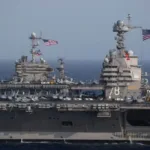
This surge in diplomacy comes at a time of exceptional sensitivity. President Trump has sharply escalated his rhetoric, warning that “time is running out” and threatening that Iran’s failure to promptly engage in serious talks over its nuclear program would be met with a military response “far harsher” than past strikes. These threats were accompanied by the mobilization of a significant U.S. naval force toward Iran.
In this volatile and uncertain atmosphere, where all outcomes remain on the table, a critical question emerges: Can last-minute diplomacy rein in the escalation and defuse the crisis before the point of no return is crossed?
Washington’s Demands to Step Back from War
According to reports in The New York Times, the Trump administration has presented Iran with three core demands described as “strict conditions” to avoid military action. Citing American and European officials, the paper outlined these as follows:
1. A Complete Halt to Uranium Enrichment:
While Iran’s key enrichment sites at Natanz and Fordow sustained significant damage during the recent 12-day war making their immediate reactivation unlikely Washington remains concerned that Tehran could resume enrichment activities at small, undisclosed facilities that are harder to detect.
The newspaper noted that Iran’s stockpile of uranium enriched to 60% close to weapons-grade could, if recovered from beneath the rubble, be enough for a few nuclear warheads. However, American and European intelligence agencies currently see no indication that Iran has retrieved this material, at least in the short term.
2. Severe Restrictions on Iran’s Ballistic Missiles:
This demand aims to strip Tehran of a key pillar of its deterrent capability. Washington and its allies believe curbing Iran’s missile program would limit its ability to target Israeli territory in the event of an attack. Although American and European officials doubt Iran is planning an imminent strike on Israel, Prime Minister Benjamin Netanyahu has hinted at the possibility of new preemptive strikes should Iran attempt to rebuild its military capabilities.
3. An End to Support for Regional Proxies:
The final demand centers on cutting off funding and arms to Iranian-aligned groups in Lebanon, Iraq, and Yemen. This long-standing U.S. condition is seen as essential to curbing Tehran’s regional influence.
Trump reportedly views this strategy mirroring his aggressive stance on Venezuela as a pressure tactic to compel both Iran’s leadership and the Revolutionary Guard to back down. Yet notably absent from the list is any mention, explicit or implicit, of protecting Iranian protesters from state repression a justification previously invoked for potential military action.
Regional Diplomatic Push Gains Momentum
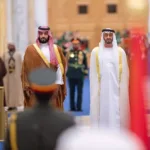
In a significant development, Saudi Crown Prince Mohammed bin Salman spoke by phone with Iranian President Masoud Pezeshkian, stressing Riyadh’s categorical opposition to the use of its airspace or territory for any military action against Iran. He reaffirmed the Kingdom’s respect for Iran’s sovereignty and its support for resolving disputes through political dialogue to bolster regional security and prevent open conflict.
Meanwhile, Egyptian Foreign Minister Badr Abdel Aaty led an intensive round of diplomacy, holding calls with officials in Iran, the U.S., Qatar, and Oman. In his discussions with Araghchi and Whitcoff, Abdel Aaty underscored the urgent need to de-escalate tensions and avoid dragging the region into new cycles of instability.
He emphasized creating favorable conditions for a return to diplomacy chiefly, reviving U.S.-Iran talks on the nuclear file that address the interests of all parties.
This flurry of diplomacy included parallel moves by Qatar and the UAE. Qatari Prime Minister and Foreign Minister Sheikh Mohammed bin Abdulrahman Al Thani expressed Doha’s full support for all de-escalation efforts in conversations with Iranian officials.
Abu Dhabi, in a formal statement, reaffirmed its commitment to preventing the use of its airspace, land, or waters for any hostile military actions against Iran, and rejected providing logistical support for such operations.
The statement emphasized that dialogue, sovereignty, and adherence to international law are the most effective tools for resolving crises and safeguarding regional security.
Tehran’s Open-Door Strategy
Despite Washington’s military posturing and aggressive rhetoric, Tehran is seeking to keep lines of communication open part of what Iranian officials refer to as an “open-door policy.” This was subtly echoed by Foreign Minister Araghchi during a press briefing after the weekly cabinet meeting on Wednesday, January 28.
Although Araghchi denied any recent direct contact with Whitcoff or a formal request from Iran to initiate talks, he confirmed that mediation efforts remain ongoing and that Iran is communicating with intermediaries through indirect channels. He noted that several countries are playing a mediating role and emphasized Tehran’s “good faith” in engaging with these efforts to contain the current tension.
Iran’s broader regional reading suggests a near-unanimous consensus among its neighbors against military escalation. Tehran believes any disruption to regional stability could have far-reaching consequences. Araghchi warned that any military action given the heavy U.S. military presence could destabilize the region and unleash uncontrollable security threats.
At the same time, he offered reassurances, saying Iran still welcomes “a fair nuclear agreement that safeguards its right to peaceful technology and ensures it does not pursue nuclear weapons.”
Trump’s Demands vs. Iran’s Red Lines
Despite ongoing contacts through mediators and backchannels, there has been no real breakthrough in overcoming the entrenched positions on both sides. American and European assessments suggest Iran is unlikely to fully meet the three U.S. demands, although tactical flexibility could be possible on some points.
On uranium enrichment, Iran is likely to reject a total halt but might consider temporary freezes or reductions in enrichment levels as part of a phased approach. The recent damage to enrichment facilities could hinder U.S. monitoring efforts, offering Tehran a window to slow-roll its program while maintaining long-term objectives.
On ballistic missiles, Iran sees these as a strategic red line its last deterrent against potential Israeli attacks. Thus, any significant concessions are unlikely. At most, Tehran might offer non-binding political assurances possibly brokered by mediators that its missiles will not target U.S. or Israeli interests, especially as Western analysts currently rule out any imminent Iranian strike.
On support for regional allies, this may be the area where Iran shows the most flexibility, at least temporarily. With mounting economic pressure and ongoing domestic unrest, sustaining its network of regional proxies has become increasingly costly. Scaling back support could be a calculated move to preserve regime stability a message underscored by the latest wave of protests inside Iran.
Will Crisis Diplomacy Prevail?
Regional diplomacy is driven by the recognition that a full-scale war would not be confined to Iran it would reverberate across the entire Middle East. Hence, the urgent moves to avert an explosion and protect the shared interests of regional states.
Tehran, for its part, is using the threat of broader retaliation to pressure international actors and deter Washington from initiating a new military conflict that could jeopardize its core interests in the region.
Some stakeholders believe diplomacy might yet extract limited Iranian concessions that Trump could frame as a political win domestically. In exchange, Washington might be persuaded that the costs of military action outweigh any strategic gains.
As Israel continues to push for a decisive U.S. strike, the final decision in Washington remains unresolved. Despite unprecedented military mobilization, the question lingers: Can last-minute diplomacy truly defuse the crisis before the fireball rolls forward and plunges the region into an unpredictable new chapter?


