















Since Itamar Ben-Gvir assumed the role of Israel’s Minister of National Security in late 2022, the country’s prison system has entered a phase of systematic escalation against Palestinian detainees. This began with the curtailment of basic living conditions, turning fundamental rights into tools of punishment and humiliation.
But following the Al-Aqsa Flood operation on October 7, 2023, the prison system underwent a total transformation. Prisons became arenas of retaliation, marked by intensified violations and entrenched practices of starvation, medical neglect, and torture all under a policy of collective punishment.
Hebrew-language media outlets suggest that Ben-Gvir treats the prison file as a political asset, using harsh rhetoric and punitive measures to bolster his popularity among the Israeli far right. So, what exactly has changed under his tenure?
Key Developments Under Ben-Gvir
1. Arrests and Deaths
-
The estimated number of Palestinian prisoners held in Israeli custody exceeds 10,000, though no official figure exists due to Israel’s refusal to release data.
-
Between October 2023 and November 2025, Israeli forces arrested approximately 21,000 Palestinians across the West Bank and Jerusalem (these include temporary detentions).
-
As of November 2025, there were 3,368 administrative detainees (held without trial) and 1,205 labeled by Israel as “unlawful combatants.”
-
These numbers exclude thousands detained from Gaza and held in military camps, with no information released about their fate.

The surprise inspections are accompanied by beatings, insults, and being forced to stand for hours. -
110 Palestinian prisoners have died in custody between January 2023 and June 2025 an average of nearly one death per week, the highest in decades.
-
Deaths were distributed over nearly three years: 32 in 2023, 47 in 2024, and 31 in the first half of 2025.
-
Most of the deceased were transferred to hospitals in critical condition, with Israeli authorities providing no official cause of death.
-
The NGO Physicians for Human Rights – Israel stated that the majority died due to torture, head injuries, internal bleeding, or severe malnutrition.
2. Expansion of Administrative Detention
-
Alongside the spike in arrests, Israel significantly expanded its use of administrative detention—holding thousands without trial under renewable secret orders.
-
Human rights groups estimate that nearly half of the over 10,000 security detainees by the end of 2025 were administrative detainees.
-
These individuals are denied access to the charges against them, with their detention orders renewed every six months.
-
Reports indicate that hundreds of children and minors have been subjected to administrative detention and interrogated without legal representation.
3. Overcrowding and Conditions of Confinement
-
In December 2023, Knesset Internal Security Committee Chair Zvika Fogel warned that the prison system was “on the verge of losing control” due to overcrowding.
-
Israel’s official prison capacity stands at 14,500 beds, yet over 21,000 individuals were held by June 2025.
-
Data shows that 84% of security prisoners are crammed into cells offering less than three square meters per person.
-
More than 3,000 detainees sleep on mattresses on the floor due to a shortage of beds.
-
In response, the Knesset passed legislation allowing a “state of emergency in prisons,” temporarily lifting legal restrictions to create more space.
4. Denial of Basic Needs and Food
-
Human rights organizations and the Israeli State Comptroller’s prison oversight report (December 2025) described prison conditions as follows:
-
Security prisoners are served meager portions, including undercooked rice and rotten vegetables, leading to severe weight loss and widespread malnutrition.

-
Drinking water is scarce due to rationing; prisoners reported faucets being turned on for only a few hours per day.
-
With the arrival of winter, inmates were denied blankets and heating units, and barred from receiving winter clothing, worsening the cold.
-
Most prisoners released in exchange deals suffered from extreme weight loss due to deliberate starvation, with many requiring immediate hospitalization.
-
Inmates were often given only one bottle of water per cell per day, and access to water in restrooms was virtually nonexistent.
-
5. Abuse and Daily Assaults
-
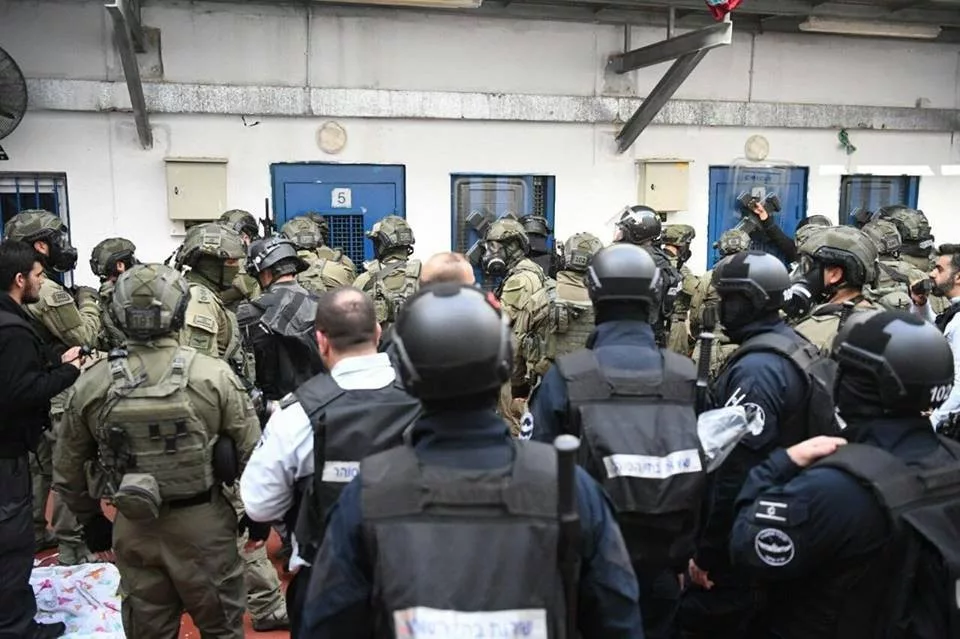
The State Comptroller’s report detailed routine surprise inspections accompanied by beatings, insults, and forced standing for hours without justification.
-
Detainees were also beaten during transfers between prison wings or en route to court, using batons and pepper spray.
-
Testimonies from released prisoners confirmed that daily beatings became standard practice after Ben-Gvir declared prisons should be “a nightmare for terrorists.”
-
Human rights reports confirm systematic abuse: broken ribs and jawbones, sexual assaults, and sleep deprivation.
-
Some prisoners are held underground in the secret Rakevet facility beneath Ramla Prison, denied food and medical care, and subjected to beatings.
-
Abuse continues even upon release, with prisoners shackled, blindfolded, beaten, and insulted while being transported.
6. Disease and Slow Death
-
Poor hygiene, limited water access, and unsanitary conditions have led to outbreaks of skin diseases, heart conditions, severe dehydration, and diarrhea.
-
Malnutrition has decimated the immune systems of many prisoners, some of whom died from treatable illnesses due to a lack of medical care.
-
According to the State Comptroller’s report, scabies became endemic in several sections, causing persistent itching and open wounds.
-
Medical professionals warn that these conditions constitute a policy of slow death, as prisoners are left vulnerable to chronic diseases without treatment.
-
Medication is heavily restricted, and medical visits are rare, further exacerbating the suffering.
7. Bans on Visits and Communication
-
Since October 16, 2023, Israeli prison authorities have barred security prisoners from using public telephones and suspended family and Red Cross visits.
-
Prisoners are allowed only one hour outdoors daily, and their personal belongings—including books and electronic devices have been confiscated.
-
This policy has cut prisoners off from their families, compounding psychological pressure in an apparent effort to break their spirits.
-
Thousands labeled as “unlawful combatants” and held without trial are also denied access to lawyers or any form of outside contact.
8. Push for the Death Penalty
-
Since taking office, Ben-Gvir has actively promoted legislation mandating the death penalty for those convicted of deadly attacks against Israelis.
-
A draft bill passed its first Knesset reading in November 2025, though its implementation remains controversial due to opposition from judges and legal experts.
-
Following the vote, Ben-Gvir declared: “This is how we fight terrorism… when this law passes, terrorists won’t leave prison except for the grave.”
-
During a Knesset session on December 8, 2025, Ben-Gvir and his party members wore noose-shaped pins in support of the bill.
-
He also stated that hanging would not be the only method of execution, suggesting the use of the electric chair and lethal injection as well.


