

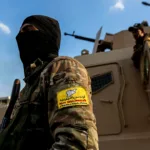

On November 27, 2025, the European Parliament issued a strongly worded resolution condemning the violence perpetrated by both sides of the conflict in Sudan the Sudanese Armed Forces and the Rapid Support Forces (RSF).
Analysts have described the resolution as a critical turning point in Europe’s handling of the Sudanese crisis.
With overwhelming support 503 votes in favor, 32 against, and 52 abstentions—the resolution employed unprecedented language, stating that the indiscriminate attacks on civilians, ethnic targeting, sexual violence, torture, child soldier recruitment, assaults on hospitals and humanitarian infrastructure, and deliberate starvation of civilians could amount to genocide.
Observers say the tone of the resolution marks a qualitative shift in the European stance, moving Brussels beyond conventional statements and diplomatic condemnation toward a firmer, more consequential approach.
This shift raises key questions: Does Europe see in Sudan a chance to reclaim its waning influence in Africa? And can it leverage this political pivot to reassert its relevance amid intensifying regional and global competition?
Cautious Diplomacy and Cold Neutrality
Since the war broke out in Sudan, the European Union has taken a cautious approach, maintaining equal distance from both warring parties. Its rhetoric has remained conventional expressing concern, condemning violence, and emphasizing the protection of civilians and support for ceasefire efforts and humanitarian aid.
Although Brussels’ tone began to shift in 2023 particularly after it labeled the conflict a civil war Europe’s role remained confined to limited diplomatic tools, repeatedly stressing a political solution and a return to the civilian-led path that the EU had warned was unraveling following the 2022 coup.
As abuses escalated through 2023 and 2024, European discourse hardened somewhat. Sanctions were issued against senior figures in both the army and the RSF, drawing on European and international human rights reports that placed criminal responsibility on both sides.
Nevertheless, this tougher stance remained bound by the framework of “neutrality,” despite repeated Sudanese appeals for Brussels to take a clearer position especially after the fall of El Fasher and the atrocities reportedly committed by RSF forces.
While Sudanese officials and rights groups urged the EU to name foreign backers chief among them the UAE the EU refrained from naming sensitive regional actors, opting instead to condemn violations without fully identifying the perpetrators.
This reluctance, coupled with deeper engagement in trade talks with Abu Dhabi, raised questions about the consistency of Europe’s approach. It also prompted voices within the European Parliament and rights circles to call for a firmer position one that restores the EU’s moral authority and bolsters its influence over the Sudanese crisis.
A Notable Shift in Rhetoric
Analysts agree that this recent EU statement, along with parliamentary debates surrounding it, marks a significant departure in tone and substance. It reflects a shift in the European political mood regarding the Sudanese conflict, particularly in response to RSF actions in Darfur, which have drawn widespread domestic and international condemnation.
The statement’s detailed language pointed to a pattern of organized violence, including mass killings, ethnic targeting, the use of sexual violence to terrorize communities, and obstruction of humanitarian aid.
This has moved Brussels from a language of concern to terminology closer to war crimes and crimes against humanity a transformation that underscores a deeper awareness of the crisis’s implications for the international order and civilian protection.
The European Parliament expressed grave concern over the rapidly deteriorating humanitarian situation, noting that famine has become a reality in some areas and that Sudan is experiencing one of the world’s worst humanitarian disasters.
It urged all warring parties to end the use of starvation and sexual violence as weapons of war, ensure unimpeded aid delivery, and prioritize the protection of women and girls.
The Parliament also called on external actors to comply with the UN arms embargo, viewing this as essential to de-escalating the conflict. Politically, it reaffirmed its support for Sudan’s sovereignty, territorial integrity, and the legitimacy of the civilian government in Khartoum, rejecting any attempts to establish parallel authorities in RSF-controlled areas.
Responsibility for ending the war, it stated, lies primarily with RSF and army leaders and their allied militias, along with their backers who must bear full accountability for the ongoing crisis and its humanitarian and security consequences.
UAE’s Role Omitted, Raising Eyebrows
Despite the resolution’s strong language on the Sudan war, its failure to mention the United Arab Emirates widely accused of funding and arming the RSF created a conspicuous gap that sparked widespread scrutiny.
The Sudanese government has formally accused Abu Dhabi at the UN Security Council of complicity in genocide, and a growing body of evidence points to the UAE’s direct involvement in fueling the conflict.
Many have interpreted the EU’s silence as a reflection of political and economic calculations. Politico reported that Abu Dhabi exerted significant pressure within the European Parliament ahead of the vote, seeking to soften the resolution and prevent explicit references to its role.
According to the report, the UAE delegation held multiple meetings in Strasbourg to promote its purported “constructive” role in Sudan despite mounting evidence of its support for RSF forces implicated in mass killings, sexual violence, and severe human rights abuses.
Although the final resolution called for punishing militias and “external funders,” it stopped short of naming names. Prominent EU lawmakers reportedly told the UAE delegation that they possessed information implicating Abu Dhabi in fueling the war.
Still, the resolution merely cited the UAE as a participant in regional mediation not as a party aggravating the conflict.
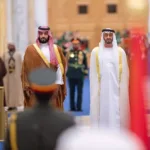
This scene unfolds at a sensitive moment in EU-UAE relations, with Brussels pushing for an ambitious free trade agreement with Abu Dhabi. Observers and human rights advocates have described the UAE’s efforts as an attempt to “contain the damage” and preempt a more explicit EU stance on its role in Sudan.
Some analysts argue that the Sudan war offers Europe a rare opportunity to regain influence in Africa, following its setbacks in the Sahel and the Horn of Africa amid rising competition from rival powers.
Across Europe, calls are growing for deeper engagement in Sudan, viewing it as a potential entry point to rebuild regional clout. Yet, this approach places Brussels in a delicate position.
On one hand, domestic political and rights-based pressure is mounting for a stronger stance on the violations supported by credible reports and testimonies calling for independent accountability mechanisms, sanctions, and tighter arms controls.
These demands position human rights as a central component of European influence.
On the other hand, regional and geopolitical dynamics impose constraints. Europe maintains complex ties with key players in the conflict foremost among them the UAE making it difficult to adopt a confrontational posture without jeopardizing strategic interests.
A Moment to Seize?
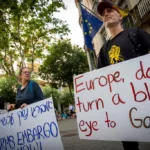
Despite criticism of the EU’s latest statement particularly its failure to openly condemn the UAE observers believe the window of opportunity remains open for Europe to restore its African influence and repair its moral credibility, which has been damaged by its ambiguous stance on the Gaza war.
Maintaining neutrality amid such severe violations not only weakens European impact but also reinforces the perception that Brussels has lost the ethical compass it once claimed creating a vacuum for other powers to fill.
Should Europe cling to traditional diplomacy and equal distance from both parties, it risks complete exclusion from the Sudanese equation and more broadly, from African geopolitics for decades to come.
But a pivot toward effective pressure tools, clear accountability paths, and an unequivocal stance aligned with international law naming violators without hesitation could open a new chapter for Europe in crisis management and reassert Brussels’ role as a credible mediator.
Caught between a bold moral stance and a return to tactical balancing, Europe now faces a critical test: Will it rediscover its principled compass and turn Sudan’s tragedy into a moment of renewed relevance? Or will it fall once again into the trap of narrow calculations, leaving the stage to rising global powers?


