After weeks of sustained protests across several Moroccan cities, the youth-led movement known as “Generation Z 212” has recalibrated its tactics both on the ground and in the digital sphere.
Rather than continuing with daily demonstrations as it initially did, the movement has shifted to weekly protests, now held every Saturday. It has also refined its list of demands and placed greater emphasis on digital activism as a primary means of mobilization and communication.
Following a brief hiatus, the movement resumed its weekly protests, reiterating calls to strengthen the principle of accountability in governance and demanding the release of those arrested for participating in earlier demonstrations.
On the other side, Moroccan authorities have expressed willingness to engage in dialogue with youth representatives. In multiple official statements, the government highlighted its commitment to accelerating reform-oriented social programs and increasing budget allocations for education and healthcare in the upcoming finance law an apparent effort to defuse public anger and channel it into institutional discourse.
Observers see the movement’s strategic shift as an effort to avoid exhaustion and mitigate police pressure. After weeks of intense mobilization, the group seems to be banking on endurance, reducing its street presence to limit confrontations with authorities and ensure long-term viability.
Yet on the popular front, the movement appears to have lost its initial momentum. Protest turnout has dropped significantly, and the issue has faded from prominence on social media platforms.
Why Has the Movement Lost Momentum?
Firstly, despite its strong digital presence, the movement has lacked organizational coherence. With no clear leadership or centralized structure, it has operated more as a spontaneous collective than a coordinated campaign.
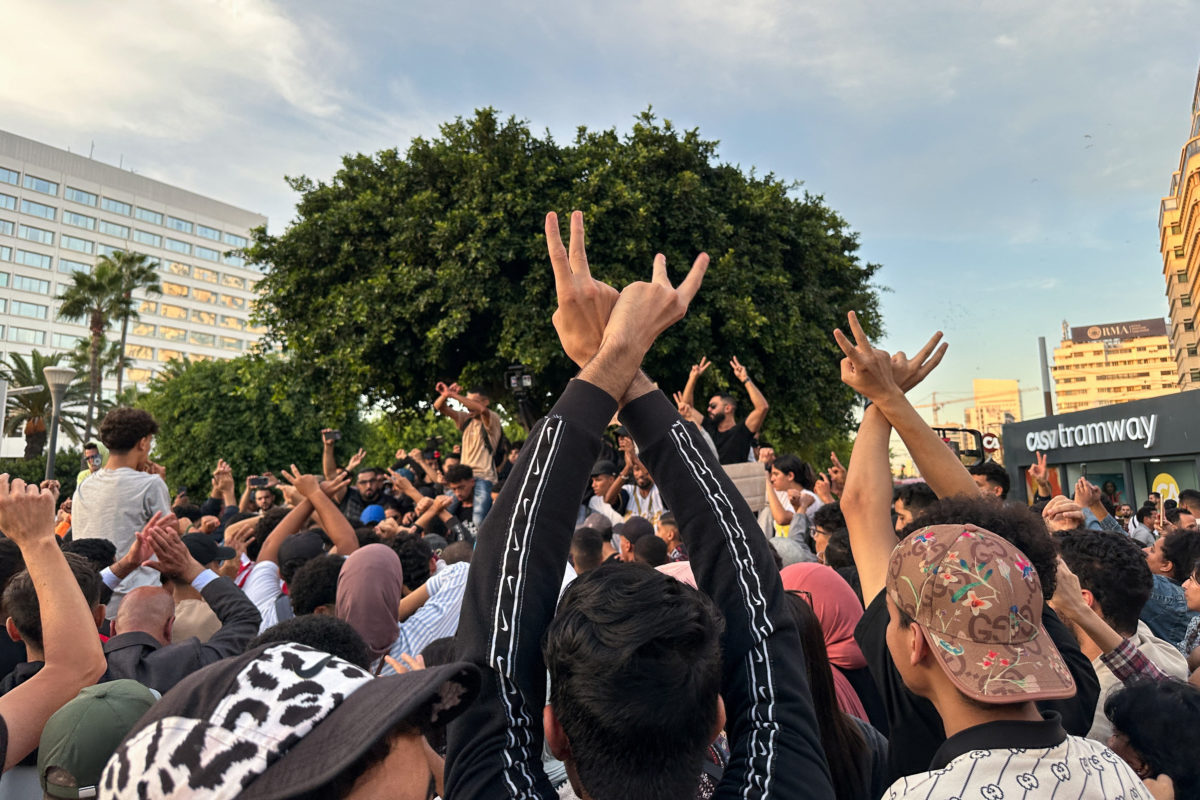
Without an internal framework capable of translating online outrage into a structured agenda or actionable fieldwork, the movement struggled to establish a sustainable trajectory. Reports have noted its absence of formal leadership, a gap made worse by widespread distrust of political parties and unions, which no longer resonate with the aspirations of the new generation.
What initially appeared to be a promising movement is now proving less capable of evolving into a long-term societal project. Despite its youthful legitimacy, the movement has yet to transform protest energy into an organized force that could push for systemic reforms in education, healthcare, or anti-corruption efforts.
Secondly, the group’s messaging and demands have become increasingly fragmented. The movement began with clear priorities education reform, improved healthcare, and anti-corruption measures. However, its discourse quickly expanded to include unemployment, cost of living, regional disparities, and even political demands such as calls for the government’s resignation or policy overhauls.
This expansion weakened internal cohesion. Some activists felt the original social demands were sufficient, while others insisted that political reform was the only viable path forward. The divergence in priorities made it difficult to formulate a unified vision. At one point, the movement released a list of demands, only to later retract it and label it a draft before issuing a broader, more complex version.
Thirdly, the movement’s heavy reliance on digital activism came at the expense of sustained, disciplined on-the-ground organizing. Initially, Generation Z leveraged platforms like Discord and social media to quickly gain visibility and support.
However, this digital momentum wasn’t matched by organized field operations capable of guiding protest activity. In some areas, protests linked to the movement descended into violence, vandalism, and the storming of public institutions and banks developments that undermined public support.
State Pressure and the Fear of Politicization
The challenges facing Generation Z 212 aren’t solely internal. External factors have also contributed to its decline.
Chief among them is the state’s security response. In cities like Inezgane, Aït Amira, and Oujda, mass arrests and violent clashes were reported, with injuries sustained by both protesters and police.
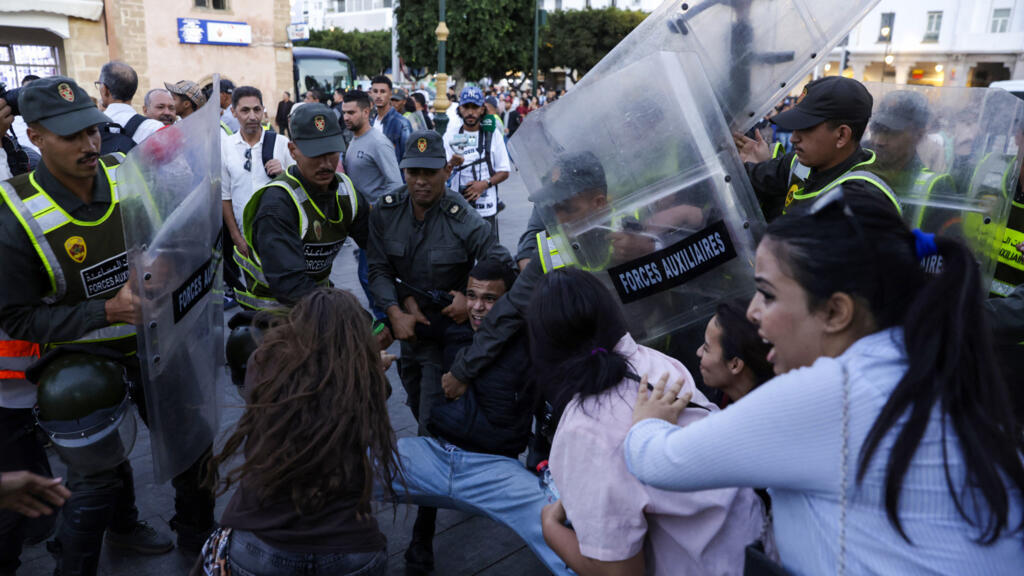
These incidents sent a clear message: the state would not tolerate mass dissent instilling fear among youth participants.
A second factor is the fear of politicization. Many within the movement resisted co-optation by traditional political actors, adopting the slogan “No Parties” to underscore their independence. Yet this distancing from political frameworks weakened their ability to negotiate or expand, leaving them isolated within the existing power structure.
At the same time, political figures have attempted to appropriate the movement, seeking to leverage it for electoral or personal gain. This has put the movement on the defensive, wary of infiltration. Moreover, Morocco’s institutional framework offers little room for the emergence of independent youth movements without formal political affiliations or recognizable negotiation partners.
Another obstacle is the lack of clarity around the movement’s demands and reform timeline. While education and healthcare reform are widely popular, Generation Z has struggled to define whether it seeks institutional transformation or superficial improvements.
This ambiguity allowed the state to dilute the movement’s energy through promises of temporary programs or symbolic gestures framed as responses to youth demands but lacking structural depth.
For example, while the government has pledged to engage in dialogue and acknowledged the legitimacy of some demands, dialogue alone without concrete action—has failed to satisfy protesters. As a result, many feel the movement has yet to achieve tangible outcomes.
Still, it has succeeded in thrusting Morocco’s public policy failures back into national debate after a prolonged silence under Prime Minister Aziz Akhannouch’s administration.
A Pivotal Moment for Generation Z
The future of Generation Z 212 hangs in a delicate balance of promise and peril. This is not a traditional revolution or mass uprising, but rather a nuanced expression of evolving relations between youth and the state.
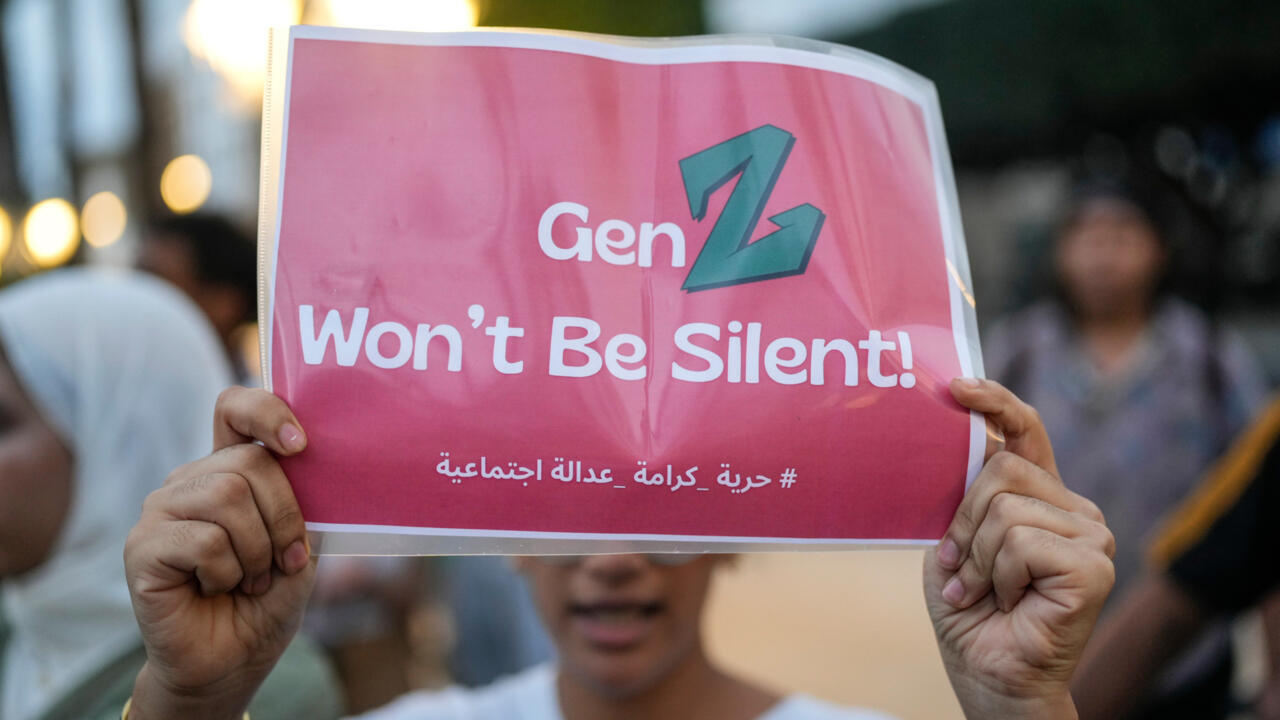
It is a moment of collective awareness, aiming to redefine citizenship, participation, and social justice within the current system, not against it.
On the positive side, the movement has shifted the national discourse. It broke a long silence, raised vital questions about justice and accountability, and compelled the state to recognize a new generation unwilling to accept paternalism. Its most significant contribution may be reigniting dialogue about public policy after years of stagnation.
But its most pressing challenge remains the lack of a stable organizational infrastructure to ensure longevity.
Without clear frameworks, representative leadership, or negotiation mechanisms, the movement risks fragmentation, absorption, or marginalization especially given its skepticism toward political parties and traditional mediators.
In the short term, the government may continue to pursue superficial appeasement through temporary programs. Meanwhile, the movement will likely cling to its symbolic power and digital presence. In the medium term, Generation Z’s fate will hinge on its ability to evolve from protest into proposition, from raw anger into tangible alternatives that reflect its core aspirations.
Its true turning point will be whether it can engage in a long-term political and social process without losing its autonomy or succumbing to traditional alignments. Its success won’t be measured solely by immediate victories, but by its ability to cultivate new leadership, create democratic spaces for youth, and foster a collective consciousness that is hard to erase.
In the end, Generation Z remains an open-ended experiment navigating the space between hope and disillusionment, dream and reality. But it has already achieved one crucial milestone: it has announced the arrival of a generation unwilling to stay silent in the face of injustice.