

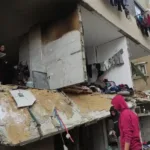




Israeli warplanes flew nearly 2,000 kilometers to reach the skies over Sana’a, Yemen, where they dropped bombs on a densely populated neighborhood in the heart of the city on September 10 of this year. Within seconds, massive explosions, blazing fires, and billowing smoke turned the residential area into a disaster zone shrouded in grief and devastation.
The Israeli military has become notorious for demolishing homes with their inhabitants still inside—something the world has come to associate with its conduct in Gaza since the war began in October 2023. Its latest strike on Sana’a was a precise attack on a media building staffed by dozens of journalists. The facility was reduced to rubble. Beneath the debris, dozens of media workers lay dead; the lucky ones emerged injured and deeply traumatized.
The Houthi group announced that the Israeli airstrikes on the Yemeni capital Sana’a and the Al-Jawf governorate on September 10 resulted in 211 people killed or wounded.
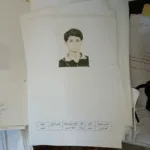
In the Al-Tahrir district of Sana’a, rescue efforts continued for five days amid the ruins. Authorities confirmed the deaths of 32 individuals working in journalism—including photographers, reporters, and editors—at the newspapers 26 September and Al-Yemen. They had been united by their profession in a single building and were killed by Israel in one strike. All were buried on the same day, in a somber and surreal moment of collective mourning.
Yemen has never before witnessed such a massacre of journalists—one that, according to Yemeni journalists, citizens, and human rights advocates, is unjustifiable. With Israel now targeting Yemen’s media sector, the dangers faced by journalists no longer come solely from domestic factions. Israel has emerged as a new and terrifying threat to reporters working in Houthi-controlled institutions in Sana’a.
The Israeli airstrike on 26 September and Al-Yemen newspapers marked the first of its kind. Whether it will be the last remains uncertain, as the Yemeni-Israeli conflict grows more complex and expansive by the day.
Following the air raids on multiple sites, Israeli Defense Minister Yoav Gallant stated that Israeli forces had struck camps in Sana’a and other parts of Yemen, including the Houthi media unit.
“We promised additional strikes, and today we delivered a painful blow to the Houthi organization in Yemen,” he said, adding that Israel’s “long arm will strike terrorism wherever it threatens us.”
The Flying Enemy
Ali, a 34-year-old independent journalist based in Sana’a, described Israel’s targeting of media facilities as “a dangerous escalation” in the war between the Houthis and Israel—and “an unprecedented loss” for Yemen’s media sector.
“In recent months, I found some justification for Israel’s targeting of power stations, fuel depots, and ports,” he told Noon Post. “I thought they were trying to create a fuel crisis and make life harder for civilians in Houthi-controlled areas—to provoke chaos and economic disruption that would destabilize the Houthis.”
“But the Zionist targeting of journalists is beyond justification. Journalists are not military actors. They are civilians who report the news and tell stories. Killing journalists with warplanes is an unspeakable atrocity and a barbaric disregard for innocent lives.”
Ali noted that Israel’s hostility toward media institutions in Houthi-controlled areas has now become unmistakably clear. The threat of further airstrikes looms constantly, keeping journalists in a state of perpetual fear.
“During the years of war in Yemen, journalists have been killed, kidnapped, and threatened by various parties in the conflict,” he added. “Enemies of the press are numerous here.
But the flying enemy—who drops bombs without warning—is among the most terrifying. When fighter jets are involved, the chances of survival are almost nonexistent.”
A report by Human Rights Watch states that repeated attacks by warring parties on journalists and media institutions put dozens of lives at risk and seriously undermine freedom of expression in Yemen. The report highlights grave violations committed by all sides—particularly the Houthis, the Southern Transitional Council, and the internationally recognized Yemeni government.
Between 2010 and the end of September 2020, 44 journalists were killed in Yemen, according to the Yemeni Journalists Syndicate. Not a single perpetrator has been brought to justice.
“As a journalist, I never got justice. My killers walk freely in Yemen,” Ali said. “So how will I ever see justice when my killer is in Israel? It’s a tragedy beyond words.”
Aseel Sariah, a Yemeni journalist, called the Israeli strike on a media institution in Sana’a “the largest journalistic massacre in the history of modern media.” He added, “Over two years, Israel killed about 240 journalists in Gaza.
But in one day alone, 30 Yemeni journalists died—that’s around 10–12% of the total killed in Gaza, and in a single strike. This isn’t just a number. It’s a human tragedy. A campaign of extermination that started in Gaza and has now reached Sana’a.”
Loyalty to the Profession
Yemeni journalists operate in a landscape fractured by political, military, and geographic divisions—the fallout of a civil war that began in 2015 between the Houthis and Yemen’s internationally recognized government. Throughout the conflict, various factions have sought to recruit journalists, launching news websites and TV channels to push their narratives and influence public opinion.
In such an environment, maintaining professional independence is extremely difficult. Many journalists accept work at media institutions owned or controlled by warring parties.
Abdul Karim Nasser, 45, lives in the Al-Tahrir district of Sana’a near the media facility destroyed by the Israeli airstrike. He knew several of the journalists who died. Speaking to Noon Post, he said: “Those journalists worked at a Houthi-run media institution, but that doesn’t mean they were loyal to the movement. Many were simply passionate about journalism. Their primary allegiance was to their profession, not the rulers.”
He added that if the Houthis were to fall, many of these journalists would remain and continue their work under the new leadership. “They’re committed to their profession—regardless of who’s in power.”
Job opportunities in Yemen’s media sector are limited, Nasser explained, which forces many journalists to keep working in government-run outlets in Houthi-controlled areas, even if they don’t support the group’s ideology.
“Israeli warplanes are killing innocent people in Yemen, including journalists,” he said. “But this does not weaken the Houthis or affect their military operations against Israel. The group will replace the dead staff, and the war will go on.”
Niku Jafarnia, a Bahrain and Yemen researcher at Human Rights Watch’s Middle East and North Africa division, emphasized that broadcast facilities are civilian infrastructure and must not be targeted.
“Such sites are only considered legitimate military targets if they are being used in a way that directly contributes to military action,” she said. “Even if they support the Houthis or oppose Israel, or report on violations of the laws of war, that does not make them lawful targets.”
Despite the chaos, Yemen’s journalists continue to hold their pens. They document events, publish news, and their media institutions persist in the face of conflict. But the challenges are mounting. The threat is no longer just from domestic actors—it now comes from above. And Israeli airstrikes have emerged as the most devastating and unpredictable danger of all.


