

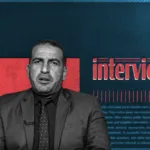




“If these words reach you, know that Israel has succeeded in killing and silencing me.” This is how Palestinian journalist Anas Al-Sharif began the will he wrote 126 days ago, convinced that his day would inevitably come, and that the occupier’s treacherous hand would not allow him to challenge its propaganda unchecked—determined to eliminate him in a campaign driven by hatred, racism, and a brutality that defies reason.
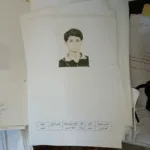
Anas—son of steadfast Jabalia, deeply rooted in Maghazi—was known for his unshakable smile and gritty voice. A fearless reporter, deeply committed to his country’s cause, he became Gaza’s voice, face, and symbol from the very beginning of the war.
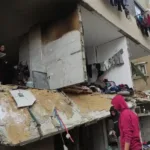
His presence, mature beyond his years, unsettled the Israeli narrative by exposing its falsehoods and stripping away its long-protected masks. His punishment came in the form of a precise missile, devoid of humanity and charged with rage and racism, which destroyed his tent on the evening of Sunday, August 10, 2025, killing him and several colleagues.
In an instant, Al-Sharif became the defining figure of Gaza. His voice pierced deception and struck the heart of truth. He spoke for the hungry, the displaced, the silenced—embodying the anguish of Gaza’s people with a body worn thin by starvation and exhaustion. He was their mirror to a world that had turned its back.
For over 650 days, Anas stood as a one-man frontline against an entire army. His voice disrupted their plans, his courage exposed their crimes. He turned words into weapons, and his camera into a black box documenting the fascism Israel tried to conceal. In time, the messenger became the story—but the story is far from over.
Destined for Martyrdom
Before the war, Anas was not widely known. He was not among the familiar names in Gaza’s media landscape. But as the Israeli campaign intensified erasing entire neighborhoods in the north and forcing mass displacement many news voices fell silent. Israel believed it had secured impunity, with no media, no Arab position of consequence, and no meaningful international accountability.
But from the rubble of Jabalia, a young man emerged slim, determined, and unwilling to let Israel claim a false victory. His voice rang out, bold and defiant: “Coverage continues.” He became the north’s cry for justice, a living witness to crimes that Netanyahu and his generals hoped would vanish quietly. But Anas had a different plan.
He knew what he was walking into. He had no illusions about the danger. For him, the path of journalism in war was a path toward martyrdom inevitable, singular, and sacred.
For 21 months, Anas crisscrossed northern Gaza, broadcasting the truth. The world watched a brutal war unfold through his lens live, unfiltered, undeniable. With his fellow journalists, he became Gaza’s eyes, its heartbeat, its breaking voice.
His fierce commitment shattered red lines. His reporting disrupted Israel’s narrative, cornering it into global scrutiny. Public opinion shifted. Governments scrambled to react. And Israel grew furious.
A smear campaign followed. The man with a microphone and camera became a high-priority target. Israeli military spokespeople and analysts openly incited against him. The message was clear: silence or die. Anas didn’t hesitate. His response was instant: coverage continues—whatever the price.
More Than a Reporter
It would be a mistake to call Anas (Abu Salah) merely a “reporter.” He didn’t practice journalism from the safety of press briefings or newsrooms. He wasn’t protected by press laws or international norms. He plunged into fire, armed with faith and a mission.
To his colleagues, he was a force of nature relentless, loyal, truthful. He helped dig out survivors, wrap the dead for burial, comfort the grieving, and share in every sorrow. He wasn’t just reporting the story he lived it. He was Gaza’s son, friend, and witness.
People didn’t see him as a distant journalist. He starved with them, slept beneath the sky with them, bled with them. Without his press vest, he was indistinguishable from the crowd. He was Gaza’s soul and mirror.
A Belief the World Couldn’t Ignore
Anas’s struggle was the lived proof of his belief in Palestine. When he believed in it fully fought for it with words and images the world believed in him. He became a symbol of resistance, rising above famous reporters across Palestine and beyond.
He believed that liberation required patience and sacrifice. For him, Palestine was worth everything. That belief sustained him. Even when, on December 11, 2023, Israeli warplanes struck his home, killing his father and relatives, Anas responded not with silence but a live broadcast: “Coverage continues.”
Despite Israeli threats and character assassinations, he kept going. By early 2024, international organizations like the CPJ and UN rapporteurs warned he could be targeted. Still, he pressed forward.
He planted pride and resilience in his children, Salah and Sham making even their innocence a weapon against Zionist propaganda. He passed beyond traditional fatherhood; for Anas, the nation was sacred, and abandoning it would be a betrayal.
A Voice That Shook the Occupation
Anas wasn’t just reporting. He was a seismic shock to Israel’s media strategy. His work dismantled decades of carefully constructed lies.
He didn’t fabricate Gaza’s suffering. He wasn’t part of armed factions. He simply showed the truth: the killer, the victim, the blood, the scene. That was his only crime telling the world what he saw and heard, with honesty and pain.
He stripped away the masks. He crossed the red lines. So Israel made the familiar choice: kill the witness.
But they’re wrong to think killing Anas ends the story. They thought the same when they killed Shireen Abu Akleh, Ismail Al-Ghoul, Hamza Al-Dahdouh, Abu Daqa, Al-Madhoun—and over 230 journalists since this war began. But behind Anas, a thousand others rise.
When Israeli Channel 12’s top analyst Amit Segal heard the news, he said:
“I’ve waited for this a long, long time. The world will be a better place without him.”
What did you do, Anas—what truth did you reveal—to make them hate you this much?
Even in His Will, Palestine Came First
A will is usually for family. But Anas’s final words, like his life, put Palestine first.
“Do not let chains silence you. Do not let borders restrain you. Be bridges toward the liberation of our land and people—until the sun of dignity and freedom rises.”
To his family, he left love and faith. To Sham, his little girl, and Salah, his hopeful son. To his mother, whose prayers were his armor. To his wife, Umm Salah separated by war, but unbroken, steadfast.
Anas could have escaped. He could’ve run with his family to the south. Others did. But he stayed. For the mission. For the message.
He had carried the bodies of martyred colleagues now he was carried. The journalist who reported on countless deaths became a headline himself. The voice who eulogized others was now mourned by millions.
This was not just another death. His blood and others’ calls out to the world. For months, he cried out. No one came. Hunger weakened his body, but never his resolve.
No more hunger, Abu Salah. No more tears, Abu Sham. No more tents, blood, or pleas to deaf ears.
Rest now. After 21 months of relentless struggle this is your reward. A reunion with the beloved. Perhaps even with Al-Sinwar and his companions.
You lived in truth and died for it, Anas. You will outlast your killers. Their thrones will fall; your legacy will not. You were a companion in life and remain noble in death. And yes—coverage continues.


