










Without prior warning and unilaterally, Turkey announced the cancellation of a 52-year-old treaty with Iraq that allowed for the export of Iraqi oil through Turkish territory to global markets. The Iraqi government has so far remained silent on this significant development.
Turkey declared that it would cease implementing the treaty—along with all subsequent protocols and memoranda—starting July 27, 2026, the date on which the agreement was due for renewal.
A Turkish official told Reuters that Ankara seeks a “new and dynamic phase that benefits both parties and the region,” noting that Turkey remains open to negotiating a new agreement with Iraq—under terms more favorable to Ankara.
From Strategic Partnership to Unilateral Termination
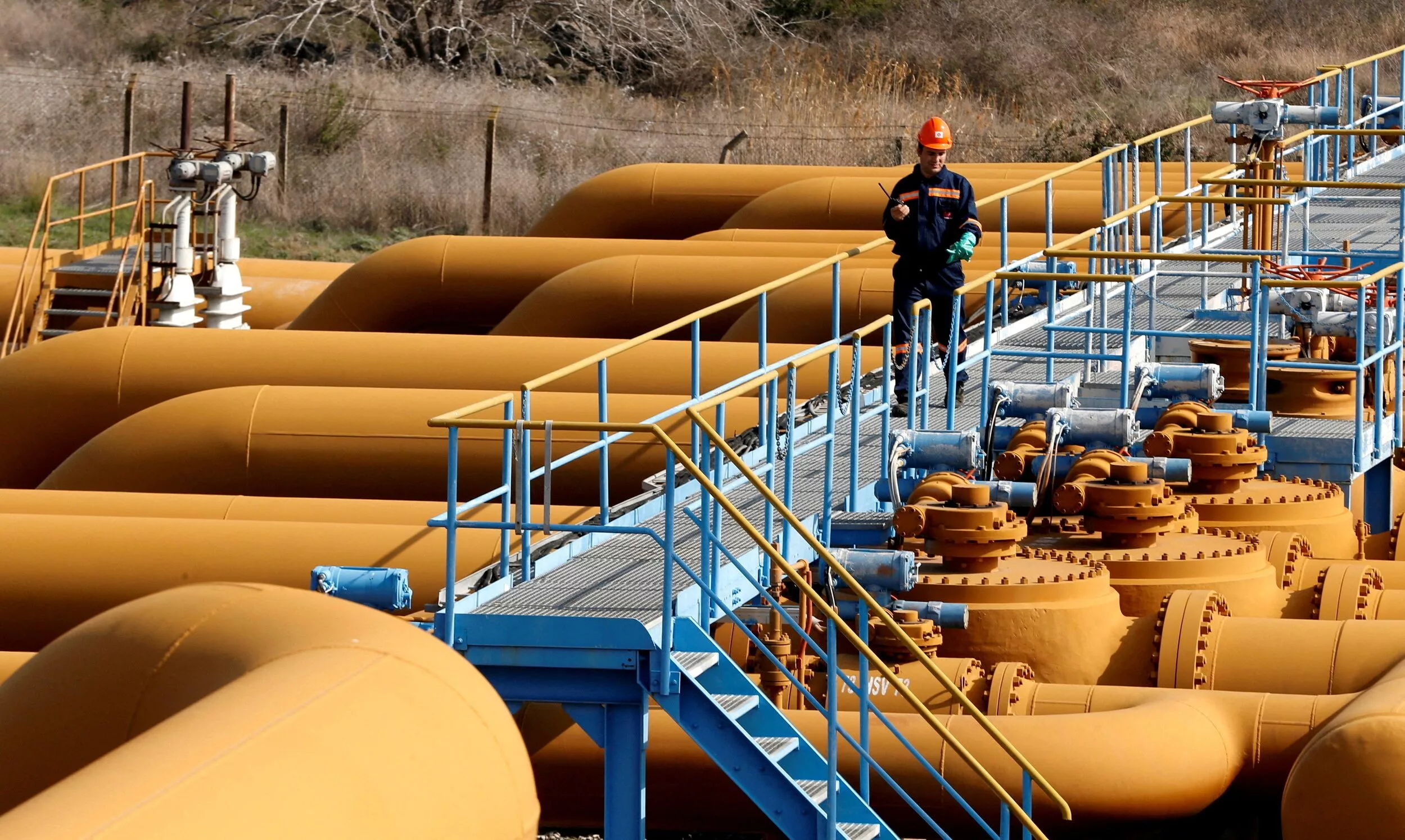
Signed in 1973, the treaty between Iraq and Turkey facilitated the export of Iraqi oil via the Turkish port of Ceyhan, and became operational in 1975. Over the decades, the treaty underwent several amendments and protocol additions and marked numerous milestones:
- 1980–1990: Expansion of the pipeline network to increase capacity and upgrades to stations and technologies.
- 1990–1991: Exports halted due to the Gulf War and international sanctions imposed on Iraq following its invasion of Kuwait.
- 2003: Oil exports gradually resumed after the fall of Saddam Hussein, with rehabilitation and modernization bringing output back to pre-war levels.
- 2010–Present: The treaty was extended for 15 years, set to expire in July 2026. However, security threats from terrorist groups led to repeated disruptions in exports.

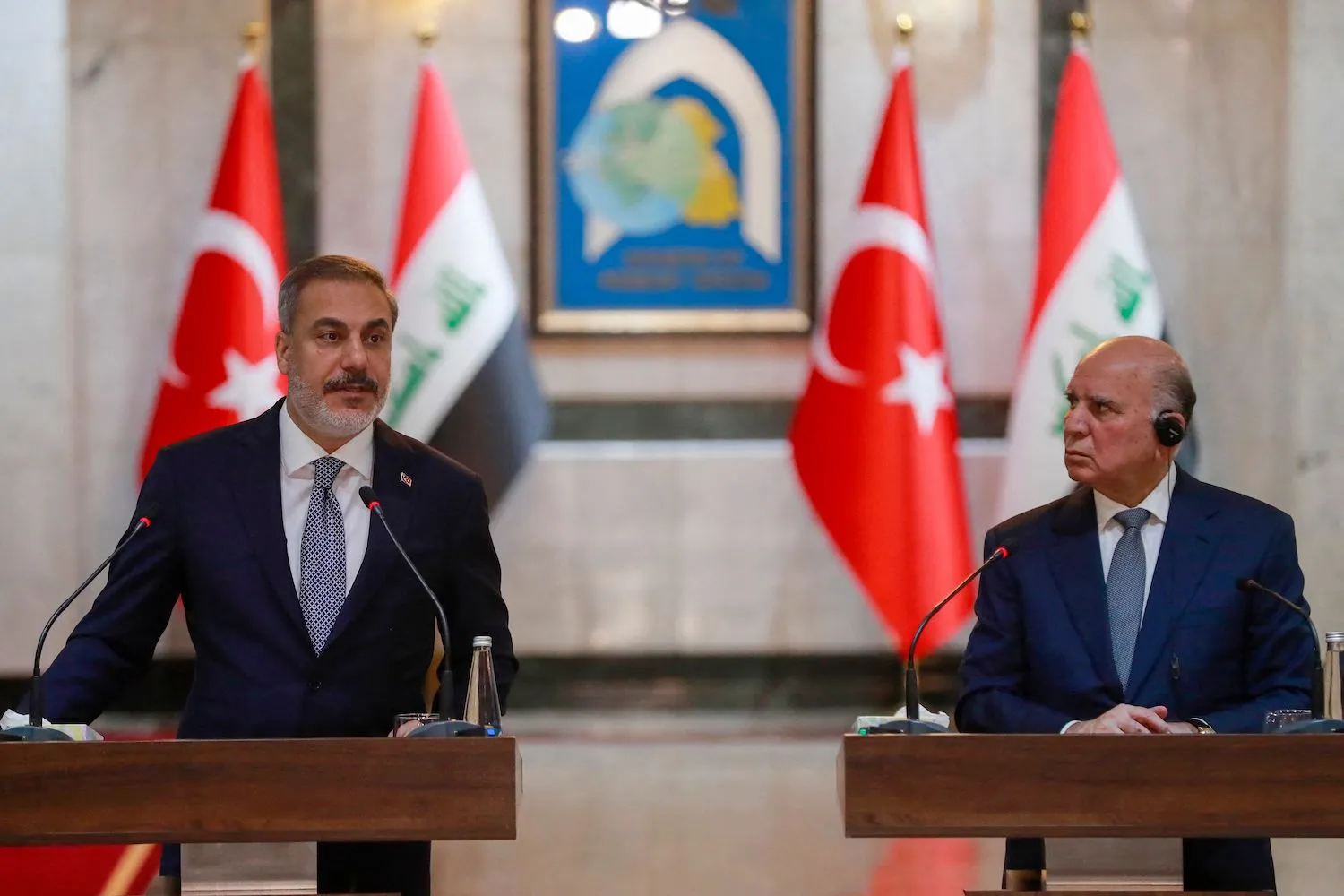
Turkish FM Hakan Fidan (left) with Iraqi FM Fuad Hussein in Baghdad, August 22. Ahmad Al-Rubaye / AFP
In 2014, the Kurdistan Regional Government (KRG) began exporting oil independently through the pipeline to Ceyhan without Baghdad’s consent, sparking a legal battle.
The Iraqi government filed a case against Turkey at the International Chamber of Commerce in Paris, which ruled in Baghdad’s favor and ordered Ankara to pay $1.5 billion in damages—a sum that remains unpaid.
In retaliation, Turkey suspended pipeline exports, costing Iraq an estimated $19 billion by February 2025.
More recently, as Baghdad and Erbil reached a tentative agreement to resume KRG oil exports via Turkey, Ankara preempted the move by canceling the treaty and calling for a new agreement.
Turkey based its action on Article 11 of the amended 2010 treaty, which allows either party to terminate the agreement—set for 15 years—by giving written notice one year before expiry. Still, Turkey remains legally obligated to maintain oil transit operations until July 2026.
Geopolitical Ambitions Beyond Borders
Turkey’s decision reflects a strategic shift shaped by recent regional upheavals. Following the outbreak of “Al-Aqsa Flood” in Gaza and the sweeping transformations it triggered—either directly or indirectly—Turkey has adopted a bolder, more assertive foreign policy.
These shifts include the fall of the Syrian regime and its replacement by a pro-Ankara government, the military defeat of Hezbollah, waning Iranian influence, and strikes on Iran by the U.S. and Israel—with more possibly on the horizon.
Further momentum came with the disbandment of the Kurdistan Workers’ Party (PKK) and the end of its armed struggle against Turkey, coupled with a renewed alignment between Ankara and Washington during Donald Trump’s second presidential term.
All these factors have emboldened Turkey to consolidate its position as a regional power and seek to translate geopolitical influence into economic and political gains—especially in reshaping its energy relationship with Iraq.
Economically, Ankara views the current treaty as financially inadequate, with Turkey earning roughly $5 per barrel exported through Ceyhan. Turkey no longer wants to serve merely as a transit corridor but as a partner in Iraq’s oil operations—particularly given its longstanding upstream partnerships with the KRG, some of which span five decades.
Ankara’s negotiating leverage stems from several sources: deep ties with the Kurdistan Democratic Party (KDP), military bases in KDP-controlled areas, significant influence over Sunni political blocs in Iraq, and—crucially—its control over water flows into Iraq. These dynamics place Baghdad at a distinct disadvantage.
Turkey now seeks a revamped treaty that reflects its strategic interests and gives it a larger role. Ankara also has its eye on the “Development Road” or “economic corridor” project connecting Basra’s ports with the Turkish border via pipelines and railways.
Turkey aspires to play a central role in this initiative, facilitating not only the export of Basra’s oil but also Gulf oil and gas to global markets—on the condition that it is treated as a primary partner, not merely a conduit.
To this end, Turkey has submitted a draft proposal to Iraq for a broader energy agreement encompassing oil, gas, petrochemicals, and electricity. An Iraqi official confirmed that Baghdad is currently reviewing the draft and preparing a formal response.
Who Bears the Cost of Turkey’s Withdrawal?
Both the KRG and the Iraqi federal government stand to suffer significant economic setbacks due to Ankara’s decision. For the KRG, the canceled treaty effectively eliminates its sole outlet for oil exports.
Given that oil revenues account for roughly 80% of the region’s budget, the halt in exports since March 2023 has already cost over $2 billion, deepening its financial crisis.
Baghdad, meanwhile, remains heavily dependent on oil exports to fund its national budget. With no viable alternatives to the annulled treaty, both Baghdad and Erbil may be compelled to accept a new deal with Ankara—potentially under less favorable terms.
From Ankara’s perspective, the outdated treaty no longer reflects today’s geopolitical realities or the evolving global energy market. Turkey now seeks a comprehensive partnership with Iraq—anchored in strategic collaboration on oil and gas production, refining, petrochemical investments, and electricity generation.
Fundamentally, Turkey aims to expand its political footprint in Iraq as a counterweight to Iranian influence, which continues to dominate Iraq’s political, economic, and military spheres.
Notably, Turkey’s announcement of its withdrawal was made exactly one year ahead of the treaty’s expiration, in line with the agreement’s stipulations. Ankara’s move also aligns with U.S. and Israeli efforts to reshape Iraqi policy on armed groups deemed terrorist organizations by Washington.
The U.S. has repeatedly warned Baghdad and its Iran-aligned parliament against legitimizing such groups through formal legislation.
By positioning itself as a viable alternative to Iran, Turkey offers a model more palatable to the U.S.—especially given its NATO membership and strategic ties with Washington.
Beyond Ceyhan: Where Does Iraqi Oil Go After Turkey?
While Iraqi negotiators have been widely criticized for their weak handling of the Turkish file, Iraq still possesses several leverage points to reduce Ankara’s economic upper hand. These include:
- Basra Ports: Iraq could ramp up exports via its Gulf terminals after upgrading their capacity. However, this route is vulnerable due to the strategic chokepoint of the Strait of Hormuz, which may be closed during any conflict involving Iran, Israel, or the U.S.—a risk Iraq’s fragile economy cannot afford.
- Syrian Route: The old pipeline to Baniyas on the Mediterranean coast could be reactivated, pending an agreement with Syria’s new regime, which urgently needs financial and energy resources. This plan hinges on securing the pipeline from sabotage amid Syria’s unstable security landscape.
- Jordanian Route: A proposed pipeline to Aqaba on the Red Sea has long been discussed, but has faced staunch opposition from Iran-backed militias, who vowed to block such a project.
- Saudi Pipeline: Iraq also owns a pipeline stretching through Saudi Arabia to the Red Sea. Though inactive since the 1990 Gulf War, it was funded entirely by Iraq and could potentially be revived through negotiations with Riyadh.
Economically, Iraq could also pressure Turkey by threatening to reduce its annual $12 billion in imports—a major imbalance in the trade relationship that Baghdad could exploit during negotiations.
Legally, Iraq can once again turn to the International Chamber of Commerce in Paris, citing Article 10 of the agreement. Legal expert Ali Al-Tamimi argues that Iraq has a strong case, as Turkey’s unilateral move violated the clause requiring bilateral settlement of disputes and caused substantial economic harm.
Ultimately, Iraq’s post-2003 governments have played a significant role in exacerbating the country’s political and economic woes, leaving it exposed to regional and international power struggles. Politics abhors a vacuum. A state unable to assert sovereign control inevitably invites foreign interference—be it from Turkey, Iran, or the United States.
Solving Iraq’s economic challenges begins with a foundational reform of the post-2003 political system, which many argue was built on non-national foundations and remains ill-equipped to serve Iraq’s long-term interests.
