
On April 27, 2025, Egypt’s Public Prosecution announced via its official Facebook page that Prosecutor General Mohamed Shawky had referred 237 cases to the economic criminal courts within just one year, all involving money laundering charges.
According to the statement, the Economic and Money Laundering Prosecution had conducted investigations into these cases as part of a broader effort to combat illicit financial activity and support transparency across personal and institutional financial transactions.
The total sums involved exceeded 7.7 billion Egyptian pounds, $319.3 million, €4.1 million, and £552.9 thousand across various bank accounts in both local and foreign currencies—amounting to an estimated $467 million in total.
The announcement, however, omitted key details such as the identities of the accused, the nature of the violations, and the activities used to launder the funds.
Around the same time in 2024, the Ministry of Interior reported the arrest of eight individuals accused of laundering 900 million Egyptian pounds derived from drug trafficking operations in the governorates of Dakahlia and Cairo.
The ministry’s statement explained that the suspects attempted to legitimize the proceeds by establishing businesses, purchasing property and vehicles, and investing in agricultural lands—efforts to conceal the money’s illicit origins under a veneer of legitimacy.
Between these two announcements—and many others like them—a consistent theme emerges: official commendations of Egypt’s regulatory efforts to combat money laundering. But while authorities celebrate such actions, they also underscore the scale of the threat such crimes pose to Egypt’s already-strained economy, deterring clean investments and potentially positioning Cairo as a rival to Dubai—not as a hub for global finance, but as a haven for laundering dirty money.
Yet the real alarm lies in what’s left unsaid. The staggering figures raise pressing questions: How can a country that is a signatory to international anti-money laundering agreements refer 237 cases in a single year involving nearly half a billion dollars? If this is merely the discovered portion, what about the undiscovered? Logic dictates that the actual volume of laundered money is likely far higher.
The United Nations defines money laundering as “the processing of criminal proceeds to disguise their illegal origin.” The 1988 Vienna Convention adds that laundering involves “the conversion or transfer of property, knowing that such property is derived from a crime, for the purpose of concealing or disguising its illicit origin.”
A Complex Map
Egypt’s money laundering ecosystem has evolved over decades into a sprawling, multifaceted phenomenon. Crimes range from drug, arms, and antiquities trafficking to bribery, corruption, embezzlement, tax evasion, cyber fraud, and digital currency-related schemes.
Methods vary: funneling funds through multiple banks, establishing shell companies, leveraging third-party accounts, foreign investments, stock purchases, and most notably, real estate and vehicle acquisitions. Entertainment venues—cinemas, bars, cafés—and beauty and massage parlors are also frequent fronts for laundering operations.
Egyptian law imposes harsh penalties. According to Anti-Money Laundering Law No. 80 of 2002 (as amended), penalties include fines proportional to the laundered sums, asset confiscation, business bans, and—in cases involving financial institutions—suspension or revocation of licenses. Prison sentences range from three to seven years and may include both incarceration and fines.
A Fertile Ground
Egypt’s informal economy—unregulated, untaxed, and absent from official economic metrics—has become a fertile breeding ground for money laundering. Referred to colloquially as the “black market” or “grey economy” (a term coined by Nobel laureate Sir Arthur Lewis), this sector includes self-employment, undeclared labor, and untaxed enterprises.
Despite the lack of official figures, estimates suggest it comprises 40–60%—some say over 70%—of Egypt’s formal economy, with around 2 million informal businesses accounting for over half the nation’s total enterprises.
Approximately 4 million Egyptians work in this sector, contributing an estimated 362.1 billion pounds in production—11.1% of GDP—and 8.7 billion pounds in capital investment. Ashraf Abdel Ghany, head of the Egyptian Tax Experts Association, estimates its size exceeds 3 trillion pounds.
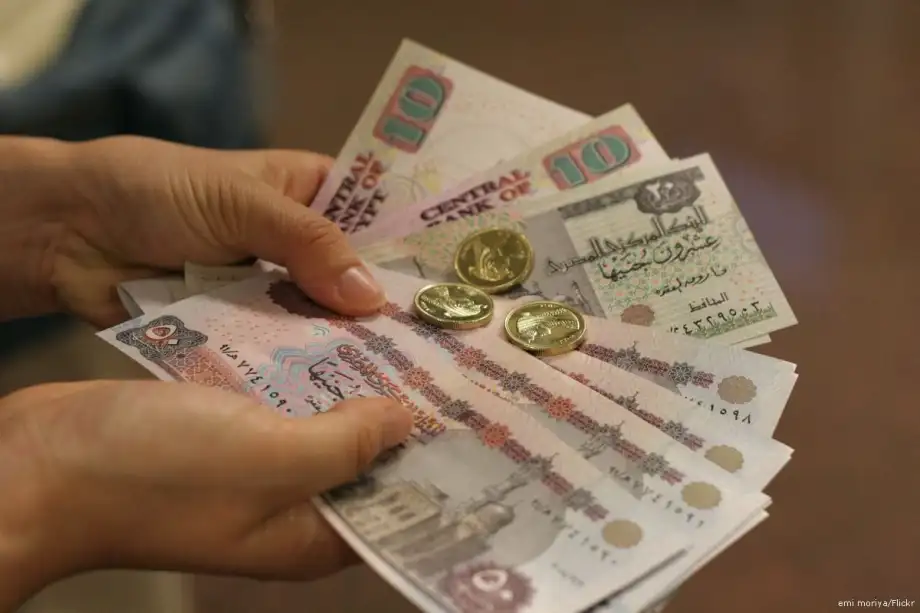
With two-thirds of economic activity effectively off the books and shielded from oversight, Egypt presents ideal conditions for illicit finance. These gaps attract criminals from around the world seeking safe havens for laundering dirty money.
In September 2020, the Ministry of Interior reported 1,600 tax evasion and public funds theft cases—including eight major money laundering operations worth 1.3 billion pounds. Six months earlier, the Administrative Control Authority arrested an MP for accepting a 300,000-pound bribe from a real estate company in Cairo.
In February that year, authorities dismantled a massive laundering network involving 17 suspects, who used fictitious accounts under names of deceased persons and expatriates, and created shell companies to transfer nearly 1.69 billion pounds ($108 million). A separate group was arrested around the same time in Alexandria and Cairo for laundering 160 million pounds ($10.3 million).
The Corruption Connection
Money laundering thrives in corrupt environments—each perpetuating the other. Although Egypt has made strides in anti-corruption efforts, corruption remains deeply entrenched, fueling the spread of laundering, bribery, and related crimes.
Egypt was among the first to sign the 2003 UN Convention Against Corruption, and in 2002, it established the Anti-Money Laundering and Terrorist Financing Unit under the Central Bank. Upon assuming power in 2014, President Abdel Fattah el-Sisi launched the “National Anti-Corruption Strategy,” citing Article 218 of the Constitution, which mandates institutional cooperation in fighting corruption and promoting transparency.
In 2017, Egypt founded the National Academy for Anti-Corruption as an educational arm of the Administrative Control Authority, offering training in anti-corruption sciences and policies. In July 2022, Law No. 154 further expanded the powers of the Anti-Money Laundering Unit.
These institutions operate through three pillars: legislative frameworks, empowered oversight bodies, and crucially, political will. Yet after a decade, Egypt fell in Transparency International’s 2024 Corruption Perceptions Index to 130th out of 180 nations, scoring just 30 out of 100—a sharp decline from the previous year’s 35.
The index evaluates bribery, embezzlement, abuse of office, lack of transparency, patronage, whistleblower protections, and restricted access to public information. According to Zakaria Azmi, former chief of staff under President Mubarak, corruption in Egypt has reached “neck-deep” proportions.
Oversight—Advanced but Insufficient
Egypt’s central bank-affiliated Anti-Money Laundering Unit has led a modernized surveillance system, securing numerous convictions. The state has updated its regulatory tools to address rising cybercrime, aiming to reassure domestic and foreign investors.
However, enforcement remains inconsistent. Online fraud and cyber-laundering continue to surge, aided by weak inter-agency coordination, outdated systems, and limited public awareness.
Digital advancements have drastically increased laundering activity. Cybercriminals exploit banking vulnerabilities to make cross-border transfers and manipulate accounts. Competing illegal networks race to exploit these cracks.
Central Bank reports acknowledge that weak oversight and poor enforcement have created ideal conditions for money laundering. Political sensitivities often prevent full disclosure of suspects’ identities and affiliations—especially when foreigners are involved—fueling opacity and compounding the crisis.
In sum, Egypt’s economy has become a major hub for illicit finance. Despite considerable state efforts, these are not enough. Combating money laundering requires comprehensive, well-resourced plans rooted in political will. Without that, corruption will continue to corrode the national economy and derail any hopes of sustainable development. The question remains: will the will to act emerge?