














The Trump administration continues to shock the world with its aggressive policies—both domestically and internationally—since taking power in Washington. From waging war on undocumented immigrants and launching a sweeping trade conflict with global partners to confronting higher education institutions, the administration seems determined to rapidly impose its conservative agenda.
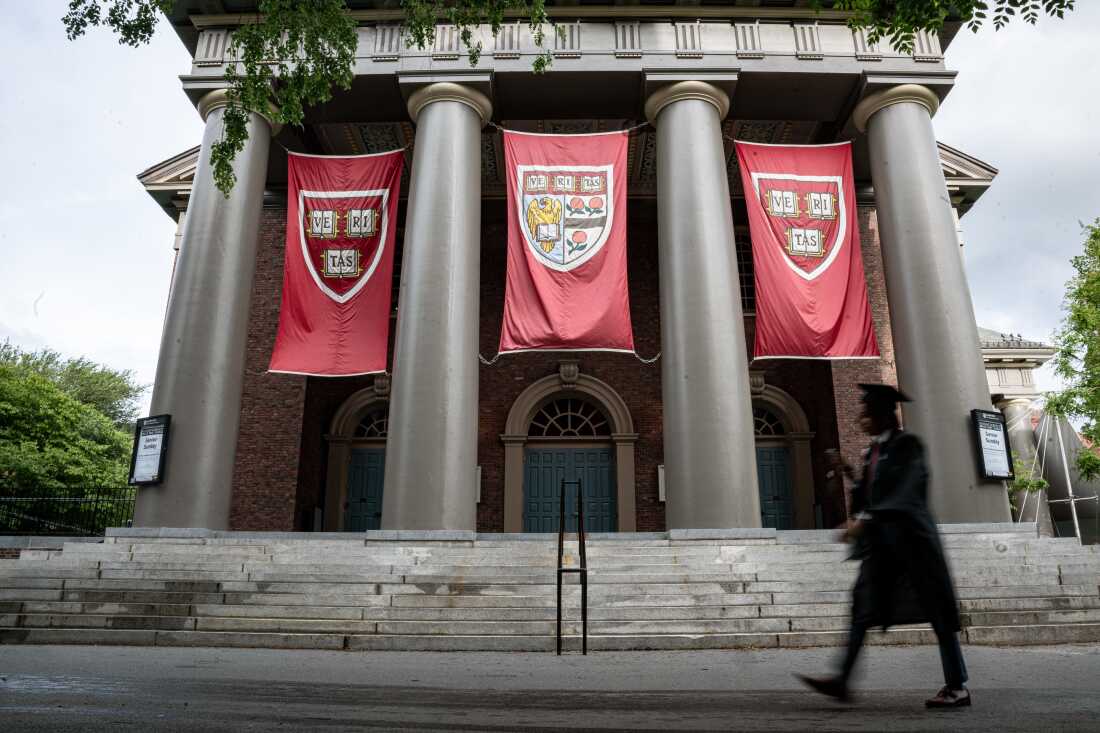
Harvard University, at the forefront of Trump’s campaign against elite academia, is the oldest, wealthiest, and one of the most prestigious institutions in the United States. Founded in 1636 in Cambridge, Massachusetts—as Harvard College—it predates the United States itself by more than a century.
Its alumni include influential figures such as John F. Kennedy, Barack Obama, Bill Gates, and Mark Zuckerberg.
A series of questions arises amid this confrontation: How did this current war begin, and how has it escalated? How far will this populist administration go in demonizing Harvard and undermining its legitimacy?
What does the future hold for the university, and how is it preparing to defend its identity? Why is Harvard being targeted specifically, and is this connected to its stance on the Palestinian issue? This article delves into these and other pressing questions.
How did the crisis begin?
Trump’s criticism of Ivy League universities, with Harvard as a prime target, predates his presidency. He has described them as “institutions above scrutiny” operating like businesses, leaving students drowning in debt—even before assuming office.
But the current escalation—which The Atlantic characterized as “an attempt to nationalize a private university”—stemmed from last spring’s student protests against Israel’s “genocidal war” in Gaza. Upon ascending to power earlier this year, the Trump administration repeatedly accused universities staging these protests of anti-Semitism.
In February, officials launched a “Task Force to Combat Anti-Semitism,” comprising the Departments of Justice, Education, Health, and Civil Rights, to investigate “anti-Semitic incidents,” especially within campuses. It issued letters to university presidents—chiefly those with visible student dissent—demanding more than policy tweaks: they threatened sweeping political intervention and oversight incompatible with academic freedom and institutional traditions.
Harvard received such a letter in April, demanding substantial curricular changes, government involvement in student admissions and faculty appointments deemed “anti-American” (with no clear definition), and routine reporting on the conduct of students and staff—conditions the university firmly rejected.
In February, the Department of Health studied medical students displaying pro‑Palestinian symbols at the 2024 graduation ceremony. This probe quickly expanded to encompass the entire university since October 7, 2023.
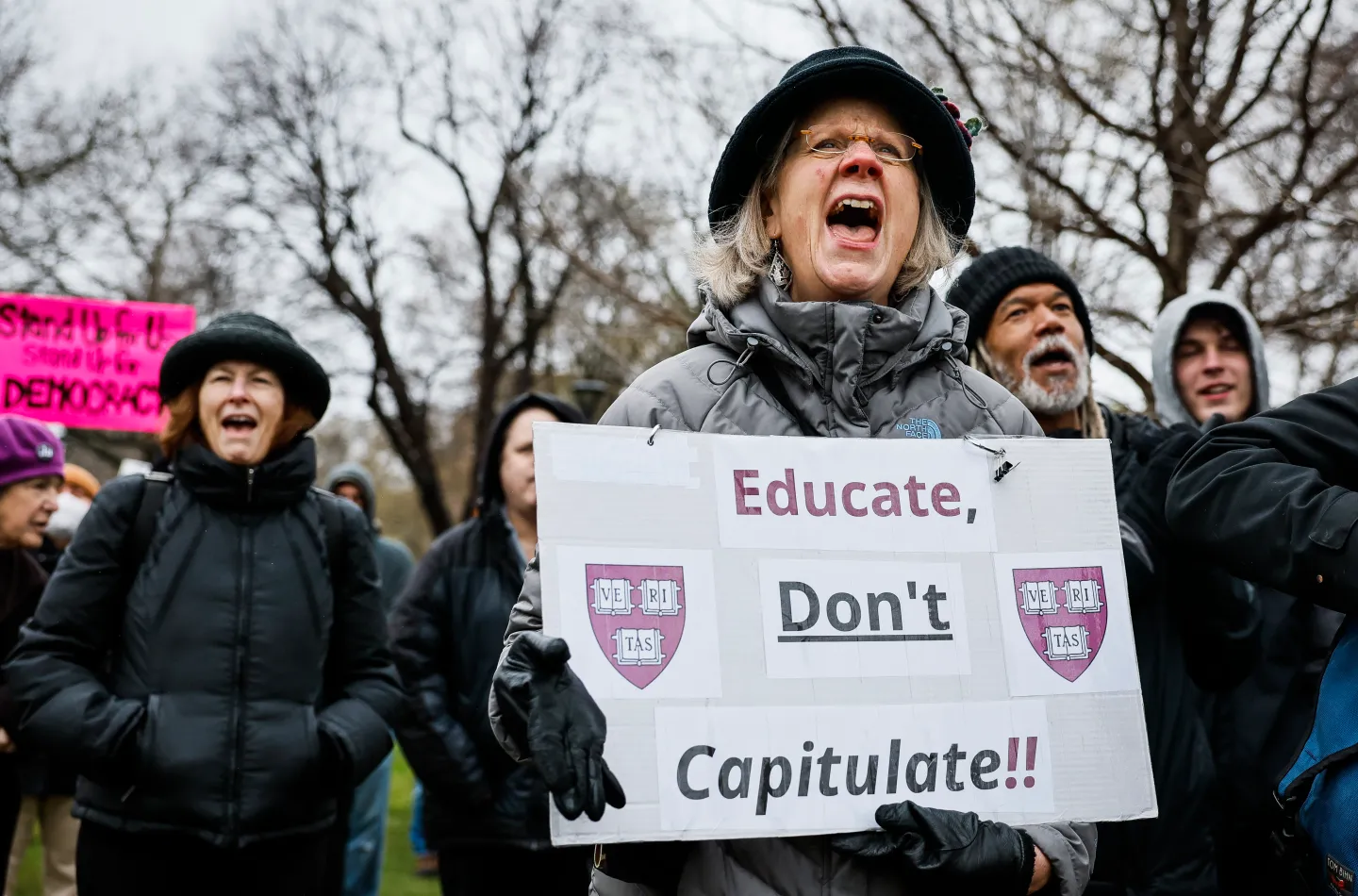
Investigations have since charged Harvard with fostering “a climate encouraging foreign radicals and extremists,” prompting Department of Homeland Security Secretary Kristi Noem to demand the names and information on all students – even international ones – a request Harvard refused, citing privacy and safety concerns.
Noem then announced a suspension on Harvard admitting international students, jeopardizing the visas of roughly 6,800 foreign students—around 27% of the student body. Although she asserted the task force had found “overwhelming evidence” of Harvard’s anti-Semitism and damaging Jewish students—ironically, the visa ban threatened Jewish as well as non-Jewish students.
Demonizing the institution
Noem went further, accusing Harvard of “endorsing terrorism.” The Department of Homeland Security sought audio/video recordings of campus protests over the past five years, including those by domestic students. They implicated Harvard in training members of the Chinese Communist Party “involved in the Uyghur genocide” and accepting funding linked to Iran.
These claims stripped Harvard of its “American identity,” signaling a relentless federal campaign against what is deemed a national-security threat.
Trump intensified the populist angle, tweeting on Truth Social that he might reallocate $3 billion in federal research funding from Harvard to working-class-focused colleges, framing it as a win for the “little guy” against “elite” universities. Education Secretary Mickey Biederman echoed that Harvard “fails to protect its students or fulfill federal obligations.”
Yet Trump’s proposed congressional bill threatens protections for students if admitted programs fail them after graduation—often hitting part-time or vocational learners hardest. In addition, Justice and Education departments have launched simultaneous investigations into alleged admissions discrimination, including claims Harvard violated the Supreme Court’s 2023 ruling banning racial quotas.
Funding as leverage
After Harvard rebuffed the administration’s demands, Washington retaliated—cutting $2.2 billion in federal research funding and $60 million in NIH contracts. A further 500 federal grants to affiliated institutions were frozen, and existing federal contracts—including $60 million from the CDC—were canceled.
Trump also threatened to strip Harvard of its tax-exempt status, which, if implemented, could cost the university hundreds of millions annually—though this requires IRS approval and has yet to be enacted.
Reports indicate the possibility of cutting the full $9 billion in projected funding—only a third of which has been affected to date.
Approximately $6 billion of this is tied to Harvard-affiliated hospitals and $2.7 billion to scientific and medical research—the administration’s moves are widely seen as political pressure rather than public-interest decisions.
Harvard fights back
Harvard filed legal suits to block federal overreach and restore funding, arguing the actions violate the university’s constitutional liberties. The case concerning the international-student ban prompted a federal judge to halt the policy, citing due process and free expression concerns. The matter is pending full resolution.
President Alan Garber defended Harvard on public radio, stating the institution is determined to protect its “students, history, and long tradition of free speech and diversity.”
He called out the administration’s attacks particularly over labeling Harvard elitist as misleading, noting that long-term federal research yields critical benefits, especially in medicine and chronic disease.
On alleged bias against conservative white men, Garber asserted that university diversity is “legitimate and beneficial,” reinforcing that ideological variety strengthens American innovation and excellence.
Why Harvard specifically?
According to a Guardian investigation, this campaign traces back to Attorney General Bill Barr and White House Chief of Staff Stephen Miller. Barr reportedly said in 2022 that conservatives should “purge traditional liberal strongholds,” with Miller labeling Harvard a tool of Democrats to undermine Americans through discriminatory, illegal practices.
Political analyst Jason Johnson at Morgan State University calls elite institutions like Harvard vanguards in resisting authoritarian impulses: undermining them would open the way to subjugate others. Economically, Harvard’s $53 billion endowment makes it both resilient and politically valuable.
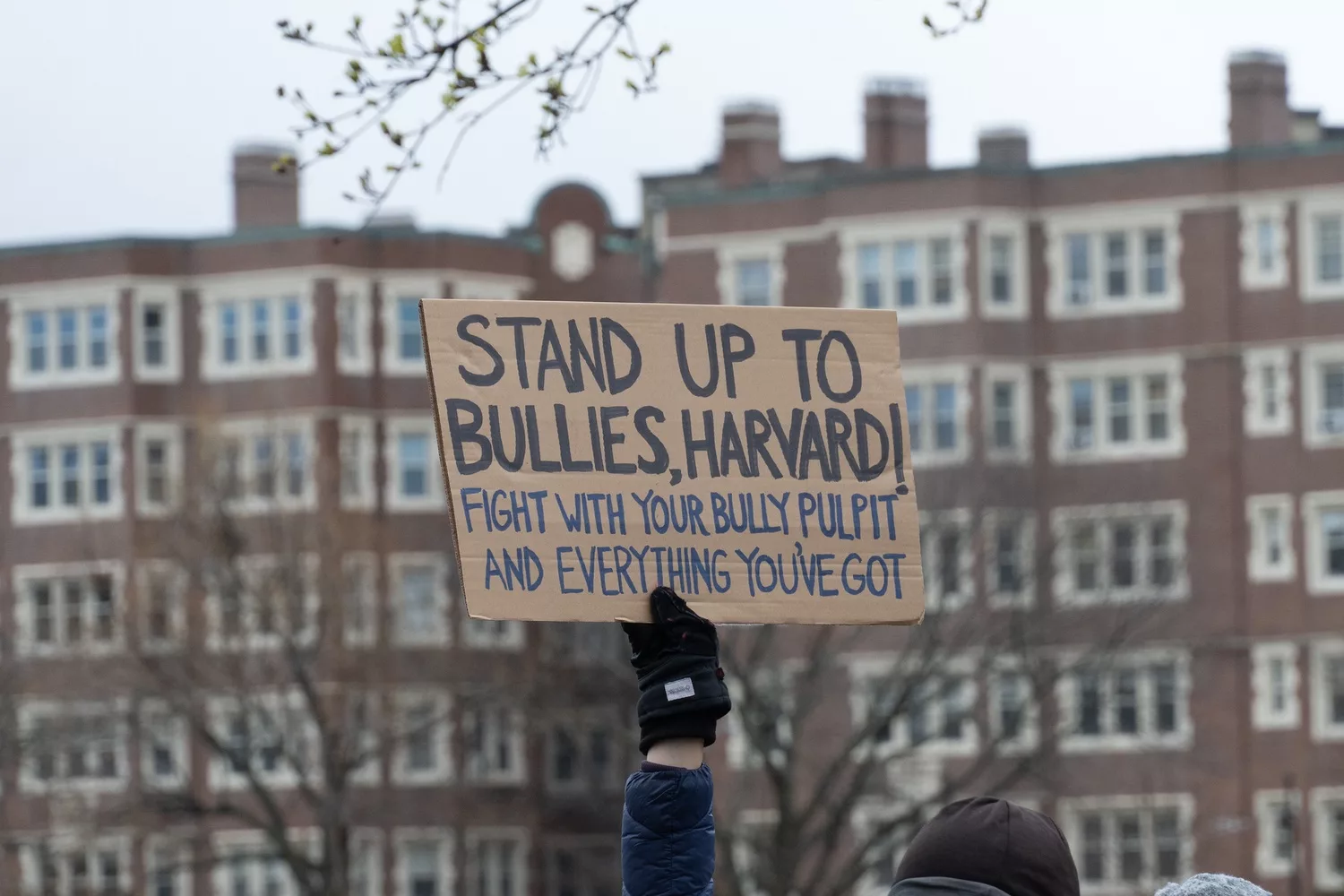
Where Columbia buckled under similar pressure, Harvard has vowed not to back down, hoping its defiance will galvanize other universities to resist governmental coercion.
Harvard isn’t a perfect champion
It’s important to note Harvard is not a radical voice for Palestinian rights. In fact, the university disciplined pro-Palestine student groups, suspended events, launched internal probes, and expelled staff involved in Gaza protests—even before the funding freeze.
Those internal measures aligned with adopting the controversial IHRA definition of anti-Semitism—leading to stricter protest policies, training for Israel supporters, and a curricular shift that some critics view as favoring the Israeli narrative.
Leaked reports suggest covert negotiations between Harvard and the administration, seeking “middle ground” to ease tensions. One step: this year the university quietly dropped funding for minority-only graduation ceremonies—a symbolic move aligned with the administration’s stance against race- or identity-based privileges.
The bottom line: over a quarter of Harvard’s students are international—a vital intellectual community facing forced departure, potentially relocating to institutions in China or Russia, as noted by former U.S. Ambassador Michael McFaul. Nevertheless, Harvard is standing firm, aware that its fate may set a precedent for the nearly 2,400 U.S. colleges and universities watching closely.
The lawsuits Harvard has filed do more than protect the institution during Trump’s presidency—they may determine the future of higher education in the United States: can universities resist White House overreach, or will federal research grants exceeding $60 billion annually be weaponized for political gain? The answer awaits the verdict of the courts.


