














In Egypt, following the events of July 2013 and the ascent of Abdel Fattah el-Sisi to the pinnacle of political and security power, the state entered into a decisive confrontation with political Islamist movements, most notably the Muslim Brotherhood. This zero-sum conflict gradually led to the exclusion of political Islam from public life—not only as organized movements but also in the form of religious and cultural activity within Egyptian society.
This article explores the key factors behind the erasure of political Islam from Egypt’s public sphere, whether due to the authoritarian policies adopted by el-Sisi’s regime or internal dysfunctions within the Muslim Brotherhood itself.
It also seeks to identify the spaces that came to occupy the vacuum left by the retreat of political Islam, addressing—albeit briefly—two critical questions: Where did former adherents of this current go? And what has replaced it?
Authoritarian Repression and the Brotherhood’s Disorientation
After the July 3rd declaration, the new regime clashed directly with Islamist groups, chief among them the Muslim Brotherhood, which had been ousted from power through a military intervention. The turning point in this struggle came with the violent dispersal of the Rabaa and Nahda sit-ins, which marked a clear shift into an existential confrontation.
At the time, the regime had not yet fully taken shape—el-Sisi had not officially assumed the presidency—but there was no indication of a willingness to negotiate with the Brotherhood. Conversely, the Brotherhood clung to maximalist demands: reversing the coup, reinstating deposed president Mohamed Morsi, and prosecuting those they held responsible for the bloodshed, making any form of settlement virtually impossible.
In August 2013, following the sit-in dispersals, the killing of street demonstrators became a normalized state practice against Islamists. This was accompanied by the mass arrest, imprisonment, torture, and forced disappearance of tens of thousands, as well as a slew of death sentences and lengthy prison terms targeting Brotherhood leaders and members.
Legally, the judiciary banned the Muslim Brotherhood, followed by a sweeping crackdown on its infrastructure: confiscating its assets, shuttering its educational, cultural, and economic activities, closing its offices, and transferring ownership of its properties to the state. From that point on, membership in the Brotherhood became a criminal offense under the law, as the group was designated a banned organization.
Under the exceptional measures imposed by the regime, the state found little need to pass new laws to justify its actions. Systematic repression, both legal and security-based, compelled many within the Brotherhood to publicly disavow their ties, to varying degrees.
As a result, even the mere consideration of joining the Brotherhood became a costly proposition for any Egyptian, given the likely confrontation with the security apparatus. This deepened the group’s isolation and widened the circle of fear surrounding association with it.
Yet it wasn’t only authoritarian repression that stifled the Brotherhood’s organizational and proselytizing activity. Internal divisions and splintering also contributed significantly to the group’s disarray, undermining its ability to repair the rifts caused by the state’s crackdown. These tensions eventually led to the emergence of two rival factions due to leadership disputes.
Later, many young members—both inside Egypt and in exile—voiced frustration with the Brotherhood’s confusion, lack of unity, and failure to listen to their grievances following the waves of repression, imprisonment, and forced migration.
This intellectual and organizational stagnation further debilitated the Brotherhood, especially in the eyes of regional regimes that had once provided it with space for media and political expression. The group’s weakened state undermined its ability to present a coherent alternative.
Consumption and Technology: New Narratives of Belonging
From the 1970s until 2013, the Muslim Brotherhood steadily expanded its reach across both urban centers and rural communities in Egypt. Under Hosni Mubarak, the group was permitted a degree of political, social, and religious activity—albeit under periodic crackdowns that involved arrests, asset seizures, and restrictions on protest.
However, these crackdowns never fully stifled the Brotherhood’s outreach or hindered societal integration within its ranks, which flourished particularly after the 2011 revolution until the fateful summer of 2013—a turning point in the group’s history.
In Egypt’s urban areas, the Brotherhood appealed to professionals such as professors, engineers, and doctors, as well as students from various educational backgrounds, including business and agriculture faculties. In rural areas, the group attracted members from middle- and lower-income segments, often with more modest levels of education.
The Brotherhood was more than just an ideological and organizational entity for its members—it functioned as a social safety net, a network of kinship and affiliation, and an economic system offering jobs, trade opportunities, and professional mobility.
Belonging to the Brotherhood conferred not only spiritual and social affirmation but also a sense of economic security and social recognition. It provided a path from marginalization to visibility, especially within religious, economic, and social circles.
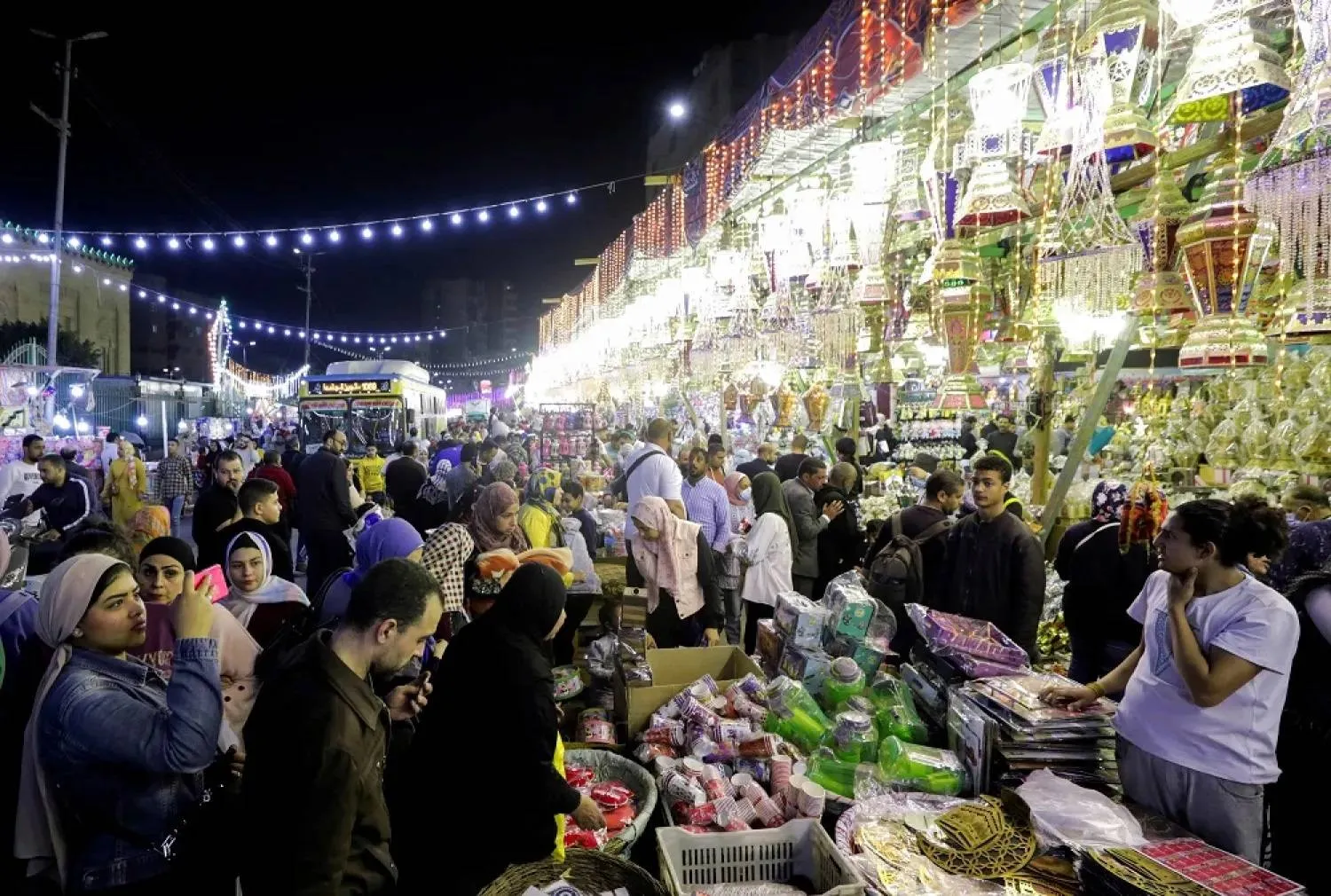
After 2013, political and religious movements did not fill the void left by political Islam’s retreat. Instead, new narratives emerged—most notably those of consumerism and technology. These narratives, particularly appealing to urban dwellers, were rooted in a globalized, multilingual cultural matrix, visible in malls, entertainment venues, travel, concerts, and all facets of an urban consumer lifestyle.
Not all Brotherhood members had been deeply religious by nature. Many were drawn by a search for meaning, a desire to understand religion, or an affinity with the group’s outward symbols of religiosity.
With the collapse of informal religious discourse and the disappearance of overt religious expression from the public sphere, new spaces began to fill the gap, offering alternative forms of identity and belonging.
As these new spaces rose to prominence—driven by advertising and aspirational values of self-actualization, recognition, and status through physical spaces and material consumption—they filled a large part of the void once occupied by Islamist movements.
Technological platforms, particularly social media, further broadened this shift. Affordable smartphones enabled people across both urban and rural areas to create accounts and channels on Facebook, TikTok, Instagram, and YouTube. They began producing content that showcased daily life in homes and villages across Egypt.
These content creators often infused their material with moral and religious messaging, presenting life lessons and ethical advice in modern, accessible formats. Themes included filial piety, loyalty in friendships and marriages, the sanctity of private life, and visible markers of modesty.
Though these messages were religious in nature, they were delivered through modern, technological means—unlike the traditional methods once used by groups like the Brotherhood.
Across the Arab world, not just in Egypt, the rise of consumption and technology has introduced postmodern narratives—fluid and adaptable rather than rigid or ideological. These narratives constantly evolve in step with the neoliberal system’s tools for market management, from shopping malls to entertainment to social media apps. These platforms continually renew themselves to attract broad audiences.
These are capitalist ecosystems designed for profit, in contrast to the ideological and organizational frameworks of social movements, whose goal is not financial gain but embedding their ideas within society.
Here, identity becomes a dynamic process. The erosion of rigid ideological narratives does not signal the end of the world of ideas. Rather, ideological revival is possible—if and when the Arab political climate, whether shaped by authoritarian regimes or reformist movements, allows society to embrace such narratives once more.
Still, the continued rise of consumerism, individualism, and profit-seeking—now deeply embedded in daily life—shows no signs of abating. These forces wield profound influence, especially in a political and cultural environment that discourages engagement with movements advocating for freedom, justice, equality, and transparency.
