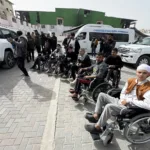

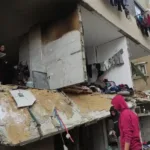





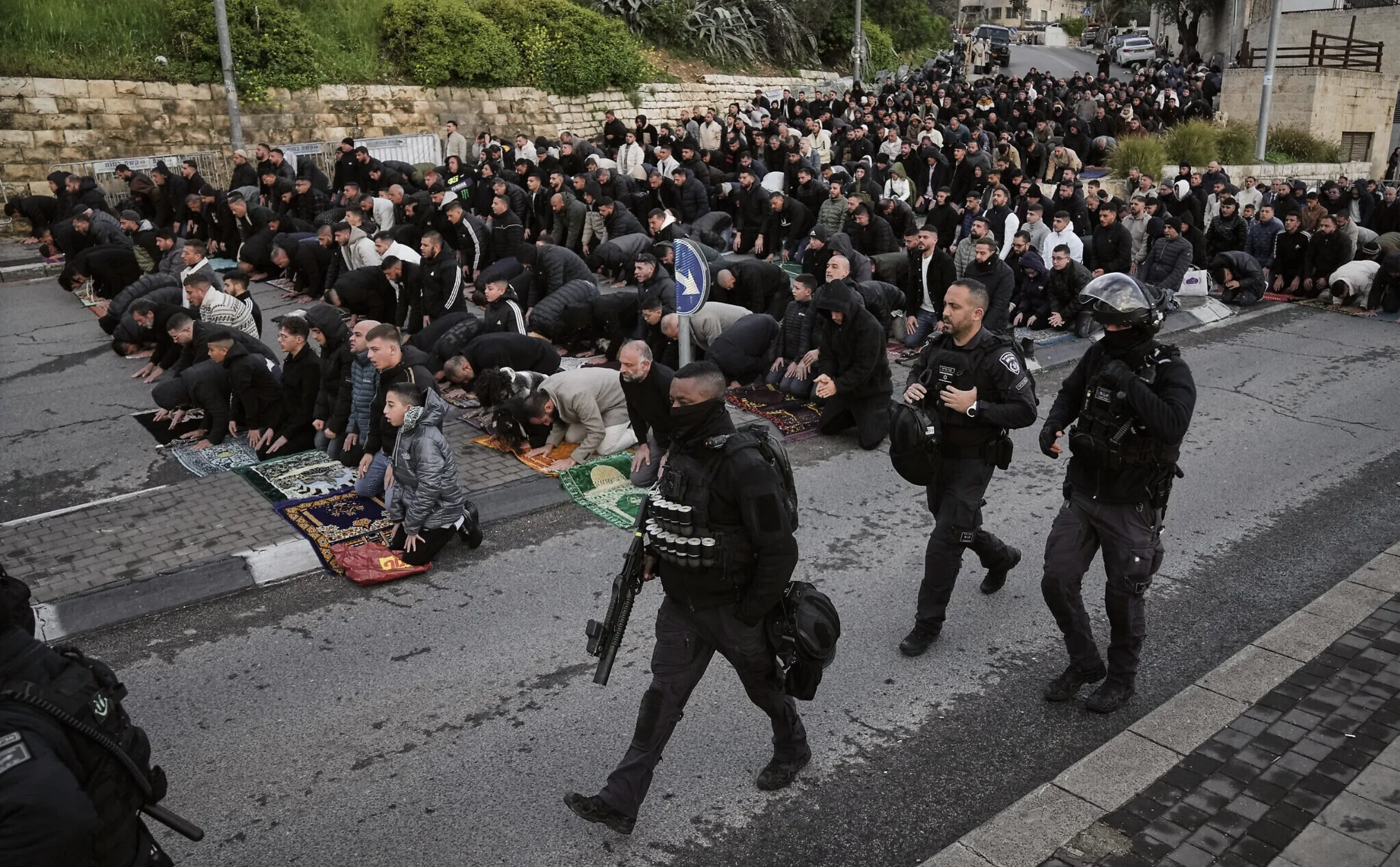
Since the earliest days of Ramadan, the entrances to Jerusalem’s Old City have appeared markedly different from what residents are accustomed to: tightened checkpoints, a heavy security presence, and the gates of Al-Aqsa Mosque sealed off to worshippers and visitors alike. In a city whose daily rhythm is closely tied to the flow of those entering and leaving the mosque, this scene does not appear fleeting.
This closure—unprecedented since 1967—cannot be separated from a broader Israeli escalation on the ground experienced by Jerusalemites, from assaults in the vicinity of the Old City to the fall of rocket shrapnel in areas near Al-Aqsa. This raises pressing questions: What political and religious messages is Israel seeking to convey through the closure? Does it reflect a shift in how the site is administered, or does it pave the way for imposing a new reality on the ground?
How has the closure affected religious and social life in Jerusalem, particularly during Ramadan? Has Al-Aqsa become directly impacted by any regional escalation? And what are the implications for Palestinian identity and Jordanian custodianship?
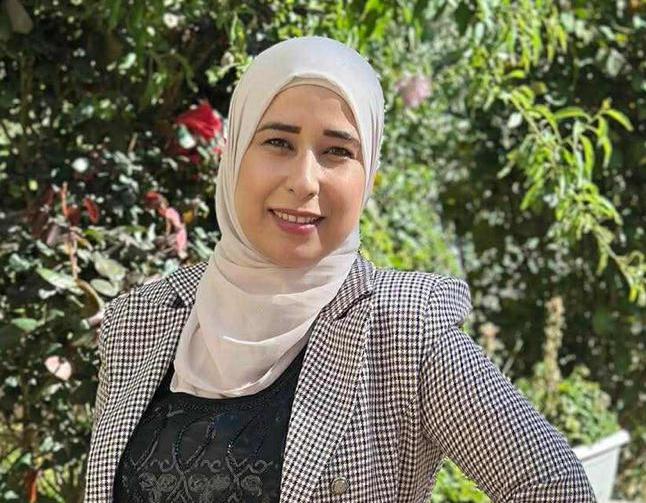
To answer these questions, Noon Post spoke with Dr. Jamal Amro, an academic and researcher specializing in Jerusalem affairs, and Dr. Abdullah Marouf, director of the Jerusalem Studies Center at Istanbul’s 29 May University, offering in-depth analyses of the current situation at Al-Aqsa and its regional and international dimensions.
Accordingly, this report seeks to provide a comprehensive reading of developments at Al-Aqsa, examining the political and regional context, the social and religious repercussions, and the messages embedded in Israeli control policies.
Hidden Messages Behind the Closure
Dr. Jamal Amro argues that Israeli authorities have long acted with clear opportunism, requiring no genuine pretext but rather exploiting any political, local, regional, or international circumstance to undermine the Palestinian people. In this context, the recent measures targeting Al-Aqsa fall within a carefully orchestrated and deliberate framework involving both official and unofficial actors, operating publicly and behind the scenes.
What has occurred, he stresses, is not merely a setback for Palestinians or the Palestinian Authority, but also affects Jordan, the custodian of Islamic and Christian holy sites in Jerusalem.
“Jordan, which signed the Wadi Araba Treaty and assumed custodianship over Al-Aqsa, is witnessing a dangerous erosion of its role,” he said. “Today, any Israeli police officer at the mosque’s gates can prevent Waqf officials—including senior administrators—from entering, reflecting a blatant disregard for agreements with Jordan and even the Camp David Accords with Egypt.”
He added that some Israeli politicians have gone further, making statements targeting Jordan itself, suggesting it should serve as an “alternative homeland” for Palestinians—thereby negating the need for an independent Palestinian state.
For his part, Dr. Abdullah Marouf emphasized that the closure is intentional, aimed primarily at conducting what could be described as a “practical test” under the most challenging conditions for Israeli police—namely Ramadan—in preparation for significant changes at Al-Aqsa after the month ends, when the number of Muslim worshippers declines. He stressed that the move is unrelated to the ongoing war.
Transformations Threatening Jerusalem’s Identity
“What is happening at Al-Aqsa cannot be understood in isolation from the broader regional context,” Amro said, noting that Israel has capitalized on Arab fragmentation and the disintegration of unified official positions to advance changes on the ground.
He added that while Jordanian custodianship once played a tangible role in administering the mosque, it has now been largely hollowed out, reduced to a formal framework without real influence. Previously, Israeli delegations could only enter Al-Aqsa through a formal request to the Waqf and under its supervision. Today, however, this reality has gradually shifted through cumulative steps aimed at imposing a new status quo.
Among the clearest indicators of this shift, he noted, is that Waqf employees themselves must now submit written requests to Israeli authorities to carry out even basic maintenance work, as approximately 80% of the mosque’s courtyards have come under the control of Israeli antiquities authorities.
Even the historical narrative is being reshaped: the name “Al-Aqsa Mosque” has disappeared from many surrounding signs and streets, replaced with the term “Temple Mount.”
These seemingly minor details—repairing a stone, a faucet, or an air conditioner—reflect a much larger tragedy affecting nearly two billion Muslims worldwide. A new reality is being imposed that restricts Muslim access to one of Islam’s holiest sites, even during Ramadan and Laylat al-Qadr, while the site is opened to settler groups and Zionist migrants under full Israeli control.
What Lies Behind the Closure?
Dr. Marouf stressed that the most significant message Israel seeks to send is that it has become the sole administrative authority over Al-Aqsa, exercising full sovereignty over the holy site without regard for Islamic institutions or Jerusalem’s Palestinian residents.
Amro added that closing the mosque during Ramadan carries profound political and security messages beyond the stated security rationale. At its core, he argued, it represents an attempt to empower a radical religious settler movement that openly calls for constructing a “Holy of Holies” at the site of Al-Aqsa and reviving rituals linked to the so-called “red heifers.”
He noted that this ideology is no longer confined to fringe religious circles but has gained political backing from influential Israeli figures such as Itamar Ben-Gvir and Bezalel Smotrich, as well as support from certain Christian Zionist movements in the United States.
Closing Al-Aqsa during Ramadan—one of the most sacred periods for Muslims—thus serves as a clear political signal: full control over the site has become a reality, and Israel is capable of imposing its religious and historical narrative by force.
Sanctity of the Site and Escalating Violations
According to Amro, Al-Aqsa has recently witnessed dangerous escalation, including the fall of rocket shrapnel in its vicinity, alongside attacks on worshippers in the Old City. He noted that fragments landed in several nearby areas, underscoring the extreme sensitivity of the security situation.
He warned that such incidents cannot be separated from the surrounding political and media context, particularly in light of prior statements by extremist religious figures suggesting scenarios that could threaten the Dome of the Rock.
These narratives, he explained, risk laying the groundwork for justifying future incidents or exploiting them to alter the status quo at the holy site.
Religious and Social Repercussions
Amro emphasized that the closure has imposed severe restrictions and deep repercussions on religious and social life in Jerusalem, particularly in the Old City. Jerusalemites have experienced profound grief and pain as a result of being barred from Al-Aqsa, especially during Ramadan, a time associated with communal worship and spiritual atmosphere.
The situation has been compounded by assaults on worshippers, including tear gas, arrests, and harassment, intensifying pressure on residents. Nevertheless, the bond between Jerusalemites and Al-Aqsa remains strong, as many view it as integral to their identity even when access is denied.
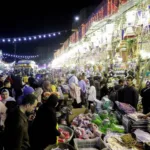
Economically, markets in the Old City have suffered significantly. Ramadan typically brings vibrant commercial activity, but restrictions and closures have led to sharp declines, causing major losses for shop owners and vendors. The education sector has also been affected, with some nearby schools forced to close.
Future Risks
Amro warned that restrictions are likely to persist amid ongoing regional tensions and may continue beyond Eid al-Fitr. In such a scenario, many Palestinians have resorted to praying in the vicinity of the Old City.
He also cautioned against potential arrangements that might allow increased settler access in exchange for limited concessions describing such deals as unacceptable.
At the same time, both experts expressed concern about attempts to fundamentally alter the status quo at Al-Aqsa, including the possibility of dividing the site or establishing a synagogue within its compound.
Marouf stressed that preserving Al-Aqsa requires intensified popular presence and collective action to counter imposed changes, even if that entails escalation.
Amro concluded that despite current challenges, Al-Aqsa remains a central symbol of faith and identity. While the present phase is difficult, history shows that attempts to impose a new reality have faced significant resistance. He called for a comprehensive strategic effort spanning education, media, and cultural engagement to strengthen resilience and safeguard Jerusalem and its holy sites.