NoonPost NoonPost

NoonPost

  • Home
  • Politics
  • Economy
  • Society
  • Culture
  • Files
  • Long Reads
  • Podcast
AR
Notification Show More
نون بوست
“There Are Nights I Can’t Close My Eyes”: How Gazans Are Living in Homes on the Brink of Collapse
نون بوست
From al-Jolani to Ahmad al-Shara: The Evolution of Syria’s New Leader
نون بوست
When Political Islam Receded in Egypt: Who Filled the Void?
نون بوست
An Extension of Genocide: Gaza’s Detainees Speak Out
نون بوست
A Tightrope Between Survival and Sovereignty: The Syrian Government Faces Normalization Pressures
نون بوست
American Aircraft Carriers: Has the Era of “100,000 Tons of Diplomacy” Ended?
نون بوست
U.S. Regime‑Change Policies: Why They Are Destined to Fail
نون بوست
Transformations of Israeli Judaism: Between the Victim Complex and the Colonizer’s Doctrine
نون بوست
The Gulf’s Balancing Act: Iran, Israel, and Hidden Links
نون بوست
Iraq–Turkey Oil Export Treaty: Why Did Ankara Cancel It After 52 Years?
نون بوست
Syria’s Northeast on Edge: QSD Between Ankara and Damascus
نون بوست
Has Europe Changed Its Stance on Israel… or Just Its Language?
NoonPost NoonPost
AR
Notification Show More
نون بوست
“There Are Nights I Can’t Close My Eyes”: How Gazans Are Living in Homes on the Brink of Collapse
نون بوست
From al-Jolani to Ahmad al-Shara: The Evolution of Syria’s New Leader
نون بوست
When Political Islam Receded in Egypt: Who Filled the Void?
نون بوست
An Extension of Genocide: Gaza’s Detainees Speak Out
نون بوست
A Tightrope Between Survival and Sovereignty: The Syrian Government Faces Normalization Pressures
نون بوست
American Aircraft Carriers: Has the Era of “100,000 Tons of Diplomacy” Ended?
نون بوست
U.S. Regime‑Change Policies: Why They Are Destined to Fail
نون بوست
Transformations of Israeli Judaism: Between the Victim Complex and the Colonizer’s Doctrine
نون بوست
The Gulf’s Balancing Act: Iran, Israel, and Hidden Links
نون بوست
Iraq–Turkey Oil Export Treaty: Why Did Ankara Cancel It After 52 Years?
نون بوست
Syria’s Northeast on Edge: QSD Between Ankara and Damascus
نون بوست
Has Europe Changed Its Stance on Israel… or Just Its Language?
Follow US

Damascus Reopens the Chemical File… What Did the Assad Regime Conceal?

فريق التحرير
Noon Post Published 26 March ,2026
Share
نون بوست
نون بوست
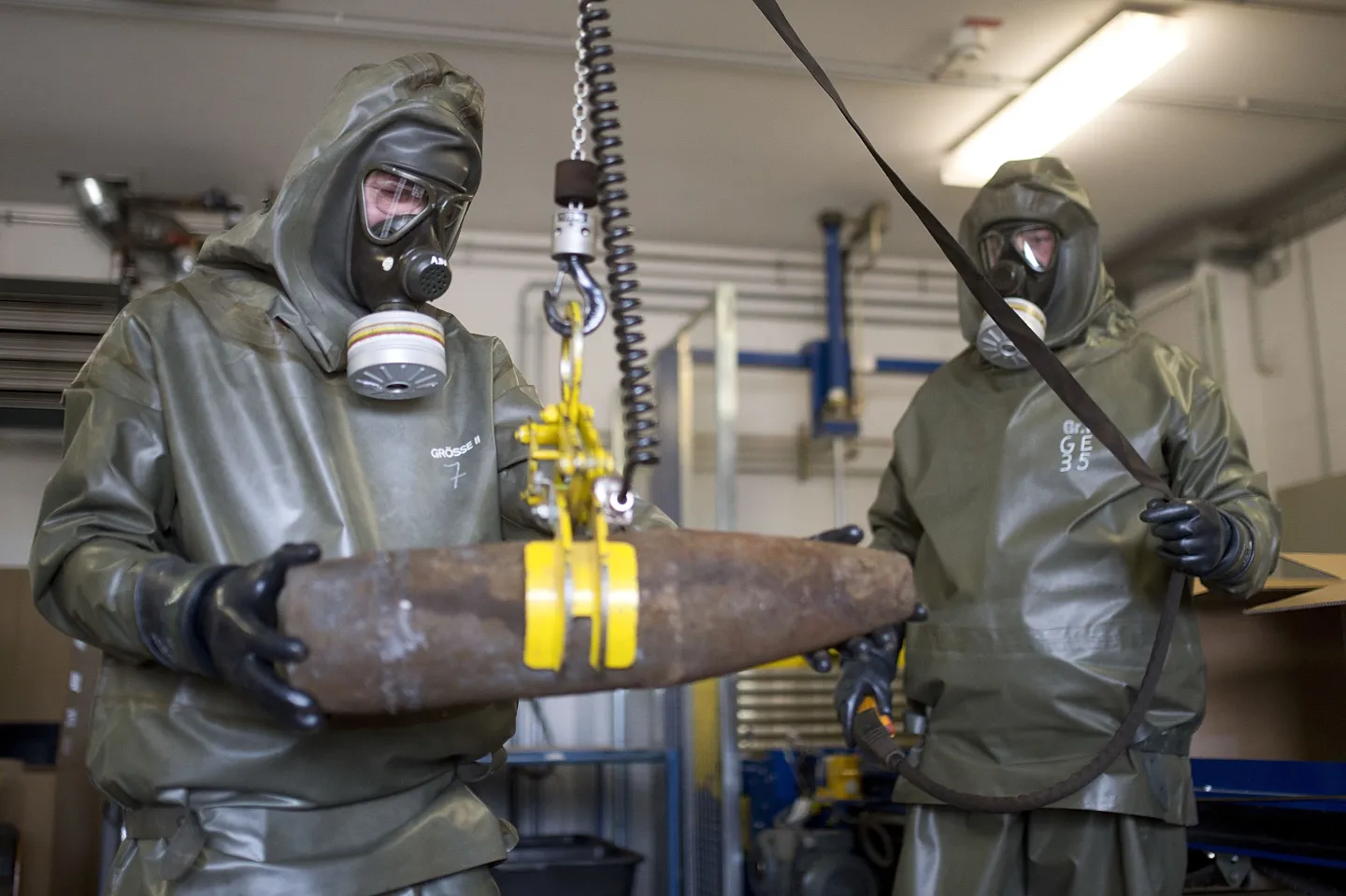
Weapons inspectors handle a mock chemical munition during a press demonstration (Getty)

After years of ambiguity left behind by the regime of Bashar al-Assad, Damascus announced on March 18, 2026, a new initiative titled “Breaths of Freedom” aimed at eliminating all remaining chemical weapons.

The effort is being carried out in cooperation with the Organisation for the Prohibition of Chemical Weapons (OPCW), under the sponsorship of countries including the United States, the United Kingdom, France, Germany, Qatar, Turkey, and Canada.

The announcement makes clear that the chemical weapons file widely believed by some to have been closed in 2014 has resurfaced with renewed urgency. This is largely because the new authorities lack a complete map of what the former regime concealed, and because the international watchdog has identified more than 100 additional sites linked to the chemical program that were never declared.

The challenge, therefore, is not merely the removal of known materials, but the uncovering of what remains within a multilayered program dispersed across sites, substances, documents, and expertise.

Mapping Potential Sites

Following Syria’s accession in 2013 to the legal framework of the OPCW, the former regime declared 26 sites linked to chemical weapons, including production facilities, storage depots, and mixing and filling lines. However, the OPCW has since gathered information suggesting the existence of more than 100 additional sites.

This figure is not definitive but rather a fluid estimate based on data provided by current authorities, documents obtained, and interviews with experts from the former program.

Some of these sites were previously declared, while others remain suspected or categorized as dual-use. Still others may be eligible for declaration under the new initiative. In the absence of a publicly released list, reports indicate that potential locations are concentrated in coastal regions, Qalamoun, Homs, and al-Safira near Aleppo.

OPCW reports further suggest that some high-priority sites are located near Latakia, though inspectors have not disclosed names or coordinates.

What Remains of the Chemical Program?

The OPCW confirms that all declared Category 1 chemical agents were destroyed by August 2014. However, this applies only to declared stockpiles. What remains may include toxic substances, precursors (materials used to produce other chemicals), munitions, equipment, documentation, and human expertise:

1. Toxic agents and precursors:
The former regime claimed to have destroyed 300 tons of isopropanol prior to inspectors’ arrival but provided no evidence. It also asserted that bombs designed for nerve agents had been converted into conventional munitions again without proof.

Analytical reports suggest that tens to hundreds of tons of nerve agents such as sarin and VX—or their precursors—may still be undeclared. There are also indications that the Assad regime attempted to procure materials to revive its chemical program.

2. Munitions and delivery systems:
The number of concealed missiles, artillery shells, and aerial munitions remains unclear. Reports indicates to the possible existence of hundreds to thousands of unfilled casings, as well as aerial bombs designed for sarin that were allegedly converted.

3. Equipment and industrial capacity:
OPCW inspectors have identified both fixed and mobile mixing and filling equipment even after Syria joined the Chemical Weapons Convention in 2013. Such infrastructure requires technical expertise and access to advanced precursors, posing a significant risk if repurposed or leaked.

4. Laboratories and program documentation:
The handover of 34 boxes of documents by the new authorities to the OPCW on January 15, 2026, points to the vast scope of the program’s archive. These materials may reveal the identities of experts, supply chains, and potentially additional sites.

More than 6,000 documents and six samples have been collected during visits to 19 sites, with one sample showing traces of a nerve agent.

5. Human expertise:
Inspectors are working to interview scientists and officers involved in the former program, as leaving such expertise unmonitored could enable the reconstitution of chemical capabilities.

Inspection, Verification, and Destruction Mechanism

“Breaths of Freedom” operates as a joint mechanism between Syria, the OPCW, and international partners. Its mandate is to identify and eliminate remaining materials while building Syrian capacity in training, logistics, and destruction. The process unfolds as follows:

1. Information gathering and planning:
The OPCW’s Office of Special Missions (OSM) is analyzing data from documents and interviews to identify priority sites. In 2025, Damascus submitted a list of 17 suspected sites in the capital, and Syrian reconnaissance teams conducted preliminary visits.

2. Field visits:
Since March 2025, inspectors have visited 19 sites four previously declared and 15 suspected. Syrian authorities provide security and сопровождение, while the OPCW ensures safety compliance before each visit. Activities include photography, document collection, and sampling.
نون بوست
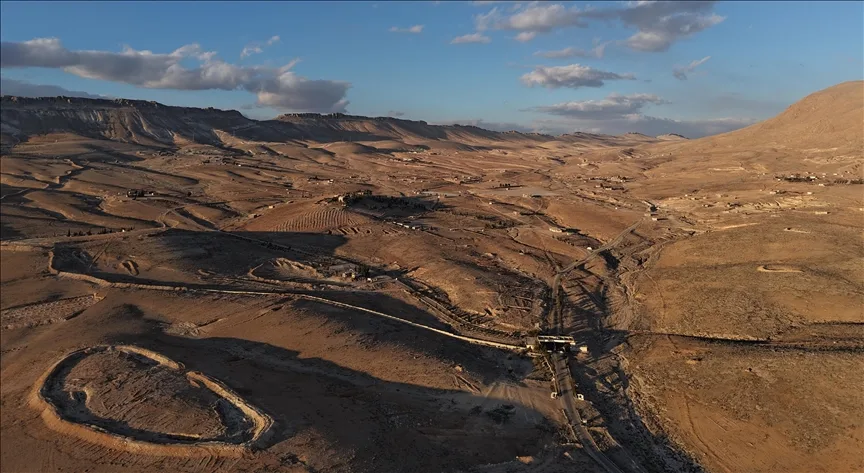
A view of a facility used by the Assad regime to store chemical weapons on a high hill surrounded by mounds of dirt in Damascus (AA)

3. Sampling and chain of custody:
Samples are divided into eight portions: one is given to the inspected state, two are used for on-site analysis, and five are sent to accredited laboratories. Centralized data and analysis ensure a strict chain of custody and prevent tampering.

4. Verification and classification:
If materials or equipment are found to be linked to chemical weapons, the facility is designated “declarable,” obligating Damascus to include it in its official disclosures. The team also distinguishes between civilian and dual-use facilities using engineering maps and expert analysis.

5. Destruction or removal:
According to OPCW protocols, materials may be destroyed in Syria if quantities are limited, or transferred abroad as in 2014. Fixed facilities are dismantled by removing equipment and sealing tunnels, with the OPCW overseeing the process until risks are eliminated and the file is formally closed.

Roles of Key Actors

1. Damascus:
Provides site access, ensures inspector security, and contributes support teams, while committing to declare any newly identified facilities or stockpiles.

The authorities have already handed over thousands of documents and dozens of archive boxes but remain under pressure to facilitate interviews and provide further data.

2. OPCW:
Leads inspection, analysis, and destruction operations, issuing monthly reports to its Executive Council. It re-established a permanent presence in Damascus in October 2025 and has conducted multiple site visits.

3. International partners:
Provide funding and expertise. Washington, London, Berlin, and Paris contribute technical support; Turkey offers demining and training expertise; while Qatar and Canada supply equipment and logistical assistance.

The OPCW has identified additional funding needs of approximately €4.3 million for 2026 and €12.5 million for 2027, underscoring the plan’s reliance on sustained financial backing.

Key Obstacles and Challenges

1. Security and logistical challenges:
Many sites are located in insecure areas littered with landmines and unexploded ordnance, particularly along the coast and in the north. The U.S.-Israeli war on Iran in late February 2026 led to the suspension of inspection visits.

Access requires securing convoys and protecting inspection teams from militia attacks or remnants of the former regime. Any security incident could halt operations entirely.

2. Technical and informational challenges:
The core issue lies in the incompleteness of Syria’s 2013 declaration, which has undergone 20 subsequent revisions. Nineteen outstanding issues remain classified by the OPCW as “serious concerns,” involving large quantities of undeclared agents and munitions.

Delays in providing documents and facilitating interviews further slow verification, while the dual-use nature of many facilities such as fertilizer and petrochemical plants complicates assessments.

3. Financial and organizational challenges:
The success of the plan hinges on sustained funding. The OPCW estimates it requires an additional €4.3 million for 2026 and €12.5 million for 2027.

There is also a need to train Syrian personnel in modern destruction techniques, establish infrastructure for storing seized materials, and manage hazardous waste. The plan further depends on advanced detection equipment and secure transport capabilities.

Download this article as PDF
Share this Article
Facebook Twitter Whatsapp Whatsapp Telegram Email Copy Link
فريق التحرير
By فريق التحرير تقارير يعدها فريق تحرير نون بوست.
Follow:
Previous Article نون بوست Is Syria Moving to Disarm Hezbollah?
Next Article نون بوست Everything You Need to Know About Iranian Mines in the Strait of Hormuz

Read More

  • U.S. Regime‑Change Policies: Why They Are Destined to Fail U.S. Regime‑Change Policies: Why They Are Destined to Fail
  • The Gulf’s Balancing Act: Iran, Israel, and Hidden Links
  • Iraq–Turkey Oil Export Treaty: Why Did Ankara Cancel It After 52 Years?
  • Syria’s Northeast on Edge: QSD Between Ankara and Damascus
  • Has Europe Changed Its Stance on Israel… or Just Its Language?
part of the design
NoonPost Weekly Newsletter

You May Also Like

U.S. Regime‑Change Policies: Why They Are Destined to Fail

U.S. Regime‑Change Policies: Why They Are Destined to Fail

إسراء سيد Esraa sayed 8 April ,2026
The Gulf’s Balancing Act: Iran, Israel, and Hidden Links

The Gulf’s Balancing Act: Iran, Israel, and Hidden Links

فريق التحرير Noon Post 8 April ,2026
Iraq–Turkey Oil Export Treaty: Why Did Ankara Cancel It After 52 Years?

Iraq–Turkey Oil Export Treaty: Why Did Ankara Cancel It After 52 Years?

فريق التحرير Noon Post 8 April ,2026

الرباط تراهن على الدبلوماسية الدينية لكسب أرض في أفريقيا

lomond
lomond Published 27 April ,2015
Share
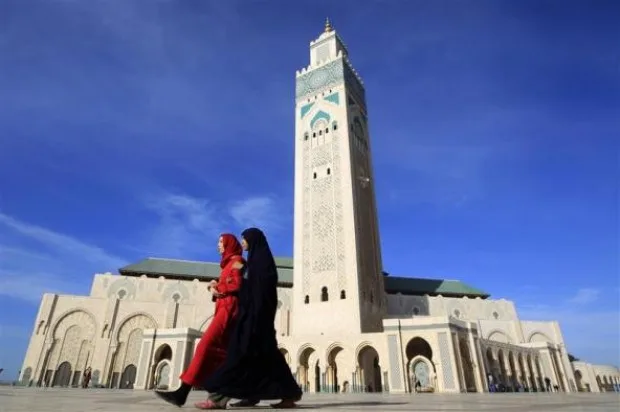
morocco-mosque-e1344337321622

ترجمة من الفرنسية وتحرير نون بوست

في الحي الجامعي “مدينة العرفان” في الرباط، تمتد المباني الجديدة على مساحة تناهز الثلاثة هكتارات، وتوجد في هذا الحي مبان إدارية، ويجب المرور عبر ساحات وأفنية عديدة، مشيدة على الطراز المعماري التقليدي، للوصول للمنطقة المخصصة لتلقي الدروس، حيث توجد قاعات محاضرات مزودة بأحدث وسائل الإيضاح، وعشرات القاعات الإعلامية.

ويحتوي هذا المجمع الذي كلف حوالي 230 مليون درهم، أي ما يعادل 21 مليون يورو، على مسجد يتسع لحوالي 1250 مصلي، وملاعب رياضية، وعن هذا المجمع يقول مديره السيد عبد السلام لزعر بكل فخر “إنه أُنجز بكل حرفية، وتم تشييده في ظرف تسعة أشهر فقط”.

بعد أن تم الإيذان ببدء العمل عليه قبل سنة، تم افتتاح “معهد محمد السادس” المخصص لتكوين الأئمة المرشدين والمرشدات في الـ 27 من مارس المنقضي على يد الملك شخصيًا، ومنذ ذلك التاريخ فتح هذا المعهد أبوابه لأول ضيوفه، بطاقة استيعاب تصل إلى ألف مكان، ولكن يستقبل هذا المعهد في الوقت الحاضر 700 طالب فقط، منهم 250 مغربي و450 أجنبي (212 من مالي و37 تونسيًا و100 من غينيا و22 فرنسيًا تم إرسالهم من قبل “اتحاد مساجد فرنسا”).

الفهم الخاطئ للدين

يتقاضى كل طالب في هذا المعهد منحة شهرية تقدر بألفي درهم، كما أن الأجانب يتم تجميعهم حسب جنسياتهم ومنحهم كل ما يلزمم من سكن ومأكل خلال فترة التكوين التي تستغرق سنتين، ويقول السيد عبد السلام لزعر إن “البرنامج التكويني موحد، وتضاف إليه بعض التعلمات على حسب البلد، وكل طالب ينتظر منه أن يكتسب العلوم المتعلقة بالدين الإسلامي، والعلوم الإنسانية، والتاريخ ووسائل الاتصال الحديثة، والهدف من وراء كل هذا العمل هو مكافحة الفكر المتطرف والتأويل الخاطئ للنصوص الدينية”.

ويُعد تأطير الأئمة شيئًا غير جديد عن المغرب، فعلى إثر تفجيرات الدار البيضاء في سنة 2003، والتي خلفت 45 قتيلاً، وضعت المملكة يدها بكل حزم على المجال الديني، وبعد أن كان التحكم في هذا المجال يتم بشكل غير رسمي، ظهرت مؤسسات مختصة في هذا الشأن، وفي هذا السياق يؤكد أحمد توفيق، وزير الشؤون الدينية، أن “هذا التدخل في الشأن الديني لم ينطلق منذ 2003، ولكن في ذلك التاريخ تم تحويله إلى أمر رسمي”.

وتكوّن المغرب كل سنة 150 إمام و50 واعظًا، وتوفر للخمسين ألف إمامًا الناشطين في مساجد المملكة تكوينًا مستمرًا يتلقونه على امتداد يومين في كل شهر، والهدف الأساسي للسلطات من كل هذا الجهد هو حسب تعبيرها “نشر إسلام وسطي ومعتدل يعتمد على المذهب المالكي، أحد المدارس الأربعة السنية، يتمحور حول قيادة الملك للمؤمنين”، ويقول السيد توفيق إن المملكة تسعى اليوم إلى “تحصين نفسها أمام التهديدات الخارجية والمساهمة أيضًا في تحصين العالم ضدها”.

وبينما تتساءل بعض الدول الأخرى عن كيفية عزل الفكر الديني المتطرف، تقدم الرباط “مثالاً مغربيًا”، ويقول عالم الأنثروبولوجيا محمد الصغير جنجار في هذا الإطار إن “الدين كان منذ الاستقلال ورقة هامة في الدبلوماسية المغربية وعلاقاتها مع القارة الأفريقية، كما أن التطورات التي شهدتها القارة مؤخرًا أعطت بعدًا آخرًا لهذه المقاربة”.

فمنذ سنة 2001، أجرى الملك محمد السادس خمس جولات في القارة السمراء، وهو يستعد لإجراء جولته السادسة في الفترة القادمة، ورغم أن الرهانات الاقتصادية تبدو على رأس لائحة أهداف هذه الزيارات، فإن الجانب الديني أيضًا أصبح محوريًا في ظل تصاعد التهديدات الإرهابية، ويذكّر السيد جنجار بأن “المملكة تعوّل على علاقاتها التاريخية والتي لم تنقطع مع دول  جنوب الصحراء الأفريقية”، فبالإضافة إلى الإشعاع الكبير الذي تحظى به المدرسة المالكية في أفريقيا، تتمتع المؤسسة الملكية المغربية بعلاقات ضاربة في القدم مع الطرق الصوفية المنتشرة في ربوع القارة.

بين الضغوطات والتنازلات

تم إبرام أول اتفاق على تكوين 500 إمام في سنة 2013 مع الرئيس المالي المنتخب حديثًا، إبراهيم بوبكر كايتا، وكان يتم استقبال الأئمة القادمين من العاصمة باماكو في المدارس القديمة في الرباط، ومع تزايد الطلبات للالتحاق بالدراسة في المملكة اقتنع “القصر” بجدوى تشييد مؤسسة جديدة، لاستقطاب الطلبة من ساحل العاج، تونس، غينيا، التشاد والنيجر، بالإضافة لبعض البلدان الأوروبية مثل بلجيكا وهولندا وإيطاليا.

وبالنسبة للمملكة المغربية التي تريد الظهور كبلد رائد في مكافحة الإرهاب، تمثل هذه الخطوة نجاحًا كبيرًا في تعزيز صورتها في الخارج، كما أنها أداة للتسويق لنظامها السياسي، فقد قرر النظام الحاكم في المغرب مواجهة الحراك الاجتماعي والسياسي الذي رافق الربيع العربي بجملة من الإجراءات، تراوحت بين القمع وتقديم التنازلات.

ويقول السيد عبد السلام لزعر إن “الطلبة يتعلمون خلال مدة التكوين كيف يكونون في خدمة الدين والوطن والشعب، ومن لا يخضعون لهذا المبدأ لا مكان لهم في هذا المعهد”، أما الأئمة المتدربون، القادمون من بلدان تعاني من الاضطرابات، فإن أكثر ما يثير إعجابهم هنا هو “الاستقرار المغربي”، ويفسر مامادو عيسى كوليبالي، ممثل وزارة الشؤون الدينية المالية المتواجد في الرباط، هذه النظرة بأن مالي على سبيل المثال تعاني منذ سنوات من مشاكل متعلقة بالإرهاب، دون أن تجد حلاً بينما نجحت المغرب في التعامل مع هذه الظاهرة”.

ويبقى التساؤل حول مدى فاعلية هذه المقاربة في القضاء على التطرف الديني الموجود في المغرب التي تشير التقديرات فيها إلى أن 1200  شاب سافر للالتحاق بالجماعات المسلحة، ويقول محمد الصغير جنجار: “نحن اليوم نواجه قوى عابرة للحدود تتبنى أنماطًا دينية جديدة، تستهدف الشباب المتعلم وتصل إليه عبر الإنترنت، بعيدًا عن الأنماط التقليدية للتدين التي تنطلق من العائلة والإمام والمسجد، ولذلك يجب دراسة مدى فاعلية هذه التجربة المغربية ومدى تأثيرها بإيجابية على أرض الواقع”.

المصدر: صحيفة لوموند الفرنسية

TAGGED: أئمة المغرب ، التطرف الديني ، مكافحة الإرهاب
TAGGED: المشهد المغربي
Download this article as PDF
Share this Article
Facebook Twitter Whatsapp Whatsapp Telegram Email Copy Link
lomond
By lomond تقارير من صحيفة لوموند الفرنسية
Follow:
Next Article نون بوست The Stigma of “ISIS”: A Heavy Legacy Haunting Women and Children of Former Members

Read More

  • U.S. Regime‑Change Policies: Why They Are Destined to Fail U.S. Regime‑Change Policies: Why They Are Destined to Fail
  • The Gulf’s Balancing Act: Iran, Israel, and Hidden Links
  • Iraq–Turkey Oil Export Treaty: Why Did Ankara Cancel It After 52 Years?
  • Syria’s Northeast on Edge: QSD Between Ankara and Damascus
  • Has Europe Changed Its Stance on Israel… or Just Its Language?
part of the design
NoonPost Weekly Newsletter
dark

An independent media platform founded in 2013, rooted in slow journalism, producing in-depth reports, analysis, and multimedia content to offer deeper perspectives on the news, led by a diverse young team from several Arab countries.

  • Politics
  • Society
  • Rights & Liberties
  • Opinions
  • History
  • Sports
  • Education
  • Technology
  • Economy
  • Media
  • Arts & Literature
  • Entrepreneurship
  • Travel
  • Cinema & Drama
  • Food
  • Health
  • Culture
  • Latest Reports
  • Files
  • Long Reads
  • Interviews
  • Podcast
  • Interactive
  • Encyclopedia
  • In Pictures
  • About Us
  • Our Writers
  • Write for Us
  • Editorial Policy
  • Advanced Search
Some rights reserved under a Creative Commons license

Removed from favorites

Undo
Go to mobile version