














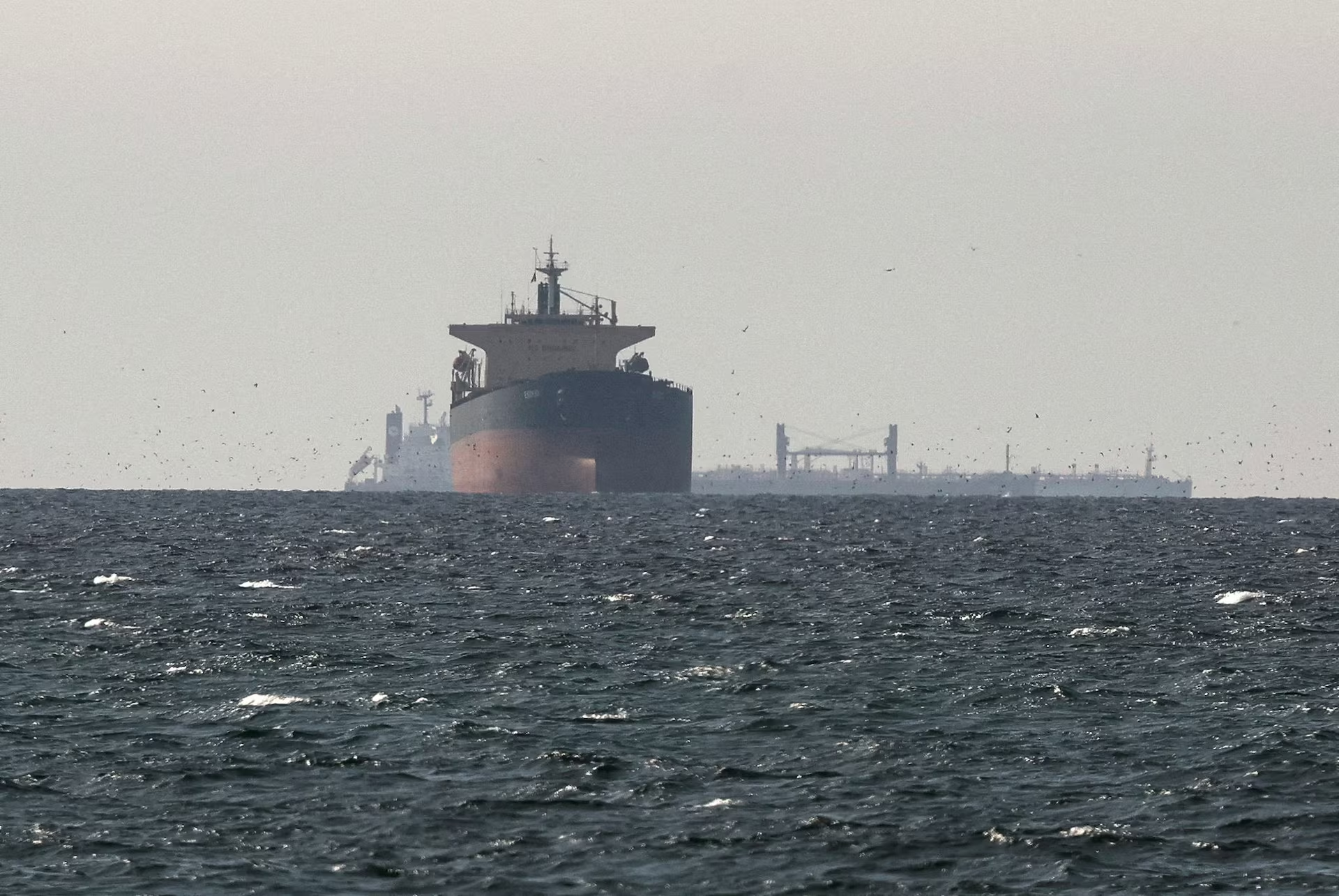
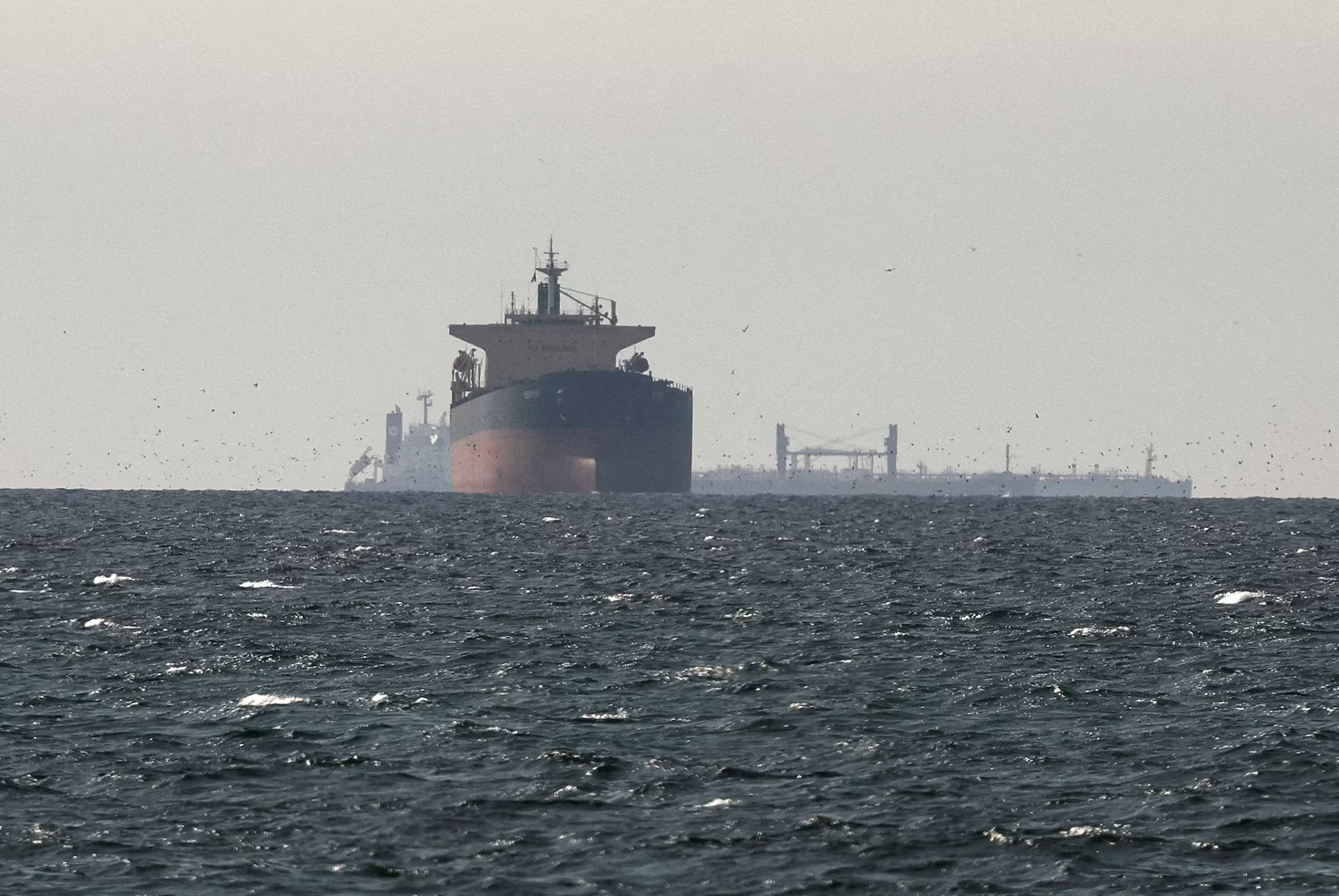
Amid the thunder of ballistic missiles and the whir of drones that have defined the war between Iran, “Israel,” and the United States, a silent weapon lurking beneath the water’s surface emerges as the most complex and disruptive threat to the global economy: the naval mine.
The strategic danger of this weapon lies not only in its direct destructive power, but in its exceptional ability to engineer fear within a vital maritime artery like the Strait of Hormuz.
It does not require deploying a massive naval fleet or planting hundreds of mines to physically block passage. Mere suspicion that a limited number may be present is enough to create a “functional blockade,” paralyzing maritime traffic as insurers halt coverage, energy prices surge, and global supply chains falter.
What do we know about mines in Hormuz?
Amid the ongoing war, the first reports of possible mine use surfaced between March 10 and 13, 2026, after Reuters cited two informed sources saying Iran had planted around 12 mines in the strait in preceding days a move said to have disrupted oil and gas transport.
Simultaneously, the US military announced it had destroyed 16 Iranian minelaying vessels near the strait, warning of severe consequences if the mines were not removed.
However, on March 13, US Defense Secretary Pete Hegseth said there was no clear evidence that Iran had actually deployed mines, describing earlier reports as “reckless,” underscoring the ambiguity surrounding the situation in the strait.
As for capabilities, estimates suggest Iran possesses between 5,000 and 6,000 naval mines of various types, according to a report by the Congressional Research Service (CRS), a figure echoed in a study by the Defense Intelligence Agency.
The same report notes that estimates in 2019 stood at “more than 5,000 mines,” rising to around 6,000 by 2025. This arsenal includes limpet mines attached by divers, moored mines floating beneath the surface, and bottom mines resting on the seabed making detection particularly difficult.
Chinese sources cited by The New York Times said Iran could deploy hundreds of mines using small boats, despite damage to some of its vessels.
There is no precise official data on the proportion of imported versus domestically produced mines. Western reports indicate that Iran’s stockpile includes Russian, North Korean, and Chinese models that have been locally modified or replicated.
Why are naval mines an ideal weapon to cripple Hormuz?
Unlike missiles or drones, the power of naval mines lies in their silence and their ability to induce psychological paralysis.
1. Geographic choke point:
At its narrowest, the Strait of Hormuz is just 33 kilometers wide and no deeper than about 200 feet, making it ideal for deploying moored or bottom mines that can obstruct safe passage.
Even without detonation, mere suspicion of mines can halt shipping. Companies and tankers cannot risk cargo worth billions, while insurers raise premiums at the first sign of danger.
A report by Lloyd’s List, a leading maritime industry publication, showed tanker traffic through the strait dropped by more than 80% following reports of potential mine presence.
War risk insurance premiums in the Gulf also surged from 0.15–0.25% of a vessel’s value to between 7.5–10%. This means a large tanker could pay an additional $10–14 million per voyage costs significant enough to reroute global shipping and disrupt supply chains.
2. Difficulty of clearance:
Clearing mines from the strait is a slow and complex operation, relying on specialized vessels, helicopters, manned and unmanned submarines, and even trained marine mammals used by the US Navy.
However, the US Navy retired traditional minesweepers in the Middle East in 2025, replacing them with littoral combat ships a platform not yet fully proven in mine-clearing operations.
A US Naval Forces report indicated that reopening the strait after a mining campaign could take days, weeks, or even months, depending on the scale of the threat.
This slow process means that even deploying or merely claiming to deploy a limited number of mines can paralyze trade for extended periods, as clearance requires complete certainty that shipping lanes are safe.
What risks do mines pose to shipping and energy?
The threat of mines extends far beyond obstructing passage; it strikes at the heart of global supply chains and energy markets.
Around five million barrels of oil per day are exported from Saudi Arabia and Iraq via Hormuz, along with 77 million tons of liquefied natural gas annually particularly from Qatar. Any disruption immediately drives up prices and threatens supplies to Asia and Europe.
The Atlantic Council notes that even the possibility of Iranian mines could halt trade within days, as shipping companies avoid the area until it is confirmed safe.
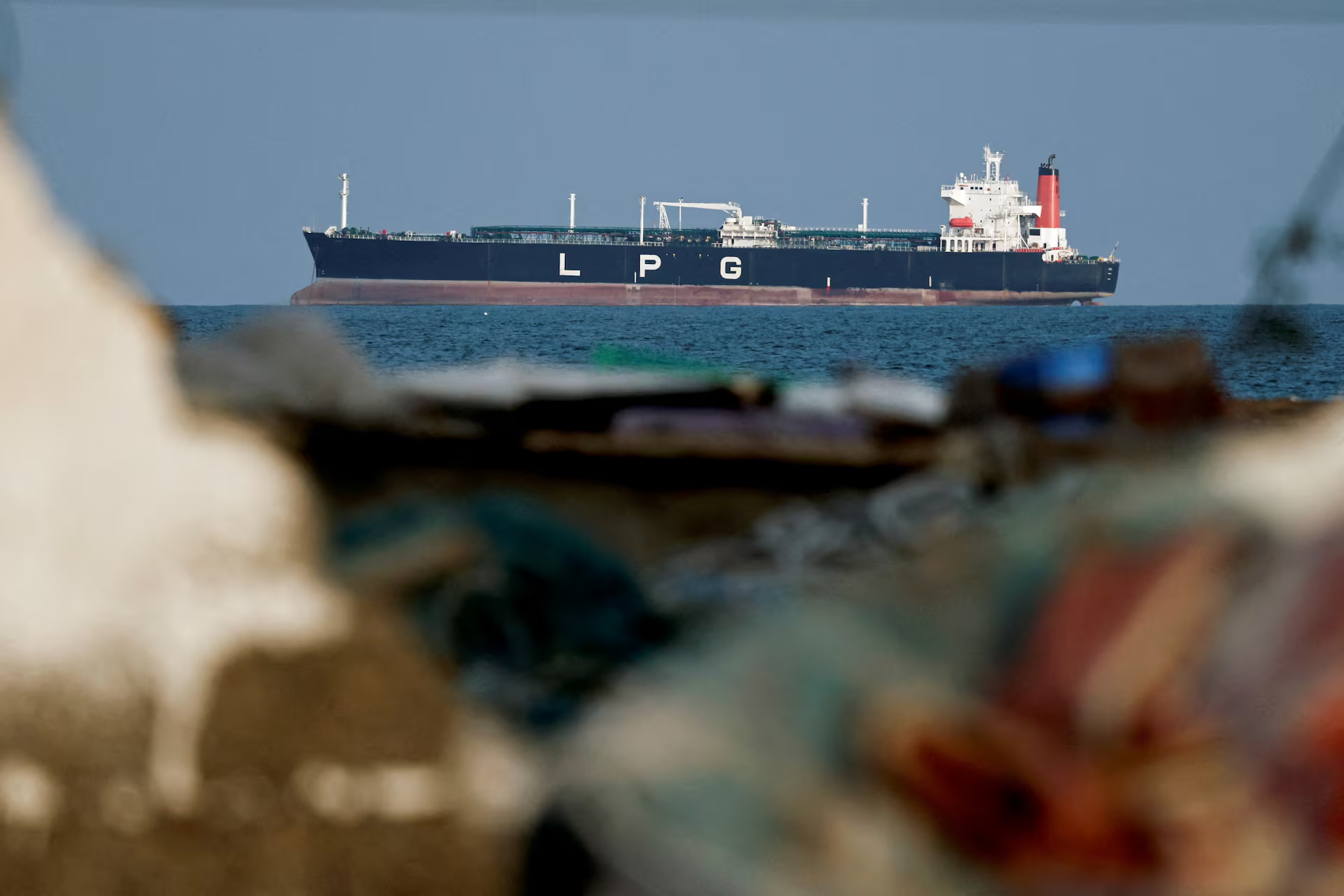
Amid the current conflict, markets have already recorded rapid price increases, and Washington has urged G7 nations to consider international escort plans. Yet even military escorts cannot guarantee safe passage if a single mine could detonate a supertanker and trigger an environmental disaster.
The challenge is that politically reopening the strait may be easier than doing so operationally, especially since mine clearance would require coordinated multinational efforts if mines are indeed deployed.
At the same time, large-scale clearance operations could expose warships to danger and strain naval resources needed on other fronts.
Thus, the true danger of naval mines lies in their ability to transform the strait into a “psychologically and logistically paralyzed corridor”: companies hesitate to transit, insurers impose exorbitant premiums, and markets wait in silence for confidence to return.
Historical precedents make the threat real
This is not the first time the mining of the Strait of Hormuz has been considered.
During the “Tanker War” between Iran and Iraq in the 1980s, Iran used mines to disrupt shipping. On July 24, 1987, an Iranian mine struck the supertanker Bridgeton, despite its protection by US warships as part of Operation Earnest Will.
An archival report by United Press International (UPI) noted that the explosion tore a large hole in the tanker but caused no casualties. US officials believed the mine originated from Iran’s Farsi Island. The incident dealt a symbolic blow to the United States and its allies, demonstrating how a single mine could embarrass a major naval power.
Less than a year later, on April 14, 1988, the US frigate USS Samuel B. Roberts hit an Iranian mine weighing roughly 250 pounds of explosives.
A report by USNI News stated the blast broke the ship’s keel and ripped open its hull, nearly sinking it.
The incident led to Operation Praying Mantis four days later, in which the US Navy destroyed nearly half of Iran’s naval forces in the largest US naval engagement since World War II.
Notably, the mine that struck the Samuel B. Roberts cost only a few thousand dollars, while repairs to the ship ran into hundreds of millions highlighting the stark asymmetry in mine warfare.
A study in Security Diaries noted that Iran laid 60 Soviet-designed M-08 mines off Farsi Island in 1987, imported from North Korea and later modified.
Other reports indicate that Iran announced in the mid-1980s that it had established domestic production facilities for mines, reinforcing claims of reliance on both local manufacturing and imported stockpiles.
This historical backdrop suggests today’s threat is far from hypothetical. Experience has shown that Iran is capable of deploying mines and inflicting significant damage even in the presence of advanced US naval forces.


