NoonPost NoonPost

NoonPost

  • Home
  • Politics
  • Economy
  • Society
  • Culture
  • Files
  • Long Reads
  • Podcast
AR
Notification Show More
نون بوست
“There Are Nights I Can’t Close My Eyes”: How Gazans Are Living in Homes on the Brink of Collapse
نون بوست
From al-Jolani to Ahmad al-Shara: The Evolution of Syria’s New Leader
نون بوست
When Political Islam Receded in Egypt: Who Filled the Void?
نون بوست
An Extension of Genocide: Gaza’s Detainees Speak Out
نون بوست
A Tightrope Between Survival and Sovereignty: The Syrian Government Faces Normalization Pressures
نون بوست
American Aircraft Carriers: Has the Era of “100,000 Tons of Diplomacy” Ended?
نون بوست
U.S. Regime‑Change Policies: Why They Are Destined to Fail
نون بوست
Transformations of Israeli Judaism: Between the Victim Complex and the Colonizer’s Doctrine
نون بوست
The Gulf’s Balancing Act: Iran, Israel, and Hidden Links
نون بوست
Iraq–Turkey Oil Export Treaty: Why Did Ankara Cancel It After 52 Years?
نون بوست
Syria’s Northeast on Edge: QSD Between Ankara and Damascus
نون بوست
Has Europe Changed Its Stance on Israel… or Just Its Language?
NoonPost NoonPost
AR
Notification Show More
نون بوست
“There Are Nights I Can’t Close My Eyes”: How Gazans Are Living in Homes on the Brink of Collapse
نون بوست
From al-Jolani to Ahmad al-Shara: The Evolution of Syria’s New Leader
نون بوست
When Political Islam Receded in Egypt: Who Filled the Void?
نون بوست
An Extension of Genocide: Gaza’s Detainees Speak Out
نون بوست
A Tightrope Between Survival and Sovereignty: The Syrian Government Faces Normalization Pressures
نون بوست
American Aircraft Carriers: Has the Era of “100,000 Tons of Diplomacy” Ended?
نون بوست
U.S. Regime‑Change Policies: Why They Are Destined to Fail
نون بوست
Transformations of Israeli Judaism: Between the Victim Complex and the Colonizer’s Doctrine
نون بوست
The Gulf’s Balancing Act: Iran, Israel, and Hidden Links
نون بوست
Iraq–Turkey Oil Export Treaty: Why Did Ankara Cancel It After 52 Years?
نون بوست
Syria’s Northeast on Edge: QSD Between Ankara and Damascus
نون بوست
Has Europe Changed Its Stance on Israel… or Just Its Language?
Follow US

On Its 15th Anniversary, Can Syria Transition from Revolution to Statehood?

حسن إبراهيم
Hasan Ebrahim Published 26 March ,2026
Share
نون بوست
نون بوست
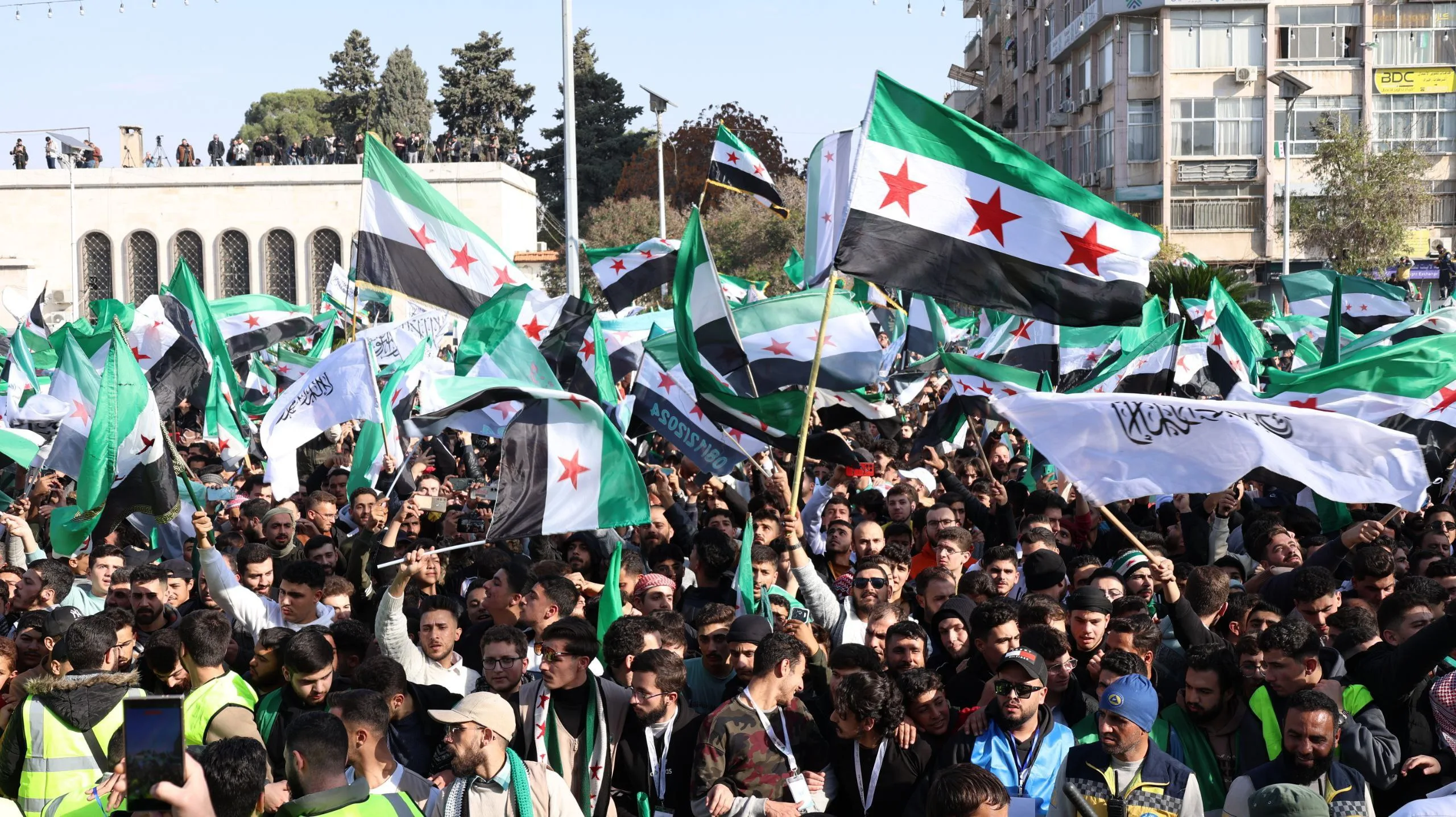
Gathering in Al-Assi Square as part of the first anniversary celebrations of the liberation of Hama, December 5, 2025 (Hama Governorate)

“The mindset of a revolutionary does not build a state; the mindset of revolution does not build a state. A revolution is defined by upheaval, eruption, and reaction it may succeed in dismantling a regime, but it cannot construct one. The revolution is over; it is part of our history, one we take pride in and commemorate. But we must not summon its mentality.”

With these words, Syrian President Ahmed al-Sharaa outlined the political framework for the post-Assad era following the collapse of Bashar al-Assad’s regime on December 8, 2024. He drew a clear line between the era of revolution and that of state-building, declaring that the priority has shifted toward establishing governance rooted in law and institutions.

Today, marking the fifteenth anniversary of the Syrian revolution and more than a year after Assad’s flight Noon Post examines the transition from a revolutionary mindset to one of statehood. It explores whether the revolution can evolve into institutions without losing its essence, the defining features of this transformation, and the obstacles that continue to hinder it.


The Logic of Revolution vs. the Logic of the State

The Syrian revolution, which began in March 2011, brought to an end a political era that had lasted more than half a century with the fall of the Assad regime. After years of sacrifice and struggle, that moment of collapse marked the beginning of a new phase one burdened by a legacy of violations and wounds yet to be healed.

In this phase, a clear divide has emerged regarding the relationship between revolution and statehood. Some argue that revolution, as an ongoing act, should not end with the fall of the regime. Others contend that it has concluded, and that a new phase guided by different rules and tools must begin.

Transitioning to a state-oriented mindset cannot be achieved through rhetoric alone. Public memory remains too heavy to ignore unless its demands are genuinely met. This shift requires a governance framework that reshapes relations between authority and society on the basis of trust and accountability, while entrenching justice, equality, and mechanisms to hold perpetrators of violations to account.
نون بوست
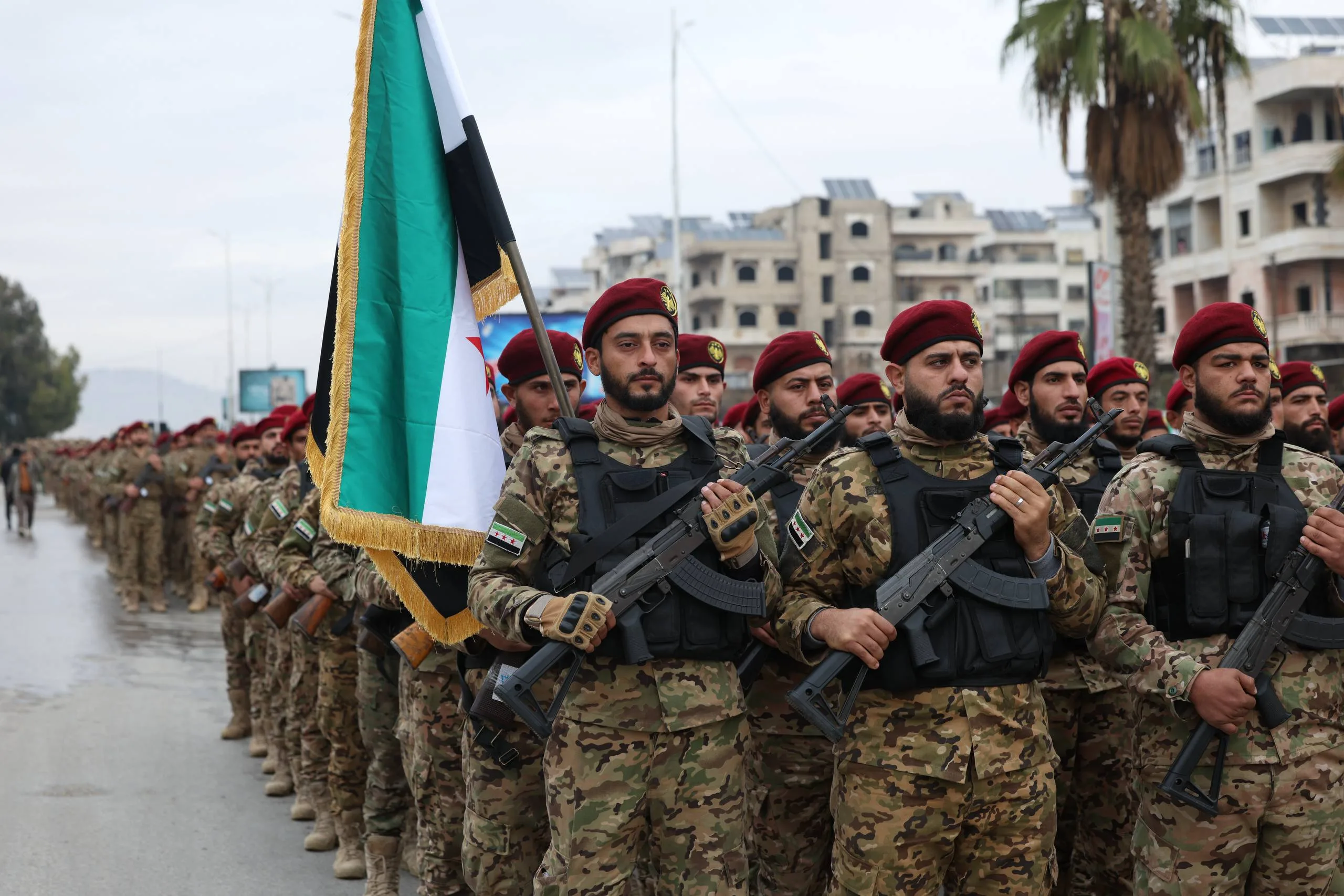
Syrian Arab Army forces during a field march in the city of Hama on the occasion of the first anniversary of the liberation of Syria, December 8, 2025 (Syrian Ministry of Defense)

Yet moving from revolution to state functions does not mean abandoning or marginalizing the revolution’s ideals. Rather, the revolutionary spirit must be refined and institutionalized serving as a compass for governance while its mechanisms are translated into state structures capable of fulfilling public functions.

Legal researcher Nawras al-Abdullah, director of the Consensus and Identity Unit at the Syrian Dialogue Center, explains that the logic of revolution rests on moral and practical legitimacy, whereas the logic of the state is grounded in legal and political legitimacy. Emotional mobilization and grand slogans define the former; administration, metrics, and institutionalization define the latter.

Speaking to Noon Post, al-Abdullah notes that more than a year into the transition, Syria still relies heavily on the legitimacy of victory and the overthrow of authoritarianism, rather than on institutional foundations. This is evident, he argues, in the issuance of laws and decrees without clear institutional backing, despite repeated declarations since the January 29, 2025 “Victory Statement” that the revolutionary phase has ended.

He maintains that the relationship between revolution and state is not inherently contradictory. In Syria’s case, the revolution served as a foundational moment to redefine the state itself. Thus, while revolutionary action may have ended, state-building should still be rooted in the revolution’s principles.

However, he warns that the continued reliance on revolutionary methods and legitimacy in the state-building phase becomes increasingly problematic over time. Growing public discourse around rule of law, institutional performance, and living conditions suggests that invoking the revolutionary phase alone is no longer sufficient.


A Path Toward Statehood

Following the fall of Assad, Syria’s new administration initiated a series of measures some swift, others delayed most notably:

  • Establishing interim governing structures to ensure continuity, including a caretaker government led by Mohammad al-Bashir, followed by a transitional cabinet of 23 ministers.

  • Convening the “Victory Conference” on January 29, 2025, which authorized Ahmed al-Sharaa as president, dissolved the Baath Party and former security apparatus, and launched the rebuilding of state institutions.

  • Gradually reorganizing the military and rejecting partition, including efforts to integrate factions and restructure internal security bodies.

    نون بوست
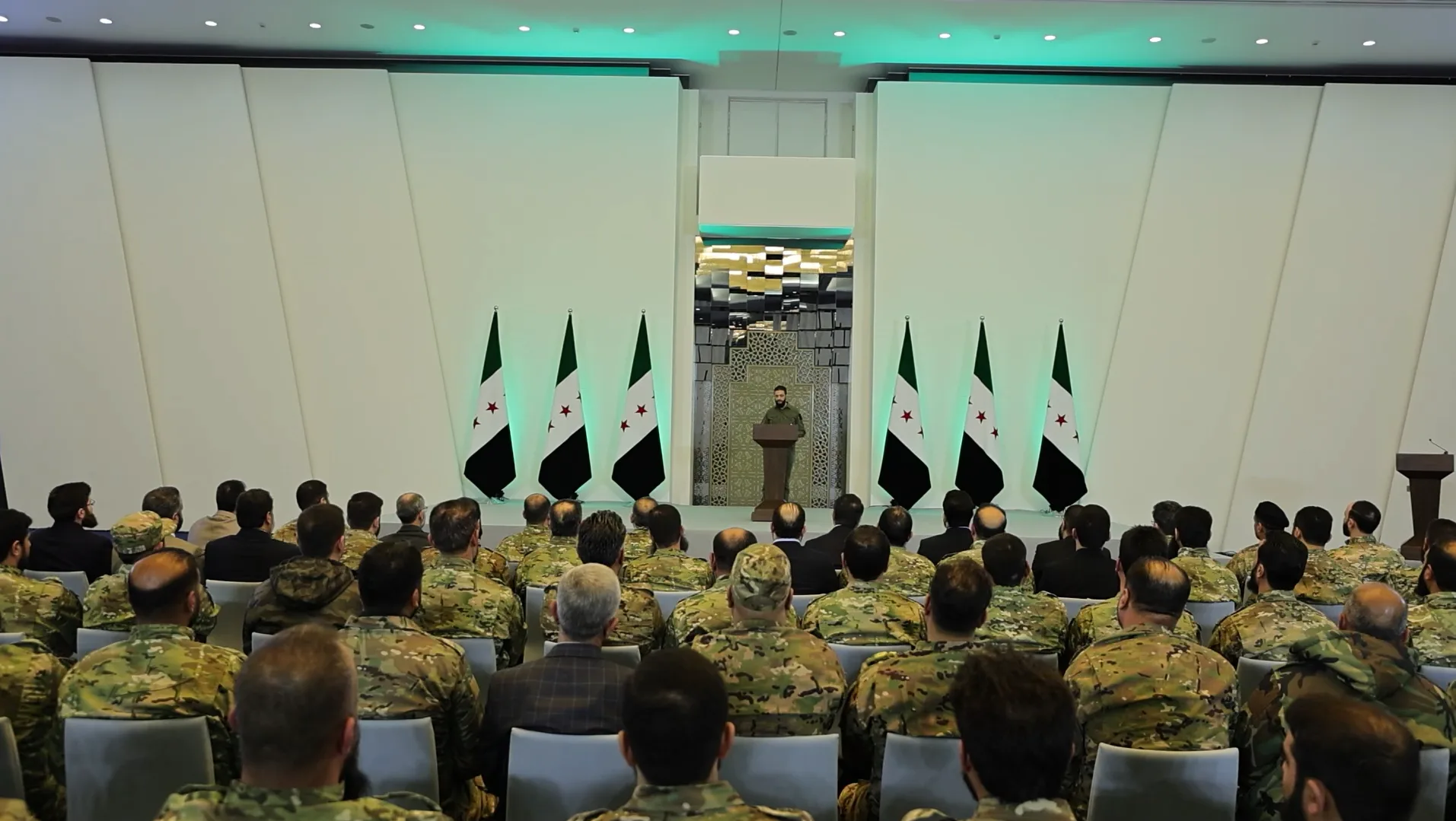
    Syrian President Ahmed al-Sharaa delivers a speech during the Victory Conference, January 29, 2025 (Presidency of the Republic)
  • Holding a national dialogue conference in February and issuing a temporary constitutional declaration in March 2025.

  • Forming national bodies such as the National Commission for the Missing and the National Transitional Justice Authority.

  • Organizing parliamentary elections, albeit with delays.

  • Pursuing diplomatic outreach to Arab and Western states to restore international legitimacy.

External Engagement and Internal Reordering

Silvia Carincci, associate researcher at the Italian Institute for International Political Studies (ISPI), considers diplomatic efforts among the most significant achievements of the post-revolution phase. Syria has actively re-engaged internationally, with President al-Sharaa addressing the UN General Assembly for the first time in decades.

She notes key developments in 2025, including meetings with U.S. President Donald Trump, the lifting of sanctions particularly those under the Caesar Act and the removal of Hay’at Tahrir al-Sham from terrorism lists.
نون بوست
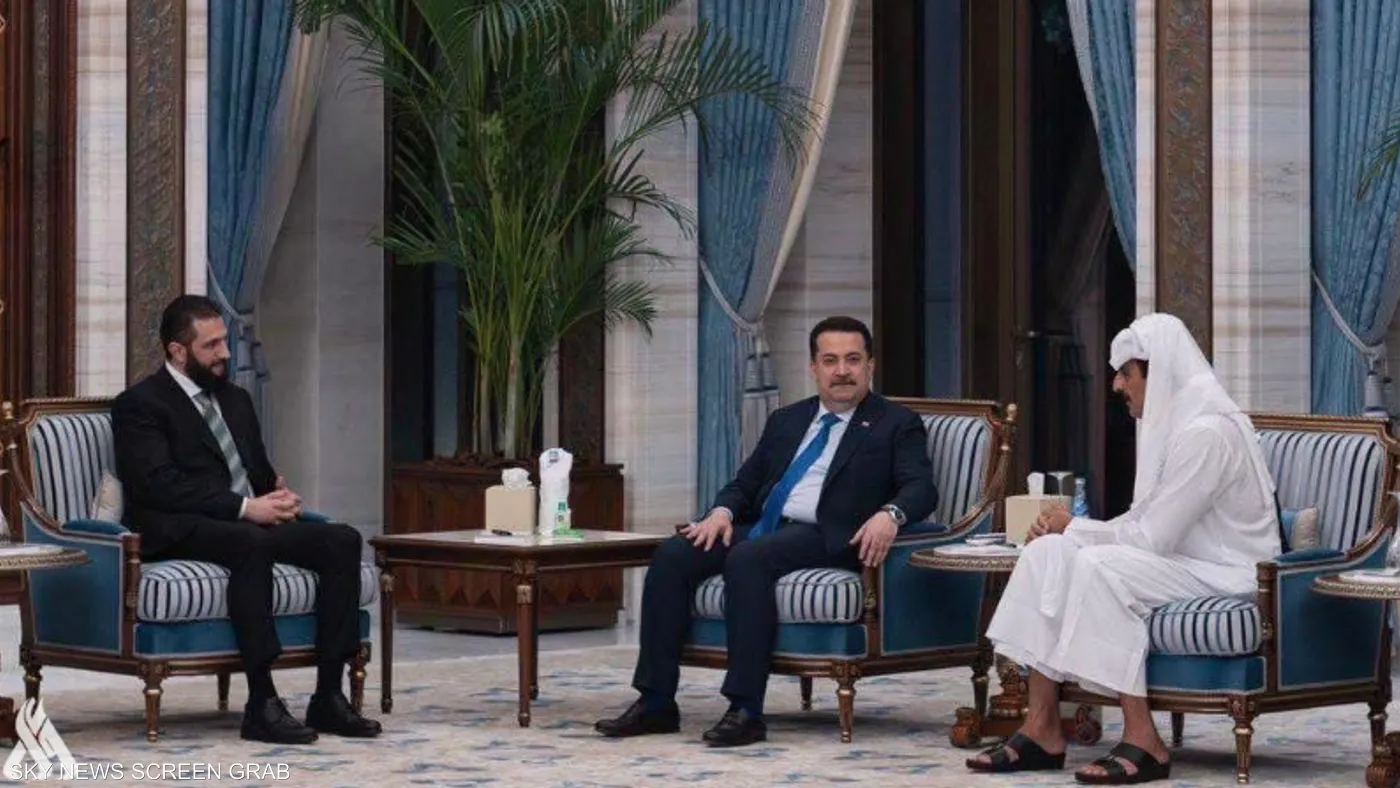
Iraqi Prime Minister Mohammed Shia al-Sudani met with Syrian President Ahmed al-Sharaa, in the presence of the Emir of Qatar, Sheikh Tamim bin Hamad Al Thani, in Doha.

According to Carincci, Syria has adopted a “zero problems” foreign policy, maintaining balanced relations and avoiding alignment with geopolitical blocs a continuation of strategies previously employed in Idlib but now elevated to a national scale.

This approach has expanded ties not only with traditional allies like Qatar and Turkey but also with new partners such as Saudi Arabia, resulting in strategic economic agreements.

Domestically, Syria has seen partial improvements in security, reforms in the security sector, and a broader space for political expression. For the first time in decades, political issues are being openly discussed in public.


Obstacles on Three Levels

Despite these efforts, the transition has not been smooth. Violent clashes in coastal regions and Suwayda, delays in integrating the Syrian Democratic Forces, and ongoing Israeli incursions highlight persistent instability.

Criticism has also emerged over governance practices, including the issuance of decrees that contradict the constitutional declaration, nepotism in appointments, and delays in transitional justice and accountability.

Al-Abdullah identifies three categories of obstacles:

  1. Contextual challenges: Rival forces, remnants of the old regime, and regional dynamics that destabilize the transition.

  2. Internal challenges: Continued reliance on mobilization rhetoric, sensitivity to criticism, and prioritization of loyalty over merit.

  3. Societal challenges: Public resistance to regulation, widespread weaponization, and deep mistrust of institutions after 14 years of conflict.


Core Files for State-Building

The transition to statehood remains a complex process shaped by decades of authoritarianism and years of war. Carincci notes that while the first year focused on international legitimacy, the second is likely to prioritize domestic challenges.

Key priorities include expanding political participation, restructuring institutions, and forging a new social contract. Balancing inclusivity with cautious governance will be critical, particularly given security risks and lessons from the Arab Spring.

Future steps may include cabinet reshuffles, activating parliament, drafting a permanent constitution, and passing a political parties law.

Equally critical is fostering social cohesion. Rebuilding trust among Syria’s diverse communities will be a long and difficult process, but local initiatives and inclusive dialogue may help bridge divides.

Progress in transitional justice remains essential, alongside economic recovery efforts to meet growing public expectations for improved living conditions.

Download this article as PDF
Share this Article
Facebook Twitter Whatsapp Whatsapp Telegram Email Copy Link
حسن إبراهيم
By حسن إبراهيم صحفي سوري
Follow:
Previous Article نون بوست How Can the Gains of the Syrian Revolution Be Preserved?
Next Article نون بوست Targeting the U.S. Embassy in Baghdad… Is Iraq Officially Entering the War?

Read More

  • U.S. Regime‑Change Policies: Why They Are Destined to Fail U.S. Regime‑Change Policies: Why They Are Destined to Fail
  • The Gulf’s Balancing Act: Iran, Israel, and Hidden Links
  • Iraq–Turkey Oil Export Treaty: Why Did Ankara Cancel It After 52 Years?
  • Syria’s Northeast on Edge: QSD Between Ankara and Damascus
  • Has Europe Changed Its Stance on Israel… or Just Its Language?
part of the design
NoonPost Weekly Newsletter

You May Also Like

U.S. Regime‑Change Policies: Why They Are Destined to Fail

U.S. Regime‑Change Policies: Why They Are Destined to Fail

إسراء سيد Esraa sayed 8 April ,2026
The Gulf’s Balancing Act: Iran, Israel, and Hidden Links

The Gulf’s Balancing Act: Iran, Israel, and Hidden Links

فريق التحرير Noon Post 8 April ,2026
Iraq–Turkey Oil Export Treaty: Why Did Ankara Cancel It After 52 Years?

Iraq–Turkey Oil Export Treaty: Why Did Ankara Cancel It After 52 Years?

فريق التحرير Noon Post 8 April ,2026

القطب الشمالي: حرب باردة جديدة؟

فريق التحرير
Noon Post Published 30 April ,2015
Share
2014maxextent_bm_hires

هي المنطقة التي تشهد أسرع معدلات احترار على الأرض في السنوات الأخيرة، والتي يذوب فيها الجليد بسرعة لم يتوقعها العلماء، والذين قالوا منذ حوالي عقد بأن فصل الصيف في القطب الشمالي سيكون خاليًا من الجليد بحلول العام 2070، ثم عدّلوا الرقم بعد سنوات إلى 2035، ليصبح أخيرًا 2020، بعد أن فقد بحر القطب الشمالي أكثر من نصف مساحته في العقود الثلاثة الماضية، وثلاثة أرباع حجمه.

ماذا يمكن أن يحدث حين تذوب الثلوج بالكامل في القطب الشمالي لتلك الأسابيع الطويلة؟ أنشطة كثيرة، وليس فقط على مستوى الأفراد، ولكن الدول والشركات الكبرى أيضًا، فتضاؤل مساحات الثلوج يتيح التنقيب عن النفط والغاز والمعادن بشكل أيسر، كما يفتح الباب أمام خط جديد للملاحة الدولية يربط اليابان وروسيا بأوروبا والولايات المتحدة دون الحاجة إلى بقية محيطات الأرض.

القطب الشمالي ببساطة سيتحوّل تدريجيًا إلى بحر متوسط جديد ستشهد معه المنطقة نموًا تجاريًا وحركة تبادل واسعة بين كافة البلدان المطلة عليه، وهي الولايات المتحدة (عن طريق ولاية ألاسكا، ووحجمها تقريبًا حجم ليبيا)، وكندا، وروسيا، وأيسلندا، وفنلندا، والدنمارك (عن طريق ولاية جرينلاند، الأكبر من أوروبا الغربية لأسرها)، بالإضافة إلى السويد والنرويج واليابان كجزء من الدائرة القطبية وإن لم يطلوا على البحر مباشرة.

هل تمتلك دائرة القطب الشمالي ما يكفي إذن من موارد لتجذب كل هؤلاء إليها وتخلق طفرة اقتصادية جديدة؟ بالطبع، وهو السبب في بداية التنافس الذي تشهده منذ حوالي عقد بين الدول الموجودة فيها، إذ يضم القطب الشمالي ما يكافئ 10٪ من الإنتاج العالمي للنفط، و25٪ من الإنتاج العالمي للغاز، وهي ثروات بدأت شركات كبرى، مثل شركة شِل في ألاسكا، وشركة كايرن الإسكتلندية في جرينلاند، في التنقيب عنها، وبالمثل بالطبع تفعل جازبروم الروسية في سيبيريا بالتعاون مع إكزون موبيل وإي إن أي ENI.

تنافس بارد جدًا

بدأت “اللعبة الكبرى” في القطب الشمالي عام 2007، حين رفعت روسيا علمها في إحدى مناطق الدائرة القطبية، لتشعل جدلًا حول نطاق سيادة كل بلد من المطلين على البحر، ولتبدأ كل منها في تعزيز قوتها البحرية في تلك المنطقة، لا سيما القطع البحرية التي تمتلك إمكانية إزاحة الثلوج، وبالنظر لكون معظم تلك البلدان من الدول الديمقراطية والنامية اقتصاديًا (باستثناء روسيا)، وغير راغبة في الدخول في صراع مفتوح، تم تأسيس مجلس القطب الشمالي للبت في النزاعات الحدودية في الشمال، وقد حل المجلس الكثير منها بالفعل، مثل النزاع بين النرويج وروسيا حول جزر سفالبارد.

على ما يبدو إذن أن الجو البارد في الشمال يسلقي بظلاله على التنافس القائم، والذي سيكون أبرد من الحرب الباردة كثيرًا، وسيشبه بشكل كبير السجال الصيني الأمريكي الجاري الآن، والذي لا يُغني عن الاعتماد الاقتصادي المتبادل والقوي، ففي عام 2011 وقعت دول القطب الشمالي معاهدة لمهمات البحث والإنقاذ، ثم بدأت العمل في 2013 على إطار لتنظيم الصيد التجاري، والتصرّف حيال أي تسّربات نفطية، بل إن بعض الدول تشارك سفن تكسير الثلوج الخاصة بها الآن مع غيرها لاكتشاف المنطقة بشكل أوسع.

علاوة على ذلك، بدأت أيسلندا في تقديم رحلات طيران عابرة للبحر القطبي، منطلقة من العاصمة ريكيافيك إلى مدينة القديس بطرسبرغ في روسيا، كما تجري خطط الآن لتنفيذ خطوط اتصالات تربط شمال آسيا بأوروبا وشمال الولايات المتحدة، وهي مناطق تضم البلدان الأكثر نموًا في العالم، من الاقتصادات المتقدمة التقليدية في الغرب إلى اليابان والصين، والتي ستستفيد بالطبع من الحصول على طريق أقصر للتجارة والتنقل والاتصالات بينها.

الحسابات الإقليمية

تُعَد معظم الدول المطلة على القطب الشمالي جزءًا من التحالف الغربي بشكل واسع، ولا يتوقع أن تتمكن روسيا منفردة من النجاح في الهيمنة منفردة في تلك المنطقة، أضف لذلك أن محاولات الصين التواجد في الشمال لا تقابلها موسكو بالترحاب نظرًا لتوجسها من التمدد الاقتصادي الصيني في منطقة سيكون أفضل أن تظل محصورة بين الغرب والروس، وهو قلق تشاركه إياها اليابان، وهي جزء من مجلس القطب الشمالي، وتشترك مع روسيا في الكثير من المصالح فيما يخص الاستراتيجية في آسيا بشكل عام أكثر مما يبدو، خاصة وهي تمتلك تكنولوجيا متطورة ستعوّض النقص الذي تعانيه روسيا في تطوير سفن قادرة على الحركة في القطب الشمالي.

بالإضافة لذلك، تُعَد العلاقات بين كندا والولايات المتحدة هي الأخرى نقطة خلاف رئيسية بين دول المجلس، إذ توجد العديد من المسائل العالقة فيما يخص الحدود بين البلدين، أبرزها الممر الشمالي الذي يمر عبر جزر كندا وإلى الشمال، والذي تعتبره كندا جزءًا من مياهها الإقليمية، في حين تعتبره واشنطن مياهًا دولية، وهي أزمة معرّضة للتفاقم بالنظر لكون الولايات المتحدة واحدة من الدول غير الموقعة على اتفاقية الأمم المتحدة لقانون البحار UNCLOS.

عدا ذلك، لا يبدو أن الولايات المتحدة ستواجه متاعب كثيرًا في خلق منظومة متوازنة بينها وبين الروس، وقد تكون العقبة الوحيدة في تعزيز مكاسبها، إلى جانب الخلاف مع كندا، هي أي خلافات سياسية قد تنشأ مع دول إسكندنافيا، فالسويد، الدولة الأبرز في شمال أوروبا، ليست عضوًا بالناتو، وفنلندا كذلك، وهو ما قد يحد قدرة واشنطن على فرض سياساتها الأقل انفتاحًا على الروس بشكل عام من نظيرتها الأوروبية، خاصة فيما يتعلق بالتحركات العسكرية، والتي ستحتاجها الولايات المتحدة عاجلًا أم آجلًا لتوجيه رسالة لموسكو بأنها موجودة في الشمال.

***

في المُجمَل، وبعيدًا عن انتقادات أنصار البيئة التي قلما تجد طريقًا لها بين السياسيين والمختصين بالحسابات الاستراتيجية، يبدو وأن المنطقة ستشهد بالفعل بدء المغامرات الاقتصادية، والتي ستنصب في الفترة المقبلة على استخراج ثرواتها لتعزيز الوضع المالي وأمن الطاقة للدول المطلة على البحر القطبي، بالإضافة إلى خطوات أولية نحو وضع بنى تحتية أساسية مثل خط اتصالات وبناء موانئ للتنقل في الصيف حيث يقل الجليد وتسهل الحركة، وهي تحركات ستحتاجها كل دول المنطقة وستتجه من أجلها لترسيخ التعاون فيما بينها في إطار مجلس القطب الشمالي، دون أن تغفل التنافس الاستراتيجي الحتمي، لا سيما بين موسكو وواشنطن، والذي سيكون على الأرجح شديد البرودة في منطقة باردة جغرافيًا، وباردة سياسيًا أيضًا بوجود دول إسكندنافيا وكندا التي يهمها الاستقرار الاقتصادي أكثر من سواه.

TAGGED: القطب الشمالي ، مجلس القطب الشمالي
Download this article as PDF
Share this Article
Facebook Twitter Whatsapp Whatsapp Telegram Email Copy Link
فريق التحرير
By فريق التحرير تقارير يعدها فريق تحرير نون بوست.
Follow:
Next Article نون بوست The Stigma of “ISIS”: A Heavy Legacy Haunting Women and Children of Former Members

Read More

  • U.S. Regime‑Change Policies: Why They Are Destined to Fail U.S. Regime‑Change Policies: Why They Are Destined to Fail
  • The Gulf’s Balancing Act: Iran, Israel, and Hidden Links
  • Iraq–Turkey Oil Export Treaty: Why Did Ankara Cancel It After 52 Years?
  • Syria’s Northeast on Edge: QSD Between Ankara and Damascus
  • Has Europe Changed Its Stance on Israel… or Just Its Language?
part of the design
NoonPost Weekly Newsletter

You May Also Like

U.S. Regime‑Change Policies: Why They Are Destined to Fail

U.S. Regime‑Change Policies: Why They Are Destined to Fail

إسراء سيد Esraa sayed 8 April ,2026
The Gulf’s Balancing Act: Iran, Israel, and Hidden Links

The Gulf’s Balancing Act: Iran, Israel, and Hidden Links

فريق التحرير Noon Post 8 April ,2026
Iraq–Turkey Oil Export Treaty: Why Did Ankara Cancel It After 52 Years?

Iraq–Turkey Oil Export Treaty: Why Did Ankara Cancel It After 52 Years?

فريق التحرير Noon Post 8 April ,2026
dark

An independent media platform founded in 2013, rooted in slow journalism, producing in-depth reports, analysis, and multimedia content to offer deeper perspectives on the news, led by a diverse young team from several Arab countries.

  • Politics
  • Society
  • Rights & Liberties
  • Opinions
  • History
  • Sports
  • Education
  • Technology
  • Economy
  • Media
  • Arts & Literature
  • Entrepreneurship
  • Travel
  • Cinema & Drama
  • Food
  • Health
  • Culture
  • Latest Reports
  • Files
  • Long Reads
  • Interviews
  • Podcast
  • Interactive
  • Encyclopedia
  • In Pictures
  • About Us
  • Our Writers
  • Write for Us
  • Editorial Policy
  • Advanced Search
Some rights reserved under a Creative Commons license

Removed from favorites

Undo
Go to mobile version